Category: Uncategorized

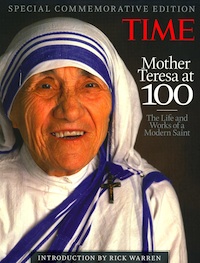
Mother Teresa at 100 – The Life and Works of a Modern Saint

Bookmark and Share


by DAVID VAN BIEMA
TIME BOOKS. 96P $19.95 (HARDCOVER)

In recognition of the centennial of the birth of Mother Teresa of Calcutta on August 26, we thought this new book would be a welcome addition to everyone’s home library. In “Unconditional Love,” the book’s introduction, the noted pastor Rick Warren pens these stirring words: “Don’t just read this book. Let it change the direction of your life. Let it cause you to investigate the One who so transformed Mother Teresa that she was able to walk away from everything we spend our lives trying to attain.” Up front is a double-page spread of small images, a timeline that captures highlights of this holy woman, who founded the Missionaries of Charity some 50 years ago.

Biema is the primary author, but the book includes contributions from James Martin, S.J., author of-among other works-My Life With the Saints, Susan Van Houte (one of Mother Teresa’s infant “rescues”) and Father Brian Kolodiejchuk, M.C., who is postulator for the cause of Mother Teresa’s canonization. In Chapter Four, “Mother to the World,” Biema writes of the Missionaries’ first forays beyond India and eventual outreach and missionary work all over the globe, drawing from a variety of sources-journalists and filmmakers who documented firsthand the challenges-even danger-the Sisters faced with unflinching purpose, dedication and fortitude.

The book is printed on glossy stock with an open, airy and appealing design. The story is familiar to many readers, but is rendered here with a freshness and perspective that readers will welcome. The volume is studded with color as well as black-and-white photos-some of which are unfamiliar to us, despite the plethora of illustrated books about the saintly nun. Time Books has put together a beautiful commemorative package indeed.

Ten Things You Didn’t Know (About the Jesuits)

Bookmark and Share


by Paul Brian Campbell, SJ 


Ten Things You Didn’t Know (About the Jesuits)

I found this list in the Summer 2010 issue of Company – a jesuit magazine and thought I’d share it with you. [Update: The list comes from James Martin S.J.’s best-selling, The Jesuit Guide to Almost Everything.]

Ten Things You Didn’t Know (About the Jesuits)

1. They invented the trap door. Without the Jesuits, the Wicked Witch of the West wouldn’t have been able to disappear so suddenly in The Wizard of Oz. With a history in theater and the arts, Jesuits also perfected the “scrim,” the sheer curtain still used in theaters today.

2. They discovered quinine (called “Jesuit bark” in the 16th century) that is used today for anti-malarial drugs and also in tonic water. Without the Jesuits, you wouldn’t be able to enjoy your gin and tonic.

3. Their founder, St. Ignatius of Loyola (1 491-1 556), the Spanish-soldier-turned-mystic may be the only saint with a notarized police record: for nighttime brawling with intent to cause bodily harm (needless to say, this came before his conversion).

4. Their dictionaries and lexicons of the native languages in North America in the 17th century were the first resources Europeans used to understand these ancient tongues, and they still provide modern scholars with the earliest transcriptions of the languages.

5. They located the source of the Blue Nile and charted large stretches of the Amazon and Mississippi Rivers.

6. They educated Descartes, Voltaire, Moliere, James Joyce, Peter Paul Rubens, Arthur Conan Doyle, Fidel Castro, Alfred Hitchcock, and Bill Clinton-not to mention Bing Crosby, Vince Lombardi, Robert Altman, Chris Farley, Salma Hayek, and Denzel Washington.

7. They founded the city of Sao Paolo, Brazil.

8. There are 35 craters on the moon named for Jesuit scientists. And Athanasius Kircher, a 17th-century Jesuit scientist, called “master of a hundred arts” and “the last man to know everything”, was a geologist, biologist, linguist, decipherer of hieroglyphics, and inventor of the megaphone.

9. They inspired the film On the Waterfront, based on the groundbreaking labor-relations work of Jesuit John Corridan, who worked in New York City in the 1 940s and 1 950s. His part was played by Karl MaIden, who, last year, died 50 years to the day after Fr.Corridan.

10. They count 40 saints and dozens of blessed among their members, including the globe-trotting missionary St. Francis Xavier. Their famous “former” members include Garry Wills, John McLaughlin, and Jerry Brown.

[Source: James Martin, S.J., The Jesuit Guide to Almost Everything, Paperback Edition]


Portrait of a Jesuit – Matteo Ricci

Bookmark and Share


The superior man on grounds of culture meets with 

his friends, and by their friendship helps his virtue


The Confucian Analects, tr. James Legge


君 子 以 文 会 友

以 友 辅 仁


[ 论语 .颜渆 ]


Previeew
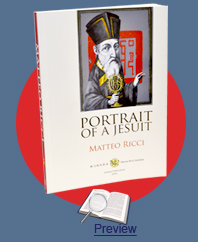
PORTRAIT OF A JESUIT – MATTEO RICCI

Recently, the Macau Ricci Institute has published a short biography of Fr. Matteo Ricci, S.J., based on a collection of essays presented at the Institute respectively by Dr. Gianni Criveller and Dr. César Guillén Nuñez, dedicated to the memory of a great pioneer after whom our Institute is named. This modest publication which would like somehow to contribute to the worldwide commemoration of Matteo Ricci’s demise in Beijing in 1610, intends to inaugurate a series of MRI studies related to the Jesuit history in the old China mission. It will be published under the name of Jesuítas Publication Series and will introduce to the readers such outstanding figures of the past as Alessandro Valignano, Melchior Carneiro and Tomás Pereira. Each title of the series will be available in English and Chinese versions (simplified characters).

Together with the commemoration of Ricci, a model of accommodation and intercultural exchange and dialogue, the MRI also marks its own tenth anniversary.

The present publication is addressed widely to MRI friends, benefactors, contributing scholars, and cooperating institutions, as well as to fellow Jesuits and communities. It gathers four essays: two of them are concerned with the life of Matteo Ricci and are written, and earlier presented at MRI Forums, by Dr. Gianni Criveller, PIME; the other two are about the iconography related to a well-known portrait of Matteo Ricci and about the Beijing church that he founded, and are written by Dr. César Guillén Nuñez, MRI researcher.

We sincerely hope that the present MRI publication will bring Matteo Ricci’s life and achievements closer to Chinese and Western readers and that it will refresh and enhance in them his spirit of knowledge, virtue and sharing of spiritual and intellectual traditions in dialogue within our globalising world.

Foreword by Artur K. Wardega, S.J.,
MRI Director


Available at our Macau Ricci Institute.
Please email enquiry to [email protected]


Hospitality and Meals in the Bible

Bookmark and Share


In the desert, hospitality was a necessity for survival. As any traveler might be in need of hospitality, any guest might reasonably expect hospitality from any host. Strangers arriving in a city sat in the central square until invited to someone’s home. A guest was entitled to protection from the host, and a good host made a feast for his guest greater than he would make for members of his own family.

Sharing a meal was at the heart of the guest/host relationship. Beginning with the prophet Isaiah in the eighth century B.C., the image of the banquet prefigures the joy of the messianic banquet on Mount Zion, where all those who are saved will be invited.

In the ministry of Jesus, whether it be the feeding of the five thousand or the request to be a guest at the home of Zacchaeus, the meal becomes an anticipation of the Kingdom of God. The cup that Jesus shared with his disciples at the Last Supper was a pledge of the cup he will share with them at their next banquet in the Kingdom of God.

The Music of Napoli

Bookmark and Share


In search of a lost Jesuit oratario

by Anthony R. DelDonna

I looked out on the city of Naples from the steps of the Church of San Antonio a Posillipo, where my parents were wed and I was christened, and contemplated a likely dead-end in my current research project. It was spring 2008, and I had returned to Naples, as I did every year, to work. A historical musicologist, I specialize in the music, musicians and artistic culture of Naples.

The Music of Napoli
In search of a lost Jesuit oratario

This time I was researching the history of the Society of Jesus in Naples and its use of music in the 18th century. The Jesuits have had a long tradition of cultivating the arts, but I had a few basic questions: Had any music-making occurred in Jesuit institutions in Naples, and did any of this music survive? More important, what was the purpose of the surviving music, and what might it tell me about the Jesuits and their fostering of the arts? As my gaze lingered on the city, my mind replayed events of the past year, the clues and surprises, though at one point the whole effort had seemed in jeopardy.

Nicola Ceva and the Collegio

My interest in Jesuit patronage of the arts in Naples started in 2007, when a colleague, Anna Celenza (chair of the department of performing arts at Georgetown University), and I organized a conference on Jesuits and music to be held the following summer. I hoped to speak on how the Society of Jesus, ever since its arrival in Naples in 1552, had developed a connection to the city’s renowned musical culture. So I read the Gazzetta di Napoli, the official periodical of the Kingdom of Naples at the time, a treasure-trove of names, places and cultural events. Accounts there revealed that the Jesuits were patrons of music, theater and even dance in their local schools. The Collegio dei Nobili, a Jesuit boarding school so named because of the number of children from noble families educated there, had special status. Its students organized and performed musical works to celebrate days of religious importance or to coincide with the conclusion of the academic year. By the mid-18th century, the Collegio dei Nobili had even constructed a school theater.

In the early part of the 18th century, the name of Nicola Ceva appeared often in connection with works performed at the Collegio, and I was cautiously optimistic that more information about him could be found. Ceva was a native of Naples, trained in one of its famed musical conservatories, who became a priest (most likely not a Jesuit) as well as a highly skilled musician. According to the Gazzetta, Ceva was the maestro di cappella of the local music school, the Conservatorio dei Poveri di Gesù Cristo, a position of considerable prestige in Naples at the time. Given this status in musical circles, Ceva’s association with the Jesuit Collegio dei Nobili is proof that the Society had attracted the best musicians in Naples, a city of entertainment. But had any music by Ceva survived? The answers could come from only one institution: the Library of the Conservatory of Naples, San Pietro a Majella.

Located in a former monastery, the library was established in the 19th century as the official repository for the musical patrimony of Naples. Its two floors are lined from floor to ceiling with thousands of precious manuscripts. Though I spent weeks sleuthing around, nothing turned up until a chance conversation with a friend and longtime assistant at the conservatory, Dr. Antonio Caroccia. He mentioned that many uncatalogued manuscripts had been taken out of storage, and he was certain they were sacred works. As I walked upstairs, my hopes soared.

I was not disappointed. After several hours of work, I recovered a previously unknown oratorio by Ceva, entitled “Trionfo per l’Assunzione della Santissima Vergine.”

“Trionfo” was composed in 1705 to celebrate the feast of the Assumption (Aug. 15), which marks the ascension of the Virgin Mary into heaven. “Trionfo” moved me with the humanity of its poetry, presented not in Latin, the language of the liturgy, but in the vernacular Italian, which was then preferred for opera.

Mary, the Mother of God, is presented speaking in the first person as she awaits her death, contemplates the afterlife and interacts with three allegorical characters: Gloria (soprano), Amor divino (alto) and Zelo (tenor). Individually, and as an ensemble, the four “personages” sing of life, death and the Assumption in utterly human terms: happiness and fear, uncertainty and resolve, understanding and acceptance. Throughout the oratorio there are also subtle references to the Bible. For example, in her first aria Gloria sings, “And with great quantities/ of pure silver/ let the moon form a throne/ to her foot,” imparting a subtle catechism lesson to the audience.

The music was equally fascinating, ranging from arias requiring only a moderate level of singing skill to pieces in the highly florid style of contemporary opera. The roles of Maria, Amor and Gloria were probably performed by students in the Collegio dei Nobili, the practice of the time. The role of Zelo, however, is a musical tour-de-force and requires an expertise and vocal dexterity that suggests that a professional singer played the role. Throughout “Trionfo” is highly lyrical music for the accompanying chamber ensemble and brief preludes and postludes that frame the individual pieces. “Trionfo” is a compelling piece of sacred theater that undoubtedly served the Jesuit mission in Naples to educate, enlighten and serve the “greater glory of God.”

The Oratorio Revived

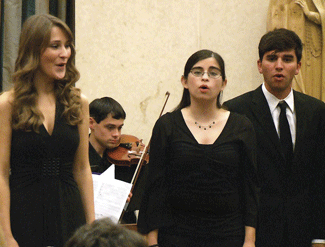
“Trionfo” sent my mind racing in new directions. Returning home, I decided to transcribe the score and translate the Italian for a performance at Georgetown. My plan was to recreate the context that spurred the composition of “Trionfo,” in particular students and faculty in a Jesuit school working together to present this music. The best way to do so seemed to be within the context of an academic course on Baroque music and culture, whose final project would be the presentation of “Trionfo.” Eight students (seven vocalists and a keyboardist) were selected, and I recruited colleagues to help teach the oratorio. We met twice a week (sometimes on weekends, too) and devoted ourselves to studying the 18th century and to rehearsals of “Trionfo.”

The first performance was scheduled for Dec. 3, 2009, not the Assumption but close to the date of another Marian feast, the Immaculate Conception. Each week the students grew more confident as they integrated their academic work with the practical study of “Trionfo.” As the day neared, we shared a measured excitement.

The concert was held at the Jesuit residence on campus, Wolfington Hall, which was filled to capacity. For the performance, an ensemble of professional musicians had been enlisted to accompany the students.

The students were exceptionally well prepared, ready to sing at their very best. More impressive, perhaps, they understood the significance of our recovery of the Ceva oratorio. For the first time since 1705, the voices of Maria, Zelo, Gloria and Amor divino from “Trionfo” were again heard at a Jesuit institution, this time on the banks of the Potomac. At the end, the students received a standing ovation.

What made the project a success was not simply the recovery and performance of the Ceva oratorio. Rather it was the convening of students, faculty and the community at large within a modern-day Jesuit “Collegio” so that we could all better understand the roles and traditions of the Society as it links past to present and looks toward the future.


Anthony R. Deldonna is assistant professor of musicology at Georgetown University in Washington. He is co-editor of The Cam-bridge Companion to Eighteenth-Century Opera (Cambridge, 2009) and co-editor (with Anna Celenza) of the forthcoming book, In Pursuit of a Cultural Mission: The Jesuits and Musical Communities.

 

‘Matteo Ricci volunteers’ fan out across China

By ucanews.com reporter, Shijiazhuang

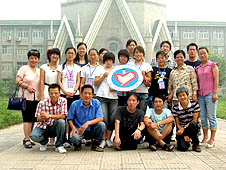
Some young Catholics are heading out to work as “Matteo Ricci Volunteers”


‘Matteo Ricci volunteers' fan out across China thumbnail
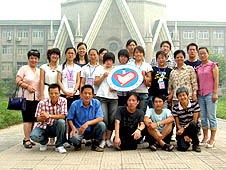
Young Catholics pose for a photo before leaving to serve in Church-run centers

 in various Church-run operations in China, including a leprosy convalescent home, orphanages, schools and HIV/AIDS treatment centers.

The 19 high school and university graduates will work on assignments lasting from six months to two years, starting in August.

The program is organized by Jinde Charities, a Catholic NGO based in Shijiazhuang, Hebei.

It is named in honor of Father Matteo Ricci, a Jesuit missioner and pioneer of the Catholic Church in China, to mark the 400th anniversary of his death.

“Today’s young people rarely get the chance to serve others,” said program coordinator Hu Limin. “We hope that being ‘Matteo Ricci Volunteers’ will help them to grow in maturity.”

The group received nine days of training on topics such as how to serve people with HIV/AIDS and leprosy as well as interpersonal relationships and psychology.

“Jinde also pays for insurance and transport for all the volunteers and we give them some pocket money so they can focus on their service,” said Hu.

“I’m hoping this will train me to handle challenges,” said 22-year-old volunteer Mary Liu. “I want to do something worthwhile while I’m young and make a contribution to the Church.”

The medical graduate will go to Guangxi on Aug. 15 and stay there for a year, working with HIV/AIDS infected children. “I admit I’m afraid,” she said.

“My desire is to seek a new understanding on life,” said another volunteer, 24-year-old Yang Shuai. “I want to develop my faith and personality through this. Meeting friends who cherish the same ideals has already strengthened my confidence and courage.”

Podcast : Is God not crying along with the Creation?

Bookmark and Share


by Father Xavier Joseph S.J.


Father Xavier Joseph S.J.

Father Joseph Xavier is member of the Madurai Province, in the south of India, a region with many Dalits, castless people. He has been coordinator of social ministry at the Jesuit Conference of South Asia in Delhi. During that time he was able to mobilize 1500 very poor people to participate in the World Social Forum in Mumbai (2004). On the request of the Archbishop of Orissa, he has been sent to that region to encourage and motivate the people after the attacks, destruction of property, and killings perpetrated by Hindu extremists. He has been invited to the first meeting of the Jesuit Task force on ecology to see what the Jesuit response could be to the ecological crisis, taking into account the desire of General Congregation 35 to consider the right relationship to creation as a fundamental part of our Jesuit Mission today.


 MP3 file 


 Subscribe
To subscribe to Jesuit Voices, please add the entire URL below to your podcast software:
http://www.sjweb.info/rss/JesuitVoicesFeed.xml

Copy the entire link above (in red) to the “URL” or “feed” field of your podcast software. Enjoy Jesuit Voices 

Keeping an eye on Church media centers

Bookmark and Share


By Julian Das, Kolkata

Periodic reviews of Church media centers are necessary for their efficiency and success, says Jesuit Father George Ponodath. The Indian priest now heads a committee looking to suggest ways to enhance the efficacy of the government-run 24-hour educational channel Vyas.


Keeping an eye on Church media centers thumbnail
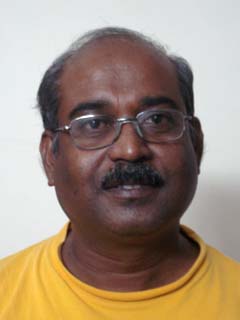
Father George Ponodath

The channel is run by the University Grants Commission (UGC), the top body for higher education in India that functions under the Ministry of Human Resources Development.

The 59-year-old Jesuit also runs the Educational Multi-media Research Center (EMMRC) of St Xavier’s College in Kolkata. EMMRCs in colleges across India contribute programs to Vyas.

The EMMRC in St. Xavier’s has twice been named Best Media Center and won over 50 awards since it started in July 1986. It is also India’s only government-funded media center run by a Christian institution.

Father Ponodath in the following interview speaks about the unique contribution of the Jesuits in media and some of the problems faced by Church-run media centers.

Q. What does the committee’s job involve?

A. We examine the scalability of the programs. It’s not enough to say a media center has 15,000 programs and 500 employees. We have to ask how many people watch the programs. How do we improve our visibility and the scalability of the project? We’re studying the reach, scalability and sustainability of the entire countrywide classroom project. We are also studying ways and means of improving the quality of programs.

Q. How are you going about the review process?

A. We conducted a nationwide survey and used the results to understand the extent of our reach. To our pleasant surprise, we found our programs were watched more in villages than in cities, which is how it should be. Figures suggest we reach about 10 percent of the population in rural areas of Jharkhand, Bihar and West Bengal states. We are still studying the data and it is still too soon to talk about where we go from here.

Q. St. Xavier’s EMMRC has won several awards. Why is that?

A. Consistency in producing programs – both in number and quality. When you look at the size of St Xavier’s College and our media center, ours is a big fish in a small pond.
Other media centers are in large universities, so are small fish in a big pond. Their function, mobility and independence are restricted, whereas I was given ample freedom by the principal.
We are not considered a separate department, but a separate entity. This is a great advantage over other centers. All of them require this kind of independence.

Q. What makes your center special?

A. Content wise we do better than other centers. Most have directors with backgrounds in chemistry or mathematics etc. My field is educational television. Other centers have technicians from other departments, while most of our staff have media technology training. Kolkata has a lot of resources, which makes us better. We also have a young production team, which makes more creative programs.

Q. Are you looking to provide e-content for education?

A. For the past 25 years, we were concerned only with television. Now with the Internet, we should think about e-content. Creating e-content cannot be easily done without television technology. With our experience we have already conducted five e-course sessions very successfully. This was done by combining television and Internet.

Q. As a media expert, how do you view Church media centers?

A. I’m not directly linked with any of the other Church-run media centers, except for a short period when I was involved with the Jesuit Chitrabani media center. However, I did have a lot of Church people asking me for advice or training. I feel that something is basically lacking in Church-run media centers.

If you ask a producer at our center what he is doing, he would say he is making a program for the UGC to be telecast on Vyas. So there is a product, and there is an end-user. In Church-run media centers, there are lots of products, but end-users are not usually defined. If they are, it is not specified how the product reaches users. It is not enough to produce; you have to develop a strategy for marketing the product. That is not happening in a Church-run media center.

Most Church centers lack a professional approach. By that I mean they should have a syllabus, trained staff and hands-on experience.

Q. Do you think periodic reviews will help Church media centers?

A. They’re essential for all institutions. If the Church invests in certain people, or buildings, they should monitor what’s going on. You can’t just say that many things can’t be measured because it is necessary in this case. How many people do we reach? How many people are watching our programs? These are questions which should be asked and answered honestly.

How Do You Get in Your Own Way?

Bookmark and Share


by VINITA

Please read chapter 19 from Days of Deepening Friendship and then enjoy the reflection. (If you are unable to preview the chapter, please click here.)


“Sometimes our resistance toward God and toward our own well-being is not so obvious; it’s hidden within attitudes and personal habits that we form in order to protect ourselves or to help us feel significant. These attitudes and habits distance us from others and from the Divine, and they enable us to keep dealing with life in ways that aren’t working for us” (Days of Deepening Friendship, 148).

The most crucial progress in life is interior. Yes, you need to find your way down the roads of career, family, and community. But equally important is developing the spiritual habit of greeting each day with an open heart. Most of us contain many obstacles to such openness and freedom.

Here are a few questions that might help identify ways in which a person can get in her own way:


– How important is it for me to gain others’ approval? Do I rearrange my activities and my conversations in order to please others, regardless of what is true or what I really think or desire?

– Do I have any addictions? Food, drugs, alcohol, television, Internet use, work, sex-these are some of the obvious ones. Anything I turn to regularly when I am stressed or in pain may be an addiction or developing into one.

– What kind of people do I spend a lot of time with? Do they encourage me to be my best self, or do they pull me in directions that are unhealthy?
– Have I developed strategies and habits that help me avoid doing what I should be doing?


– Is my constant interior dialogue with myself uplifting and positive, or is it critical, self-loathing, and negative?


– Do I find myself in patterns of behavior that are discouraging to me and that I don’t seem to be able to change or break out of?

One good indicator that you’re getting in your own way is what I call primary emotions. Each person has favorite, or habitual, emotions. Some people tend to be angry a lot. It can come out as sarcasm or simple irritation, but for some of us anger is the personal indulgence that holds up our progress. For others, fear colors just about every hour of the day. Often it appears as various minor anxieties, but at the heart of their interior life is fear, and it keeps them stuck.


Some people tend toward ambition or competition, whether or not those modes are truly helpful. Others indulge nostalgia, clinging to the past rather than moving into the present.


Do you get the idea? Try to spend some time each day for a week or two,

asking God to help you identify how you get in your own way.
Blessings on your journey.