Category: Uncategorized

Book Reviews : The Grace of Everyday Saints

Bookmark and Share


by Bill Williams


Catholic bishops have struggled with the impact of declining church attendance, shrinking numbers of priests and the financial costs of settling priest sexual abuse cases. One solution is to close some churches.

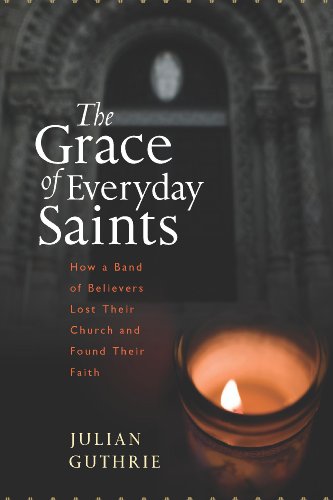
The Grace of Everyday Saints is the riveting story of one such church, St. Brigid, in San Francisco. When Archbishop John Quinn shuttered the church in 1994, shocked parishioners banded together to fight the decision—marking the start of a long-running saga that continues to this day.

The author, Julian Guthrie, is a San Francisco Chronicle journalist who first wrote about the parishioners’ struggle in a series of newspaper articles, which she has now expanded into this compelling book. Guthrie’s narrative brims with drama, tension, surprise and loss. Her descriptions of the faith and lives of the people involved bring the story to life.

Robert Bryan, a nationally known lawyer who represents death row convicts, felt drawn to the parishioners’ cause and became the fiery leader of the Committee to Save St. Brigid. He converted to Catholicism, but eventually became disillusioned with church politics and what he viewed as the arbitrary decision to close the century-old church.

Other activists included Lily Wong, a devoted parishioner from Burma, one of 11 siblings who converted from Buddhism to Catholicism; Joe Dignan, a confused man struggling with his sexual identity before he disclosed to the committee that he was gay; and the Rev. Cyril O’Sullivan, a committed St. Brigid priest who defied the archbishop by actively working with parishioners to save their church. The archbishop soon moved him to another parish to silence him.

To all appearances, Guthrie’s account makes clear, St. Brigid appeared to be a thriving church. There were five Sunday Masses and three daily Masses, celebrated in five languages.

Parishioners met with the archbishop, but he was adamant that the church would not reopen, citing declining Mass attendance and the anticipated high cost of strengthening the church to protect it from earthquakes.

The committee leader Bryan characterized the struggle as one “about good versus evil, about the little guy taking on the powerful.” He even flew to Rome to file an appeal, but no one in the Vatican would meet with him. He accused the archbishop of exercising “morally corrupt leadership.” Tiring of the rancor, the archbishop resigned.

Bryan’s hardball, aggressive leadership eventually split the committee. After a decade at the helm, Bryan gave up his position. Joe Dignan, a younger, less inflammatory leader, succeeded him.

The new archbishop, William Levada, initially seemed more open to compromise, but when the committee offered to raise $1.5 million to upgrade the church, it got no response. Parishioners, however, did succeed in having the church declared a historic landmark so it could not be torn down.

One dramatic subtheme of the story involves the impact of the nationwide sexual abuse scandal involving priests. The San Francisco Archdiocese alone spent $67 million to settle such cases. As Guthrie notes, parishioners believed the archdiocese wanted to sell St. Brigid to raise money to help pay for the settlements, but the archdiocese maintained none of the sale proceeds were used for that purpose.

The St. Brigid story has so many twists and turns that it is hard to summarize them in a short review. At one point the archdiocese agreed to sell St. Brigid to a condominium developer but then backed out of that deal and instead sold the church to the Academy of Art University, which planned to use the building for school and community events.

In 2005 Joe Dignan told the committee, “What I’ve come to learn is that my faith has nothing to do with gold chalices or big cathedrals. It is deep inside.” A year later committee members received the shocking news that Dignan had died suddenly of a heart attack at age 49. The Academy of Art allowed mourners to use the shuttered church for a memorial service.

Despite the loss of their leader and the long odds, the Save St. Brigid committee has vowed to carry on. It continues to meet bi-weekly. One diocesan official has compared the protesters to the Energizer Bunny. They simply never give up. “They believe in something bigger than themselves,” Guthrie writes, “and they are never going to let go—despite the powerful opposition and despite the appearance of getting nowhere.”

Nonfiction books written by reporters often lack depth and a compelling narrative thread, but Guthrie’s account hooks the reader from the start with color, dialogue, telling detail and intrigue, much like good fiction.

Nationwide, the unfortunate economic reality is that some dioceses are close to bankruptcy because of rising costs, declining Mass attendance and multi-million-dollar settlements of sexual abuse cases. Are there options other than closing churches to save money? The author does not say, but perhaps that is a subject for another book.


Bill Williams is a freelance writer in West Hartford, Conn., and a former editorial writer for The Hartford Courant. He is a member of the National Book Critics Circle.


Praying with Refugees: The Spirit of Accompaniment

Bookmark and Share


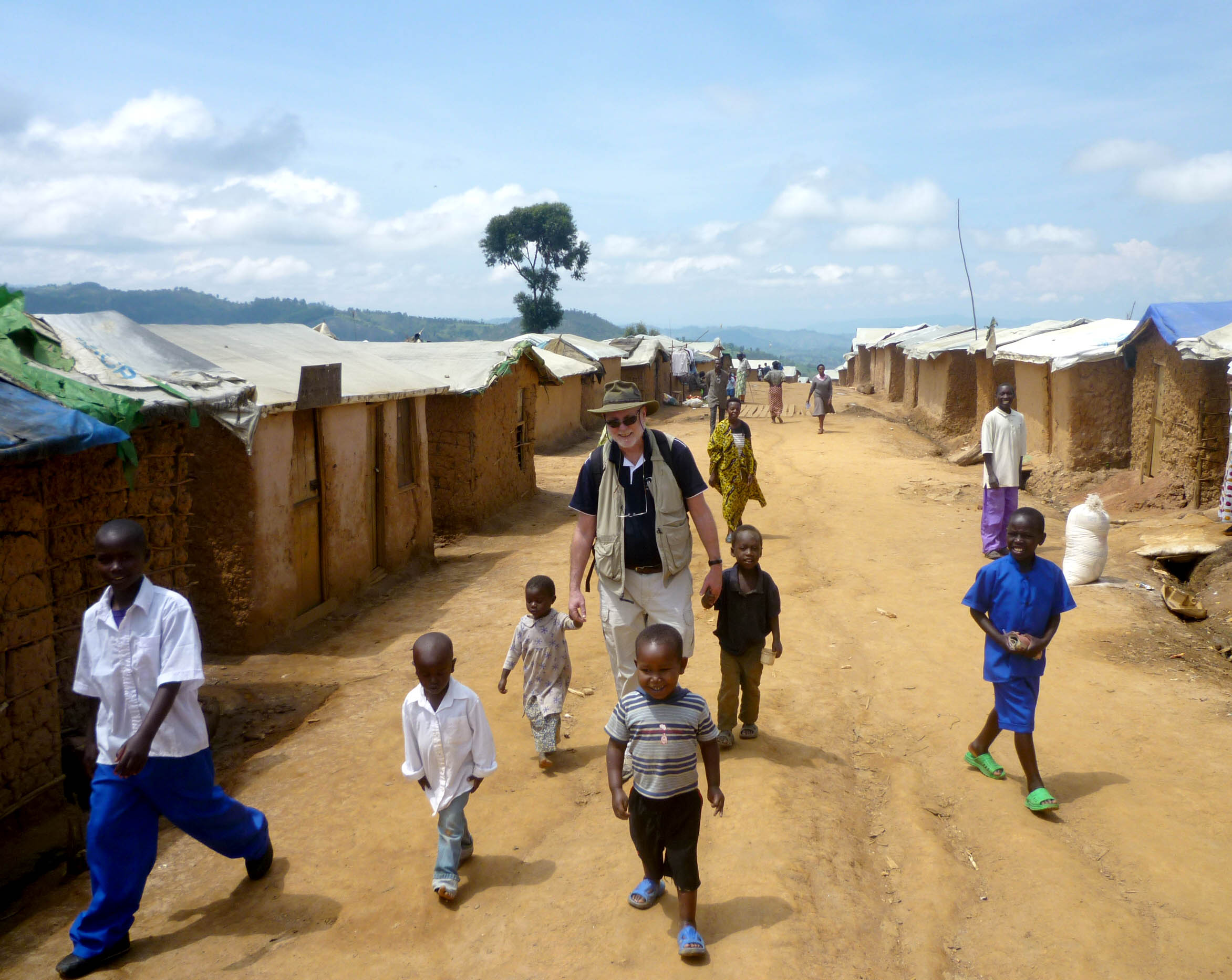
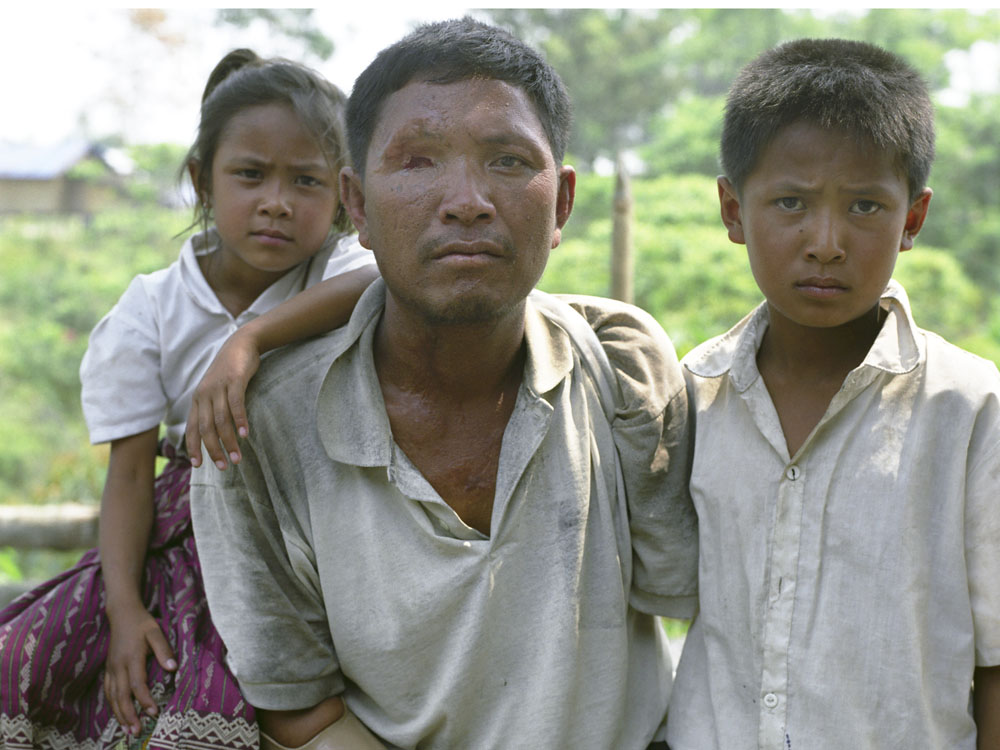
Michael S. Gallagher, S.J. and his young ‘escorts’ tour Kiziba Refugee camp in eastern Rwanda. (Jesuit Refugee Service)

Members of the international office staff of Jesuit Refugee Service, especially those of us who do not go into the field regularly, do not have the “normal” relations with forcibly displaced persons that other JRS staff enjoy.

Whereas most JRS people are in one place serving a specific population – albeit sometimes a very large one – we in the international office are in for a short period of time. Usually we are focusing on internal JRS issues such as training of local volunteers or fostering relations between JRS and the local church and intergovernmental organizations. For me a question arises: how do I accompany the forcibly displaced?

Michael Gallagher, S.J.


Reflections for prayer


Two images come to mind. The first was somewhere in Eastern Chad. The JRS team got into a truck and drove to a designated place where we met up with other non-governmental organizations, each in its vehicle. Two vehicles carrying armed members of the Department Intregré de Securité joined us and took up station, one at the head of the group the other as the last vehicle and we drove to the refugee camp. We were “escorted.”
The second image comes for Kiziba Refugee camp in eastern Rwanda. I was walking through the camp to see JRS works with the project director. A very young boy, between three and four years old came up and grabbed a finger on my left hand and began walking with me. Soon a small girl of about the same age came up and took hold of a finger on my right hand. We walked all around the camp looking at JRS schools, and other works. I was accompanied.


JRS’ mission is to accompany, serve and plead the cause of forcibly displaced persons. Accompaniment, I have learned, is by its very nature reciprocal. It cannot be done alone and it cannot be done in a unilateral fashion.

The two children who walked with me were undoubtedly born in Kiziba camp. They had never been in the Democratic Republic of the Congo which their parents fled. Kiziba was home to them. They did not feel displaced there. The two tykes accompanied me through the camp and I accompanied them. The three of us were not engaged in “doing for” but in “being with.” We entrusted each other with our time and presence.

In their wordless innocence, by the simple gesture of holding the hand of a person never seen before, these two natives of the camp became the embodiment of Jesus’ words in Mt. 25:35: “I was… a stranger and you welcomed me.”

Theme Retreat with Margaret Silf

活动地点: 香港思维静院 Xavier House
主办单位: 香港依纳爵灵修中心 Ignatian Retreat Center
活动介绍: Bookmark and Share


Xavier House香港思维静院


Living God’s Dream During this retreat we will explore some basic Ignatian themes, but without assuming any prior knowledge, and without using specifically Ignatian language. The retreat will include work on desire, discernment and detachment, and will loosely follow the dynamic of the Exercises. (in English)

Leader:Margaret Silf

Services Fee:HK$2200

Application for Activities


Download our Calendar of Events for 2012


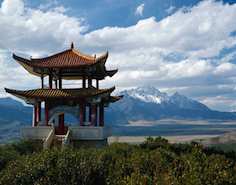
Address:27 Peak Road West, Cheung Chau Island, Hong Kong

Phone:(852) 2981-0342

Fax:(852) 2981-0749 

eMail[email protected]


Websitehttp://xavier.ignatian.net

Telephone Enquiry Time:9:15am – 12:15pm, 2:00 pm – 5:00 pm 
(Closed on Sat afternoons, Sundays and Public Holidays)

Transport:

Please take the Cheung Chau Ferry at Central Pier 5 to get to Xavier House.

Visitors arriving from the Mainland at corss-boundary check points, by plane or from Macau may get to Central Pier by MTR, Airport Railway, bus, airport coach, mini bus, Hong Kong-Macau Ferry or Star Ferry (on foot). ﹕

– Please click here to view  Map of Central Pier with feeder traffic details.

– Please click here to view  Ferry Schedule & Charges.

– Please click here to view  Map of Cheung Chau showing route from pier to Xavier House.

活动日期: 2012-02-05 ~ 2012-02-11

Wisdom Story 32

Bookmark and Share


by Paul Brian Campbell, SJ 

The Master always frowned on anything that seemed sensational. “The divine,” he claimed, “is only found in the ordinary.”


To a disciple who was attempting forms of asceticism that bordered on the bizarre the Master was heard to say, “Holiness is a mysterious thing: The greater it is, the less it is noticed.”

source from: Tony de Mello, S.J. 


Jesuits get new Regional Superior

Bookmark and Share


Fr Bonifice Tigga,S.J.

An Indian priest was installed as the new Jesuit Regional Superior on Christmas Day in a small ceremony at the Jesuit House in Kathmandu.

Father Bonifice Tigga’s installation comes only days after he learned of his new appointment which was announced last week.

It happened very quickly he said. “I was told of my appointment on December 22 and I had to take up my duties yesterday.”

Father Tigga replaces Father Lawrence Maniyar who has completed two three-year terms in the office.

Fr Tigga was born in 1966 in a small farming village in Chhattisgarh, in central India and went to Nepal in 1988 after completing his bachelor’s degree in Bhopal.

As a boy he said he and his nine brothers – five of whom also became priests – used to help his father in the fields before and after attending a mission school run by diocesan fathers.

“On my very first day at school a teacher asked me what I wanted to be when I grew up and I said a ‘Sister’ and everybody laughed. I said that because nuns used to bring sweets to my home and I wanted to become like them,” Fr Tigga laughed.

Since being ordained a Jesuit priest in 1999 he has served as a principle in three large St Xavier schools in the country the most recent being St Xavier’s Godavari school in Kathmandu.

In 2007 he also completed his masters degree at Loyola University in Chicago.

Regional Jesuit Superiors are directly appointed by Jesuit Generals in Rome after a secret ballot by members of the Society of Jesus.

There are currently 67 priests in Nepal and 35 are Jesuits. The congregation first arrived in the country 60 years ago just as Nepal opened its doors to foreigners.


The Dancing Jesuit

Bookmark and Share


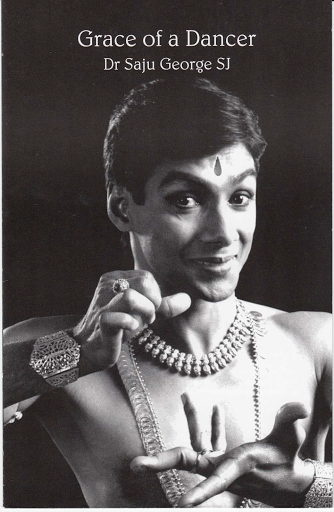
Saju George performances at the 2nd Ecumenical Kirchentag in Munich.

The bharatanatyam is an elegant form of dance with a strong visual impact. Originating in the temples in Tamil Nadu, a state in southern India, literally thousands of years ago, this dance style is the oldest of the main forms of classical Indian dance. The dancers, through their choreographies, display gestures and movements representative of mythology, philosophy, epics, ancient stories, contemporary themes and other experiences of life.

Originally from Calcutta, Saju George Moolamthuruthil, S.J., better known as the Jesuit Dancer, is a dynamic and unique artist with a rare vision and passion for the art and culture of India and quite simply a brilliant dancer of the bharatanatyam style.

Over the 15 or so years he has been performing, Saju George, S.J. has shown a constant concern to conjugate his dancing with his Catholic faith and his ordainment and considers art as an effective means of spiritual integration and social transformation. In recent years, Saju has given over 200 performances in India and worldwide and adopting both Hindu and Christian themes in his incorporation of images whether of Radha-Krishna and Shiva-Parvati or of the crucifixion and resurrection of Christ.

According to the Dancing Jesuit, this art involves prayer and adoration, self-awareness and divine realization, aesthetic delight and cosmic integration, social service, the promotion of inter-religious peace and harmony, ecumenism as well as other dimensions. He believes strongly in the power of art, and in a special fashion, that of dance and of music.

Saju George is also director of various centers of art, culture and social development, including: Kalahrdava, the Art Peace Foundation and Shanti Nir, in Calcutta.


Asia Pacific: our year at JRS

Bookmark and Share


As 2011 comes to a close, instead of offering specific project updates, below is an update on our work regionally. New projects beginning, others closing down and some are changing direction. JRS will look different in 2012.

Each of our seven active countries have seen growth in this past year, but so has the region in general. Regional advocacy for landmines and detention issues have been a focus of JRS this past year.

Advocates from JRS Cambodia and Indonesia attended the Convention on Cluster Munitions in Beirut, Lebanon to discuss the difficulties surrounding ratifying the treaty in the Asia Pacific and collaborate with other advocates on further action.

JRS staff met in Jogjakarta, Indonesia to discuss their work in places of detention. JRS works in seven immigration detention centres in the region. Staff from Australia, Indonesia and Thailand came together to share their experiences, and to explore ways to promote alternatives to detention. JRS staff explored ways to informally monitor conditions in detention, how to manage stress and devised action plans for promoting alternatives to detention throughout the region.

Thailand

In a change in JRS Thailand IDC policy, JRS facilitated the bail out of 16 detainees, by acting as guarantor for detainees who are able to pay their own bail and have applied to the IDC superintendent. Later, 39 more were released on bail with JRS support.

The Thailand task force on alternatives to detention, of which JRS is a member, finished its proposal which has been submitted to the Ministry of Foreign Affairs and the Immigration Commissioner in both English and Thai on 30 September. It proposes to release vulnerable asylum seekers and refugees into the community with reporting requirements and support from NGOs.


Cambodia

Phnom Penh will host the Eleventh Meeting of States Parties (11 MSP) this November 26th – December 2nd. This will mark the eleventh meeting on the convention on the prohibition of the use, stockpiling, production and transfer of anti-personnel mines and on their destruction.

The Cambodian government and non-governmental organisations focusing on landmines have already started hosting workshops, preparing exhibits and planning events. In Phnom Penh the International Committee of the Red Cross (ICRC) hosted a workshop looking at the regional impact of land mines.

The International Committee to Ban Landmines (ICBL) speakers gave facts about casualties in the region, urging governments to join the treaty and attend the 11MSP. In Siem Reap the Cambodian Mine Action Centre (CMAC) hosted a land release workshop in October. Representatives of demining agencies from around the world met to discuss survey and clearance techniques. Read more on this meeting and its outcomes at www.jrsap.org.

Philippines

The Philippines team has been working over the past year with internally displaced women with children who are extremely vulnerable. They are assisting women with skills training and supplies for vegetable gardens, and animal-raising so they can find work and sustain their families.

JRS is also advocating for women’s issues to be raised in public meetings and for women’s voices to be heard by decision makers. They have established leadership teams in the IDP centres. Women are often at the forefront of discussing food security, education and health issues of IDP children. Those who chose to remain in host communities and evacuation centres, many of them women and children, still find return unsafe.

Indonesia

After three years, JRS has closed its project in Aceh. The project, initially working with those affected by the tsunami and violent conflict worked in education, disaster preparation and conflict management. After their Strategic Planning on August 6-9 attended by the regional office, JRS IDN has decided to move on from Aceh and continue their engagement with IDC in Medan and asylum seekers and refugees in Cisaura. The team is also revisiting and restarting their involvement with displaced people in Ambon.

With their work accompanying asylum seekers and refugees in Medan’s Immigration Detention Centre, the team is exploring working in a second detention centre in Pasuruan, Surabaya and the refugees living in a community accommodation in Sewon, Bantul, Yogyakarta.

Timor Leste

JRS works in 22 sub-villages in four villages. About 4,200 returned internally-displaced people have returned to these villages that registered the highest incidence of violence and conflict. The focus of our efforts is on strengthening sub-village governance and empowering youth and women in the community.

By June, 7 45 women participated in skills training. In Hera village, two groups of households have each established vegetable farms with assistance from JRS. Other activities include training for local officials and communities on peace, human rights, and reconciliation, gender-based violence, inter-village sports and music for peace involving young people. JRS have trained village officials in proposal writing. In June, one village council proposal for youth sports for peace was approved by the government; three other proposals are awaiting results.

Australia

As we reach the end of 2011, JRS Australia is now very involved in looking to provide services to single adult men who will be in community detention until they are found to be suitable for a Bridging Visa. These men are deemed to be very vulnerable and many have a background of torture and trauma. We expect to have the first men out under this system by Christmas, a result of the Government announcement that Australia will now undertake onshore processing only.

JRS continues also to house and provide case work to unaccompanied minors in community detention. It also provides accommodation, financial support, and case work for up to 60 adult asylum seekers in the community as part of its Shelter Project. In addition, JRS continues to provide pastoral care to upwards of 2,000 detainees in the Christmas Island, Villawood, Curtin, and Inverbrackie immigration detention centres.

MRI International Workshop 2012

Bookmark and Share


Humankind and Nature: 
An Endangered System of Interdependence 
in Today’s Globalising World


Macau, 7th – 8th November, 2012

Since the 1960s, concepts like “conservation” and “environment friendly” have become part of our language and to a lesser degree of our lifestyle. When it comes to facing these issues, religions are par excellence positioned to teach and deal with the relationship between man and his environment. Eastern thought has many references to this, notably tian ren he yi (unity of humankind and nature), and there is also an equally reflective teaching in Western religion (Christianity) expressed in the first divine invitation to man: “to fill the earth and subdue it” (Gen. 1:1-3:23). Where are we now with the response of major religions, such as Christianity, Buddhism, and Taoism, to this particular call?

Today’s relationship between man and nature is defined by economic development. With the great impact on other forms of life and also human suffering and poverty, however, this “development” could be seen as a myth. Billions of people experience growing vulnerability to food and water shortages, wars and environmental disasters. Much of the challenge is not only to science and technology but also to the neo-liberalist economic policy. Again, where has religion helped to deepen this human engagement with resource development and the need for balance? How does religion contribute to bringing about a greater human consciousness of the value of the gift of life? Where is the celebration of creation?

The economic development that guides science and technology has greatly contributed to today’s crisis in the relationship of humans to nature. Conservation and actions to protect the environment have been aimed to remedy this problem, but this relates very much to an urban middle class re-discovery of this relationship and easily blames or excludes the rural poor as part of the problem. Ecology is an ‘-ology’, a study, science or ideal that is not always inclusive of all of humanity, especially of people at the margins. We as humanity are not one, nor are we one with that into which we were created.

Nowadays the elites in our societies dominate not only creation but also humanity, and consequently our participation in globalisation is unequal. Our humanity is no longer what includes us in a common fellowship as dogs in condominiums often eat better than children in the streets of many of our global cities. What has development done to humanity? Does it always have to be advanced technologies that give us a comfortable lifestyle? We are still working here in the realm of comfort zones, and there is no place in any of this for religion that speaks of limits, even cutbacks, and that accepts and enters into human suffering.

Man does not merely influence nature in a destructive way; it is as if all men, women, and children are in a battle to triumph over the realities of nature. There is a struggle for power in the dominant human self-image, while there is a lack of self-reflection as part of nature, and of recognition of human needs, especially in terms of suffering and limits of moral values.

In this particular context we can consider the role of religions and seek their valuable contributions. Since religion’s role is not simply morality but especially in Christianity is to show the face of God, it is out of this relation we then seek to live towards the ‘good’, especially in relation to our neighbour, creation and God. Religious believers may have failed severely in communicating this relationship in the twenty-first century. So we might ask:


– How relevant is religion to the challenges and changes in a sustainable world as a result of market growth and financial crisis?

– How can modern religions adapt, contribute and be part of social maturation in response to the times and context of a vulnerable heaven and earth?

– How can religions respond to the call to meet basic human needs and to have a more secure and sustainable relationship with the natural resources and diversity of life?


Main Themes


1. Reflections on Technology
– Where is the space for self-reflection and recognition of human needs when bio-sciences are progressing extremely fast?


2. Reflections on Humankind
– What has global development done to humanity?


3. Reflections on the Conservation Movement
– How could we ‘balance’ development and conservation and still meet basic needs of the many people of humanity? Can we achieve a balance that is good for all?


4. Reflections on Religions and Ecology
– How do these traditions relate to helping people live towards the ‘good’ (at least to meet basic human needs)?


Date
7th – 8th November, 2012


Workshop Venue
Auditorium, Team Building, 
Institute for Tourism Studies, Macau


Languages
English, Chinese (Mandarin).
Simultaneous Interpretation provided


Organising Institution
澳 门 利 氏 学 社 
INSTITUTO RICCI de MACAU
MACAU RICCI INSTITUTE
Macau SAR, China


Contact Us


Wisdom Story 31

Bookmark and Share


by Paul Brian Campbell, SJ 

Ryokan, a Zen master, lived the simplest kind of life in a small, remote hut. One night a thief entered the hut, only to discover there was nothing in it to steal. Ryokan returned and caught him in the act.


“You may have come a long way to visit me,” he told the disillusioned prowler, “and you should not return empty-handed. Please take my clothes as a gift.”

The thief was bewildered. But he took his clothes and crept back into the night.

Ryokan sat naked, watching the moon. “Poor fellow,” he mused. “I wish I could have given him this beautiful moon.”


Gratitude Exercises

Bookmark and Share


by Jim Manney


Here are some exercises to heighten your sense of gratitude. They were written by my friend Vinita Wright and published in her book Days of Deepening Friendship.

Create a physical space in your life, in which you can focus on and enjoy creation. It could be a single potted plant or window box, a bird feeder, a window that gives a great view of the evening or morning sky. Try to involve all of your senses as you receive and appreciate what God has given you.

Go through a day-or through a single hour-and discipline yourself to attend to each moment as it comes and to note what is praiseworthy in that moment. Try to build this habit of dwelling completely in the moment at hand rather than in the past or future.

Identify some task you have accomplished and come up with a little celebration of it. This can be private or with friends.

Write a poem about one of your significant relationships. Make it a poem of wonder and praise.

Choose a natural process to enter more intentionally. You might try eating much more slowly and mindfully, thoroughly tasting the food. Or you could notice, over the next few nights, what your process is like for falling asleep. Allow yourself to enjoy the natural tension and release of ordinary processes in your life.