

Author: 爵醒
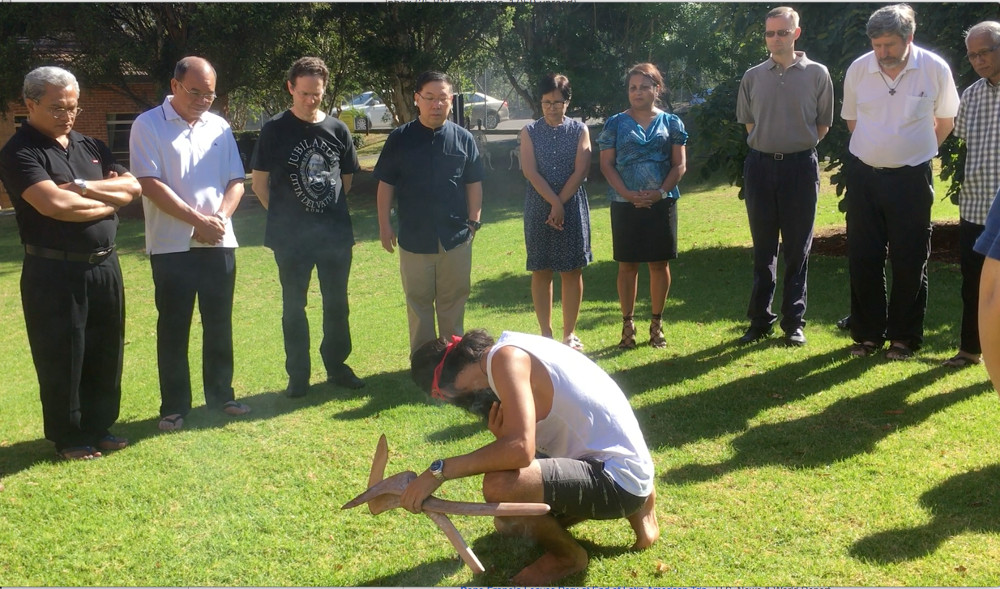

Discernment. Collaboration. Mission. These three words were used frequently during last week’s Major Superiors Assembly of the Jesuit Conference of Asia Pacific. From beginning to end, the meeting was a period of grace, a time for the major superiors to step aside from their province concerns and come together to discern how best to move forward as one Jesuit Conference of provinces, regions and missions in the Asia Pacific region.

From this prayerful beginning, they covered considerable ground over the rest of the week. They spent time talking about how they would discern the universal apostolic preferences in their provinces and as a Jesuit Conference, as requested by Fr General Arturo Sosa SJ in recent documents. They reviewed a self-assessment of JCAP’s Way of Proceeding as asked in General Congregation 36, Decree 2. The underlying aim of this study is to ensure that governance in the Society of Jesus is constantly renewed to “better serve and support the Society’s mission, the Missio Dei”.
“The self-assessment showed us our giftedness, but we also realised our weaknesses and the invitations of the Spirit to move forward,” said Fr Tony Moreno SJ, who took over as President of the Jesuit Conference of Asia Pacific in November 2017. “We will continue to assess ourselves as a conference as we discern the way forward for JCAP.”

Fr Oh In-don SJ shared a proposal to Father General for the development of a structure for collaboration in the universal Society of Jesus. He was JCAP’s representative at the Task Force for Collaboration meeting in Rome in October 2017. Fr Oh stressed that the proposal is about collaboration with non-Jesuits and that the need for Jesuits to collaborate is not because of declining numbers. It is about the Missio Dei.
They received a briefing on China and agreed on initial first steps towards developing a way of proceeding. They received updates on the apostolic plan for the East Timor region and the consortium of major superiors supporting it. They spoke too about the juridical status of Myanmar and agreed that more discussion is needed of the options presented.
The various JCAP apostolic priorities were also reviewed. They considered how to proceed after Fr Greg Soetomo SJ presented the Islam policy paper. They reviewed the formation report and agreed that the Leadership Development Programme would have a second run. They received an update on JCAP communication including the new website and newsletter and approved the proposal to convene a province communicators meeting this year.
The update on the two newest JCAP priorities was especially appreciated. It was good to see that the Ignatian Spirituality Network set up last year now has an expanded core team and three priority initiatives, one of which is to compose a spiritual profile of Jesuit ministries, akin to “What Makes a Jesuit School Jesuit?” They also watched a video on the recently concluded Magis Asia Pacific gathering in Cambodia. Magis Asia Pacific is the main programme of JCAP’s Youth Ministry. The major superiors asked that the core team discuss what else the ministry can do, so that it is not only based on one programme.
“The JCAP apostolic plan (2014 – 2019) gives preferential attention to migration, reconciliation with creation and youth. We continue to pursue movements in these areas and, in the light of the 36th General Congregation, we want to mainstream reconciliation and justice into our life and mission,” said Fr Moreno.

They also received updates on the East Asian Pastoral Institute in the Philippines and the St Joseph Jesuit Scholasticate in Vietnam, both of which are raising funds for renovations.
Later in the week, Australian Provincial Fr Brian McCoy SJ and his consultors provided an insight into the workings and challenges of the Australian Province.
The meeting concluded on January 26, which is Australia Day. That night all the participants in the assembly gathered at St Aloysius College – along with some Jesuits and lay partners from across the Australian Province – to celebrate a liturgy led by Fr Moreno, followed by dinner on the rooftop terrace with expansive views of the Sydney harbour. The harbour, lights and fireworks provided an impressive backdrop to conclude a very full week of discussion.
“There was some twenty-three of us at Peter Canisius House for the week, representing the rich texture of the different Provinces of JCAP,” said Fr McCoy. “These are valuable meetings. They remind us of our wider Jesuit mission and the friendships and partnerships we wish to build and strengthen across our Conference and the wider Jesuit world.”
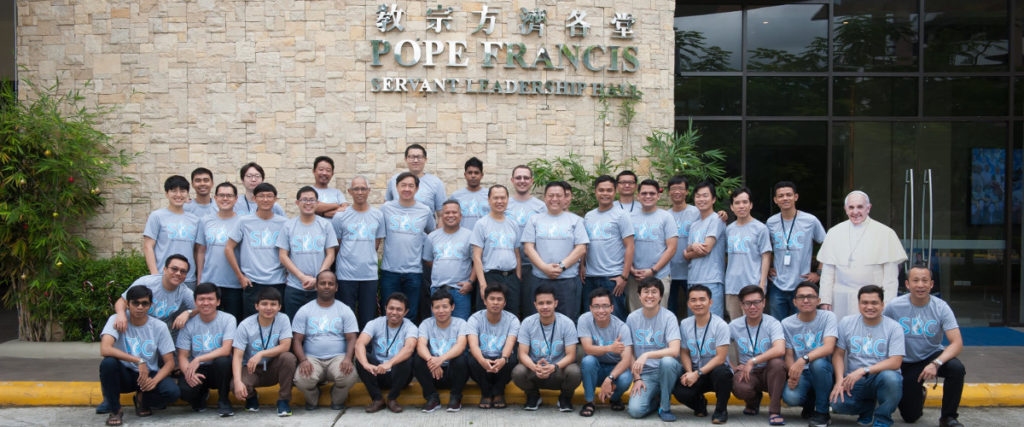
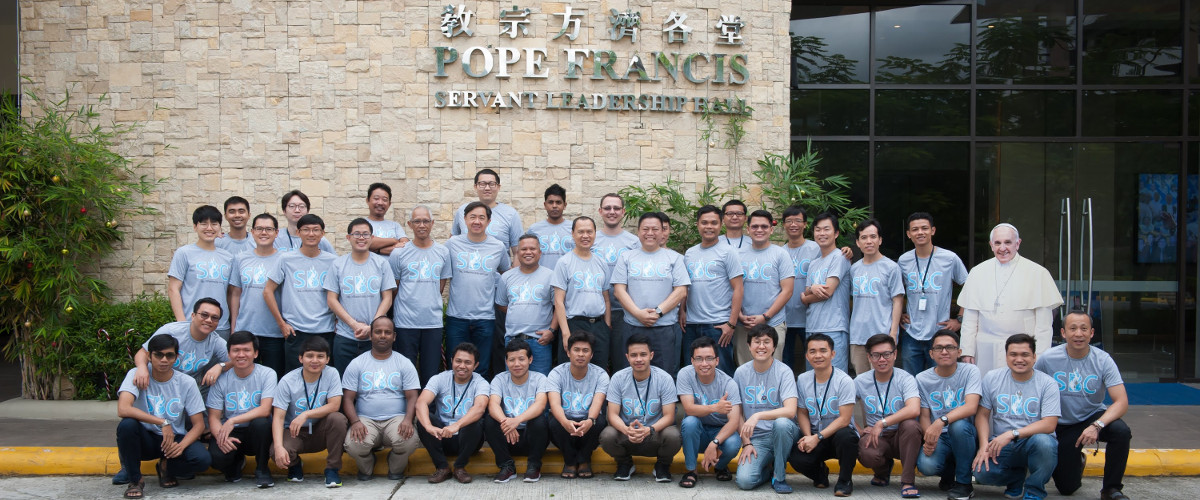
“How can we innovate our education ministry to respond to the 21st century, while remaining faithful to our tradition?” This was the big question that 33 scholastics and brothers in formation from 11 countries in Asia Pacific tried to address during the Scholastics and Brothers Circle workshop held in Cebu, Philippines from December 18 to 28.
 The participants were taken through the history and tradition of Jesuit education, including the 4 Cs (Competence, Conscience, Compassion and Commitment), and even tried using Ignatian Pedagogy as a design process. Technology was embedded in the workshop to give them an experience of learning in a technology-integrated environment.
JCAP President Fr Antonio Moreno SJ was also with them for part of the workshop. He told them: “In the last General Congregation, Pope Francis asked us to discern. Therefore we cannot rest content in the way we run our schools and the way we do things in the classroom and even in management. There is this push to re-imagine, to be more creative in the way we run our institutions, our schools. We hope this will redound to the benefit of our future Jesuits.”
Fr Moreno spent an evening dialoguing with the participants enabling the young Jesuits in formation to see beyond their own regions and provinces. He also participated in a panel discussion along with JCAP Formation Delegate Fr Riyo Mursanto SJ and Sacred Heart School-Ateneo de Cebu President Fr Manny Uy SJ. Fr Joseph Haw SJ, President of Ateneo de Iloilo-Sta Maria Catholic School also joined the discussion via Skype. The accumulated wisdom from their collective years of experience both enlightened and inspired the participants.
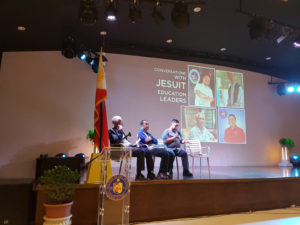 “It’s been a wonderful experience,” shared Scholastic Joshua Choong SJ from Australia. “I hope that in the future I will be able to animate teachers and students in the Ignatian pedagogy.”
Scholastic Sarayuth Konsupap SJ from Thailand shared the same aspiration. “I learnt many things about Jesuit education and I hope that in the future I could apply them to the new Jesuit school in Thailand.”
The workshop was also an opportunity for the participants to meet and make friends with Jesuits from the different provinces and regions.
Fr Mursanto pointed out that one of the six dynamics in JCAP’s “Profile of a Formed Jesuit” is conversation.
“Conversation is really in practice. They meet from different cultures, different countries and they share with each other. With that they are able to build a solid foundation to be able to collaborate in the future,” he said.
Scholastic Bernard Lodewicus SJ from South Africa who is doing his regency in Taiwan affirmed this, saying that it was a wonderful opportunity to get to know the scholastics from the different regions in Asia Pacific. “I think we’ve all had a wonderful time,” he said. “What we’ve got here we will go and implement in our various ministries not just in education.”
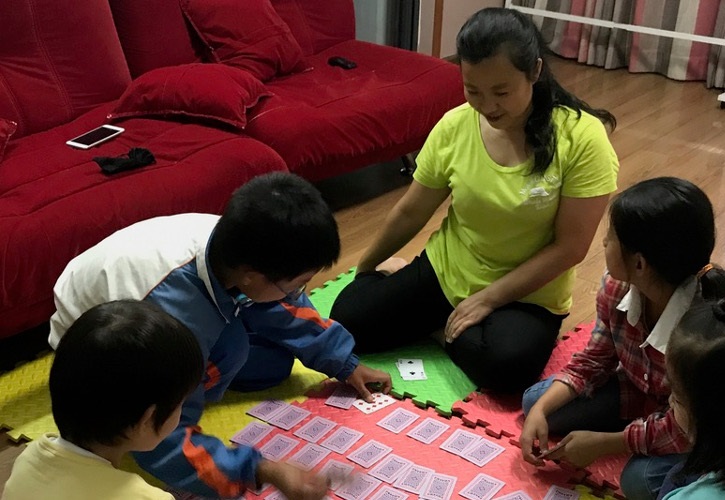
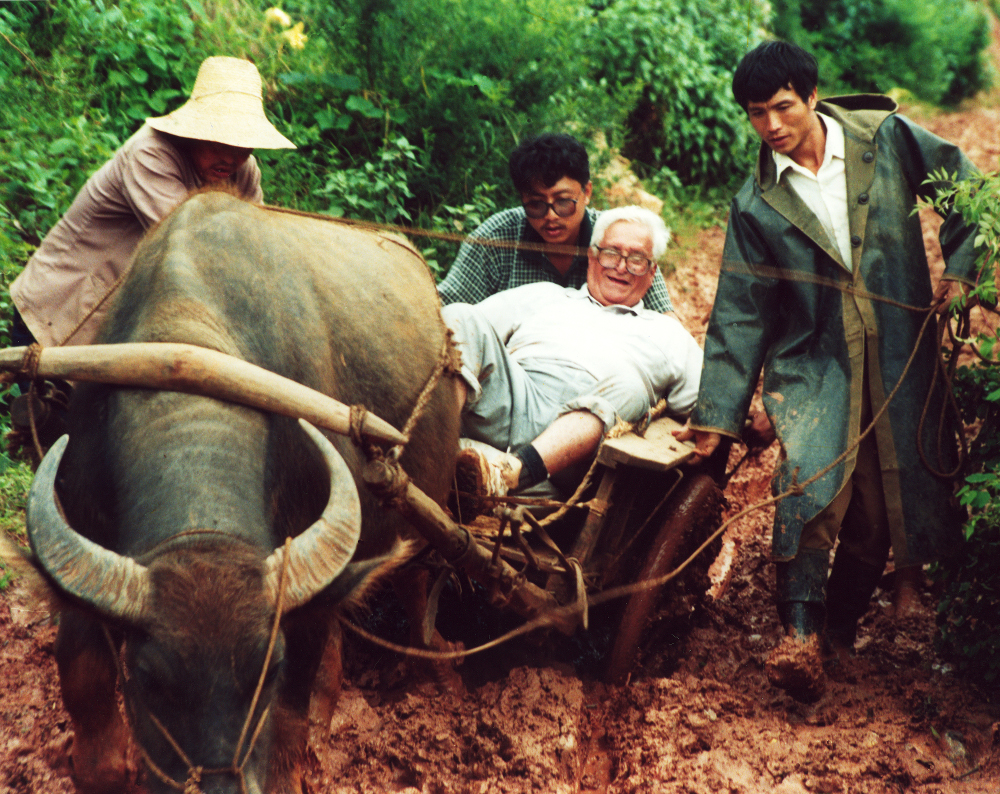
Thirty years ago, a 74-year-old Spanish Jesuit priest had his first encounter with a community of persons affected by leprosy in China. Moved by the terrible situation of the leprosy-affected persons in Taikam Island in Guangdong Province, Fr Luis Ruiz SJ decided to work with local governments and church communities to change the conditions of leprosy patients in China. That was the beginning of Ricci Social Services, a social service network created to bring relief, dignity and social justice to the poor and marginalised people in mainland China and Macau.
Since then, Ricci Social Services has journeyed far and wide in China, going to the remotest places to be with and serve persons and communities in need of solidarity, healing, friendship and support.
“The ones who opened the door to us were not business persons, the powerful or the learned, but persons affected by leprosy and those living with HIV/AIDS,” shared Ricci Social Services Director Fr Fernando Azpiroz SJ. “It was because of them that more than 50 local governments from more than10 provinces invited Ricci Social Services to go to their places, to serve them in their needs.”
Today, Ricci Social Services collaborates in more than 40 programmes in 10 provinces that serve around 5,000 people, including adults and children affected by leprosy or living with HIV/AIDS, women at risk (such as sex workers), or people dying without support in the hospitals. These programmes are organised as a network of “communities of solidarity”.
“These are communities where people learn how to overcome discrimination; communities where physical, psychological and social wounds are healed, where dignity is affirmed, and where communion is restored and re-created among individuals, their communities and their relationships with their natural environments,” said Fr Azpiroz.
In these communities, more than 80 religious sisters and volunteers live with patients or people who suffer from discrimination, serving them in their needs, joining them in their daily struggles and learning from them.
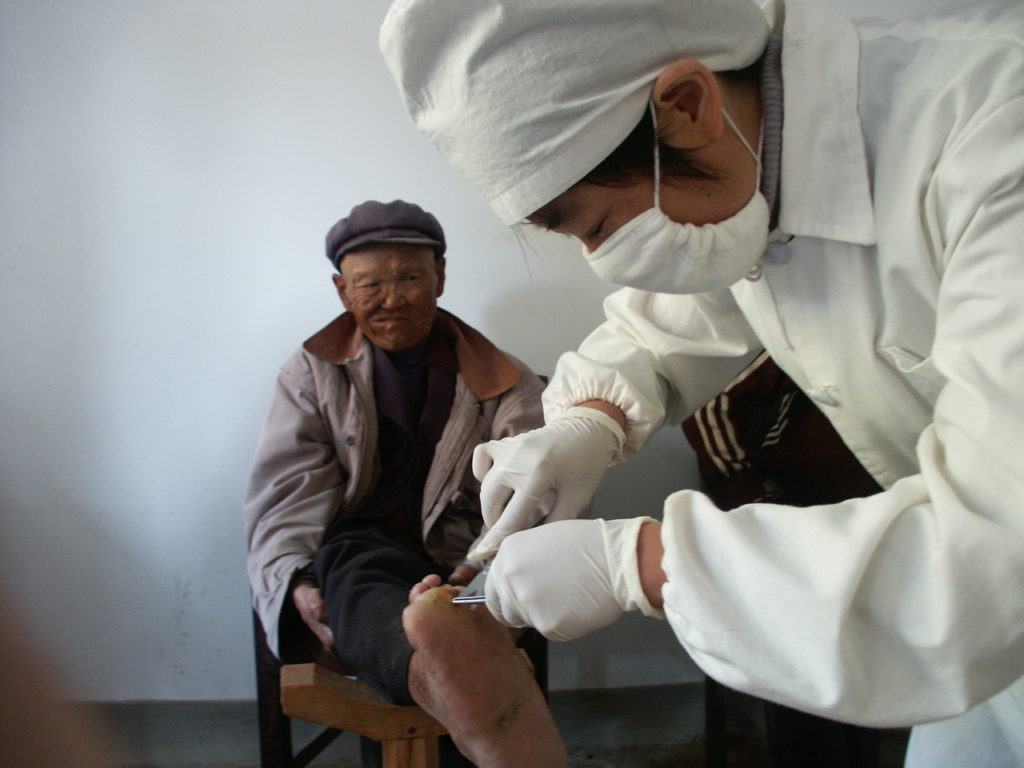
“This has been a journey to our personal limits as well, far away from our comfort zones,” said Fr Azpiroz, sharing that in many places, they suffered from lack of understanding and discrimination from the local people; lack of water, electricity or roads; tests, sicknesses, and even death. In 2008, one of the religious sisters, Sister Xue, died in an accident while serving her leprosy-affected patients.
“But our reward has been far bigger than all the efforts we have made during these 30 years, a reward that only those who love can understand because love transforms everybody and everything,” said Fr Azpiroz.
Fr Azpiroz explains that love enables receivers to become givers, and givers to become receivers. This is why three decades later, the same impulse to love has brought them to more new frontiers, serving women at risk, children living with HIV/AIDS, poor and dying patients in public hospitals, and helping almost 25 different local social service communities to build their capacities to serve more and better. This same love has also pushed them to do more in terms of ecological justice in China. “We would like to help people to change their ways of living, consuming and producing, in order to do justice to nature and our future generations,” he said.
But love is also and always an invitation for others to collaborate. “We are not doing all these alone. This is the fruit of working together with thousands of benefactors, hundreds of sisters, volunteers and staff workers, hundreds of government officials, partners. We are the beneficiaries of all their love and support,” said Fr Azpiroz.
This has been the daily experience of Ricci Social Services throughout its 30-year journey in China; the experience of a love that is incarnated and shared, and that has transformed and continues to transform thousands of people. The mystery of a love that took flesh to become Emmanuel, God with us.
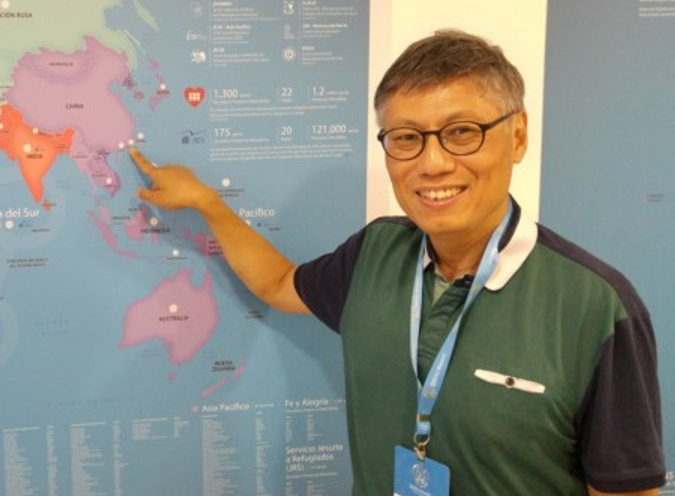

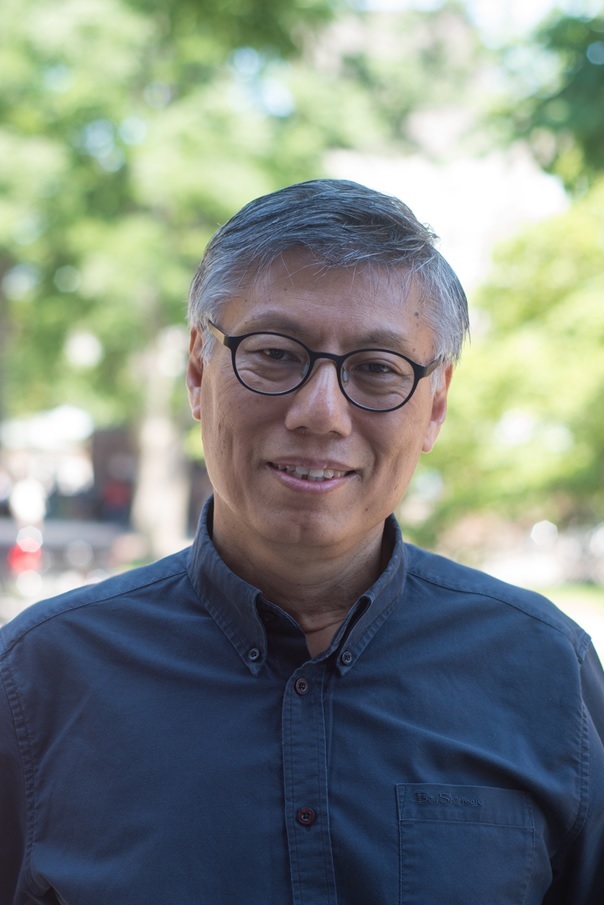
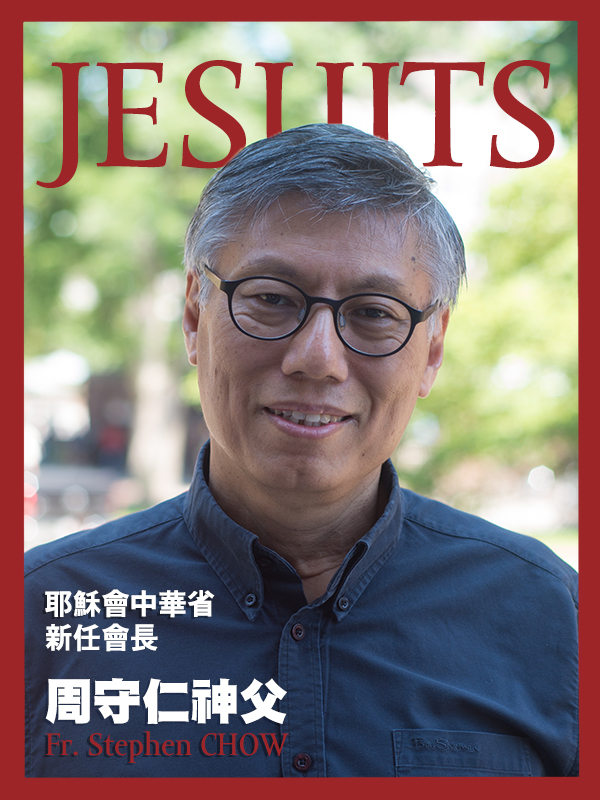
Fr Stephen Sau-yan Chow SJ will become Provincial of the Chinese Jesuit Province on January 1, 2018. He succeeds Fr John Lee Hua SJ who has served as Provincial for the last six years.
Fr Chow hails from Hong Kong and is a seasoned educator. Before entering the Society of Jesus in 1984 in Dublin, Ireland, Fr Chow already had a Bachelor of Arts in Psychology/Philosophy and a Master of Arts in Educational Psychology (Counselling) from the University of Minnesota in the United States.
After his ordination in 1994, he obtained a Master of Science degree in Organisational Development at Loyola University, Chicago, USA, and worked at Wah Yan College Kowloon and Hong Kong for five years, from 1995 to 2000, as minister, ethics teacher, vocations director and chaplain. At Wah Yan College Hong Kong and Kowloon, he also served as school manager (trustee).
In 2000, he went to Harvard University’s Graduate School of Education to study Human Development and Psychology, and completed his Doctorate in Education in 2006.
Prior to his appointment as Provincial, Fr Chow served as Formator of scholastics in Hong Kong. Fr Chow will continue as Supervisor of Wah Yan College Hong Kong and Kowloon, positions he has held since 2006 and 2007 respectively, and as Chairman of the Chinese Province’s Education Commission.
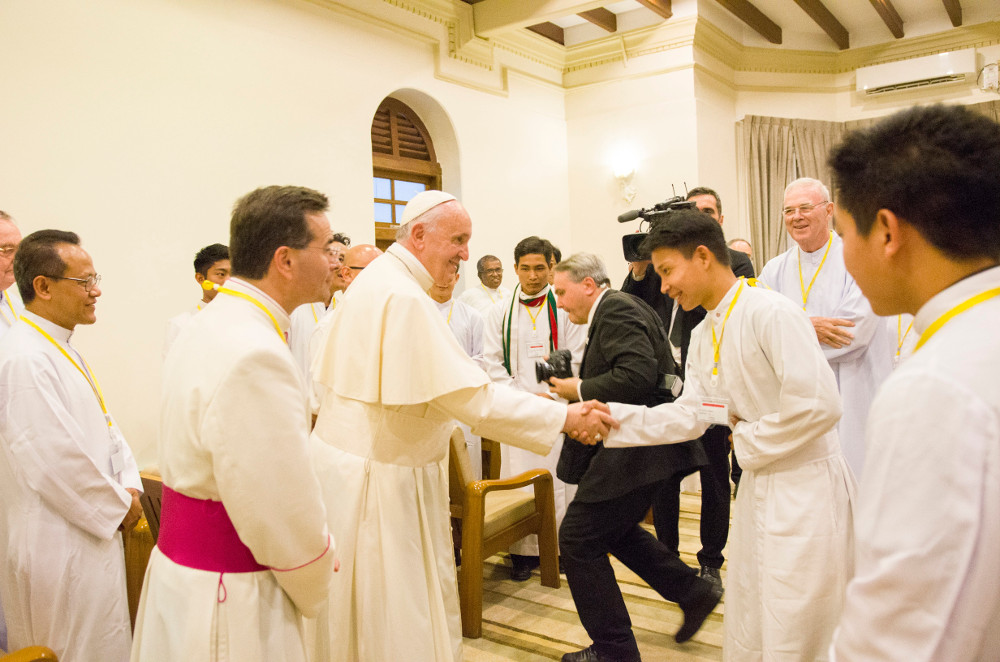
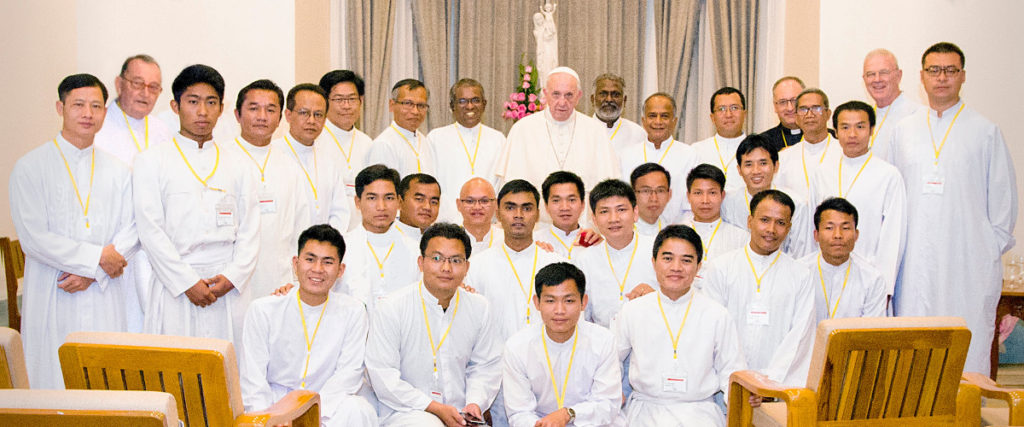
The private conversation with Pope Francis gave great joy to his Jesuit brothers in Myanmar. Almost all the 32 Jesuits and novices who live in Myanmar were able to be with him at the house of Cardinal Charles Bo where he was staying. Continue reading “Be deeply grounded, rooted in the love of God, says Pope Francis to Jesuits in Myanmar”
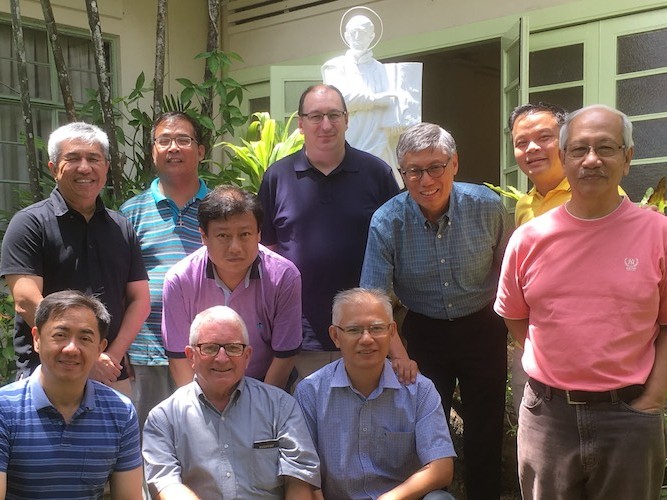
 What is the context of Jesuit schools in Asia Pacific? How are they addressing the challenges in their local context? Continue reading “Education secretaries bolster networking and collaboration”
 Dear Brothers,
I am very happy to announce to the Province that Fr. General has missioned
Fr. Stephen CHOW Sau-yan (周守仁) as the new Provincial.
Fr. Stephen Chow will begin his new mission on January 1, 2018. He will
continue to be Supervisor of the two Wah Yans and Chairman of the Commission
for Education.
Fr. Stephen Tong Chak-long (董泽龙) will replace Fr. Chow as Formator of
Scholastics in Hong Kong and as member of the Province Commission for
Formation, starting from Sept. 1, 2017.
We are very grateful to Fr. John Lee Hua (李骅) for his dedication and zeal
during these past six years as Provincial. After finishing his term as Provincial,
Lee Hua will have a well-deserved sabbatical.
Fr. Stephen Chow will surely need our prayers and fraternal support as he
prepares himself for his new mission. May all of us continue to be fully available
for mission!
Fraternally in Christ,
Luciano
Socius
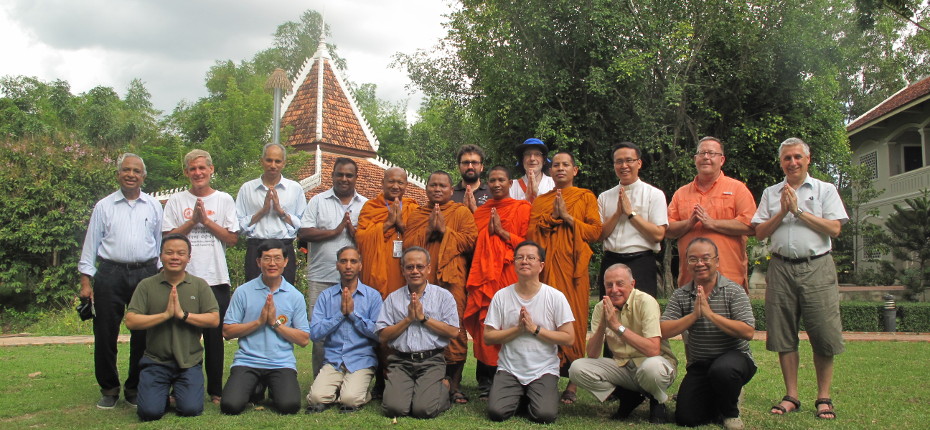
Jesuits from different parts of the world gathered in Cambodia recently to dialogue with Buddhist monks, engaging them on three levels – academic, spiritual and practical. This holistic approach to inter-religious dialogue is one that has prevailed in the regular Christian-Buddhist Workshop of the Jesuit Conference of Asia Pacific for many years.
It also provides an opportunity for “networking, friendship and fellowship among Jesuits engaged in Buddhist studies and dialogue,” as first time participant Fr Jaroslav Duraj, a Polish Jesuit based in Macau, discovered. This year’s workshop, held from August 8 to 12 in Siem Reap, saw 16 Jesuits come from Korea, Philippines, United States, Japan, India, China, Thailand, Nepal and Myanmar. They were joined by four Cambodian Buddhist monks, a former Jesuit and Buddhist activist, a former Buddhist monk and a Maryknoll priest.
Meditation and chanting with Buddhist monks at Wat Svayromeath
Fr Jerry Cusumano SJ from Sophia University in Japan presented on Zen and Spiritual Exercises of St Ignatius Loyola, showing how Zen and the Spiritual Exercises complement rather than contradict each other. Fr Bernard Senecal SJ from Sogang University, South Korea spoke about “Christ as the Awakened One”, describing Buddhism and Christianity as religions of awakening. He pointed to Christ’s mystical experiences, times of prayer and docility to the Holy Spirit as evidence of his enlightenment. Fr Thierry Meynard SJ from Sun Yat-Sen University in Guangzhou, China presented on “Beyond Religious Exclusivism: The Jesuit Attacks against Buddhism and Xu Dashou’s Refutation of 1623”, examining the dynamics of religious competition in Asia evoked by Christianity in the 16th and 17th Centuries.
 JCAP Christian-Buddhist Workshop group
“[The talks by] Jerry Cusumano and Bernard Senecal helped me to have a deeper understanding of our own spirituality and tradition, and to be rooted in them. And at the same time to be open to the other, especially Buddhism and Zen,” shared Fr Mathew Cyril SJ from Madurai Province. He also found Fr Meynard’s presentation very informative and educational. “The question that came in my mind was: Can Christianity become an inclusive religion, accommodating and respecting other faiths and believes? If it can, I think, it will be a great step for peace and brotherhood in the world.”
The group also heard from former Jesuit Bob Maat about his journey with Venerable Maha Ghosananda in promoting peace in Cambodia through a peace march. “That he (Maat) continues to walk with the people and promote peace in Cambodia is an inspiration as well as a challenge for all of us Jesuits who want to follow Jesus closely,” shared Fr Lawrence Soosai SJ .
 Buddhist monk Ven Sovechea talked about “Buddhism and Christian Spirituality” from an interfaith perspective, beginning with the idea that all religions teach us to prevent conflict. He gave many examples of interfaith work in Cambodia grounded on the teachings of important Buddhist figures, such as Emperor Ashoka, Maha Ghosananda and Thich Nhat Hanh. He concluded with the idea that in the 21st Century, conversion should not be from one religion to another, but from greed to generosity, from hatred to kindness and from delusion to enlightenment.
“The young Venerable is a living example of the growth of Buddhist education in Cambodia, a country still recovering from the ravages of war, especially in the field of education,” said Fr In-gun Kang SJ, JCAP Coordinator for Buddhist-Christian dialogue.
Memorial Mass for Fr Noel Sheth SJDuring their workshop, the group also remembered Fr Noel Sheth SJ, a beloved companion and scholar in Hinduism and Sanskrit language, who passed away in July. Fr Cyril Veliath led the memorial Mass, during which the participants shared how they had been touched and inspired by Fr Sheth, who was a member of the core group.
“It will be somehow consoling to wish not only for the eternal rest of Fr Noel, but also his eternal work between us for this world,” shared Fr Senecal.
Prayers were offered for Fr Sheth in the 12th Century , the oldest temple community in Siem Reap, where the Jesuits joined more than 70 young monks in their evening meditation and chanting. Afterwards, Fr Kang told them about Fr Sheth’s life.
The participants also visited other temples and historical sites, including the Sophia University Asia Center in Siem Reap where they learnt about a project for the protection, restoration and conservation of Angkor monuments and sites. They also went to the floating village on Tonle Sap Lake where they heard about the difficult life of the undocumented Vietnamese people living in floating huts. The undeniable reality of poverty and marginalisation of the people was for them a confirmation of how important interreligious dialogue is in the service of faith and the promotion of justice.
In 2014, the major superiors of the Jesuit Conference of Asia Pacific decided that the youth had to be a priority for the Jesuit Conference. They saw a clear need to accompany young people in the way of St Ignatius, which is marked by cura personalis (personal care), discernment and magis (more). Continue reading “A path to magis for young people”
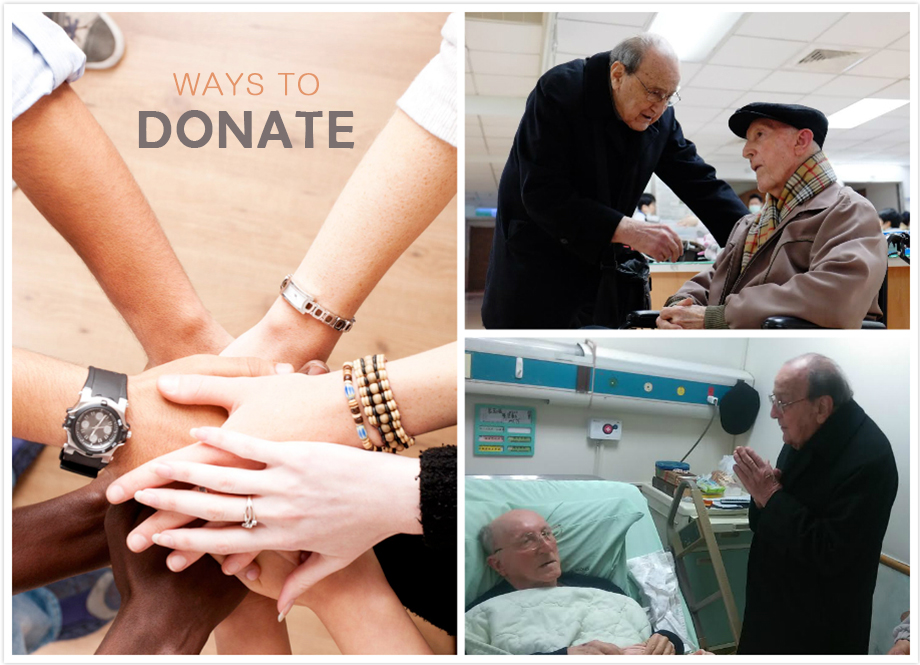
The work of the Jesuits in the service of faith and the promotion of justice is made possible by he generous support of friends and benefactors who believe in the value of what we do, whether it is running schools and parishes; advocating for disaster risk planning; or accompanying, serving and advocating for the rights of the poor and of migrants.
Fr.Rabago works in the Chinese province of Jesuit to implement many projects for half century. His story is the best evidence to live for love.
YES! I want to donate for supporting Fr.Rabago
To learn more about how you can get involved, please contact the following Jesuit Development Office staff for assistance:
Tracy Lee, [email protected]
+886 2 2321-2442 ext.500