

Author: cfliao


4th Week in Ordinary Time
5th Week in Ordinary Time
6th Week in Ordinary Time
1st Week of Lent
2nd Week of Lent


Courage of Haitians “starts young,” says U.S. nun who nursed hundreds

Sister Mary Finnick, a nurse who directs the Matthew 25 House in of Port-au-Prince, found that “the courage of the Haitian people starts young” when she opened an impromptu triage and treatment center in a nearby soccer field after the quake.
“The children, though crying, did not have temper tantrums and cooperated as much as is possible for a 3-year-old when you make a splint, clean out a head wound and debride backs and legs,” Finnick said in a Jan. 13 e-mail.
“In all of this, we also hear the Haitian voices raised in song, praising God for being alive,” she added.
Sister Mary said she, two other Matthew 25 staff members, six guests from Pennsylvania and New York, and three Haitian doctors treated 300 to 400 people in the hours after the magnitude 7 earthquake.
“We began to see some very horrible conditions caused primarily from the cement blocks, which most of the houses are built with, poor and rich alike,” she wrote. “There were many head wounds, some so serious it surprised us the person was still alive. Most were deep wounds that should have been sutured, but we had no material to do that.” When supplies ran out, “we finally cut up pillowcases for bandages,” Sister Mary reported.
Matthew 25 House, established in 2005, provides hospitality to North Americans who come to Haiti with missionary or humanitarian organizations.
Although the downstairs of the house experienced no structural damage, Sister Mary said, the upper floors were affected and “the wall between us and the neighbor has quite a large hole.” She encouraged medical teams that had been scheduled to come to Haiti not to change their plans. “There is a great need for medical supplies, suturing, betadine, analgesics … everything … and personnel to bring it,” she said.
Earthquake claims first Haitian-born Salesian brother
One of the thousands of victims in the Haitian earthquake was Salesian Hubert Sanon, 85, the first Haitian to join the religious order as a brother.
Details surrounding Brother Hubert’s death were unknown, but Rev. Mark Hyde, the executive director of the Salesian Missions, said Hubert died in the Salesian compound that houses the National School of Arts and Trade.
Concern also was growing for 200 students believed trapped in the rubble at the school. Father Hyde said he last heard from someone at the school at midday Jan. 13, minutes before cell phone service was disrupted.
Brother Hubert professed vows in 1947 and worked at the school’s Lakay program for young adults and teenagers on the streets. The program tries to reunite the young adults with their families. For those unable to find their families, the program offers the young people a place to stay and teaches them a trade in preparation for employment.
Father Hyde said Brother Hubert was a graduate of the school and was so impressed with the work of the Salesians that he decided to join the order. The school’s director, Salesian Father Atilio Stra, was seriously injured during the earthquake and the school and the surrounding compound suffered extensive damage.
‘What is happening?’
Junior Sinsmyr thought Haiti had been attacked.
Sinsmyr, senior translator at an American-sponsored medical clinic in Port-au-Prince, was not exactly sure why his world was falling down all around him the evening after the earthquake hit.
Brent DeLand, a member of Christ the King Parish in Springfield, Ill., who established the SARTHE Medical Clinic, was on the phone with 24-year-old Sinsmyr when a major aftershock shook the Haitian capital.
“I was stunned when he answered the phone,” DeLand said. “His response was ‘What is happening?’ He asked me what an earthquake was. I told him. I’m not sure he really understood what an earthquake was.
“Then he sort of understood and I asked ‘What do you see?’ He said, ‘Well, I’m in the middle of the street. In all directions there are no buildings left.”
“As we were talking the second aftershock hit and I knew it because I was watching it on CNN. He said, ‘Oh, no, the world is shaking.’ That was a fairly profound comment. I asked what was happening. I couldn’t hear him because of all the screams and cries.”
Then the line went dead.
As of Jan. 14, DeLand had not heard from Sinsmyr or anyone else from the clinic since the night of Jan. 12. He was hoping to travel to Haiti with a small group of volunteers on Jan. 16, as originally planned. They were expecting to address more routine medical procedures.
Aid worker finds scene from Dante’s “Inferno”
“It looks like Dante’s ‘Inferno.'” That’s how Mike Henry, Haiti project director for Cross International Catholic Outreach, described the scene in Port-au-Prince after the quake.
“There are dead bodies everywhere,” Henry said in a Jan. 13 report from the Haitian capital. “It is hell on earth.”
Jim Cavnar, president of the Catholic aid agency based in Pompano Beach, Fla., said the magnitude 7 earthquake “has done more than shake the earth. It has shaken the fragile hopes and dreams of the Haitian people, who just last year were the victims of devastating storms and flooding.”
But even amid the devastation, there were signs of resilience.
“The girls were shaken up quite a bit when it happened,” said an unnamed person who works with Cross Catholic, in a message to Cavnar, “but now they are playing with the kids of the parents who are staying in our home.”


Father General
Interview to Father General.
On December 21st, just before leaving Zimbabwe, last stop of his third trip to Africa, Father General gave the following interview to Fr. Oskar Wermter. With the kind permission of Fr. Oskar, we are publishing it, for we believe the themes treated to be of interest to all.
1. Very familiar as you are with Asia, what strikes you as different in Africa, both in the Church and in society at large?
Let me start saying that one of the things I have learned in my Asian experience is to never trust first impressions. The main reason is that first impressions are the most conditioned by previous experience, expectations or prejudice. And the second thing is that it took me some time to realize that there is no Asia, an Asia we can speak about in one line of conversation. Asia is many countries, many cultures, many traditions, many histories and peoples. If Africa is still “one Africa” for me, it means that I do not yet understand it. I really hope that, as I grow in understanding Africa, I will come to the realization that there are many peoples, many languages, many traditions, many cultures… in Africa as well. And then comparisons become concrete and limited. I find it very hard – that is, impossible – to compare Asia and Africa. I would have to ask which Asia? And, which Africa?
2. There are going to be Secretaries for Dialogue with Hinduism, Islam and Buddhism, major world religions. How do you see dialogue with African Traditional Religion? And African contemporary religion (new religious movements, Indigenous Christian movements led by “prophets”, Pentecostal groups, etc. etc.)?
I would like to mention only two points before I answer this question. The first is that, as you could see in my letter, these Secretaries for Dialogue with Religions will be resident in their own apostolic place. I think that it is important that Dialogue is taking place; that something moves at the base, where people are and live their Religions. And that it is important that we differentiate; dialogue with Buddhism is totally different from dialogue with Islam. In other words, if something happens at the level of the life of the Church and the Society, then we can think about coordinating similar initiatives or experiences. I would not like to start at the top with someone sitting on high without roots in the life of people. I truly hope that dialogue with the people takes place in depth, touching their religious roots. Then we can think of a Secretary.
This gives me the opening to make my second point. I really hope that Jesuits working with people can relate so deeply with them that there is a real dialogue of hearts between our men and the people we serve. And if there is such a dialogue, the religious roots of people’s life will emerge and be part of our dialogue with them. It has been a biased view of European people, scholars included, to consider traditional religion as “less developed”, “more primitive”, “less sophisticated”, etc. The fact is that it has permeated our whole life to such an extent that even modern European agnostics (self-defining often as the most elaborate secularists) continue to have latent or overt behaviour that is understandable only in categories of traditional religion. As a Japanese scholar once said, Europeans have always been and continue to be “animistic”, even if they are reluctant to acknowledge it. Thus, I really hope that our men will take this dialogue seriously and will study traditional religions seriously, and will open avenues and possibilities for creative and deepening dialogue. Dialogue can help all of us because it helps us discover hidden meanings in our tradition and opens up possibilities of purification and growth that would remain unnoticed otherwise.
With these two remarks I can now address your question. I think the main thrust of our dialogue should not be with ideas or systems or concepts, but with people. Being person is being in dialogue. What matters is not the area of specialization we take; what really matters is people and in dialogue with them we come in touch with old and new religiosities, old and new fears, old and new ritual needs, old and new inner liberations. And if this is the case, then it is clear that we will need a far greater depth in our faith and a very wide training so that we can be of help to those with whom we dialogue.
3. “Inculturation” is the great catchword in African theology. Where do you think we should put the emphasis: on liturgy, ecclesiology, marriage and family, religious life, or statehood and governance (social justice)?
I do not think we can separate the issues so neatly. Inculturation, like any development in life or thinking that involves culture, does not happen by plan or theory. It happens when the people involved feel free to live and express themselves in the terms that best respond to their experience and the mental, or interactive frameworks within which they are most truly themselves. This applies to liturgy, ecclesiology, marriage, religious life and social justice. Culture is a reality that has a life of its own and keeps growing, changing, adapting and responding to new events and environmental changes. Inculturation is a way of living in the wider context of whatever makes human life human. Thus the encounter between culture and faith is ongoing, mutually influential, and, hopefully, a source of ongoing growth and purification.
4. Do you see a danger that our deep involvement as Jesuits in social work and social development may “secularize” us or alienate us from the priesthood, even the Church (I am asking this because we are in the Year of the Priest)?
It all depends on the kind of spiritual and human depth we have reached in our lives. Social work can be a distraction from deep spiritual living, or it could be a great help to encounter the living God in people who are suffering. Yesterday I received a book by a spiritual writer about a Jesuit who became a worker-priest and who lived in his new environment very high mysticism. The book is titled: “God, friendship and the poor. The mysticism of Egide van Broeckhoven, a worker Jesuit”. This Jesuit understood his call as one of teaching people “the mystical depths of friendship”. If we understand that one of the dimensions of Priesthood is to help people come closer to God, social work cannot be considered as alienating. On the other hand, a person totally dedicated to concrete temporal results in the social justice arena can become very alienated from his own spiritual religious mission and be totally at the mercy of political or social results of his effort.
5. Zimbabwe is struggling to overcome bad governance, corruption, violence and rebuild the country with a new democratic constitution. Do you think democracy (government by participation) has a chance? Would you say democracy has Christian roots so that we are obliged to promote it? Could you answer this in the context of your wide experience in other parts of the developing world, especially Asia?
I can only say that, from my own experience elsewhere, the chances of democracy to
succeed and take root go hand in hand with the development of education in a country. And I do not mean Western style of education. I mean growth in the ability to handle information, to understand reality, to make good judgments and to act accordingly. If the population are not given the needed and objective information; if they are not allowed to understand correctly right and false solutions; if judgment is disturbed with propaganda, oppression and superficial slogans; if, finally, responsible decisions are made practically impossible, then we cannot have real democracy.
In this sense we are all for democracy because we are all for human growth and maturity. It is not a choice for a political system as political and partisan. We are for valuing human ability to grow, to make choices, to understand reality and to act accordingly. We are for fair information and for an education that gives people the capacity to understand, judge and act responsibly. If this is called democracy, I am all for it. This is not a partisan choice because partisan choices disenfranchise people and we are for all the people and their participation in the responsibilities that touch their lives.
The fact that some “democratic” systems did not work well only means that democracy, like all other systems, need time to mature and are based on a number of conditions that require attention, investment and patience. We cannot expect from democracy the kind of “instant soup” approach that would think that the system has to work well from the very first hour of its existence. No system ever does. All systems need monitoring for effective and rational working out.
By the way, a note should be made about the fact that I do not know whether the roots of democracy are Christian or not. It is enough for me to know that the elements at work in terms of human dignity, information, responsibility, etc… are deeply harmonious with my Christian faith to be in its favour.
Appointments
The Holy Father Benedict XVI has named the following Jesuits as consultants to the general secretariat of the Synod of Bishops:
– Father Paul Béré, professor of Old Testament and biblical languages at the “Institut de Théologie de la Compagnie de Jésus”, “Université Catholique de l’Afrique de l’Ouest”, Abidjan (Ivory Coast) and at “Hekima College Jesuit School of Theology” in Nairobi (Kenya);
– Father Samir Khalil Samir, professor of History of Arabic Culture and Islamology at the “St. Joseph” University in Beyrouth (Lebanon).
Father General has appointed:
– Father Miguel Gabriel Cruzado Silveri as Provincial of Peru. Father Gabriel was born in 1970, joined the Society of Jesus in 1995 and was ordained a priest in 2005. He returned recently to the Province after Tertianship and spirituality studies in Europe.
– Father John Dardis, Irish Province, as president of the Conference of European Provincials. Father John was born in 1956, joined the Society of Jesus in 1974 and was ordained a priest in 1987. He has served as the Provincial of Ireland since 2004.
– Father Louis Boisset as Regional Secretary for the Assistancy of West Europe. He will replace Father Hugues Delétraz at the end of July. Father Louis Boisset, who is a member of the Province of Middle East, is actually at the Jesuit Residence in Beyrouth.
From the Provinces
BELGIUM: New Database for Chinese Texts
A new instrument is now available for those searching for information on Matteo Ricci including what he wrote and what has been written about him. The Chinese Christian Texts Database, is a research database of primary and secondary sources concerning the cultural contacts between China and Europe in the seventeenth and eighteenth centuries, especially from 1582 to 1840. It was compiled and is regularly updated by Professor Ad Dudink and Father Nicolas Standaert, S.J., of the Sinology Research Unit in Leuven, Belgium. The multi-lingual database is divided between primary and secondary sources. The primary sources are composed of approximately 1050 Chinese documents and include printed books, manuscripts, pamphlets and maps. The secondary sources, over 4500 of them, are linked to the primary sources when possible.The primary and secondary sources are grouped by theme following the categorization of the Handbook of Christianity in China: Volume One (635-1800). Access to the database is free and is found at: http://www.arts.kuleuven.be/sinology/cct/cct.htm
ITALY: Rome Mayor Pays Visit to Centro Astalli
On Christmas day, Gianni Alemanno, Mayor of Rome, visited the dining room of Centro Astalli for refugees and asylum seekers, as one of a series of visits to social assistance agencies in the city. Father Giovanni La Manna, president of Centro Astalli, said: “every year at Christmas time, we open our dining room to offer refugees and asylum seekers in Rome a comfortable place to eat a hot meal. We succeed in guaranteeing good service on the 25th of December thanks to the generous support of many volunteers. For a number of years, Christmas at Centro Astalli is celebrated with men and women fleeing wars and persecutions, hundreds of people who again live the experience of Joseph and Mary, who could not find refuge at the time of Jesus birth and had to flee their country. The presence of the Mayor of Rome in our dining room on Christmas day is an important sign of welcome and solidarity the city of Rome offers to those arriving in Italy in search of protection.”
MALAYSIA: Promoting Interreligious Dialogue
In an interview with UCA News at the recent Federation of Asian Bishops’ Conference symposium on Religious Life, held in Hua Hin, Thailand, Bishop Paul Tan Chee Ing S.J. of Melaka-Johor underlined the commitment of the Church to promote interreligious dialogue in Malaysia. An increasing “islamization” is taking place in the country where 60% of its 28 million people profess Islam. The bishop spoke about the ongoing controversy surrounding Malaysian Christians use of the word “Allah” and the various issues connected with “islamization”. This year the government confiscated 15.000 Malay-language bibles because they contain the word “Allah”, used to refer to God. The Church has become embroiled in a dispute with the government to assert its right to use “Allah” arguing that the country’s home Minister had contravened the Constitution when he introduced new conditions banning the use of the word “Allah” to mean any God other than the Muslim God. The word was used in the Herald, a newspaper of the Catholic Church, meant only for Christians and distributed only in churches. The Church has appealed to the Constitution, which protects the fundamental rights of religious minorities to carry out their worship freely. In recent days, the High Court of Justice declared unconstitutional the Government’s decision to prohibit non-Muslims using the word “Allah” to refer to God. Unfortunately, extremist Muslims reacted to the ruling by setting fire to several Christian churches. The Government plans to appeal this ruling.



By Tom McGrath
A friend called as I was in the midst of a difficult day. When he asked, “How’s it going?” I launched into a litany of woes: malfunctioning alarm clock, spilled grape juice on a new white shirt, three empty buses flying by as I hurried toward my bus stop, and an important and urgent e-mail inexplicably bounced back, missing a deadline. Now I’d begun to take out my frustrations on my coworkers. I was about to continue my griping when my friend gently interrupted: “Well, it’s never too late to have a good day.”
At first I wanted to hang up. I was looking for sympathy, and he offered me a strong dose of wisdom instead. I wanted to wallow in victimhood, and he offered me the opportunity to put my faith into practice.
I knew what he was trying to tell me. He’d shared his beliefs with me before, both in word and in example. I’d seen him handle difficulties with grace and patience and even a touch of humor.
“How can I do that?” I asked. He said I needed to stop agonizing and take a few deep breaths. Then I could ask God sincerely for help with whatever would come my way that day.
Finally, I simply needed to stop looking backward and instead do the next thing right in front of me, for that’s where God’s help would meet me. I took his advice, and since then I’ve become a big believer in these three steps:
Stop agonizing: It was hard for me to admit it, but agonizing over my day as if life were all about me was not only self-centered but showed a certain lack of faith. As long as I stayed in the self-absorbed mode of griping, I was failing to look for God in these challenging moments. Scripture tells us that nothing can “separate us from the love of God” Romans 8:38-39. And that certainly extends beyond minor irritations such as spilled grape juice and missed buses.
Ask God for help: This small change in attitude-from trying to handle everything on our own to inviting God’s help into our lives-makes an enormous difference in how our days play out. It’s not that God is withholding help unless we beg for it; God’s help is always available. The point is that unless we seek it, we won’t be open to recognizing that help when it’s all around us. The act of asking for God’s assistance predisposes our hearts, minds, imaginations, and wills to responding to it when it comes our way.
Do the next thing right in front of you: If you’ve been having “one of those days,” you may be tempted to try to address all your challenges at once. This can leave you disoriented, scattered, and confused. Instead, trust that God’s will for you can be found right here and right now in whatever situation you’re in. It’s in the present moment that we encounter God’s grace.
Our lives will never be free from challenges, disappointments, and difficulties, but God promises to accompany us if we invite him along. And that can make all the difference. Have a good day!
Tom McGrath is a writer and speaker on family-faith issues and spirituality. He is also the author of Raising Faith-Filled Kids.


At the beginning of the year, we each turn our attention to improving ourself. We can also turn our thoughts inward to our relationship with God. With the help of his grace, we can resolve each day of the new year to become the people God knows we can be.


by Jake Martin, S.J.
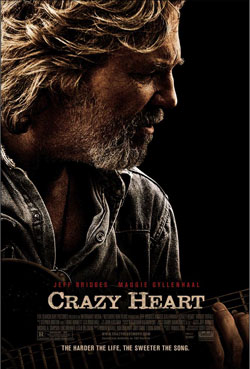
Momentum often trumps skill come Oscar time. Industry buzz plays as much a factor in deciding whose white knuckles clench the golden trophy in March as the quality of a performance. A savvy media campaign is just as important as acting chops in nabbing the highest prize in Hollywood, and the focus on sizzle over steak has often left film lovers scratching their heads when “the Oscar goes to…” yet another unworthy recipient. This year things may be different.
Jeff Bridges’ performance as a country crooner looking up from the bottom of a whiskey bottle in “Crazy Heart” is the perfect marriage of media hype and craftsmanship. Such is the weight of Bridges’ performance and the buzz surrounding it that the folks at Fox Searchlight saved it from the direct- to-DVD purgatory for which it was originally intended and give it a limited theatrical release. The producers must have been fairly certain that Bridges would get a nod from the Academy.
“Crazy Heart,” directed by Scott Cooper, is an unassuming, yet fully realized story of addiction and redemption. The narrative is direct and transparent; transitions are telegraphed from a mile away and nuance and deft sleight of hand are nowhere to be found. Yet this lack of subtlety in no way hinders the film’s agenda or makes its impact any less effective.
The film contains all the elements of a clichéd country ballad, complete with a dipsomaniacal protagonist, Bad Blake (Bridges), staggering through an endless series of one-night stands at half-empty honky-tonks. Perhaps the only thing surprising about “Crazy Heart” is its conclusion. It would seem almost an inevitability that a contemporary drama about a country-music singer would end in emptiness and despair. But Cooper, a first time director, who also adapted Thomas Cobb’s novel into the screenplay, seems utterly unconcerned with providing an existential chasm into which his hero can plummet. Indeed, he is more focused on advancing the remarkable story of an unremarkable man to allow trendy nihilistic undertones and hip narrative devices to interfere with the task at hand.
Historically, Hollywood’s portrayal of alcoholics has been, if not, entirely unrealistic, at least simplistically over the top. As anyone who has engaged with an alcoholic for any significant period knows, infrequently do their lives play out at the operatic levels of the celluloid drunks essayed in “The Days of Wine and Roses” and “The Lost Weekend.” More often, they are like Bad Blake, a man who manages to function just enough to get by, day by day, for years at a time.
The repercussions of addiction, while no less tragic, are often less dramatic than the standard didactic Hollywood offerings. The paint-by-numbers trajectory of alcoholism, which the film industry favors, often leads its audience to feel safely detached and immune from a disease that is far more subtle and destructive than the drunk-in-the-gutter portrayal that film industry has traditionally put forth. Not every alcoholic is like Nicolas Cage in “Leaving Las Vegas.” Some, like Bad Blake, manage to muddle through life in semi-coherent haze, and the tragedy is found, not in one moment of destructive excess, but rather in a lifetime of disintegration, as relationships, health and quality of life slowly but surely become compromised to the point of paralysis. The creative team behind “Crazy Heart” understands the complexities inherent in addiction and Bridges’ Blake, with his stubborn, almost blissful refusal to acknowledge his disease, makes for truthful and resonant movie watching.
Ultimately, it is all about Bridges, and he does not disappoint. The quintessential journeyman actor, if there can be such a thing in Hollywood, Bridges has gracefully moved through the better part of four decades giving one adroit, understated performance after another. Long overshadowed by peers with flashier styles and edgier personas, Bridges has always stood just outside the realm of the superstardom that seemed his right when audiences first beheld him in “The Last Picture Show.”
Bridges inherently unassuming and optimistic manner serves him well in the role of Blake, who, in less skilled hands would easily turn into a Saturday Night Live character gone bad. Instead, he manages to makes every move look natural. Bridges is the Spencer Tracy of his generation: never once are we aware that he is “acting,” and moreover, never does his performance get in the way of the story. The actor understands that at the root of all addictions is a myopic self-centeredness that impairs its victims to such a degree that even the simplest awareness of things outside the self are hard to come by. Yet because of his innate likeability we are never put off by his fundamental lack of cognizance.
Maggie Gyllenhaal, as the love interest, seems a bit too strident and impenetrable to be believable as a woman who would succumb to Bridges’ charms. While Bridges’ seems as if he was born with a bottle of Wild Turkey in his mouth, Gyllenhaal never manages to fully shed her actress persona, and she seems out of place in her Southwestern surroundings, as if waiting for the next bus out of Santa Fe and back to the familiar environs of Manhattan.
“Crazy Heart” bears more than a passing resemblance to “The Wrestler,” last year’s Oscar nominee, which resuscitated the career of Mickey Rourke. Unlike Rourke, however, Bridges does not need a comeback. He never went away. Rather, he’s been invisible, silently honing his craft year after year amidst a culture that seems only to affirm the damaging behavior of the kind Bad Blake and Rourke specialize. Yet that may change, if only for a brief few months, this Oscar season if Bridges finally receives the acclaim he so richly deserves. And it couldn’t happen to a nicer guy.
Jake Martin, S.J., is a Jesuit scholastic teaching theology and theater at Loyola Academy in Wilmette, Illinois.


In this short video clip, Jesuit Father Thomas Smolich, president of the Jesuit Conference of the United States, talks of the Jesuits’ efforts in Haiti to provide earthquake relief. Through the mobilization of the Society of Jesus’ missionary arm, Jesuit Refugee Service, the Jesuits are responding to God’s call to provide aid to the suffering and to stand in solidarity with the people of Haiti during their time of need.
Jesuit Conference President on Haitian Earthquake Relief Efforts from Jesuit Conference USA on Vimeo.
National Jesuit News is urging people to give to the Jesuit organization Jesuit Refugee Service to help those in Haiti.
To support JRS/USA’s humanitarian response to the emergency needs of the Haitian people, please click here to be directed to their secure website and choose “Haiti Earthquake Relief Fund.”
Or you may send a check to:
Jesuit Refugee Service/USA
1016 16th Street NW Suite 500
Washington, DC 20036
Checks should be made payable to “Jesuit Refugee Service/USA.”
Please clearly note “Haiti Earthquake Relief” in the memo field on the check.
(ENI) – The German embassy in Harare has sent a strongly-worded letter of protest to the Zimbabwe government after some of its soldiers beat up a Jesuit priest who has lived in the country for most of his life and was rushing a boy to hospital.
“The Embassy of the Federal Republic of Germany … wishes to express its utter consternation about a violent attack on Father Wolfgang Thamm SJ, by four junior members of the Zimbabwean army on 15 November 2009 at the city of Banket,” read part of the letter.
According to the letter, Thamm, a German citizen in his late sixties, was driving and was then stopped “without apparent reason” by soldiers near the military barracks at Darwendale Clinic in Banket, nearly 100 kilometers northwest of Harare.
“One soldier took Father Thamm’s glasses and then slammed him in the face before forcing him out of the car,” the embassy said.
Other reports said a sick boy and a nursing sister were with the Roman Catholic priest in the car when it was stopped at Banket, where Thamm has served for 12 years.
“The priest was then ordered by the soldiers to kneel in a large puddle of water. When he hesitated to follow the order, he was pushed into the dirty pool and brutally kicked several times by the soldiers,” said the embassy letter.
The Zimbabwe Foreign Ministry said it had received the letter on November 17. Thamm reported the assault to the police but Ecumenical News International was unable to obtain a reaction from the police.
“This totally unacceptable misconduct does not only come as a disgrace to the Zimbabwean armed forces but must be qualified as being particularly despicable in view of the fact that Father Thamm, a well known personality in Banket, has devoted his entire life to religious, social, and educational work for the people of Zimbabwe,” the embassy said.
The German embassy called on Zimbabwean authorities to take action against the soldiers and to prevent similar incidents in future.
Mugabe and his chief opponent Morgan Tsvangirai formed a power-sharing government in February to avert a descent into conflict after the opposition Movement for Democratic Change won parliamentary elections in February 2008 and Mugabe refused to cede power, later winning a presidential poll he alone contested.
Zimbabwe residents have frequently reported that soldiers beat up Tsvangirai’s supporters and others who do not agree with Mugabe’s Zanu-PF party.
Zimbabwe’s SW Radio Africa, which transmits news to more than 3 million Zimbabweans who have fled the country, wrote in an editorial, “It is of great concern that the army feels so unaccountable and free to abuse anyone they want to. It does not bode well for the future of Zimbabwe.”
 Even though he was an inveterate opponent of the Catholic Church, to the end of his days Voltaire felt deep gratitude to the Jesuits who had educated him. He never stopped insisting that the Church was the enemy of progress and sought to “keep people as ignorant and submissive as children”; and yet he waxed lyrical about the profound and expansive education in the classics, theatre, rhetoric, philosophy, and natural science which he received at the Collège Louis-le-Grand (1704-11). This is what he had to say about the Jesuit teachers he had there: “I was educated for seven years by men who took unrewarded and indefatigable pains to form the minds and morals of youth. Is it credible that anyone should fail to have some feeling of gratitude toward such teachers?”



Celebrating our Catholic Identity
As we begin the new year, let’s turn our attention to what makes us Catholic. When we share with children our appreciation of our Catholic identity, we can help them grow knowledgeable in their faith and comfortable discussing it with others.
A Few Lessons for Living
from Lessons for Living by John Paul II
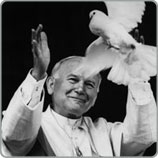
The words of John Paul II have long inspired Christians throughout the world. People of faith often turn to his wisdom in trying or difficult times.
In his gentle yet unflinching manner, the pope offered wisdom on such topics as the importance of forgiveness, how to respond to suffering in a Christian way, the necessity of unity in the Christian family, and the responsibilities of living as a Christian in this world. Below is a small sampling of inspirational lessons that encourage us to draw closer to God, helping us to live as faithful Christians in a sometimes challenging world.
The Gift of Peace
Become friends to those who have no friends. Become family to those who have no family. Become community to those who have no community. If we want peace, we must reach out to the poor. May the rich and poor of the world recognize that we are all brothers and sisters. May we all share what we have with one another as children of the one God, who loves everyone and who offers to everyone the gift of peace.
Suffering as Offering
A basic principle of our Christian faith is the fruitfulness of suffering and, hence, the call of all those who suffer to unite themselves with Christ’s redemptive sacrifice. Suffering thus becomes an offering, an oblation; this has happened and still does in so many holy souls…In [Jesus] they find the strength to accept pain with holy abandon and trusting obedience to the Father’s will. And they feel, rising from within their hearts, the prayer of Gethsemane: “But let it be as you would have it, Father, not as I.”
Every Life Is a Gift
Stand up for the life of the aged and the handicapped; stand up against attempts to promote assisted suicide and euthanasia. Stand up for marriage and family life. Stand up for purity. Resist the pressures and temptations of a world that too often tries to ignore a more fundamental truth: that every life is a gift from God our Creator and that we must give an account to God of how we use it, either for good or evil.
Faith Is Demanding
How can we profess faith in God’s Word, and then refuse to let it inspire and direct our thinking, our activity, our decisions, and our responsibilities toward one another? Faith is always demanding because faith leads us beyond ourselves. Faith imparts a vision of life’s purpose and stimulates us to action.
The Center
Prayer is not one occupation among many, but is at the center of our life in Christ. It turns our attention away from ourselves and directs it to the Lord. Prayer fills the mind with truth and gives hope to the heart.
Life Is a Talent
Life is a talent entrusted to us so that we can transform it and increase it, making it a gift to others. No person is an iceberg drifting on the ocean of history. Each one of us belongs to a great family, in which we can have our own place and our own role to play.
The True Face of Jesus Christ
Jesus says to us: “I am sending you to your families, to your parishes, to your movements and associations, to your countries, to ancient cultures and modern civilization, so that you will proclaim the dignity of every human being, as revealed by me, the Son of Man.” If you defend the inalienable dignity of every human being, you will be revealing to the world the true face of Jesus Christ, who is one with every man, every woman, and every child, no matter how poor, no matter how weak or handicapped.
May Our Faith Be Strong
May our faith be strong; may it not hesitate, not waver, before the doubts, the uncertainties that philosophical systems or fashionable movements would like to suggest to us. May our faith be certain. May it be founded on the Word of God; on deep knowledge of the Gospel message, and especially of the life, person, and work of Christ; and also on the interior witness of the Holy Spirit.
Every Area of Our Lives
There cannot be two parallel lives in the existence of the faithful: on the one hand, our so-called spiritual life, with its values and demands; and on the other, our so-called secular life, that is, life in a family, at work, in social relationships, in the responsibilities of public life, and in culture. Every area of our lives, as different as they are, enters into the plan of God, who desires that these very areas be the places where the love of Christ is revealed and realized for both the glory of the Father and service of others.
Featured Activities
Get children thinking about what it means to be Catholic with these activities:
Grade 1: Mirror of God
Grade 2: Baptism Welcomes Us into the Large Community
Grade 3: Welcome, Welcome, Welcome
Grade 4: Say It with Virtues
Grade 5: Building Unity
Grade 6: Commandment Mobile
Junior High: Come and Worship
Visit our online activity finder for more creative ways to teach children about their faith. You can search more than 500 activities available by age, grade, subject, or learning style.