

Author: cfliao


The history of the transit of Venus and its observers is well documented. Just go through the ‘Past transits’ menu at the top of this page, which will take you on an interesting voyage through time. Of all the historical observations of the transit of Venus, an important group of observers usually doesn’t get much attention: the Jesuits. These Roman Catholic priests of the religious order Societas Iesu had a keen interest in mathematics, astronomy and natural sciences as a result of their apostolic spirituality. In their educational and missionary activities scientific work had an important place, because of their frontier spirit and their vocation to “find God in all things”. At their schools, colleges and universities they often established an astronomical observatory to study the universe and make meteorological observations. At the time of the eighteenth century transits of Venus (1761 and 1769) a quarter of all observatories was run by Jesuits and half of all clerics working on science were Jesuits. In their scientific work as well as apostolate they show how faith and reason harmonise well and are just the two sides of the same medal: the search for Truth.
Among the more well-known Jesuit observers of the transit of Venus are Maximilian Hell, Leonardo Ximenes and Joseph Xavier Liesganig. The Jesuits observed the transit from their colleges on the European mainland and rarely undertook expeditions. Maximilian Hell is one of the few Jesuits who travelled in the eighteenth century specifically to see the transit in its entirety (remarkably, on the invitation of the protestant king Christian VII of Denmark and Norway). Still, among the reports of observations from far flung places are also accounts written by Jesuits. They operated from the observatories in mission countries, where the Jesuit order had established missions to spread both the Christian faith and western science. The Imperial Observatory of Beijing for example was run by Jesuits, but the transit of Venus was also observed from other missionaries in Asia, like Tranquebar and Madras.
In between the two eighteenth century transits, the Jesuit order was suppressed for political reasons in Portugal, France, the Two Sicilies, Parma and the Spanish Empire. A couple of years after the transits, in 1773, the society was suppressed altogether by Pope Clement XIV under secular pressure. This ended all observatories, although some of the priests continued their work in the now nationalised institutions.
On June 5 and 6, 2012 the planet Venus will pass in front of the Sun for the last time this century. Millions around the world will witness this rare astronomical phenomenon.

The science versus religion controversy was instrumental in the foundation of Jesuit observatories in the nineteenth century, and it also played an important role in their closing in the twentieth century. After the 1960s, the priorities of the Society of Jesus moved toward work for faith and social justice. As a result, practically all Jesuit observatories have been closed in the last forty years and only a handful is still in operation today. Still, we owe a lot to the Jesuit scientists of the past, who with an apostolic zeal helped western science spread the world, and who made some valuable contributions in the study of the transit of Venus.


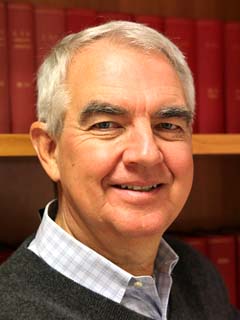
Father Gerald R. Blaszczak (born 1949) was fascinated by the openness, the social involvement, the intellectual search, the real piety and the friendship of the Jesuits at their High School in Dallas (USA) at the end of the sixties. He entered the New York province and studied New Testament and Islam mysticism. He started teaching at the newly opened Jesuit theologate in Nairobi (Kenya), became Novice Director of his Province and was responsible for “Mission and Identity” at the Jesuit Universities of Fordham (New York) and Fairfield (Connecticut). Father General appointed him as director of the new Curia Secretariat for the Promotion of Faith (which will involve also Ecumenical and Interreligious Dialogue and Ignatian Spirituality).
|
|
| Download MP3 |


Mary Ward founded a religious community for women dedicated to active service, drawing on the Society of Jesus as an organizational model.
Mary Ward was born to a Catholic family in North Yorkshire, England, just a few years before the defeat of the Spanish Armada. The family was determined to practice the Catholic faith in spite of the ongoing hostility. In 1589 the family home was burned down, but Mary and her sisters were saved by her father.
At the age of 15, Mary Ward felt called to religious life. Ward entered the Poor Clare convent in Saint-Omer in France. At the time the only option for religious life for women was in cloistered communities. Mary Ward, however, wanted to give active service to God and others. Thus began her extraordinary journey.
At the age of 24, Mary gathered a number of companions and formed a religious community. In creating a structure for her religious community, Mary Ward drew on the Constitutions of the Society of Jesus. Church authorities, however, were implacably opposed to the idea of religious women being active in any ministry outside of the enclosed walls of the cloister.
The community grew in the face of severe opposition. They ministered to imprisoned and persecuted Catholics openly on the European continent, secretly in England. Mary was imprisoned by the English government and later by the Inquisition in Rome. While she was personally admired, Mary Ward’s congregation was suppressed in 1630. There was also an effort to destroy all related documents so as to erase the memory of Mary’s work. Returning to England in 1642, Mary died surrounded by a few companions in 1645. Although she was continually frustrated in her dreams, Mary Ward never lost confidence in her relationship with Jesus.
Mary Ward’s legacy survives today in the Institute of the Blessed Virgin Mary worldwide, and in the newly renamed Congregation of Jesus in England.
Quote: “Women in time to come will do much.”


PC’s, mobile phones, mp3 players, tablets… they are everywhere, today’s tools for the information revolution, carriers of books, magazines and news. And the Society of Jesus? We are and will be there.
The progress and innovation is happening so fast it can seem quite terrifying to us – because we are not internet natives. But to those who were born into this web-driven world, it is second nature. So how do we integrate, what can we offer, what needs to change, how do we go about it and how can we offer something hat will capture the attention of a browsing public?
Between the 19th and 23rd April web masters and communication officers from many European Provinces, as well as representatives from the US, got together for the annual European Jesuit Webmasters’ meeting in Lewes, England, and put our heads together to discuss all this and more – sharing experiences, know-how, questions and difficulties. Professional presentations from experts in their fields fuelled discussions in between sittings.
Austin Ivereigh, journalist, commentator and author and former spokesman for the Archbishop of Westminster demonstrated how can we prepare ourselves and other members of the Church to effectively participate in media discussions on neuralgic issues in an era of 24-hour news. He is the founder and coordinator of ‘Catholic Voices’.
Jane Hellings, director of the fundraising and management division of Kingston Smith amply stressed the importance of branding in developing recognition, trust and long-term relationships with donors.
Matt Malone SJ, who served as associate editor of ‘America’ magazine, and who has accumulated a wealth of experience in the world of in-depth journalism and publishing presented an insightful hour on ‘The great migration? – Transitions from print to digital’.
JP Morrison, Headmaster of St Ignatius College in Enfield, London, presented the realities and experiences of digital natives (young persons born into a world where digital media were already well established), particularly the experiences of the students in this north London school.
Nick Austin SJ, who teaches moral theology at Heythrop College, University of London, proposed a way of taking on this new world, whereby individual’s real freedom and relationships would not be damaged, and all of this through the virtue of temperance.
John Dardis SJ, President of the Conference of European Provincials, joined us too, leading workshops which extracted goals related to Jesuit presence in the digital media and means by which to achieve these goals within the next few years.
Our appeal is for Jesuits Europe-wide to:
• Embrace and take on this digital world as a frontier which our presence cannot overlook.
• Invest in human resources and finances for this work, so that we can be present and effective.
• Listen to the needs of your publics.
• Become familiar with digital media, and do not be afraid to change the way things have been done for so long.
• Look out for news value in your work and supply the communications office with the material they need.
• Ironically, web masters and communications offices are often left to work in isolation and with too few resources – support, participate, consult, work together!



by Jim Manney
My kids know I’m a big Bruce Springsteen fan, so I was pleased when my daughter Laura gave me his latest album, “Wrecking Ball.” It’s terrific. Several songs fortify the Boss’s reputation as the greatest Catholic poet of our time. My favorite is “We Are Alive.”
We are alive
Oh, and though we lie alone here in the dark
Our souls will rise to carry the fire and light the spark
To fight shoulder to shoulder and heart to heart.
I couldn’t find a video of a live performance that I could recommend, so we’ll have to settle for the sound track with a poster. Lyrics here. Click here to watch it on YouTube.


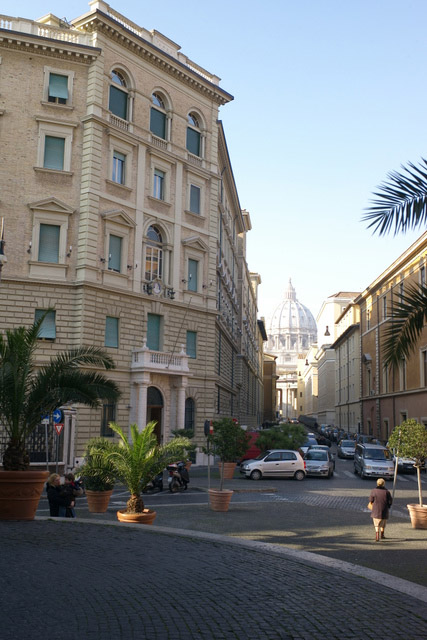
On 30th of April, the General Curia will welcome 18 new provincials belonging to six different conferences. They,in the presence of Fr. General, will reflect on important themes such as, the government of the provinces, the account of conscience and personal guidance, the animation of community, the participation in the reality of the local Church, the frontier mission and interprovincial and international collaboration. The meeting will end on 12th May.


James Martin, S.J., joins Tim Reidy for a discussion of Walter Ciszek’s With God in Russia, which chronicles the imprisonment of an American Jesuit in the Soviet Union. The Vatican recently gave formal approval for Fr. Ciszek’s cause for canonization to proceed. The Pennsylvania-born priest spent five years in the notorious Moscow prison, Lubyanka, and later in Siberian work camps. He developed a deep reliance and belief in the providence of God, and risked his life ministering to his fellow prisoners.
|
|
| Download MP3 |


by Jim Manney
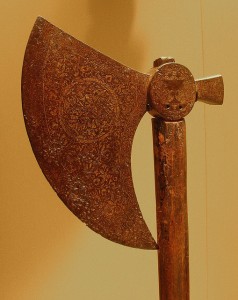
Every time the story of Ignatius Loyola is told, the teller of the tale mentions that he was a soldier and that he was wounded in battle. But then the speaker hurries on to what happens next-his conversion during his year-long recovery from terrible battle wounds.
Writer Dawn Eden thinks we should pause a moment and reflect on what Ignatius experienced as a soldier. She suggests that he was a trauma survivor. Fighting was often hand-to-hand. Men killed other men with swords, pikes, axes, and knives. Ignatius must have experienced intense terror and witnessed horrific carnage. Such things cause deep emotional and spiritual wounds. This is something that was always known but seldom talked about, and to our knowledge, Ignatius never talked about it.
I wonder how Ignatius’s battle experiences affected him. Trauma survivors often feel responsible for the horrific things they experienced. Could this be a factor in the bouts of morbid scrupulosity Ignatius suffered? Survivors are often tormented by memories. Ignatius was careful to include his memories in the things he gave back to God (“Take, O Lord, and receive all my liberty, my memory, my understanding, and my whole will.”) Those who heal from trauma have a profound sense of having come a long way from a very dark place. Can we detect this in Ignatius’s deep sense of gratitude to God?
Possibly so. In the Spiritual Exercises Ignatius strives to help us understand that we are sinners who are redeemed and loved by God. He may have been able to do this because he experienced it in a place where most of us don’t go.

Dear Brothers in Christ,
Fr. Joseph CH’I Min-che went peacefully to the Lord on May 2, 2012 at the Cardinal Tien Hospital, Taipei, at 11:00 a.m.
Fr. Joseph Ch’i was born in Beijing, China, on May 13, 1924. He entered the Society in Xianxian on Aug. 14, 1945, was ordained to the priesthood on March 18, 1956 Baguio, Philippines, and made the last vows on Aug. 15, 1961 at the Sacred Heart Community, Cebu.
All priests of the Chinese Province will celebrate one Mass first intention for Fr. Joseph Ch’i’s eternal rest. Those who are not priests will offer one Mass and Communion and recite one “corona”. The members of the Theologate community will offer two Masses, etc.
Yours in Our Lord,
Luciano Morra, S.J.
Socius
May 2, 2012
Dear Brothers in Christ,
Fr. Joseph CH’I Min-che went peacefully to the Lord on May 2, 2012 at the Cardinal Tien Hospital, Taipei, at 11:00 a.m.
Fr. Joseph Ch’i was born in Beijing, China, on May 13, 1924. He entered the Society in Xianxian on Aug. 14, 1945, was ordained to the priesthood on March 18, 1956 Baguio, Philippines, and made the last vows on Aug. 15, 1961 at the Sacred Heart Community, Cebu.
All priests of the Chinese Province will celebrate one Mass first intention for Fr. Joseph Ch’i’s eternal rest. Those who are not priests will offer one Mass and Communion and recite one “corona”. The members of the Theologate community will offer two Masses, etc.
Yours in Our Lord,
Luciano Morra, S.J.
Socius
May 2, 2012