

Author: cfliao


 |
The Exercises represent a kind of spiritual journey, as they invite the one who makes them to consider the foundational truths of Christian life: creation as an act of love, human stewardship of creation, sin and forgiveness, the life and work of Jesus as a paradigm of discipleship, Christ’s suffering, death, and resurrection and, finally, the surrender of all human life into the hands of a loving God. The Ignatian take on the Christian journey is to insist that it is a movement, an active progress towards a radical decision to live one’s life in harmony with Christ’s vision and values. The movement towards Christ is both inward and outward, horizontal and vertical, contemplative and active.
Howard Gray SJ,
An Ignatian Spirituality Reader


8th Week in Ordinary Time
9th Week in Ordinary Time
10th Week in Ordinary Time
SS Philip Minh, priest and Comps, College General Martyrs
11th Week in Ordinary Time
12th Week in Ordinary Time


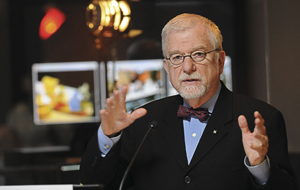
by William F. Baker
Breaking into a career in television would have been impossible for me without the intellectual and emotional support of my religion. Summoning the courage to speak freely and truthfully to political officials, corporate leaders and television stars is much easier when you remember that everybody is equal in the eyes of God. That mixture of humility and courage has been present whenever my faith and my working life have intersected.
There were times when being a Catholic in the television business gave me an extra, though necessarily private, sense of pride in my work. In a television studio about a mile from ground zero on Sept. 12, 2001, my friend Msgr. Jim Lisante was a guest of Bill Moyers on a live national broadcast. Bill had invited religious leaders into the studio to discuss the moral and spiritual ramifications of the terrorist attacks. Monsignor Lisante was sitting next to a rabbi, who had just cited an Old Testament text calling for “an eye for an eye.” When he was asked what the Catholic tradition taught in the face of such aggression, Monsignor Lisante looked right into the camera and said, “Forgiveness.” For anybody who remembers the climate of fear and rage that pervaded the country during those weeks, Monsignor Lisante’s courage is something to be deeply proud of.
If my faith has sometimes enriched my work, it has also occasionally made it more difficult. About 20 years ago, I had to decide whether to broadcast a film called “Stop the Church,” about members of the gay rights group Act Up, which disrupted Mass and desecrated the host at St. Patrick’s Cathedral on Fifth Avenue. Though I supported and still support the struggle of gay people for dignity and equality, I found the actions of the protesters in the film deeply offensive. But like the other Catholics I have known who work in media, I kept the private covenant of my faith separate from the public duties of my job. As a Catholic I found abhorrent what as a journalist I was morally obligated to bring before the independent judgment of the public. So the film ran on New York’s PBS station. This made a lunch I had with my friend Cardinal John O’Connor, at his residence near St. Patrick’s some months later, rather tense. I asked him about forgiveness, and he asked me about righteous indignation. We never mentioned it again and remained friends.

Throughout my career, the spiritual vocabulary of the church has given me a big advantage. It has shown me how to see my work sacramentally, as the outward sign of an inward, if not grace, then purpose. Abundant purpose sustains a person or a company when money may not be as abundant. My successes as a manager in the media business, and specifically in the not-for-profit media business, came because I persistently kept the inner justifications for my work in view, whether times were good or bad. And I always encouraged my employees to do the same.
Since retiring from WNET-TV, I have enjoyed the blessing of bringing my work and my faith closer together. I am producing a feature film called “Sacred,” about the deep connections between Islam, Judaism and Christianity. I have also accepted a position on the faculty of Fordham, New York’s Jesuit university. Surrounded there by a community sustained by the faith that has sustained me for so long, I feel very much at home.
president emeritus of the Educational Broadcast-ing Corporation, parent company of WNET-TV and WLIW-TV, where he served for 20 years as chief executive officer, is journalist-in-residence at Fordham University and holds the Claudio Aquaviva Chair at its Graduate School of Education.
Listen to a conversation with William F. Baker.
|
|
| Download MP3 |
William F. Baker, president emeritus of the Educational Broadcast-ing Corporation, parent company of WNET-TV and WLIW-TV, where he served for 20 years as chief executive officer, is journalist-in-residence at Fordham University and holds the Claudio Aquaviva Chair at its Graduate School of Education.


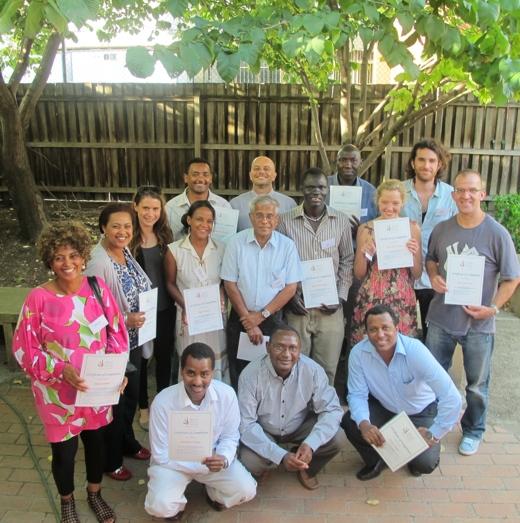
Imagine your feelings if every time you visited a particular friend you were searched, asked a series of intimidating questions and then taken to a hostile and foreign environment. What if that friend was more of an acquaintance? How long would you be able to handle such difficult visiting conditions? A week? Two weeks?
This is the searching question that Jesuit Social Services African case worker Tapuwa Bofu ponders when praising the volunteer mentors in the African Visitation and Mentoring Programme (AVAMP). The programme delivers mentoring support to people from African backgrounds, before and after their release from prison in Victoria, Australia.
“When we visit prisons we are searched thoroughly. You wouldn’t visit a friend if you knew you had to face this every time,” reflected Tapuwa.
“Our mentors are exceptional people,” said Mentor Joshua Futina. “It is all about just being a human being and wanting to so something to help out a fellow human being. A lot of the people we visit have no families here in Australia who can do that for them so we are trying to fill that gap. It is a big commitment and not something I do lightly but I thoroughly recommend it.”
AVAMP mentors are matched with the participants in remand on the basis of skills and shared interests, and visit Port Philip Prison, Melbourne Assessment Prison, and the Metropolitan Remand Centre.
“Relationships is what it’s all about,” said Daniel Clements, Manager of Brosnan Services, which runs AVAMP. “You don’t have to be an African to be a mentor; the idea is to guide them to somewhere they want to be – a place in life they want to end up.”
To ensure good outcomes for the prisoners and their mentors, the mentors receive ongoing support and are provided with training about culturally sensitive practice over 15 weeks. The training aims to develop a supportive mentoring relationship that continues following re-entry into the community.
For more information on AVAMP, contact Brosnan Services on +61 (03) 9387 1233.


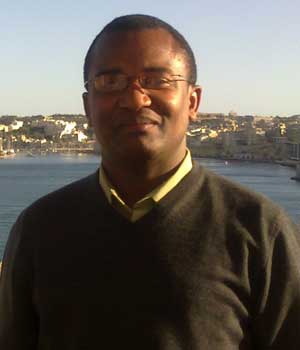
I am Fr. Mauki, a Tanzanian Jesuit from the Eastern Africa Province of the Society of Jesus. I joined the Jesuit Refugee Services (JRS) team in Malta to consolidate the pastoral accompaniment of JRS for African asylum seekers amid migrants present in Malta. After working for fifteen months with JRS, I have experienced that my having joined the Jesuit Refugee Services was to embark on a faith journey. I have discovered that God is giving me the privilege of assisting the forced migrants and through them experiencing God’s blessing.
Listening to the immigrants’ stories and frustrations in the detention centres has been the intervention I can provide to aid in lightening their hearts’ burdens. As a pastoral team, the only way we can help detainee migrants is to listen to their stories, instill hopes and offer a realistic approach to their problems. Most immigrants tell me that Mass in the detention centre is the only thing that gives them hope. Nobody can afford to take that away. They feel that God will not abandon nor forget them. For many, the Church is a sign of hope in the midst of an alien and hostile environment.
Working with immigrants has strengthened my faith. I have realized that God is present even in life’s most tragic episodes. The immigrants I encounter in detention have a profound faith conviction, a faith that can move mountains. I have seen immigrants who have discovered God as their only help and comfort in exile. I am amazed by their mysterious capacity to believe in God amidst many seemingly unjust situations. Many immigrants speak about Jesus as their only refuge and hope. During my pastoral care in detention, I try to penetrate their world and be with them, even if it is that I be present and silent. A vibrant hope I discover among the immigrants leaves me with a question: Do I bring hope, or do I find it there?
The hope I see among the immigrants is grounded in suffering. It is a grace that gives strength. The challenge for me is to search for and find the seeds of hope, to allow the same hope to continue to grow. In the present situation at the detention centres, pastoral care is a sign of hope and comfort for the people. I have also encountered immigrants who have abandoned their faith. They cannot fathom a loving God who has allowed them to be in detention for eighteen months and being rejected for asylum. The more the immigrants stay in detention, the more difficult it is for them to live out the virtues of their Christian faith.
My role is to search for and find the seeds of hope and to fan the feeble spark into a flame. Immigrants need to see light at the end of the tunnel. Christ offers a larger picture, a meaningful story of suffering, sacrifice and hope within which to situate one’s life. It is for this reason JRS Malta seeks to accompany, serve and defend the rights of asylum seekers and forcibly displaced persons who arrive in Malta. Forced migrants are victims of a violation of basic human rights. JRS Malta cannot ignore issues of protection and human rights violations in the context of forced migration.
Beatus Mauki SJ
Dar Manwel Magri
Mons Carmelo Zammit Street
Msida MSD 2020
Malta


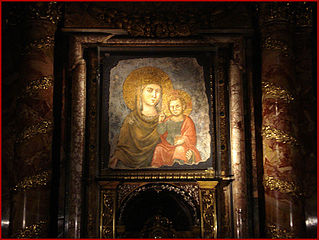
When Ignatius, Faber, and Laínez came in 1537 to Rome, Ignatius had discovered in the centre of the city, in the vicinity of the Capitol, a small church of Our Lady with the holy image ‘Madonna della Strada’. Time and again he instructed the Fathers to say Mass there. He longingly hoped for an opportunity to acquire that church. It was not so beautiful, but ideally situated as starting point for pastoral activities in the city.
This opportunity resulted from Father Codacio who had got that premises in hereditary tenancy on August 19th 1540, and had attained on November 18th the benefice of the parish St Maria della Strada. With the family Camillo Astalli who owned that complex Codacio worked for the transfer of the church with the holy image to the young Order. On May 15th 1542 Ignatius was inaugurated solemnly in the possessions of the sanctuary, whereas the parish pastoral was shifted to St Marco. It was the first church in the possession of Jesuits.
At the beginning of February 1541 the First Fathers had moved from the Piazza Frangipani into an old, narrow house. It stood opposite the small church and was rented for thirty Scuds annually. By demolition and new building the Professed House and the Church Il Gesù arose from those beginnings. Only under Francisco de Borja, the third General of the Order, was laid the foundation-stone for the building of Il Gesù on June 20th 1568. Architect was Jacopo Vignola, the successor of Michelangelo. The building dragged on for sixteen years until 1584.
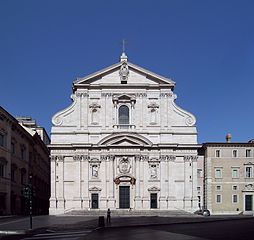
In this church is in front on the left side the Grave Altar of St Ignatius of Loyola. On its right is venerated the holy image ‘Madonna della Strada’. In the Professed House of the Jesuits just beside Il Gesù the three rooms once inhabited by Ignatius are still shown in their original form. Only the walls are covered with silk wallpapers.
To the building of Il Gesù contributed many donors. The chief patron was Cardinal Alessandro Farnese (who died at the beginning of March 1589). Farnese was Vice-Chancellor and led the state affairs since 1538. For full fifty-five years he belonged to the College of Cardinals. He took part in seven conclaves, often in the role of the ‘pope maker’. He was the ‘Grand Cardinal’, who was unmatched in experience and insight, generosity and charitableness for the poor. Uncommonly rich, he was devoted to the arts, the sciences, and the humanists. To the recent Society of Jesus Farnese was a generous promoter and an influential advisor. The Order owes him its main church Il Gesù, and the Roman Professed House.


by UCAnews
China’s first exhibition center dedicated to Father Matteo Ricci (1552-1610) has opened in Zhaoqing, the place where the Italian missionary first set foot on the mainland.
Acting director of the Paris Ricci Institute, officials from the Guangdong provincial cultural bureau and Zhaoqing city attended the opening ceremony on Sunday.
The new Matteo Ricci Cultural Exchange Exhibition Center details the life of the Jesuit priest, known as Li Madou to Chinese people, through an array of exhibits and written accounts.
The center is located near the ruins of the first church and Jesuit house that Fr Ricci and his confrere Fr Michele Ruggieri were allowed to build after they arrived in China in 1583. The church, called “Xianhua Temple” out of respect for Buddhist custom, was dedicated to the Blessed Mother.
At that time Zhaoqing was the capital of Guangdong province.
The location of the church was next to a 500-year-old Buddhist pagoda on the banks of the Xijiang (West) River, from where the two missioners arrived by boat.
Father Gabriel Li Jiafang of Jiangmen, who attended the opening, hoped the exhibition, which is designed to boost tourism, would make more people aware of the missionary and the Catholic faith.
“The local Church has provided historical material such as books and written records for the Ricci exhibition center which is managed by the city museum. A replica of a Ricci statue owned by the parish is also erected there,” the pastor of Zhaoqing’s Immaculate Conception Church said.
Other exhibits include Fr Ricci’s writings, items of clothing, scientific instruments and astronomical data, to help visitors understand his background, his six years in Zhaoqing (until 1589) and his contribution to cultural exchanges between East and West.
A special feature, around 30 clocks made in Europe between the 17th and 20th centuries, impressed Fr Li.
“Though these clocks are not relics of Fr Ricci, they commemorate his contribution in introducing Western clock-making techniques that influenced the development of Zhaoqing’s clock industry,” he said.


by Jim Manney
There’s an old saying that we should “pray as if everything depends on God, work as if everything depends on you.” It’s been attributed to Ignatius (though there’s no evidence that he said it), and many think it captures the Ignatian spirit: turning it all over to God in prayer and then working tirelessly and urgently to do God’s work. I prefer to reverse it: “pray as if everything depends on you, work as if everything depends on God.” This means that prayer has to be urgent: God has to do something dramatic if everything depends on me. It also puts our work in the right perspective: if it depends on God, we can let it go. We can work hard but leave the outcome up to him. If God is in charge we can tolerate mixed results and endure failure.
Ignatius writes about work and human effort in a letter to an aristocrat named Jerome Vines, whom I imagine was a busy, hard-charging, Type A character who was getting upset about the fate of his many projects. A busy man, Ignatius writes, “must make up his mind to do what he can, without afflicting himself if he cannot do all that he wishes. You must have patience and not think that God our Lord requires what man cannot accomplish.” He concludes with this: “There is no need to wear yourself out, but make a competent and sufficient effort, and leave the rest to him who can do all he pleases.”


 |
A farmer’s daughter duty was to carry fresh milk to customers in various villages, one of whom was a priest. To reach his house, the milkmaid had to cross a good-sized stream. People crossed it by a sort of ferry raft, for a small fee.
One day the priest, who performed worship daily with the offering to God of fresh milk, finding it arrived very late, scolded the poor woman. “What can I do?” she said, “I start out early from my house, but I have to wait a long time for the boatman to come.”
Then the priest said (pretending to be serious), “What! People have even walked across the ocean by repeating the name of God, and you can’t cross this little river?” This milkmaid took him very seriously. From then on she brought the priest’s milk punctually every morning. He became curious about it and asked her how it was that she was never late anymore.
“I cross the river repeating the name of the Lord,” she replied, “just as you told me to do, without waiting for the ferry.” The priest didn’t believe her, and asked, “Can you show me this, how you cross the river on foot?” So they went together to the water and the milkmaid began to walk over it. Looking back, the woman saw that the priest had started to follow her and was floundering in the water.
“Sir!” she cried, “You are uttering the name of God, yet all the while you are holding up your clothes from getting wet. That is not trusting in God!”


The Society marks 450 years in Macau in 2012. On August 24, 1562, Frs Luís Fróis SJ and Giovanni Battista Del Monte SJ arrived in Macau to take up residence and embark on apostolic work. The two Portuguese Jesuits helped the two diocesan priests who were ministering to the 5,000 inhabitants of Macau, among whom were 600 Portuguese.
They had arrived with Diogo Pereira, a successful merchant, who had been appointed Portuguese envoy to the court of Beijing. They were provided lodgings first in the residence of Guilherme Pereira, brother of Diogo and benefactor of Francis Xavier. Later, they were also welcomed by Pedro Quintero, and it was he who would offer funds for the construction of the first Jesuit house in Macau.
The Jesuits awaited instructions regarding the embassy to Beijing until late in 1565, when they received word from the Jesuit Provincial, António de Quadros, to erect a permanent residence of the Society in Macau. They began to build at the end of December 1565.
The first bishop of Macau (1568-1581) was the Portuguese Jesuit Melchior M Carneiro, who founded a leprosarium and the “Santa Casa da Misericordia”.
*** *** *** *** *** ***
The Beijng Center appoints new director
French Jesuit Thierry Meynard SJ takes over as the International Director of The Beijing Center (TBC) from August 1, 2012. He will succeed Fr Roberto Ribeiro SJ, who is stepping down after completing his three-year term as international director.
“I have seen TBC growing along the years into a unique place for teaching and research on China,” said Fr Meynard, who is a Professor in the Philosophy Department at Sun Yat-sen University, Guangzhou, China, where he has been teaching since 2006. He is also Vice-director of the Research Center on the Introduction of Western Learning in China.
The Beijing Center logo“TBC has offered an in-depth knowledge of Chinese language, culture and society to hundreds of students, and the TBC alumni are today engaged in China in many different ways. We shall continue our mission to provide a rigorous training in understanding China and to foster academic exchanges between China and the world.”
Fr Meynard first arrived in China in 1988 and brings with him enormous experience through his work in higher education and life in China, in understanding Chinese culture and bridging Chinese and Western cultures.
He obtained a PhD in Chinese philosophy from Peking University in 2003. His publications include The Religious Philosophy of Liang Shuming, The Hidden Buddhist, Confucius Sinarum Philosophus (1687), and The First Translation of the Confucian Classics. He was the editor of Liang Shuming’s Thought and Its Reception, and Teilhard and the Future of Humanity.
Yunan tripThe Beijing Center was founded in 1988 by Fr Ron Anton SJ, who ran the centre for a decade before passing the reins to Fr Ribeiro. Initially conceived as a standard Study Abroad Programme, TBC has expanded in unexpected directions, into scholarship, publications, a varied menu of programmes.
TBC makes its resources available to students seeking to study in Beijing, to scholars seeking to explore the history and culture of China as it relates to other cultures, and to professionals seeking to understand and to build relationships with contemporary China.