Category: Uncategorized

An Apostle of Prayer

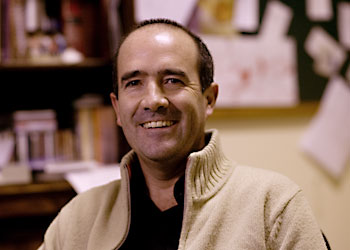
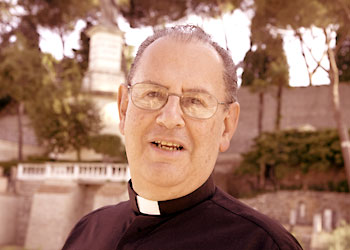
Father Claudio Barriga SJ

In 2007 Father Claudio Barriga took the reins of the 164-year old program and is working to update a solid, very practical spirituality. He also devotes time to the Eucharistic Youth Movement and took part in World Youth Day in Australia last summer. Years of pastoral work in Chile prepared Fr. Barriga to handle a mission which is far more pastoral than administrative.

Posted: December 9 | Listen now

An Apostle of Prayer

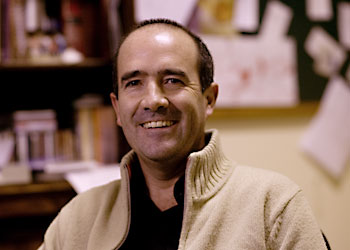
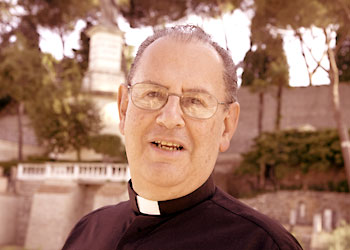
Father Claudio Barriga SJ

In 2007 Father Claudio Barriga took the reins of the 164-year old program and is working to update a solid, very practical spirituality. He also devotes time to the Eucharistic Youth Movement and took part in World Youth Day in Australia last summer. Years of pastoral work in Chile prepared Fr. Barriga to handle a mission which is far more pastoral than administrative.

Posted: December 9 | Listen now

Fighting the Lord’s Fight

By William Doino Jr. | NOVEMBER 24, 2008

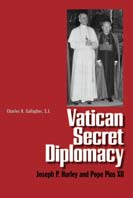
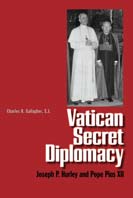
Vatican Secret Diplomacy
By Charles R. Gallagher, S.J.
Yale Univ. Press. 304p $40

Among the movers and shakers of American Catholicism, Joseph P. Hurley (1894-1967) surely deserves a high place. As priest, bishop, Vatican envoy and ally of Franklin D. Roosevelt, he was at the center of a number of 20th-century debates involving the church. As influential in his day as his contemporary, Francis Cardinal Spellman, Hurley remains far less known. Fortunately, with the publication of Charles Gallagher’s new work, Vatican Secret Diplomacy, this forgotten prelate finally receives the attention he deserves.

Gallagher, a Jesuit seminarian, is the author of a previous work on the Archdiocese of St. Augustine, Fla., which Hurley led from 1940 to 1967. Granted access to Hurley’s private papers, he has produced a fascinating study.

As Gallagher tells it, Hurley was a classic pre-conciliar Catholic. He believed, as did many U.S. bishops, that a “blessed harmony” existed between the church and the United States, and thought patriotism “should have the strongest place in man’s affections.”

Once ordained, a combative spirit animated him: “Dominating concepts of Catholic militarism, Americanism, patriotism, and athleticism would all be transferred to his religious outlook and his later diplomatic career…. To compromise, dither, walk away from a fight, or ‘not face up to facts’ placed one in the detestable category of ‘the Catholic milksop’.”

Fighting the Good Lord’s fight-as he saw it-was Hurley’s specialty. A man of the world as well as the cloth, his abilities were recognized by his superiors, who assigned him posts in India, Japan and, finally, the Vatican. That Hurley took well to all these positions-despite any formal diplomatic training-speaks to his natural talents.

Gallagher’s book is as much character study as religious biography. Hurley was a man of contradictions. Though outstanding in many respects, he sometimes allowed prejudice to overtake him. While serving in the papal secretariat of state (1934-40), he sympathized with the controversial priest Charles Coughlin. When he finally took a stand against “Charlie,” as he called him, it was only because of Coughlin’s criticism of Franklin D. Roosevelt, not his anti-Semitism. And yet, to Hurley’s credit, after he witnessed what was actually happening to Jews during the 1930s and 40s, he became their champion-delivering scorching sermons against Hitler and his “criminal effort to eradicate the Jews.” He also aligned himself with the White House, becoming “the most outspoken critic of American Catholic noninterventionism and arguably the most ardent Catholic supporter of Roosevelt’s wartime foreign policy.” At a time of rampant isolationism, this was daring.

Even after America’s entry into the war, conflicts continued, especially when the United States and the Holy See differed. Invariably, Hurley took his government’s side, even promoting the State Department’s “Black Propaganda” against the papacy (meant to influence its political stands). Had the Vatican become aware of this, it could have ended Hurley’s ecclesiastical career.

Though positive toward Hurley, Gallagher offers a one-sided view of Eugenio Pacelli (Pope Pius XII). Relying upon questionable evidence, Gallagher depicts Pacelli as overly cautious; more fearful of Communism than of Nazism; and not as outspoken as his predecessor, Pius XI. These are familiar but unpersuasive charges, given that Hitler’s most fervent supporters always blamed Pacelli for the anti-Nazi line taken by the Holy See. Gallagher errs when he writes that Cardinal Pacelli’s 1937 warning to the American diplomat Alfred Klieforth was “arguably the only time Pacelli personally expressed his disdain for Hitler.” In fact, as early as 1923, Pacelli, then papal nuncio in Germany, wrote to the Vatican (following Hitler’s failed putsch) and denounced the future dictator by name.

One of Gallagher’s sources against Pius XII is Hurley himself, who revered Pius XI but doubted Pacelli. But the claim that there was a big difference between Pius XI and Pius XII is unconvincing, since Pius XI appointed Cardinal Pacelli his secretary of state and said the cardinal “speaks with my voice.”

Some of Hurley’s criticisms may have been based on simple ignorance. Gallagher cites an entry in one of Hurley’s papers, for example, where Hurley praises Pius XI’s anti-Nazi encyclical Mit Brennender Sorge: “Ratti [Pius XI] said it in March 1937, even if Pacelli missed the point later.” Apparently, Hurley was unaware that Pacelli drafted Pius XI’s encyclical. Similarly, Hurley believed Pius XII’s wartime statements were not direct enough; but the Nazis themselves denounced Pius as a “mouthpiece of the Jewish war criminals,” and many rescuers have testified that Pius inspired them.

In 1940, Pius XII suddenly appointed Hurley (still stationed in Rome) to be bishop of St. Augustine, a move that had the effect of placing the outspoken prelate in a “backwater” diocese. Gallagher sees this as Pius’s punishment for Hurley’s independent ways. But whatever tensions existed, the pope must have admired the feisty American on some level; for when the war ended, he surprised Hurley by reviving his diplomatic career, appointing him acting chief of the apostolic nunciature in Belgrade, Yugoslavia. There he courageously battled the Communists, even as he met with constant frustration.

Hurley experienced far more success in St. Augustine, to which he returned in 1950, expanding the diocese through savvy real estate deals and religious gusto. If only Hurley’s knack for property development had been matched by a more prophetic imagination. A staunch traditionalist, he opposed the Second Vatican Council and even ridiculed John Courtney Murray, S.J., as a “master of double-talk.”

Last, though an outspoken foe of racism abroad, Hurley was less sensitive to it back home. During 1964, the Rev. Martin Luther King Jr. transformed St. Augustine into “a major area of civil rights activity and media attention.” Hurley wanted no part of this. Declining to meet with King, he instead sent him an equivocal letter expressing Christian fraternity “among people of different races,” but warning against “any act which might occasion…ill will.” This was six years after the American bishops had issued-on the orders of a dying Pius XII-a pastoral condemning the sins of racial segregation.

One wonders how anyone, observing Hurley’s failure, might have mistaken him for a “Catholic milksop.”

William Doino Jr. is a Catholic researcher and writer who specializes in the history of the Holocaust.


Fighting the Lord’s Fight

By William Doino Jr. | NOVEMBER 24, 2008

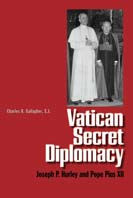
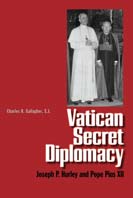
Vatican Secret Diplomacy
By Charles R. Gallagher, S.J.
Yale Univ. Press. 304p $40

Among the movers and shakers of American Catholicism, Joseph P. Hurley (1894-1967) surely deserves a high place. As priest, bishop, Vatican envoy and ally of Franklin D. Roosevelt, he was at the center of a number of 20th-century debates involving the church. As influential in his day as his contemporary, Francis Cardinal Spellman, Hurley remains far less known. Fortunately, with the publication of Charles Gallagher’s new work, Vatican Secret Diplomacy, this forgotten prelate finally receives the attention he deserves.

Gallagher, a Jesuit seminarian, is the author of a previous work on the Archdiocese of St. Augustine, Fla., which Hurley led from 1940 to 1967. Granted access to Hurley’s private papers, he has produced a fascinating study.

As Gallagher tells it, Hurley was a classic pre-conciliar Catholic. He believed, as did many U.S. bishops, that a “blessed harmony” existed between the church and the United States, and thought patriotism “should have the strongest place in man’s affections.”

Once ordained, a combative spirit animated him: “Dominating concepts of Catholic militarism, Americanism, patriotism, and athleticism would all be transferred to his religious outlook and his later diplomatic career…. To compromise, dither, walk away from a fight, or ‘not face up to facts’ placed one in the detestable category of ‘the Catholic milksop’.”

Fighting the Good Lord’s fight-as he saw it-was Hurley’s specialty. A man of the world as well as the cloth, his abilities were recognized by his superiors, who assigned him posts in India, Japan and, finally, the Vatican. That Hurley took well to all these positions-despite any formal diplomatic training-speaks to his natural talents.

Gallagher’s book is as much character study as religious biography. Hurley was a man of contradictions. Though outstanding in many respects, he sometimes allowed prejudice to overtake him. While serving in the papal secretariat of state (1934-40), he sympathized with the controversial priest Charles Coughlin. When he finally took a stand against “Charlie,” as he called him, it was only because of Coughlin’s criticism of Franklin D. Roosevelt, not his anti-Semitism. And yet, to Hurley’s credit, after he witnessed what was actually happening to Jews during the 1930s and 40s, he became their champion-delivering scorching sermons against Hitler and his “criminal effort to eradicate the Jews.” He also aligned himself with the White House, becoming “the most outspoken critic of American Catholic noninterventionism and arguably the most ardent Catholic supporter of Roosevelt’s wartime foreign policy.” At a time of rampant isolationism, this was daring.

Even after America’s entry into the war, conflicts continued, especially when the United States and the Holy See differed. Invariably, Hurley took his government’s side, even promoting the State Department’s “Black Propaganda” against the papacy (meant to influence its political stands). Had the Vatican become aware of this, it could have ended Hurley’s ecclesiastical career.

Though positive toward Hurley, Gallagher offers a one-sided view of Eugenio Pacelli (Pope Pius XII). Relying upon questionable evidence, Gallagher depicts Pacelli as overly cautious; more fearful of Communism than of Nazism; and not as outspoken as his predecessor, Pius XI. These are familiar but unpersuasive charges, given that Hitler’s most fervent supporters always blamed Pacelli for the anti-Nazi line taken by the Holy See. Gallagher errs when he writes that Cardinal Pacelli’s 1937 warning to the American diplomat Alfred Klieforth was “arguably the only time Pacelli personally expressed his disdain for Hitler.” In fact, as early as 1923, Pacelli, then papal nuncio in Germany, wrote to the Vatican (following Hitler’s failed putsch) and denounced the future dictator by name.

One of Gallagher’s sources against Pius XII is Hurley himself, who revered Pius XI but doubted Pacelli. But the claim that there was a big difference between Pius XI and Pius XII is unconvincing, since Pius XI appointed Cardinal Pacelli his secretary of state and said the cardinal “speaks with my voice.”

Some of Hurley’s criticisms may have been based on simple ignorance. Gallagher cites an entry in one of Hurley’s papers, for example, where Hurley praises Pius XI’s anti-Nazi encyclical Mit Brennender Sorge: “Ratti [Pius XI] said it in March 1937, even if Pacelli missed the point later.” Apparently, Hurley was unaware that Pacelli drafted Pius XI’s encyclical. Similarly, Hurley believed Pius XII’s wartime statements were not direct enough; but the Nazis themselves denounced Pius as a “mouthpiece of the Jewish war criminals,” and many rescuers have testified that Pius inspired them.

In 1940, Pius XII suddenly appointed Hurley (still stationed in Rome) to be bishop of St. Augustine, a move that had the effect of placing the outspoken prelate in a “backwater” diocese. Gallagher sees this as Pius’s punishment for Hurley’s independent ways. But whatever tensions existed, the pope must have admired the feisty American on some level; for when the war ended, he surprised Hurley by reviving his diplomatic career, appointing him acting chief of the apostolic nunciature in Belgrade, Yugoslavia. There he courageously battled the Communists, even as he met with constant frustration.

Hurley experienced far more success in St. Augustine, to which he returned in 1950, expanding the diocese through savvy real estate deals and religious gusto. If only Hurley’s knack for property development had been matched by a more prophetic imagination. A staunch traditionalist, he opposed the Second Vatican Council and even ridiculed John Courtney Murray, S.J., as a “master of double-talk.”

Last, though an outspoken foe of racism abroad, Hurley was less sensitive to it back home. During 1964, the Rev. Martin Luther King Jr. transformed St. Augustine into “a major area of civil rights activity and media attention.” Hurley wanted no part of this. Declining to meet with King, he instead sent him an equivocal letter expressing Christian fraternity “among people of different races,” but warning against “any act which might occasion…ill will.” This was six years after the American bishops had issued-on the orders of a dying Pius XII-a pastoral condemning the sins of racial segregation.

One wonders how anyone, observing Hurley’s failure, might have mistaken him for a “Catholic milksop.”

William Doino Jr. is a Catholic researcher and writer who specializes in the history of the Holocaust.


Missionary in Ethiopia

Bishop Rodrigo Mejía Saldarriaga SJBishop Rodrigo Mejía Saldarriaga SJ

Bishop Rodrigo Mejía Saldarriaga follows a tradition of Jesuit missionaries who went to Ethiopia in the very earliest days of the history of the Society of Jesus. This native of Colombia now serves a growing Church in the south of the country and faces challenges of multiple languages, limited resources and strong social problem-which he confronts with humor and patience.

Posted: November 7 | Listen now:

MP3 file

Missionary in Ethiopia

Bishop Rodrigo Mejía Saldarriaga SJBishop Rodrigo Mejía Saldarriaga SJ

Bishop Rodrigo Mejía Saldarriaga follows a tradition of Jesuit missionaries who went to Ethiopia in the very earliest days of the history of the Society of Jesus. This native of Colombia now serves a growing Church in the south of the country and faces challenges of multiple languages, limited resources and strong social problem-which he confronts with humor and patience.

Posted: November 7 | Listen now:

MP3 file

Santa Clara University Names New President

SANTA CLARA, Calif., Sep 18, 2008 (BUSINESS WIRE) — Michael Engh, S.J., distinguished historian and current Dean of the Bellarmine College of Liberal Arts at Loyola Marymount University in Los Angeles, has been selected the 28th president of Santa Clara University. Fr. Engh will succeed Paul Locatelli, S.J., who announced in March that he would step down after nearly 20 years as president. Fr. Locatelli continues as president of the University until December 31, 2008. For more information visit www.scu.edu/president/incoming.

Engh, 58, was elected by Santa Clara University’s Board of Trustees during a special meeting of the governing body on September 17. He will take office in January 2009. In making the announcement, A.C. “Mike” Markkula, Chair of the Santa Clara University Board of Trustees, said, “Fr. Engh brings to Santa Clara an outstanding record as a scholar, teacher, historian, and administrator. He has made significant academic contributions in his career as a historian, and understands the potential of Jesuit institutions to advance learning and artistic expression, faculty scholarship, and social justice.” He added that Fr. Engh emerged from a field of candidates as the best person to lead Santa Clara to new frontiers in academic excellence. “He possesses a rare blend of vision, compassion, and a deep understanding of Jesuit higher education that will serve students, faculty, staff and the broader Silicon Valley community very well.” Robert Finocchio, Vice chair of the Santa Clara University Board of Trustees and chair of the presidential search committee said, “Fr. Engh is the ideal person to lead Santa Clara University into the next stage of its history. He will continue building Santa Clara’s reputation for academic excellence and supporting our mission of developing leaders of competence, conscience, and compassion.” “From the first conversations in the search process, Santa Clara’s themes–the pursuit of academic excellence, social justice, community-based learning–have resonated with my core values,” Engh said. “It is an honor and a great privilege to have been selected to join Santa Clara University as its next president.” A third-generation Angeleno, Engh graduated from what was then Loyola University of Los Angeles in 1972 and was ordained a Jesuit priest in 1981. He completed his graduate studies in the history of the American West at the University of Wisconsin at Madison in 1987 and began teaching at LMU in 1988. He was also active in founding LMU’s Thomas and Dorothy Leavey Center for the Study of Los Angeles and the university’s Center for Ignatian Spirituality. He is the author of Frontier Faiths: Church, Temple, and Synagogue in Los Angeles (1992) and has published 18 articles or chapters in books on the history of Los Angeles, the Catholic Church in the American West, and the history of LMU. “Santa Clara University is fortunate to have Fr. Engh come on board as President,” said Robert B. Lawton, S.J., President of Loyola Marymount University in Los Angeles. “He is a wonderful human being, and agreat academic who works very well with both faculty and students, and he is a terrificfund raiser,” he said. “He’ll quickly become a Bronco!” As dean of the Bellarmine College of Liberal Arts at LMU, a position he has held since June 2004, Engh has the responsibility for programs that enrolled approximately 1800 students. In addition, he oversees 151 tenured and tenure-track faculty, 85 to 95 part-time faculty each semester, and 26 staff members. During his tenure as dean, he led a team in the implementation of a five-year strategic plan for the College: “Education That Transforms,” initiated contacts with universities in China, encouraged foreign immersion trips for faculty, and founded two programs to promote inter-religious dialogue. Prior to his work as Dean, Engh served as rector of the Jesuit Community at LMU from 1994 to 2000, where he coordinated, planned, and completed the construction of a new residence for the Jesuits. In 1991, he cofounded the Los Angeles History Seminar at the Huntington Library, one of the largest urban history seminars in the country, and led the group until 2003. As part of a sabbatical, Engh spent two years (2000-02) in East Los Angeles conducting research at the Huntington Library, volunteering at Los Angeles Central Juvenile Hall, and helping at the Dolores Mission parish. Engh says his approach to higher education reflects a city-inspired understanding of the essential place that social justice holds in the mission of the contemporary Jesuit University. “The gritty realities of inner-city life jarred me as no book or lecture had,” he said. He adds that academics in any locale have much to learn from the socio-economic realities that surround every campus. “My vision uses the traditional Jesuit lens of academic rigor to focus on the pursuit of knowledge, justice, and faith. Excellence in scholarship and the arts presumes rigor, mental training that disciplines the mind in order to free the spirit in its quest for truth and beauty.” At Santa Clara, Engh said, his job will be to ask a lot of questions and to listen deeply to the campus community. As president, his priorities would center on drawing diverse and academically gifted students, attracting and retaining talented faculty, and fundraising. The oldest of six children, he was born in Los Angeles, where his mother’s family first settled in the 1880s. His father, Donald, is a retired captain in the Los Angeles city fire department and his mother, Marie Therese (Airey) Engh, is a homemaker. He graduated from St. Bernard High School, in Playa del Rey, Calif. in 1968. A baseball enthusiast, Engh said the two words that best describe him are: Dodgers Fan! In his free time, he enjoys reading, regular exercise, and spending time with friends. He is also looking forward to getting to know and engage with the diversity, energy and entrepreneurial spirit that are the hallmarks of Silicon Valley. Engh, who first visited Santa Clara in 1974 as a Jesuit novice, has great memories of his early visits to the Mission campus. Captivated by history as a child, he remembers being fascinated by the past, by historic sites, and original documents. His grandfather, Edmund F. Airey, Sr., was a great storyteller, and Engh grew up hearing his accounts of California history and sharing his love of the past. “Engaging teachers in high school and college further inspired my love of studying history,” he said. Engh, who has a reputation of being a challenging professor and a tough grader — “if you want the best for your students, you have to ask their best from them” — also knew early on in his student life that he wanted to be a teacher.”My first experience as a teacher was teaching history to a class of high school students. I knew then I had found my true vocation.” About Santa Clara University Santa Clara University, a comprehensive Jesuit, Catholic university located 40 miles south of San Francisco in California’s Silicon Valley, offers its 8,685 students rigorous undergraduate curricula in arts and sciences, business, and engineering, plus master’s and law degrees and engineering Ph.D.s. Distinguished nationally by one of the highest graduation rates among all U.S. master’s universities, California’s oldest operating higher-education institution demonstrates faith-inspired values of ethics and social justice. SOURCE: Santa Clara University

Santa Clara University  Deepa Arora, 408-554-5125  Media Relations Director  [email protected]  

Copyright Business Wire 2008 End of Story

Santa Clara University Names New President

SANTA CLARA, Calif., Sep 18, 2008 (BUSINESS WIRE) — Michael Engh, S.J., distinguished historian and current Dean of the Bellarmine College of Liberal Arts at Loyola Marymount University in Los Angeles, has been selected the 28th president of Santa Clara University. Fr. Engh will succeed Paul Locatelli, S.J., who announced in March that he would step down after nearly 20 years as president. Fr. Locatelli continues as president of the University until December 31, 2008. For more information visit www.scu.edu/president/incoming.

Engh, 58, was elected by Santa Clara University’s Board of Trustees during a special meeting of the governing body on September 17. He will take office in January 2009. In making the announcement, A.C. “Mike” Markkula, Chair of the Santa Clara University Board of Trustees, said, “Fr. Engh brings to Santa Clara an outstanding record as a scholar, teacher, historian, and administrator. He has made significant academic contributions in his career as a historian, and understands the potential of Jesuit institutions to advance learning and artistic expression, faculty scholarship, and social justice.” He added that Fr. Engh emerged from a field of candidates as the best person to lead Santa Clara to new frontiers in academic excellence. “He possesses a rare blend of vision, compassion, and a deep understanding of Jesuit higher education that will serve students, faculty, staff and the broader Silicon Valley community very well.” Robert Finocchio, Vice chair of the Santa Clara University Board of Trustees and chair of the presidential search committee said, “Fr. Engh is the ideal person to lead Santa Clara University into the next stage of its history. He will continue building Santa Clara’s reputation for academic excellence and supporting our mission of developing leaders of competence, conscience, and compassion.” “From the first conversations in the search process, Santa Clara’s themes–the pursuit of academic excellence, social justice, community-based learning–have resonated with my core values,” Engh said. “It is an honor and a great privilege to have been selected to join Santa Clara University as its next president.” A third-generation Angeleno, Engh graduated from what was then Loyola University of Los Angeles in 1972 and was ordained a Jesuit priest in 1981. He completed his graduate studies in the history of the American West at the University of Wisconsin at Madison in 1987 and began teaching at LMU in 1988. He was also active in founding LMU’s Thomas and Dorothy Leavey Center for the Study of Los Angeles and the university’s Center for Ignatian Spirituality. He is the author of Frontier Faiths: Church, Temple, and Synagogue in Los Angeles (1992) and has published 18 articles or chapters in books on the history of Los Angeles, the Catholic Church in the American West, and the history of LMU. “Santa Clara University is fortunate to have Fr. Engh come on board as President,” said Robert B. Lawton, S.J., President of Loyola Marymount University in Los Angeles. “He is a wonderful human being, and agreat academic who works very well with both faculty and students, and he is a terrificfund raiser,” he said. “He’ll quickly become a Bronco!” As dean of the Bellarmine College of Liberal Arts at LMU, a position he has held since June 2004, Engh has the responsibility for programs that enrolled approximately 1800 students. In addition, he oversees 151 tenured and tenure-track faculty, 85 to 95 part-time faculty each semester, and 26 staff members. During his tenure as dean, he led a team in the implementation of a five-year strategic plan for the College: “Education That Transforms,” initiated contacts with universities in China, encouraged foreign immersion trips for faculty, and founded two programs to promote inter-religious dialogue. Prior to his work as Dean, Engh served as rector of the Jesuit Community at LMU from 1994 to 2000, where he coordinated, planned, and completed the construction of a new residence for the Jesuits. In 1991, he cofounded the Los Angeles History Seminar at the Huntington Library, one of the largest urban history seminars in the country, and led the group until 2003. As part of a sabbatical, Engh spent two years (2000-02) in East Los Angeles conducting research at the Huntington Library, volunteering at Los Angeles Central Juvenile Hall, and helping at the Dolores Mission parish. Engh says his approach to higher education reflects a city-inspired understanding of the essential place that social justice holds in the mission of the contemporary Jesuit University. “The gritty realities of inner-city life jarred me as no book or lecture had,” he said. He adds that academics in any locale have much to learn from the socio-economic realities that surround every campus. “My vision uses the traditional Jesuit lens of academic rigor to focus on the pursuit of knowledge, justice, and faith. Excellence in scholarship and the arts presumes rigor, mental training that disciplines the mind in order to free the spirit in its quest for truth and beauty.” At Santa Clara, Engh said, his job will be to ask a lot of questions and to listen deeply to the campus community. As president, his priorities would center on drawing diverse and academically gifted students, attracting and retaining talented faculty, and fundraising. The oldest of six children, he was born in Los Angeles, where his mother’s family first settled in the 1880s. His father, Donald, is a retired captain in the Los Angeles city fire department and his mother, Marie Therese (Airey) Engh, is a homemaker. He graduated from St. Bernard High School, in Playa del Rey, Calif. in 1968. A baseball enthusiast, Engh said the two words that best describe him are: Dodgers Fan! In his free time, he enjoys reading, regular exercise, and spending time with friends. He is also looking forward to getting to know and engage with the diversity, energy and entrepreneurial spirit that are the hallmarks of Silicon Valley. Engh, who first visited Santa Clara in 1974 as a Jesuit novice, has great memories of his early visits to the Mission campus. Captivated by history as a child, he remembers being fascinated by the past, by historic sites, and original documents. His grandfather, Edmund F. Airey, Sr., was a great storyteller, and Engh grew up hearing his accounts of California history and sharing his love of the past. “Engaging teachers in high school and college further inspired my love of studying history,” he said. Engh, who has a reputation of being a challenging professor and a tough grader — “if you want the best for your students, you have to ask their best from them” — also knew early on in his student life that he wanted to be a teacher.”My first experience as a teacher was teaching history to a class of high school students. I knew then I had found my true vocation.” About Santa Clara University Santa Clara University, a comprehensive Jesuit, Catholic university located 40 miles south of San Francisco in California’s Silicon Valley, offers its 8,685 students rigorous undergraduate curricula in arts and sciences, business, and engineering, plus master’s and law degrees and engineering Ph.D.s. Distinguished nationally by one of the highest graduation rates among all U.S. master’s universities, California’s oldest operating higher-education institution demonstrates faith-inspired values of ethics and social justice. SOURCE: Santa Clara University

Santa Clara University  Deepa Arora, 408-554-5125  Media Relations Director  [email protected]  

Copyright Business Wire 2008 End of Story

An International Symposium in Commemoration of the 3rd Centenary of the death of Tomás Pereira, S.J


In the Light and Shadow of an Emperor

Tomás Pereira, S.J. (1645-1708), the Kangxi Emperor
and the Jesuit Mission in China

Lisbon
10-12 November, 2008
  Macau
27-29 November, 2008

The symposium examines one of the most decisive and controversial moments in the history of the Jesuit Mission in China during the reign (1661-1722) of the Kangxi Emperor (1654-1722). One of the most outstanding and enlightened Chinese monarchs, Xuanye’s celebrated cultural tastes, scientific curiosity and political sensibility led to the admission of the Jesuits at his court. This attitude had its apex in the proclamation of the Edict of Tolerance of March 22, 1692, allowing the Catholic faith to be preached and practiced in China. It was a relevant and uncommon gesture of openness towards the West that led to the flourishing of the Catholic Mission in China. It also confirmed the respectability of Western learning in China and secured Macau’s fragile situation as a European entrepôt. To all of this the Portuguese Jesuit, Tomás Pereira S.J. (1645-1708) contributed decisively, as is clearly demonstrated by the full text of the Edict of Tolerance, which with the imperial eulogy was transcribed on his tombstone. Tomás Pereira also played a crucial role in trying to appease the famous Rites Controversy in China after Western politico-religious animosities had disrupted the Kangxi Emperor’s original attitude of benevolence towards the Catholic Missions.

Working at the court of Kangxi for more than thirty years (1673-1708), Tomás Pereira not only forged a unique and privileged personal relation with the Emperor, but also served as an innovative musician and a skillful mediator on Sino-Russian affairs. He built the new Nantang Church in Beijing, and was a pro interim Prefect of the Court of Mathematics, as well as an effective representative and protector of the Christian missions in China. This symposium reviews from an interdisciplinary and primary source perspective Tomás Pereira´s life and work in the contexts of the China Mission and of Chinese Politics and Court Culture. It was, in fact, a rich and unique moment of dialogue of China with the West and constitutes an inspiring experience for the future. For this reason, the symposium takes as its starting point the 300 th anniversary of the death of Tomás Pereira, whose intellectual skills, dedication, loyalty and moral authority made him one of the most influential and respected Jesuits in the inner circle of the Kangxi Emperor.

Main Themes


Tomás Pereira: the Man and the Missionary
The China Mission in the time of Kangxi Emperor
Tomás Pereira, Science and Mission
Tomás Pereira and the Music in China
Tomás Pereira, the Court and the Chinese Culture
Tomás Pereira and the Sino-Russian Negotiations of Nerchinsk

Scientific Committee

Prof. John W. Witek, S.J. – Georgetown University, USA

Prof. Paul Rule – Ricci Institute –
University of San Francisco Center for the Pacific Rim, USA

Prof. António Vasconcelos de Saldanha – Instituto do Oriente –
Instituto Superior de Ciências Sociais e Políticas/Universidade Técnica de Lisboa, Portugal

Prof. Henrique Leitão – Centro de História das Ciências –
Faculdade de Ciências/Universidade de Lisboa, Portugal

Prof. Fernando Ramôa Ribeiro – Universidade Técnica de Lisboa, Portugal

Prof. Lin Qian – Chinese National Commission for the History of the Qing Dynasty, PRC

Prof. Zhuo Xinping – Centre for the Study of Christianity –
Institute for World Religions – Chinese Academy of Social Sciences, PRC

Prof. Zhang Xiping – National Research Center of Overseas Sinology –
Beijing Foreign Studies University, PRC

Prof. Louis Gendron, S.J. – Chinese Province – Society of Jesus

Prof. Alfredo Dinis, S.J. – Province of Portugal – Society of Jesus

Fr. Thomas McCoog, S.J. – Institutum Historicum Societatis Iesu, Rome

Ambassador João de Deus Ramos – Fundação Oriente, Portugal

Mestre Tereza Sena – Macau Ricci Institute, Macau

Dr. Jin Guoping – Portugal

Organising Institutions

The Macau Ricci Institute
Instituto do Oriente
ISCSP (Universidade Técnica de Lisboa)
Centro de História das Ciências
Faculdade de Ciências
(Universidade Clássica de Lisboa)

Co-organising Institutions

Reitoria da Universidade Técnica de Lisboa

Centre for the Study of Christianity – Institute for World Religions –
Chinese Academy of Social Sciences

National Research Center of Overseas Sinology – Beijing Foreign Studies University

Chinese Province – Society of Jesus

Province of Portugal – Society of Jesus

Institutum Historicum Societatis Iesu

Fundação Oriente

Sponsors
Dates

Lisbon: 10th – 12th November 2008
Macau: 27th – 29th November 2008

Venues

Lisbon: Auditorium of the Museu do Oriente, Fundação Oriente
Macau: Inspiration Building, Institute For Tourism Studies

Languages

Lisbon: English, Portuguese
Macau: English, Chinese (Mandarin). Simultaneous interpretation will be provided.

Registration Fee (Macau)

MOP$150 / HK$150 (cash)

Contact us

[email protected]

Please check this website periodically for further updated information

An International Symposium in Commemoration of the 3rd Centenary of the death of Tomás Pereira, S.J

In the Light and Shadow of an Emperor

Tomás Pereira, S.J. (1645-1708), the Kangxi Emperor
and the Jesuit Mission in China

Lisbon
10-12 November, 2008
  Macau
27-29 November, 2008

The symposium examines one of the most decisive and controversial moments in the history of the Jesuit Mission in China during the reign (1661-1722) of the Kangxi Emperor (1654-1722). One of the most outstanding and enlightened Chinese monarchs, Xuanye’s celebrated cultural tastes, scientific curiosity and political sensibility led to the admission of the Jesuits at his court. This attitude had its apex in the proclamation of the Edict of Tolerance of March 22, 1692, allowing the Catholic faith to be preached and practiced in China. It was a relevant and uncommon gesture of openness towards the West that led to the flourishing of the Catholic Mission in China. It also confirmed the respectability of Western learning in China and secured Macau’s fragile situation as a European entrepôt. To all of this the Portuguese Jesuit, Tomás Pereira S.J. (1645-1708) contributed decisively, as is clearly demonstrated by the full text of the Edict of Tolerance, which with the imperial eulogy was transcribed on his tombstone. Tomás Pereira also played a crucial role in trying to appease the famous Rites Controversy in China after Western politico-religious animosities had disrupted the Kangxi Emperor’s original attitude of benevolence towards the Catholic Missions.

Working at the court of Kangxi for more than thirty years (1673-1708), Tomás Pereira not only forged a unique and privileged personal relation with the Emperor, but also served as an innovative musician and a skillful mediator on Sino-Russian affairs. He built the new Nantang Church in Beijing, and was a pro interim Prefect of the Court of Mathematics, as well as an effective representative and protector of the Christian missions in China. This symposium reviews from an interdisciplinary and primary source perspective Tomás Pereira´s life and work in the contexts of the China Mission and of Chinese Politics and Court Culture. It was, in fact, a rich and unique moment of dialogue of China with the West and constitutes an inspiring experience for the future. For this reason, the symposium takes as its starting point the 300 th anniversary of the death of Tomás Pereira, whose intellectual skills, dedication, loyalty and moral authority made him one of the most influential and respected Jesuits in the inner circle of the Kangxi Emperor.

Main Themes


Tomás Pereira: the Man and the Missionary
The China Mission in the time of Kangxi Emperor
Tomás Pereira, Science and Mission
Tomás Pereira and the Music in China
Tomás Pereira, the Court and the Chinese Culture
Tomás Pereira and the Sino-Russian Negotiations of Nerchinsk

Scientific Committee

Prof. John W. Witek, S.J. – Georgetown University, USA

Prof. Paul Rule – Ricci Institute –
University of San Francisco Center for the Pacific Rim, USA

Prof. António Vasconcelos de Saldanha – Instituto do Oriente –
Instituto Superior de Ciências Sociais e Políticas/Universidade Técnica de Lisboa, Portugal

Prof. Henrique Leitão – Centro de História das Ciências –
Faculdade de Ciências/Universidade de Lisboa, Portugal

Prof. Fernando Ramôa Ribeiro – Universidade Técnica de Lisboa, Portugal

Prof. Lin Qian – Chinese National Commission for the History of the Qing Dynasty, PRC

Prof. Zhuo Xinping – Centre for the Study of Christianity –
Institute for World Religions – Chinese Academy of Social Sciences, PRC

Prof. Zhang Xiping – National Research Center of Overseas Sinology –
Beijing Foreign Studies University, PRC

Prof. Louis Gendron, S.J. – Chinese Province – Society of Jesus

Prof. Alfredo Dinis, S.J. – Province of Portugal – Society of Jesus

Fr. Thomas McCoog, S.J. – Institutum Historicum Societatis Iesu, Rome

Ambassador João de Deus Ramos – Fundação Oriente, Portugal

Mestre Tereza Sena – Macau Ricci Institute, Macau

Dr. Jin Guoping – Portugal

Organising Institutions

The Macau Ricci Institute
Instituto do Oriente
ISCSP (Universidade Técnica de Lisboa)
Centro de História das Ciências
Faculdade de Ciências
(Universidade Clássica de Lisboa)

Co-organising Institutions

Reitoria da Universidade Técnica de Lisboa

Centre for the Study of Christianity – Institute for World Religions –
Chinese Academy of Social Sciences

National Research Center of Overseas Sinology – Beijing Foreign Studies University

Chinese Province – Society of Jesus

Province of Portugal – Society of Jesus

Institutum Historicum Societatis Iesu

Fundação Oriente

Sponsors

Dates

Lisbon: 10th – 12th November 2008
Macau: 27th – 29th November 2008

Venues

Lisbon: Auditorium of the Museu do Oriente, Fundação Oriente
Macau: Inspiration Building, Institute For Tourism Studies

Languages

Lisbon: English, Portuguese
Macau: English, Chinese (Mandarin). Simultaneous interpretation will be provided.

Registration Fee (Macau)

MOP$150 / HK$150 (cash)

Contact us

[email protected]

Please check this website periodically for further updated information