
| 活动地点: | Xavier House香港思维静院 | |
| 主办单位: | 香港依纳爵灵修中心 | |
| 活动介绍: |
Contemplation is a method of meditation focused on the perception of one’s own breathing, listening and body sensations. It does not require any previous qualifications. It is however necessary to have a certain psychological equilibrium in order to make progress in the exercise of Contemplation and being able to integrate Contemplation into one’s daily life. Usually the practise of Contemplation inspires to try to understand insights from major Oriental and Western wisdom traditions and stories. The course is open to all religious denominations and atheists. Leader:Fr Stephen Rothlin, S.J. Services Fee:HK$1000 Download our Calendar of Events for 2013
Address:27 Peak Road West, Cheung Chau Island, Hong Kong Phone:(852) 2981-0342 Fax:(852) 2981-0749 eMail:[email protected]
Telephone Enquiry Time:9:15am – 12:15pm, 2:00 pm – 5:00 pm Transport:
|
|
| 活动日期: | 2013-04-19 ~ 2013-04-21 |

Contemplation Course


No Commonplace Achievements

Chris Lowney on the Ignatian passion for lofty goals:

Heroic Leadership
Best Practices from a 450-Year-Old Company that Changed the WorldChris Lowney
ISBN 0-8294-1816-4
336 Pages
When Loyola informed Portuguese Jesuits that “no commonplace achievement will satisfy the great obligations you have of excelling,” he created heroic expectations that could be met only through change and innovation on a dramatic scale.
By way of illustration, imagine any modern corporate setting. The manager who sets an expense reduction target of 10 percent gets his team wondering where to buy cheaper pencils: 10 percent means safe, mainstream thinking. An expense reduction target of 40 percent, however, is “no commonplace achievement” but a heroically ambitious target that requires outside-the-box thinking. With this goal, no one is thinking about cheaper pencils anymore; it’s time to conceive radically new ways of doing things.
The heroism that gripped Jesuits led to the same radical thought patterns. So it wasn’t enough for Jesuit teams in Paraguay to advocate marginally better treatment of indigenous people within the encomienda system; they rejected the whole system to establish the radically new reduction model. The tradition of thinking outside the box began when Loyola himself jettisoned the centuries-old model of religious life to invent a completely new kind of religious company.
From Heroic Leadership
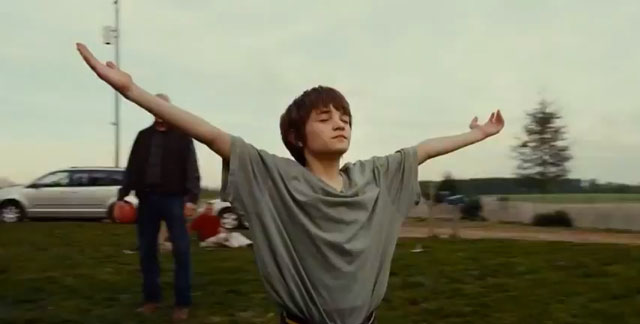
Film Reviews : The Odd Life of Timothy Green
by Rev Dr Richard Leonard SJ

Starring Jennifer Garner, Joel Edgerton, C.J. Adams, Diane Weist. Directed by Peter Hedges. 104 mins. Rated G.
‘Odd’ is an odd word for the title of this film. Yes, Timothy Green is odd, that is, he is not your usual young boy. But, he is sweetness and light rather than odd. This is a nice piece of Americana, magic realism and sentiment with a sad/happy ending.
Jennifer Garner and Joel Edgerton (fitting easily into the American scene) are a couple who have tried every means available for having a child but without success. We see them at the opening of the film being interviewed by officials of an Adoption Agency. In fact, the whole film is their telling their rather (very) unbelievable tale, punctuated by the flashbacks of their life and what they call their ‘miracle’, the arrival of Timothy Green during a mysterious storm in their drought-stricken town of Stanleyville.
Timothy (C.J. Adams) is a delightful young lad, what Americans would call ‘cute’. And he fits into the family life beautifully bringing enormous joy to the couple who are plunged into instant parenthood. He is nice to everyone, even to the boys who bully him at school. The magic does not immediately help him at soccer practice, tripping over himself, but he gets there. And he improvises, as do his parents, when his aunt (Rosemarie de Witt) has one of her musical afternoons to showcase her own children. He charms an elderly uncle and aunt. He even mellows his grandfather who had not been at all affirming to his own son.
There are some social questions in the background, the economy of the town and its museum, but especially the factory which is about to close down. It makes (and we are shown the detail): pencils.
This review has avoided giving away anything much about Timothy’s previous life and his particular gifts. Just a hint: leaves.
Quite a lot of character actors, including Diane Weist and David Morse, build a strong supporting cast.
It is a nice film, about generally nice people. But, for those who use ‘twee’ as a derogative word, it will be far too sweet.
Rev Dr Richard Leonard SJ is the Director of the Australian Catholic Office for Film and Broadcasting (ACOFB).Peter W. Sheehan is associate of the Australian Catholic Office of Film and Broadcasting.

Jesus Appears to Mary, His Mother


by Becky Eldredge
The first contemplation in the Fourth Week of the Spiritual Exercises involves Jesus appearing to his mother. Can you imagine being Mary, sitting in her house, overcome with grief and despair at losing her son? Can you imagine Mary, fully immersed in a “Holy Saturday” moment, pondering what happened, absorbed in her grief? Grief that we can relate to because of loss in our own lives.
Ignatius invites us to contemplate the interaction between Mary and her beloved son, who she watched die on the cross. What would the dialogue sound like?
“Woman, why are you crying?”
“I thought I had lost you.”
“I am here. I am here. I am risen, Mom. I am risen.”
“You are here, Son.”
Being a mom, I cannot even imagine the depth of joy Mary felt at seeing her son again. I have no doubt that her heart burst with joy and that she was radiant with love and hope. Can you imagine the depth of her consolation in that moment?
But what does Mary’s experience have to do with our lives? EVERYTHING!
In this Easter season we celebrate Mary’s joy that her son is here. We celebrate that Jesus is alive in each of us, in our world, creating us moment by moment. We celebrate that we can experience the joy Mary felt at seeing her son because Jesus lives within us. Easter reminds us of the reason to hope in the first place—because of the Resurrection of Mary’s son!

Mirrors of Dangerous Grace
by Michelle Francl-Donnay

I have a favorite mirror, which thankfully is not in my house. In it, I see myself as I do in my mind’s eye: five inches taller, and maybe even 10 pounds lighter. Alas, the mirror is slightly warped, stretching reflections like taffy. The reality is that I’m five foot tall and my bad knee would be happier if I, and not just my reflection, lost those 10 pounds.
The work of this last week was to seek out mirrors that didn’t skew my image, that let me see myself as I truly am-a loved sinner-and then look into them. And look again, more deeply.
There are many mirrors to choose from, and Ignatius suggests holding them up one at a time. What does sin look like in history, in the larger world? How am I entangled in it? Can I see how my sin spirals out, injuring my students and colleagues, my family and friends?
And hardest of all, how can I look into a mirror that shows every flaw with clarity and manage to see how beautifully I am created, how wonderfully loved? Ignatius asks us to imagine looking into Jesus’ eyes as he dies on the cross and talking to him. The conversation Ignatius suggests we have is not one in which Jesus takes us to task for every sin we have ever committed in some sort of divine scolding. Instead, the emphasis is on seeing the immensity of the love with which I am created, and by which I am redeemed-a love that will give everything away, even while it sees every chip in my soul, every hard spot in my heart.
Ignatius keeps the focus turned away from ourselves-what have I done wrong?-and firmly on God: What have I done for Christ? What am I doing for Christ? What ought I to do for Christ? Lutheran pastor Walter Wangerin calls this contemplation a “mirror of dangerous grace.” It is a mirror that does not just reflect back what is, or even what has been, but like my favorite mirror, invites me to see my best self. This mirror of grace is not passive, but active. It challenges me to become my best self.
What I found most difficult about these contemplations was not so much the looking into the mirrors, but the looking again. I want to say, yes, yes, I see it; I’m changed. I finally realized that I was still wincing at my flaws, still not quite ready to risk facing a love so deep that even as Jesus hangs on the cross for what I have done, I am drenched in grace.
What I see, with grace I could yet be.

Give Thanks with the Examen

by Joseph Tetlow, SJ
The Ignatian Examen begins with thanks to God for all that we have and are. We might begin with the greater things like faith in Christ and life itself and then thank God for the concrete graces of the day. We can live “always and everywhere giving thanks to God” (Ephesians 5:20).
Look carefully at all we need to thank God for. Some of his gifts are given to all of us: We live in plenty. Most of us pray and worship in peace. Some of God’s gifts are deeply personal-good parents, a good marriage, faithful friends. These are all gifts from God that we may appreciate too little.
Some of our gifts are so much a part of everyday life that we do not think of them as gifts. Who thanks God for everyday things like drinkable water in every faucet? For trustworthy supermarkets? For a web of highways? We can thank God for these things too.
And then there are the greatest gifts: our “firm hope” of living with Christ forever in our own flesh. Our confidence that God cares for me, personally. Our amazing gift of the Eucharist.
We are grateful to a loving God. Grateful that our loving God remains present in the gifts he gives. Grateful that God is always acting to care and provide for us. Grateful that God the Son, Jesus Christ, came to us and remains with us, God-with-us.
As we grow in gratitude, we grow more willing to let go of our attachments to things that hold us back. This Lent is good time to reflect on these attachments and ask our Lord Jesus to free us from them.
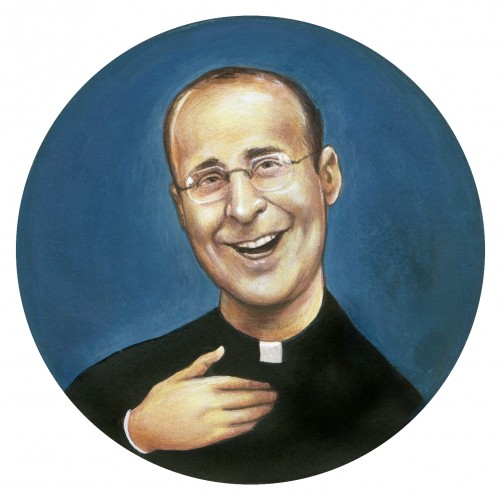
Habemus Humor?
by James Martin, SJ

As you may have already concluded from my lack of the title “Cardinal,” I’m not eligible to vote in the upcoming conclave. Nonetheless, like every sentient Catholic, I have plenty of ideas about who the next pope should be and what he should do.
Not surprisingly, we have received many inquiries here at America from the media about those very questions. The morning that Pope Benedict XVI announced his resignation I fielded a call from one journalist who asked me what the top three qualifications might be for the next pope. “Well, first,” I said, “he has to be a holy person. Second, he needs to be able to preach the Gospel effectively. And third, he must have the ability to work within a variety of cultures.” There was an uncomfortable pause on the other end of the line. “Father, I can’t just write that he needs to be holy,” he said. “I was hoping you would talk about something like women’s ordination and birth control.”
So much for holiness.
There are many challenges facing the church that I hope the next pope will take up. (My list is too long for a column.) But as the conclave approaches, I think less about issues and more about the person. Few can predict what will occupy the working days of the next vicar of Christ, and none of the cardinal-electors has the gift of foresight. So besides considering where a candidate stands on the burning topics and sizing up his skills (administrative and otherwise), it is important to look at the spiritual qualities of the man: his prayerfulness, his freedom, his awareness of his own reliance on God. In a word, his holiness.
Let me add another quality that makes for a holy person: a sense of humor. I can think of no other job that so requires a keen sense of humor as being pope. It is an absolutely essential requirement for sustaining at least a modicum of humility. After all, it must be difficult not to get a swelled head when people kiss your ring and call you “Your Holiness” or “Holy Father.” (Frankly, one of my fantasies about what I would do as pope would be to say, “I’m not crazy about that second title. You have only one father in heaven-as my boss said.”)
Besides fostering humility, self-deprecating humor puts others at ease. One model for papal humor is Pope John XXIII, who during his pontificate demonstrated a flair for self-deprecation. Once, after his microphone failed at a public event, he said to the crowd, “Don’t worry about not hearing what I was saying. You didn’t miss anything. I didn’t say anything interesting anyway.” Archbishop Fulton Sheen, for 20 years host of a popular radio broadcast and then on television in the early 1950s and again in the 1960s, related that John XXIII once said to him: “From all eternity, God knew that I was going to be pope. He had 80 years to work on me. Why did he make me so ugly?”
Are there any papal candidates who fulfill the “sense of humor” requirement? I’m not as familiar with the papabili as John L. Allen Jr., Thomas J. Reese, S.J., or Robert Mickens, so I can’t tell you if Cardinal Gianfranco Ravasi is a hoot or Cardinal Angelo Scola knows any good knock-knock jokes. But there is at least one man who fits the bill: Cardinal Timothy J. Dolan of New York. When I was on his radio show last year, Cardinal Dolan related that when he was archbishop of Milwaukee, he met with Pope John Paul II and shared some good news with him. “Your Holiness,” said Dolan, “the Archdiocese of Milwaukee is growing!” John Paul looked him over and said, “So is the archbishop!”
If the cardinals don’t believe me, then maybe they should believe their former boss. In an interview given during his pontificate, Pope Benedict XVI shared this reflection:
I believe [God] has a great sense of humor. Sometimes he gives you something like a nudge and says, ‘Don’t take yourself so seriously!’ Humor is in fact an essential element in the mirth of creation. We can see how, in many matters in our lives, God wants to prod us into taking things a bit more lightly, to see the funny side of it, to get down off our pedestal and not forget our sense of fun.
Let’s pray for a pope who takes God and the church seriously-but not himself.
James Martin, S.J., editor at large of America, is the author of the e-book Together on Retreat: Meeting Jesus in Prayer (HarperOne).

God’s Gaze
by Andy Otto

One of the biggest revelations one can have in prayer is that he or she is loved, especially those who have experienced trauma or abandonment. When I was a hospital chaplain I would often recommend this prayer: imagine God gazing down on you and ask yourself how he feels.
This prayer is Ignatian in that it is inspired by the meditation on the Incarnation, which involves the Trinity looking down on the world. God’s gaze upon us is always one of love, and I had one patient who especially clung to this. He said for days he made that his prayer. Knowing God loved him made his medical situation much more bearable. So often in our attempts to find God’s presence around us we fail to realize that God is seeking us: “For the Son of Man came to seek out and to save the lost.” (Luke 19:10)
My spiritual director once recommended that for my daily Examen, instead of trying to feel God’s presence I let God feel my presence. I imagined what it might look like from God’s perspective as God brought me into God’s mind, felt my presence, and gained awareness of what I was feeling that day. This loving gaze revealed to me God’s desire for prayer with me, that my feelings mattered, and that God not only wanted to know about my day but wanted to experience it with me. That is compassionate love.
Not all of us have experienced major trauma, but every one of us has felt abandoned at one time or another, feeling needless or unimportant. Knowing that we are deeply loved by God-even sought out in compassion-is one of the greatest soul-healing realizations we can have.

Wisdom Story 51
by Paul Brian Campbell,SJ

A little wave was bobbing along in the ocean, having a grand old time. He’s enjoying the wind and the fresh air – until he notices the other waves in front of him, crashing against the shore. “My God, this is terrible,” the wave says. “Look what’s going to happen to me!”
Then along comes another wave. It sees the first wave, looking grim, and it says to him, “Why do you look so sad?” The first wave says, “You don’t understand! We’re all going to crash! All of us waves are going to be nothing! Isn’t this terrible?”
The second wave says, “No, you don’t understand. You’re not a wave, you’re part of the ocean.”
Refugees – people without past and future
 |
by Fr. Peter Balleis S.J.
JRS International Director
What defines the existence of a refugee? A journalist recently asked me this question on Swiss Radio. She could have looked up the definition in the 1951 Geneva Refugee Convention but then she was asking the question from an existential rather than a legal viewpoint. What is the meaning of being a refugee, what does it do to a person? A refugee is someone whose past has been destroyed and whose future is blocked: a person seemingly without a past or a future.
Life as a linear progression of past, present and future. We all have a past and a future, which meet in the here-and-now. Most people have a home, a place where they were born, grew up, went to school, with family and friends, in a community based on a shared culture, values and beliefs. Rooted in this past we build the present and future, with dreams, career plans, opportunities in education and our chosen profession.
No past. For a refugee, however, the past has been taken away, left behind, or destroyed: the security and protection offered by a home, family and community have been lost. Dear ones, family members have been dispersed, some or all killed. School and university studies have been abruptly interrupted. Refugees find themselves in a new country, a new culture, sometimes with another religion and value system. They can no longer refer to their past when defining their identity because it has been torn away.
For some, the experience suffered in their home country was so traumatic and deeply disappointing that they want to cut loose, never to refer to it again, much less return to it. The past is no longer a reference point for the present.
No future. But there is no future either. Many refugees feel their host country tolerates them at best but doesn’t really want them. The willingness to welcome large or even small numbers of refugees has faded. So-called xenophobia is a growing phenomenon not just in wealthier regions but also in countries in the global South, which were once receptive.
Forcibly displaced people who are granted international refugee status can end up living under the protection of the UN for more than 10, even 15 years, because their home and host countries fail to protect them. Children are born as refugees, grow up in camps and spend their entire childhood and youth there.
Many other refugees are not recognised at all. Nowadays, more than half the world’s refugees live in cities, often illegally, without documents, status or protection. They live a life in the shadows. In many countries, even recognised refugees are not allowed to work. Less than one percent have access to higher education, due to many obstacles, not least because it’s simply too expensive. No work, no higher education opportunities, no local integration, no return, no resettlement means no future for most.
Just the here-and-now. Refugees live at the crossroads between past and future. They just live in the here-and-now, often on the margins of society, at the borders of countries, in a ‘no man’s land’.
Advent and Christmas. Let’s consider the life of a refugee through the lens of Advent and Christmas. The experience of a refugee mirrors the meaning of Advent, a time in the here-and-now between the unredeemed past and expected salvation in the future.
The unredeemed past is marked by the sin of the world: greed for power, riches and glory. Across the world, people are oppressed, violated and killed for the sake of robbing their land, their resources, for the sake of the glory of a few. It is such violence and injustice that refugees have had to run away from, which destroyed their past.
Thus refugees are left with nothing but the hope and desire for peace, for a new home where they will find protection. They wait for years for this new home, which will be either back in their country, or in the host country through local integration, or in another country where they may be resettled. They wait patiently, without ever losing hope, until one day the message of peace is announced, the message delivered by the angel at Christmas: Peace on earth to all people of goodwill (cf. Lk 2:14).
The existence of refugees is an illustration of the theological meaning of advent, of a people who live in darkness and who see a great light, as the prophet Isaiah (cf. Is 9:2).
Jesuit Refugee Service nourishes the hope of Christmas. Working with refugees, JRS also experiences this dimension of Advent to some degree. There is no need to go into detail to understand what it means for JRS teams to share the tragedies unfolding right now in eastern Congo and Syria. Hundreds of thousands have fled the wanton destruction. JRS still has teams on the ground in eastern Congo and Syria, holding out for as long as possible with people who are forced to endure an unredeemed world at war, a place in the here-and-now without past or future.
This is in line with our mission that gives priority to accompanying refugees, to being with them and sharing to some degree the dangers they are exposed to.
Another priority of JRS is to serve refugees by offering psychosocial and pastoral care, and especially education, to kindle hope through learning. JRS formal and informal education programmes reach over 250,000 children, young people and adults. School is about more than increasing knowledge, it is a place where the past is healed and the future is gained.
Education in the here-and-now of a refugee’s life helps to re-connect the lost past and future. One can lose everything but not what one carries in the mind and heart, knowledge and values, the spirit of hope. Education is a source of hope and an instrument of peace.
The mission of JRS finds deep meaning in Advent, striving for the hope, joy and peace celebrated at Christmas. It is about finding a new home, the protection of a new family, community and country, just as Mary and Joseph found a humble place in Bethlehem, cared for by the poor shepherds who were the first to hear the message of the angels: Peace on earth to all people of goodwill.