Category: News

Deacons in the service of the Church

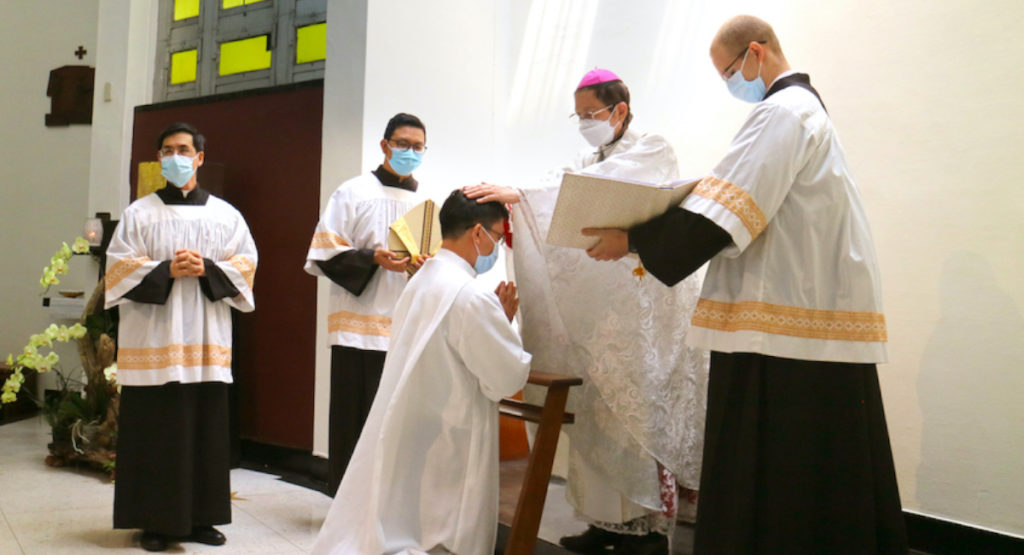
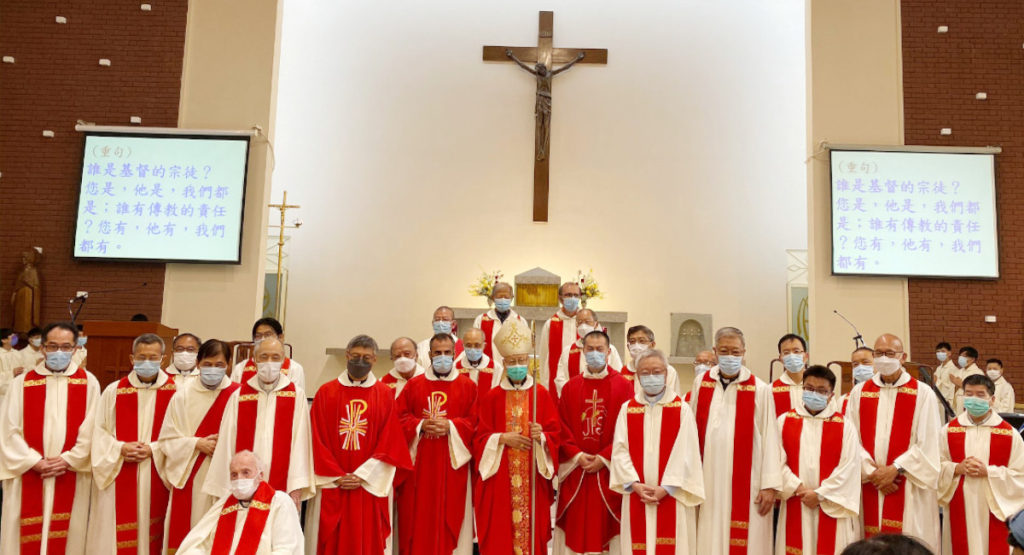
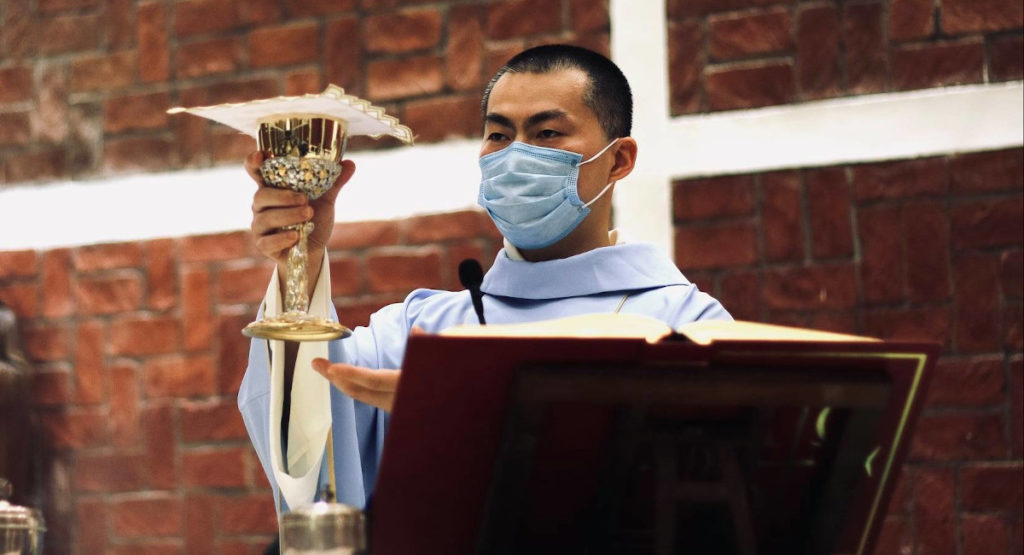
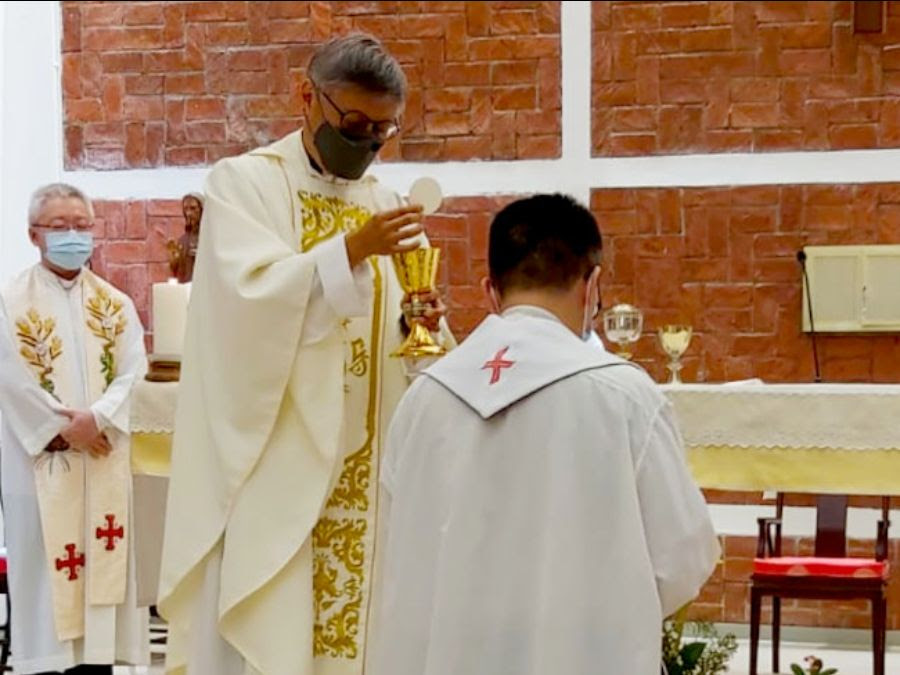
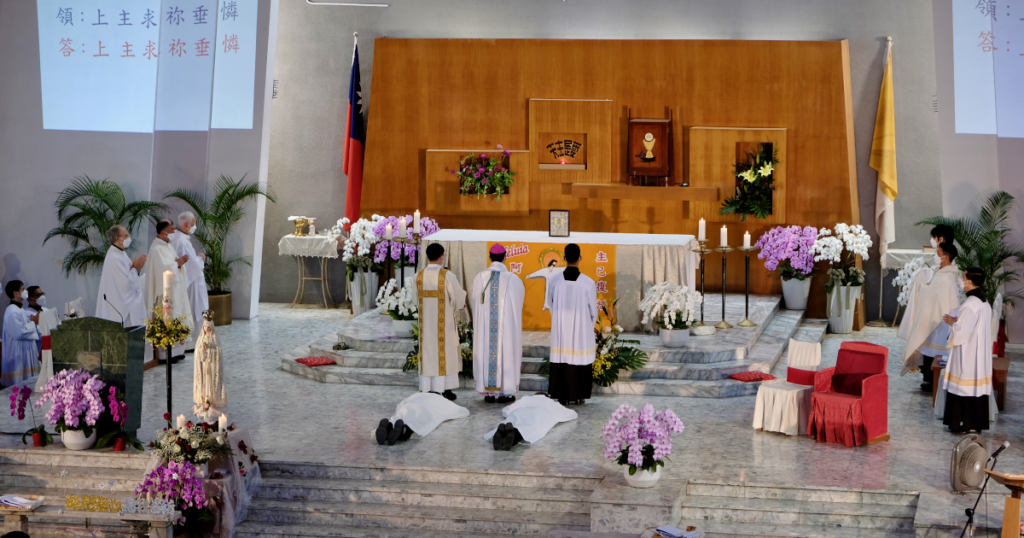
The Chinese Province of the Society of Jesus celebrated the ordination to the diaconate of two scholastics, Philip Fung Hon-chung SJ and Przemyslaw Mąk SJ, on 7 May at the Holy Family Church in Taipei. Due to the Covid-19 pandemic, the organising committee offered two options for people to participate in the liturgical celebration: in-person or through the livestream. Despite the challenges, the faithful, friends, and classmates of the two ordinands filled the church with enthusiasm.

The Archbishop of Taipei, Most Rev Thomas Chung, was initially scheduled to preside at the ordination. However, due to recent cases of infection at the Taipei Archdiocesan chancery office, Most Rev John Baptist Lee, the Bishop of Hsinchu Diocese and chairperson of the Chinese Regional Bishops’ Conference, presided over the liturgy instead. The Mass was also joined by more than 30 concelebrants.

Bishop Lee exhorted the two ordinands to immerse themselves in works of charity, deepen their spiritual life, and be fervent in evangelization. Later, two Jesuit priests, Fr Jaime Valenciano and Fr Barry Martinson vested the new deacons respectively with the stole and dalmatic.

Towards the end of the liturgy, the Socius of the Chinese Province, Fr Luciano Morra SJ, gave the thanksgiving speech on behalf of the Provincial, Fr Stephen Tong SJ, who is currently in Hong Kong and so was unable to attend the celebration due to travel restrictions from the pandemic. Fr Morra read Father Provincial’s letter in which he specifically thanked the Bishop for ordaining our two Jesuit brothers to the diaconate as servants of the Church.
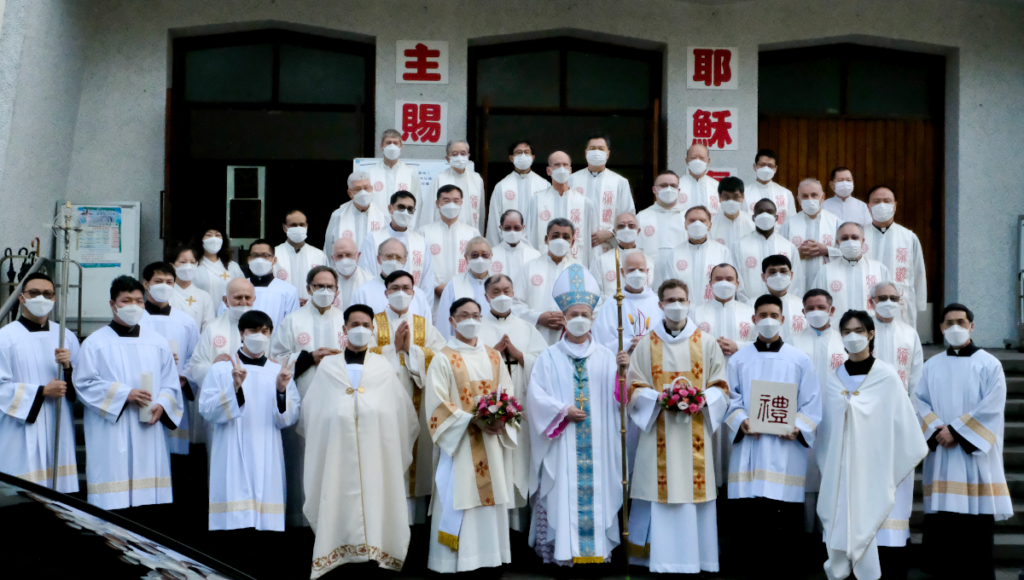
2022.05.Taiwan-diaconate-ordination2

In his letter, Fr Tong also mentioned the varied backgrounds of the new deacons: Philip is a neurologist while Przemyslaw is a ballroom dancer, yet the same Lord called them both and placed them together. This shows forth the diverse and international character of the Society of Jesus. Father Provincial sincerely hopes that the new deacons will reflect the image of God indefatigably in all circumstances.

Fr Tong also described the role and essence of deacons in the early Church. He encouraged the new deacons to concretely embody the spirit of Jesus expressed in his words: “I did not come to be served, but to serve,” He further exhorted them to live out the motto of the Jesuits: “For the Greater Glory of God” standing firmly on the foundation of the Holy Church.

Finally, Fr Tong expressed his gratitude for the generosity of the parents of the deacons. He hopes the two deacons will grow joyfully in their vocation.

At the end of liturgy, the new deacons gave thanksgiving speeches, each in their mother tongue, Cantonese and Polish, respectively. They expressed gratitude for the support of family and friends. Since this ordination day was also the Feast of Our Lady of China, the two deacons venerated the Holy Mother with a bouquet of flowers while singing and dancing to the Magnificat. In so doing they drew this heartwarming celebration to a perfect end.
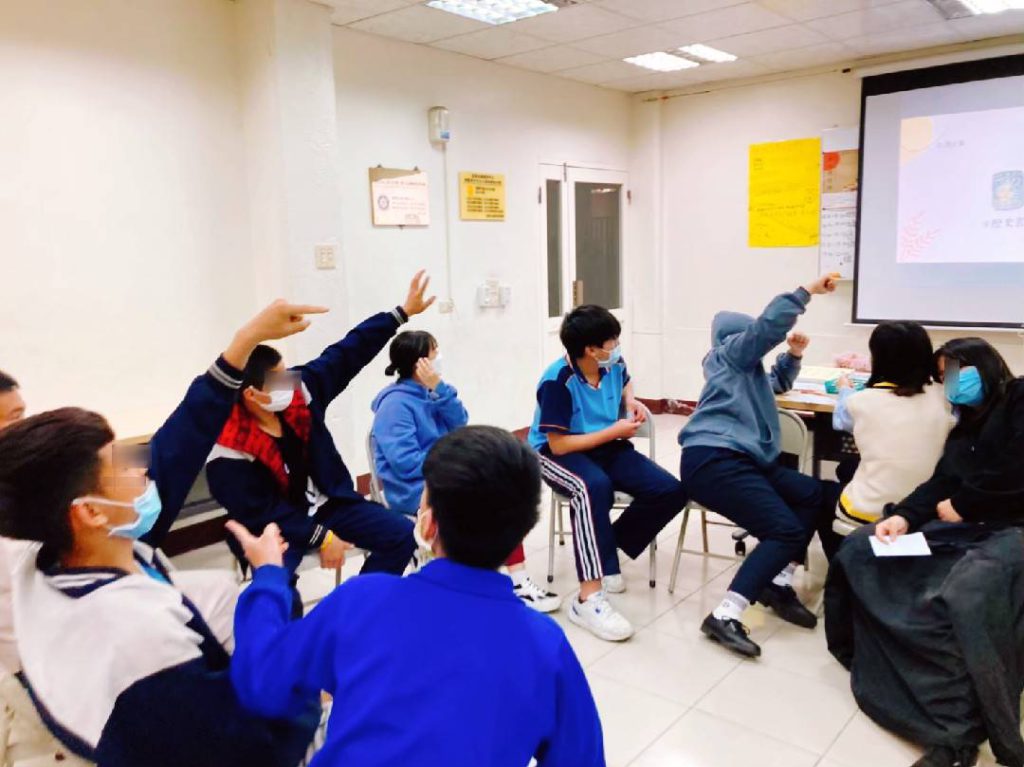
Companions of aboriginal youth towards a hope-filled future

*Xiaomei, holding a baby in her arms, shifts in her seat. The social worker looks at the certificates on the wall and asks: “Are these all yours?” Xiaomei comforts her infant daughter while stopping a quarrel between her two younger sisters from escalating. She says softly: “Yes! Almost all of them. This one is from a school exam; this is an attendance award; and that one is when I won a running contest! Look, those trophies in the cabinet are also mine. I should have won the championship in the boxing event, but because my teammates were too noisy, the referee called a foul, and I became the runner-up.” “Weren’t you sad at that time?” asks the social worker. Xiaomei looks fondly at the baby in her arms and replies: “It doesn’t matter. I think runner-up is also very good!”

粉彩画_220308_3

Xiaomei became a mother when she was not yet 17 years old, and the child’s father had just turned 18. Both of them are aboriginal people, and both come from problematic families, with their parents unable to give them the proper support they need. Xiaomei had to stop school to take care of the baby, while the child’s father worked odd jobs at the construction site to support them. As a young mother, Xiaomei lives a different life than women her age. While students complain about their exam being too difficult, Xiaomei worries about the baby in her arms. She has grown mature and thin from her life experience.

The dilemma of social service organisations is that they want to inform the public about the plight of the people in their care so resources could come in, but at the same time, they must protect the privacy of these people. The Rerum Novarum Center in Taipei has been engaged in aboriginal youth training and service work in Zhudong, Hsinchu County for many years. Since aboriginal people have their own distinct culture, they often have to struggle against systemic discrimination and exclusion. Their experience is different from the experience of Han Chinese, the dominant ethnic group in Taiwan, who from childhood learn how to interact with mainstream Taiwanese society.

People also have general impressions about aboriginal people, such as their happy disposition, and their interesting way of speaking. These impressions may sound delightful, however, the truth is often very cruel, especially when they enter the educational system. Aboriginal children cannot compete with the rest of the students. The content of the course is relatively unfamiliar to them, and the contents of their textbooks are very different from their life experiences. Their lessons do not resonate with them, let alone arouse their interest.

吉他课

People hope that disadvantaged groups can rise above their status in life through education, and the public is quick to laud special cases wherein an aboriginal person achieved success through education, but the reality is that most aboriginal youth are limited by their resources and are challenged by the system. In the face of mainstream education, what we see in them is fear rather than hope, and what may constitute as deviant behaviours in the eyes of the public, such as dropping out of school, joining gangs, or even having children out of wedlock. What results is more condemnation and disappointment than understanding of their situation.

Aboriginal students desire a sense of achievement and belonging. Thus, Rerum Novarum’s after-school companionship and learning services include learning resources from different networks, as well as a dream realisation plan for aboriginal teenagers. Being able to see their own value and perceive different paths for success that are not limited to the framework of mainstream society help to make them feel more free to choose the courses they want to take up. This enables them to develop more interests and abilities, express themselves, and gain a sense of achievement through enhanced skills and knowledge.

“Actually, I used to have a lot of dreams. I wanted to be a track and field coach, and a boxer. I used to run really fast,” muses Xiaomei, while watching her younger sisters play with a basketball in a dimly lit street. “You can still do it now!” says the social worker. Xiaomei smiles: “I can’t help it. I have to take care of my child now. And after giving birth, I can’t run as fast anymore.”

Creating a fair society for disadvantaged children is a difficult challenge, and something that cannot be done right away. But there are efforts that can be made to prevent the same thing that happened to Xiaomei from happening to more young people, and to provide them more understanding and support. The Rerum Novarum Center is grateful to the many people who support the Aboriginal Youth Development and Dream Project, which not only brings hope to children, but also gives the staff great motivation to continue to work hard. [Rerum Novarum Center]

Finding God in the midst of hard work

The Arrupe Month is a time of grace for Jesuit scholastics. In addition to the eight-day retreat, participants have the opportunity to meet different people and listen to their vocation stories, to discuss a wide range of topics, from Ignatian Spirituality to the issues of the Church, from the longing of the faithful to the experience of waiting for a mission. This rich exchange is very helpful for scholastics in reflecting on our vocation. They help us to pray and go deeper into our own spiritual experiences.

The Arrupe Month is a time of grace for Jesuit scholastics. In addition to the eight-day retreat, participants have the opportunity to meet different people and listen to their vocation stories, to discuss a wide range of topics, from Ignatian Spirituality to the issues of the Church, from the longing of the faithful to the experience of waiting for a mission. This rich exchange is very helpful for scholastics in reflecting on our vocation. They help us to pray and go deeper into our own spiritual experience. In the evenings, we take turns sharing our vocation stories through prayer and reflection. This brought me a greater sense of understanding and sympathy. It also gave me the opportunity to know myself better, and reflect on how God has led me to consecrated life these last 10 years. Ten years is not a short time and a lot has happened, but if I had to describe it in one phrase, it would be: Finding God in the midst of hard work. My Provincial Superior once asked me: “Where is the easiest situation for you to find God?” At that time, I answered: “In serving the poor and the suffering.” This answer is real because I have felt Him through serving lepers and the mentally ill, and I have learned a lot from the poor and those in need, who have not only influenced me to know myself, but have also given me the opportunity to experience God’s love. God’s teachings and companionship flow abundantly, and I feel God’s greatness and generosity if I open my heart and mind to be in union with Him. He continues to lead me to different people and experiences to make me realise that in the midst of suffering, sickness, and hardship, God is closer to the people. There is no need to fear or run away because we can rely on God’s strength to face and find meaning in difficulties. During the Arrupe Month I had time to slowly reflect on my difficult experiences, and I was filled with many wonderful feelings. In particular, these few experiences stand out. I once worked in a cement factory. I was assigned in different departments, but what I remember most is the time I spent in the basement doing packaging work, standing for eight hours a day. It was really challenging for me. I lost four to five kilograms, but it was a most rewarding moment when I felt the presence of God. Working in an environment where I could not get enough food, clothing, and water was the closest I felt to God. I also spent time in a psychiatric centre helping care for about 200 patients. I was physically and mentally stretched to my limit, but it was there that I saw God’s miracles in the life of my patients. Currently I am studying theology, and there are many hard parts in being a student. From my experience, it seems that the more demanding a teacher is and the more challenging the exams are, the more fruitful the class becomes. In Taiwan, I often hear the phrase “you’ve worked hard” to encourage and comfort others, which is a good habit. For me though, this phrase has taken on a different meaning, that is, “the opportunity to be with God”. I consider it a blessing that gives me much strength to face difficult and hard things.In the evenings, we take turns sharing our vocation stories through prayer and reflection. This brought me a greater sense of understanding and sympathy. It also gave me the opportunity to know myself better and reflect on how God has led me to consecrated life these last 10 years.
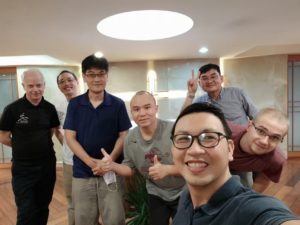
Ten years is not a short time and a lot has happened, but if I had to describe it in one phrase, it would be: Finding God in the midst of hard work.

My Provincial Superior once asked me: “Where is the easiest situation for you to find God?”

At that time, I answered: “In serving the poor and the suffering.”

This answer is real because I have felt Him through serving lepers and the mentally ill, and I have learned a lot from the poor and those in need, who have not only influenced me to know myself, but have also given me the opportunity to experience God’s love.

God’s teachings and companionship flow abundantly, and I feel God’s greatness and generosity if I open my heart and mind to be in union with Him. He continues to lead me to different people and experiences to make me realise that in the midst of suffering, sickness, and hardship, God is closer to the people. There is no need to fear or run away because we can rely on God’s strength to face and find meaning in difficulties.

The Arrupe Month is a time of grace for Jesuit scholastics. In addition to the eight-day retreat, participants have the opportunity to meet different people and listen to their vocation stories, to discuss a wide range of topics, from Ignatian Spirituality to the issues of the Church, from the longing of the faithful to the experience of waiting for a mission. This rich exchange is very helpful for scholastics in reflecting on our vocation. They help us to pray and go deeper into our own spiritual experience. In the evenings, we take turns sharing our vocation stories through prayer and reflection. This brought me a greater sense of understanding and sympathy. It also gave me the opportunity to know myself better, and reflect on how God has led me to consecrated life these last 10 years. Ten years is not a short time and a lot has happened, but if I had to describe it in one phrase, it would be: Finding God in the midst of hard work. My Provincial Superior once asked me: “Where is the easiest situation for you to find God?” At that time, I answered: “In serving the poor and the suffering.” This answer is real because I have felt Him through serving lepers and the mentally ill, and I have learned a lot from the poor and those in need, who have not only influenced me to know myself, but have also given me the opportunity to experience God’s love. God’s teachings and companionship flow abundantly, and I feel God’s greatness and generosity if I open my heart and mind to be in union with Him. He continues to lead me to different people and experiences to make me realise that in the midst of suffering, sickness, and hardship, God is closer to the people. There is no need to fear or run away because we can rely on God’s strength to face and find meaning in difficulties. During the Arrupe Month I had time to slowly reflect on my difficult experiences, and I was filled with many wonderful feelings. In particular, these few experiences stand out. I once worked in a cement factory. I was assigned in different departments, but what I remember most is the time I spent in the basement doing packaging work, standing for eight hours a day. It was really challenging for me. I lost four to five kilograms, but it was a most rewarding moment when I felt the presence of God. Working in an environment where I could not get enough food, clothing, and water was the closest I felt to God. I also spent time in a psychiatric centre helping care for about 200 patients. I was physically and mentally stretched to my limit, but it was there that I saw God’s miracles in the life of my patients. Currently I am studying theology, and there are many hard parts in being a student. From my experience, it seems that the more demanding a teacher is and the more challenging the exams are, the more fruitful the class becomes. In Taiwan, I often hear the phrase “you’ve worked hard” to encourage and comfort others, which is a good habit. For me though, this phrase has taken on a different meaning, that is, “the opportunity to be with God”. I consider it a blessing that gives me much strength to face difficult and hard things.During the Arrupe Month I had time to slowly reflect on my difficult experiences, and I was filled with many wonderful feelings. In particular, these few experiences stand out.
I once worked in a cement factory. I was assigned in different departments, but what I remember most is the time I spent in the basement doing packaging work, standing for eight hours a day. It was really challenging for me. I lost four to five kilograms, but it was a most rewarding moment when I felt the presence of God. Working in an environment where I could not get enough food, clothing, and water was the closest I felt to God.

I also spent time in a psychiatric centre helping care for about 200 patients. I was physically and mentally stretched to my limit, but it was there that I saw God’s miracles in the life of my patients.

Currently I am studying theology, and there are many hard parts in being a student. From my experience, it seems that the more demanding a teacher is and the more challenging the exams are, the more fruitful the class becomes.

In Taiwan, I often hear the phrase “you’ve worked hard” to encourage and comfort others, which is a good habit. For me though, this phrase has taken on a different meaning, that is, “the opportunity to be with God”. I consider it a blessing that gives me much strength to face difficult and hard things.


Scholastic Peter Phạm Khánh Linh SJ from Vietnam is a third year theology student at the Fu Jen Faculty of Theology of St Robert Bellarmine in New Taipei City, Taiwan. The Arrupe Month is a period of reflection and discussion that prepares Jesuit scholastics for ordination.

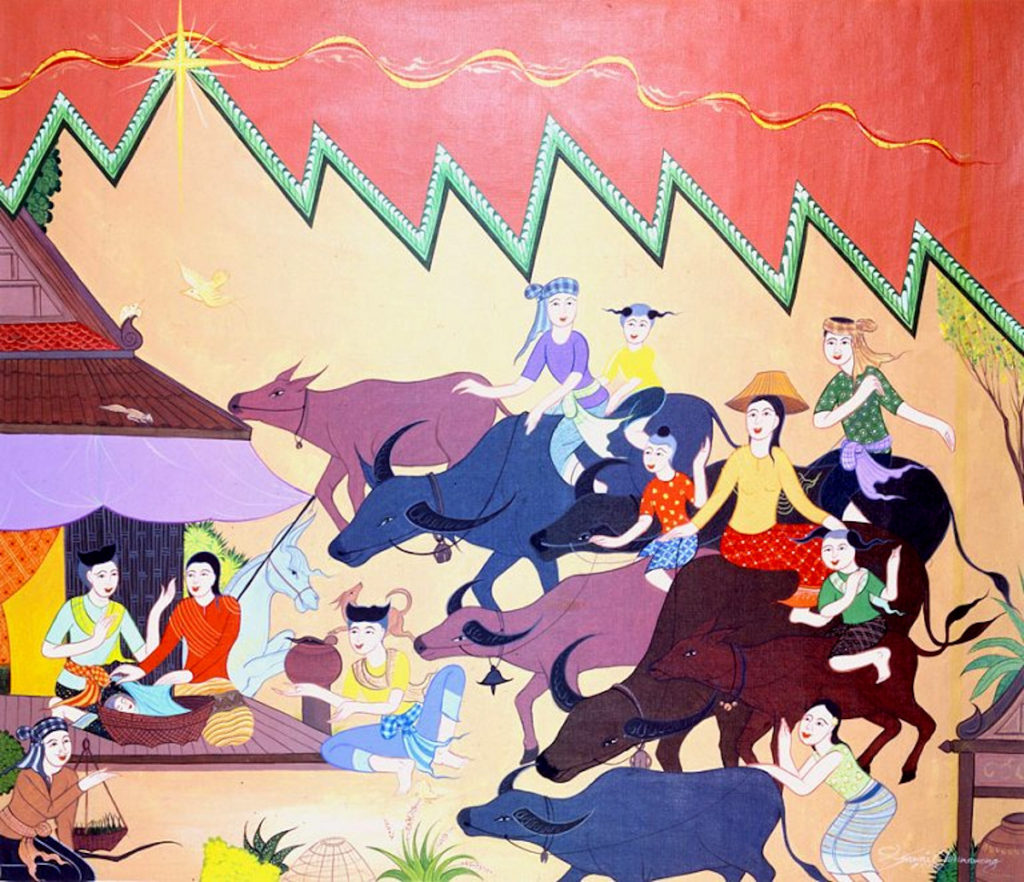
Synodality at the first Christmas

The encounters with Jesus in the manger are no accident. There are signposts which are heard and seen. In the case of the shepherds, the angel appears before them and declares: “Do not be afraid…, a saviour has been born for you who is Messiah and Lord…, you will find an infant wrapped in swaddling clothes and lying in a manger.” The shepherds are vigilant, mindful, responsive, and prayerful. After seeing Mary, Joseph, and the baby Jesus, they are overjoyed, and in thankful praise, they glorify God “for all they had heard and seen, just as it had been told to them”.

We have a similar account with the visit of the magi. They are overjoyed at seeing the star. They are attentive, responsive, prayerful, and courageous. They follow the star until they reach the place where Jesus is. They adore him and open their gifts of gold, frankincense, and myrrh. In a dream, the message becomes clear: they should not return to Herod, and they are to travel to their country “by another way”.

At the first Christmas, we have a striking picture of synodality – the shepherds and magi journeying together separately and willing to be led by the angel or by the star. They see, listen, focus, and find Jesus. They are not disengaged, indifferent, and inattentive. They eventually tell the story of their encounter with the Lord, and share their joys and hopes with others.

Pope Francis has convened the Synod on Synodality last October, so we can experience true conversion, and that we may see the realities around us, listen to each other more deeply, and listen to the Spirit as we walk together in pursuit of the mission. If we have the disposition of the shepherds and the magi, their willingness to see, listen, and be led, we can encounter the Lord, and thus share our joys and hopes with others. Rafael Luciani, an eminent lay Venezuelan theologian and member of the theological commission for the Synod on Synodality, says that this gathering is the next most important event of the Church after Vatican II. Reform and conversion are at the heart of synodality. The conversion of mindsets, dispositions, and attitudes of all the baptised, not only the ordained ministers, is needed just as structures of the governance in the Church have to be transformed. Clericalism, careerism, and self-referentiality have no place in the Church. They have to give in to communion, participation, and mission.

Synodality is our way of being and living. It is a collective response to what is terribly lacking in our Church and world. This is our response to the world that is plagued with failure to listen and see, always wanting to control and dominate, and privatised faith without any sense for community. May Christmas not simply be for us an experience of joy and giving, but more importantly, an event of journeying together, of listening and seeing, of being led to a deep encounter with Jesus, and our own transformation for the mission.

A blessed Christmas and a hope-filled 2022.

Tony Moreno SJ
President, Jesuit Conference of Asia Pacific
Christmas 2021

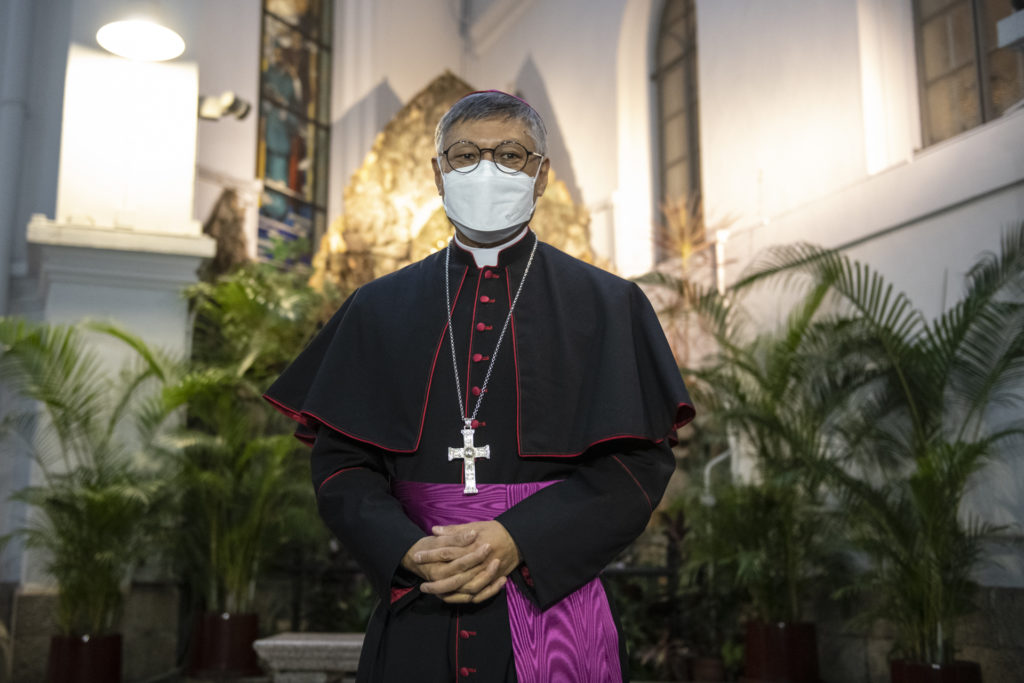
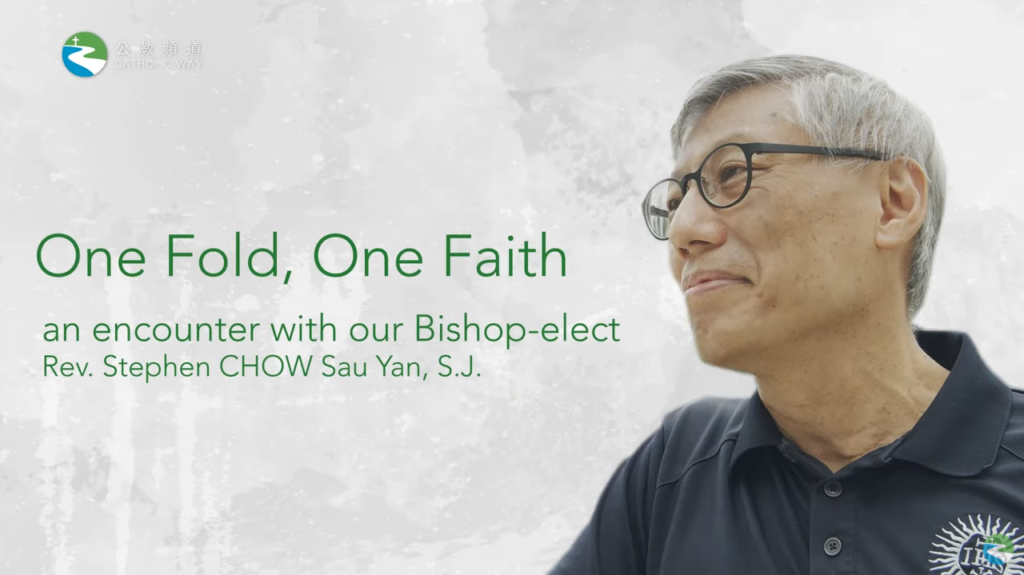
The brief address of Bishop Stephen Chow Sau Yan, S.J.

The Most Reverend Stephen Chow Sau Yan,S.J. was installed as the 9th Bishop of Hong Kong on 4 December 2021 
at the Cathedral of the Immaculate Conception. 
The whole Diocese welcomes our new bishop and we earnestly request the faithful to keep praying 
for the Diocese of Hong Kong.

Full text of the brief address of Bishop Stephen Chow Sau Yan, S.J. as below :  Continue reading "The brief address of Bishop Stephen Chow Sau Yan, S.J." 

Ricci Institute for Chinese-Western Cultural History coming to Boston College

The internationally acclaimed Ricci Institute for Chinese-Western Cultural History, a research center for the study of Chinese-Western cultural exchange, will move to Boston College from the University of San Francisco, where it has been located since its founding in 1984. Continue reading “Ricci Institute for Chinese-Western Cultural History coming to Boston College”

Vietnamese Jesuit ordained deacon in Taiwan

Michael Nguyen Phuoc Bao Dai Loi SJ from Vietnam was ordained to the diaconate in the chapel of the Fu Jen Faculty of Theology of St Robert Bellarmine in New Taipei City on 21 August. The Most Rev Thomas An-Zu Chung, Archbishop of Taipei, was the ordaining prelate.

Deacon Loi, 38, was born in Hue in central Vietnam. Before entering the Society of Jesus in 2008, he studied sociology at Ho Chi Minh City University of Social Sciences and Humanities. He was sent to Taiwan for his Regency and later for theology studies at St Robert Bellarmine School of Theology.

2021.08.SJVN-Diaconate-Ordination-Taiwan1

Some little thoughts

I am to be ordained tomorrow. It is now 22:19, 13 August 2021. After finishing the first rehearsal with all the greatest altar boys of Wah Yan College Hong Kong and Wah Yan College Kowloon, I received one WhatsApp message from a friend in Rome. The message read: “Congratulations Fr Philip! We offered a Mass for your ordination today!” I laughed in my room not because my friend was confused about the date and time of my ordination, but because the message was the only “other kind” I had received throughout the entire day; the others had all been about the logistics and revisions of the logistics of the ordination. I feel extraordinarily grateful for this message: It is not an error, but a blessing because it reminds me that I have friends from all over the world!

A year ago, when I was just ordained as a deacon and missioned to study Canon Law in Rome, I could not foresee the highs and lows of the year. I thought, well, it would be difficult, but I would never have thought it would be so “different”.

It was different in many senses. For example, language was different. I had to pass an exam in Italian before I could register in the school, and I had only three months to improve from level zero to level B1. The community was different. We spoke only Italian during breakfast and lunch – even when sometimes during breakfast I was not yet fully awake. The class was different; the professors started from the Codes written in Latin and tried to explain them in Italian.

Thank God for a great Italian teacher, who is also a good friend of the Jesuits in Rome. She treated me more like her son instead of her student. This is not an exaggeration, because later, when I got sick with Covid, she sent me a huge box of famous Italian handmade chocolates (that I would never have dared to use my allowance to buy). Though I had eaten all of them, I still have the box. And when I see the box, from time to time, it makes me want to cry.

Fr Philip Shi SJ during his first Mass in Wah Yan College Hong Kong

Also, I had great professors. I will not name them because they are very truly Jesuit professors. For example, Fr G has a strong Spanish accent even when speaking Italian. At first, I worried because I knew neither Italian nor Spanish, but one time he gave me a whole extra hour so that I could ask my questions and finally finish a deadly assignment. From him, I learned more than knowledge. Besides, we also had Fr R, who gave perfect notes and checked every lesson in our study, from the correct pronunciation of a Latin word to the right understanding of each Canon Code. He was always full of courage after commenting on many codes. He would say, “According to me, this code is USELESS!” It may seem like a sarcastic joke, but he was showing us real “critical thinking”.

Moreover, I had best friends. When my PCR test came back “positive”, my mind blanked out momentarily. Then I took a breath, collected the things I would need, and moved to the room for quarantine. It was not a bad room – in fact, it was on the first floor with a window that opened to the “cortile” (courtyard) of Bellarmino. On the second day many came to visit. They would stand in the cortile, and I would appear in the window. A little whim came to me, so I started to bless them by making the sign, which made all of us laugh. I guess you must laugh, too, if you can imagine because I just made myself like the Pope, who would bless the pilgrims from his window.

Thus, I did not find a big space for me to grieve or to be sad because I got sick. Fr Provincial sent me a message of encouragement, telling me to “be courageous because you are now part of the millions who are also suffering”. I thought: “That’s right. To be a Jesuit is not like having a magic shield that can protect us from the struggles of all others.” So I wrote him a letter in which I included all the names of those who had treated me so well since I arrived in Rome. Interestingly, as I was writing this letter, my fear and worry slowly faded away. I guess that’s what Fr George Yeung, Fr Mon Bautista, and Fr Chris Dumadag (my novice masters) taught me about gratitude: It defines our lives in front of God, and it can change everything. In fact, since I now have the natural antibodies, I was able to take care of friends in the community who also got sick with Covid afterwards.

I am grateful for the whole year. I am to be a priest and a servant of God for life. I am happy to have reached this point because I am not alone; I am well accompanied by so many even though I am an only child. My parents are well taken care of by my friends in my hometown, though we could only communicate by WeChat, and it has not been easy for me to visit them often. I think this is the most beautiful part of my vocation, that I am here to offer my life to God, and yet He is actually the one who is preparing something greater for me.

And how to cooperate with God? I don’t know how to summarise this in one phrase, since for me, God is becoming more and more like a funny companion. He knows that I need some challenges to grow out of my fear and tendency for “controlling” situations. So I got malaria in Africa, Dengue fever in Cagayan de Oro, and Covid in Rome. (I hope the list will not grow anymore, but let’s see.) Yet, every time, He left me with a braver heart. God is my great friend.

As I end this reflection, my personal reflection continues. I remember Fr Mon who told me before my First Vows in the Novitiate to be “gentle and firm”. Now I think God is making me like that, bit by bit, with His “gentle and firm” hand leading me on.

“For God all things are possible”

Fr Clement Tsui SJ pronounced his Final Vows on 31 July at the school chapel of Wah Yan College, Hong Kong, in front of Chinese Jesuit Provincial Fr Stephen Chow SJ, and members of the Jesuit community in Hong Kong.

A native of Hong Kong, Fr Tsui entered the Society of Jesus in 2005, after working in the banking industry. He was ordained a priest in 2015. At his Final Vows, he recalled the inspiration he received from the Lord when he was discerning his vocation to join the Jesuits. It was a passage from the Gospel of Mark: “For human beings it is impossible, but not for God; for God, all things are possible” (Mk 10:27).

Now 16 years later, on the feast day of St Ignatius of Loyola, he shared: “I felt consoled when I professed my Final Vows. It was a blessing for me and my community in Hong Kong.”

Apart from his family and friends, Fr Tsui also invited a group of young men to participate in the Mass. “I hope to be an empathic role model for them,” he said, “so more young men may consider joining the Society of Jesus.”

Fr Tsui is currently the School Chaplain of Wah Yan College Hong Kong and the Chairman of the Education Commission of the Chinese Jesuit Province. He is also the Assistant for Youth Ministry in Hong Kong. His latest mission is as Supervisor of Wah Yan College, Hong Kong and Wah Yan College, Kowloon, succeeding Fr Chow beginning September this year.