
Author: 爵醒
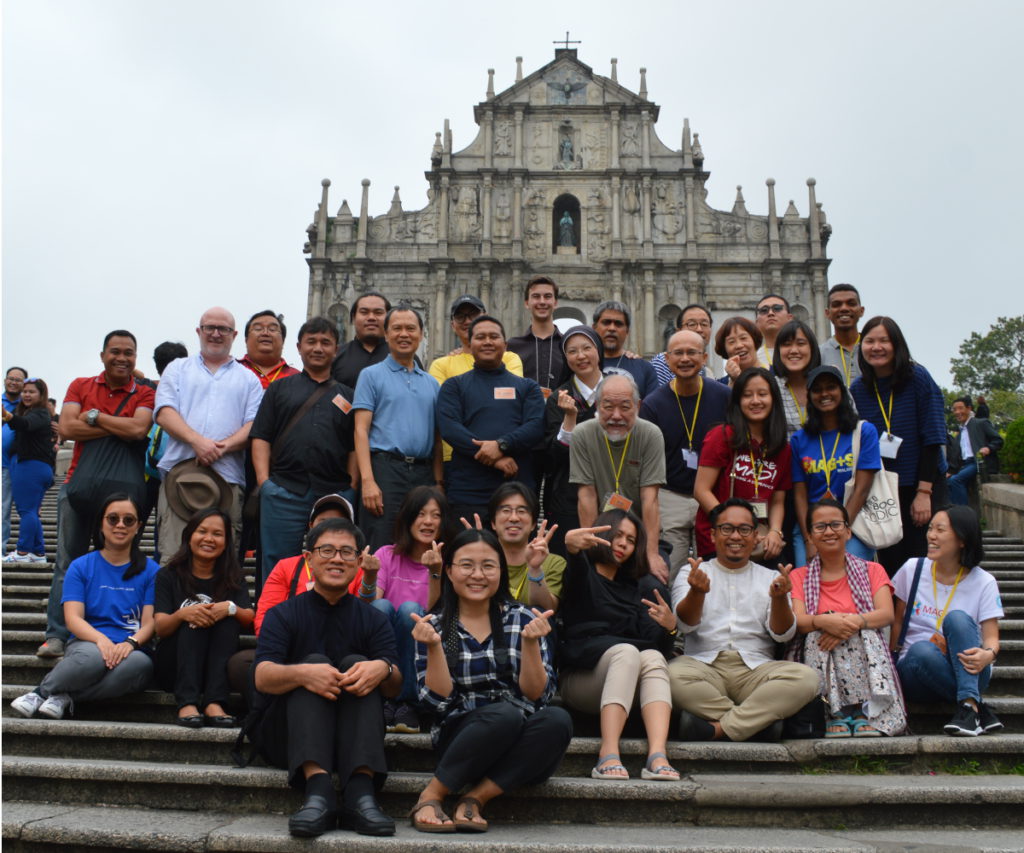
To strengthen the network of youth ministers and better serve the needs of young Catholics in the region, the Jesuit Conference of Asia Pacific (JCAP) Youth Ministry organised its first meeting for youth ministers in Colégio Mateus Ricci, Macau from March 18 to 22.
More than 30 Jesuits and young people from Australia, Cambodia, China, Indonesia, Japan, Malaysia, Singapore, Myanmar, Philippines, Thailand and Timor-Leste participated in the meeting.
“For the past five years since the establishment of the JCAP Youth Ministry, we have been focusing on the Magis Formation programme as a way of accompanying young people in our Asia Pacific conference”, said Youth Ministry Coordinator Fr John Nugroho SJ. “This year, we would like to share with the youth ministers another Ignatian method of training young people to be servant leaders.”
The core team plans to hold the youth ministers meeting every two years. For this first gathering, the participants were provided with practical ways they can “journey with the youth”, one of the four Universal Apostolic Preferences of the Society of Jesus.
“We hope to encourage those who have already graduated from the Magis Formation programme to take part in the Church’s work, give back to the community and serve as animators in accompanying their younger friends”, said Fr Nugroho.
He opened the meeting with an update of the projects of the JCAP Youth Ministry. One of these is a manual on how to organise and implement youth ministry programmes in the conference level. Another document underway is a youth volunteer manual that will help connect Asia Pacific youth with Jesuit missions in need of volunteers in the region.
The participants had the opportunity to share how they carry out their youth ministry programmes in their own countries, including their challenges and strengths. Many of them said they were inspired and happy to learn from the experience of their fellow youth ministers.
To deepen their sharing, the participants assembled into small groups of three to four people for Contemplative Dialogue. During the first round of sharing, they each expressed what inspired them from the day’s sessions and where they found God. In the second round, they expressed what touched them from their friends’ sharing in the first round of the dialogue. Then they concluded with conveying a phrase that expressed God’s message for them during the sharing.
The meeting was also a chance to learn about the work of the Chinese Province, which encompasses four places: Mainland China, Taiwan, Hong Kong and Macau. Fr Vincentius Haryanto SJ from Macau gave a talk on Ignatian Pedagogy and how it can be applied in the youth ministry beyond the school setting.
Nineteen-year-old Renata Tania, who is part of the JCAP Youth Ministry core team, shared about her experience as a trained JCAP youth minister, how it has changed her life and help her to grow in Ignatian Spirituality.
JCAP President Fr Tony Moreno SJ reflected on how young people have a passion for the common good.
“We want to listen to the voice of the youth. God’s voice can be heard through them”, he said. “Sometimes we say we accompany the youth. But actually, it could also be the other way around, that we are accompanied by the youth.”
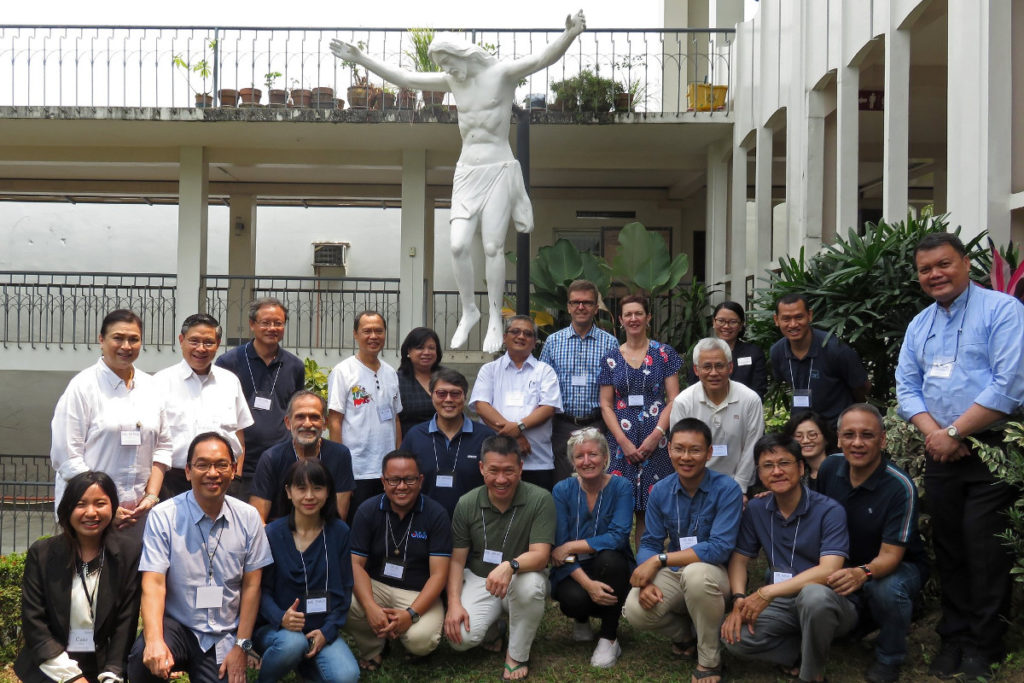
Development Officers of the Jesuit Conference of Asia Pacific are meeting this week, from March 11 to 14, in Manila. A key thrust of the meeting is to help align JCAP units’ development work to the Universal Apostolic Preferences (UAPs) of the Society of Jesus. Continue reading “Connecting the Universal Apostolic Preferences with the mission of the Development Office”
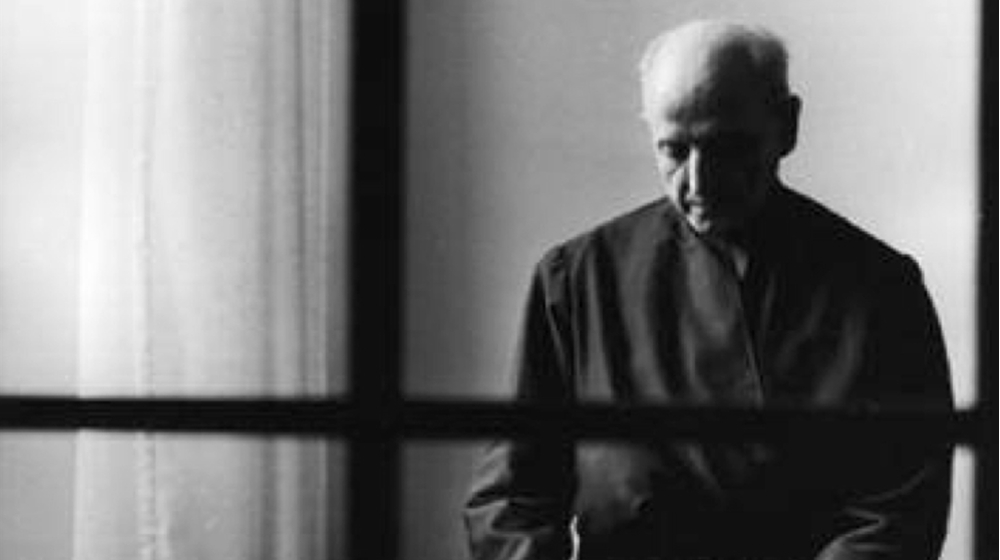
“Grant me, O Lord, to see everything now with new eyes…”
So begins a personal prayer of Fr. Pedro Arrupe, SJ, who served as the Jesuit superior general from 1965 to 1983 and whose cause for sainthood was opened earlier this year.
It’s a perfect prayer for Lent, this time of spiritual renewal and preparation for Easter. How easy it is to forget that God is always with us, here and now, reaching out with love and inviting us to grow closer to him. How often we put our own selves at the center of the universe, failing to respond to or even notice the needs of the human family. How natural to get burnt-out, cynical or just plain tired.
We need a new way of seeing.
What if we could see other people, the planet and ourselves the way God does? How much more joy and peace would there be on earth?
Holy men and women like Pedro Arrupe are essential guides for us disciples, pointing the way to Jesus and encouraging us to come along. This Lenten season, as the Jesuit community continues to pray for the canonization of Pedro Arrupe, we invite you to spend some prayerful time with the words and prayers of this revered Servant of God.
Each Sunday of Lent, we will use a line or two from the day’s Scripture passages to uncover a theme, and then connect that theme to words of Arrupe’s. We’ll use videos, images and written reflections to enter into just a bit into his deep spiritual life. Because while you can learn plenty of facts about Pedro Arrupe by readings biographies or scholarly articles, you can learn something else entirely by praying with him.
Read more at http://jesuits.org/lent.
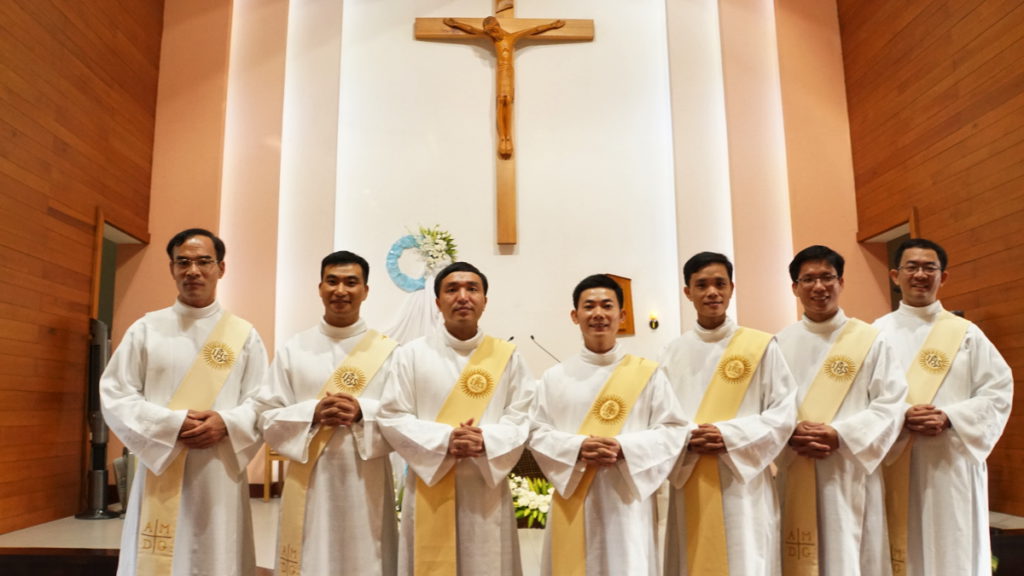

Seven Jesuits of the Vietnamese Province were ordained as deacons on March 2 by Most Rev Luis Nguyen Anh Tuan, Auxiliary Bishop of the Archdiocese of Saigon. Relatives and friends of the ordinands, and Jesuits from nearby communities gathered bright and early for the solemn ordination Mass at the Oratory of Saint Joseph Jesuit Scholasticate in Thu Duc, Ho Chi Minh City, Vietnam.
The newly ordained deacons are Rev Paul Trương Minh Cao SJ, Rev Paul Nguyễn Văn Chí SJ, Rev Vincent Nguyễn Văn Công SJ, Rev Joseph Vương Văn Đỉnh SJ, Rev Joseph Trương Đình Sáng SJ, Rev Joseph Mary Trương Hoàng Sơn SJ and Rev Peter Nguyễn Bá Tinh SJ.
Reflecting on the Gospel of Mathew 20: 25-28, Bishop Tuan invited the congregation to contemplate and mirror Jesus as a model of love and generosity. He urged the deacons to imitate Jesus Christ in serving humanity, saying they should strive “to serve, not to be served” and to follow his way of life by living their vows of chastity, poverty and obedience.
The Bishop also called on them to live faithfully their Jesuit vocation by relying upon the charism of spiritual discernment in realising God’s will for them and in fulfilling it. Lastly, he invited the new deacons to be men of God and men for others by internalising a prayerful life and living a spirit of service.
The newly ordained deacons have responded promptly to the call of service. Ordination to the diaconate is the final step in preparation for priestly ordination in the Society of Jesus. As Roman Catholic deacons, they are ordained to assist the Bishop and his Presbyterate as ministers of the Word, of the altar and of charity. They proclaim the Gospel, preach and teach in the name of the church. From now on, as ministers of the sacraments, they are authorised to baptise, witness marriages and conduct wake and funeral services.
May the Lord bless our new deacons and grant them His grace in order that they may live faithfully their Jesuit vocation. [Vietnam Jesuits]
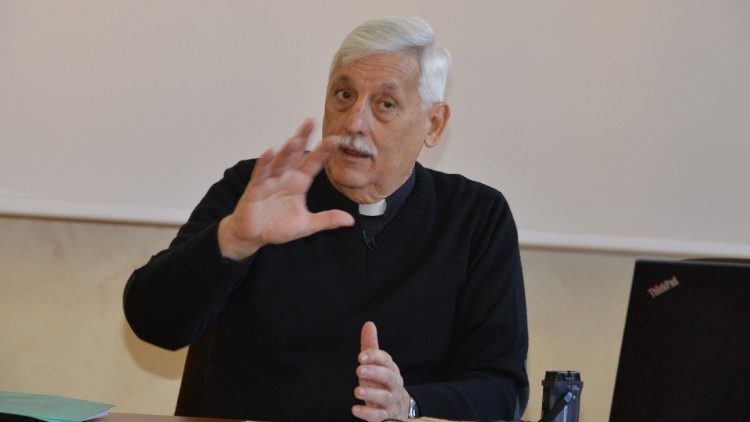
By Amedeo Lomonaco, Vatican news
The universal apostolic preferences of the Jesuits “are in harmony with the current apostolic priorities of the Church expressed through the ordinary magisterium of the Pope, the synods, the episcopal conferences, especially in the Apostolic Exhortation ‘Evangelii Gaudium’”. This is what Pope Francis emphasized in a letter addressed to the Jesuit General, Father Arturo Sosa.
What has been undertaken, the Pontiff said, is a “dynamic discernment”, not a “library or labour” process. According to the Pope, the first preference is fundamental because it presupposes as a “primary condition the relationship of the Jesuit with the Lord, the personal and community life of prayer and discernment”.
Apostolic preferences
The apostolic preferences are the result of a process of discernment that lasted almost two years. They represent “four vital areas” for today’s world. Father Sosa recently said they inspire Jesuits “in their discernment and in apostolic planning”.
They are the points of reference, horizons and orientations for the entire Society of Jesus. They emphasize how Jesuits can “make better use of the means at their disposal to serve Christ’s reconciling mission in the world.” They are the Jesuits’ response to the needs of the Church. In a society marked by profound change, preferences are established “through socio-political analysis, theological and pastoral reflection and discernment”. For the next 10 years, the 4 preferences set by the Jesuits, have been confirmed by Pope Francis.
Promoting discernment, spiritual exercises
Illustrating the 4 apostolic preferences, Fr. Sosa told Vatican News that discernment is a necessity for the Church. The spiritual exercises, he added, are a preferential path for the Jesuits. It is also fundamental, as far as the exercises are concerned, to take the path of creativity. According to the Jesuit General, new forms must be found so that the exercises adapt to different groups, realities and contexts.
Walking with the excluded
Walking with those who are discarded, said Father Sosa, means approaching the world of the poor and going to the suburbs to meet the people. “We want to take a path, he added, to promote social justice. “We want to promote a change in the economic, political and social structures that cause injustice. “We want to eliminate the scourge of abuse from the life of the Church and society,” a drama that the Jesuit General said is manifest out in various forms, including in sexual abuse and abuse of power.
Accompanying young people
According to Fr. Sosa, walking with young people also means looking at the world from their perspective. Young people, he explained, can help understand the changes in society, to grasp the sense of a new culture. We must therefore “open up spaces for young people, for their creativity”, he said, adding they must also learn from the young.
Caring for the common home
The fourth preference concerns our common home – the created world. Father Sosa said we must try to participate in urgent actions that can help curb and stem the deterioration of the environment. Alternative formulas must also be sought. To respond to these preferences, said the head of the Jesuits, a great challenge is that of collaboration which he considered a strong point of their action.
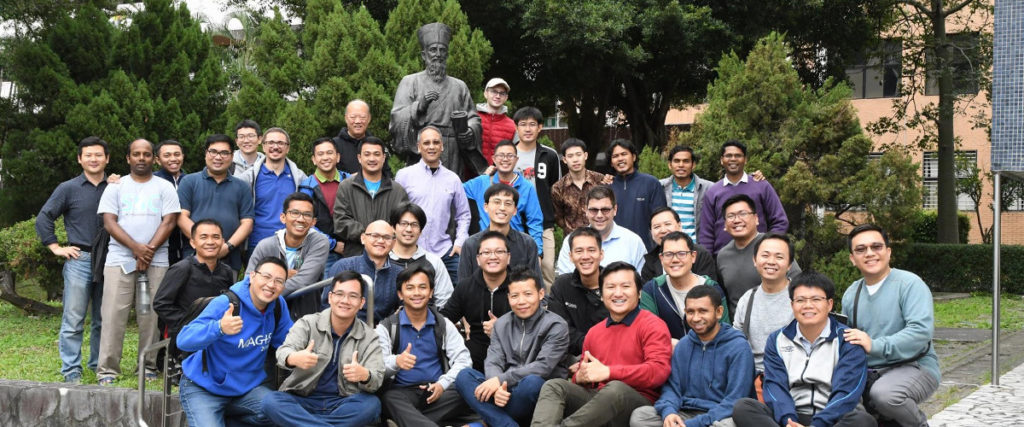
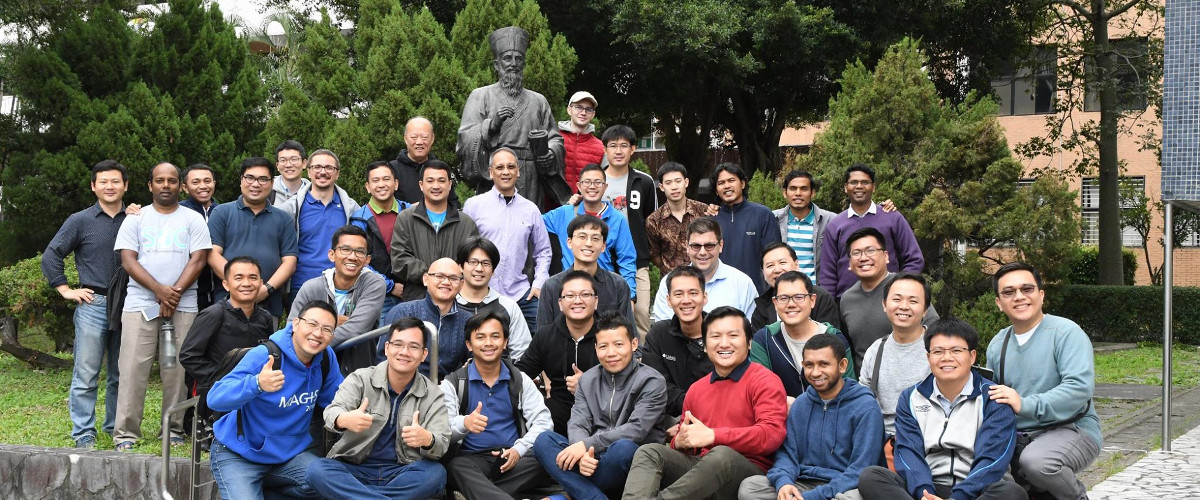
Community-building, immersion, daily Masses, city tour, academic lectures, periods of reflection, food expeditions, museum visits, efficient train rides, Christmas festivities and lasting friendships – these are just some of the tags that can summarise the 10-day Scholastics and Brothers Circle (SBC) workshop in Taiwan from December 15 to 25.
A total of 37 formands of 15 nationalities (six Vietnamese, five Burmese, four Filipinos, four Indonesians, three Koreans, three Australians, two Thais, two Timorese, two Chinese, an Italian, a Singaporean, a Malaysian, an Indian, a Polish, and a Japanese) participated in the workshop that centred on “Indigenous Ministry and the Mission of the Jesuits in China”. Jesuit Conference of Asia Pacific Socius Fr Eric Velandria SJ and Formation Delegate Fr Riyo Mursanto SJ accompanied the participants.
Fr Olivier Lardinois SJ, who combines pastoral work with indigenous peoples and doctoral studies in anthropology, facilitated the meeting. Most of the activities, including residences of the participants, were held in Fu Jen Faculty of Theology of St Robert Bellarmine Community in New Taipei City. Fr David Yen SJ, the Jesuit Delegate to Fu Jen, provided a hands-on tour of the campus and explained the philosophical meanings of the designs and locations of the buildings.
In the morning of December 17, the participants had their team building activities despite the 13°C temperature outside. In the afternoon, at Tien Center at Sacred Heart Parish, Guting, Fr Emmanuel Lim SJ, Delegate for China of the Chinese Provincial, talked about the mission of the Chinese Province. Part of the talk was the introduction to the staff of Magis Center. Chinese Provincial Fr Stephen Chow SJ celebrated the Mass followed by a sumptuous Chinese dinner with the lay and Jesuit community of Sacred Heart. There they met the lively Fr Andres Diaz de Rabago SJ, the oldest member of the Chinese Province at 102 years old! After dinner, Fr Lardinois brought the group to Longshan Temple to witness the faith of many Taiwanese Buddhists. The Temple also serves as refuge for many homeless at night.
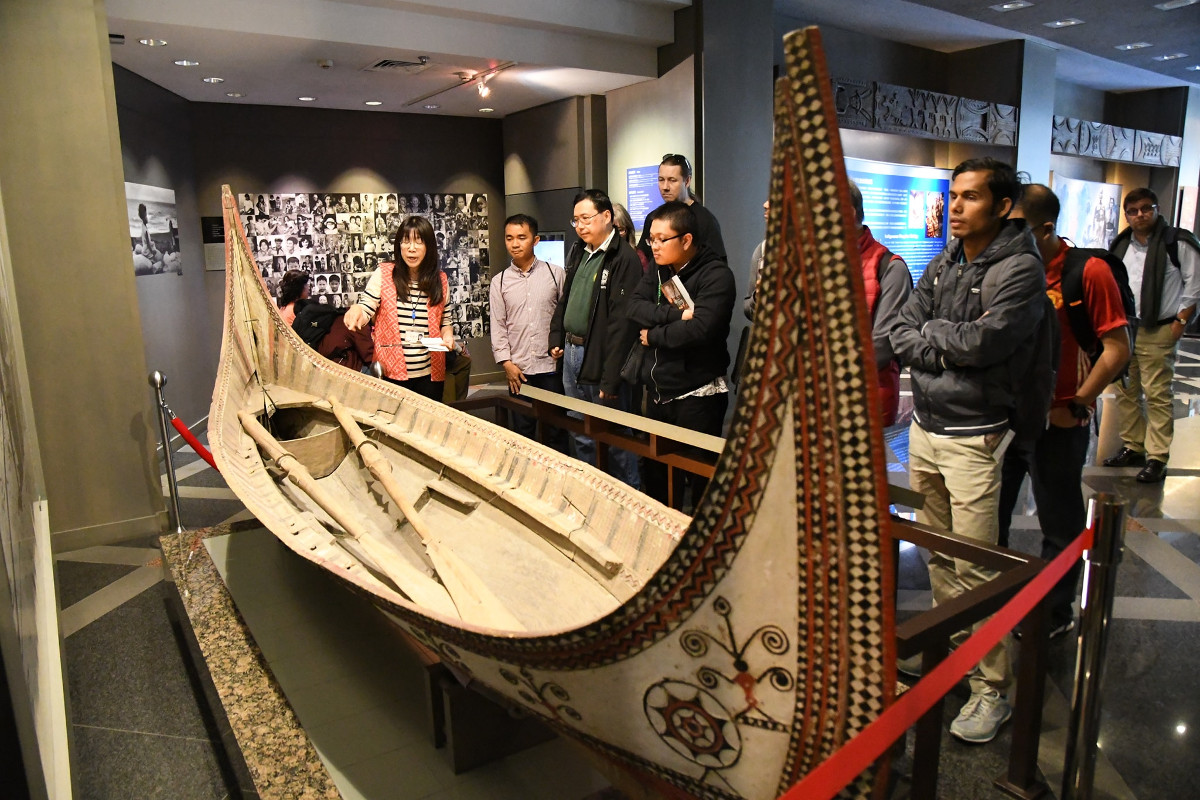
December 19 to 21 were days dedicated to living with indigenous peoples, mostly of the Atayal Tribe of Central Taiwan. A day prior, Fr Lardinois oriented the participants about Taiwan Aborigines and the Jesuit indigenous ministry, and took them to Shung Ye Museum of Formosan Aborigines.
A two-hour bus ride took the participants from Fu Jen University to the Jesuit Parish in Zhudong, Hsinchu Hsien. They were welcomed by very engaging lay persons who shared about the parish’s pastoral services, particularly the intensive catechetical programmes to young and old.
The formands were divided into four groups for their immersion: one group went with Fr Yves Nalet SJ to Shilei, another to Xinguang with Parish Priest Fr Corneille Heynanns SJ, group three to Qunqquan where Fr Barry Martinson SJ was waiting and group four to Nalou with Fr Lardinois. It took three hours of navigating the zigzag road before they reached their mission stations.
The participants gained plenty of memorable experiences from the immersion, such as the meaningful conversations with indigenous peoples and experiencing their warm hospitality, bathing in hot springs in 10°C weather, tasting sautéed and stewed flying squirrels and house-to-house Christmas carolling.
Italian Scholastic Cesare Gabriele Sposetti SJ, shared: “As a ‘westerner’, I never before had the opportunity to meet indigenous cultures. This kind of encounter helped me to have a wider picture of the cultural and human variety of this part of the world.”
On the way back to Taipei, the participants stopped by St Aloysius Technical School at Hsinpu, Hsinchu Hsien. This Jesuit educational institution has produced several quality technocrats in Taiwan. Many were astonished to realise that behind the school’s success are laypersons led by Principal Jerry Jyh-Lung Tang.
On December 22, Fr Lardinois provided a synthesis of the immersion experience by placing his expertise in anthropology side by side the Ignatian paradigm. This was supplemented by the brief sharing of each group of the fruits of their structured reflections and spiritual conversations. Then it was the participants’ turn to present. Each country reported about their respective province’s or region’s effort in serving indigenous peoples. In the evening, the group held a Christmas party.
The remaining days were devoted to excursions around Taipei. The formands made sure not to miss the National Palace Museum to see the paintings of Br Giuseppe Castiglione SJ, imperial painter to Emperors Kangxi, Yongzheng and Qianlong in the mid-18th century.
Although only 10 days, the SBC workshop in Taiwan fortified the formands’ appreciation of the Chinese Jesuit Province and the ministry to the indigenous peoples.
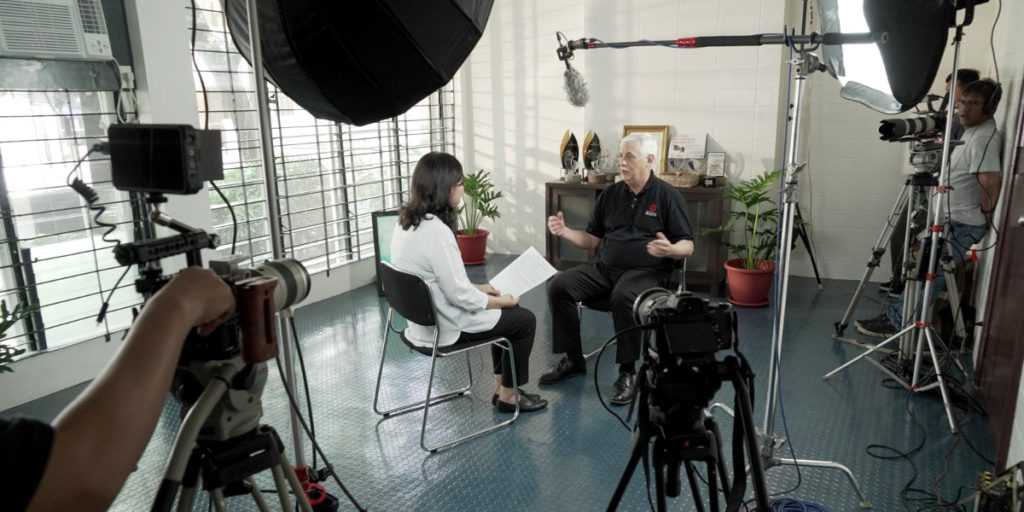
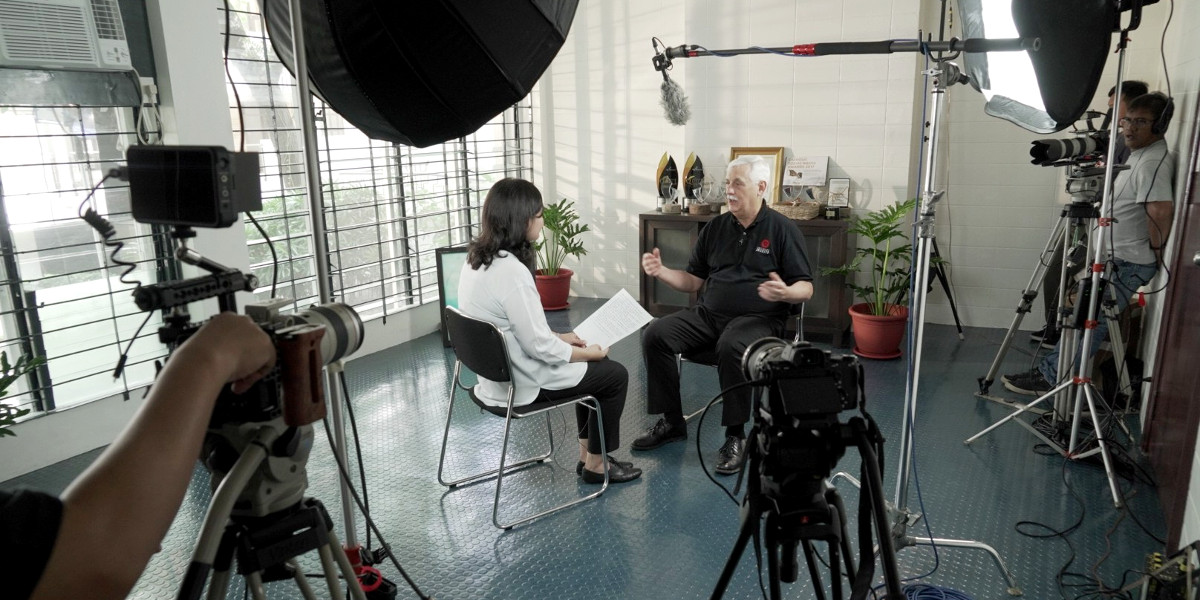
Superior General of the Society of Jesus Fr Arturo Sosa spent the first two weeks of December visiting the Vietnamese Province and the Philippine Province. It was his second trip to Asia Pacific; in 2017 he went to Cambodia, Indonesia and Singapore. From December 1 to 15, we at the JCAP Communications desk in Manila monitored the progress of Fr General’s trip with the help of the excellent teams of Jesuit Communications Vietnam and Jesuit Communications Philippines.
To prepare for the visit, there was a lot of coordination with Br Stephen Tran Thien Kinh SJ, who was sending us complete and up-to-date coverage of the highlights from the Vietnam leg that it almost felt like we were there.
Meanwhile, in the Philippines, we worked with Fr Nono Alfonso SJ, Executive Director of Jescom Philippines and JCAP Coordinator for Social Communications. During a meeting, I asked if I could go to Kalookan City with the Jescom team to cover the visit to Sacred Heart mission station. So I tagged along with the production staff headed by Ernestine Tamana, while Rev Harry Setianto Suyarno SJ from Arrupe International Residence took many incredible shots of that memorable day in Dagat-Dagatan.
When Fr Nono asked if I could interview Fr General, I immediately agreed. Then I began making copious notes. What questions to ask Fr General? I needed guidance, so the input from Fr Nono–who is a pro at these things–was helpful, also the advice and suggestions of Fr Tony Moreno, JCAP President, Fr Socius Eric Velandria and Vanessa Gorra, our very own Communications Assistant. I listened to Fr General’s homilies and speeches throughout the trip, and attended the Mass he celebrated on the Second Sunday of Advent and found myself infinitely consoled by his message of hope.
I had the opportunity to interview him on December 15, his last day in Manila, only hours before he would leave for the airport to fly back to Rome. I had a list of 10 questions handwritten in green ink on a sheet of paper. We sat down at precisely half past nine and at the beginning I was a bit nervous. But I found Fr General to be (as Fr Tony put it) muy simpatico. We spoke about his trip to the two provinces and the challenges and needs here in Asia Pacific. He shared: “Really it’s also a moment for me of consolation to find the people and it’s an opportunity to share the same vocation in so diverse a context.”
I am filled with gratitude for all the help and support we got from all over to cover this visit, and for such a privileged moment with Fr General Arturo Sosa.
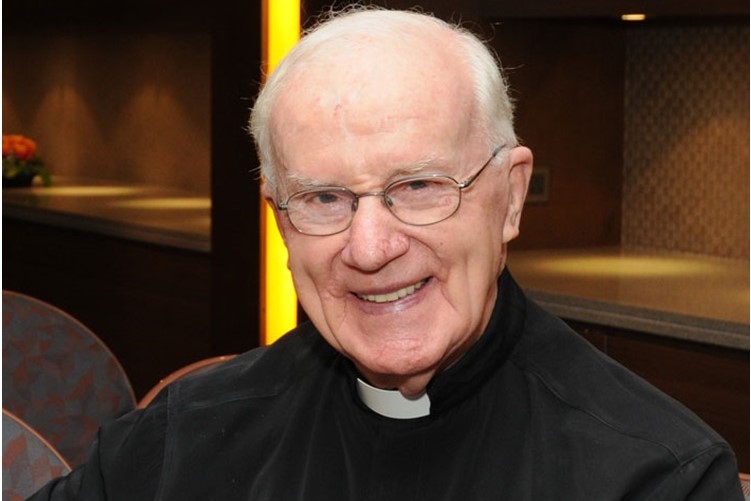
Dear Friends, the Wah Yan Community and the Ricci Hall Community,
It is with deep sorrow that I am announcing the passing of Fr. Alfred Deignan. Fr. Deignan left this world for his Eternal Home from St. Paul’s Hospital, Hong Kong at 3:43 a.m. on December 11, 2018.
Fr. Deignan’s life has been an embodiment of the loving-compassionate God. He is now meeting the Source of Love and Compassion face to face. May he continue to pray for us who are trying our best to live a good life in this world.
Fr. Deignan was born in Mullagh, Co. Cavan, Ireland on Mar. 25, 1927. He entered the Society at Emo Park, Portlaoise, Laoise, Ireland, on Sep. 7, 1945; was ordained to the priesthood on July 31, 1959 in Dublin and professed the final vows on Nov. 5, 1977 at Ricci Hall, Hong Kong.
Information of Fr. Deignan’s funeral arrangement will be announced when available.
What better way to practice cura personalis than to use an approach to Growth Coaching that is based on ‘listening to the self, to others, to creation and to God?
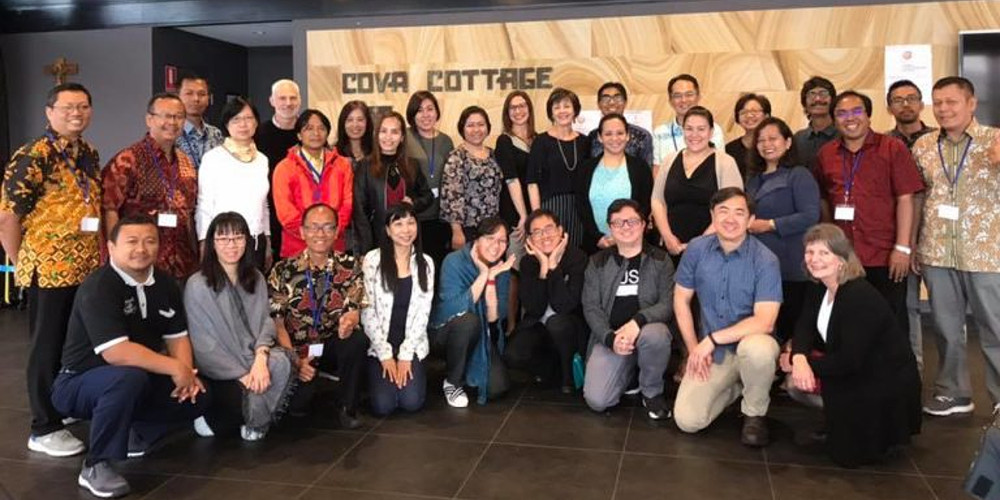
This was the premise of the second workshop on Ignatian Pedagogical Paradigm organised by the Jesuit Conference of Asia Pacific Education Secretariat. The workshop combined Ignatian conversation with Growth Coaching and best practices on feedback giving.
The idea first emerged in Kamakura, Japan, where a team from St Ignatius’ College, Riverview, Australia conducted the Ignatian Teachers Program.
“The group agreed that a module on coaching and mentoring based on the Ignatian ministry of holy conversations would respond to an important need among educators in our Asia Pacific schools, and so here we are!” shared JCAP Education Secretary Fr Johnny Go SJ.
Twenty-six educators from the Philippines, Hong Kong, Macau and Indonesia had gathered at St Ignatius’ College, Riverview for the workshop, which was held from November 11 to 17.
Fr Ross Jones SJ, Rector of St Aloysius and former Rector at Riverview, set the tone by talking about St Ignatius of Loyola’s ministry of holy conversation.
Bill Hobbes drew from his vast experience working with the former Jesuit Secondary Education Association in the United States to help the participants grow in self-awareness and understand the dynamics within organisations.
Scholastic Bagus Sugiyono SJ, a first-year regent at Kolese Kanisus in Jakarta, was grateful for the theoretical and practical things he learnt at the workshop. “There are several new insights that I got on how to practice cura personalis for students, as well as teachers,” he said.
Mandy Yu from Estrella do Mar in Macau was “excited and thankful” for the experience to “deepen my spirituality and help me grow”, and is looking forward to applying what she learnt in her school and in her teaching.
The participants were also joined by so-called “Companions” from Riverview who helped to model what coaching based on Ignatian conversation is like. The participants’ first-hand encounter with these expert practitioners proved to be a powerful learning experience.
“I still find it amazing how Ignatian Conversation can be seamlessly linked to Growth Coaching and how feasible it is in our own school setting,” shared Chaveli Ventosa Dela Cerna of Xavier School, Philippines, who found many possibilities for faculty and staff formation in Jesuit institutions.
Irene Cheung, Principal of Colégio Mateus Ricci, appreciated the new approaches she learnt in coaching and listening, as well as the use of tools such as the Myers–Briggs Type Indicator. “The feeding forward bridge,” she added, “is what I most want to master and apply.”
Likewise, Antonius Agus Sulistyono from St Peter Canisius Minor Seminary of Mertoyudan, Indonesia, said that the “feeding forward conversation taught me how to make others better and to lead them to God”.
For many of the participants, the workshop was an opportunity to examine their leadership style.
“I was able to step back and reflect on how I can be a better companion to the teachers and students I work with and how I can lead them to be better partners in the mission,” shared Chuchay Rolan-Lugapo of Xavier School, Philippines.
Vivian Cheng of Wah Yan College, Hong Kong hopes that after the workshop, “each one of us can be a better companion to our students and colleagues”.
For Ag Prih Adiartanto, Principal of De Britto College, Yogyakarta, Indonesia, his most valuable takeaway was, simply, learning how to listen.
Maan Estrellado-Domingo of Xavier School, Philippines shared a similar realisation: “It is not my brilliance, but the love that I put in the conversation that matters”.
The next education workshop will be on communal discernment from April 26 to May 2, 2019 at the Seven Fountains Retreat Centre, Chiang Mai, Thailand.