

Author: cfliao


by Jesuit Communications Australia
Jesuit Social Services is working with communities around Alice Springs to support Eastern and Central Arrernte to improve their situation and to have more control over their lives.

Jesuit Social Services was then approached to assist, by supporting community members to develop plans and to engage stakeholders from various sectors of the community.
Eastern and Central Arrernte people made this approach to the Church network because they were deeply concerned about the impact of the changes in government business and service delivery. These changes have resulted in a reduction in the community’s ability to access these mainstream systems and programs in culturally appropriate, meaningful, effective and sustainable ways.
This new project will be based on community development principles and will be commencing work at the family group level. Our agreed approach will:
embrace the importance of culture, family and sovereignty
embrace the centrality of strong, respectful relationships and reciprocity in partnerships
build on the strengths of Indigenous people, families and communities
follow sound sustainable community development principles.
Through local family and community meetings, this project will undertake a local assessment of needs, identify priorities and develop plans to address these. Opportunities to directly address ‘closing the gap’ will be identified. Community governance structures will be established and strengthened and areas for corporate, philanthropic and government engagement will be identified.
‘We were really honoured to be asked to play a role in trying to improve the lot of Indigenous people in central Australia’, says Jesuit Social Services CEO Julie Edwards. ‘The reality of the situation is a great cause of shame for all of us. There’s a lot to do and a lot for us to learn.’
Jesuit Social Services is urgently seeking support for this project. If you would like to support it, or find out more, please contact Jesuit Social Services on (03) 9427 7388


By David L. Fleming, SJ Ignatian spirituality gives us a way to approach these questions. To follow Jesus we need to know how to make good decisions. Ignatian spirituality helps us approach this challenge in a practical way. Ignatius would first have us be clear about the ends that we seek. Again we return to the Principle and Foundation for clarity about the values that should govern our choices. Everything in this world is presented to us “so that we can know God more easily and make a return of love more readily.” Thus, “our only desire and our one choice should be this: I want and I choose what better leads to God’s deepening life in me.” Our loving relationship with God is the goal and end of our life. All of our choices are means, steps toward reaching our goal. We enter marriage or choose a career or start a business as a way to deepen our relationship with God. All of these important choices are means, not ends in themselves. It is easy to lose sight of this and treat choices as the ends. Our first choice or decision is simply to be a follower of Christ. Everything else—all our choices, big and small—follows from this. When we have our end clearly in sight, then we are able to tackle the complexities of decision making. One way is the analytical approach. In trying to choose between two goods, we might list pros and cons in two columns on a sheet of paper. If we are perplexed, we might also ask some friends what they think. Then we make a decision, offer our decision to God for his blessing, and pray for a consolation of peace as God’s gift to us. Ignatius calls this type of decision making a “third-time” choice. “First-time” and “second-time” choices are decisions guided by our hearts, where confirmation comes not from the reasoning intellect but through a discernment of the meaning of the different movements of the emotions and feelings. This is Ignatius’s greatest gift to us about decision making. It may be called the gift of the reasoning heart. A first-time choice is a decision that is unmistakably clear. We know what is right. Ignatius cites two examples of first-time choice in the New Testament: the conversion of the apostle Paul, and the call of the tax collector Matthew. Neither man had any doubt about what God wanted of him (at least in these situations). First-time choices are not rare. We probably know people who never had any doubt about what they should do at major turning points in their lives. Some people are sure about their marriage spouse at a first meeting in this graced manner. Others are sure about their religious-life vocation or priestly vocation in a similar way. You may have had this experience yourself, at least in some circumstances. Second-time choices are situations where the preferred choice is not entirely clear. We are presented with alternative courses of action that all seem attractive to some degree, and we are not blessed with the gift of a clear certainty about what to do. In these cases, Ignatius says that we can discern the right choice by attending to the inner movements of our spirit. In particular, feelings of “consolation” and “desolation” will signal the correct course of action. Ignatius always carefully puts the word spiritual before consolation and desolation. For him spiritual consolation is our experience “when some interior movement in the soul is caused, through which the soul comes to be inflamed with love of its Creator and Lord.” Ignatius more simply describes consolation as every increase in hope, faith, and charity. Spiritual desolation is just the opposite. The words Ignatius uses to describe it include darkness of soul, disturbance, movement to things low and earthly, disquiet of different agitations and temptations. Ignatius’s understanding of the importance of these feelings dates back to the very beginning of his conversion to a fervent Christian faith when he learned to pay close attention to his feelings. Second-time choice is not simply a matter of “feeling peaceful” about a proposed decision. The feelings of spiritual consolation and spiritual desolation must be carefully assessed. Complacency and smugness about a decision can masquerade as consolation. At times, desolation can be a timely sense of restlessness pointing us in a new direction. Ignatius discusses how to work with his guidelines for discerning at some length in his “rules for discernment of spirits” at the end of the Spiritual Exercises. It seems surprising (and somewhat risky) to trust our feelings to the degree Ignatius does, but this approach to discernment is entirely consistent with his vision of the Christian life. The Ignatian perspective tells us that we live in a world that is permeated by God, a world God uses to keep in touch with us. We seek to follow Jesus. We carefully observe him in the Gospels and we enter into these Gospel scenes using the methods of Ignatian contemplation through imagination. We come to know who Jesus is and strive to make him the center of our lives. We make our decisions within the context of this relationship of love. It is a relationship of the heart. Our heart will tell us which decisions will bring us closer to Jesus and which will take us away from him. Ignatian discernment, then, holds that our Christian choices are often beyond the merely rational or reasonable. “The heart has its reasons of which the mind knows nothing,” Pascal said. This is fine—as long as the heart has been schooled by Christ. It is often said that Ignatian spirituality forms us to be “contemplatives in action.” We can understand this somewhat paradoxical term if we see that the goal is action and discernment is the means. Discernment guides us to decisions that will join us ever more closely with Christ and with our working with Christ in the world. Contemplation of Jesus in the Gospels is the essential discipline that makes discernment possible. The practice of imaginative prayer teaches us who Jesus is and how he acts and how he decides. This kind of contemplation schools our hearts and guides us to the decisions that bring us closer to God. Excerpt from What Is Ignatian Spirituality? by David L. Fleming, SJ. Discernment in a Nutshell by Joseph Tetlow, SJ
From What Is Ignatian Spirituality? What shall we do? We should not do anything wicked and we should not do anything absurd. Between these boundaries lie a vast number of possibilities. We face large decisions: schooling, career, work, state of life, relationships, weighty commitments. Every day we face smaller decisions about our priorities and goals, how to spend our time, what to pay attention to and what to put off for another day. How do we make these choices? How do we weigh competing values? How do we discern the right path?
What Do We Want?
The Analytical Approach
Sometimes the Choice Is Clear
When the Choice Isn’t So Clear
Trusting Your Feelings
Related Links
A Spirituality of the Heart by David L. Fleming, SJ


Feast Day September 5
If you had to pick out the most important thing you did this week, what would it be?

Making a B on a test you thought you’d failed? Protecting the goal on that last shot and saving the game? Convincing your mom to buy you that new outfit?
Was that it? Or might it be something else-a different kind of “important”?
Sometime, somehow in the last week, you’ve listened to someone who was sad or angry. You’ve defended someone who’s been picked on. You bit your tongue when you wanted to mouth off to your dad. You thanked your mom for the dinner she fixed. You went through your clothes and picked out some good stuff to send to kids at the homeless shelter.
In other words, the most important thing you’ve done today, yesterday, and last week is love. One act of love, no matter how quiet, can change a person’s day-even his or her whole life! Now that’s important.
When we think about the difference that love can make, many people very often think of one person: Blessed Mother Teresa of Calcutta. A tiny woman, just under five feet tall, with no tools except prayer, love, and the unique qualities God had given her, Mother Teresa is probably the most powerful symbol of the virtue of charity for people today.
Mother Teresa wasn’t, of course, born with that name. Her parents named her Agnes-or Gonxha in her own language-when she was born to them in Albania, a country north of Greece.
Agnes was one of four children. Her childhood was a busy, ordinary one. Although Agnes was very interested in missionary work around the world, as a child she didn’t really think about becoming a nun; but when she turned eighteen, she felt that God was beginning to tug at her heart, to call her, asking her to follow him.
Now Agnes, like all of us, had a choice. She could have ignored the tug on her heart. She could have filled her life up with other things so maybe she wouldn’t hear God’s call. But of course, she didn’t do that. She listened and followed, joining a religious order called the Sisters of Loreto, who were based in Dublin, Ireland.
After two months in Ireland, spent mostly learning how to speak English, Agnes got on a boat (in 1928, hardly anyone took trips by plane), and thirty-seven days later she arrived in the beautiful, busy, complicated country of India.
In India, Agnes took her final vows as a sister and took the name Teresa, after Thérèse of Lisieux, the Little Flower. She spent fifteen years teaching in a girl’s school in Calcutta, a job that she loved and was very good at. But then one day, she heard that call again.
The voice in her heart was telling her that she was to make a very big change in her life-that she should leave her teaching position and go into the streets of Calcutta and care for the poor.
Again, Teresa could have ignored the voice and just gone on teaching the wealthy girls behind the high walls of her school. But you know how it feels to ignore the voice of God in your heart, right? You can’t rest easy until you obey that voice. Do you know why?
It’s not because God wants to play games with you or test you. No, it’s because God created you and knows you better than anyone else does. He knows what all of your talents are and he knows what you can do with those talents. He also knows that he made you, above all, to love. That pull on your conscience is a nudge, giving you a hint about where you’re going to find happiness and peace, and where the charity you practice is going to have the greatest impact.
So Sister Teresa listened and said yes. She had lived in India for years, and she knew how desperate the poor of that country were, especially in the big cities. It was these people, the dying poor, that Sister Teresa felt a special call to love. After all, these were people who had absolutely no one else in the world to love them. Not only were they poor, but they were also dying. Why did their feelings matter? Wouldn’t they be gone soon enough?
Teresa saw these people differently. She saw them through God’s eyes, which means that she saw each of them as his dear child, suffering and yearning for some kind touch or word, some comfort in their last days on earth. She heard that call and chose to live it out-to let God love the forgotten ones through her charity.
As is the case with all great things, Teresa’s efforts started out small. She got permission to leave her order, to live with the poor, and to dress like them, too. She changed her habit from the traditional one to the sari worn by Indian women. Her sari would be white with blue trim, the blue symbolizing the love of Mary. She didn’t waste time, either. On her very first day among the poor of Calcutta, Mother Teresa started a school with five students, a school for poor children. That school still exists today. She quickly got some training in basic medical care and went right into the homes of the poor to help them.
Within two years, Teresa had been joined by other women in her efforts, all of them her former students. She was soon “Mother Teresa” because she was the head of a new religious order: the Missionaries of Charity.
The Missionaries of Charity tried to care for as many of the dying as they could. They bought an old Hindu temple and made it into what they called a home for the dying. Hospitals had no room or interest in caring for the dying-especially the dying poor-so the dying had no choice but to lie on the streets and suffer. The sisters knew this, so they didn’t wait for the poor to come to them. They constantly roamed the streets, picking up what looked from the outside like nothing but a pile of rags, but was actually a sick child or a frail old person.
When a dying person came or was brought to Mother Teresa and her sisters, they were met with nothing but love. They were washed and given clean clothes, medicine, and-most important-someone who could hold their hand, listen, stroke their foreheads, and comfort them with love in their last days.
One of the most feared diseases in the world is leprosy. It’s a terrible sickness that deadens a person’s nerves and can even cause their fingers, toes, ears, and nose to eventually fall away. You know that in Jesus’ time, lepers were kept away from communities. Lepers in poor countries like India, where they have a hard time getting the medicines to treat the disease, are often treated the same way.
You can probably guess what Mother Teresa thought and-more important-what she did about this. After all, a person with leprosy isn’t a thing or an animal with no feelings. A person with leprosy is, above all, a person whom God loves and cares deeply about.
So Mother Teresa saw people with leprosy in the same way-through God’s loving eyes. She got the help of doctors and nurses, gathered lepers from the slums, and began treating and caring for them in a way that no one before her had tried to do.
Mother Teresa’s work of love started out small, but it isn’t small anymore. There are more than four thousand Missionaries of Charity today, living, praying, and caring for the helpless in more than a hundred different houses around the world, including in the United States.
Mother Teresa died in 1997, but even now, when we think about her work, we can learn all we need to know about love: It doesn’t take any money or power to love. It doesn’t take great talent or intelligence. It simply takes love.
Mother Teresa did wonderful, brave work in caring for the forgotten, but if there’s one thing she would want you to remember about love, it’s that you don’t have to travel to foreign countries to practice the virtue of charity.

from Loyola Kids Books of Heroes
© 2003 Amy Welborn


F or the past nine years, James Martin, S.J. has run a popular book club for adult Catholics at the Church of St. Ignatius Loyola, in New York City. As a way of helping readers who might want to begin a similar club in their own parishes, we offer a brief description of a plan that Father Martin has used, as well as the list of books selected for the club
Overall structure of the club
The book club members read a mixture of fiction, spirituality, theology, biography and Scripture. All the books are currently in print and easily obtained either from either Amazon.com or directly from the publisher. The majority (particularly those books published more recently) are also available from major bookstores. All the books are of reasonable lengths (no more than around 200 pages) and if they are any longer (for example, The Seven Storey Mountain) we break them up into two sessions.) Around Christmas, since most people are so busy, I usually assign a Gospel. Not only is it shorter and more easily fit into this hectic time of year, but it is a great devotional tool for the season. Often participants say that it is the first time they have ever read a gospel straight through.
There are two groups: one for adults under 35 and one for those over 35. This helps the participants, especially the younger Catholics, feel that they are meeting and speaking with people with more or less similar life experiences. (Our separate discussions of books like Cardinal Bernardin’s The Gift of Peace, which focuses on issues of death and dying made this very evident.)
We meet once monthly, on a Wednesday evening in the rectory. We begin at 6:30 p.m. with a simple dinner (usually pizza and sodas). This avoids the problems of “assigning dinners” to a single person, etc., or providing elaborate meals for a large group. Everyone chips in at the end of the night for expenses–no more than a five dollars per person. The casual dinner lasts for roughly an hour, and is an excellent way of helping people get to know one another before the discussion, as well as building community in the parish. Many book club members say that they enjoy this part of the evening as much as the actual book discussion.
At 7:30 we begin with a brief prayer, and then I ask everyone to introduce themselves. This is especially important at the beginning, but even later on everyone appreciates being reminded of people’s names. (We are always open to new members as well; notice of the meeting times and the month’s book appears in the parish bulletin on a regular basis.)
During their introductions people are also asked to mention something interesting or significant that has happened to them over the past month. This has proven a wonderful way of very gently encouraging some “faith sharing,” and is another way of building community. As the members grow more comfortable with one another, what they offer about the past month often grows more personal. Still, this should only be a few minutes per person. If you have, say, 20 people, you don’t want to spend 40 minutes on introductions.
The actual book discussion begins at 7:30 and lasts until 8:30. I begin with a simple question, “How did you like the book?” and then try to facilitate a friendly discussion, paying particular attention to any of the more “spiritual” questions that come up. When there is a question of fact, say, about church history or teaching, about Scripture, I try to explain things, and do a bit of catechesis, but otherwise I try to stay in the background. When possible, I have invited any of the authors who are in the area to join us when discussing their book: this is always a great success.
There are only three requirements that I set out: first, to read the book; second, to respect everyone’s opinions; and, third, not to “hog” any of the discussions. The evenings end at 8:30 with a prayer and a brief description of next month’s book. Sometimes, I will hand out supplementary material beforehand, for example, if the book is about an historical figure. For the gospels, I always hand out a brief two-page synopsis, taken from any good commentary.
The book club is a great deal of fun, very little work for the organizer (just publicizing it, getting a room, ordering the pizza and selecting the books) but a great way to build community, do a little catechesis, and encourage faith sharing in the parish in a non-threatening way.
Here are the selections for the last five years:
1998
Jan. — Mariette in Ecstasy, Ron Hansen
Feb. — Virgin Time, Patricia Hampl
Mar. — Meditations from a Moveable Chair, Andre Dubus
Apr. — The Cloister Walk, Kathleen Norris
May — This Our Exile: A Spiritual Journey with the Refugees of East Africa, James Martin, S.J.
1999-2000
Oct. — The Gift of Peace, Joseph Cardinal Bernardin
Nov. — St. Augustine, Garry Wills
Dec. — God and You: Prayer As a Personal Relationship, William A. Barry, S.J.
Jan. — The Gospel of Luke
Feb. — Anthony DeMello: Writings, edited by William Dych, S.J.
Mar. — The Long Loneliness, Dorothy Day
Apr. — Traveling Mercies, Anne LaMott
May — The Moviegoer, Walker Percy
2000-2001
Sep. — The Diving Bell and the Butterfly, Jean-Dominique Bauby
Oct. — Signatures of Grace: Catholic Writers on the Sacraments
Nov. — Opening to God: A Guide to Prayer, Thomas H. Green, S.J.
Dec. — Joan of Arc, Mary Gordon
Jan. — The Gospel of Mark
Feb. — Return of the Prodigal Son, Henry Nouwen
Mar. — In Good Company: The Fast Track from the Corporate World to Poverty, Chastity and Obedience, James Martin, S.J.
Apr. — The Sacred Journey: A Memoir of Early Days, Frederick Buechner
May — Wise Blood, Flannery O’Connor
2001-2002
Sep. — Lying Awake, Mark Salzman
Oct. — Armchair Mystic: Easing Into Contemplative Prayer, Mark Thibodeaux, S.J.
Nov. — The Power and the Glory, Graham Greene
Dec. — Jesus Before Christianity, Albert Nolan
Jan. — The Gospel of Matthew
Feb. — How Can I Find God?: The Famous and Not-So-Famous Consider the Quintessential Question, James Martin, S.J., ed.
Mar. — Dakota: A Spiritual Geography, Kathleen Norris
Apr. — Thérèse of Lisieux, Monica Furlong
May — God Moments: Why Faith Really Matters, Jeremy Langford
2002-2003
Sep. — Brideshead Revisited, Evelyn Waugh
Oct. — Professions of Faith: Living and Working As a Catholic, James Martin, S.J., and Jeremy Langford, eds.
Nov. — Salvation: Scenes From the Life of St. Francis, Valerie Martin
Dec. — For the Love of God: The Faith and Future of the American Nun, Lucy Kaylin
Jan. — The Gospel of Mark
Feb. — The Seven Storey Mountain (Part I), Thomas Merton
Mar. — The Seven Storey Mountain (Part II)
Apr. — Finding Grace at the Center: The Beginning of Centering Prayer, M. Basil Pennington, O.C.S.O., Thomas Keating, O.C.S.O., Thomas E. Clarke, S.J.
May — Death Comes for the Archbishop, Willa Cather
2003-2004
Sep. — Conclave, John Allen
Oct. — The Holy Longing, Ronald Rolheiser
Nov. — Running From the Devil, Steve Kissing
Dec. — Shadows on the Rock, Willa Cather
Jan. — The Gospel of John
Feb. — The Saints’ Guide to Happiness, Robert Ellsberg
Mar. — Contemplatives in Action, William A. Barry, S.J., and Robert G. Doherty, S.J.
Apr. — The End of the Affair, Graham Greene
May — Awake My Soul: Contemporary Catholics on Traditional Devotions, James Martin, S.J., ed.
2004-2005
Sept. — The Genesee Diary: Report from a Trappist Monastery, Henri J. M. Nouwen
Oct. — Father Joe: The Man Who Saved My Soul, Tony Hendra
Nov. — Consider Jesus: Waves of Renewal in Christology, Elizabeth A. Johnson
Dec. — The Gospel of Luke, NRSV or any mainstream translation (e.g., RSV, NAB)
Jan. — Poverty of Spirit, Johannes Baptist Metz
Feb. — Dead Man Walking: An Eyewitness Account of the Death Penalty in the United States, Helen Prejean
Mar. — Mere Christianity, C. S. Lewis
Apr. — Sacred Silence: Denial and the Crisis in the Church, Donald Cozzens
May — Celebrating Good Liturgy: A Guide To The Ministries Of The Mass (Loyola Press, 2005), James Martin, S.J., ed.
2005-2006
Sep. — Gilead, Marilynne Robinson
Oct. — Mr. Blue, Myles Connolly
Nov. — Celebrating Good Liturgy: A Guide to the Ministries of the Mass, ed., James Martin, SJ
Dec. — Dangerous Memories: A Mosaic of Mary in Scripture, Elizabeth Johnson, CSJ
Jan. — The Gospel of Matthew
Feb. — Letters from the Desert, Carlo Carretto
Mar. — All We Know of Heaven, Remy Rougeau
Apr. — My Life with the Saints, James Martin, SJ (first half of the book)
May — My Life with the Saints, James Martin, SJ (second half)
2006-2007
Sept. — The Sparrow, Mary Doria Russell
Oct. — Joan of Arc: In Her Own Words, Willard Trask
Nov. — Simple Ways to Pray, Emilie Griffin
Dec. — So Long, See You Tomorrow, William Maxwell
Jan. — Deus Caritas Est (“God is Love”), Benedict XVI
Feb. — Becoming Who You Are, James Martin, S.J.
Mar. — From Union Square to Rome, Dorothy Day
Apr. — Barabbas, Pär Lagerkvist
May — Cosmas, or the Love of God, Pierre de Calan
2007-2008
Oct: Come Be My Light, Mother Teresa
Nov. A Jesuit Off-Broadway, James Martin, SJ
Dec. God, I Have Issues, Mark Thibodeaux, SJ
Jan. The Selfless Way of Christ, Henri Nouwen
Feb: Jesus: A Historical Portrait, Daniel J. Harrington, SJ
Mar: Atticus, Ron Hansen
Apr. Radical Gratitude, Mary Jo Leddy
May. Silence, Shusako Endo
2008-2009 (A year for longer books)
Oct. The Duty of Delight, Dorothy Day
Dec. The Sign of Jonas, Thomas Merton
Feb. The Song of Bernadette, Franz Werfel
Apr. Acedia & Me, Kathleen Norris
May. Exiles, Ron Hansen
James Martin, S.J., is an associate editor at America and author of My Life with the Saints.


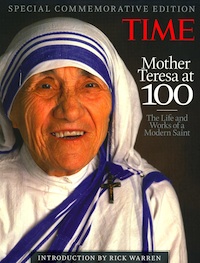
by DAVID VAN BIEMA
TIME BOOKS. 96P $19.95 (HARDCOVER)
In recognition of the centennial of the birth of Mother Teresa of Calcutta on August 26, we thought this new book would be a welcome addition to everyone’s home library. In “Unconditional Love,” the book’s introduction, the noted pastor Rick Warren pens these stirring words: “Don’t just read this book. Let it change the direction of your life. Let it cause you to investigate the One who so transformed Mother Teresa that she was able to walk away from everything we spend our lives trying to attain.” Up front is a double-page spread of small images, a timeline that captures highlights of this holy woman, who founded the Missionaries of Charity some 50 years ago.
Biema is the primary author, but the book includes contributions from James Martin, S.J., author of-among other works-My Life With the Saints, Susan Van Houte (one of Mother Teresa’s infant “rescues”) and Father Brian Kolodiejchuk, M.C., who is postulator for the cause of Mother Teresa’s canonization. In Chapter Four, “Mother to the World,” Biema writes of the Missionaries’ first forays beyond India and eventual outreach and missionary work all over the globe, drawing from a variety of sources-journalists and filmmakers who documented firsthand the challenges-even danger-the Sisters faced with unflinching purpose, dedication and fortitude.
The book is printed on glossy stock with an open, airy and appealing design. The story is familiar to many readers, but is rendered here with a freshness and perspective that readers will welcome. The volume is studded with color as well as black-and-white photos-some of which are unfamiliar to us, despite the plethora of illustrated books about the saintly nun. Time Books has put together a beautiful commemorative package indeed.


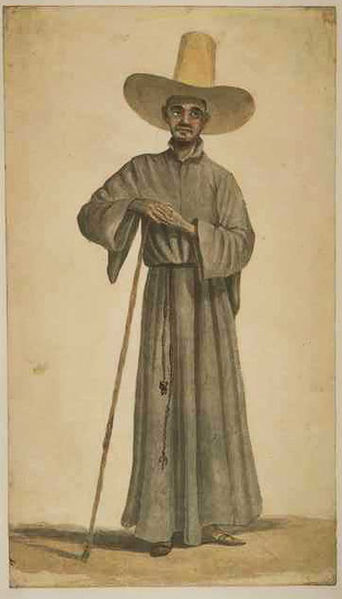
Ten Things You Didn’t Know (About the Jesuits)
1. They invented the trap door. Without the Jesuits, the Wicked Witch of the West wouldn’t have been able to disappear so suddenly in The Wizard of Oz. With a history in theater and the arts, Jesuits also perfected the “scrim,” the sheer curtain still used in theaters today.
2. They discovered quinine (called “Jesuit bark” in the 16th century) that is used today for anti-malarial drugs and also in tonic water. Without the Jesuits, you wouldn’t be able to enjoy your gin and tonic.
3. Their founder, St. Ignatius of Loyola (1 491-1 556), the Spanish-soldier-turned-mystic may be the only saint with a notarized police record: for nighttime brawling with intent to cause bodily harm (needless to say, this came before his conversion).
4. Their dictionaries and lexicons of the native languages in North America in the 17th century were the first resources Europeans used to understand these ancient tongues, and they still provide modern scholars with the earliest transcriptions of the languages.
5. They located the source of the Blue Nile and charted large stretches of the Amazon and Mississippi Rivers.
6. They educated Descartes, Voltaire, Moliere, James Joyce, Peter Paul Rubens, Arthur Conan Doyle, Fidel Castro, Alfred Hitchcock, and Bill Clinton-not to mention Bing Crosby, Vince Lombardi, Robert Altman, Chris Farley, Salma Hayek, and Denzel Washington.
7. They founded the city of Sao Paolo, Brazil.
8. There are 35 craters on the moon named for Jesuit scientists. And Athanasius Kircher, a 17th-century Jesuit scientist, called “master of a hundred arts” and “the last man to know everything”, was a geologist, biologist, linguist, decipherer of hieroglyphics, and inventor of the megaphone.
9. They inspired the film On the Waterfront, based on the groundbreaking labor-relations work of Jesuit John Corridan, who worked in New York City in the 1 940s and 1 950s. His part was played by Karl MaIden, who, last year, died 50 years to the day after Fr.Corridan.
10. They count 40 saints and dozens of blessed among their members, including the globe-trotting missionary St. Francis Xavier. Their famous “former” members include Garry Wills, John McLaughlin, and Jerry Brown.
[Source: James Martin, S.J., The Jesuit Guide to Almost Everything, Paperback Edition]
By Inyani Martin Kassim
JRS Assistant Primary Education Coordinator, Nimule, Southern Sudan
(Nimule) August 23, 2010 – Seventy-two teachers will teach more effectively in 25 JRS-supported primary schools after each attending one of the three-day workshops on teaching skills organized by JRS for untrained teachers in Nimule, Mugali and Pageri sub-counties in Magwi county, Eastern Equatoria state, Southern Sudan.
The workshops were conducted for teachers who have not received any college-based training after completing their secondary education. The training content covered teaching and learning methods, lesson development, lesson presentation skills and how to assess the performance of students and teachers. It was facilitated by five qualified primary teachers, two of whom are JRS staff members. The overall aim of such workshops is to help the Government of Southern Sudan (GoSS) enhance quality education.
In his opening remarks for one of the workshops, outgoing JRS Nimule Director Lagu Angelo informed participants that JRS projects are scheduled to conclude in Southern Sudan in December 2012. “I ask you to reveal your needs, particularly in the area of teacher training so that JRS can address them within the remaining two years,” he said. “The number of untrained teachers is still huge, so I expect you to show interest in upgrading your skills,” Mr. Lagu said.
In all three sub-counties, participants thanked JRS for organizing the workshops. “It equipped me with teaching and learning skills I would otherwise not have,” said Kajacu Silver Okomi, one of the participants. “Please continue offering possibilities for teachers to obtain certificates during the next two years,” he added.
According to statistics obtained from education officials of the three sub-counties, 170 out of a total of 383 teachers who teach at 25 JRS supported primary schools are untrained. To enhance the quality of teaching in primary schools, JRS offers teachers scholarships at colleges and universities. Since JRS first started working in Nimule in 1997 the organization helped 115 teachers to obtain teaching certificates and another 20 to complete training at diploma level. Another 64 teachers are yet to complete their courses at both levels.
Teacher training is one of the main educational needs the GoSS and various humanitarian agencies have identified among the population of Southern Sudan and much remains to be done in this area to promote quality education.


The superior man on grounds of culture meets with
his friends, and by their friendship helps his virtue
The Confucian Analects, tr. James Legge
君 子 以 文 会 友
以 友 辅 仁
[ 论语 .颜渆 ]
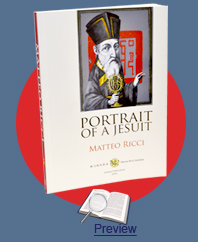
PORTRAIT OF A JESUIT – MATTEO RICCI
Together with the commemoration of Ricci, a model of accommodation and intercultural exchange and dialogue, the MRI also marks its own tenth anniversary.
The present publication is addressed widely to MRI friends, benefactors, contributing scholars, and cooperating institutions, as well as to fellow Jesuits and communities. It gathers four essays: two of them are concerned with the life of Matteo Ricci and are written, and earlier presented at MRI Forums, by Dr. Gianni Criveller, PIME; the other two are about the iconography related to a well-known portrait of Matteo Ricci and about the Beijing church that he founded, and are written by Dr. César Guillén Nuñez, MRI researcher.
We sincerely hope that the present MRI publication will bring Matteo Ricci’s life and achievements closer to Chinese and Western readers and that it will refresh and enhance in them his spirit of knowledge, virtue and sharing of spiritual and intellectual traditions in dialogue within our globalising world.
Foreword by Artur K. Wardega, S.J.,
MRI Director
Available at our Macau Ricci Institute.
Please email enquiry to [email protected]


In the desert, hospitality was a necessity for survival. As any traveler might be in need of hospitality, any guest might reasonably expect hospitality from any host. Strangers arriving in a city sat in the central square until invited to someone’s home. A guest was entitled to protection from the host, and a good host made a feast for his guest greater than he would make for members of his own family.
Sharing a meal was at the heart of the guest/host relationship. Beginning with the prophet Isaiah in the eighth century B.C., the image of the banquet prefigures the joy of the messianic banquet on Mount Zion, where all those who are saved will be invited.
In the ministry of Jesus, whether it be the feeding of the five thousand or the request to be a guest at the home of Zacchaeus, the meal becomes an anticipation of the Kingdom of God. The cup that Jesus shared with his disciples at the Last Supper was a pledge of the cup he will share with them at their next banquet in the Kingdom of God.


In search of a lost Jesuit oratario
by Anthony R. DelDonna
I looked out on the city of Naples from the steps of the Church of San Antonio a Posillipo, where my parents were wed and I was christened, and contemplated a likely dead-end in my current research project. It was spring 2008, and I had returned to Naples, as I did every year, to work. A historical musicologist, I specialize in the music, musicians and artistic culture of Naples.
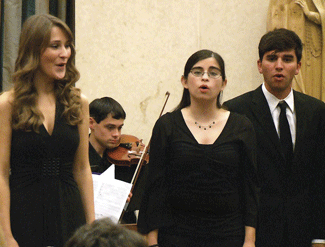
In search of a lost Jesuit oratario
This time I was researching the history of the Society of Jesus in Naples and its use of music in the 18th century. The Jesuits have had a long tradition of cultivating the arts, but I had a few basic questions: Had any music-making occurred in Jesuit institutions in Naples, and did any of this music survive? More important, what was the purpose of the surviving music, and what might it tell me about the Jesuits and their fostering of the arts? As my gaze lingered on the city, my mind replayed events of the past year, the clues and surprises, though at one point the whole effort had seemed in jeopardy.
Nicola Ceva and the Collegio
My interest in Jesuit patronage of the arts in Naples started in 2007, when a colleague, Anna Celenza (chair of the department of performing arts at Georgetown University), and I organized a conference on Jesuits and music to be held the following summer. I hoped to speak on how the Society of Jesus, ever since its arrival in Naples in 1552, had developed a connection to the city’s renowned musical culture. So I read the Gazzetta di Napoli, the official periodical of the Kingdom of Naples at the time, a treasure-trove of names, places and cultural events. Accounts there revealed that the Jesuits were patrons of music, theater and even dance in their local schools. The Collegio dei Nobili, a Jesuit boarding school so named because of the number of children from noble families educated there, had special status. Its students organized and performed musical works to celebrate days of religious importance or to coincide with the conclusion of the academic year. By the mid-18th century, the Collegio dei Nobili had even constructed a school theater.
In the early part of the 18th century, the name of Nicola Ceva appeared often in connection with works performed at the Collegio, and I was cautiously optimistic that more information about him could be found. Ceva was a native of Naples, trained in one of its famed musical conservatories, who became a priest (most likely not a Jesuit) as well as a highly skilled musician. According to the Gazzetta, Ceva was the maestro di cappella of the local music school, the Conservatorio dei Poveri di Gesù Cristo, a position of considerable prestige in Naples at the time. Given this status in musical circles, Ceva’s association with the Jesuit Collegio dei Nobili is proof that the Society had attracted the best musicians in Naples, a city of entertainment. But had any music by Ceva survived? The answers could come from only one institution: the Library of the Conservatory of Naples, San Pietro a Majella.
Located in a former monastery, the library was established in the 19th century as the official repository for the musical patrimony of Naples. Its two floors are lined from floor to ceiling with thousands of precious manuscripts. Though I spent weeks sleuthing around, nothing turned up until a chance conversation with a friend and longtime assistant at the conservatory, Dr. Antonio Caroccia. He mentioned that many uncatalogued manuscripts had been taken out of storage, and he was certain they were sacred works. As I walked upstairs, my hopes soared.
I was not disappointed. After several hours of work, I recovered a previously unknown oratorio by Ceva, entitled “Trionfo per l’Assunzione della Santissima Vergine.”
“Trionfo” was composed in 1705 to celebrate the feast of the Assumption (Aug. 15), which marks the ascension of the Virgin Mary into heaven. “Trionfo” moved me with the humanity of its poetry, presented not in Latin, the language of the liturgy, but in the vernacular Italian, which was then preferred for opera.
Mary, the Mother of God, is presented speaking in the first person as she awaits her death, contemplates the afterlife and interacts with three allegorical characters: Gloria (soprano), Amor divino (alto) and Zelo (tenor). Individually, and as an ensemble, the four “personages” sing of life, death and the Assumption in utterly human terms: happiness and fear, uncertainty and resolve, understanding and acceptance. Throughout the oratorio there are also subtle references to the Bible. For example, in her first aria Gloria sings, “And with great quantities/ of pure silver/ let the moon form a throne/ to her foot,” imparting a subtle catechism lesson to the audience.
The music was equally fascinating, ranging from arias requiring only a moderate level of singing skill to pieces in the highly florid style of contemporary opera. The roles of Maria, Amor and Gloria were probably performed by students in the Collegio dei Nobili, the practice of the time. The role of Zelo, however, is a musical tour-de-force and requires an expertise and vocal dexterity that suggests that a professional singer played the role. Throughout “Trionfo” is highly lyrical music for the accompanying chamber ensemble and brief preludes and postludes that frame the individual pieces. “Trionfo” is a compelling piece of sacred theater that undoubtedly served the Jesuit mission in Naples to educate, enlighten and serve the “greater glory of God.”
The Oratorio Revived
“Trionfo” sent my mind racing in new directions. Returning home, I decided to transcribe the score and translate the Italian for a performance at Georgetown. My plan was to recreate the context that spurred the composition of “Trionfo,” in particular students and faculty in a Jesuit school working together to present this music. The best way to do so seemed to be within the context of an academic course on Baroque music and culture, whose final project would be the presentation of “Trionfo.” Eight students (seven vocalists and a keyboardist) were selected, and I recruited colleagues to help teach the oratorio. We met twice a week (sometimes on weekends, too) and devoted ourselves to studying the 18th century and to rehearsals of “Trionfo.”
The first performance was scheduled for Dec. 3, 2009, not the Assumption but close to the date of another Marian feast, the Immaculate Conception. Each week the students grew more confident as they integrated their academic work with the practical study of “Trionfo.” As the day neared, we shared a measured excitement.
The concert was held at the Jesuit residence on campus, Wolfington Hall, which was filled to capacity. For the performance, an ensemble of professional musicians had been enlisted to accompany the students.
The students were exceptionally well prepared, ready to sing at their very best. More impressive, perhaps, they understood the significance of our recovery of the Ceva oratorio. For the first time since 1705, the voices of Maria, Zelo, Gloria and Amor divino from “Trionfo” were again heard at a Jesuit institution, this time on the banks of the Potomac. At the end, the students received a standing ovation.
What made the project a success was not simply the recovery and performance of the Ceva oratorio. Rather it was the convening of students, faculty and the community at large within a modern-day Jesuit “Collegio” so that we could all better understand the roles and traditions of the Society as it links past to present and looks toward the future.