

Author: cfliao
The 10th biannual meeting of the social-pastoral network of Jesuits engaged with indigenous peoples of Latin America took place from 12 to 17 August in Peru. Delegates from nine countries represented 17 indigenous groups: Aymaras, Quichuas, Mam, Quechua, Awajún, Wampís, Guaranís, Raramuris, Tseltales, Ch’ol, Zoques, Mapuches, Moxos, Arhuacos, Wiwas, Kankuamos and Koguis.
In an unexpected turn of events, the local Awajún-Wampís, protesting against new government legislation, blocked all roads to Santa Maria de Nieva, where the meeting was supposed to take place. Participants therefore gathered first in Jaén and then in Chiclayo, in solidarity with the indigenous groups protesting infringement of their territorial rights and exploitation of their land by multinationals. Read Fernando Franco’s reflections on these events in our blog (in English).
Read a letter from the Jesuit parish priest in Santa Maria de Nieva to the delegates of the indigenous apostolate meeting (in Spanish) and his collection of local news items.
The pictures on our website were taken at the meeting by Fernando Franco – click “refresh” to see the next picture.
Australian Jesuit Fr Michael Kelly has been appointed as director of the Bangkok-based Asian Catholic news agency, UCAN. UCAN was launched in 1979 to provide information on the Catholic Church and Catholic concerns in the Asian region. It is the largest Catholic news service in Asia and one of the biggest in the world.
“I’m looking forward to learning and sharing,” said Fr Kelly.
“There’s a lot we can learn from the fastest changing region in our world, and there’s a lot we can bring to it given Australia’s technological developments over the last decade particularly in relation to the web.”
As well as his experience in traditional media, Fr Kelly will bring to UCAN extensive experience in harnessing new technologies.
“The Church’s mission is to reach out to people where they are with the message of Jesus, in a way that’s relevant and applied to their lives. The access to the web for many people across Asia is through hand held devices. That represents a completely new challenge in communications, and it’s one that I look forward to exploring and responding to in coming years,” Fr Kelly said.
 75 volunteers joined the Slí Eile South Africa Challenge this summer. They were mainly 6th year graduates of the Jesuit schools, but they were joined by volunteers from Terenure College and a host of friends and partners of the Jesuits in Ireland. They raised €45,000, which funded the materials and local labour for the construction of an orphan house in the Franklin Township, and every two weeks a new group went out to work on the construction. The orphan house has since been completed. On Saturday afternoon, in Belvedere Hotel, the Slí Eile South Africa Volunteers gather to celebrate their achievement and to present John Clarke, of Friends in Ireland, with a cheque for €45,000.
Plans have begun in China and Italy to celebrate the 400th anniversary of Jesuit missionary Father Matteo Ricci, in 2010.
‘First world citizen of the earth,’ ‘Pioneer of cultural exchange,’ ‘Chinese among the Chinese,’ ‘Xi tai teacher of the West,’ ‘Xi ru wise man from the West,’ ‘Mandarin,’ ‘the first man to open cultural relations between Europe and China’…These are just a few of the many titles used to describe the great Jesuit missionary Fr Matteo Ricci.
In addition to being a missionary, he was also a humanist, a philosopher, a man of letters, geography, astronomy…not to mention all he left behind. Not only Chinese Catholics, but all Chinese people in general and the Italian people as well have shown a great gratitude and esteem for this man.
In honour of the 400th anniversary of his death, which will be celebrated in 2010, China and Italy will join in recalling this great ‘son,’ with the theme: ‘Matteo Ricci, a European in China.’ There will be two conferences in 2009: one in May and another in October, in Rome and in Beijing. There will also be various initiatives for discovering the spirit of this great man who won over the simple and the learned of China in short, the entire Chinese world with his preaching of Christianity.
Father Matteo Ricci was born in Macerata, Italy, on October 6, 1552. He began his studies in a Jesuit school in 1561. Little by little, his missionary vocation matured. In 1577 he was transferred to Coimbra, Portugal, to prepare for his transfer to Asia. In 1578, he left from Lisbon to travel to Goa, on the coast of India. He was ordained a priest in 1582 and left for Macao in China, where the Jesuits had hoped to evangelize from the moment of their foundation in 1534. In 1589, he was transfered to Shao Zhou, in the Province of Guang Dong. After having worked tirelessly at the Chinese mission and with many failed attempts, Fr. Ricci went to Beijing on January 24, 1601 to visit the Imperial Court of Ming (Emperor Wan Li). He built what is now the Cathedral of Beijing, dedicated to the Immaculate Conception. He died in Beijing on May 11, 1610. In honor of this great man who had come from a far away land, Emperor Wan Li personally donated the land for his burial, in central Beijing.
Source: Fides
© Independent Catholic News 2008
September 23, 2008 | Vol. 12, N. 8
Early in the morning of September 20 Father General left for his visit to Brazil. At the city of Manaus he will attend the meeting of the Conference of Provincials of Latin America (CPAL) to be held September 23-27. After the Conference he will proceed to visit the Amazonian Region where 45 Jesuits work in seven communities. His visit is interpreted as a sign of encouragement to the recently established Region (2005), characterized by the mobility of its apostolic activity organized as “itinerant teams”. (See “Light Cavalry” Yesterday, “Itinerant Team” Today. YEARBOOK S.J. 2004, page 97). Jesuits from the Region are now preparing their intervention in the World Social Forum to be held in the city of Belem at the end of January 2009. They intend to raise their voices in defence of Nature, a vital concern for the people in the Region.
Father General will also visit Belo Horizonte, the only inter-provincial center in Latin America of formation for Jesuits, where the Faculties of Philosophy and Theology are located.
Immediately after his return to Rome (October 5) Father General will participate in the Synod of Bishops (October 6-26) on the theme “The Word of God in the life and mission of the Church”.
From September 20-Oct 5 and during the Synod, Father Valentín Menéndez will act as Vicarius ad tempus for matters of ordinary governance in the Society.
Father General has appointed Father Wojciech Ziólek, 45 years old, Provincial of the South Poland Province. He succeeds Father Krzysztof Dyrek.
As well as the usual individual visitors, the month of September has registered an unusual number of guests who were attending four main meetings in the Curia: Counsellors of Father General, Presidents of the Provincials Conferences, Treasurers of the United States Provinces and their assistants, and a JRS seminar for volunteers. Twenty eight of the guests stayed at the Curia. Others stayed at the Canisio Community and at the Residence for lay people.
After the XV World Assembly celebrated in Fatima August 12-21, the Secretariat of the Christian Life Community (CVX) has made available the following documents:
-Talk of Father General to the Assembly;
-Final Document of the Assembly;
-Handbook of the CVX Ecclesiastical Assistant.
Requests from: cvx-at-sjcuria.org
These documents are available in English, French and Spanish.
Social Justice Secretariat: Ignatian Ecology Network.
Starting with a summary of what the 35 General Congregation declared regarding “Ecology and the Society of Jesus”, the Social Justice Secretariat has formulated several questions inviting Jesuits to offer Father General their own answers and suggestions. To receive the summary and the questions, write to ecology-at-sjcuria.org
Bihar, Haiti, Cuba
Reports from several parts of the Society regarding the devastation caused by recent hurricanes, has moved Father General to send financial help from FACSI to the state of Bihar (Patna Province), Haiti and Cuba. In the state of Bihar the flooding left more than 2 million people homeless. For Haiti it has been estimated that 100 million $USD will be needed for the reconstruction. An official announcement in La Habana reported that all the reserves of the country to help people were exhausted.
Sweden
Together with two female religious, Father Brian O’Leary, of the Irish Province, has concluded recently a course of the Spiritual Exercises for Lutheran Pastors in the Jesuit Retreat House at Gothenburg. Sister Adelheid, of Germany, a member of the Sacred Heart Congregation, started the movement several years ago. The Exercises are conducted in silence with daily periods of personal direction. Father O’Leary found that many of the Pastors were anxious to contact the Catholic Church at the spiritual rather than the ecclesiastical level. The future of this activity however is not rosy because at the beginning of 2009 the Sacred Heart Sisters are pulling out of Sweden and without the inspiration of Sister Adelheid, the British and Irish Jesuits who have been called to conduct the Retreats wonder if it will be possible to keep the program alive.

SANTA CLARA, Calif., Sep 18, 2008 (BUSINESS WIRE) — Michael Engh, S.J., distinguished historian and current Dean of the Bellarmine College of Liberal Arts at Loyola Marymount University in Los Angeles, has been selected the 28th president of Santa Clara University. Fr. Engh will succeed Paul Locatelli, S.J., who announced in March that he would step down after nearly 20 years as president. Fr. Locatelli continues as president of the University until December 31, 2008. For more information visit www.scu.edu/president/incoming.
Engh, 58, was elected by Santa Clara University’s Board of Trustees during a special meeting of the governing body on September 17. He will take office in January 2009. In making the announcement, A.C. “Mike” Markkula, Chair of the Santa Clara University Board of Trustees, said, “Fr. Engh brings to Santa Clara an outstanding record as a scholar, teacher, historian, and administrator. He has made significant academic contributions in his career as a historian, and understands the potential of Jesuit institutions to advance learning and artistic expression, faculty scholarship, and social justice.” He added that Fr. Engh emerged from a field of candidates as the best person to lead Santa Clara to new frontiers in academic excellence. “He possesses a rare blend of vision, compassion, and a deep understanding of Jesuit higher education that will serve students, faculty, staff and the broader Silicon Valley community very well.” Robert Finocchio, Vice chair of the Santa Clara University Board of Trustees and chair of the presidential search committee said, “Fr. Engh is the ideal person to lead Santa Clara University into the next stage of its history. He will continue building Santa Clara’s reputation for academic excellence and supporting our mission of developing leaders of competence, conscience, and compassion.” “From the first conversations in the search process, Santa Clara’s themes–the pursuit of academic excellence, social justice, community-based learning–have resonated with my core values,” Engh said. “It is an honor and a great privilege to have been selected to join Santa Clara University as its next president.” A third-generation Angeleno, Engh graduated from what was then Loyola University of Los Angeles in 1972 and was ordained a Jesuit priest in 1981. He completed his graduate studies in the history of the American West at the University of Wisconsin at Madison in 1987 and began teaching at LMU in 1988. He was also active in founding LMU’s Thomas and Dorothy Leavey Center for the Study of Los Angeles and the university’s Center for Ignatian Spirituality. He is the author of Frontier Faiths: Church, Temple, and Synagogue in Los Angeles (1992) and has published 18 articles or chapters in books on the history of Los Angeles, the Catholic Church in the American West, and the history of LMU. “Santa Clara University is fortunate to have Fr. Engh come on board as President,” said Robert B. Lawton, S.J., President of Loyola Marymount University in Los Angeles. “He is a wonderful human being, and agreat academic who works very well with both faculty and students, and he is a terrificfund raiser,” he said. “He’ll quickly become a Bronco!” As dean of the Bellarmine College of Liberal Arts at LMU, a position he has held since June 2004, Engh has the responsibility for programs that enrolled approximately 1800 students. In addition, he oversees 151 tenured and tenure-track faculty, 85 to 95 part-time faculty each semester, and 26 staff members. During his tenure as dean, he led a team in the implementation of a five-year strategic plan for the College: “Education That Transforms,” initiated contacts with universities in China, encouraged foreign immersion trips for faculty, and founded two programs to promote inter-religious dialogue. Prior to his work as Dean, Engh served as rector of the Jesuit Community at LMU from 1994 to 2000, where he coordinated, planned, and completed the construction of a new residence for the Jesuits. In 1991, he cofounded the Los Angeles History Seminar at the Huntington Library, one of the largest urban history seminars in the country, and led the group until 2003. As part of a sabbatical, Engh spent two years (2000-02) in East Los Angeles conducting research at the Huntington Library, volunteering at Los Angeles Central Juvenile Hall, and helping at the Dolores Mission parish. Engh says his approach to higher education reflects a city-inspired understanding of the essential place that social justice holds in the mission of the contemporary Jesuit University. “The gritty realities of inner-city life jarred me as no book or lecture had,” he said. He adds that academics in any locale have much to learn from the socio-economic realities that surround every campus. “My vision uses the traditional Jesuit lens of academic rigor to focus on the pursuit of knowledge, justice, and faith. Excellence in scholarship and the arts presumes rigor, mental training that disciplines the mind in order to free the spirit in its quest for truth and beauty.” At Santa Clara, Engh said, his job will be to ask a lot of questions and to listen deeply to the campus community. As president, his priorities would center on drawing diverse and academically gifted students, attracting and retaining talented faculty, and fundraising. The oldest of six children, he was born in Los Angeles, where his mother’s family first settled in the 1880s. His father, Donald, is a retired captain in the Los Angeles city fire department and his mother, Marie Therese (Airey) Engh, is a homemaker. He graduated from St. Bernard High School, in Playa del Rey, Calif. in 1968. A baseball enthusiast, Engh said the two words that best describe him are: Dodgers Fan! In his free time, he enjoys reading, regular exercise, and spending time with friends. He is also looking forward to getting to know and engage with the diversity, energy and entrepreneurial spirit that are the hallmarks of Silicon Valley. Engh, who first visited Santa Clara in 1974 as a Jesuit novice, has great memories of his early visits to the Mission campus. Captivated by history as a child, he remembers being fascinated by the past, by historic sites, and original documents. His grandfather, Edmund F. Airey, Sr., was a great storyteller, and Engh grew up hearing his accounts of California history and sharing his love of the past. “Engaging teachers in high school and college further inspired my love of studying history,” he said. Engh, who has a reputation of being a challenging professor and a tough grader — “if you want the best for your students, you have to ask their best from them” — also knew early on in his student life that he wanted to be a teacher.”My first experience as a teacher was teaching history to a class of high school students. I knew then I had found my true vocation.” About Santa Clara University Santa Clara University, a comprehensive Jesuit, Catholic university located 40 miles south of San Francisco in California’s Silicon Valley, offers its 8,685 students rigorous undergraduate curricula in arts and sciences, business, and engineering, plus master’s and law degrees and engineering Ph.D.s. Distinguished nationally by one of the highest graduation rates among all U.S. master’s universities, California’s oldest operating higher-education institution demonstrates faith-inspired values of ethics and social justice. SOURCE: Santa Clara University
Santa Clara University Deepa Arora, 408-554-5125 Media Relations Director [email protected]
Copyright Business Wire 2008 

SANTA CLARA, Calif., Sep 18, 2008 (BUSINESS WIRE) — Michael Engh, S.J., distinguished historian and current Dean of the Bellarmine College of Liberal Arts at Loyola Marymount University in Los Angeles, has been selected the 28th president of Santa Clara University. Fr. Engh will succeed Paul Locatelli, S.J., who announced in March that he would step down after nearly 20 years as president. Fr. Locatelli continues as president of the University until December 31, 2008. For more information visit www.scu.edu/president/incoming.
Engh, 58, was elected by Santa Clara University’s Board of Trustees during a special meeting of the governing body on September 17. He will take office in January 2009. In making the announcement, A.C. “Mike” Markkula, Chair of the Santa Clara University Board of Trustees, said, “Fr. Engh brings to Santa Clara an outstanding record as a scholar, teacher, historian, and administrator. He has made significant academic contributions in his career as a historian, and understands the potential of Jesuit institutions to advance learning and artistic expression, faculty scholarship, and social justice.” He added that Fr. Engh emerged from a field of candidates as the best person to lead Santa Clara to new frontiers in academic excellence. “He possesses a rare blend of vision, compassion, and a deep understanding of Jesuit higher education that will serve students, faculty, staff and the broader Silicon Valley community very well.” Robert Finocchio, Vice chair of the Santa Clara University Board of Trustees and chair of the presidential search committee said, “Fr. Engh is the ideal person to lead Santa Clara University into the next stage of its history. He will continue building Santa Clara’s reputation for academic excellence and supporting our mission of developing leaders of competence, conscience, and compassion.” “From the first conversations in the search process, Santa Clara’s themes–the pursuit of academic excellence, social justice, community-based learning–have resonated with my core values,” Engh said. “It is an honor and a great privilege to have been selected to join Santa Clara University as its next president.” A third-generation Angeleno, Engh graduated from what was then Loyola University of Los Angeles in 1972 and was ordained a Jesuit priest in 1981. He completed his graduate studies in the history of the American West at the University of Wisconsin at Madison in 1987 and began teaching at LMU in 1988. He was also active in founding LMU’s Thomas and Dorothy Leavey Center for the Study of Los Angeles and the university’s Center for Ignatian Spirituality. He is the author of Frontier Faiths: Church, Temple, and Synagogue in Los Angeles (1992) and has published 18 articles or chapters in books on the history of Los Angeles, the Catholic Church in the American West, and the history of LMU. “Santa Clara University is fortunate to have Fr. Engh come on board as President,” said Robert B. Lawton, S.J., President of Loyola Marymount University in Los Angeles. “He is a wonderful human being, and agreat academic who works very well with both faculty and students, and he is a terrificfund raiser,” he said. “He’ll quickly become a Bronco!” As dean of the Bellarmine College of Liberal Arts at LMU, a position he has held since June 2004, Engh has the responsibility for programs that enrolled approximately 1800 students. In addition, he oversees 151 tenured and tenure-track faculty, 85 to 95 part-time faculty each semester, and 26 staff members. During his tenure as dean, he led a team in the implementation of a five-year strategic plan for the College: “Education That Transforms,” initiated contacts with universities in China, encouraged foreign immersion trips for faculty, and founded two programs to promote inter-religious dialogue. Prior to his work as Dean, Engh served as rector of the Jesuit Community at LMU from 1994 to 2000, where he coordinated, planned, and completed the construction of a new residence for the Jesuits. In 1991, he cofounded the Los Angeles History Seminar at the Huntington Library, one of the largest urban history seminars in the country, and led the group until 2003. As part of a sabbatical, Engh spent two years (2000-02) in East Los Angeles conducting research at the Huntington Library, volunteering at Los Angeles Central Juvenile Hall, and helping at the Dolores Mission parish. Engh says his approach to higher education reflects a city-inspired understanding of the essential place that social justice holds in the mission of the contemporary Jesuit University. “The gritty realities of inner-city life jarred me as no book or lecture had,” he said. He adds that academics in any locale have much to learn from the socio-economic realities that surround every campus. “My vision uses the traditional Jesuit lens of academic rigor to focus on the pursuit of knowledge, justice, and faith. Excellence in scholarship and the arts presumes rigor, mental training that disciplines the mind in order to free the spirit in its quest for truth and beauty.” At Santa Clara, Engh said, his job will be to ask a lot of questions and to listen deeply to the campus community. As president, his priorities would center on drawing diverse and academically gifted students, attracting and retaining talented faculty, and fundraising. The oldest of six children, he was born in Los Angeles, where his mother’s family first settled in the 1880s. His father, Donald, is a retired captain in the Los Angeles city fire department and his mother, Marie Therese (Airey) Engh, is a homemaker. He graduated from St. Bernard High School, in Playa del Rey, Calif. in 1968. A baseball enthusiast, Engh said the two words that best describe him are: Dodgers Fan! In his free time, he enjoys reading, regular exercise, and spending time with friends. He is also looking forward to getting to know and engage with the diversity, energy and entrepreneurial spirit that are the hallmarks of Silicon Valley. Engh, who first visited Santa Clara in 1974 as a Jesuit novice, has great memories of his early visits to the Mission campus. Captivated by history as a child, he remembers being fascinated by the past, by historic sites, and original documents. His grandfather, Edmund F. Airey, Sr., was a great storyteller, and Engh grew up hearing his accounts of California history and sharing his love of the past. “Engaging teachers in high school and college further inspired my love of studying history,” he said. Engh, who has a reputation of being a challenging professor and a tough grader — “if you want the best for your students, you have to ask their best from them” — also knew early on in his student life that he wanted to be a teacher.”My first experience as a teacher was teaching history to a class of high school students. I knew then I had found my true vocation.” About Santa Clara University Santa Clara University, a comprehensive Jesuit, Catholic university located 40 miles south of San Francisco in California’s Silicon Valley, offers its 8,685 students rigorous undergraduate curricula in arts and sciences, business, and engineering, plus master’s and law degrees and engineering Ph.D.s. Distinguished nationally by one of the highest graduation rates among all U.S. master’s universities, California’s oldest operating higher-education institution demonstrates faith-inspired values of ethics and social justice. SOURCE: Santa Clara University
Santa Clara University Deepa Arora, 408-554-5125 Media Relations Director [email protected]
Copyright Business Wire 2008 
By Carol Glatz
Catholic News Service
VATICAN CITY (CNS) — Speakers invited to attend a Vatican-sponsored congress on the evolution debate will not include proponents of creationism and intelligent design, organizers said.
The Pontifical Council for Culture, Rome’s Pontifical Gregorian University and the University of Notre Dame in Indiana are organizing an international conference in Rome March 3-7 as one of a series of events marking the 150th anniversary of the publication of Charles Darwin’s “The Origin of Species.”
Jesuit Father Marc Leclerc, a philosophy professor at the Gregorian, told Catholic News Service Sept. 16 that organizers “wanted to create a conference that was strictly scientific” and that discussed rational philosophy and theology along with the latest scientific discoveries.
He said arguments “that cannot be critically defined as being science, or philosophy or theology did not seem feasible to include in a dialogue at this level and, therefore, for this reason we did not think to invite” supporters of creationism and intelligent design.
Father Leclerc was one of several organizers speaking at a Sept. 16 Vatican press conference about the congress, part of the culture council’s “Science, Technology and the Ontological Quest,” or STOQ project.
Archbishop Gianfranco Ravasi, president of the Pontifical Council for Culture, said the other extreme of the evolution debate — proponents of an overly scientific conception of evolution and natural selection — also were not invited.
He reiterated that evolutionary theory “is not incompatible with the teachings of the Catholic Church or the Bible’s message.”
Gennaro Auletta, professor of philosophy at the Gregorian and head of the STOQ project, said organizers hope the encounter will help theologians and philosophers be “a bit more humble and learn to listen a bit more” to what science is unveiling about humanity and the world.
Auletta said Popes Pius XII, John Paul II and Benedict XVI have expressed “a fundamental interest” in the theory of biological evolution. However, the pontiffs’ hopes that Catholics would gain greater understanding of the issues has not yet materialized, he said.
Phillip Sloan, a professor at Notre Dame, told the press conference the evolution debate, “especially in the United States, has been taking place without a strong Catholic presence … and the discourse has suffered accordingly.”
While there has been Catholic commentary on the compatibility of faith and evolutionary theories, there is no definitive written source to which people can refer to learn the church’s position, he said.
Sloan said he hoped the March conference and other initiatives planned by Notre Dame and the Vatican would foster the development of “informed Catholic thought” on the subject.
 |
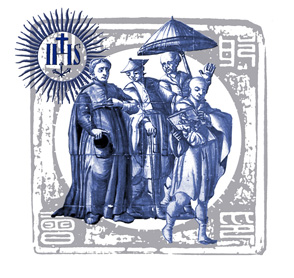
In the Light and Shadow of an Emperor
Tomás Pereira, S.J. (1645-1708), the Kangxi Emperor
and the Jesuit Mission in China
| Lisbon 10-12 November, 2008 |
Macau 27-29 November, 2008 |
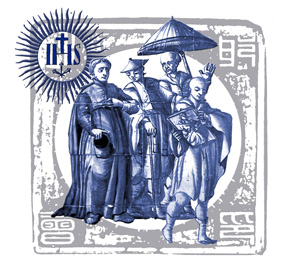
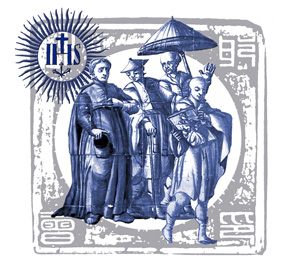
The symposium examines one of the most decisive and controversial moments in the history of the Jesuit Mission in China during the reign (1661-1722) of the Kangxi Emperor (1654-1722). One of the most outstanding and enlightened Chinese monarchs, Xuanye’s celebrated cultural tastes, scientific curiosity and political sensibility led to the admission of the Jesuits at his court. This attitude had its apex in the proclamation of the Edict of Tolerance of March 22, 1692, allowing the Catholic faith to be preached and practiced in China. It was a relevant and uncommon gesture of openness towards the West that led to the flourishing of the Catholic Mission in China. It also confirmed the respectability of Western learning in China and secured Macau’s fragile situation as a European entrepôt. To all of this the Portuguese Jesuit, Tomás Pereira S.J. (1645-1708) contributed decisively, as is clearly demonstrated by the full text of the Edict of Tolerance, which with the imperial eulogy was transcribed on his tombstone. Tomás Pereira also played a crucial role in trying to appease the famous Rites Controversy in China after Western politico-religious animosities had disrupted the Kangxi Emperor’s original attitude of benevolence towards the Catholic Missions.
Working at the court of Kangxi for more than thirty years (1673-1708), Tomás Pereira not only forged a unique and privileged personal relation with the Emperor, but also served as an innovative musician and a skillful mediator on Sino-Russian affairs. He built the new Nantang Church in Beijing, and was a pro interim Prefect of the Court of Mathematics, as well as an effective representative and protector of the Christian missions in China. This symposium reviews from an interdisciplinary and primary source perspective Tomás Pereira´s life and work in the contexts of the China Mission and of Chinese Politics and Court Culture. It was, in fact, a rich and unique moment of dialogue of China with the West and constitutes an inspiring experience for the future. For this reason, the symposium takes as its starting point the 300 th anniversary of the death of Tomás Pereira, whose intellectual skills, dedication, loyalty and moral authority made him one of the most influential and respected Jesuits in the inner circle of the Kangxi Emperor.
Main Themes
Tomás Pereira: the Man and the Missionary
The China Mission in the time of Kangxi Emperor
Tomás Pereira, Science and Mission
Tomás Pereira and the Music in China
Tomás Pereira, the Court and the Chinese Culture
Tomás Pereira and the Sino-Russian Negotiations of Nerchinsk
Scientific Committee
Prof. John W. Witek, S.J. – Georgetown University, USA
Prof. Paul Rule – Ricci Institute –
University of San Francisco Center for the Pacific Rim, USA
Prof. António Vasconcelos de Saldanha – Instituto do Oriente –
Instituto Superior de Ciências Sociais e Políticas/Universidade Técnica de Lisboa, Portugal
Prof. Henrique Leitão – Centro de História das Ciências –
Faculdade de Ciências/Universidade de Lisboa, Portugal
Prof. Fernando Ramôa Ribeiro – Universidade Técnica de Lisboa, Portugal
Prof. Lin Qian – Chinese National Commission for the History of the Qing Dynasty, PRC
Prof. Zhuo Xinping – Centre for the Study of Christianity –
Institute for World Religions – Chinese Academy of Social Sciences, PRC
Prof. Zhang Xiping – National Research Center of Overseas Sinology –
Beijing Foreign Studies University, PRC
Prof. Louis Gendron, S.J. – Chinese Province – Society of Jesus
Prof. Alfredo Dinis, S.J. – Province of Portugal – Society of Jesus
Fr. Thomas McCoog, S.J. – Institutum Historicum Societatis Iesu, Rome
Ambassador João de Deus Ramos – Fundação Oriente, Portugal
Mestre Tereza Sena – Macau Ricci Institute, Macau
Dr. Jin Guoping – Portugal
Organising Institutions
 |
The Macau Ricci Institute |
 |
Instituto do Oriente ISCSP (Universidade Técnica de Lisboa) |
 |
Centro de História das Ciências Faculdade de Ciências (Universidade Clássica de Lisboa) |
Co-organising Institutions
Reitoria da Universidade Técnica de Lisboa
Centre for the Study of Christianity – Institute for World Religions –
Chinese Academy of Social Sciences
National Research Center of Overseas Sinology – Beijing Foreign Studies University
Chinese Province – Society of Jesus
Province of Portugal – Society of Jesus
Institutum Historicum Societatis Iesu
Fundação Oriente
Sponsors
Dates
Lisbon: 10th – 12th November 2008
Macau: 27th – 29th November 2008
Venues
Lisbon: Auditorium of the Museu do Oriente, Fundação Oriente
Macau: Inspiration Building, Institute For Tourism Studies
Languages
Lisbon: English, Portuguese
Macau: English, Chinese (Mandarin). Simultaneous interpretation will be provided.
Registration Fee (Macau)
MOP$150 / HK$150 (cash)
Contact us
Please check this website periodically for further updated information
 |
In the Light and Shadow of an Emperor
Tomás Pereira, S.J. (1645-1708), the Kangxi Emperor
and the Jesuit Mission in China
| Lisbon 10-12 November, 2008 |
Macau 27-29 November, 2008 |
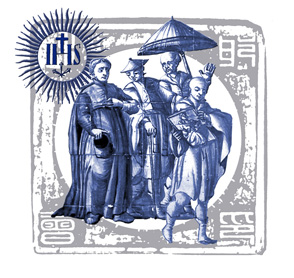
The symposium examines one of the most decisive and controversial moments in the history of the Jesuit Mission in China during the reign (1661-1722) of the Kangxi Emperor (1654-1722). One of the most outstanding and enlightened Chinese monarchs, Xuanye’s celebrated cultural tastes, scientific curiosity and political sensibility led to the admission of the Jesuits at his court. This attitude had its apex in the proclamation of the Edict of Tolerance of March 22, 1692, allowing the Catholic faith to be preached and practiced in China. It was a relevant and uncommon gesture of openness towards the West that led to the flourishing of the Catholic Mission in China. It also confirmed the respectability of Western learning in China and secured Macau’s fragile situation as a European entrepôt. To all of this the Portuguese Jesuit, Tomás Pereira S.J. (1645-1708) contributed decisively, as is clearly demonstrated by the full text of the Edict of Tolerance, which with the imperial eulogy was transcribed on his tombstone. Tomás Pereira also played a crucial role in trying to appease the famous Rites Controversy in China after Western politico-religious animosities had disrupted the Kangxi Emperor’s original attitude of benevolence towards the Catholic Missions.
Working at the court of Kangxi for more than thirty years (1673-1708), Tomás Pereira not only forged a unique and privileged personal relation with the Emperor, but also served as an innovative musician and a skillful mediator on Sino-Russian affairs. He built the new Nantang Church in Beijing, and was a pro interim Prefect of the Court of Mathematics, as well as an effective representative and protector of the Christian missions in China. This symposium reviews from an interdisciplinary and primary source perspective Tomás Pereira´s life and work in the contexts of the China Mission and of Chinese Politics and Court Culture. It was, in fact, a rich and unique moment of dialogue of China with the West and constitutes an inspiring experience for the future. For this reason, the symposium takes as its starting point the 300 th anniversary of the death of Tomás Pereira, whose intellectual skills, dedication, loyalty and moral authority made him one of the most influential and respected Jesuits in the inner circle of the Kangxi Emperor.
Main Themes
Tomás Pereira: the Man and the Missionary
The China Mission in the time of Kangxi Emperor
Tomás Pereira, Science and Mission
Tomás Pereira and the Music in China
Tomás Pereira, the Court and the Chinese Culture
Tomás Pereira and the Sino-Russian Negotiations of Nerchinsk
Scientific Committee
Prof. John W. Witek, S.J. – Georgetown University, USA
Prof. Paul Rule – Ricci Institute –
University of San Francisco Center for the Pacific Rim, USA
Prof. António Vasconcelos de Saldanha – Instituto do Oriente –
Instituto Superior de Ciências Sociais e Políticas/Universidade Técnica de Lisboa, Portugal
Prof. Henrique Leitão – Centro de História das Ciências –
Faculdade de Ciências/Universidade de Lisboa, Portugal
Prof. Fernando Ramôa Ribeiro – Universidade Técnica de Lisboa, Portugal
Prof. Lin Qian – Chinese National Commission for the History of the Qing Dynasty, PRC
Prof. Zhuo Xinping – Centre for the Study of Christianity –
Institute for World Religions – Chinese Academy of Social Sciences, PRC
Prof. Zhang Xiping – National Research Center of Overseas Sinology –
Beijing Foreign Studies University, PRC
Prof. Louis Gendron, S.J. – Chinese Province – Society of Jesus
Prof. Alfredo Dinis, S.J. – Province of Portugal – Society of Jesus
Fr. Thomas McCoog, S.J. – Institutum Historicum Societatis Iesu, Rome
Ambassador João de Deus Ramos – Fundação Oriente, Portugal
Mestre Tereza Sena – Macau Ricci Institute, Macau
Dr. Jin Guoping – Portugal
Organising Institutions
 |
The Macau Ricci Institute |
 |
Instituto do Oriente ISCSP (Universidade Técnica de Lisboa) |
 |
Centro de História das Ciências Faculdade de Ciências (Universidade Clássica de Lisboa) |
Co-organising Institutions
Reitoria da Universidade Técnica de Lisboa
Centre for the Study of Christianity – Institute for World Religions –
Chinese Academy of Social Sciences
National Research Center of Overseas Sinology – Beijing Foreign Studies University
Chinese Province – Society of Jesus
Province of Portugal – Society of Jesus
Institutum Historicum Societatis Iesu
Fundação Oriente
Sponsors
Dates
Lisbon: 10th – 12th November 2008
Macau: 27th – 29th November 2008
Venues
Lisbon: Auditorium of the Museu do Oriente, Fundação Oriente
Macau: Inspiration Building, Institute For Tourism Studies
Languages
Lisbon: English, Portuguese
Macau: English, Chinese (Mandarin). Simultaneous interpretation will be provided.
Registration Fee (Macau)
MOP$150 / HK$150 (cash)
Contact us
Please check this website periodically for further updated information