

Author: cfliao
 SHANGHAI, China (UCAN) — Shanghai diocese capped its nine-month celebration of the 400th anniversary of Catholicism’s arrival with the ordination of two priests.
Auxiliary Bishop Joseph Xing Wenzhi of Shanghai ordained Fathers Joseph Li Gangyao and Joseph Xu Ruhao on Dec. 6 at St. Ignatius Cathedral in the downtown Xujiahui district of the city, 1,080 kilometers southeast of Beijing. Both graduated from Sheshan Regional Seminary on the outskirts of Shanghai.
About 2,000 Catholics, including relatives of the new priests, attended the ordination Mass, which 87 priests from local and neighboring dioceses concelebrated.
With the ordination of Father Li, Shanghai diocese now has 75 diocesan priests. Father Xu was ordained for Anhui diocese, to the west.
Bishop Xing told the congregation that although the anniversary celebrations have come to a close, “our mission does not end today, but rather it marks a new impetus for us to spread the Gospel to those who have never heard of it.”
Noting that the universal Church is now in the midst of celebrating a Pauline Year, Bishop Xing urged the congregation to model themselves after Saint Paul the Apostle in evangelizing zeal.
Pope Benedict XVI declared June 28, 2008, to June 29, 2009, as the Year of Saint Paul.
During the ordination rite, Bishop Xing encouraged the new priests to learn to be good shepherds like Jesus Christ, who “comes not to be served but to serve, and to search for the lost.”
Father Li told UCA News two days later that he knows many Catholics have been praying for him and will “work hard to evangelize as a gesture of thanks.” He added that he would look toward the early missioners to China as role models.
Bishop Aloysius Jin Luxian of Shanghai had asked Catholics to intensify evangelization efforts to mark this year’s landmark anniversary. In a pastoral letter he issued in December 2007 to announce the celebration, he also urged them to renew themselves spiritually, especially in response to the pope’s call for prayers to Our Lady of Sheshan on May 24, the feast day of the Sheshan Marian shrine.
The elderly bishop is currently in poor health.
The Catholic Church began in Shanghai in 1608, when Paul Xu Guangqi, the first Shanghai Catholic, invited Italian Jesuit Father Lazare Cattaneo to preach here. About 200 people received baptism during the priest’s two-year stay, and the first Catholic church was built near Xujiahui.
The diocesan celebrations of the anniversary, which began on March 1, included pilgrimages to the Sheshan shrine in May and a seminar on evangelization in September.
On Oct. 30, an exhibition of about 100 photos linked to local Church history opened at the cathedral. Tours to 30 parishes that will go until May 30, 2009, were also launched.
Another anniversary event, the first-ever diocesan choral concert, was staged at the cathedral on Nov. 15, the diocesan website reported. About 1,000 laypeople, priests, seminarians and nuns, as well as local and foreign tourists, attended the performance.
Father Antonius Li Xiaowei, the organizer of the concert, told UCA News each of the diocese six deaneries, or parish groupings, sent a choir to participate. The hymns were grouped under three themes: Remembering the Past, Expressing Thanks for the Present and Looking to the Future.
As examples of songs in the first category, he cited the Latin hymn Sicut Cervus (as the deer), performed by a youth choir, and the Chinese Shepherd Song, sung by some priests. These hymns depicted how the early missioners “brought the Good News to China, but were at times barred from entering the country,” he explained. “We Chinese became thirsty for God, just like the deer that searches for the spring.”
Today, he said, the Chinese people are still thirsty for God, a sentiment that was expressed in Chinese hymns such as Thirst for God and God Reads My Heart.
Before the anniversary celebrations began in March, the diocese had already launched a one-year evangelization formation program for 80 lay Catholics. On Jan. 19, each participant received a certificate after completing courses on the Bible, Church dogma and history, liturgy and evangelization skills.
SHANGHAI, China (UCAN) — Shanghai diocese capped its nine-month celebration of the 400th anniversary of Catholicism’s arrival with the ordination of two priests.
Auxiliary Bishop Joseph Xing Wenzhi of Shanghai ordained Fathers Joseph Li Gangyao and Joseph Xu Ruhao on Dec. 6 at St. Ignatius Cathedral in the downtown Xujiahui district of the city, 1,080 kilometers southeast of Beijing. Both graduated from Sheshan Regional Seminary on the outskirts of Shanghai.
About 2,000 Catholics, including relatives of the new priests, attended the ordination Mass, which 87 priests from local and neighboring dioceses concelebrated.
With the ordination of Father Li, Shanghai diocese now has 75 diocesan priests. Father Xu was ordained for Anhui diocese, to the west.
Bishop Xing told the congregation that although the anniversary celebrations have come to a close, “our mission does not end today, but rather it marks a new impetus for us to spread the Gospel to those who have never heard of it.”
Noting that the universal Church is now in the midst of celebrating a Pauline Year, Bishop Xing urged the congregation to model themselves after Saint Paul the Apostle in evangelizing zeal.
Pope Benedict XVI declared June 28, 2008, to June 29, 2009, as the Year of Saint Paul.
During the ordination rite, Bishop Xing encouraged the new priests to learn to be good shepherds like Jesus Christ, who “comes not to be served but to serve, and to search for the lost.”
Father Li told UCA News two days later that he knows many Catholics have been praying for him and will “work hard to evangelize as a gesture of thanks.” He added that he would look toward the early missioners to China as role models.
Bishop Aloysius Jin Luxian of Shanghai had asked Catholics to intensify evangelization efforts to mark this year’s landmark anniversary. In a pastoral letter he issued in December 2007 to announce the celebration, he also urged them to renew themselves spiritually, especially in response to the pope’s call for prayers to Our Lady of Sheshan on May 24, the feast day of the Sheshan Marian shrine.
The elderly bishop is currently in poor health.
The Catholic Church began in Shanghai in 1608, when Paul Xu Guangqi, the first Shanghai Catholic, invited Italian Jesuit Father Lazare Cattaneo to preach here. About 200 people received baptism during the priest’s two-year stay, and the first Catholic church was built near Xujiahui.
The diocesan celebrations of the anniversary, which began on March 1, included pilgrimages to the Sheshan shrine in May and a seminar on evangelization in September.
On Oct. 30, an exhibition of about 100 photos linked to local Church history opened at the cathedral. Tours to 30 parishes that will go until May 30, 2009, were also launched.
Another anniversary event, the first-ever diocesan choral concert, was staged at the cathedral on Nov. 15, the diocesan website reported. About 1,000 laypeople, priests, seminarians and nuns, as well as local and foreign tourists, attended the performance.
Father Antonius Li Xiaowei, the organizer of the concert, told UCA News each of the diocese six deaneries, or parish groupings, sent a choir to participate. The hymns were grouped under three themes: Remembering the Past, Expressing Thanks for the Present and Looking to the Future.
As examples of songs in the first category, he cited the Latin hymn Sicut Cervus (as the deer), performed by a youth choir, and the Chinese Shepherd Song, sung by some priests. These hymns depicted how the early missioners “brought the Good News to China, but were at times barred from entering the country,” he explained. “We Chinese became thirsty for God, just like the deer that searches for the spring.”
Today, he said, the Chinese people are still thirsty for God, a sentiment that was expressed in Chinese hymns such as Thirst for God and God Reads My Heart.
Before the anniversary celebrations began in March, the diocese had already launched a one-year evangelization formation program for 80 lay Catholics. On Jan. 19, each participant received a certificate after completing courses on the Bible, Church dogma and history, liturgy and evangelization skills.
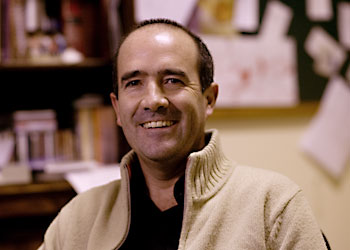

In 2007 Father Claudio Barriga took the reins of the 164-year old program and is working to update a solid, very practical spirituality. He also devotes time to the Eucharistic Youth Movement and took part in World Youth Day in Australia last summer. Years of pastoral work in Chile prepared Fr. Barriga to handle a mission which is far more pastoral than administrative.
Posted: December 9 | Listen now
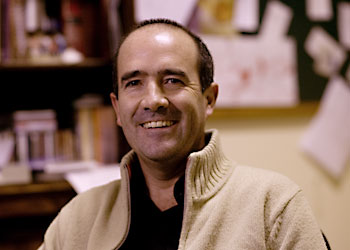

In 2007 Father Claudio Barriga took the reins of the 164-year old program and is working to update a solid, very practical spirituality. He also devotes time to the Eucharistic Youth Movement and took part in World Youth Day in Australia last summer. Years of pastoral work in Chile prepared Fr. Barriga to handle a mission which is far more pastoral than administrative.
Posted: December 9 | Listen now
KOLKATA, India (UCAN) – Some young filmmakers in India say a Jesuit media center’s annual film festival offers them unique opportunities to grow.
The center, Chitrabani (picture-sound), launched the festival five years ago with Nandan (entertainment), West Bengal state’s cultural center. Both centers are in Kolkata, the state capital, 1,460 kilometers southeast of New Delhi.
This year’s festival, held Dec. 7-13, screened 98 films in Bengali, English, Hindi, Marathi and Tamil languages.
Sajal Samaddar, a young filmmaker who makes documentaries for corporate houses, told UCA News Chitrabani’s initiative has given him access to the public. Two of the four films he submitted were selected for screening.
Another director, Kaushik Kumar, 26, submitted his first documentary. It features India’s traditional extended family (“joint-family”) system whereby parents live with their children and grandchildren under one roof.
Inspiration for the film, Kumar told UCA News, came from his own experience growing up in such a family. “Today, societies are breaking and so is the state, because people do not realize the joy of living together,” he said.
Motiur Rahman, a filmmaker serving as the festival’s public relations officer, told UCA News about 500 people, mostly young men and women, watched screenings each day. Rahman said young filmmakers from across India, especially from West Bengal, consider the festival a screening platform for their efforts. It is the Jesuit center’s unique contribution, he added.
According to Jesuit Father Joseph Pymbellykunnel, Chitrabani’s director, the event draws people together irrespective of religion, language or culture. This year, he told UCA News, the filmmakers were aged 25-32, and 25 of the screened films came from women.
The 193 films submitted this year were the most since the event began, but organizers selected and screened only about half of them. Two from the United Kingdom and six from Bangladesh were among those chosen for the festival.
Father Pymbellykunnel pointed out that this year’s films had less violence than in the past. “We had more films dealing with peace and harmony. This shows a change in the orientation of young filmmakers.”
Besides offering a platform to showcase films, Chitrabani discusses with filmmakers ways to help each other and develop joint projects, the priest added.
According to an agreement between Chitrabani and Nandan, the Jesuit center arranges the festival’s logistics and Nandan provides the screening venue.
Father Pymbellykunnel said Chitrabani also negotiates with marketing firms to help young filmmakers sell their films, and since July 2007, Nandan has helped Chitrabani screen short films by young filmmakers on Saturdays.
TAIPEI (UCAN) — Taiwan bishops have discussed the possibility of developing Taiwan as a distance-learning center for students, especially in Hong Kong and the Philippines, to study theology in Chinese.
This would involve providing online courses or videotaped lectures, according to a press release the Chinese Regional Episcopal Conference issued on Dec. 3. The bishops’ Commission for Education and Culture will coordinate preparation of the proposal, according to the press release.
The proposal was a major topic of discussion for of the Taiwan bishops during their Nov. 24-28 plenary assembly.
Father Joseph Cheng, secretary general of the bishops’ conference, told UCA News on Dec. 5 that Fu Jen Catholic University had asked the bishops to support the proposal. According to Fu Jen, he explained, Chinese-speaking Catholics in the Philippines want to take theology courses in Chinese, whereas such courses are offered only in English there.
Fu Jen has sufficient teaching staff, Father Cheng continued, and it could make use of information management and communications know-how from other departments to facilitate distance learning.
The Church official clarified that the proposal would not be aimed primarily at mainland Chinese but as a service to all Chinese. He pointed out that it would provide another choice for Catholic students from Hong Kong, which uses mainly the Cantonese dialect in its seminary college. Taiwan, like mainland China, uses Mandarin Chinese.
As a first step toward realizing the plan, the Taiwan bishops’ Commission for the Doctrine of the Faith and Catechetical Instruction as well as the Commission for Clergy will invite the dean of Fu Jen’s theology faculty and counterparts in Hong Kong and the Philippines to set up a committee. This committee is expected to meet after Lunar New Year, which falls on Jan. 26, 2009, the press release says.
Meanwhile, the Commission for Clergy will set up another committee together with Taiwan Regional Catholic Seminary and Fu Jen to look into the possibility of mainland Chinese studying philosophy and theology in Taiwan.
Taiwan law currently does not allow mainland Chinese to study on the island, but the government’s education department in November proposed allowing this. Accordingly, Taiwan’s Executive Yuan (council) on Dec. 4 amended the Statute Governing the Relations between the People of the Taiwan Area and the Mainland Area, the University Act and the Junior College Law.
However, the Executive Yuan said it would limit the number of mainland students as well as the number of universities and the kinds of degrees open to them, so as not to affect local students’ prospects.
At their meeting, the Taiwan bishops also discussed summer courses for priests set to begin in 2009. Under this plan, Fu Jen’s theology faculty will offer masters’ degrees to priests who want to further their studies through summer courses over a period of 10 years, Father Cheng said.
In 2009, according to the press release, the Church in Taiwan will organize three major events — the closing of the Pauline Year in June, the Caritas Asian Congress Sept. 7-11 at Fu Jen and the closing ceremony on Nov. 22 for the 150th anniversary of Catholicism in Taiwan. Pope Benedict XVI declared the Pauline Year to commemorate the 2,000th anniversary of Saint Paul’s birth.
Seven active bishops took part in the five-day bishops’ meeting held in Shen Keng, Taipei county. Auxiliary Bishop John Baptist Tseng Chien-tze (Kingzi) of Hualien could not attend the meeting, which Archbishop John Hung Shan-chuan of Taipei, president of the Taiwan bishops’ conference, chaired.
Cardinal Paul Shan Kuo-hsi, retired bishop of Kaohsiung and former president of Taiwan’s episcopal conference, and Monsignor Paul Fitzpatrick Russell, the Holy See’s charge d’affaires in Taiwan, also spoke at the meeting. Jesuit biblical scholar Father Mark Fang, who attended the Synod on the Word of God at the Vatican Oct. 5-26, was invited to share theological reflections.
On the last day of the meeting, the bishops visited the Carmelite Monastery of the Sacred Heart of Jesus in Shen Keng and held Mass there, during which two nuns were assigned to pray for each of Taiwan’s seven dioceses in all their prayers in the future. The bishops also asked for the Carmelite nuns’ prayers for their ad limina visit to the Vatican Dec. 9-13.
TAIPEI (UCAN) — Taiwan bishops have discussed the possibility of developing Taiwan as a distance-learning center for students, especially in Hong Kong and the Philippines, to study theology in Chinese.
This would involve providing online courses or videotaped lectures, according to a press release the Chinese Regional Episcopal Conference issued on Dec. 3. The bishops’ Commission for Education and Culture will coordinate preparation of the proposal, according to the press release.
The proposal was a major topic of discussion for of the Taiwan bishops during their Nov. 24-28 plenary assembly.
Father Joseph Cheng, secretary general of the bishops’ conference, told UCA News on Dec. 5 that Fu Jen Catholic University had asked the bishops to support the proposal. According to Fu Jen, he explained, Chinese-speaking Catholics in the Philippines want to take theology courses in Chinese, whereas such courses are offered only in English there.
Fu Jen has sufficient teaching staff, Father Cheng continued, and it could make use of information management and communications know-how from other departments to facilitate distance learning.
The Church official clarified that the proposal would not be aimed primarily at mainland Chinese but as a service to all Chinese. He pointed out that it would provide another choice for Catholic students from Hong Kong, which uses mainly the Cantonese dialect in its seminary college. Taiwan, like mainland China, uses Mandarin Chinese.
As a first step toward realizing the plan, the Taiwan bishops’ Commission for the Doctrine of the Faith and Catechetical Instruction as well as the Commission for Clergy will invite the dean of Fu Jen’s theology faculty and counterparts in Hong Kong and the Philippines to set up a committee. This committee is expected to meet after Lunar New Year, which falls on Jan. 26, 2009, the press release says.
Meanwhile, the Commission for Clergy will set up another committee together with Taiwan Regional Catholic Seminary and Fu Jen to look into the possibility of mainland Chinese studying philosophy and theology in Taiwan.
Taiwan law currently does not allow mainland Chinese to study on the island, but the government’s education department in November proposed allowing this. Accordingly, Taiwan’s Executive Yuan (council) on Dec. 4 amended the Statute Governing the Relations between the People of the Taiwan Area and the Mainland Area, the University Act and the Junior College Law.
However, the Executive Yuan said it would limit the number of mainland students as well as the number of universities and the kinds of degrees open to them, so as not to affect local students’ prospects.
At their meeting, the Taiwan bishops also discussed summer courses for priests set to begin in 2009. Under this plan, Fu Jen’s theology faculty will offer masters’ degrees to priests who want to further their studies through summer courses over a period of 10 years, Father Cheng said.
In 2009, according to the press release, the Church in Taiwan will organize three major events — the closing of the Pauline Year in June, the Caritas Asian Congress Sept. 7-11 at Fu Jen and the closing ceremony on Nov. 22 for the 150th anniversary of Catholicism in Taiwan. Pope Benedict XVI declared the Pauline Year to commemorate the 2,000th anniversary of Saint Paul’s birth.
Seven active bishops took part in the five-day bishops’ meeting held in Shen Keng, Taipei county. Auxiliary Bishop John Baptist Tseng Chien-tze (Kingzi) of Hualien could not attend the meeting, which Archbishop John Hung Shan-chuan of Taipei, president of the Taiwan bishops’ conference, chaired.
Cardinal Paul Shan Kuo-hsi, retired bishop of Kaohsiung and former president of Taiwan’s episcopal conference, and Monsignor Paul Fitzpatrick Russell, the Holy See’s charge d’affaires in Taiwan, also spoke at the meeting. Jesuit biblical scholar Father Mark Fang, who attended the Synod on the Word of God at the Vatican Oct. 5-26, was invited to share theological reflections.
On the last day of the meeting, the bishops visited the Carmelite Monastery of the Sacred Heart of Jesus in Shen Keng and held Mass there, during which two nuns were assigned to pray for each of Taiwan’s seven dioceses in all their prayers in the future. The bishops also asked for the Carmelite nuns’ prayers for their ad limina visit to the Vatican Dec. 9-13.
MANILA, Philippines – On Dec. 10 Jesuit-run Ateneo de Manila University launched Wednesday a legal education and research center named after Fr. Joaquin Bernas SJ, dean emeritus of the Ateneo Law School (ALS) in Makati City. Bernas was a member of the 1986 Constitutional Commission that drafted the present Philippine Constitution.
The Center will be a special unit of the Ateneo’s law school and will provide a venue for continuing legal education programs by holding legal education series, undertaking legal researches, and producing legal publication on current, relevant and important legal issues.
Bernas served as Dean of Ateneo Law School, President of Ateneo de Manila University from 1984 to 1993, a Member of the Constitutional Commission formed by then President Corazon Aquino in 1986, a Provincial Superior of the Society of Jesus in the Philippines, and a Director of the Philippine Stock Exchange.
Upon his retirement as Law Dean in 2004, Bernas was conferred the position of Dean Emeritus at Ateneo School of Law. He continues to teach Constitutional Law and Public International Law to law freshmen and sophomores. He enjoys high credibility as an unbiased and independent legal expert and is a frequent resource speaker in legal conferences and workshops.
He has authored several law books and law articles published and widely-used by Filipino lawyers and law students. His published works are often cited in decisions penned by justices of the Philippine Supreme Court and judges of lower courts.
HONG KONG (UCAN) — A congress for Catholic doctors in Asia has stressed the need for appropriate medical ethics in the health-care profession, suggesting such ethics can be found in Eastern cultures as well as Christianity.
About 130 doctors from around Asia, 50 of them from Hong Kong, and 70 other health-care workers attended the 14th congress of the Asian Federation of Catholic Medical Associations (AFCMA).
The event, organized on the theme Human Dignity in Modern Medicine, was held Nov. 27-30 at the Catholic Diocese Centre in Hong Kong.
Participants from outside the territory came from Cambodia, India, Indonesia, Japan, Korea, Macau, Malaysia, Myanmar, Oman, Pakistan, Philippines, Singapore, Sri Lanka, Taiwan and Thailand.
They also visited Catholic-run St. Mary’s Home for the Aged and the diocese’s Holy Spirit Seminary.
In his keynote speech, Beyond Secularist Medical Ethics, Cardinal Javier Lozano Barragan, president of the Pontifical Council for Health Pastoral Care, said the United Nations promotes a medical ethics rooted in a Western, postmodern way of thinking.
The Vatican cardinal identified relativism, nihilism and pseudo-religiosity as some characteristics of postmodern ethics, built on a paradigm “based only on consensus without objective foundations.”
It is important to compare this paradigm with Buddhism, Daoism (Taoism), Shintoism and Confucianism, which provide key ethical foundations in Eastern cultures, he said.
Eastern values such as belief in the fundamental goodness of humankind, benevolence, and harmony of mind and heart are also found in Christianity, he observed.
Other congress speakers included Luke Gormally, a visiting professor at the John Paul II Institute for Marriage and Family in Melbourne, Australia, and a member of the Pontifical Academy for Life. He spoke on Christian understanding of human dignity and the practice of medicine.
Jesuit Father Louis Aldrich, another academy member, spoke on Testing what is consistent with human dignity in modern medicine: The standard of the Natural Moral Law. The priest is dean of the Theology Faculty at Fu Jen Catholic University in Taiwan.
Doctor John Wong from Taiwan told UCA News on the first day of the congress that he came hoping to learn from and share with other participants how to maintain the dignity of dying patients. Among other things, he wanted to learn more about caring for dying patients, their right to know about their illness, and maintaining their dignity during its final stages.
Doctor Michael Poon Chi-ming, master of the Hong Kong Guild of St. Luke, Ss. Cosmas & Damian, the local Catholic doctors’ association, told UCA News local doctors decided on the congress theme after discussing Pope Paul VI’s 1968 encyclical Humanae Vitae (“On the Regulation of Birth”) earlier this year.
At the time they agreed “medical ethical standards worldwide have not kept pace” with medical technological advancements, Poon said. This year marks the 40th anniversary of the encyclical.
A doctor making a medical decision in a secular working environment “is often mindful of his own superior’s attitude” on the issue “rather than ethics,” he said. “We hope this congress would remind Catholic doctors to always be aware of ethical values.”
The guild organized the congress with the Hong Kong Catholic Nurses Guild and the Hong Kong Diocesan Commission for Hospital Pastoral Care.
This congress had participation for the first time by a national Catholic health-care association from a West Asian country, Oman.
The first AFCMA congress was held in 1960 in Manila. Prior to this congress, Hong Kong also hosted the sixth congress, in 1976.
HONG KONG (UCAN) — A congress for Catholic doctors in Asia has stressed the need for appropriate medical ethics in the health-care profession, suggesting such ethics can be found in Eastern cultures as well as Christianity.
About 130 doctors from around Asia, 50 of them from Hong Kong, and 70 other health-care workers attended the 14th congress of the Asian Federation of Catholic Medical Associations (AFCMA).
The event, organized on the theme Human Dignity in Modern Medicine, was held Nov. 27-30 at the Catholic Diocese Centre in Hong Kong.
Participants from outside the territory came from Cambodia, India, Indonesia, Japan, Korea, Macau, Malaysia, Myanmar, Oman, Pakistan, Philippines, Singapore, Sri Lanka, Taiwan and Thailand.
They also visited Catholic-run St. Mary’s Home for the Aged and the diocese’s Holy Spirit Seminary.
In his keynote speech, Beyond Secularist Medical Ethics, Cardinal Javier Lozano Barragan, president of the Pontifical Council for Health Pastoral Care, said the United Nations promotes a medical ethics rooted in a Western, postmodern way of thinking.
The Vatican cardinal identified relativism, nihilism and pseudo-religiosity as some characteristics of postmodern ethics, built on a paradigm “based only on consensus without objective foundations.”
It is important to compare this paradigm with Buddhism, Daoism (Taoism), Shintoism and Confucianism, which provide key ethical foundations in Eastern cultures, he said.
Eastern values such as belief in the fundamental goodness of humankind, benevolence, and harmony of mind and heart are also found in Christianity, he observed.
Other congress speakers included Luke Gormally, a visiting professor at the John Paul II Institute for Marriage and Family in Melbourne, Australia, and a member of the Pontifical Academy for Life. He spoke on Christian understanding of human dignity and the practice of medicine.
Jesuit Father Louis Aldrich, another academy member, spoke on Testing what is consistent with human dignity in modern medicine: The standard of the Natural Moral Law. The priest is dean of the Theology Faculty at Fu Jen Catholic University in Taiwan.
Doctor John Wong from Taiwan told UCA News on the first day of the congress that he came hoping to learn from and share with other participants how to maintain the dignity of dying patients. Among other things, he wanted to learn more about caring for dying patients, their right to know about their illness, and maintaining their dignity during its final stages.
Doctor Michael Poon Chi-ming, master of the Hong Kong Guild of St. Luke, Ss. Cosmas & Damian, the local Catholic doctors’ association, told UCA News local doctors decided on the congress theme after discussing Pope Paul VI’s 1968 encyclical Humanae Vitae (“On the Regulation of Birth”) earlier this year.
At the time they agreed “medical ethical standards worldwide have not kept pace” with medical technological advancements, Poon said. This year marks the 40th anniversary of the encyclical.
A doctor making a medical decision in a secular working environment “is often mindful of his own superior’s attitude” on the issue “rather than ethics,” he said. “We hope this congress would remind Catholic doctors to always be aware of ethical values.”
The guild organized the congress with the Hong Kong Catholic Nurses Guild and the Hong Kong Diocesan Commission for Hospital Pastoral Care.
This congress had participation for the first time by a national Catholic health-care association from a West Asian country, Oman.
The first AFCMA congress was held in 1960 in Manila. Prior to this congress, Hong Kong also hosted the sixth congress, in 1976.