
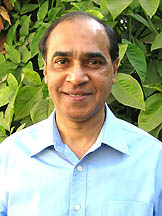
Jesuit Father Noel Sheth,
PUNE, India (UCAN) — Christian and Hindu leaders in India as well as scholars from around the world have praised the performance of a Jesuit priest in convening the History of Religion section of the recent 14th World Sanskrit Conference.
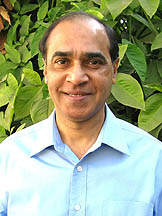
chief convener for History
of Religion at the 14th World Sanskrit Conference
Father Noel Sheth, a professor of Indian religions served as chief convener of the History of Religion section at the meeting in Kyoto, Japan, the first Catholic priest so honored. The International Association of Sanskrit Studies had invited the University of Kyoto to host the triennial conference this year, held Sept. 1-5.
The Jesuit “did an excellent job as the convener,” acknowledged Muneo Tokunaga, head of the university’s Sanskrit department. He selected “top-rate research papers” and appointed the best person to chair each session, the Japanese scholar told UCA News by e-mail.
Tokunaga, a Buddhist and chairperson of the conference’s organizing committee, added that the priest’s “deep insight” into Indian culture helped promote better understanding between Hinduism and other religions.
In India, Father Job Kozhamthadam likewise credited his fellow Jesuit’s lectures and writings with linking various religions. In the process, said the president of Jnana Deepa Vidyapeeth (university of knowledge light), a Jesuit-run seminary in Pune, Father Sheth has introduced Catholic insights and beliefs into Indian culture and traditions.
The priest’s selection as chief convener is “a great honor to the Catholic Church in India,” remarked Bishop Thomas Dabre of Poona (Pune), an expert on Indian religions.
Father Sheth’s scholarship in Sanskrit symbolizes the Catholic Church’s commitment to preserve authentic Indian ancient culture, tradition and heritage, the prelate said.
Sanskrit provided Father Sheth a gateway to understand Hindu culture, the way of life and thought that helped him promote interfaith dialogue and intercultural relations, Bishop Dabre continued.
The bishop once taught Indian spirituality and traditions at Jnana Deepa, Asia’s largest seminary, where Father Sheth currently teaches.
Mohan Dhadphale, former head of the Sanskrit department at Fergusson College in Pune, revealed that Father Sheth had convinced him Christianity is an Eastern religion, not a Western one as propagated by some Hindu radicals.
The Hindu scholar and Father Sheth’s former teacher said the Rig-Veda, the first of the ancient Hindu Veda texts, mentions the origins of Jesus Christ.
“Therefore, the study of Sanskrit helps scholars such as Father Sheth to promote an enriching interfaith dialogue,” said Dhadphale, who attended the Kyoto meet.
Some 500 scholars of Sanskrit and Prakrit, another ancient Indian language, presented research papers in 15 subject sections.
Each of the sections, which included the Vedas, Poetry, Drama and Aesthetics, Scientific Literature, Buddhist Studies, Jain Studies, Philosophy and Ritual Studies, had a chief convener.
Father Sheth told UCA News on Sept. 9 that his work as convener had given him the opportunity to demonstrate that the Catholic Church is “very much engaged” in preserving ancient Indian culture, tradition and heritage.
He noted that in India, Sanskrit and Prakrit are considered the preserve of Hindus, Buddhists and Jains.
“Christians in India are often considered as foreigners who are not in the mainstream of Indian life and culture,” he explained. On the contrary, his selection dispels that notion and convinces people that the Church “is very much in the mainstream of Indian life.”
He also observed that Sanskrit and Prakrit had played crucial roles in Indian art’s profound influence on Asian countries, where Hinduism and Buddhism testify to the spread of Indian culture and religion.