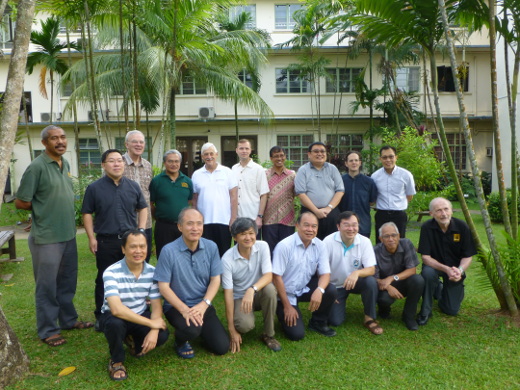
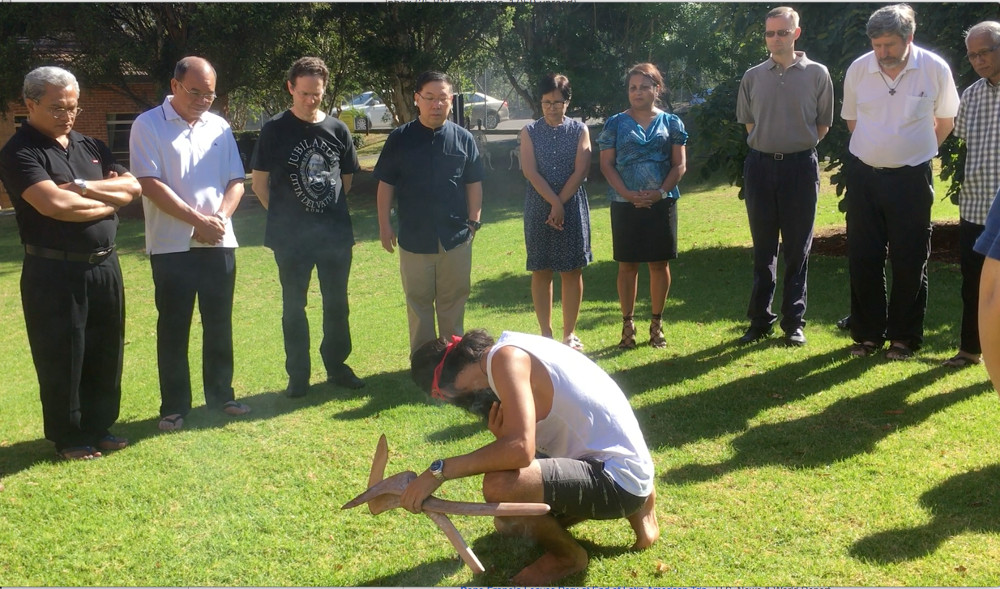

Discernment. Collaboration. Mission. These three words were used frequently during last week’s Major Superiors Assembly of the Jesuit Conference of Asia Pacific. From beginning to end, the meeting was a period of grace, a time for the major superiors to step aside from their province concerns and come together to discern how best to move forward as one Jesuit Conference of provinces, regions and missions in the Asia Pacific region.

The first morning was devoted to an examen of their life and mission in the six months since their last meeting in July. The major superiors spent half an hour in quiet, before coming together in small groups for spiritual conversations.
From this prayerful beginning, they covered considerable ground over the rest of the week. They spent time talking about how they would discern the universal apostolic preferences in their provinces and as a Jesuit Conference, as requested by Fr General Arturo Sosa SJ in recent documents. They reviewed a self-assessment of JCAP’s Way of Proceeding as asked in General Congregation 36, Decree 2. The underlying aim of this study is to ensure that governance in the Society of Jesus is constantly renewed to “better serve and support the Society’s mission, the Missio Dei”.
“The self-assessment showed us our giftedness, but we also realised our weaknesses and the invitations of the Spirit to move forward,” said Fr Tony Moreno SJ, who took over as President of the Jesuit Conference of Asia Pacific in November 2017. “We will continue to assess ourselves as a conference as we discern the way forward for JCAP.”

Fr Oh In-don SJ shared a proposal to Father General for the development of a structure for collaboration in the universal Society of Jesus. He was JCAP’s representative at the Task Force for Collaboration meeting in Rome in October 2017. Fr Oh stressed that the proposal is about collaboration with non-Jesuits and that the need for Jesuits to collaborate is not because of declining numbers. It is about the Missio Dei.
They received a briefing on China and agreed on initial first steps towards developing a way of proceeding. They received updates on the apostolic plan for the East Timor region and the consortium of major superiors supporting it. They spoke too about the juridical status of Myanmar and agreed that more discussion is needed of the options presented.
The various JCAP apostolic priorities were also reviewed. They considered how to proceed after Fr Greg Soetomo SJ presented the Islam policy paper. They reviewed the formation report and agreed that the Leadership Development Programme would have a second run. They received an update on JCAP communication including the new website and newsletter and approved the proposal to convene a province communicators meeting this year.
The update on the two newest JCAP priorities was especially appreciated. It was good to see that the Ignatian Spirituality Network set up last year now has an expanded core team and three priority initiatives, one of which is to compose a spiritual profile of Jesuit ministries, akin to “What Makes a Jesuit School Jesuit?” They also watched a video on the recently concluded Magis Asia Pacific gathering in Cambodia. Magis Asia Pacific is the main programme of JCAP’s Youth Ministry. The major superiors asked that the core team discuss what else the ministry can do, so that it is not only based on one programme.
“The JCAP apostolic plan (2014 – 2019) gives preferential attention to migration, reconciliation with creation and youth. We continue to pursue movements in these areas and, in the light of the 36th General Congregation, we want to mainstream reconciliation and justice into our life and mission,” said Fr Moreno.

They also received updates on the East Asian Pastoral Institute in the Philippines and the St Joseph Jesuit Scholasticate in Vietnam, both of which are raising funds for renovations.
Later in the week, Australian Provincial Fr Brian McCoy SJ and his consultors provided an insight into the workings and challenges of the Australian Province.
The meeting concluded on January 26, which is Australia Day. That night all the participants in the assembly gathered at St Aloysius College – along with some Jesuits and lay partners from across the Australian Province – to celebrate a liturgy led by Fr Moreno, followed by dinner on the rooftop terrace with expansive views of the Sydney harbour. The harbour, lights and fireworks provided an impressive backdrop to conclude a very full week of discussion.
“There was some twenty-three of us at Peter Canisius House for the week, representing the rich texture of the different Provinces of JCAP,” said Fr McCoy. “These are valuable meetings. They remind us of our wider Jesuit mission and the friendships and partnerships we wish to build and strengthen across our Conference and the wider Jesuit world.”
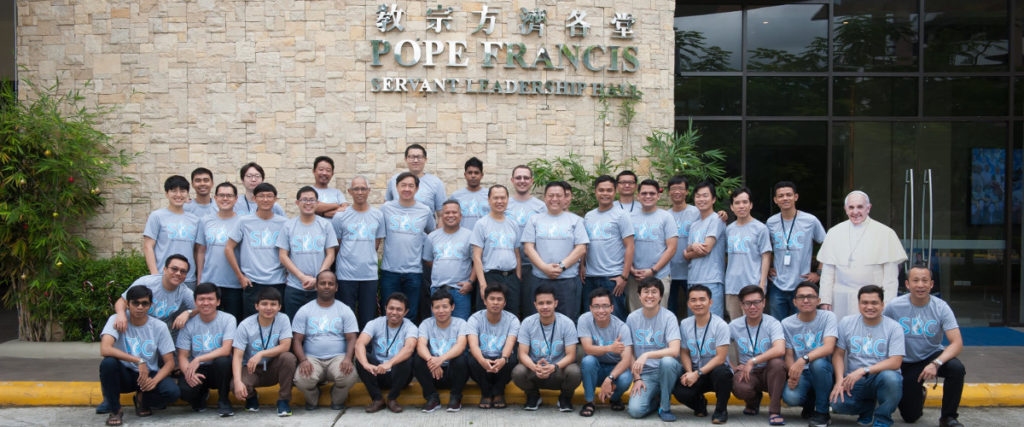
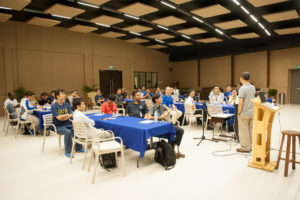 The participants were taken through the history and tradition of Jesuit education, including the 4 Cs (Competence, Conscience, Compassion and Commitment), and even tried using Ignatian Pedagogy as a design process. Technology was embedded in the workshop to give them an experience of learning in a technology-integrated environment.
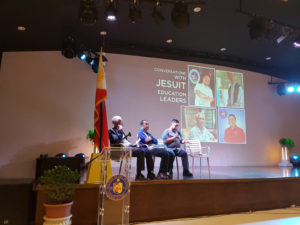 “It’s been a wonderful experience,” shared Scholastic Joshua Choong SJ from Australia. “I hope that in the future I will be able to animate teachers and students in the Ignatian pedagogy.”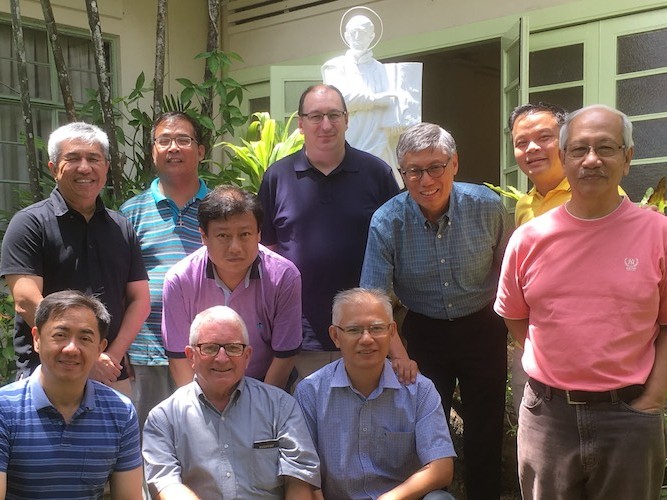
 What is the context of Jesuit schools in Asia Pacific? How are they addressing the challenges in their local context?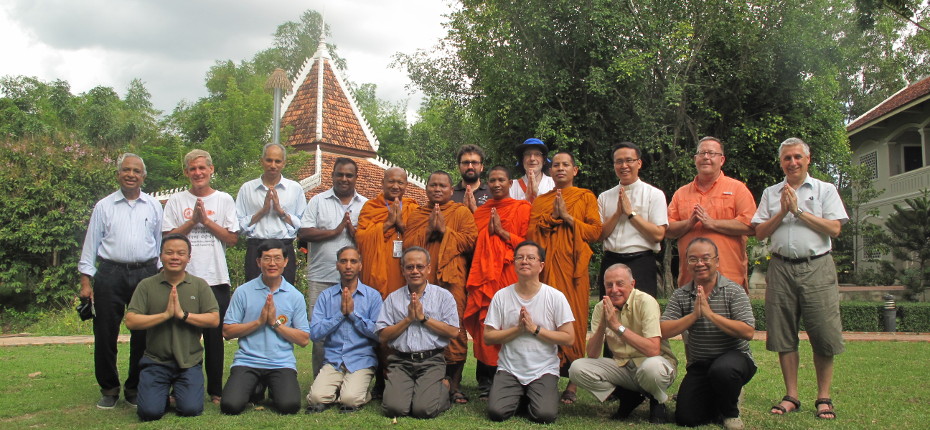
 JCAP Christian-Buddhist Workshop group
 Buddhist monk Ven Sovechea talked about “Buddhism and Christian Spirituality” from an interfaith perspective, beginning with the idea that all religions teach us to prevent conflict. He gave many examples of interfaith work in Cambodia grounded on the teachings of important Buddhist figures, such as Emperor Ashoka, Maha Ghosananda and Thich Nhat Hanh. He concluded with the idea that in the 21st Century, conversion should not be from one religion to another, but from greed to generosity, from hatred to kindness and from delusion to enlightenment.