Tag: JCAP

Fostering growth in affective maturity

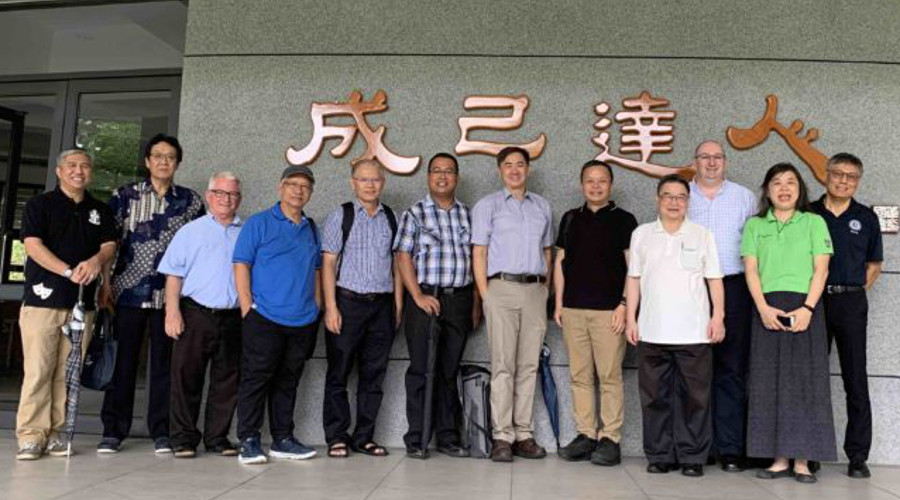
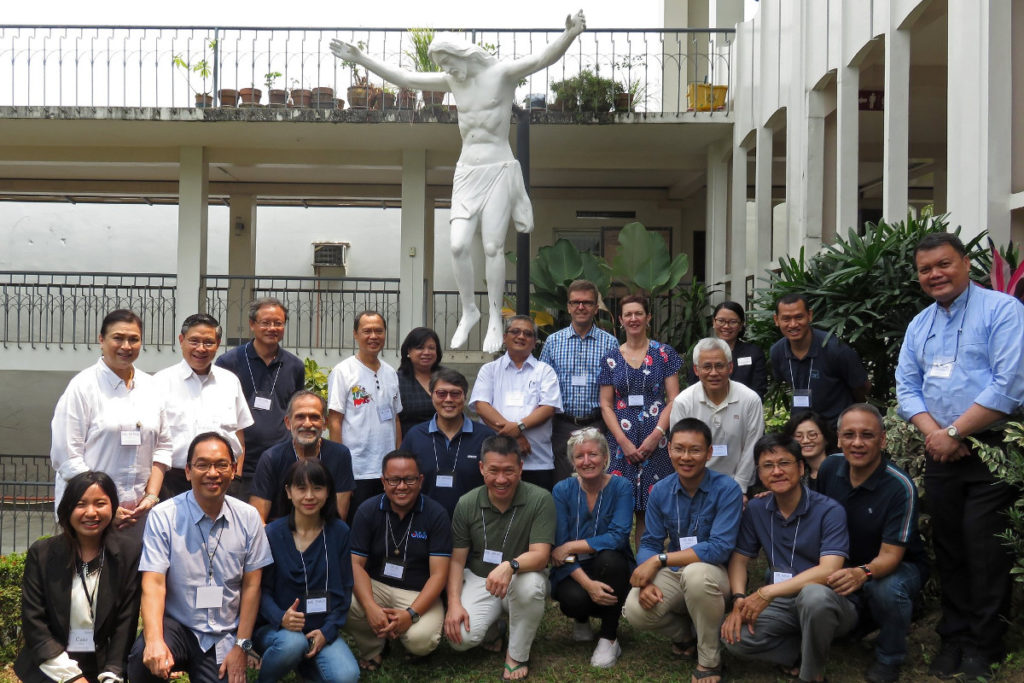
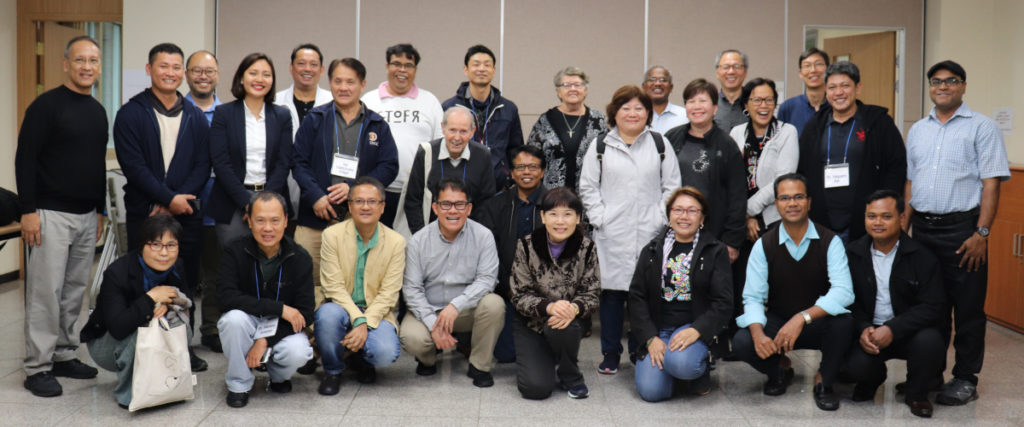
2019.06.JCAP-Formation-DelegatesA solid human formation is foundational to every Jesuit. The recent gathering of formation delegates of the Jesuit Conference of Asia Pacific (JCAP) focussed on how to help Jesuits in formation to grow in affective maturity and celibacy.

This year’s meeting held from June 17 to 20 in Yangon, Myanmar followed through last year’s topic on “Safeguarding the Minor”. Fr James Gascon SJ, psychoanalyst, counsellor and former director of the Center for Family Ministries in the Philippines, guided discussions on motives for living a celibate life, the theological dimensions of celibacy and sexual identity, sexual maturity and integration, boundaries, and accompaniment of homosexuals in formation.

The Shwedagon Pagoda in Yangon

Although the sessions were loaded and intense, the delegates appreciated the serious study and presentations, particularly in naming, identifying and clarifying issues related to celibate chastity, sexuality and sexual identity in relation to Jesuit formation. These subjects are often difficult to talk about in an Asian context, where in many places they are considered sensitive and taboo. The presentations were, in fact, mostly based on a Western context, as Fr Gascon admits, because of the dearth of research in the Asian context. The invitation after the sessions was always for us to reflect on how the inputs made sense in our work of formation in our own provinces and regions.

Besides the presence of JCAP Formation Delegate Fr Riyo Mursanto SJ and JCAP Delegate for Studies Fr Robin Koning SJ, we were graced by the participation of Fr Mark Ravizza SJ, General Counsellor for Formation. He shared about formation vis-à-vis the new Universal Apostolic Preferences (UAPs) of the Society. Fr Ravizza emphasised understanding the preferences as “orientations” and not simply as priorities, thus, considering the UAPs as a “spiritual path” – “a dynamic means for continuing to be guided by the Spirit”, a new way of proceeding, a process of discernment.

The UAPs are given to us as “a guide to the renewal of life and mission that General Congregation 36 sought, to respond to who we want to be and how we are called to live”, said Fr Ravizza. They invite “each person, community and institution to enter into a process of discernment to hear and respond to the cries of the poor, the youth and the earth in their local context”. Therefore, the UAPs are an invitation to a “conversion that empowers the mission”. In this understanding, Fr Ravizza reminded us how the Spiritual Exercises, spiritual conversation and discernment in common are important tools that help us “to show the way to God”.

After three days of earnest discussions, we visited Campion Institute, the English language school, and the newly opened Myanmar Leadership Institute in Yangon to gain a better appreciation of the Society’s work in Myanmar. A visit to the country would be incomplete without stopping by the 2,500-year-old Shwedagon Pagoda, a magnificent Buddhist temple about 110 metres high, covered with gold plates and a stupa encrusted with over 4,000 diamonds. We ended the meeting with a prayer for the country and for the Jesuit Mission in Myanmar.

Educating for depth and reconciliation

2019.05.JCAP-education-secretaries-Taiwan

Education Secretaries of the Jesuit Conference of Asia Pacific (JCAP) were in Taipei from May 14 to 18 to discuss the II COLLOQUIUM JESEDU JOGJA 2020, and to identify concrete ways in which the Universal Apostolic Preferences (UAPs) of the Society of Jesus can be promoted by our schools.

II COLLOQUIUM JESEDU JOGJA 2020 is the second global gathering of Jesuit secondary schools. The first international colloquium was held in Boston College in 2012. About 500 school leaders will gather in Sanata Dharma University, Yogyakarta, Indonesia from June 29 to July 4, 2020 to learn more about “Educating for depth and reconciliation”.

The education secretaries held spiritual conversations on the UAPs. To concretise the conversations, they identified what they considered “crucial threats” and “promising opportunities” in their work of education.

“The discussions were rich and full of fresh insights that should guide our schools in concretising these apostolic preferences this decade”, said JCAP Education Secretary Fr Johnny Go SJ. “The conversations about the UAPs are expected to continue among our schools”, he added.

Apart from the annual reports from the Provinces and the Regions, the group also took the opportunity to visit St Ignatius High School (徐匯中學), where each learned about the school’s flagship formation programme called Life Education.

Global Compacts: walking with the excluded and the marginalised

2019.05.JCAP-Migration-Network

In a time of increased globalisation, it is a sign of the times to live with the “stranger”. How do we prepare for the increasing number of migrants and refugees, and what should be our focus?

From April 25 to 29, the Jesuit Conference of Asia Pacific (JCAP) Migration Network hosted a forum at the Jesuit Center, Seoul to discuss an important question – what should we do at the moment when we are witnessing an increased presence of migrants and refugees in our communities? Twenty-five of us from 13 institutions, and 12 countries discussed how to better welcome, protect, promote and integrate migrants and refugees and the best way to build a network and work together.

The forum specifically focused on the Global Compact on Refugees (GCR) and Global Compact for Safe, Orderly and Regular Migration (GCM), which were adopted in December last year. We discussed how to implement the Global Compacts and how to advocate for the implementation of these significant agreements focusing on each nation’s context and regional realities.

The GCR was adopted to respond to the challenges of 68.5 million forcibly displaced people worldwide and to look at responsibility sharing between different member states. The adoption of the GCM was a historic development to protect the rights of migrants as the first instrument focusing on increasing international collaboration to address international migration in all its forms.

One hundred eighty-one countries adopted the GCR and 164 countries adopted the GCM. The GCR focuses on responsibility sharing and complements existing international Refugee Law including the Refugee Convention of 1951 and its additional protocol. The GCR aims at increasing responsibility sharing between states looking at the needs of countries hosting a high number of refugees, promoting refugees’ self-reliance and promoting durable solutions, including safe and dignified return. The GCR aims at collective efforts for refugee focused solutions and equitable responsibility sharing.

The GCM is the first instrument of its kind with 23 targeted objectives to address international migration in all its forms including addressing drivers of migration, focusing on migrants in vulnerable situations, increasing regularisation pathways, promoting decent work and labour rights, addressing climate induced displacement and taking measures to end child immigration detention, amongst others. The positive response from many countries shows that refugees and migration are our common challenges requiring a global response.

Unfortunately, the GCR and GCM are non-binding instruments. The Global Compacts are not an international treaty but an agreement, which means that member states can decide how they implement them in accordance with their national priorities. All countries that adopted the Global Compacts committed to protect and promote the rights of refugee and migrants but they can decide how to do it. At this early stage national implementation of the GCs is uncertain. So civil society and faith based organisations’ concerted effort including advocacy and putting pressure on each national government is critically important for the implementation of the GCs.

The forum in Seoul focused on two themes. The first was to increase understanding on the GCs. The second was to study good practices of advocacy. The aim was to encourage the development of networks and increased collaborations for refugees and migration.

During the first session, Jane Williamson of UNHCR Korea clarified the significance of the GCR. She pointed out that the GCR promotes a “whole of society” approach including governments and civil society and long-term and ongoing plans of refugee solutions. She compared the GCR with previous conventions and concluded that the GCR is a more comprehensive response requiring networking between government and civil society, different countries and between the national and local levels.

Carolina Gottardo, Director of Jesuit Refugee Service (JRS) Australia and the focal point on the GCM for Asia Pacific Refugee Rights Network (APRRN) expounded on the GCM and the implementation architecture of both Global Compacts. She stressed that it is important for the Church and Church institutions to implement the GCR and GCM. She said there have been several agreements and conventions on refugees but the GCM is the first global comprehensive agreement looking at all dimensions of international migration. It is not legally binding but it has a good normative potential.

Naoko Maruyama, Regional Coordinator of East Asia and Southeast Asia for the Migrants and Refugees Section, Vatican, introduced “20 action points for the Global Compacts” and said that it is the mission of the Church and Church institutions serving migrants and refugees to “welcome, protect, promote and integrate” them.

We also had other sessions examining the cases of promoting and protecting migrants and refugees’ human rights. Nishadh Rego, Policy and Advocacy Coordinator of JRS Australia, talked about the meaning and role of advocacy activities in the areas of migration and refugees and how advocacy activities could be developed in the specific context which each institution faces. In the process of advocacy, it is important to consider the potential to achieve the goal. When we try to achieve a certain goal or value, it is necessary for us to focus on the specific goals that we would like to achieve.

Dany Gerra of Solidarity with Migration, an activist NGO in Korea, shared his experience as an undocumented migrant worker and community leader. His message focused on advocating for human rights of Overseas Filipino Workers in Korea. On April 28, we visited YIUTSARI, the Jesuit institution for migrant workers, and had the opportunity of listening to the voices of Vietnamese and Filipino migrant workers living in Korea.

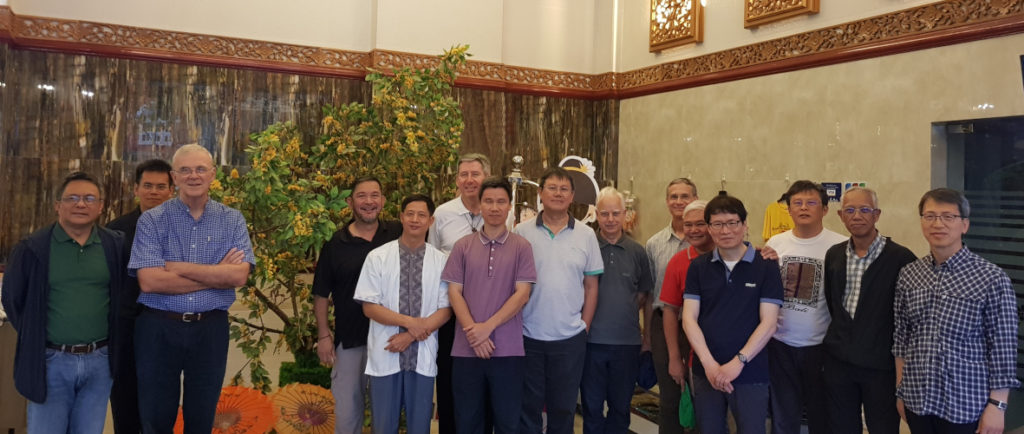
The JAP Migration Network at YIUTSARIFor us in the JCAP Migration Network, the implementation of the GCs may be understood in the context of the Universal Apostolic Preferences. The implementation can be enlightened by our commitment to “walk with the excluded and the marginalised”. JCAP President Fr Tony Moreno SJ pointed out that responding to the issue of migration and refugees is a priority and necessitates an inter-conference and inter-provincial collaboration. The effort for collaboration, he said, should be based on discernment and planning.

After a four-day meeting, the participants reached the following conclusions.

First, the JCAP migration network will focus on deepening understanding of the two Global Compacts. It is important for ordinary people to understand the implications of the GCs on migration and refugees, considering that these GCs are significantly important in the history of migration and refugees. We agreed that the network will translate these key documents into local languages and also produce video clips and animation on the GCs.

Second, the GCs are a comprehensive framework for migration and for the network. The network recognises the fact that each country has its own specific context and naturally we need to contextualise the GCs on the realities of each country. Internal research will be completed as part of the preparatory process for national implementation of the GCs.

Third, the network will find partners for advocacy programmes on the implementation of the GCs. Church institutions such as Caritas and other organisations – especially APRRN – could be our partners for advocacy and awareness-raising on migration and refugees.

The next meeting will be in Indonesia in 2020. Until then, the JCAP Migration Network will share all information related to the process of implementation of the GCs and other services for migration and refugees.

Fr Min Johan Kim SJ is the Coordinator for the JCAP Migration Network. He co-wrote this article with JRS Australia Director Carolina Gottardo.

Learning to become schools of discernment

2019.05.JCAP-Education-workshop-discernment-in-common-group

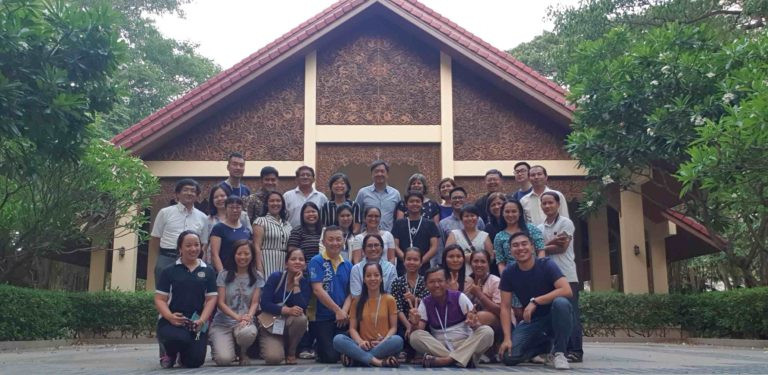
From April 26 to May 1, a diverse group of educators from Jesuit schools in Cambodia, Hong Kong, Japan, Macau and the Philippines met at the Seven Fountains Retreat Center in Chiang Mai, Thailand for a workshop on “Apostolic Planning and Decision Making through Communal Discernment”. The title is a mouthful; after all, discernment in common is a complex and difficult, albeit worthwhile process.

The participants had a first-hand experience of discernment in common, one of the identified Universal Apostolic Preferences of the Society of Jesus. There was emphasis on listening to others as well as listening to one’s interior movements. The spiritual conversations were conducted in mixed groups to allow the participants to learn from one another’s contexts and cultures. There were moments of personal prayer and reflection in preparation for the spiritual conversations.

“It was important for the participants to listen attentively not only to members of their own groups, but also to the plenary reports from the small groups. It is counter to what educators are accustomed to, given their workload and busy lives”, said Fr Johnny Go SJ, Education Secretary for the Jesuit Conference of Asia Pacific (JCAP).

Fr Go facilitated the workshop together with Jennie Hickey, Executive Officer of Jesuit Education Australia, Fr Roy Ragas SJ of Emmaus Center for Psycho-spiritual Formation and Jeraldine Ching from Xavier School in the Philippines.

The JCAP Ignatian leadership workshops have become known for their socials. Delegates from Ateneo de Cebu / Sacred Heart Jesuit School in the Philippines organised an evening of games to break the ice and build a sense of community. Consequently, one of the best parts of the workshop was the friendships formed. “These personal relationships are the crucial ingredient to the networking that we hope to strengthen among our schools in Asia Pacific”, said Fr Go.

The participants were most grateful for the actual experience of spiritual conversations. “We ended the workshop with the optimistic resolve to find ways of incorporating some of the elements of communal discernment in selected decision-making processes in our schools”, said Fr Go. “As Jennie put it at the end of the workshop, we hope that our schools will truly become schools of discernment.”

The risen Lord lives in our hearts

The risen Christ appears to Mary Magdalene (Fra Angelico c 1438–50)

Easter is a moment of unparalleled rejoicing. The Lord is risen from the dead. He triumphs over sin and death. He is truly alive and his Spirit lives in our hearts.

It is rather striking that the apparitions of the risen Jesus happened to the lowly people who had pinned their hopes on him or to people who had some faith or even to those whose faith had wavered. He appeared to the women who were the first to visit his burial site, to the fearful disciples, to people who doubted him like Thomas and to many others. He did not appear to the strong and mighty, those who clearly had no space for him. It would have been quite dramatic if the risen Lord had appeared to people like the members of the Sanhedrin who tried and convicted him, High Priest Caiaphas, King Herod and Pilate, the governor of Judea, and all those who plotted his death in order to shame and humiliate them all. Perhaps it would have been pointless.

Easter is for all of us, especially for people who long for Jesus even if our faith is not strong enough. It is for the weak and the lowly, the broken and the impoverished. It is for people who thirst and work for reconciliation and justice. It is for people who continually discern the mission of God and try to accomplish it despite the complexities and challenges. It is for people who seek personal, communal and institutional conversion even if they may not always succeed.

Fr General Arturo Sosa released the Universal Apostolic Preferences on February 19 this year after getting the approval and blessing of Pope Francis. The preferences are a product of prayerful discernment of Jesuits and companions over 16 months. They serve as an apostolic compass of the Jesuits and companions in the next 10 years. These four preferences are the following: to show the way to God through the Spiritual Exercises and discernment; to walk with the poor, the outcasts of the world, those whose dignity has been violated in a mission of reconciliation and justice; to accompany young people in the creation of a hope-filled future; and to collaborate in the care of our Common Home. These preferences are in sync with the priorities of the Church according to Pope Francis. After his approval and blessing, these preferences in some sense are no longer ours. They are no longer ourmission, but more precisely the mission entrusted to us by the Church through Pope Francis. They could be daunting and overwhelming for Jesuits and companions given the many challenges that can be complex and seemingly insurmountable. But with Easter, our fears and anxieties take a backseat. Even if our faith is wavering and weak, the risen Lord could appear to us to breathe new life and inspire us. Even if our resolve is weak and we are tempted to despair, the God of life could manifest to us to give us renewed hope and inspiration. May we open our hearts to God’s enduring presence in our lives.

Happy Easter to one and all!

Tony Moreno SJ
JCAP President
Easter 2019

Ignatian leadership and discernment in light of the Universal Apostolic Preferences

JCAP leadership group Fr Karel San Juan SJ, Fr Benny Juliawan SJ, Fr Jojo Magadia SJ, Fr Non Yamauchi SJ, Fr Adrianus Suyadi SJ and Dr Edna Franco with Fr John Dardis SJ

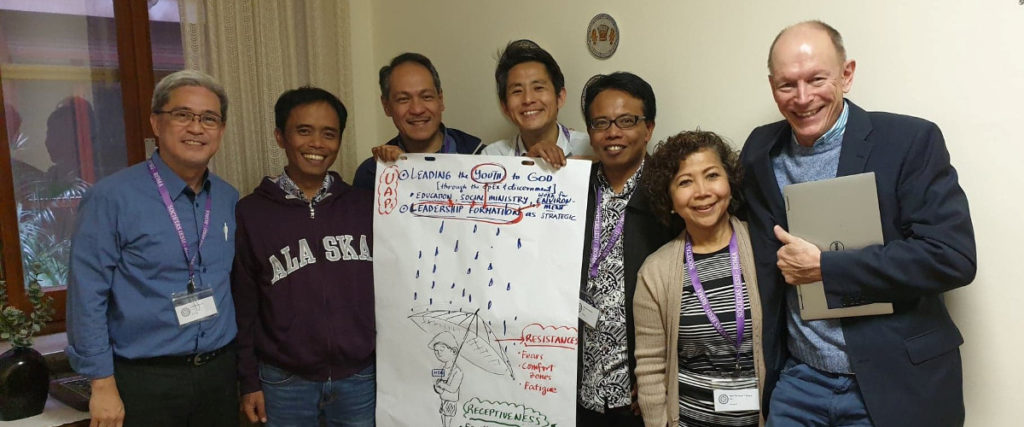
Over 50 Jesuits and lay collaborators gathered at Monte Cucco, just outside of Rome, to reflect on how Ignatian leadership and discernment can help realise the newly identified Universal Apostolic Preferences (UAPs), a mission from the Holy Father released to the Society of Jesus.

The participants composed of leadership development practitioners coming from a range of ministries – from parishes to retreat centres, high schools to universities, outreach centres to refugee services to province offices – included six from the Jesuit Conference of Asia Pacific (JCAP): Fr Jojo Magadia SJ, Regional Assistant for Asia Pacific; Fr Adrianus Suyadi SJ, JCAP Secretary for Social Ministries; Fr Non Yamauchi SJ of the Japanese Province; Fr Benny Juliawan SJ of Sanata Dharma University in Indonesia; Dr Edna Franco of Ateneo de Manila University in the Philippines; and Fr Karel San Juan SJ, President of Ateneo de Zamboanga University also in the Philippines.

Fr General Arturo Sosa SJ told all those gathered that the UAPs are “a call to conversion” and not merely a strategic plan or a checklist of ministries and activities. He also underlined the use of the term “preferences” rather than “priorities”. Whereas priorities emphasise the primacy of certain apostolates, probably establishing new ones and relegating some old ones, preferences should be understood more as “orientations” for focusing all Jesuit apostolates in the next 10 years.

“‘Orientations’ primarily are about giving direction which helps us reconsider and recalibrate our life and mission. UAPs are not about what to do, rather they are an inspiration about how to do, as Fr General put it”, shared Fr Juliawan.

“Working in institutions that are heritages of Jesuit legends and having very limited number of Jesuits and lay collaborators, I used to feel very lonely and powerless to respond to our mission. The conference gave me a new inspiration”, said Fr Yamauchi.

The meeting held from April 1 to 5 emphasised discernment as essential in leadership. Fr John Dardis SJ, General Counsellor for Discernment and Apostolic Planning, asked the participants to be open to a “prayer for leadership” that promotes spiritual conversion. The participants engaged in spiritual conversations in voicing their hopes and fears for the future of the Society of Jesus.

“Ignatian leadership centres around the formation of spiritual persons who are united with God in all their deeds. These persons build trust and inspire people around them to grow and work collaboratively for a mission. The mission in question is the mission of the Society”, said Fr Juliawan.

About half of the participants were lay people, evincing the move towards greater collaboration.

“They are really committed people who consider themselves Ignatian and even members of the Jesuit family”, said Fr Juliawan.

Dr Franco, a lay participant, serves as executive director of Ateneo de Manila’s Center for Organization Research and Development. “It was a priceless gift to be in the same room with Fr General and 49 other individuals from 23 coutries working as a community on the desire of the Society of Jesus ‘to find the best way to collaborate in the Lord’s mission, the best way to serve the Church at this time, the best contribution we can make with what we are and have, seeking to do what is for the greater divine service and the more universal good’”, she shared, quoting a letter of Fr General introducing the UAPs.

For Fr San Juan: “The meeting is an example of networking and collaboration of Jesuits and lay colleagues across cultures, to facilitate sharing of resources and expertise, and to foster friendship and community.”

The meeting reminded me of the proverb ,“More haste, less speed”, said Fr Yamauchi. “In order to implement the UAPs, we should not rush to conclusions. Instead we should start a pilgrimage of discernment with our collaborators. Although the process may take time, it is our way of proceeding. It is how we can implement the preferences in our life and mission.”

In his address Fr General used the term the “Collaborative Society” (Minima Compania Collaboradora) and encouraged the participants to promote lay vocations to be partners or collaborators in the mission.

“The call for collaboration is certainly growing louder”, said Fr Juliawan, “and if the Jesuits are serious about this, some changes to the way the Society is governed must be introduced in the future to reflect their significance.”

Journeying with the youth a step further

2019.04.JCAP-Youth-Ministers

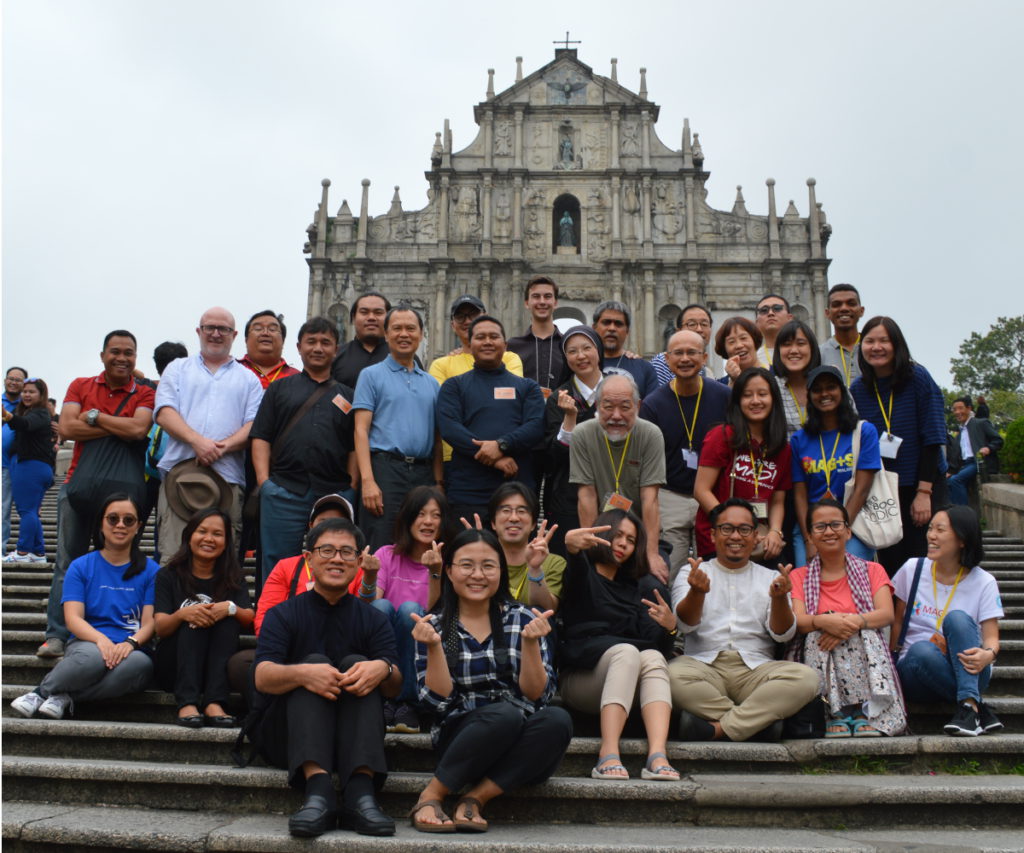
To strengthen the network of youth ministers and better serve the needs of young Catholics in the region, the Jesuit Conference of Asia Pacific (JCAP) Youth Ministry organised its first meeting for youth ministers in Colégio Mateus Ricci, Macau from March 18 to 22.

More than 30 Jesuits and young people from Australia, Cambodia, China, Indonesia, Japan, Malaysia, Singapore, Myanmar, Philippines, Thailand and Timor-Leste participated in the meeting.

“For the past five years since the establishment of the JCAP Youth Ministry, we have been focusing on the Magis Formation programme as a way of accompanying young people in our Asia Pacific conference”, said Youth Ministry Coordinator Fr John Nugroho SJ. “This year, we would like to share with the youth ministers another Ignatian method of training young people to be servant leaders.”

The core team plans to hold the youth ministers meeting every two years. For this first gathering, the participants were provided with practical ways they can “journey with the youth”, one of the four Universal Apostolic Preferences of the Society of Jesus.

“We hope to encourage those who have already graduated from the Magis Formation programme to take part in the Church’s work, give back to the community and serve as animators in accompanying their younger friends”, said Fr Nugroho.

He opened the meeting with an update of the projects of the JCAP Youth Ministry. One of these is a manual on how to organise and implement youth ministry programmes in the conference level. Another document underway is a youth volunteer manual that will help connect Asia Pacific youth with Jesuit missions in need of volunteers in the region.

The participants had the opportunity to share how they carry out their youth ministry programmes in their own countries, including their challenges and strengths. Many of them said they were inspired and happy to learn from the experience of their fellow youth ministers.

To deepen their sharing, the participants assembled into small groups of three to four people for Contemplative Dialogue. During the first round of sharing, they each expressed what inspired them from the day’s sessions and where they found God. In the second round, they expressed what touched them from their friends’ sharing in the first round of the dialogue. Then they concluded with conveying a phrase that expressed God’s message for them during the sharing.

The meeting was also a chance to learn about the work of the Chinese Province, which encompasses four places: Mainland China, Taiwan, Hong Kong and Macau. Fr Vincentius Haryanto SJ from Macau gave a talk on Ignatian Pedagogy and how it can be applied in the youth ministry beyond the school setting.

Nineteen-year-old Renata Tania, who is part of the JCAP Youth Ministry core team, shared about her experience as a trained JCAP youth minister, how it has changed her life and help her to grow in Ignatian Spirituality.

JCAP President Fr Tony Moreno SJ reflected on how young people have a passion for the common good.

“We want to listen to the voice of the youth. God’s voice can be heard through them”, he said. “Sometimes we say we accompany the youth. But actually, it could also be the other way around, that we are accompanied by the youth.”

Connecting the Universal Apostolic Preferences with the mission of the Development Office

2019.03.Development-OfficersDevelopment Officers of the Jesuit Conference of Asia Pacific are meeting this week, from March 11 to 14, in Manila. A key thrust of the meeting is to help align JCAP units’ development work to the Universal Apostolic Preferences (UAPs) of the Society of Jesus. Continue reading “Connecting the Universal Apostolic Preferences with the mission of the Development Office”

Engaging with Taiwan Aborigines and the Chinese Jesuit mission

2019.01.SBC-At-Fu-Jen-University
Engaging with Taiwan Aborigines and the Chinese Jesuit mission

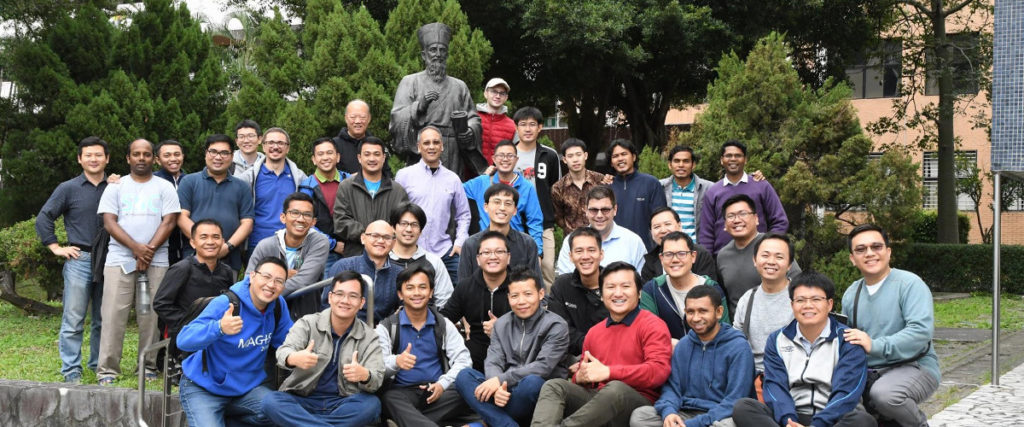
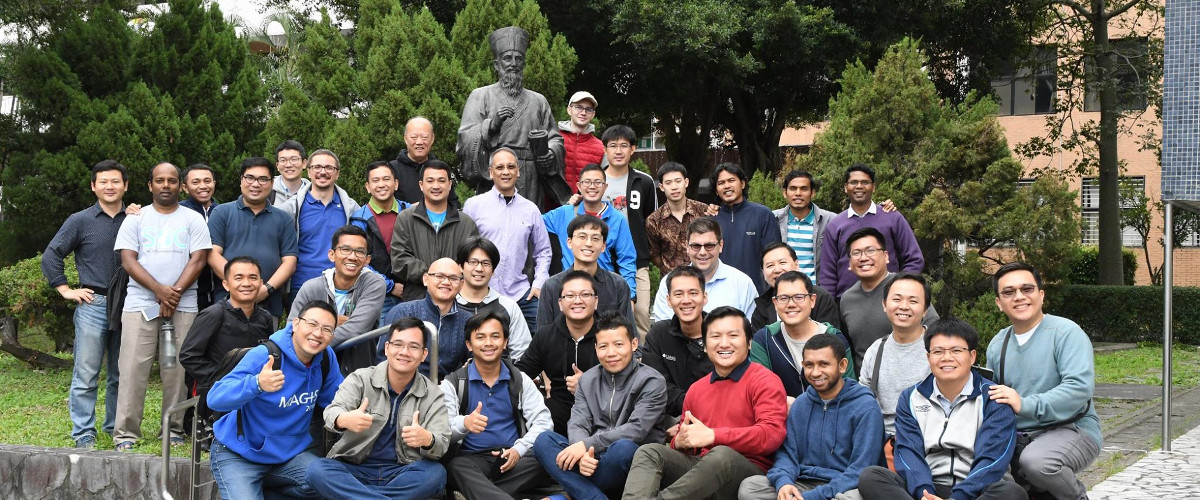
Community-building, immersion, daily Masses, city tour, academic lectures, periods of reflection, food expeditions, museum visits, efficient train rides, Christmas festivities and lasting friendships – these are just some of the tags that can summarise the 10-day Scholastics and Brothers Circle (SBC) workshop in Taiwan from December 15 to 25.

A total of 37 formands of 15 nationalities (six Vietnamese, five Burmese, four Filipinos, four Indonesians, three Koreans, three Australians, two Thais, two Timorese, two Chinese, an Italian, a Singaporean, a Malaysian, an Indian, a Polish, and a Japanese) participated in the workshop that centred on “Indigenous Ministry and the Mission of the Jesuits in China”. Jesuit Conference of Asia Pacific Socius Fr Eric Velandria SJ and Formation Delegate Fr Riyo Mursanto SJ accompanied the participants.

Fr Olivier Lardinois SJ, who combines pastoral work with indigenous peoples and doctoral studies in anthropology, facilitated the meeting. Most of the activities, including residences of the participants, were held in Fu Jen Faculty of Theology of St Robert Bellarmine Community in New Taipei City. Fr David Yen SJ, the Jesuit Delegate to Fu Jen, provided a hands-on tour of the campus and explained the philosophical meanings of the designs and locations of the buildings.

In the morning of December 17, the participants had their team building activities despite the 13°C temperature outside. In the afternoon, at Tien Center at Sacred Heart Parish, Guting, Fr Emmanuel Lim SJ, Delegate for China of the Chinese Provincial, talked about the mission of the Chinese Province. Part of the talk was the introduction to the staff of Magis Center. Chinese Provincial Fr Stephen Chow SJ celebrated the Mass followed by a sumptuous Chinese dinner with the lay and Jesuit community of Sacred Heart. There they met the lively Fr Andres Diaz de Rabago SJ, the oldest member of the Chinese Province at 102 years old! After dinner, Fr Lardinois brought the group to Longshan Temple to witness the faith of many Taiwanese Buddhists. The Temple also serves as refuge for many homeless at night.

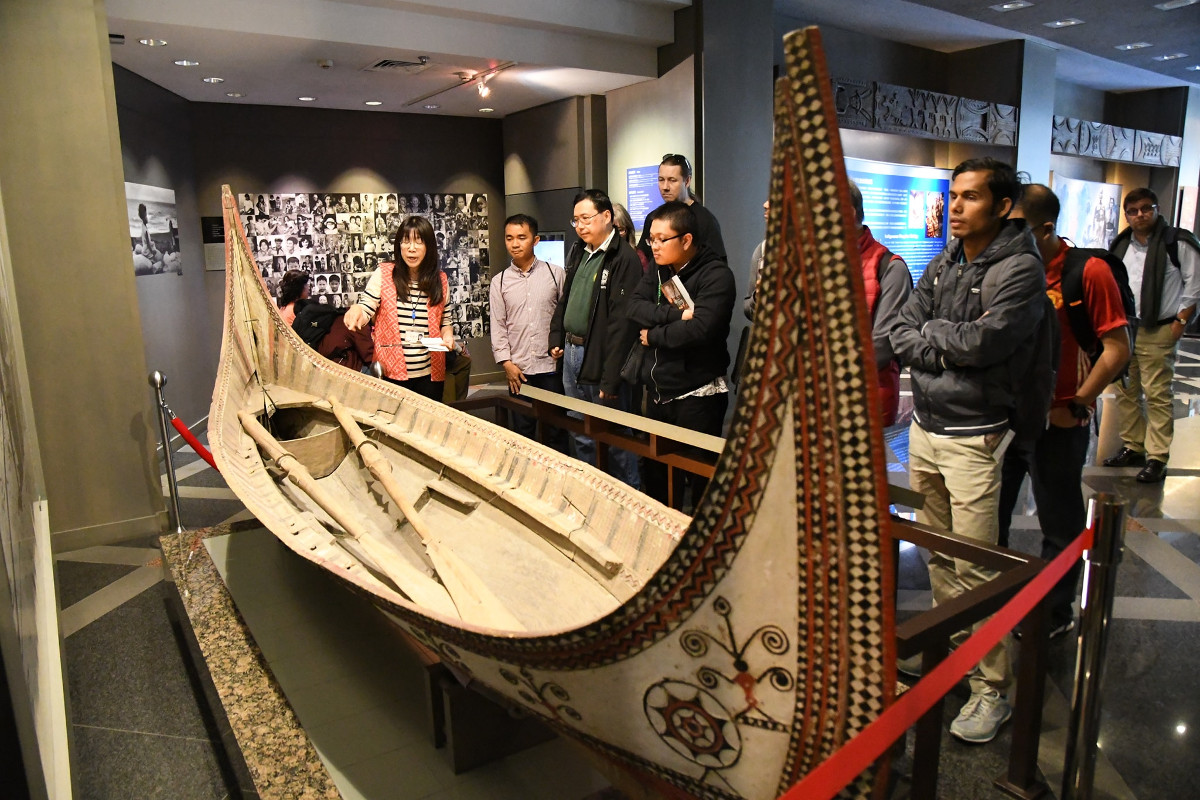
The formands visit the Shung Ye Museum of Formosan Aborigines

December 19 to 21 were days dedicated to living with indigenous peoples, mostly of the Atayal Tribe of Central Taiwan. A day prior, Fr Lardinois oriented the participants about Taiwan Aborigines and the Jesuit indigenous ministry, and took them to Shung Ye Museum of Formosan Aborigines.

A two-hour bus ride took the participants from Fu Jen University to the Jesuit Parish in Zhudong, Hsinchu Hsien. They were welcomed by very engaging lay persons who shared about the parish’s pastoral services, particularly the intensive catechetical programmes to young and old.

The formands were divided into four groups for their immersion: one group went with Fr Yves Nalet SJ to Shilei, another to Xinguang with Parish Priest Fr Corneille Heynanns SJ, group three to Qunqquan where Fr Barry Martinson SJ was waiting and group four to Nalou with Fr Lardinois. It took three hours of navigating the zigzag road before they reached their mission stations.

The participants gained plenty of memorable experiences from the immersion, such as the meaningful conversations with indigenous peoples and experiencing their warm hospitality, bathing in hot springs in 10°C weather, tasting sautéed and stewed flying squirrels and house-to-house Christmas carolling.

Italian Scholastic Cesare Gabriele Sposetti SJ, shared: “As a ‘westerner’, I never before had the opportunity to meet indigenous cultures. This kind of encounter helped me to have a wider picture of the cultural and human variety of this part of the world.”

On the way back to Taipei, the participants stopped by St Aloysius Technical School at Hsinpu, Hsinchu Hsien. This Jesuit educational institution has produced several quality technocrats in Taiwan. Many were astonished to realise that behind the school’s success are laypersons led by Principal Jerry Jyh-Lung Tang.

On December 22, Fr Lardinois provided a synthesis of the immersion experience by placing his expertise in anthropology side by side the Ignatian paradigm. This was supplemented by the brief sharing of each group of the fruits of their structured reflections and spiritual conversations. Then it was the participants’ turn to present. Each country reported about their respective province’s or region’s effort in serving indigenous peoples. In the evening, the group held a Christmas party.

The remaining days were devoted to excursions around Taipei. The formands made sure not to miss the National Palace Museum to see the paintings of Br Giuseppe Castiglione SJ, imperial painter to Emperors Kangxi, Yongzheng and Qianlong in the mid-18th century.

Although only 10 days, the SBC workshop in Taiwan fortified the formands’ appreciation of the Chinese Jesuit Province and the ministry to the indigenous peoples.

Interview with the General

Photo by Jesuit Communications Philippines

Superior General of the Society of Jesus Fr Arturo Sosa spent the first two weeks of December visiting the Vietnamese Province and the Philippine Province. It was his second trip to Asia Pacific; in 2017 he went to Cambodia, Indonesia and Singapore. From December 1 to 15, we at the JCAP Communications desk in Manila monitored the progress of Fr General’s trip with the help of the excellent teams of Jesuit Communications Vietnam and Jesuit Communications Philippines.

To prepare for the visit, there was a lot of coordination with Br Stephen Tran Thien Kinh SJ, who was sending us complete and up-to-date coverage of the highlights from the Vietnam leg that it almost felt like we were there.

Meanwhile, in the Philippines, we worked with Fr Nono Alfonso SJ, Executive Director of Jescom Philippines and JCAP Coordinator for Social Communications. During a meeting, I asked if I could go to Kalookan City with the Jescom team to cover the visit to Sacred Heart mission station. So I tagged along with the production staff headed by Ernestine Tamana, while Rev Harry Setianto Suyarno SJ from Arrupe International Residence took many incredible shots of that memorable day in Dagat-Dagatan.

When Fr Nono asked if I could interview Fr General, I immediately agreed. Then I began making copious notes. What questions to ask Fr General? I needed guidance, so the input from Fr Nono–who is a pro at these things–was helpful, also the advice and suggestions of Fr Tony Moreno, JCAP President, Fr Socius Eric Velandria and Vanessa Gorra, our very own Communications Assistant. I listened to Fr General’s homilies and speeches throughout the trip, and attended the Mass he celebrated on the Second Sunday of Advent and found myself infinitely consoled by his message of hope.

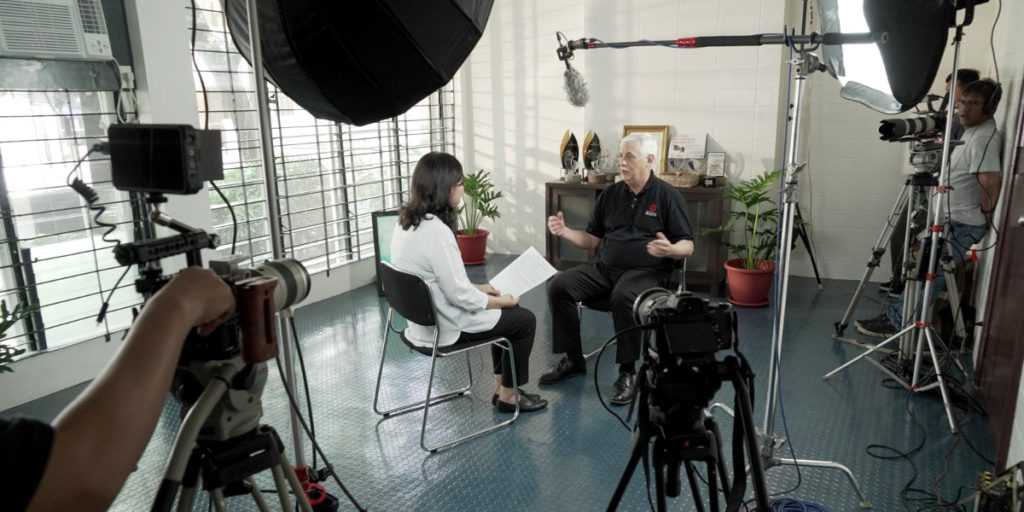
I had the opportunity to interview him on December 15, his last day in Manila, only hours before he would leave for the airport to fly back to Rome. I had a list of 10 questions handwritten in green ink on a sheet of paper. We sat down at precisely half past nine and at the beginning I was a bit nervous. But I found Fr General to be (as Fr Tony put it) muy simpatico. We spoke about his trip to the two provinces and the challenges and needs here in Asia Pacific. He shared: “Really it’s also a moment for me of consolation to find the people and it’s an opportunity to share the same vocation in so diverse a context.”

I am filled with gratitude for all the help and support we got from all over to cover this visit, and for such a privileged moment with Fr General Arturo Sosa.