
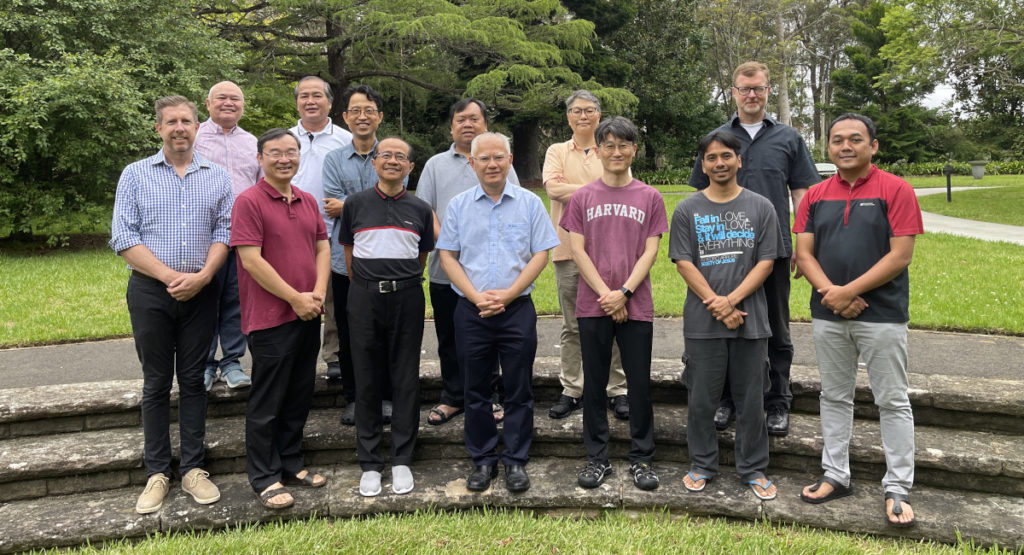
It was a full week of rich sharing and learning for the Safety in Ministry network as they met face to face at St Peter Canisius House in Pymble, New South Wales from 22 to 28 January. Continue reading “Defining the work of safeguarding”
Defining the work of safeguarding
Working and walking together as members of the “Jesuit” body of higher education
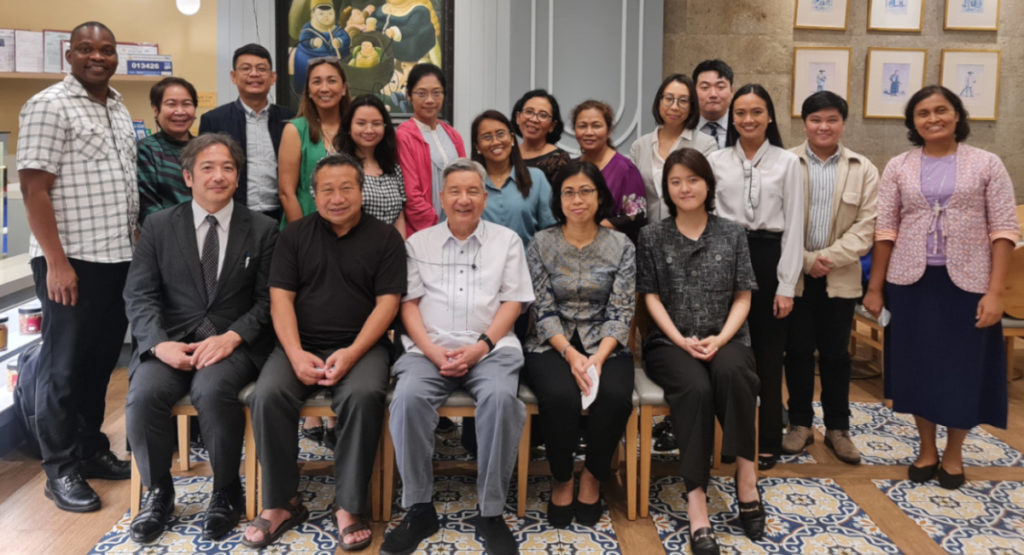
I attended for the first time the gathering of the International Networking Officers of the Association of Jesuit Colleges and Universities – Asia Pacific Continue reading “Working and walking together as members of the “Jesuit” body of higher education”
The joy of giving
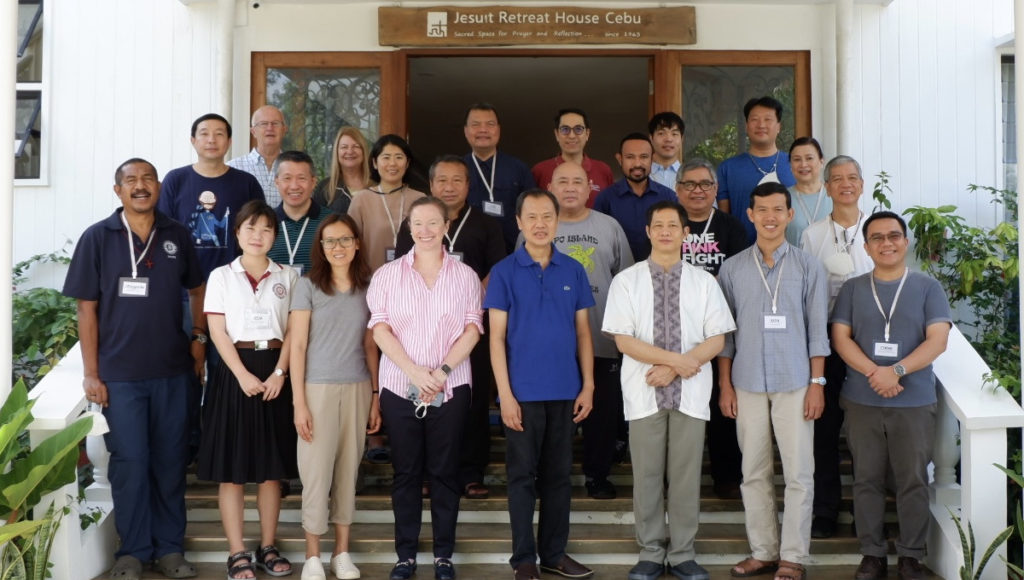
“You can’t have a long face and be a development officer.” These words from Jesuit Conference of Asia Pacific (JCAP) President Fr Tony Moreno SJ certainly proved Continue reading “The joy of giving”
Celebrating love and diversity among indigenous youth
This pandemic has inevitably changed the way we celebrate. Physical gatherings are risky, potential super spreader events where people might catch the virus. The next best thing is to take the celebration online: Zoom parties are the norm these days. And while a virtual celebration is certainly different, we do what we can to stay connected.
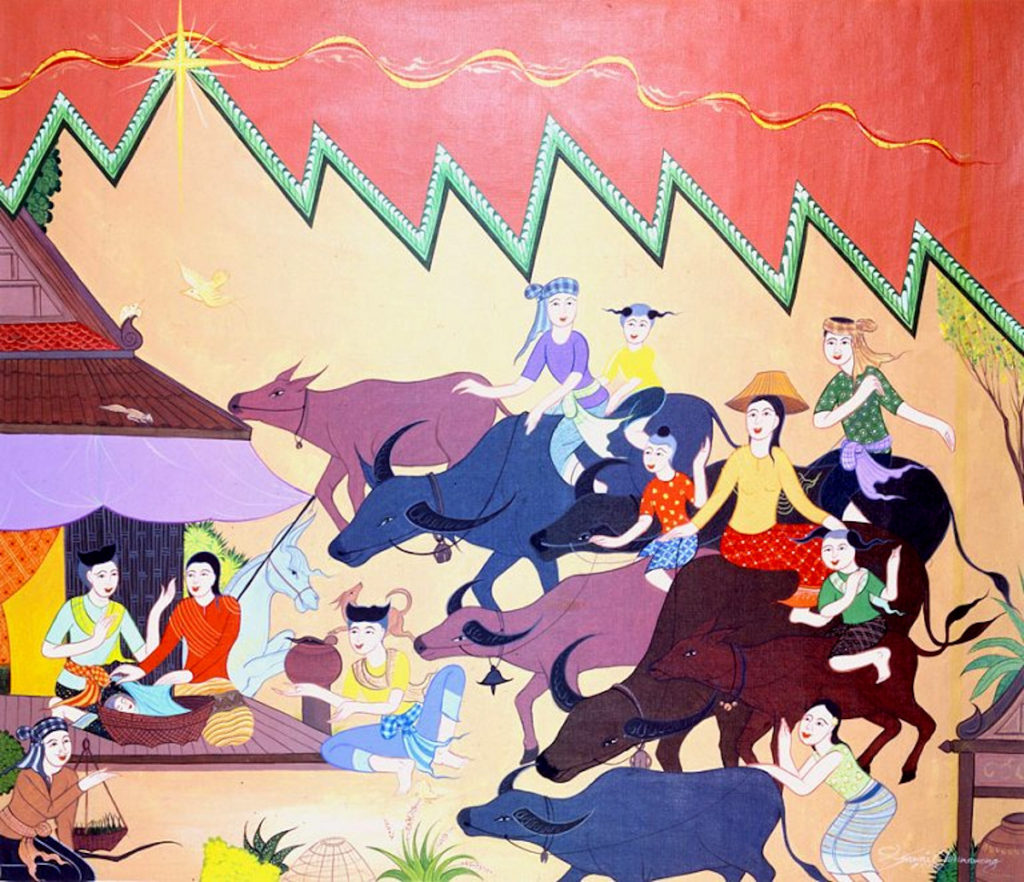
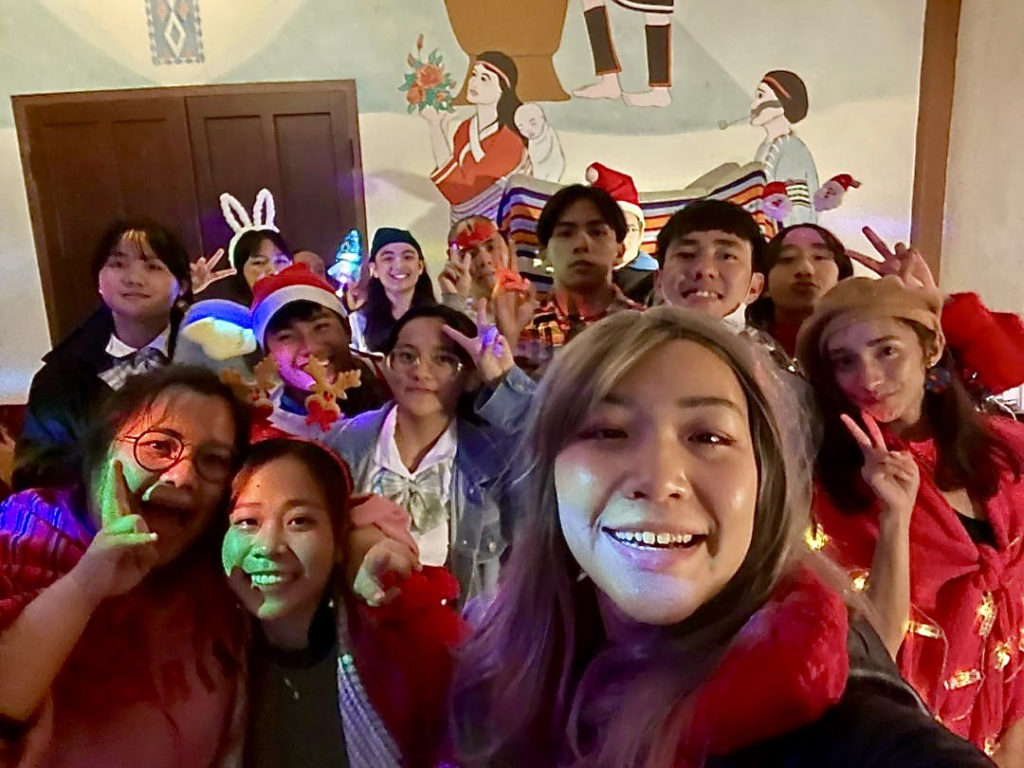
Last December, two indigenous youth groups–one from the southern Philippines (Bukidnon, Davao, and Culion) and another from the small village of Chingchuan in Hsinchu County, Taiwan–met online for a Christmas celebration organised by the Jesuits working in indigenous ministry. Despite the geographical distance, language barriers and technical difficulties, the youthful energy and spirit of sharing pervaded over the gathering. As Conference President Fr Tony Moreno SJ noted in his message to the group, it was “the only network within the Jesuit Conference of Asia Pacific to have a Christmas celebration”. This was a true example of how the joy and enthusiasm of the youth, no matter what obstacles they face in life, cannot be extinguished. As Abegelle, a Food Technology student from Bukidnon State University put it, they are “divided by distance, united by the love and hope of our tribes”.
Fr Ambrosio Flores SJ, coordinator for the Jesuit Companions in Indigenous Ministry (JCIM), and Fr Barry Martinson SJ, a pioneer in this ministry and parish priest in Chingchuan, steered the participants to put together a programme centred on sharing–their identities as indigenous youth, as students, and as talented young people with bright futures ahead. From the livestream in Malaybalay, students from the seven tribes of Bukidnon were resplendent in their multi-coloured traditional clothing. Representatives from the Tagbanua tribe in the island of Culion and the Ateneo Lumad Students Association from Davao also participated.
Meanwhile in Taiwan, the lively group of Ayatal youth–all in high spirits from celebrating their Christmas party in the village church earlier that same evening–were bundled up in winter clothing, some wearing Santa hats and holiday accessories. They all had the chance to introduce themselves to each other. Fr Martinson emphasised using song and dance in the programme, which is universally appealing and easy to translate, as English was not spoken by everyone. The presentations were as diverse as the performers: from indigenous Ayatal songs, to traditional Filipino kundiman (love song) accompanied by acoustic guitar, from original rock ballads with full band to classic Christmas carols–and of course, dancing–the spirit of sharing their talents and expressions of joy for the season were palpable.
JCIM has done over two decades of apostolic work with communities all over Asia Pacific–aside from the Philippines and Taiwan, also Australia, Timor-Leste, Indonesia, Malaysia, Thailand, Vietnam, Laos, Myanmar, and Cambodia–and continue to accompany the youth, with a focus on integral formation. As indigenous youth often have to struggle with things other young people take for granted and face obstacles like poverty, discrimination, and maintaining their indigenous identity, it is important to accompany and encourage them and provide opportunities for growth.
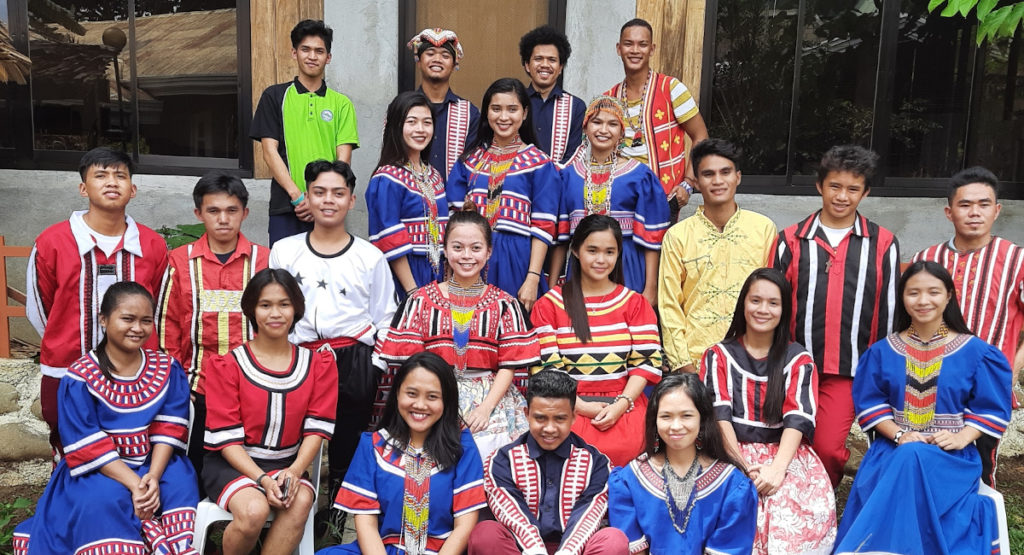
In Bukidnon, the Kapawa hu Paglaum College Scholarship and Formation Programme supports indigenous students as they strive for “self-governance and empowerment, and political, social, economic, and religious inclusion through accompaniment”.
In Chingchuan, while the youth all have the opportunity and resources to complete their education, they are also exposed to the arts through the artistic centres in the village, including the indigenously-designed primary school, a forest arts and crafts village, and the Catholic Church with its mosaics, murals, and stained glass. Thus equipped, they now have to find a way to “advance in society while sustaining and developing their own distinctive culture, to keep their faith in the face of a materialistic society, to preserve their characteristic warmth and hospitality with increasing tourism and opportunities to make money, to find meaning in life when so much has been given to them.” Today, Fr Martinson says, the Ayatal youth “are proud to be what they are. They have come a long way, and it has not been without struggle.”
The gifts from the JCIM online gathering were not in the form of material things. But the participants took home insights with far greater value. “The Christmas encounter made me believe that there is still a thriving fervour of love within the indigenous youth towards one’s tribe, one’s community,” shared Ereca, an agriculture student from the Manobo tribe. Needheart, a sociology major from Bukidnon State University, said: “Sharing with the indigenous youth across Asia Pacific is one of the most memorable moments for me. It reminded me of God’s love for us that is undeniably unending and big.”
If you would like to help the students through the Kapawa hu Paglaum College Scholarship and Formation Programme, please visit this link for more information.

From fear to great joy
This celebration of Christmas is particularly different, and probably strange for some people. It feels more like a very long Advent rather than a Christmas celebration that we customarily do. But if Christmas means an authentic encounter with the birth of the Lord in our world today, then, there is an invitation to discern and follow the voice of the angel as the shepherds experience for themselves.
In Luke’s account of the birth of Jesus, the angel says to the shepherds who are struck with great fear: “Do not be afraid; for behold, I proclaim to you good news of great joy that will be for all the people.” In this familiar story, the shepherds, one of the most marginalised sectors of Jewish society, are the first to hear of the good news. Strangely enough, they find the infant who is both Messiah and Lord “wrapped in swaddling clothes and lying in a manger”. This image of fragility is very significant and powerful for our time, and especially for the most vulnerable among us. God enters into the depths of our humanity and frailty. Christmas is a season of hope. There is no place for fear or despair when we admit our vulnerabilities. Fear should give way to the hope that God remains with us even during this time of insecurity, joblessness, hunger, natural calamities, sickness, and death. Not even the saddest and most painful moments of human history can take away the consoling presence of our God-made-human.
Let us be like the shepherds, eager to find Jesus wherever he is. Let us learn from them as they radiate joy after their encounter with the infant. They see blessings despite the many challenges in life. For indeed, God is truly present amid the uncertainties, and struggles of humanity and creation.
Blessed Christmas to one and all!
Tony Moreno SJ
President, Jesuit Conference of Asia Pacific
Society of Jesus donates surgical N95 masks to aid healthcare workers in Hubei province battling COVID-19
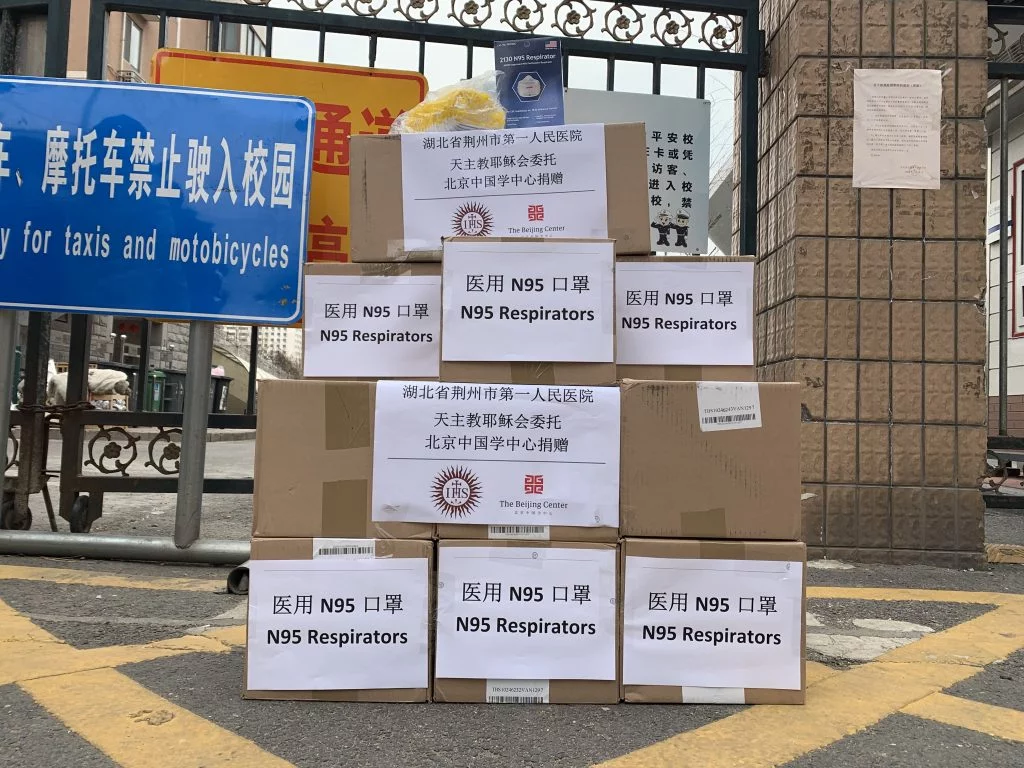
The Society of Jesus has donated 1,800 surgical N95 masks to Jingzhou No 1 People′s Hospital in Hubei province.
Jesuit Superior General Fr Arturo Sosa SJ approved the donation, which was coordinated and arranged by The Beijing Center for Chinese Studies (TBC), the Jesuit education centre and intellectual hub operating in mainland China since 1998.
“The Society of Jesus is a Society of solidarity. This small gesture is a symbol of that wide and deep solidarity,” said Fr José Magadia SJ, General Counsellor and Regional Assistant for Asia Pacific.
Earlier this month, Chinese authorities said there is an urgent need for medical supplies, including surgical N95 masks. These masks offer better protection than regular surgical masks and are designed to prevent 95 per cent of small particles from entering the nose and mouth area.
Though not prominently appearing in international media, Jingzhou city, located about 220 kilometres (137 miles) west of Wuhan, has been greatly affected by the COVID-19 outbreak. The disease has killed more than 2,996 people and infected over 87,728 globally.
With over a thousand infected in Jingzhou city alone, healthcare workers are grappling with certain medical supplies shortages. TBC has been in direct contact with Jingzhou No1 People’s Hospital, confirming the serious need for surgical N95 masks. The centre ensured the delivery of the masks, which arrived from Canada, to the hospital’s healthcare workers.
“TBC is honored to be the facilitator and platform connecting the Jesuits to mainland China. We thank the Society for the generous donation and continued support during this challenging time,” said TBC Executive Dr Simon Koo.
“It is our privilege to support your meaningful mission with our humble donation,” said Chinese Jesuit Provincial Fr Stephen Chow SJ to the healthcare workers. He assured them of the Society’s earnest prayers and told them: “Please stay safe and healthy for your loved ones and your mission.”
JCAP President Fr Tony Moreno is new Chair of The Beijing Center
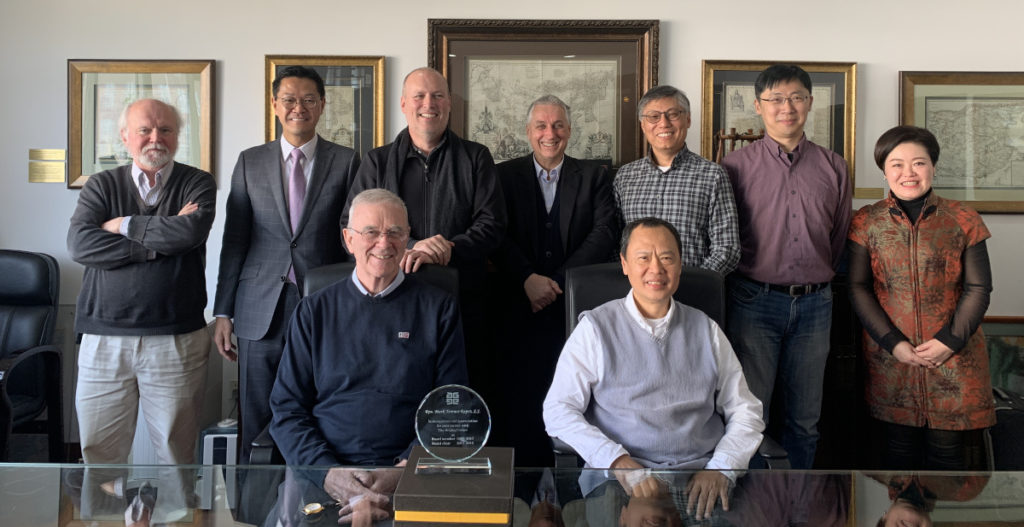
Fr Tony Moreno SJ, President of the Jesuit Conference of Asia Pacific (JCAP), has been named as Chair of The Beijing Center (TBC) to replace Fr Mark Raper SJ who has concluded his service as Board Chair and Board Member after a 12-year tenure. Fr Raper is currently Superior of the Myanmar Jesuit Mission and former JCAP President.
Besides Fr Moreno, Chinese Jesuit Provincial Fr Stephen Chow SJ was elected Vice Chair, a newly created position that is being proposed. Dr Thomas Poon was elected Board Member.
The election took place during the TBC Board of Directors meeting on November 18. The night prior to the meeting, the board members attended the TBC Annual Thanksgiving Dinner in honour of the service learning initiatives this semester.
The event brought together celebrated partnerships and friendships, along with the opportunity to recognise the unparalleled contribution organisations, such as Bethel China, make towards improving the lives of underprivileged and impaired children in China, with the support of partners and volunteers like TBC students and staff.
In his final speech as Chair, Fr Raper said he was grateful for the wonderful reunion between passionate individuals and organisations who continue working to provide students with quality international education.
Read more about the thanksgiving dinner here.
Ignatian Teachers’ Program in Sydney
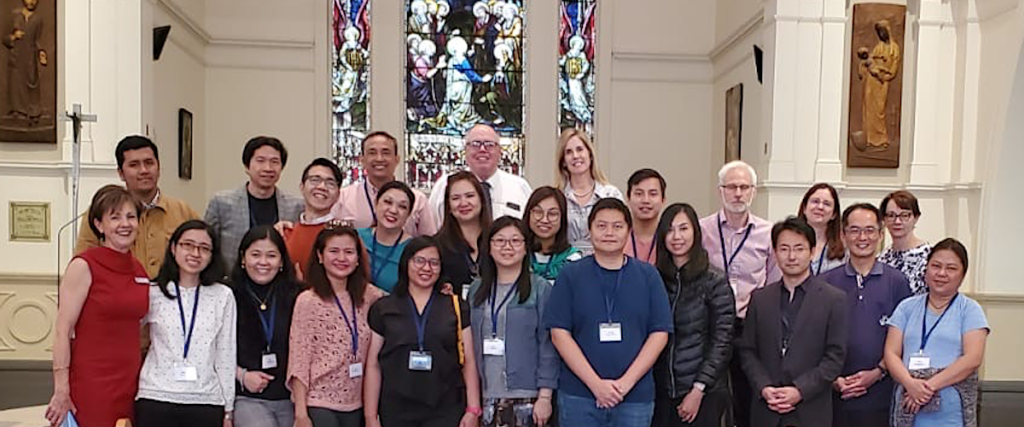
The Ignatian Teachers’ Program (ITP) was held on November 11 to 15 at St Ignatius’ College, Riverview in Sydney, Australia. Located near Lane Cove River, St Ignatius’ College has beautiful Jacaranda trees on the campus. Walking along the main building and the rose garden allowed each participant to savour the long tradition of this Jesuit school.
There were 18 participants from the Philippines, Indonesia, Japan, Macau and Hong Kong. Most of them were experienced teachers, with a few school directors, administrators and school chaplains.
The workshop began every morning with a meaningful prayer session guided by John Gills, the school’s Director of Religious Formation. The specially designed prayers helped the participants each day to open themselves to the movements of the Holy Spirit. After all, the discernment of the Holy Spirit’s promptings is at the very core of Ignatian Spirituality, which is the basis of Jesuit Education.
On the first day, the participants were asked to reflect on the history and tradition of the Ignatian approach to teaching – or what we call Ignatian Pedagogical Paradigm (IPP). The IPP pays special attention to the context of the students. Participants reflected on how the IPP enables them to accompany their students, to know their needs and to promote learning more effectively.
The most striking experience for many of the participants was the “Through the Eyes of the Student” Program. The participants shadowed a student assigned to them, learning through observation what the students experienced. It was a challenge for many because they should focus on the students without criticising them. They were not supposed to tell the students what to do. Rather, they were asked to listen and to try to find how the students felt. At the end of the day, we were all grateful for this one-day one-of-a-kind experience. We became more aware of our students’ needs and we gained new insights about learning and teaching through this unique experience.
There was also a session where participants shared their experiences and practice of the IPP in their respective schools. Aside from learning about the diverse ways IPP is implemented, the participants learned from each other. For example, students can practise the Examen in various ways depending on the school’s context. We felt encouraged that each Jesuit school was concerned about their students’ holistic growth including participation in social services for the poor in their societies.
For example, students from Sacred Heart School-Ateneo de Cebu High School are required to work in Jollibee fast food as part of their service, offering their wages to support poor families. Students from Kolese Kanisius volunteer to clean up rubbish on the public streets of Jakarta.
The participants realised not only the diversity of their situations, but also their unity as a worldwide community dedicated to a common mission. It was important to build the network of each school.
After the sharing, the educators visited the teachers of the school’s special education unit – providing yet another opportunity to learn a different way of accompanying our students.
On our last day, Jennie Hickey, Executive Director of Jesuit Education Australia, introduced the education apostolic work of the Jesuit Conference of Asia Pacific. She insisted that Jesuit education was a mission for the service of the poor as St Ignatius of Loyola and the First Companions had intended. The Society of Jesus has always worked for faith and justice.
There are many challenges in carrying out this mission as fewer Jesuits work in schools today. It is important for Ignatian educators to realise that they are called to dedicate themselves to the mission. Though our contexts are different, we still share the common mission.
We ended the five-day workshop with a Eucharistic Celebration in the school chapel. We thanked the Lord for the abundant graces that we received. Besides the formal sessions, we appreciated the informal conversations and sharing among ourselves during the breaks and over the meals. [JCAP Education]
Fr Clement Tsui SJ is the Education Delegate of the Chinese Province.
A JCAP gathering in Rome
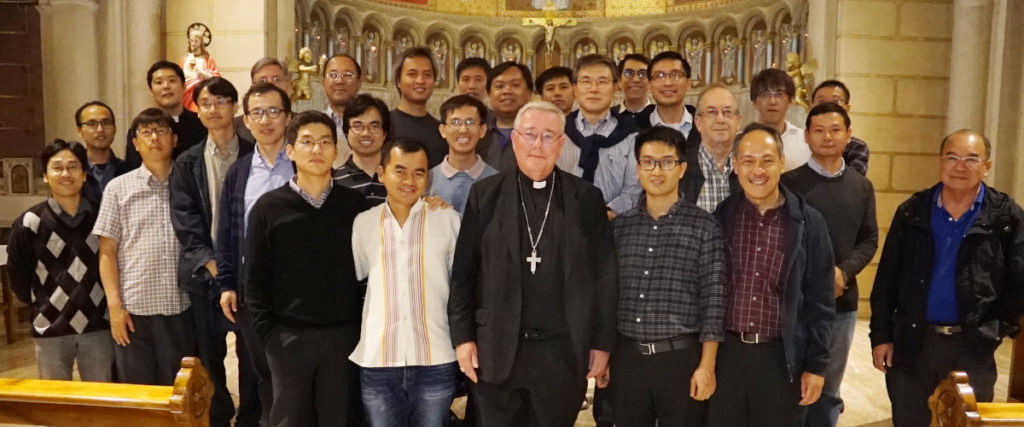
Jesuits from the Jesuit Conference of Asia Pacific (JCAP) who work or study in Rome got together on Sunday, October 20. Some 30 were present, including Jesuits who were visiting Rome from our conference, such as Vietnamese Provincial Fr Vincent Pham Van Mam SJ.
We began by celebrating the Eucharist in St Francis Borgia Chapel in the General Curia. The main presider was His Eminence, Jean-Claude Cardinal Hollerich SJ, Archbishop of Luxembourg, who had been created a Cardinal by the Holy Father in the Consistory of October 2019. Fr Jean-Claude is a proud member of the Japanese Province! Concelebrating with him were three other JCAP Jesuits – Fr José Magadia (Regional Assistant); Fr Gino Picca, an Italian missionary and parish priest in Taiwan; and newly ordained Fr Chang-joon Lee (KOR), who studies Canon Law at the Gregorian.
In his homily, Fr Chang-joon thanked all those in JCAP who have been praying for those of us in Rome. He expressed the hope that we would be able to dedicate ourselves even more to our study and work, and so prepare ourselves as best we can for the apostolate back in JCAP, or wherever the Lord might call us for service. Myanmarese Scholastic PV Joseph, who just arrived for his theological formation here, led the singing and played the guitar. After Mass, the group went for a simple meal at a nearby Chinese restaurant.
The JCAP Jesuits in Rome are engaged in different missions. Many of us are studying in various fields, mainly at the Pontifical Gregorian University and at the Pontifical Biblical Institute (the Biblicum). Others are currently assigned in the Curia, Vatican Radio, and as professors in the Gregorian and the Biblicum. Given this diversity, it is not always easy to come together. But on this occasion, we were happy to have found time to share with each other, and be nourished by spiritual food, a solid Asian dinner and the gift of reaffirming that we remain friends in the Lord, especially being so far away from home.
Fr Benedict Jung SJ from Korea is the Regional Secretary for Asia Pacific. He led in organising this festive semestral gathering.