
On November 5th, the Church remembers the the Saints and Blessed who have lived their Christian vocations as Companions of Jesus. Please join your prayers with mine as we remember all those Saints and Blessed of the Society of Jesus….those who have come before us and those who live among us now. A Prayer for Vocations Father, We especially as you May your will be done. Amen. Posted by Ryan Duns, SJ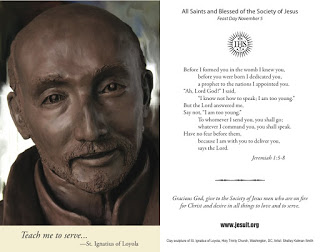
in the name of Jesus,
through the power of your Spirit,
inspire men and women to labor for your kingdom.
through the intercession
of Mary, our Mother,
St. Ignatius, and all the saints,
to help the Society of Jesus
continue its service of your church.
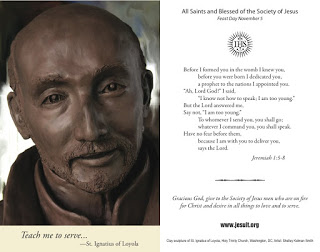
All Saints and Blessed of the Society of Jesus
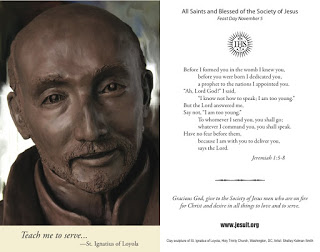
All Saints and Blessed of the Society of Jesus
On November 5th, the Church remembers the the Saints and Blessed who have lived their Christian vocations as Companions of Jesus. Please join your prayers with mine as we remember all those Saints and Blessed of the Society of Jesus….those who have come before us and those who live among us now.
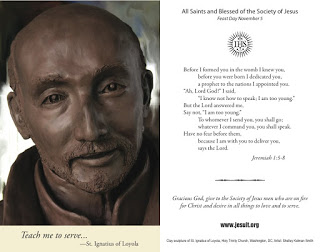
A Prayer for Vocations
Father,
in the name of Jesus,
through the power of your Spirit,
inspire men and women to labor for your kingdom.
We especially as you
through the intercession
of Mary, our Mother,
St. Ignatius, and all the saints,
to help the Society of Jesus
continue its service of your church.
May your will be done.
Amen.
Posted by Ryan Duns, SJ
The Social Apostolate of the Society from another point of view
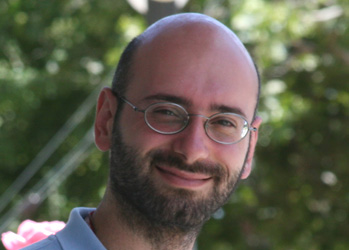
Giuseppe Riggio S.J.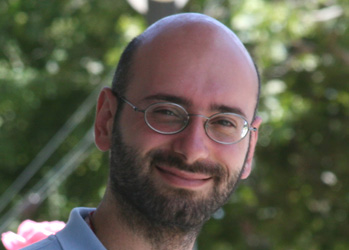
Giuseppe Riggio is an Italian Jesuit in formation. During his philosophy studies in Padua he worked with an association serving refugees and those seeking asylum; he organized courses for people interested in knowing more about immigration. Next, as part of his formation, he worked two years in the Social Justice Secretariat at the Jesuit General Curia in Rome. During that time he had the opportunity to attend the World Social Forum in Brazil and was able to spend some time in a community of indigenous people. Presently he is studying theology in Paris in preparation for priestly ordination.

CLIA Boston Begins Year with Retreat
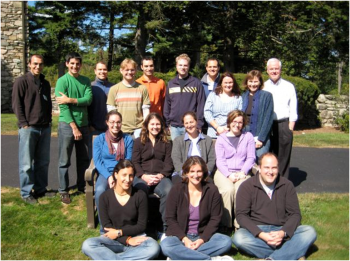
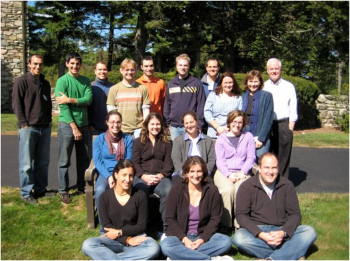 CLIA Boston’s inaugural group (2009-2011) and program leaders at their kick-off retreat
Participants in the Contemplative Leaders in Action Program in Boston began their first year with a retreat at the Connors Family Retreat and Conference Center in Dover, MA, on the weekend of September 26-27. Retreat highlights included Rob Keder’s “groovilicious” icebreaker, Friday night sharing of career highs and lows, three thought-provoking talks by Fr. Michael Boughton, S.J., each of which was followed by a quiet time of prayer and reflection, a session facilitated by Fr. Edward Quinnan, S.J. focusing on the graces received on retreat, the closing liturgy which Fr. Quinnan celebrated, deepening of connections among all who attended, and the spectacular fall weather which allowed retreatants to pray and reflect while contemplating the beauty of God’s creation.
Caravaggio Brought to Light; Renaissance Reborn
“The Taking of Christ” Is Rescued
ROME, OCT. 1, 2009 (Zenit.org).- Tuesday, Sept. 29, was Caravaggio’s birthday. As his name, Michelangelo Merisi, suggests, the Milanese artist was born in 1571 on the feast of the archangels.
While no one would accuse Caravaggio of being of angelic disposition, the body of art he left humanity certainly transmits some of the most powerful messages of our faith.
I celebrated Caravaggio’s birthday in Dublin, in front of one his works that I had never seen in person before, “The Taking of Christ.” Of all of Caravaggio’s works, this canvas not only tells a dramatic incident from years past, but was also subject of a modern detective story.
The work was painted by Caravaggio around 1601-3, the years when he lived in the home of his powerful patron Ciriaco Mattei. He had just completed his major religious commissions at Santa Maria del Popolo and San Luigi dei Francesi, unveiling his revolutionary technique of using light and shadow to enhance the drama of his sacred stories.
The Mattei collection was gradually sold off as the family resources dwindled, and even the archive or accounts and inventories had been moved away from Rome. Even Caravaggio’s name had been forgotten in the annals of art history, relegated, in the words of Italian art historian Roberto Longhi, to the position of “the least known painter of Italian art.”
Thanks to the tireless research of Longhi and later Sir Denis Mahon, the works of Caravaggio were gathered from dusty storerooms, cleansed of centuries of grime and painstakingly catalogued and authenticated.
Despite lifetimes of work, a few remained tantalizingly hidden, extolled in the yellowed pages of old biographies and guide books, but no longer in their original homes.
“The Taking of Christ” was one such prize; mentioned in several contemporary sources, even lovingly described, art historians marveled at how such a celebrated work could go astray. Depressing fears about the fate of the painting loomed as one had been destroyed in the bombing of Dresden, and others, so darkened with age as to be unrecognizable, were simply reattributed and disappeared.
On my way to Dublin I read Jonathan Harr’s riveting book “The Lost Painting,” which recounts the extraordinary story of several converging paths that would return this painting to the world in 1993. Two enterprising archivists, one sharp-eyed restorer, an English nobleman in love with Italian art and a Jesuit priest with a profound devotion to tradition and beauty all participated in the discovery on this work, now hanging in the National Gallery in Dublin on indefinite loan from the Jesuits.
Providence even granted me the privilege of running into the priest, Father Noel Barber, who brought the “Taking of Christ” for cleaning, thereby restoring a Caravaggio work to the world. I couldn’t help but think that ironically, the Jesuits were one of the few new 17th century orders to never have commissioned a work from Caravaggio, yet are the only order to own his work today.
The painting, proudly displayed in the National Gallery, is unique in Caravaggio’s oeuvre as the only work to have a visible light source. The powerful light in Caravaggio’s art usually comes from a mysterious font, hinting at the role of the Holy Spirit in illuminating conversion, martyrdom and evangelization.
Caravaggio was still flaunting his extraordinary skill at still life painting, apparent in the metal armor of the soldiers, the rich blue wool of Christ’s robe and the opaque paper of the lantern. But the dazzling virtuosity of his brush pales before his narrative power.
From the right, three soldiers crowd roughly toward Christ, with a figure at the end holding aloft a lamp to illuminate the scene. The absolute center of the painting however, remains empty, heads and arms leaving a large gap at the very focal point of the work.
This brief caesura heightens the tension of the left-hand part of the work. Judas, his face distorted, leans toward Christ to bestow his kiss of betrayal. The contrast between Christ and Judas could not be greater. Cheek to cheek with Jesus, Judas thrusts himself forward, actively perpetrating this ultimate treachery. Christ on the other hand, with downcast eyes and hands still clasped in prayer, expresses both the profound sadness at Judas’ act as well as the acceptance of his passion. On the far left, St. John runs away, and his red robe, grasped by the soldier forms a scarlet curtain around Jesus and Judas.
More than just a boon to the art world, this missing Caravaggio is a gift to the faithful. In this crowded violent scene, the figure holding up the lantern peering into the chaos represents Caravaggio himself, witness and recorder of this dark happening. We too, standing before this canvas, become witnesses to how Christ was betrayed, persecuted and abandoned, and as Caravaggio retells the story for us to see, we too must render this event visible in our lives.
* * *
Giving back
Truth be told, I wasn’t in Dublin only to celebrate Caravaggio’s birth. I had been lured to the Emerald Isle by an invitation to speak to the Legatus association, an organization bearing many similarities to a Renaissance initiative.
Over the past couple of years, I have had the opportunity to meet many members of this alliance of Catholic businessmen whose mission is to “to study, live and spread the faith in our business, professional and personal lives,” and many of their stories of faith and success recall the histories of the Medici and other great Florentine families.
Renaissance Florence boasted unprecedented commercial success. In what appeared to be a town of boundless opportunity, businesses flourished and luxury goods proliferated as more and more of her citizens became successful bankers, merchants and even artists.
Many of what would become Florence’s greatest families immigrated to the city during the Middle Ages, living in slum quarters and doing menial jobs as they dreamed of a better life. By the 15th century many had achieved wealth, status and success beyond their wildest dreams.
In a world where faith was part of the very air they breathed, and the churches around every corner reminded people of the spiritual and practical sustenance the Church had offered people during their struggling years, the business elite of Florence looked for ways to give back what they had received.
Just as they were leaders in the business community, they also wanted to be good models for the community of the faithful.
So the Company of the Magi was born, an organization of Florence’s most successful citizens, who met regularly to pray together, share ideas and plan charitable projects.
They took the name of the Magi, the three kings of old, who used their wealth, whether monetary or intellectual, to honor the Christ Child. The Company of the Magi sponsored orphanages, helped dower poor girls and once a year regaled the Florentine with a spectacular procession of its most illustrious citizens parading through the streets dressed as the Three Kings.
In many ways, Legatus resembles a modern-day Company of the Magi.
Derived from the Latin verb meaning “to dispatch,” Legatus also describes an ambassador, and the members of this group strive to represent Christ not just in their private moments, but in the workplace, among friends and at home.
Founded in 1987 by Domino’s Pizza Chairman Thomas Monaghan, Legatus brings together CEOs, company presidents and business owners for spiritual and intellectual enrichment; once a month they meet for Mass, dinner and a speaker, and there are annual pilgrimages and conferences.
The Eucharist is at the heart of the organization. The idea came to Mr. Monaghan after receiving Communion from the late John Paul II and the meeting always starts with Mass. Afterward, the members recite the prayer of St. Thomas Aquinas imploring the Eucharist to, “be a helmet of faith and a shield of good will.
“May it purify me from evil ways and put an end to my evil passions.
“May it bring me charity and patience, humility and obedience,
and growth in the power to do good.”
David Fisher, a young CEO from the Fort Worth chapter, says Legatus has been “a real blessing for me.” He was particularly struck by “the importance that the organization places on the sacraments with our monthly meetings, and with the summits and with the pilgrimages, which help me live my life in a much more faith-filled way.”
Legatus also emphasizes education and greater knowledge of one’s faith. John Hale, owner of Corporate Travel Service and member of the Detroit chapter of Legatus, explained, “We are better ambassadors when we are knowledgeable about our faith. What better way to know our faith than to learn at the feet of the best Catholic scholars, theologians, writers and professors who speak regularly at the meetings and conferences?”
Over the years Legatus members have heard speeches from Roman cardinals, entertainment celebrities and political powerhouses; their interests are as diverse as their businesses, which gives them a very “catholic” perspective on the world around them.
Another important theme in Legatus is fellowship and family. Spouses are granted full membership and Legatus plans events for families to participate together. As John Hale recalls, “When my wife was pregnant with our fifth child, most of the world thinly veiled their distaste with yet another child. When we would attend the monthly Legatus meetings and visit with member friends who were blessed with 12 plus children, we were certainly affirmed by their witness to the faith through an openness to children and family. It has made all the difference in our business and in our family.”
Legatus has over 60 chapters in the United States and has expanded into Canada, Poland and Ireland. Visiting with the Ireland chapter this week, I was struck again by both the centrality of the liturgy in Legatus events and the commitment to live one’s faith in every aspect of life, common to all the members I have encountered.
In Legatus, the finest spirit of the Renaissance has found its own rebirth.
* * *
Elizabeth Lev teaches Christian art and architecture at Duquesne University’s Italian campus and University of St. Thomas’ Catholic studies program. She can be reached at [email protected]
Jesuit brought about winds of change for rural Indians
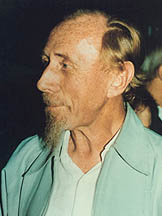
NEW DELHI (UCAN) — The people of Karamchedu knew where their hopes lay. Father Michael Anthony The dalit, former “untouchable” people, in Andhra Pradesh’s Prakasam district refused help even from the state government when a caste feud left them homeless and desperate in 1985. Instead, they turned to Father Michael Anthony Windey’s Village Reconstruction Organization (VRO) for help. The village leaders said they had found the Jesuit priest’s team inspiring. Father Windey, who died on Sept. 20 at age 88, was a figure of hope for thousands of villagers across India. Karamchedu villagers had already seen what the VRO had done for neighboring Kangadapada and Bapadlal villages in the wake of devastation wreaked by a cyclone. Thanks to the organization’s work there, the dalit villagers were able to abandon their mud huts and move into concrete buildings. New drainage systems improved hygiene, while newly planted trees brightened the villages. Child and adult education improved, and job skills taught by VRO volunteers fired youngsters with ambition. “We’ll help, yes, but on our terms,” Father Windey had replied when Karamchedu villagers approached him. He then shot them a question. “What have you done together?” “Nothing much,” they said. Then came the next question: “What do you think you can do?” The slightly built Belgian missioner with a goatee put these questions to thousands of landless laborers, fishermen with little fishing equipment, craftsmen with little security and tribal people displaced by mega-projects. Repeated over four decades, they worked wonders in hundreds of villages across India. For Father Windey, all crises were God-given opportunities for people’s development and growth. He used to say he hated providing cosmetic relief that kept people dependent and poor. The Jesuit also cited a chance meeting with Mahatma Gandhi and a later association with Gandhi disciple Jayaprakash Narayan as having convinced him of the need to make Indian villages more viable, complementing urban development. According to the priest’s analysis, about 2,700 urban centers in India draw the best from the country’s more than 575,000 villages. The result — villagers flood towns and slums mushroom. In 1962, more than 82 percent of Indians lived in villages. Within 20 years, this figure had fallen to 77 percent. To check this trend, Father Windey tried to make villages more livable, seeking to bring changes from within while rebuilding them. He insisted on people’s participation in rebuilding disaster-hit villages in new areas. This helped villagers overcome caste differences, he said, because people considered having a home more important than sticking to their caste. Over the decades, VRO villages have become symbols of equality and security. Social work might have been the last thing on his mind when his superiors sent him to India in 1946 to continue his priestly studies and work in the Chotanagpur region of eastern India. But he was at the forefront of Church relief work when famines hit Bihar and Madhya Pradesh in the 1960s. The late Cardinal Valerian Gracias of Bombay had noted his dynamism and, as head of the Indian Catholic Church, requested the young Jesuit’s help in Andhra Pradesh when it was devastated by a cyclone in 1969. Father Windey arrived in the southern Indian state with a single volunteer and little else. But he soon gathered voluntary groups, individuals and Church workers into a common relief effort to help cyclone victims. They started work in 10 villages, which eventually became models for others. Father Windey always chose the most isolated and least known villages to work in. Now, hundreds of such villages in Andhra Pradesh, Orissa and Tamil Nadu states have become beacons of hope for those suffering from illiteracy and oppression. The VRO has also brought about changes in the way NGOs approach village work. “He turned job seekers into volunteers, teachers into learners and officials into activists,” says Jose Vincent, who had worked with the Jesuit for decades. Bureaucrats and Church leaders also became listeners and sympathized with the Jesuit’s way of conducting interreligious dialogue at the grassroots level. The Andhra Pradesh government itself often turned to Father Windey for ideas and help in crises, such as during the caste feud in Karamchedu that claimed 15 lives 24 years ago.
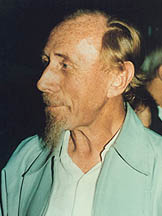
Windey (file photo)
Scholars hail Jesuit’s success at world Sanskrit conference
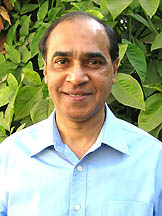
Jesuit Father Noel Sheth,
PUNE, India (UCAN) — Christian and Hindu leaders in India as well as scholars from around the world have praised the performance of a Jesuit priest in convening the History of Religion section of the recent 14th World Sanskrit Conference.
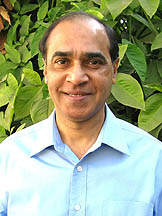
chief convener for History
of Religion at the 14th World Sanskrit Conference
Father Noel Sheth, a professor of Indian religions served as chief convener of the History of Religion section at the meeting in Kyoto, Japan, the first Catholic priest so honored. The International Association of Sanskrit Studies had invited the University of Kyoto to host the triennial conference this year, held Sept. 1-5.
The Jesuit “did an excellent job as the convener,” acknowledged Muneo Tokunaga, head of the university’s Sanskrit department. He selected “top-rate research papers” and appointed the best person to chair each session, the Japanese scholar told UCA News by e-mail.
Tokunaga, a Buddhist and chairperson of the conference’s organizing committee, added that the priest’s “deep insight” into Indian culture helped promote better understanding between Hinduism and other religions.
In India, Father Job Kozhamthadam likewise credited his fellow Jesuit’s lectures and writings with linking various religions. In the process, said the president of Jnana Deepa Vidyapeeth (university of knowledge light), a Jesuit-run seminary in Pune, Father Sheth has introduced Catholic insights and beliefs into Indian culture and traditions.
The priest’s selection as chief convener is “a great honor to the Catholic Church in India,” remarked Bishop Thomas Dabre of Poona (Pune), an expert on Indian religions.
Father Sheth’s scholarship in Sanskrit symbolizes the Catholic Church’s commitment to preserve authentic Indian ancient culture, tradition and heritage, the prelate said.
Sanskrit provided Father Sheth a gateway to understand Hindu culture, the way of life and thought that helped him promote interfaith dialogue and intercultural relations, Bishop Dabre continued.
The bishop once taught Indian spirituality and traditions at Jnana Deepa, Asia’s largest seminary, where Father Sheth currently teaches.
Mohan Dhadphale, former head of the Sanskrit department at Fergusson College in Pune, revealed that Father Sheth had convinced him Christianity is an Eastern religion, not a Western one as propagated by some Hindu radicals.
The Hindu scholar and Father Sheth’s former teacher said the Rig-Veda, the first of the ancient Hindu Veda texts, mentions the origins of Jesus Christ.
“Therefore, the study of Sanskrit helps scholars such as Father Sheth to promote an enriching interfaith dialogue,” said Dhadphale, who attended the Kyoto meet.
Some 500 scholars of Sanskrit and Prakrit, another ancient Indian language, presented research papers in 15 subject sections.
Each of the sections, which included the Vedas, Poetry, Drama and Aesthetics, Scientific Literature, Buddhist Studies, Jain Studies, Philosophy and Ritual Studies, had a chief convener.
Father Sheth told UCA News on Sept. 9 that his work as convener had given him the opportunity to demonstrate that the Catholic Church is “very much engaged” in preserving ancient Indian culture, tradition and heritage.
He noted that in India, Sanskrit and Prakrit are considered the preserve of Hindus, Buddhists and Jains.
“Christians in India are often considered as foreigners who are not in the mainstream of Indian life and culture,” he explained. On the contrary, his selection dispels that notion and convinces people that the Church “is very much in the mainstream of Indian life.”
He also observed that Sanskrit and Prakrit had played crucial roles in Indian art’s profound influence on Asian countries, where Hinduism and Buddhism testify to the spread of Indian culture and religion.
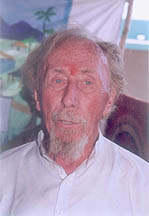
Church mourns Jesuit village reformer
HYDERABAD, India (UCAN) — Church people and social workers in India are mourning the death of a Belgian Jesuit missioner who used Gandhian methods to revolutionize village life in India. Father Michael Father Michael Anthony Windey, founder of the Village Reconstruction Organization (VRO), died on Sept. 20 at Heverle in Belgium, where he had been undergoing treatment for liver cancer since January. He was 88. Sabien Arnaut, Father Windey’s niece, told UCA News from Belgium that her uncle’s last wish was to return to India, but doctors ruled it out, saying he would not survive a flight back. “He was very weak and could barely walk. Though the doctors gave him only a few weeks to live, his sudden death was unexpected,” she said. His funeral is scheduled for Sept. 26 in Belgium. Father Windey was born in 1921, the fourth of 12 children. He joined the Jesuits in 1938, traveled to India in 1946 and was ordained a priest in 1950. Until 1969 he worked in Ranchi, eastern India, where he began social work in 1967 when a famine hit Bihar state. He shifted to the southern state of Andhra Pradesh in 1969 to work among cyclone victims and later set up VRO, following Mahatma Gandhi’s call to reconstruct village life as the way to bring about India’s advancement. Father Windey “believed in the Gandhian way of developing villages, and understood the Indian ethos and culture,” said Father Anthoniraj Thumma, secretary of the ecumenical Andhra Pradesh Federation of Churches. “He was more Indian than Belgian, and we will miss him and his social service.” According to Father Peter Raj, a Jesuit from Andhra Pradesh and secretary to the Jesuit provincial of South Asia, Father Windey succeeded in transforming village life. “He made ordinary people self-reliant and dignified,” the priest told UCA News. Father Xavier Jeyaraj, secretary for the social department of the Jesuits’ South Asia region, noted that Father Windey developed contacts with people of all religions. “His simplicity, openness and friendly approach toward the poor was wonderful,” he said. Nagender Swamy, a Hindu and secretary of the VRO governing body, eulogized the missioner as “a great proponent” of village development and renewal. “His loss is difficult to replace, but his hard work has a tremendous future for village development,” he added. Sister Martin Maliekal, another long-term associate, said that even though Father Windey wanted to die in India, he resigned himself to God’s will when his superiors asked him to go to Belgium for treatment. “When I met him in Belgium, he was always talking about how to help villagers and make them happy,” recalled the Jesus, Mary and Joseph nun. Father Arulanandam Elango, another Jesuit priest based in Andhra Pradesh, described Father Windey as an adventurous and enterprising social worker who ventured where other NGOs did not dare to go. In the words of Jose Vincent, who worked with Father Windey for three decades, the priest was a perfectionist “who was always in a hurry to get things done.” Father Windey was “never bothered about the religion of the person he helped,” added Father A.X.J. Bosco, a former head of the Jesuits’ Andhra Pradesh province who has worked as VRO’s operational director. “While selecting villages, he always chose to help the poorest village.” Jesuit Father Peter Daniel, currently in charge of Jesuit projects in the state, said the foreign missioner’s death had saddened his confreres in India. “We will hold a Mass for Father Windey on the day of his funeral in Belgium,” he told UCA News. The Andhra Pradesh Jesuits also plan to conduct a 30th-day memorial service and to erect a memorial at the VRO headquarters in Guntur. Father Daniel said donors have expressed their willingness to support VRO’s future projects.
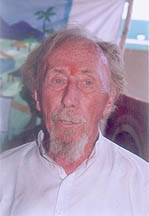
Anthony Windey

Expressing the mission of the Gospel in the diversity of the Asian context
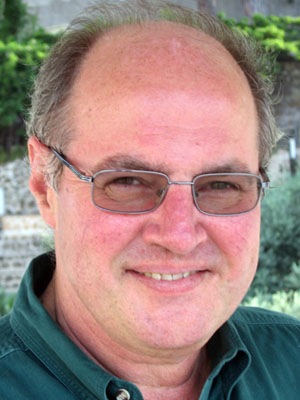
Fr. Michael Kelly SJFr. Michael Kelly SJ
Fr. Michael Kelly is an Australian Jesuit working in Asia. After having worked with radio, television and internet in various Asian countries and in Australia, for the past two years he has been the executive director of UCANews, a Catholic News Agency with offices in Bangkok and Hong Kong.
The agency developed also several specific products focused e.g. on the Catholic Youth Movement in India, the Jesuits in the Philippines or the religious in India. In the last few months they launched an interactive medium Cathnews Asia. Michael Kelly is also involved in the training of young journalists, using the newest audio-visual web techniques to express their voice, the voice of the church in Asia and the mission of the Gospel in the diversity of the Asian context.
Posted: September 2 | Listen now:
 MP3 file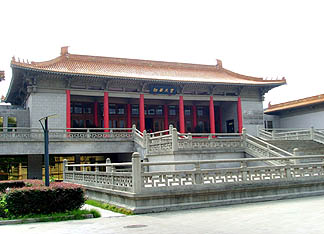
Preparation for Jesuit Matteo Ricci anniversary gathers pace
The Nanjing Museum, one of three mainland Chinese museums to host an exhibition on Father Matteo Ricci in 2010
BEIJING (UCAN) — Preparations for the celebration of the 400th death anniversary of Jesuit Father Matteo Ricci (1552-1610) are picking up in China, the country where Ricci performed his life’s work, and Italy, where he was born.

The Nanjing Museum, one of three mainland Chinese museums to host an exhibition on Father Matteo Ricci in 2010
Taipei, Macau and three cities on the mainland will run academic symposiums and exhibitions on the pioneer missioner’s life and work.
The Marche region of central Italy where Father Ricci’s hometown Macerata is located, is organizing a touring exhibition in Beijing, Shanghai and Nanjing next year.
Riccardo Sessa, Beijing-based Ambassador of Italy to China, told UCA News that the Marche exhibition “will focus, through the person and the work of the eminent Jesuit, on the first encounter of great significance between Europe and China in the late Ming period.”
The exhibition is to celebrate Father Ricci’s “many, great contributions to the contacts between East and West, Asia and Europe, China and Italy,” Sessa said.
Each of the three cities will host the exhibition for two months. Beijing’s opening is scheduled for Feb. 9 at the Capital Museum, Shanghai’s in the first week of April at the Shanghai Museum, and Nanjing’s on June 12 at the Nanjing Museum.
After Nanjing, the exhibition might also travel to Macau and South Korea, although details have not been finalized, Sessa said.
The exhibition comprises two sections. The first will display important documents and texts from Europe that Ricci introduced to China. They include works on art and architecture of the late Renaissance and early Baroque period, science and technology, philosophy and theology.
The second part of the exhibition will illustrate Ricci’s voyage from Macau to Beijing with images of the cities where he stopped on the way and artifacts mainly from the museum collections in China.
A video showing Ricci’s trip from Italy to Macau will be an “intermezzo” in-between the two sections.
Meanwhile, Church organizations in Macau and Taiwan are inviting scholars to join their international symposia, both commemorating Father Ricci’s contributions to the Church’s mission and to wider East-West relations.
The Jesuit-run Macau Ricci Institute’s symposium focuses on the theme “Education for New Times: Revisiting Pedagogical Models in the Jesuit Tradition” on Nov. 25-27. The institute said the event is “dedicated to the intellectual and humanistic Jesuit formation that Matteo Ricci has brought to China.”
In Taiwan, Fu Jen Catholic University will organize another symposium themed “Beginning and Development of Dialogue between East and West” on April 19-22, 2010.
Riccardo Sessa, the Italian ambassador to China

The Tainan-based Catholic Window Press will print the 2010 Catholic diaries based on the illustrations and monuments of Father Ricci and Macerata.
UCA News learnt that some mainland dioceses also plan to hold activities in commemoration of Father Ricci, but concrete information has yet to be announced.
Father Ricci began his journey from Portugal in 1578 and arrived in Goa, a Portuguese colony in India. Four years later he was sent to Macau, then the gateway for foreigners entering China.
In 1583, he traveled inland to Zhaoqing and Shaozhou (today’s Shaoguan) in Guangdong province and then on to Nanchang in Jiangxi province and Nanjing.
Wherever he stayed, he met with intellectuals and bureaucrats who appreciated his wide knowledge of geography, mathematics and science. With the help of Jesuits and Chinese Catholic scholar Paul Xu Guangqi, he also published world maps and books in Chinese, as well as translating Confucian classics into Latin to introduce the dominant Chinese philosophy to Europe.
Father Ricci arrived in Beijing in 1601 and the Chinese emperor allowed him to stay in the capital until his death on May 11, 1610.
Although Father Ricci never visited Shanghai, his Jesuit counterpart Father Lazzaro Cattaneo introduced Catholicism there in 1608. Shanghai gradually became a major center of the Jesuits’ missionary activities, particularly after foreign powers forced China to open its doors in the mid-19th century.