Category: Uncategorized

Index of Shalom July 2010

Bookmark and Share


Jesuit Electronic News Service Vol. XIV, N. 13

Bookmark and Share


From the Curia

Tempo forte. Father General, together with his council, was out of Rome from the 6th to the 10th of June for four days of intense consultation, prayer and reflection on many subjects regarding the governance of the Society. The major theme was a synthetic re-reading of this year’s “ex-officio” letters. Consequently, the major part of the time was devoted to reflection on the collaboration with laity and on the nurturing of vocations in the Society today. Other subjects on the agenda were formation in Ignatian spirituality and the evaluation of the work done by the Consulta during this year. “To be gone out of the Curia as a Council,” said Fr. Echarte, secretary of the Society, “being in close contact with nature, made the meeting deep, but not wearying. This tempo forte lived up fully to what the tradition of the Curia expects from these special days of consultation: a time of prayer, reflection and discernment as a special help to Father General for his governance.”


Task Force on Ecology. The first meeting of the members of the task forceon ecology (see Electronic Service n. 7 of 12 April 2010) will be held at the General Curia in Rome from the5th to the 10th of July. The meeting will consist of three parts: first of all a reflection on the responses given by Jesuits to the question of what are the ecological challenges all over the world. Then, there will be a reflection on documents on the subject published by the Society in the last ten years. During the second part the members of the task force will listen to the contribution by some representatives of different religious orders based in Rome and by Jacques Blamont, internationally renowned scientist. The third part will be devoted to discerning the Jesuit commitment for the future and on the kind of practical recommendations to submit to Father General.


Appointments

Father General has appointed:

– Father Francisco José Ruiz Pérez, new Provincial of Spain. Fr. Ruiz Pérez, who is presently Provincial of Betica, will replace Fr. Elias Royón. Fr. Francisco José was born in 1961, entered the Society of Jesus in 1981 and was ordained a priest in 1994.


– Father Jose Changanacherry, new Provincial of Gujarat (India). Father Jose was born in 1938, entered the Society of Jesus in 1957 and was ordained a priest in 1971. Until now he has been instructor for Third Year in Goa. He has been already Provincial of Gujarat from 1989 to 1995.


From the Provinces

ASIA-PACIFIC: Joint communications strategy

The Jesuit Conference of Asia Pacific (JCAP) at a recent creative communications workshop held in Manila with professionals from different countries of Asia has developed a communications action plan aimed at pooling its communication resources.  “We are not isolated units in different parts of the world, but we are part of one common international body. We need to be able to see ourselves in this way so that we can meet the challenges that are coming in a global way… New ideas can be developed and our communication bodies are involved in the production of a wide variety of products, including films, magazines, online journals and websites,” said Fr. Mark Raper, President of JCAP.  It is important to remain relevant in the media world because with the prevailing focus on physical appearance people are no longer interested in their spiritual needs. At the workshop the importance of communications training during formation was also discussed, to ensure that Jesuits are equipped with communications skills suitable to a range of ministries.


AUSTRIA: Night of the open churches

This year the “Night of the open churches” took place for the second time in Austria and for the sixth time in Vienna on May 28. The Jesuits have also participated with various events in and near different Jesuit churches: in Graz visitors were welcomed at the John Ogilvie Haus, while in Innsbruck the renovated crypt was opened for visitors and a saxophone band played. The program ended with the Eucharist. In Linz and Steyr the agenda contemplated also musical programs with pieces by Bach, Händel and Mozart. In Linz there was also a lecture on Matteo Ricci and inculturation. In Vienna apart from a guided tour through the church (a master piece of Andrea Pozzo S.J.) and a presentation of the mission work of St. Paul, two Jesuits talked about what is important for the Society today and what Jesuit life looks like.


BURUNDI: A clinic against AIDS

Service Yezu Mwiza (SYM), a Jesuit programme for AIDS care and HIV prevention in Burundi, has inaugurated a small clinic on 12 June. The clinic represents a significant milestone for SYM: recognition, earlier in the year, as a centre for the distribution of antiretroviral therapy (ART). “We give thanks to God for this success, which will allow those we serve, most of whom are very poor, to save the money they would have spent on transport to collect their medication from other centres and hospitals in or around the town,” says Fr Désiré Yamuremye SJ, SYM Director. “Given our strategy to bring services to the people by going to parishes or nearby health centres, our doctors and nurses will at last be able to distribute ARVs to those who need them. This has always been our target and our beneficiaries are very happy”. The aim is to offer holistic care: medical, psychosocial, nutritional, micro-credit for income-generating activities. Children benefit from educational and other support. The opening of the clinic has been possible thanks to cooperation between AJAN, the Jesuit Region, the local Jesuit AIDS ministry, and the generosity of benefactors in Canada and Holland.


COLOMBIA: More death threats

On the 3rd of June Fathers Peter Balleis, international director of JRS (Jesuit Refugee Service), Alfredo Infante, JRS director for Latin America and Caribbean and John Jairo Montoya, JRS director for Colombia, issued a communiqué in which they asked the Colombian government to investigate some events and to offer protection to organizations and people who suffered intimidations from the Comando Conjunto de Limpieza. Among other things the communiqué affirms: “On the 26th of May 2010 many organizations of displaced persons and defenders of human rights, among them the JRS of Barrancabermeja (Colombia) received death threats through personal and institutional e-mails… We ask the Colombian government for quick and effective justice and clarity about what has happened as well as protection for organizations and threatened people.” The communiqué ends assuring that JRS will continue to work on the side of the population by reaching for peace through the development of dialogue and respect for human rights. CINEP, the Colombian Centro de Investigación y Educación Popular also issued a communiqué regarding the same threats. And, the Bishop of Barrancabermeja joined the protest with a communiqué in which he showed solidarity with Jesuit fathers and their collaborators.


EUROPE: Effects of detention  in European Centers for migrants

23 countries of the European Union commissioned a study to investigate the effect of detention on those in migrant centers, especially on women and children.  According to Sir, the news agency of the Italian Episcopal Conference, the study, facilitated by the Jesuit Refugee Service (JRS), was submitted on the 8th of June to Brussels.  The study, “To become vulnerable during detention”  analyzed over 18 months the consequences of compulsion and deprivation of freedom at the psychological and sanitary level, on the life of the asylum seekers and migrants confined in the centers scattered all over Europe. The results of this research, says the JRS, show that “young women, children and people detained for more than three months suffer from a severe form of stress, anxiety, depression, insomnia and loss of weight.”


INDIA: Consultation for food security

Some 100 participants attended a June 5-6 consultation organized by the Delhi-based Jesuit Indian Social Institute. Participants called on the Indian government to make food available, accessible and affordable “at all times in all circumstances”. Saying they opposed “the unhealthy use of fertile agricultural land” participants also demanded that the government promote agricultural sector growth. “Everyone has a fundamental right to be free from hunger and to receive a required-level of nutrition”, a consultation statement said. The draft bill defines food security as a “situation that exists when all people at all times have physical, social and economic access to sufficient, safe and nutritious food that meets their dietary needs and food preferences for an active and healthy life.” Father M. K.George, ISI director, said he hoped that the consultation would launch an intensified campaign for a “just and humane act.”


INDONESIA: Threats to national character

Rampant consumerism and religious extremism pose a dual threat to Indonesia’s national character; Father Franz Magnis-Suseno of Jakarta’sDriyarkara School of Philosophy warned speaking to about 80 participants at a June 2 symposium in Jakarta organized by the Democratic National, an organization dedicated to creating integral freedom in Indonesia. “Narrow-minded religious extremism has also emerged today. This also threatens society,” he said underlying that the national character needs basic values which are already contained in the Pancasila (five principles) enshrined in the 1945 Constitution, and that calls for a belief in one God, a just and civilized society, national unity, consensus-led democracy and justice for all. Indonesian people need openness and tolerance, Father Suseno said. “These exist in Indonesia. But they are being threatened by fanaticism and religious and ethnic narrow-mindedness. We must uphold our basic values since they unite us.” And he urged Indonesians to resist the threats and to learn to accept ethnic and religious differences.


LATIN AMERICA: Message from the meeting of Major Superiors

The XX meeting of Major Superiors of the Society of Jesus in Latin America was held in Guatemala at the end of May. At the end of the meeting the participants sent a message “to our Jesuit brethren and those with whom we collaborate in the apostolic service to the mission.” After mentioning the goal of the meeting, that is: “to build together our Common Apostolic Project”, the superiors say: “in a climate of prayer, discernment and union of souls we have selected six priorities for our common apostolic work…The aim is to fix the options we, as Latin American, collectively want to stress and in this way to collaborate in the process of reflection and apostolic planning that we have in every Province. Together in  this work we have listened to the human tragedies of Haiti and Chile…Thinking of the victims and the work the Society of Jesus may develop in these circumstances, we have commissioned the presidency of CPAL (Conference of Jesuit Provincial of Latin America) to elaborate a protocol to face emergency situations.” After mentioning other moments and situations lived during the meeting, the Provincials end: “through the priorities we have taken up, we ask our Lord to help us  proclaim of spiritual richness as well as be its heirs.”


USA: A statement of California Province

The California Province of the Jesuits has published a statement declaring solidarity with migrants in opposing the new anti-migrant law that was passed in the state of Arizona (SB 1070)http://www.jesuitscalifornia.org/Document.Doc?id=436). Another statement condemning the law has been published by the Jesuit Service for Migrants (SJM) of North and Central America. Read the statement here (in Spanish):http://www.sjweb.info/sjs/articles/documents.cfm?LangTop=3. In addition, the students at a Jesuit school in Arizona, Brophy College Prep have been very active since the passing of SB 1070. The school’s office of Faith and Justice organized the students to take several trips to the (Arizona) Capitol to lobby. Students made signs and stood along with other Arizonans who opposed SB 1070. Headlines 2010/05.


VATICAN: Summer school again at the Specola

The 12th Summer School of the Specola is under way from the 30th of May to the 25th of June. The 27 participants come from from 24 countries. For them this is an occasion to deepen their knowledge of an illuminating theme in modern astrophysics and observational cosmology: the chemistry of the universe. The course will alternate theoretical lessons and laboratory exercises, in which the students will test themselves as “creators” of theoretical universes toward the realization of evolutionary models of the chemistry of the universe. The goal of this biennial initiative of the Specola Vaticana is to offer to a group of deserving students, at the end of their university studies, a privileged opportunity to deepen some topics of their astronomical studies and to weave professional friendships with professors and students of an international sphere. It is worth noting that, among the criteria for the selection of candidates, the Observatory favours students coming from developing countries, and that, for many, it is their first opportunity to participate in international courses. This year, the professors are former students of the Observatory’s summer courses.


The 4th centenary of Matteo Ricci’s death

Circulating exposition. Last months the Jesuit Centre Sèvres in Paris hosted an exhibition with twenty panels illustrating the scientific contributions of Fr. Matteo Ricci to cartography, astronomy and mathematics and the welcome they received in Ming China (the imperial dynasty of Ricci’s time). The exposition underlined that it was an encounter of two major traditions, rich and complex, in a specific time in history, the end of XVI and the beginning of XVII century.


Rome: A new stamp. The Pontifical Gregorian University promoted at the Mail Bureau of the Sovereign Military Order of Malta the printing of a commemorative stamp devoted to its distinguished “alumni” Father Matteo Ricci, S.J. on the occasion of the 4th centenary of his death. The stamp, issued on the 30th of April 2010, for the value of 2,50 euro, with a circulation of twelve thousand specimens (every sheet contains 12 stamps), reproduces the classical painting by Emmanuel Yu Wen-Hui, kept in Rome at the Gesù Church.  The Sovereign Military Order of Malta has the international right to issue stamps, but these are not accepted for mail service for the most part of  the countries of the world.


Portrait of a Jesuit-Matteo Ricci. Recently, the Macau Ricci Institute (MRI) has published a short biography of Fr. Matteo Ricci, based on a collection of essays presented in the Institute respectively by Fr. Gianni Criveller and Dr. César Guillén Nuñez. This modest publication which would like somehow to contribute to the worldwide commemoration of Matteo Ricci’s death in Beijing in 1610, intends to inaugurate a series of MRI studies related to the Jesuit history in the old China mission. It will be published under the name of Jesuítas Publication Series and will introduce to the readers such outstanding figures of the past as Alessandro Valignano, Melchior Carneiro and Tomás Pereira. Each title of the series will be available in English and Chinese simplify versions. The book is available from: [email protected]


New in SJWEB

podcast with Fr. Paterne Mombe, a Jesuit from West Africa who has been appointed coordinator of AJAN, the African Jesuit Centre in the struggle against AIDS, in Nairobi.


Lessons from Matteo Ricci for the Present

Bookmark and Share


by Fr. David A. Brown, S.J.
David Brown, S.J., is an astronomer at the Vatican Observatory at Castel Gandolfo, Italy.

The course of history is sometimes punctuated by points in time that witness the passing of one seminal figure only to see the birth of another who builds on the work of his predecessor. One example is seen in the figure of Isaac Newton (b. 4 January 1643) who was born less than a year after Galileo’s death (8 January 1642). Thus it was also with the famous Jesuit missionary and sinologist Matteo Ricci, who was born (6 October 1152) in the same year in which St. Francis Xavier had died (3 December) on Shangchuan island off the coast of China, his hope of entering the mainland remaining unrealized. Xavier’s hopes would be fulfilled in Matteo Ricci, whose endeavors in Asia would change the course of history.

The year 2010 marks the 400th anniversary of Matteo Ricci’s death in Beijing on 11 May 1610. To commemorate the occasion, Pope Benedict XVI has asked Bishop Claudio Giuliodori of the Diocese of Macerata (the region in Italy that was home to the young Ricci) to sponsor a Jubilee year, as stated in the Pontiff’s letter of 6 May 2009. Given the Pope’s emphasis on the importance of such an occasion, combined with the emergence of China as a superpower and a shifting of the global economic center of gravity toward Asia, it seems an opportune moment to examine the importance of Matteo Ricci’s legacy for these modern times especially with regard to the challenges confronting the Church in its efforts to spread the Gospel. This article will discuss the broad themes of Ricci’s missionary enterprise that both Pope John Paul II and Pope Benedict XVI have deemed as worthy of note for the present in some of their recent speeches: Pope John Paul II’s Lettera di Giovanni Paolo II al Vescovo di Macerata (LettJPII, 1982), Address to the Gregorian University Commemorating the 400th Anniversary of the Arrival in China of Matteo Ricci, S.J. (AddressJPII, 1982), and Dialogue of Cultures: the Road to Peace (DialogueJPII, 2001), and Pope Benedict XVI’s Message to the Bishop of Macerata on the Occasion of the Fourth Centenary of the Death of Fr. Matteo Ricci (LettBXVI, 2009).

In many ways, the current situation faced by an increasingly eastward looking Church is not too different from that of 500 years ago. From centuries ago, one can hear echoes of the following words: “Whoever desires to serve as a soldier of God beneath the banner of the cross in our society, which we desire to be designated by the name of Jesus, and to serve the Lord alone and the Church, his spouse, under the Roman pontiff, the vicar of Christ on earth, is a member of a Society founded chiefly for this purpose: to strive especially for the defense and propagation of the faith and for the progress of souls in Christian life and doctrine” (Formula of the Institute, 1540). These are the opening lines from the foundational document of the Society of Jesus (the Jesuits), initially approved by Pope Paul III in 1540. Freshly penned from Ignatius and his companions, they inflamed the hearts of men and inspired them to enter the ranks of the Society of Jesus with zeal and fervor for the Lord even as they faced a rapidly changing world fraught with much turmoil but also replete with opportunity and new horizons. Even as the Protestant Reformation divided Christendom in northern Europe, the discovery of the Americas and travel to other parts previously inaccessible in the Orient inaugurated a new age in which the Church looked outward to new realms both East and West. Within Europe itself, the old Medieval order and Scholasticism of the universities were passing and being supplanted by an urban culture permeated with the new Renaissance humanism. This demanded men formed in Renaissance culture, men open to a new and bigger world, and men who could engage it by communicating effectively. With its printing press and newly-encountered lands, it was a world not entirely different from our own, a modern world awash in more information and having more education than ever, yet torn by culture wars as the dominance of the old Western order is increasingly supplanted by a “multipolar” world made smaller by globalization and by the mass media.

It was into a world in flux that Matteo Ricci was born on 6 October 1552 in the Italian city of Macerata. As the eldest of 13 children, he was expected to follow in his father’s footsteps. However, Ricci entered the Society of Jesus in 1571, partly due to the influence of his former teacher, whom he deeply admired and who had entered the Society a few years before. Having completed his time at the novitiate of Sant’ Andrea Quirinale, he then did part of his Jesuit seminary training in Rome at the Roman College, where he studied philosophy, theology, mathematics, and astronomy. There he would have met Jesuits of great learning such as the mathematician Christopher Clavius and the theologian Robert Bellarmine. Imbued with the spirit of the new learning in such an environment and filled with zeal for being a missionary in the Orient — partly due to hearing about the great deeds of missionaries already there — Matteo Ricci was finally granted his request to work in the missions. He departed for Asia from Lisbon and arrived in Goa (India) in 1578. After four years there, he was dispatched by Alessandro Valignano, his former novice master, to the Portuguese island-colony of Macao (off the coast of southern China) in 1582 to begin preparations to enter mainland China in the hope of establishing a permanent mission there. Together with another Jesuit, Michele Ruggieri, Ricci was instructed to master the Mandarin Chinese dialect, the language of the educated class and of official government administration in the Chinese imperial bureaucracy. Having done this and having learned the customs of the culture, both Ricci and Ruggieri were finally authorized to enter the city of Zhaoqing (Shiuhing/Chao-King) in China in 1583 by the governor of Canton, Wang-Pan, a Mandarin official who was intrigued by Western skills in cartography, mathematics, astronomy, and clocks. Seeking the acceptance of the culture into which they had entered, Ricci and Ruggieri came dressed in the clothing of Buddhist monks, but quickly realizing the marginal status of that class in Chinese society, they changed their attire to that of Mandarins who were well-respected in Confucian society. Their stay in Canton was based on the condition that they become fully Chinese in their ways and allegiances, something to which they agreed. It was there and later in Nanjing and Nanchang that Ricci labored patiently, constantly adapting himself to Chinese culture, and in the process, built up a network of friendships based on trust and on a mutual exchange of what both East and West saw as important, characteristic, curious, and desirable in the other. Here, Ricci’s knowledge of astronomy, mathematics, calendars, and maps was a source of fascination and invaluable to Chinese scholars who deeply respected him. Then in 1601, Ricci’s dream was finally realized when he entered Beijing and was allowed to enter the Forbidden City in the hope of having an audience with the Ming Emperor himself, Wan-li. Though he never met the emperor face-to-face, he was given access to the Forbidden City, and the Jesuits were henceforth made beneficiaries of the emperor’s patronage. Ricci spent the next nine years of his life at the imperial court placing his mathematical skills at the service of the emperor and laboring slowly to introduce Christianity to the people and their culture using Chinese concepts, philosophy, and, of course, the language. He died in Beijing in 1610. As a measure of the esteem in which he was held at court by the emperor and officials, special permission was granted to the Jesuits to bury him in Beijing, a privilege not ordinarily granted to foreigners in that age.

By the time of his death, Matteo Ricci (Li Madou) had facilitated an unprecedented meeting of East and West and had planted the seeds of the Gospel in the very heart of China. Moreover, he had done what had been viewed as impossible: to formulate an entirely new non-Western framework by which to communicate Christianity to a culture utterly unlike his own. The result is seen in the many writings he produced, including a translation of the 10 Commandments into Mandarin, his famous Treatise on Friendship, and his great apologetic work The True Meaning of the Lord of Heaven. This latter work, perhaps his most famous, was characteristic of Ricci’s attempt to begin with Chinese considerations, in this case from natural, philosophical and political premises: “Every state or realm has a sovereign (lord); would it ever be possible that only the universe would not have a (sovereign) lord” (Ricci, True Meaning of the Lord of Heaven and Earth)? In the realm of mathematics, Ricci also translated Euclid’s Elements of Geometry into Chinese.

Matteo Ricci’s legacy is an impressive one, the effects of which are still felt today. As such, the Church can still draw many lessons from it in its rapport with different cultures (including that of Western secularism) in modern times. With the Apostolic See ultimately in charge of setting the Church’s general evangelization priorities, it is important to examine what it sees as the key elements of Ricci’s methodology, which is of relevance to the Church’s present and future missionary efforts. Something of this can be gleaned from letters written by both Pope John Paul II and Pope Benedict XVI in the last 30 years commemorating the different anniversaries of events in Ricci’s journey in the Orient.

In some ways the style of evangelization that characterized Ricci and his contemporaries was nothing new. It had its precedent in the early missionary endeavors of the first Christians as they engaged the Greco-Roman culture of their day, as St. Paul did at the Areopagus 2000 years ago. What made Ricci’s methods and those of other Jesuits novel 1500 years later in the Age of Discovery was the sharp contrast between their methods and those of the European colonizers with whom they had to deal and on whom they depended. The colonizers often tended to coerce local indigenous populations into embracing Christianity, the motivation often being simple economic gain. Their first-hand witness of the brutality of some of the colonizers, combined with encountering the advanced cultures of Japan and China — cultures which would not so easily bend to European ways — indicate that a different approach had to be found by missionaries to bring the Gospel to the peoples of the Orient.

The seminal figure, who in many ways set the tone and standard for the methods which Ricci and contemporaries would later follow, was Alessandro Valignano. He had been appointed Visitor to the East Indies Mission in 1573 by the Jesuit Superior General Mercurian. An immensely talented man, Valignano knew that the only way that the Christian faith could take root in such different lands was if it were truly received into the hearts and minds and culture of the people. The Gospel had to be received in a way they could call their own, understood in terms familiar to themselves and not through the prism of the European worldview. This would require the ability to respect their culture and customs by inserting oneself into it, which if done correctly, could win the good will of the people and promote true friendship. Of course, all of this would begin with the ability to learn the language of a particular culture. For Valignano, these steps served as the basic prerequisites to any long-lasting form of evangelization.

Beginning with Francis Xavier and continuing with Valignano, experience of the missions in Japan and in other territories quickly led to the realization that China was the central cultural power in the Orient, the source from which many other nations had derived their own cultures and to which they looked for continuing developments. Thus, engagement with Oriental culture, an establishment of a link between East and West, between country and Church, all built on dialogue, would (and continues to) find its test case in the Church’s rapport with China. Both Pope John Paul II and Pope Benedict XVI note that, above all, Ricci’s emphasis on inculturation of the Gospel in Chinese culture has been and continues to be of crucial importance. First, they observe that a certain amount of pre-evangelization is a requisite for the process of inculturating the Gospel. That is, there has to be an engagement with the culture itself, beginning with a working knowledge of its language, then an acquaintance with its ways and mores, all properly understood through a knowledge of the philosophical or credal system that shapes and provides a narrative for the culture. Further, both popes note that the evangelist also has to inculturate himself (in as far as this is possible without compromising the basic tenets of the Christian faith) so as see the world through its own culture, as was the particular case of Ricci who had to learn how the Chinese perceive things. Only then will the next step in evangelization come: inculturation of the Gospel message itself. In the case of Ricci, it was not just the presentation of Christianity to the Chinese in their own language (Mandarin) but also promotion of its understanding through the Confucian worldview which pervaded China at that time. For both popes, two fundamentals can be identified in Ricci’s methodology: 1) Chinese neophytes would not have to abandon their culture and become any less Chinese when embracing Christianity; 2) rather than uproot or destroy it, the Christian faith would complete, perfect, complement, and enrich all that was best in Chinese tradition (DialogueJPII, 2001 & LettBXVI, 2009). That is, the Incarnation itself, the Word becoming flesh, can only ennoble — grace perfecting nature.

Going beyond the theoretical framework of evangelization, both popes stress that what was novel about Ricci in practice was his profound empathy with and respect for the Chinese people, their ways, and their culture. The means by which this would be realized in daily life was in the cultivation of friendships and relationships with persons, a mutual trust built up slowly over the 28 years that he was in China. This process required great patience. Given its length of time, the number of visitors received, and the many setbacks experienced, the mission always seemingly in danger of failure. Yet, reciprocation in good will from the Chinese would follow. A testament to Ricci’s cultivation of friendships was the remarkable success which his Treatise on Friendship (Cicero’s De Amicitia) met in the country when printed in Mandarin. A wide network of friendships had been formed with Christian charity at its center.

For Pope John Paul II, an important dimension in this role of friendship in the process of inculturation is the virtue of honesty, expressed in transparency. The early missionaries came to China with no ulterior motives and put themselves at the service of governors and, ultimately, the emperor himself. Pope John Paul II notes: “What the Chinese people particularly admire in Matteo Ricci’s scientific work in China is his humble, honest, and disinterested attitude, not inspired by ulterior motives and free from links with any foreign economy or power” (AddressJPII, 1982). Indeed, violation of already-established trust would have doomed the mission, given the suspicion with which foreigners were held. Instead, there was to be a mutual enrichment. The missionaries came with certain practical skills which would be of benefit to the Chinese. Here, good will was accompanied by a practical cultural exchange from which both sides stood to benefit.

As successful as the Church’s initial rapprochement with China came to be under Ricci’s sojourn there, it was not without its difficulties and failings. Ricci himself, notwithstanding his successes, is not beyond criticism for his methods employed, one example being a tendency to overemphasize how strongly Christianity is implicit in Confucian philosophy. The issue at hand was how far the Christian faith could be stretched to accommodate an almost-entirely different worldview and still remain true to its evangelical proclamation, and his expert knowledge of Chinese culture was inevitably subject to criticism, including that of some fellow Jesuits. It is one of the central tensions which has always been at the heart of the Church’s missionary endeavors throughout the generations: the tension between a robust Christian orthodoxy and creativity required to give the Gospel a new expression, something which was to become a major issue in the Chinese rites controversy 150 years later. Both Pope John Paul II and Pope Benedict XVI speak about this creative tension, noting that true creativity in inculturation is at its best when it is able to maintain the integrity of the faith in its totality: “I therefore willingly join those who are commemorating this generous son of your region, an obedient minister of the Church and a daring and intelligent messenger of Christ’s Gospel. Given his intense scientific and spiritual activity, it is impossible not to be favorably impressed by his innovative and special skill in bringing together with full respect China’s cultural and spiritual traditions in their totality” (LettBXVI, 2009). Another source of tension is of a more temperamental nature: desire for immediate results and conversions as opposed to the patience required by the long view: planting the seeds which others will reap. Any missionary — and Ricci was no exception— knows that he is planting the seeds which others will reap years after him.

In noting the various anniversaries connected with Ricci’s encounter with China, Popes John Paul II and Benedict XVI highlight important lessons for establishing dialogue with different cultures, especially with China. Although China remains in some ways a society strongly resistant to foreign influences and yet desirous of some Western innovations — a situation not unlike that of the 1500s — its cultural context is entirely different than that of the past. With the Marxist Revolution having overturned and destroyed the old Confucian order on which China had based its daily rhythms of life, and with more recent secularism eroding its last vestiges, the cultural reality now dominant in China is entirely unlike that faced by Ricci centuries ago. Ironically, the Church’s dialogue with secularism, in particular its emphasis on the role of reason as the starting point for dialogue, will be of enormous assistance in future years. Likewise, the provision of men who can provide certain practical skills to help the Chinese to develop their society is still of great relevance today.

Discernment: Making Inspired Choices

Bookmark and Share


“Just do it.”

Sounds easy, right? On the one hand, there’s something to be said for spontaneity. On the other hand, some of our choices in life require deep thought, prayer, and consideration, lest we find ourselves facing the consequences of a poor decision. That’s where the art of discernment comes in.

Discernment is a time-honored practice in the Christian tradition. In essence, discernment is a decision-making process that honors the place of God’s will in our lives. It is an interior search that seeks to align our own will with the will of God in order to learn what God is calling us to. Every choice we make, no matter how small, is an opportunity to align ourselves with God’s will. Here are some tried-and-true pointers that can help you discern God’s will.

Talk to Someone You Respect.
God often speaks to us through the wisdom of others. Seek out the wisdom of at least one and perhaps several people who you feel have the gift of wisdom and ask for their advice.

Find Some Solitude.
It’s good to talk to other people when making important decisions, but at some point, it is crucial to make some time to be alone with your thoughts and with God. Invite God into your decision-making process.

Start with What You Know.
Lay out all of the facts in front of yourself so that you can deal with the known before you delve into the unknown!

Tell God What It Is That You Desire and What You Fear.
Be honest and tell God what your deepest desires and fears are in this situation is. Before you can say the words, “thy will be done,” be sure you are truly in touch with your own will; otherwise it will come back to bite you anyway!

Let God Speak to You.
Most of us don’t actually hear a voice when God speaks to us. However, pay attention closely to the ways that God is speaking to you. What kinds of thoughts, feelings (especially love, joy, and peace, or a lack thereof), and memories might God be stirring within you to help you make your decision? What Scripture story or saint’s life comes to mind that might enlighten your decision? Find the passage or story and prayerfully read it.

Know That God Has a Plan for You.
Remind yourself that you are not on your own and that you don’t have to yell and scream to get God’s attention to help you in this matter. On the contrary, remind yourself that God has a plan for you and that his plan is driven purely by love.

Pray to Do God’s Will.
As difficult as it may be, pray the words, “thy will be done,” asking God to give you the strength you need to continue to discern his will and to follow it.

Wait.
If circumstances allow, wait before making your decision. Continue to pay attention to your feelings to see which direction you are being drawn to.

Prayerfully Commit.
At some point, you need to act. Knowing that you have sought God’s will, set forth to do the loving thing.

Check Out the Fruits.
Discernment is ongoing. After you make a decision, prayerfully evaluate it. If the fruits (outcomes) of your decision-your words, actions, and behaviors-are good, then it is a good indication that the decision you made is good. If the fruits are “rotten,” then that is a good indication that you may need to alter your course. True discernment results in good fruit (even if it’s something we wouldn’t normally pick out for ourselves).

Discernment can help you when you face decisions. Even though making good decisions can be difficult at times, trust that the Holy Spirit is with you to guide you and help you choose what is good and true.


This article is written by Joe Paprocki, 
author of The Catechist’s Toolbox


Young Jesuits inspired by Afghan mission

Bookmark and Share


Young Jesuits inspired by Afghan mission thumbnail
From left: Jesuit scholastics Lancy Dias, David Raj and Alex Yagoo

By Ritu Sharma, New Delhi

Three young Indian Jesuit seminarians about to head off to war-ravaged Afghanistan, say mission work there will make their religious commitment more meaningful.

David Raj, 28, Lancy Dias, 27, and Alex Yagoo, 28, volunteered to work in Afghanistan to recapture their congregation’s original spirit of going to new and dangerous places to spread Christ’s message.

Dias will go to Herat, Raj will go either to Herat or Kabul, while Yagoo will go to Bamiyan, where Jesuits have been working for the past five years.

The three come from the Karnataka, Hazaribagh and Madurai Jesuit provinces.

The seminarians spoke about the challenges ahead, their expectations and work as they waited for their visas at the residence of the Jesuit Provincial of South Asia in New Delhi.

Q: How do you feel about going to Afghanistan?

David Raj: Excited, because first we are going to help a country which is facing lots of challenges and problems, and second, there is personal satisfaction that we are going to do something that gives meaning to our vocation.

I feel that Religious life is very secure in India and I want to face some challenges. I have led a very comfortable life during my 10 years as a Jesuit. I think there should be some challenges otherwise there is no point in choosing this life.

Q: Are you not scared of going there?

David Raj: The first Jesuits who went there five years ago felt so but now everything is almost set up. Anything can happen. Then, anything could happen in India also.

Q: What has motivated your decision?

Lancy Dias: From the beginning of my life in the Society [of Jesus], I was fascinated by its universal character. I had opted for the Afghanistan mission two years ago but due could not go. This time, I got the chance. I don’t have fear but curiosity to know the place, to contribute something from what I have gained over the years in my vocation.

Alex Yagoo: I am also excited about Afghanistan. Initially I wanted to work in Nepal but the offer came from Afghanistan.

Q: Are you aware that Indians are targeted in Afghanistan?

David Raj: Attacks and deaths can happen anywhere. We are used to such situations and we are prepared. During my early years in the Society, I worked in a mission where a Jesuit priest was beheaded by people who opposed his work among poor people.

Q: What are the challenges you foresee in Afghanistan?

David Raj: The language and culture of that country will be a major challenge. Indians are brought up in a very conservative way. In our society, Hindus and Christians do not have many Muslim friends or vice versa. Now we are going to an Islamic country. We are going to a place where we are not even allowed to carry a Bible. But the values of Jesus can be taught at any place.

Q: How long will you be there?

Lancy Dias: I will be there for one year and the other two for three years. I will be in Herat where I will be teaching English to students in a high school and I will be training teachers also.

Alex Yagoo: I will be in a university in Bamiyan teaching students and training teachers.

David Raj: I will be either in Herat or Kabul. We are to undergo a teachers’ training program. If we do so then I will be in Kabul. Two more Ursuline sisters from Pune will join us later.

Q: What preparations have you done for this mission?

David Raj: I graduated from Loyola College in Chennai and attended a program on training of trainers. I am concentrating on teaching English.

Lancy Dias: Last year while doing my regency, I had a chance to teach in St. Aloysius College, Mangalore, and take regular classes in English. I have done industrial training.

Alex Yagoo: I am going to teach in the human science department of Bamiyan University. I have to teach four papers so I have prepared for that but I cannot put all that material together because I have to study the situation and the students’ standards.

Q: Would you be able to teach girls in such a conservative country?

David Raj: I think the Indian media is giving a wrong impression about Afghanistan. In the DVDs shown to us, we found both boys and girls receiving education.

Q: But girls are not allowed to venture out in Taliban-controlled areas?

David Raj: Even we are not allowed to go to places where the Taliban are. We have prescribed areas.

Q: Then who will help those people there?

David Raj: We are on the way. We have to explore the possibilities and hope for the better. We are planning to open up new places.

Q: Have you spoken to those returning from Afghanistan?

Alex Yagoo: They are happy about their stay in that country. We want to go with a fresh and open mind. We don’t want to take along any prejudices.

Lancy Dias: Indians are very prejudiced. When we hear about Islam, we think of terrorism but what I have heard from returning Jesuits is that common people there are very good to Indians. If we go with prejudices, it will be difficult for us to remain there. All through our formation, we are fed with ideas about taking challenges, risky missions.

Q: Why didn’t you choose a comfortable life as a Religious?

Lancy Dias: I joined the Society after graduation. I have seen the outside world also but find more meaning in what I am doing now. I still find meaning in Religious life.

Q: How are your families reacting?

Lancy Dias: My mother was initially very hesitant. I told her that anything can happen to me wherever I am. We are not safe even in our country. I felt peace within after my decision to go to Afghanistan.

Alex Yagoo: My parents normally don’t call me but after a bomb blast in Pune where I was studying, I received a call from them. Now, getting a call in Afghanistan could become a daily affair. I had a tough time convincing my parents.

David Raj: I didn’t have a very difficult time making my parents understand. My parish priest was with me and my uncle, who is a bishop, convinced my mother.


Jesuit gives Pope gifts from Sheshan and Shanghai

Bookmark and Share


Vatican City (AsiaNews) – Benedict XVI received two gifts from Shanghai on behalf of the diocese’s bishops and faithful. He received them from the hands of a Chinese priest at the end of today’s general audience in Saint Peter’s Square. They were a painting on canvas with the portrait of Our Lady of Sheshan, in the background the prayer to the Virgin written by Pope in his Letter to Chinese Catholics, and a bas-relief also of Our Lady of Sheshan on ancient wood taken from the hill where the national shrine is located.

Fr Matteo Chu, who gave the gifts to the Holy Father, was born in the mainland. He is a Jesuit priest who spent 27 years in forced labour. After his release, he went to the United States with Card Gong Pinmei, then to Taipei, Taiwan.

During the audience with the Pope, he was accompanied by another Chinese priest, Fr Gu Guangzhong.

Father Matteo has close ties to the Church of Shanghai, which sent the two gifts for the Pontiff. He is in Rome on a pilgrimage to mark the end of the Year for Priests (see his article, “From Shanghai to Rome, the joy of being a priest in the Year for Priests”, in AsiaNews, 15 June 2010)

He told AsiaNews that he asked the Pope for a special blessing for the Church in China; he also told the Holy Father about the wish of the Church of Shanghai to start the process of beatification of Matteo Ricci and his scientist friend, mandarin Paul Xu Guangqi.


Experts praise Jesuit’s Indian film theory book

Bookmark and Share


By Julian Das, Kolkata

Experts praise Jesuit's Indian film theory book thumbnail
Jesuit Father Gaston Roberge (center) during the book release

A Jesuit priest has made a “significant contribution” to the film industry with a new book on Indian film theory.

Father Gaston Roberge was praised by film makers, critics and scholars at the launch of his book The Indian Film Theory: Flames of Sholay, Notes and Beyond, on June 15.

“Father Roberge shows us there is an Indian film theory that can form the cornerstone of our film ethos,” said Ashok Vishwanathan, a Bengali film maker and scholar.

“I had been asking myself since the 1980s why we do not have a new theory of popular film,” said Father Roberge. “It was only recently that I got an answer after studying a 2000-year old Indian treatise of drama and dance, Natya Sastra – The Science Of Drama.”

The result is a 100 page book that offers a new perspective on the theories underlying Indian commercial cinema. It has been described as “easily readable” and “radical in its content.”

Father Roberge is author of more than 25 books on cinema and spirituality and founder of Chitrabani the first media center in eastern India. Although he admits some decline in the first decade of the century, Father Roberge has said that cinema will continue to be relevant even in the age of the iPod.

Jesuits slam tribal region dam plans

Bookmark and Share


Jesuits slam tribal region dam plans thumbnail
The Sardar Sarovar dam in Gijarat


Tens of thousands of tribals will be forced from their homes if construction on several dam projects in Gujarat proceeds, Jesuit activists warn.

“This is another attempt to push indigenous people to the periphery by grabbing their land and houses to construct big dams,” Jesuit human rights activist Father Cedric Prakash, who directs an NGO in Gujarat’s commercial capital Ahmedabad said.

“More than 30,000 tribals displaced by the Sardar Sarovar dam over the river Narmada in Gujarat and Madhya Pradesh are yet to be rehabilitated and construction of new dams would lead to further displacement of tribals,” the priest added.

The government says damming the Ambika, Par and Tapi rivers in Gujarat’s southern region will provide irrigation water to the Saurashtra and Kutch regions.

Meanwhile, drinking water for Mumbai in Maharashtra state can be supplied by building dams over the Damanganga and Pinjal rivers which flow through the two states.

An agreement for the projects was signed by the two governments in May.

The project sites are currently populated by indigenous people with their own language and cultural identity.

Other activists say the projects will not benefit the tribals at all.

“Compensation is unlikely because most of the land is claimed by the state government’s forest department,” said Father Stanny Jebamalai, who heads the Shakti Trust in Songadh in Tapi district.

Jesuit Father Xavier Manjooran accused authorities of trying to take water away from area already in need.

Dangs, a tribal dominated district, already has a water shortage so why build “big dams to take water to other areas?” he asked.

“Small reservoirs and check dams can be constructed without uprooting people to conserve water,” said Father Manjooran, who also provides legal aid to local tribal people.

KPS: Matteo Ricci documentary Part 3/3

Bookmark and Share


KPS Matteo Ricci documentary

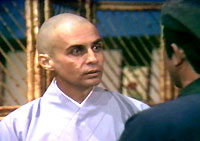
This three part documentary was recorded over 20 years ago by the Kuangchi Program Service, but takes us back 400 years with re-enactments of conversations that would have actually happened between the Jesuit Matteo Ricci and his friend Xu Guangqi. A challenge that all western students of Chinese can relate to, Ricci shows us what it was to struggle through the strokes of a Chinese character before the days of the The Grand Ricci, let alone the brand new digital version. Fittingly Ricci is played by Jesuit Jerry Martinson.

To purchase the full version of the DVD Matteo Ricci in Chinese contact Paul Su or come and visit the Kuangchi Offices in Taipei. Also available are educational documentaries on Matteo Ricci’s good friend Xu Guangqi and two other Jesuits influential in Sino-Western history – Adam Schall von Bell and Francis Xavier. All available in Chinese and English.

Fr Jerry Martinson who acts Matteo Ricci in this film has also been involved in many cross cultural dialogue missions of his own, to hear about them click here.


KPS: Matteo Ricci documentary Part 2/3

Bookmark and Share


KPS Matteo Ricci documentary

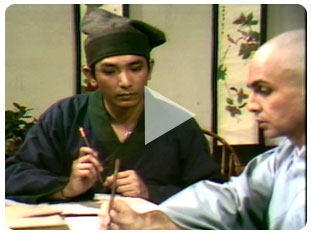
This three part documentary was recorded over 20 years ago by the Kuangchi Program Service, but takes us back 400 years with re-enactments of conversations that would have actually happened between the Jesuit Matteo Ricci and his friend Xu Guangqi. A challenge that all western students of Chinese can relate to, Ricci shows us what it was to struggle through the strokes of a Chinese character before the days of the The Grand Ricci, let alone the brand new digital version. Fittingly Ricci is played by Jesuit Jerry Martinson.

To purchase the full version of the DVD Matteo Ricci in Chinese contact Paul Su or come and visit the Kuangchi Offices in Taipei. Also available are educational documentaries on Matteo Ricci’s good friend Xu Guangqi and two other Jesuits influential in Sino-Western history – Adam Schall von Bell and Francis Xavier. All available in Chinese and English.

Fr Jerry Martinson who acts Matteo Ricci in this film has also been involved in many cross cultural dialogue missions of his own, to hear about them click here.