Category: Uncategorized

Celebrating the Feast of St. Ignatius

Bookmark and Share


31 Days of St. Ignatius
A month-long celebration of Ignatian spirituality.

On July 31, Catholics celebrate the Feast of St. Ignatius. Loyola Press was founded by the Jesuits and we are celebrating our leader for the month of July. Therefore, please join us for a 31-day journey to get to know St. Ignatius better. This calendar has links to information about St. Ignatius and Ignatian Spirituality, reflections, prayers, videos, and activities.


St. Ignatius Download the PDF now


Ignatian Spirituality IgnatianSpirituality.com is a service of Loyola Press, a ministry of the Chicago Province of the Society of Jesus. It offers information on and experiences of Ignatian spirituality from Jesuit and Ignatian sources around the world. IgnatianSpirituality.com serves all audiences-the curious, the knowledgeable, and the expert.
dotMagis dotMagis is a blog about Ignatian spirituality and Jesuit ministry, inspired by Ignatius Loyola’s love of “magis” -the greater, the excellent, the best.


Father General Visits Russia

Bookmark and Share


Father General Visits Russia
At the final mass during the Russian Regional meeting with Fr. General, he was presented with an original icon by the regional superior, Jesuit Fr. Tony Corcoran, (New Orleans Province; left) , Jesuit Clemens Werth (right), in the novitiate chapel in Novosibirsk. Deacon Bredelyev Oleksiy, in the background. (Photo Courtesy Jesuit Fr. Don Doll)

Father General Adolfo Nicolás visited the Russian region from July 4 – 10. The visit began in Novosibirsk where he participated in a meeting of Jesuits working in the region. The theme of the meeting was “Apostolic and Communal Life in the Russian Region: a Challenge/Call to Live in Unity of Minds and Hearts.” The gathering was scheduled for three days and was an occasion for Fr. Nicolás to learn first-hand the opportunities and challenges facing the region, and to offer reflections regarding the future. From Novosibirsk, Father General traveled to Moscow where, on the morning of July 9, he met with representatives of the Department of External Relations of the Orthodox Russian Church. That afternoon, he attended a reception at the St. Thomas Institute, the theology, philosophy and history faculty run by the Jesuits in the Russian capital, and visited with the Apostolic Nuncio, Archbishop Antonio Mennini. The next day, Father General “played tourist” visiting Red Square and other places of interest in Moscow; he also paid a visit to Archbishop Paolo Pezzi of Moscow.

Along the Legal Path

Bookmark and Share


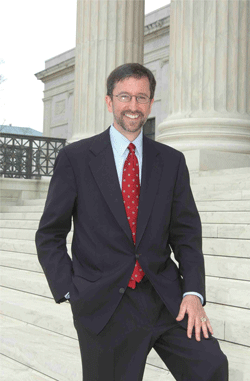
Joseph Cosgrove’s journey as a Catholic lawyer

by GEORGE ANDERSON, S.J.

It’s as much a part of me as my breath.” Those are the words Joseph (Joe) Cosgrove used in a recent interview to describe the strong sense of social justice that has been his since growing up in a small Pennsylvania town. It was a sense that led him into studying both law and theology at the University of Notre Dame as he increasingly became an advocate

Along the Legal Path

for “the outcast,” another phrase of his that came up in a recent conversation. These twin focus points were reinforced through his long-term friendship with the Jesuit peace activist, Daniel Berrigan, who officiated at Cosgrove’s wedding Mass. Yet another formative influence was the actor-activist Martin Sheen, like Fr. Berrigan a close friend. How did Cosgrove come to know two such remarkable figures, as well as Mother Teresa of Calcutta? And how did he also enter into the fields of acting and studio art?

The friendship with Martin Sheen began when the two were introduced by Fr. Berrigan when the actor was working on a social justice film (“You’ve got to meet this fellow,” Berrigan told Cosgrove). Later, Mr. Sheen was involved in a protest in New York against former President Reagan’s Star Wars project. The peaceful demonstration resulted in the arrest of Sheen, Berrigan, Cosgrove and others, all of whom Cosgrove offered to defend gratis in court. Cosgrove first became aware of Martin’s anti-death penalty views on seeing him play the lead in the film, “The Execution of Private Slovik.” Slovik was the only soldier in World War II executed for desertion, and the unjust way Slovik was treated nourished Cosgrove’s commitment to justice and opposition to the death penalty.

Defending the Poor

While pursuing joint degrees in law and theology at the University of Notre Dame (he received both degrees on the same day), Cosgrove’s mother fell ill with cancer. He knew that Fr. Berrigan at the time was working in Manhattan as a volunteer in a hospice for cancer patients. “A mutual friend put us in touch,” Cosgrove said, and he expressed gratitude for “Dan’s being so pastoral with me and my family in a difficult time.” But he added that even earlier, through a teacher at his Catholic high school, he felt an appreciation for Fr. Berrigan and his brother Philip for what he termed “their conscientious witness” during the Vietnam War.

Through their influence and that of others, Cosgrove began to develop a deep belief in God’s love for the disenfranchised of the world. The vast majority of his cases as a criminal defense attorney, he said, have been in the area of representing the poor. Aware that the resources available to public defenders are far more limited than those available to prosecutors (money for expert prosecutorial witnesses like psychiatrists, for example), Cosgrove has became a strong supporter of increased funding for the indigent defense system. “For the better part of the last ten years I’ve been shouting about this very issue,” said Cosgrove, who also serves as president of the Pennsylvania Defense Lawyers Association. “The Sixth Amendment right to counsel is a promise that has all too often not been fulfilled.”

The same impulse to see Christ in the poor brought Cosgrove into contact with Mother Teresa of Calcutta. The two first met in the early 1990s. They spoke about capital punishment and the first Gulf War-to which, like Cosgrove, Mother Teresa was opposed. Cosgrove had written a brief discussing the international law implications of that war, he said, “and early one morning a priest who was talking with her in Rome called me and said, ‘Joe, Mother Teresa is on the line’, and there she was…” Later, Cosgrove would work with Blessed Mother Teresa on several death penalty cases.

Cosgrove has defended several people arrested at non-violent peace demonstrations, including Catholic Workers and activists like John Dear and Martin Sheen, for whom he has served as personal attorney. “My focus in peace activist cases, like many other matters in the criminal justice system, has been to uphold certain basic principles, like presumption of innocence and the right to a fair trial–concepts that can be threatened in the heat of these cases,” he observed, “where public sentiment might be strongly against the defendants.” Otherwise, he continued, “the process isn’t fair and liberty is jeopardized.”

A Role in ‘The West Wing’

It was Martin Sheen who first encouraged Cosgrove to act. He and Cosgrove were working on a project together, and met in Paris where Sheen was filming “The Maid.” Then, in an unexpected complication, an actor in the film abruptly quit on the last day of the filming, and, as Cosgrove explained, “I could speak English and so I got the part.” (This led to his membership in the Screen Actors Guild.) Some years later, when “The West Wing” was being made for television with little expectation that it would become the success it did, Cosgrove was offered a minor part. “I wondered how ‘West Wing’ would succeed. It had no romance, no violence, so how could it be a hit?” But, he went on to say, “it became one of the most well-written, well-acted dramas in television history.” Initially, he was simply asked to advise the producers on a legal issue that was in the script. When a particular Supreme Court issue came up, though, they not only sought him out for advice, but also “cast me as a lawyer in that episode.”

On the day it was filmed, he said, “my character was a Supreme Court attorney, who the reappeared in several later episodes, in 2000, 2001 and 2004.” He mentioned that Martin joked on the set in that episode, which was filmed on a stage in Burbank. After the filming (in which the Supreme Court denies Cosgrove’s motion), Sheen shouted, “You’re not acting! You’re in court and losing-you do that every day!” Cosgrove responded with equal humor, “I guess everybody’s a critic!”

Then as now, Cosgrove was teaching constitutional law at King’s College in Wilkes-Barre, Pa., where he has held the position of adjunct professor of law for two decades. (One of his former students, Patrick J. Murphy, is a Democrat member of the House of Representatives from Pennsylvania.) Last year, he offered a seminar on the Supreme Court that led to a visit with Justice Ruth Bader Ginsburg. “We studied a case that was coming up there, and so I took a group of the students to Washington to hear the oral arguments in the case,” Cosgrove said. Ginzberg invited the group to visit her afterwards in her chambers. Cosgrove had met her on several previous occasions and was himself co-counsel in a death penalty case six years ago, not as the lead counsel but as the “second chair.” Cosgrove was admitted to the bar of the U.S. Supreme Court on the motion of former Attorney General Ramsey Clark, whose father was a Supreme Court justice and with whom Cosgrove had been co-counsel in a federal civil rights case in the past.

From Leprechaun to Judge

Besides his degrees in law and theology from Notre Dame, Joe also has a master’s degree in studio art from Marywood College in Scranton, Pa. He spoke of this aspect of his life as a manifestation of the optimism that infuses all that he does, “whether it’s the minor aspect like my occasional acting, or studying ceramic art.” Along with that hopefulness goes a sense of humor that carries with it a ministerial side. As an undergraduate at Notre Dame, he became a costumed leprechaun mascot at sports events, moving along the sidelines to evoke spirited support for the home teams. He attributes the leprechaun role to his Irish heritage. “Every ethnic group brings something of value to the human community, and one of those things the Irish have brought is a sense of wit and wry humor that transcends even the tragedies of their sometimes historically difficult existence,” he said.

Cosgrove’s turn as a leprechaun put him in contact with Special Olympics and special education groups that were often present both at the sports events and at the Logan Center in South Bend, an organization formed by faculty, students and others that offers opportunities for people with disabilities. “It was a moving aspect of the leprechaun role, sharing with these great kids who bring with them a joyousness,” he said. “Some would call them disabled, but that’s a very limited view of what their lives really are.” For Cosgrove, they are “well-abled” at the most important things-generosity, love, compassion and being non-judgemental. “They taught me a great deal,” he added.

This past January, Cosgrove’s career underwent a shift. He was appointed by the Pennsylvania governor to complete the term of a civil court judge who had been removed from the bench in a corruption scandal. “As a judge, my role in the justice system has vastly changed,” he said. “My personal opinions are set aside, but the most important thing I can do is to assure everyone, no matter their state in life, that they will be treated fairly, respectfully, and have a chance to be heard. That is the essence of justice.”

Will he return to his practice as an attorney when the two years as a judge in Luzern County are over? “I have been fortunate to have always been guided and placed where I needed to be. In two years, I trust that will still be true,” he said. But whatever the future may hold-he is still only in his early 50s-advocacy for the poor and outcast, in one form or another, will surely be a part of what lies ahead, both in terms of his profession and his faith.


George Anderson, S.J., is an associate editor at America.


A shortage of priests: Catholic church struggles to serve its growing membership


by  Shea Zirlott 

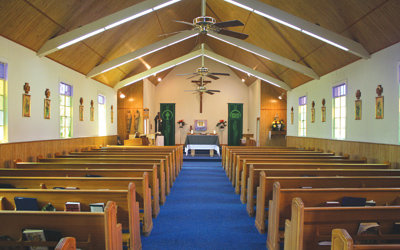
In a small church in west Anniston the Sunday before last, about three dozen faithful were spread out amongst the 25 pews. The pews may not have filled, but parishioners were not all that was missing from All Saints Catholic Church.

There was no priest present, due to a “miscommunication with the cathedral” about plans for a visiting priest to celebrate Mass.

Instead, deacon Mike Cova said his first Mass of many that day to the worshippers gathered in the cozy, 75-year-old church.

Mass without a priest is something the parishioners at All Saints have grown accustomed to over the past two decades, and they have learned to adapt and make the most of their situation.


All Saints Catholic Church in Anniston. Photo: Shea Zirlott/The Anniston Star.

Going without a resident priest dedicated to their parish is an option that many in the congregation prefer to the option they were forced to accept in the past. In the late 1980s, because there were not enough priests to go around, the archdiocese of Birmingham closed the doors of All Saints and merged the congregation with the much larger Sacred Heart of Jesus Catholic Church in Anniston. “We felt like outcasts there,” said parishioner Rose Munford. “We wanted our church back.”

The doors reopened after about a year, and since then Mass has been led by whomever was available, including deacons and local priests who could fit Mass at All Saints in with Mass at their own parishes.

All Saints has not always been without a priest. When the historically African-American church was established in the 1940s, in the midst of Jim Crow and segregation, the church was home to a Catholic school as well.

“I have always felt that we were given a wonderful education because we were exposed to the orders, and we were held to a higher standard than other kids, and learned art and music,” said Munford. “This is what formed me. Their dedication is why I do so much in the community.”

This past year, All Saints had the same priest come every weekend to lead Mass, but he was not solely responsible for All Saints parish. Then the archdiocese assigned him to a bigger church in Birmingham.

“They pulled our priest and left us with no one,” Munford said. “We are smaller and don’t bring in a lot of money. Our money barely keeps us open.”

Munford considers her church to be “a very blessed church that has been very fortunate.”

Many of her fellow parishioners like the experiences and insights that the visiting priests have brought with them throughout the years, saying they have helped them grow as a parish.

Priests declining nationally

In recent years, the Catholic Church has faced a decline in the number of men and women called to vocations – priests, deacons or members of any holy order – especially young men and women in the United States.

Also, a substantial number of older priests have retired from the active priesthood.

The church has been forced to close or reshuffle parishes. Many priests have come from countries such as India, which has a booming Catholic population and has ended up with more priests than it needed.

What some are calling a priest shortage is actually a “relative phenomenon,” according to M. Rev. Mark Lewis, S.J., provincial supervisor of the Jesuits of the New Orleans Province. “Compared to the 1950s, the numbers are lower, but the biggest drop in clergy numbers seems to have occurred in the 1970s, and it has leveled off now,” he said. “We notice it more because the population of priests is now divided between the much older majority and a growing number of young priests, a group too small to replace every older priest.”

Locally, there are two Catholic churches in Anniston, one in Jacksonville, one in Piedmont and a Catholic school in Anniston.

In the archdiocese of Birmingham, which covers 54 parishes in the state, the number of priests has declined while the number of Catholics has grown, according to Rev. John Martignoni, director of the office of new evangelization and stewardship.

There are 103 priests in the diocese for those 54 parishes. But some parishes do not have a priest, and some share priests amongst parishes. There are 89,000 Catholics in the diocese, which averages out to one priest for every 864 Catholics.

Parishes have been affected because each priest is responsible for more people than in decades past. The ratio, Martignoni said, makes it “harder on the individual priests because they are busier with sacraments, and it is making the priest’s schedules more hectic and their lives busier.”

The archdiocese is taking steps to reverse the trend, Martignoni said, working with a vocations consultant to boost the number of seminary students over the next five to 15 years.

There are many factors influencing the decline in seminarians, including the rising cost of seminary and the recent sexual abuse scandals that have rocked the Catholic Church. Lewis said the real concern should be about quality, not quantity. He thinks changes arising from the abuse crisis, including psychological screenings, have helped the church ordain better priests. “Increasingly, the need for good, holy and well-adjusted priests comes to the forefront,” he said. “If there are fewer, they should be better, stay healthier and be good leaders of the community.”

Not just a Catholic crisis

Rev. Bryan Lowe of Sacred Heart Catholic Church in Anniston says the decline in ministries and vocations is not unique to Catholicism.

“It is just not seen as something valuable to do by as many young people as used to see it as something valuable,” he said.

Society has pushed some, he said, to be overly concerned with how much money they can make, or how prestigious they can become. He thinks the church needs to introduce the idea of vocation to its young people, so that when they are thinking about what they will become, religious life can at least cross their minds.

Rev. James Macey of St. Charles Borromeo Catholic Church in Jacksonville became a deacon 10 years ago. After his wife died, he began the process to become a priest.

Macey is part of a growing trend of “second career priests.” Macey is a retired military officer and former university professor. Lowe of Sacred Heart Catholic Church is also a second career priest, answering the call after also retiring from the military.

Macey thinks the decline in religious vocations is due, at least in part, to the culture in America.

“I think it has to do with a general deterioration of moral values, that there is this move away from faith and morals. We live in a very secular society,” he said. “A religion that says, ‘thou shalt’ and ‘shalt not’… these aren’t conditions that are conducive to generating a lot of vocations.”

The rise of deacons

As the number of priests has declined, there has been a rise in the number of deacons, like Mike Cova. Deacons are not priests, but can perform many of the tasks of priests. They can lead Mass, bury the dead, marry, baptize and visit the sick. Deacons cannot give absolution by hearing confessions, or consecrate the Eucharist (also called transubstantiation, when the bread and wine become the body and blood of Christ). Instead, deacons can lead Mass and use previously consecrated bread and wine.

Prior to 1961, there were no deacons in the Catholic Church, according to Cova. Today, there are close to 16,000. There are 54 deacons in the archdiocese of Birmingham.

One of the major differences between deacons and priests is marital status. Priests are “married to the church,” whereas deacons are allowed to be married. According to Cova, 95 percent of the deacons in the United States are married. (Interestingly, there are no deacons in India because there is such a large number of priests in the country.)

Cova acknowledges there may be a shortage of priests if you just look at the numbers, but thinks the real shortage of priests is because “we want priests to be accommodating for us.”

“We are in a society of convenience. We want it when we want it, and we want it now,” he said. Parishioners want to be able to go to Mass at a time that is convenient for them, he explained, and not necessarily when the clergy is available.

He pointed out that there have been congregations in remote areas that have survived for centuries without the constant guidance of a priest. Instead, the local people carried on and held the church together as a community.

The future of All Saints

Munford said she looks forward to a time when All Saints will once again have its own priest. She feels the church needs a priest who will be able to bring more people into the congregation, especially children. The congregation now consists of mostly adults with very few children.

“If you don’t bring younger people in to carry on, the church will stop existing,” she said.

Munford has high hopes for the future of her church, and the potential of her fellow parishioners. “Church is a community. If we really learn the Word, any of us should be able to go up and read the Scripture and give a sermon, if we have learned God’s word and speak it in his name.”

There is potential good news for All Saints. According to Cova, parishioners can expect to see the same priest presiding over Mass every Sunday in the near future. The archdiocese has realigned some priests, although the changes have not gone into effect yet.

He said the parishioners at All Saints have dealt well with not having a full-time priest, but he knows they “would be tickled pink to be able to have a daily Mass.”

Read more: Anniston Star – A shortage of priests Catholic church struggles to serve its growing membership

 

A shortage of priests: Catholic church struggles to serve its growing membership

Bookmark and Share


by  Shea Zirlott 

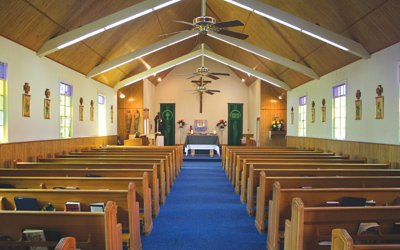
In a small church in west Anniston the Sunday before last, about three dozen faithful were spread out amongst the 25 pews. The pews may not have filled, but parishioners were not all that was missing from All Saints Catholic Church.

There was no priest present, due to a “miscommunication with the cathedral” about plans for a visiting priest to celebrate Mass.

Instead, deacon Mike Cova said his first Mass of many that day to the worshippers gathered in the cozy, 75-year-old church.

Mass without a priest is something the parishioners at All Saints have grown accustomed to over the past two decades, and they have learned to adapt and make the most of their situation.


All Saints Catholic Church in Anniston. Photo: Shea Zirlott/The Anniston Star.

Going without a resident priest dedicated to their parish is an option that many in the congregation prefer to the option they were forced to accept in the past. In the late 1980s, because there were not enough priests to go around, the archdiocese of Birmingham closed the doors of All Saints and merged the congregation with the much larger Sacred Heart of Jesus Catholic Church in Anniston. “We felt like outcasts there,” said parishioner Rose Munford. “We wanted our church back.”

The doors reopened after about a year, and since then Mass has been led by whomever was available, including deacons and local priests who could fit Mass at All Saints in with Mass at their own parishes.

All Saints has not always been without a priest. When the historically African-American church was established in the 1940s, in the midst of Jim Crow and segregation, the church was home to a Catholic school as well.

“I have always felt that we were given a wonderful education because we were exposed to the orders, and we were held to a higher standard than other kids, and learned art and music,” said Munford. “This is what formed me. Their dedication is why I do so much in the community.”

This past year, All Saints had the same priest come every weekend to lead Mass, but he was not solely responsible for All Saints parish. Then the archdiocese assigned him to a bigger church in Birmingham.

“They pulled our priest and left us with no one,” Munford said. “We are smaller and don’t bring in a lot of money. Our money barely keeps us open.”

Munford considers her church to be “a very blessed church that has been very fortunate.”

Many of her fellow parishioners like the experiences and insights that the visiting priests have brought with them throughout the years, saying they have helped them grow as a parish.

Priests declining nationally

In recent years, the Catholic Church has faced a decline in the number of men and women called to vocations – priests, deacons or members of any holy order – especially young men and women in the United States.

Also, a substantial number of older priests have retired from the active priesthood.

The church has been forced to close or reshuffle parishes. Many priests have come from countries such as India, which has a booming Catholic population and has ended up with more priests than it needed.

What some are calling a priest shortage is actually a “relative phenomenon,” according to M. Rev. Mark Lewis, S.J., provincial supervisor of the Jesuits of the New Orleans Province. “Compared to the 1950s, the numbers are lower, but the biggest drop in clergy numbers seems to have occurred in the 1970s, and it has leveled off now,” he said. “We notice it more because the population of priests is now divided between the much older majority and a growing number of young priests, a group too small to replace every older priest.”

Locally, there are two Catholic churches in Anniston, one in Jacksonville, one in Piedmont and a Catholic school in Anniston.

In the archdiocese of Birmingham, which covers 54 parishes in the state, the number of priests has declined while the number of Catholics has grown, according to Rev. John Martignoni, director of the office of new evangelization and stewardship.

There are 103 priests in the diocese for those 54 parishes. But some parishes do not have a priest, and some share priests amongst parishes. There are 89,000 Catholics in the diocese, which averages out to one priest for every 864 Catholics.

Parishes have been affected because each priest is responsible for more people than in decades past. The ratio, Martignoni said, makes it “harder on the individual priests because they are busier with sacraments, and it is making the priest’s schedules more hectic and their lives busier.”

The archdiocese is taking steps to reverse the trend, Martignoni said, working with a vocations consultant to boost the number of seminary students over the next five to 15 years.

There are many factors influencing the decline in seminarians, including the rising cost of seminary and the recent sexual abuse scandals that have rocked the Catholic Church. Lewis said the real concern should be about quality, not quantity. He thinks changes arising from the abuse crisis, including psychological screenings, have helped the church ordain better priests. “Increasingly, the need for good, holy and well-adjusted priests comes to the forefront,” he said. “If there are fewer, they should be better, stay healthier and be good leaders of the community.”

Not just a Catholic crisis

Rev. Bryan Lowe of Sacred Heart Catholic Church in Anniston says the decline in ministries and vocations is not unique to Catholicism.

“It is just not seen as something valuable to do by as many young people as used to see it as something valuable,” he said.

Society has pushed some, he said, to be overly concerned with how much money they can make, or how prestigious they can become. He thinks the church needs to introduce the idea of vocation to its young people, so that when they are thinking about what they will become, religious life can at least cross their minds.

Rev. James Macey of St. Charles Borromeo Catholic Church in Jacksonville became a deacon 10 years ago. After his wife died, he began the process to become a priest.

Macey is part of a growing trend of “second career priests.” Macey is a retired military officer and former university professor. Lowe of Sacred Heart Catholic Church is also a second career priest, answering the call after also retiring from the military.

Macey thinks the decline in religious vocations is due, at least in part, to the culture in America.

“I think it has to do with a general deterioration of moral values, that there is this move away from faith and morals. We live in a very secular society,” he said. “A religion that says, ‘thou shalt’ and ‘shalt not’… these aren’t conditions that are conducive to generating a lot of vocations.”

The rise of deacons

As the number of priests has declined, there has been a rise in the number of deacons, like Mike Cova. Deacons are not priests, but can perform many of the tasks of priests. They can lead Mass, bury the dead, marry, baptize and visit the sick. Deacons cannot give absolution by hearing confessions, or consecrate the Eucharist (also called transubstantiation, when the bread and wine become the body and blood of Christ). Instead, deacons can lead Mass and use previously consecrated bread and wine.

Prior to 1961, there were no deacons in the Catholic Church, according to Cova. Today, there are close to 16,000. There are 54 deacons in the archdiocese of Birmingham.

One of the major differences between deacons and priests is marital status. Priests are “married to the church,” whereas deacons are allowed to be married. According to Cova, 95 percent of the deacons in the United States are married. (Interestingly, there are no deacons in India because there is such a large number of priests in the country.)

Cova acknowledges there may be a shortage of priests if you just look at the numbers, but thinks the real shortage of priests is because “we want priests to be accommodating for us.”

“We are in a society of convenience. We want it when we want it, and we want it now,” he said. Parishioners want to be able to go to Mass at a time that is convenient for them, he explained, and not necessarily when the clergy is available.

He pointed out that there have been congregations in remote areas that have survived for centuries without the constant guidance of a priest. Instead, the local people carried on and held the church together as a community.

The future of All Saints

Munford said she looks forward to a time when All Saints will once again have its own priest. She feels the church needs a priest who will be able to bring more people into the congregation, especially children. The congregation now consists of mostly adults with very few children.

“If you don’t bring younger people in to carry on, the church will stop existing,” she said.

Munford has high hopes for the future of her church, and the potential of her fellow parishioners. “Church is a community. If we really learn the Word, any of us should be able to go up and read the Scripture and give a sermon, if we have learned God’s word and speak it in his name.”

There is potential good news for All Saints. According to Cova, parishioners can expect to see the same priest presiding over Mass every Sunday in the near future. The archdiocese has realigned some priests, although the changes have not gone into effect yet.

He said the parishioners at All Saints have dealt well with not having a full-time priest, but he knows they “would be tickled pink to be able to have a daily Mass.”

Read more: Anniston Star – A shortage of priests Catholic church struggles to serve its growing membership


Meeting the Divine Mother: Amritanandamayi and Me

Bookmark and Share


by FRANCIS X. CLOONEY, S.J.

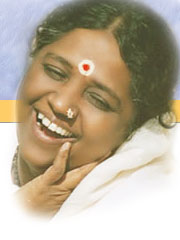
Marlborough, MA. I was invited to speak last evening at an appearance in one of the Boston suburbs of the famous modern Indian teacher, Mata Amritanandamayi (literally, “the mother,” “the one entirely composed of bliss in the imperishable”)- Amma, mother, who tours the world regularly, and has been widely honored for her charitable works for the poor in many places. She is also famous for embracing those who come to see her. For she is also “the hugging guru,” and is known to receive for hours at a time whoever comes to her, embracing them warmly and with a loving smile. She is also considered, by many of her disciples, simply a divine person come down to earth.

So I had the opportunity to speak a few words in introduction to her own lecture (in Malayalam, her native South Indian language, with a subsequent translation read by a discipline) and subsequent devotional hymns and a long evening of embraces. I was invited partly as a specialist in Hindu-Christian relations, and partly, I suspect, as a Harvard professor. But what to do, speaking a few word before nearly 1000 people (mostly Western, most “converted” to being her devotees) gathered to see this person they know to be divine?

Meeting the Divine Mother: Amritanandamayi and Me

One might turn down such a request, of course, but if one does accept it, how to speak in a way that honors the occasion, respects her loving presence and good works, while yet also communicating something of Christian love too? It is quite a challenge to weave everything together in the right balance, definitely a Catholic and definitely standing before so large a group of very sincere devotee of Amma. So I pondered this for days, finally accepted the invitation, and eventually came up with the speech below; I showed up in my Roman collar, gave my talk, garlanded her, was embraced by her, spoke with her in Tamil for a brief moment, and enjoyed it all. But see what you think of my little speech. Did I say too much? too little? would you agree to speak on such an occasion?

Here it is (though also click here for the summary posted by Amma’s organization):

“Namaste, vanakkam, good evening. It is a grace to be here tonight with you. I know that we all travel by so many personal paths, yet by a singular invitation we are here together for a time, and that is good that it is so. I offer you this ancient Jewish blessing as we collect ourselves: “May the Lord bless us and keep us; / may the Lord make his face to shine upon us, / and be gracious to us; / may the Lord lift up his face upon us, / and give us peace. Amen.” (Numbers 6)

“We are here tonight, gathered together with Amritanandamayi Amma. When we speak this name – Amritananda-mayi, “perfect, complete in the bliss of the imperishable” – the Sanskrit scholars among us may think first on a philosophical level, perhaps turning to the Upanisads to probe the meaning of “bliss” and “the imperishable.” We may eventually think of the undying spark within all beings, and of a bliss grounded in the highest immortal Reality.

“But we also know that this name – Amritanandamayi – tells us something simpler and more immediate. We are invited to see how our guest – our host – is open to the undying Spirit that blows where it will – in, through, and around each of us. With her tonight, we learn again to stop covering our light with a bushel basket, and to share the bliss that is within us.

“I am told that Amma does not teach by many words, that she offers no elaborate instructions. When she speaks to you, I have been told, it is a living word that exists not as an idea or lesson, but as the intimate dialogue that happens when two people meet one another, face to face, and receive at some deeper level the gift of words so simple that they have more to do with receiving that giving information, listening than talking. This is the way it should be. Far better, tonight, is a true word that helps us as we need it right now, perhaps even before we know what that need is.

“I think you know that my guru, the only guru I know as my own, is Jesus. He spoke many memorable words as the teacher, living words that surprised and awakened and guided his listeners, but most often he spoke just the word or two needed to change a person’s life: get up and

Meeting the Divine Mother: Amritanandamayi and Me

walk; you are forgiven, go in peace; do not be afraid, I am with you always; come, follow me; go forth and preach the Good News, I am with you always. Think too of Lord Krsna, who said many things to Arjuna, but in the end said a simple word that was enough: “ma sucah, grieve no more.” Bhagavad Gita 18.66)

“And so tonight we listen carefully, we listen in stillness and by song, as we once again become witnesses to God promising to be with us always.

“We also know very well that Amma’s words blossom into the doing of good deeds, acts of compassion. This is what St. Francis meant when he said, ‘Preach the Good News always; use words only when necessary.’ Amma’s concrete and real works of mercy are known everywhere, hers is a faith lived out in compassion, love realized in feeding the hungry, giving shelter to the homeless.

“And so it should be. As St. John puts it, ‘God is love, and those who abide in love abide in God, and God abides in them… There is no fear in love, but perfect love casts out fear…. We love because God first loved us. But those who do not love the brother or sister they see, cannot love God whom they have not seen. The commandment we have from Jesus is this: those who love God must love their brothers and sisters as well.’ (I John 4) True wisdom is not separate from compassion: this core insight gives life once and again, and it emerges with the greatest force when the message and messenger are one.

“From the first time I heard about Amma I, like many of you, have known how she hugs people, envelopes all who come to her in her embrace. This too speaks more than words, showing us in visible form that no one is untouchable, no one is to be kept at a distance, and no one need be the alien or exile, shunned by others. Such compassion flows around us, like a river that recognizes no stopping point. As Jesus said, “The water that I give will become in you a spring of water welling up to eternal life.” (John 4)

“When Jesus came, he lay his hand upon the leper and the outcaste, he called the little children unto himself. He was kissed, embraced, touched by those who simply wanted to be where he was. He ate with the sinner and the prostitute, he dined in the house of the tax collector and the Pharisee. In love, the scorned woman washed his feet with her tears. He stretched forth his hands, that he might be nailed to the cross of our suffering and despair. Or think of Rama, who came into the home of Sabari the outcaste woman, accepted her gift, and embraced her.

“It seems right then that Amma, a mother indeed, should open herself to all who will come near to her, and by a hug offer so intimate a pathway to bliss: a smile, just a word, a deed that is good news for the lonely and the brokenhearted today – and still more simply, the loving embrace that welcomes us home. Such is the great gift we share tonight.

“I close by sharing with you the very first Indian prayer that touched my heart, Rabindranath Tagore’s words of recognition of God who is wondrously near to us:

‘You have made me known to friends whom I knew not. / You have given me seats in homes not my own. / You have brought the distant near / and made a sister of the stranger… / Through birth and death, / in this world or in others, / wherever you lead me / it is you, the same, / the one companion of my endless life / who ever links my heart / with bonds of joy to the unfamiliar. / When one knows you, / then alien there is none, / then no door is shut. / Oh, grant me my prayer / that I may never lose / the bliss of the touch of the one / in the play of the many.'” (from Gitanjali; adapted)

Amen.

Francis X. Clooney


Podcast : Catholic Workers

Bookmark and Share


Podcast : Catholic Workers

Applications to religious volunteer programs have risen dramatically this year as a result of the shrinking job market. In “Will Work for Free,” assistant editor Kerry Weber looks at how the influx of volunteers and the poor economic conditions are affecting programs like the Jesuit Volunteer Corps. On our podcast Kerry discusses why she chose to spend a year with the Mercy Volunteer Corps after graduating from college and what spiritual lessons she learned from the sisters of Mercy and the families she worked with on an Indian reservation.


Download MP3

Narratives: J. Stanny SJ, SHAKTI-LAHRC, Gujarat, India

Bookmark and Share


“As he saw the crowds, his heart was filled with pity for them, because they were worried and helpless, like sheep without a shepherd.” (Mt. 9:36)


Mass weddings unite Gujarat tribal groups thumbnail
Couples waiting to get married

When I started my legal ministry among the Adivasis/Tribals/Indigenous Peoples in Gujarat, India, as part of the SHAKTI-LAHRC Jesuit human rights centre, I had a feeling somewhat similar to that of our Master when he said “They were like sheep without a shepherd”. In India the Adivasi population is 8%, in Gujarat 15% and in the area where I am working it is as high as 65 to 98%. The Adivasis have faced, and continue to face various challenges. Among these are a crisis over Adivasi identity, erosion of their culture, unity and dignity, loss of control over their natural resources, and violations of their Human Rights. One of the main causes is a lack of value-based Adivasi “shepherdship”, which could lead these people to green pastures! At this juncture, the hope was that “one day, their own people could lead themselves”. With this hope, we started using our legal ministry to foster Adivasi leadership. Today there are some signs that our effort is bearing fruits.

42 years ago, a major dam called the Ukai dam was built, displacing over 150 Adivasi villages without proper compensation and rehabilitation. That dam was supposed to have had two main canals: The Left canal going beyond Surat city, and the Right canal irrigating 59 Adivasi villages. The Left canal is functioning, but not the Right one. The people believed that their leaders would see to it that it would, but nothing happened. Three years ago, some awakening was brought about among the people and a few Adivasi leaders took the initiative. They blocked the roads and forced the Government to give them a promise. That promise has not been kept. So they have taken the Government to the High Court of Gujarat to fulfil its promise.

In a remote town called Songadh, 250 Adivasi men and women have been selling vegetables for many years. Now they are being pushed out by outsiders and harassed by different elements. They (the sons and daughters of the soil) have no place to sell their goods, reminding us of Jesus’ saying, “The Son of man has no place to lay his head”. The women took the initiative, went to different authorities but all in vain. Now they have taken the Municipal authorities to the High Court to redress their rights.

Several such struggles are on by the people to gain their dignity and restore their unity and identity. Their ongoing struggle for getting their rights over forestlands is a good example of the rising level of awareness and growing Adivasi leadership.

The celebration of Indigenous Peoples Day, the yearly Adivasi Cultural Festival at Songadh and the recently concluded Mass Weddings in which 29 couples of different Adivasi groups participated, ignoring their various sub groups, religious, political, geographical differences are all indications of the gradual transformation that is taking place.

The Mass Weddings were a particular occasion for rejoicing, since in India (and maybe everywhere in the world), people spend a lot money on weddings. This does not bother the well-to-do, but what about the poor who cannot afford it? Deep down everyone would like his or her marriage to be celebrated in grand style, as indeed every parent would like perform their children’s weddings in grand style. But poverty is a very real issue and leads quite a few to elope and start living together. This causes problems for the community. Even of those who are married very few obtain legal registration of the marriage, and the couples and their children are then deprived of Government welfare schemes.

The Mass wedding was planned keeping these things in mind. It served as a platform for many to have their weddings in style with no expense and allowed them to receive gifts from others. Their marriages also get legally registered and they are then eligible for benefits from government schemes.

All these initiatives are helping to bring together all the Adivasis as one Community on one platform and to shout with confidence, joy and pride the slogan, “Jai Adivasi, Jago Adivasi” (Victory to the Adivasis, Awaken O Adivasis!).


J. Stanny SJ (Jebamalai Stanislaus)

SHAKTI-LAHRC (Legal Aid and Human Rights Centre)

Songadh, Gujarat, India


Read a news item about the mass wedding and see pictures here.


Jesuit Jim Siwicki on the Brother’s Vocation

Bookmark and Share


Where does a Jesuit come from?

Why does he join the Society of Jesus?

How does he know his calling?

The Jesuit Conference of the United States has launched a new video series interviewing Jesuits from across the country discussing their vocations, their various paths to becoming a Jesuit and what it has meant to them to answer God’s call. National Jesuit News will feature a new video interview each week. You can watch additional videos by going to the Jesuits Revealed channel on YouTube.

Today’s video features Jesuit Brother Jim Siwicki discussing the unique calling for Jesuits who are brothers. Fr. Siwicki is a Jesuit from the California Province of the Society of Jesus where he is the vocation director for the province. You can watch additional videos with Siwicki here and here at the Jesuits Revealed channel on YouTube.


Philippine prelates bid farewell to Bishop Claver

Bookmark and Share


By Nj Viehland, Quezon City

Philippine prelates bid farewell to Bishop Claver thumbnail
Cardinal Gaudencio Rosales of Manila incenses Bishop Francisco Claver’s coffin

More than 50 Philippine bishops paid their last respects to Jesuit Bishop Francisco Claver during his funeral Mass in Quezon City July 7.

The late bishop was one of Asia’s greatest Church leaders, Oblate Archbishop Orlando Quevedo told the gathering, which included priests, nuns and lay Church workers.

He also had a keen eye for detail, seen in his supervision of construction projects inMalaybalay diocese, said Jesuit Father Calvin Poulin in his homily.

Father Poulin was the late bishop’s vicar general, secretary and companion during his first assignment as bishop in Malaybalay in the southern Philippines in 1969.

Cardinal Gaudencio Rosales of Manila presided over the Mass, held at the Jesuits’ Loyola House of Studies chapel, and concelebrated by Cardinal Ricardo Vidal of Cebu and Archbishop Edward Joseph Adams, apostolic nuncio to the Philippines.

Bishop Claver was later buried at the Jesuit Sacred Heart Novitiate cemetery in Novaliches, Quezon City.

The late prelate was born in Bontoc, Mountain Province, in 1929. He entered the Society of Jesus on May 30, 1948, and was ordained a priest in 1961 after completing theology studies at Woodstock College in Maryland, US.

He obtained a master’s degree in anthropology from the Jesuit Ateneo de Manila and later a doctorate in the same field from the University of Colorado.

He served as first bishop of Malaybalay from 1969-1984 and bishop of his home vicariate of Bontoc-Lagawe from 1995-2004.

In between these assignments and even during them, he taught and wrote articles on social justice and violence.

He drafted the 1986 Philippine bishops’ statement believed to have triggered the People Power movement that unseated President Ferdinand Marcos.

Bishop Claver died on July 1 from pulmonary embolism, a blood clot in the lung. He was 81.