Category: Uncategorized

‘China Trade’ Merchants and Artists

Bookmark and Share


MRI International Workshop 2011


Date
2 – 3 March 2011


Place

Institute For Tourism Studies (IFT) Auditorium, Macau


Language 

English


Contact 

[email protected]

In his article, “A Seller of ‘Sing-Songs'”, on the foreign trade conducted in Guangzhou and Macau in the first half of the nineteenth century, J.M. Braga rhetorically asked if the activities of the London merchant John Henry Cox had “contributed not a little to the spread of those notions of free trade which took hold of the consciousness of an industrialized Britain and, in course of time, to an awakening of the East”.

Since Braga’s pioneering article was published by the University of Hong Kong in 1964, a spate of publications has appeared, discussing not only the goods, but also the art that was produced for export to the West. Following Carl Crossman’s 1970s writings on the decorative arts of the China trade, art collections and art exhibitions of significant cultural value have mushroomed in China, Europe and the U.S., as well as in Hong Kong and Macau. They attest to the importance of an era that has had such a dramatic impact on the world that we know today.

The present Workshop invites papers that discuss, preferably as a result of recent research, historical, economic and artistic developments that took place from approximately the 1760s to the 1860s in Guangzhou, Macau and Hong Kong. The first decade has been chosen as starting point because of its historical implications. The Chinese guild trading system known to Westerners as the 公行 Cohong had existed since the mid-seventeenth century. However, it was the restriction of the European trade to Guangzhou from 1759 on, up to the Treaty of Nanjing in 1842 that resulted in a more politically complex system of trade between China, Europe and the Americas, a trade that also gave rise to a large variety of luxury items and artifacts. The 1860s have been chosen as cut-off date because it was the preceding century that saw the production of most of the works of art and craftsmanship that have come to define the art of the China trade today.


Main Themes:

  • The Dutch, British, Swedish, Danish, and other East India companies and their headquarters and main trading interests and merchandise in Guangzhou.
  • The East India Companies and their headquarters in Macau.
  • The relations between the 公行 Cohong and Western merchants after 1760.
  • Unstudied aspects of the Thirteen Factories of Guangzhou.
  • The demise of the Lisbon-Macau-Guangzhou Portuguese trade, and the trans-Pacific Acapulco-Manila Spanish trade.
  • Export painting and art made for the China trade.
  • “China Trade” art in Guangzhou, Macau, Hong Kong and elsewhere in China.
  • China trade museum collections in China and the West.
  • Shipwrecks, rescue and restoration projects that throw light on the China trade.
  • Individual personalities, art collectors and chroniclers of the China trade.
  • Contemporary literature and publications in Macau.


Date
2 – 3 March 2011


Venue

Auditorium, Team Building, 
Institute For Tourism Studies
(Instituto de Formação Turística, IFT) 
Macau


 Languages

English


 Organising Institution

 
澳 門 利 氏 學 社 
INSTITUTO RICCI de MACAU
MACAU RICCI INSTITUTE
Macau SAR, China


Contact us


Celebrating Advent with Your Family

Bookmark and Share


When we think of New Year’s celebrations, we usually think of party time. It’s time to let the old year go. We anticipate the new year by making resolutions, promising changes in behavior.

As Christians, we celebrate the arrival of a new liturgical year differently. The new year that begins on the first Sunday of Advent is a quiet one. In the readings for the four Sundays of Advent, we remember the time when people waited in anticipation for the coming of the Messiah. And while we know that the Messiah has come in Jesus Christ, and we have remembered his life, death, resurrection and Ascension many times, we can still reflect on and celebrate the newness of his coming once again.

What is great about celebrating the coming of Jesus with children is that they help us approach the season with fresh eyes and insight. They present us with a challenge and an opportunity. The challenge they present is the way they soak up the values of the culture that has had them anticipating Christmas since the beginning of November. The opportunity they present is that we can introduce them to the timeless rituals celebrating the coming of the Messiah that will add depth to their spiritual lives.

There are a number of ways families can celebrate the season of Advent:

Make an Advent wreath and place it in the middle of the dining room table. An Advent wreath consists of a frame holding four candles placed inside a circle of evergreens. The greenery in the wreath symbolizes the promised new life in Jesus. The four candles denote the four Sundays of Advent. There are three purple candles and one rose candle. Purple is a sign of penance, and rose is the color denoting the anticipation of joy. Light a candle on each Sunday evening of Advent, saying a short prayer or singing a verse of “O Come, O Come Emmanuel.” The light of the candles represents the light coming into the world as we prepare to celebrate Jesus’ birth.

Advent calendars are available at many gift stores. The calendar consists of two pieces of cardboard on top of each other. Twenty-four doors are cut out of the top layer. One door is opened each day from December 1 through December 24, revealing a picture.

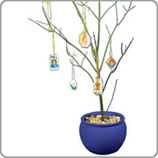
There is a long tradition in Christian art of depicting the Jesse Tree, a symbolic tree or vine with spreading branches on which there are images depicting the genealogy of Jesus. There are several variations of the Jesse Tree. In one variation, each ornament has a picture on one side and a Scripture passage on the other. An ornament is hung on the tree every day during Advent.
With the celebration of Advent each year, everything old can be new again. Each year gives ourselves and our family an opportunity to remember and anticipate the celebration of the birth of Jesus on Christmas morning.

Jim Campbell is the author of 52 Simple Ways to Talk to Your Kids about Faith: Opportunities for Catholic Families to Share God’s Love. He is also a father of two, a grandfather of six, a religious educator, and an author. He is the coauthor of the Finding God religious education program and the general editor of the Harper’s New American Bible Study Program.

Opera opens the door into The Memory Palace of Matteo Ricci

Bookmark and Share


HONG KONG (SE): A predominately local team staged the world premiere of The Memory Palace of Matteo Ricci at St. Ignatius’ Chapel in the grounds of Wah Yan College, in Kowloon, on November 5.

Commemorating the 400th anniversary of the death of the great Jesuit missionary to China, Father Matteo Ricci, a packed house heard New York-based Tian Haojiang sing across the boundaries of the old and the new, as electronic music was blended with traditional opera, reflecting the life of a missionary who discarded the conventional to cross boundaries of culture.

While the many events that have been staged around the world in honour of the great missionary have depicted the success of the first westerner to engage Chinese culture in a meaningful way, Tian portrays the inner life struggle of a man and a priest pursuing a lifetime dream, the success of which is ultimately measured by divine approbation, not his own ambitions.

In 1578, at the age of 26, Father Ricci left his native Italy with the dream of inviting the Chinese people to roam the vast memory palace of God’s love that he had meticulously constructed in his mind and filled with the images of what he regarded as the important things in a Christian life. And, in contrast to the conflicts he left behind in his native Europe, he was inviting them to roam in peace.

Leaving behind a Christian continent plagued by wars that were marked by infidel bashing, his missionary journey quickly brought him face to face with the reality of his chosen vocation, in a land where the God he loved so intimately appeared to be as foreign as he did.

His words of Christian comfort to a dying African slave on board ship stung his ears and pierced his heart. It was a first taste for Father Ricci of the blank wall he was facing. While his prayer for the slave expressed the hope that his forced servitude may bequeath hope for others, it was uttered more in the hope that his own chosen servitude may be fruitful.

In Macau, he meets the riddles of language and on the mainland grapples with the conundrums presented by his own foreignness, as he painstakingly searches for the path to the inner sanctum of the emperor of China, whom he dreams of bringing to meet the son of God. He delights as people enter his memory palace, but is disappointed when they only stop to study the clocks, the maps and the other scientific knowledge he has filed away, and not to gaze at the beauty of the images of his God displayed on its walls.

But he loves with persistence and is eventually rewarded with the key to his dream. As Tian commands the music of triumph, he accompanies Father Ricci away from the mundane, as he marches towards the climax of years of preparation, an audience with the emperor, and the scent of his euphoria wafts on the air of the chapel.
However, the sweetness of success is quickly dissolved in the bitter sight of an empty throne. It is the despair of his failure. He is hung on his own cross. He staggers from the palace in Peking into the dust storm of Sodom. Once again his words of Christian solace bring pain to the ears he wants to comfort. He is lost. He does not know if he is in Rome or Peking. Only the comforting words of his beloved Blessed Mother remain.

The puppet children that weave their way through the operatic performance knock on the door of his memory palace. But his dream has died. The door is closed. Father Ricci is dead.

As Tian sings his funeral, one question remains. How can we dream the dreams of God? Producer, director and designer, Matthias Woo, notes, “Once you believe, you will stick to the path until the end.” The Blessed Mother reminded Father Ricci that he would be forever remembered for devoting his whole life to spreading the word of God with peace.

Centuries later, Bishop John Blowick came to the same realisation, as he watched the institutions of his diocese of Hanyang being dismantled by the communist armies. He reflected, “We did not come to convert China, but to do the will of God.”

In the life of Father Ricci, it is the love for peace and the diligence of persistence that appeal to Tian, whose own dream is to sing peace to the world. Woo has a desire to bring art and religion together. He told the Sunday Examiner, “Religion and art go up and down together. In a sophisticated society like Hong Kong, things get centralised into one system. It is a sure way to create a mediocre world.”

However, in Father Ricci, he sees a man who was aware of the limitations created by the boxes we cage ourselves within. He says that in the same way as the missionary of the 16th and 17th centuries, we too must be aware of those limitations and “remain curious about the world beyond the boxes.”

Woo says that for this reason, the production of Father Ricci’s memory palace is abstract, visual and experimental. The images projected onto the wall behind the altar in the chapel by the Zuni Icosahedron organisation, are an invitation to imagine St. Peter walking on the water, something which Father Ricci craved to do as he fretted for an early convert drowning in a shipwreck.

Next, a dapper-looking Father Ricci, affecting a somewhat Chinese-style appearance, is beckoning visitors to his memory palace, then comes the chaos of Sodom and, finally, the mother’s comfort, in Our Blessed Mother.

The Memory Palace of Matteo Ricci portrays mission as foreign to the wisdom of the domesticated. It is a challenge to the accepted conversation of any day and invites a search for God in places and faces not yet delved.

The fantasy puppets invite the audience to leave the box of convention and step into Father Ricci’s world.

As he sought to bring a love and a peace to a people of another land, as he searched to touch the dreams of God, Woo says that each person in the audience responds to Father Ricci’s dream in their own way. They can escape, if just for just 90 minutes, the museums of custom that cage the imagination.

JRS commemorates 30 years of putting refugees first

Bookmark and Share


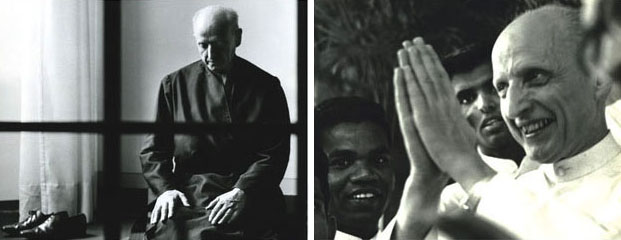
Fr. Pedro Arrupe, S.J., founded Jesuit Refugee Service in 1980. (JRS)

Fr. Pedro Arrupe, S.J., founded Jesuit Refugee Service in 1980. (JRS)

(Washington, D.C.) – On November 14, 1980 – in a world dominated by ideology and repression – Jesuits moved to meet the humanitarian and educational needs of the Vietnamese boat people, and Jesuit Refugee Service was born.

As we mark the 30th anniversary of the founding of Jesuit Refugee Service by Fr. General Pedro Arrupe, S.J., the reality of our modern world is quite sobering. There are tens of millions more refugees, internally displaced people, and asylum seekers today than there were in 1980.

“Natural disasters such as the earthquake in Haiti and political tensions such as those now threatening the extremely tenuous peace in Southern Sudan present us with both the opportunity and the challenge to respond to the needs of desperate people,” said Jesuit Refugee Service/USA Director Fr. Michael A. Evans, S.J.

During the past 30 years, Jesuit Refugee Service has attempted to meet these challenges by dramatically increasing the scale and scope of our services – through education, emergency assistance, healthcare and human rights protection.

“Accompaniment is the heart of this approach. Our place is close to refugees, being touched by their reality: in camps, conflict zones, detention centers … on the margins of society. This closeness teaches us how best to serve and advocate on behalf of refugees and promote justice and reconciliation,” said JRS International Director Fr. Peter Balleis, S.J.

Central to modern displacement is greed, fuelling insecurity and growing economic disparity. The scramble for resources frequently ends in conflict and persecution. Fleeing extreme poverty and human rights violations, desperate migrants and refugees then face exploitation and resentment when they arrive in new lands.

JRS places the highest priority on ensuring a future for refugees by investing in education and training. Worldwide, JRS provides education and vocational services to approximately 280,000 children, young people and adults every year.

Throughout our 30 years, JRS has remained true to its mission: going where the need is greatest and leaving only once the refugee challenge has been resolved. Working closely with refugees and in cooperation with all people of goodwill, with a non-proselytizing presence, JRS welcomes people of all traditions to share and help in its mission.

Without this closeness to refugees, our advocacy in the centers of power – whether in Geneva, Rome, Brussels, Nairobi, Delhi or Washington – would not be possible. In partnership with refugees JRS tries to address the root causes of forced displacement. Simply stated, JRS works to empower refugees and host communities to defend the human rights of all people, promoting harmony and dignity.


A Letter from Cardinal Paul Shan to All Brother Bishops

Bookmark and Share


1 May 2010

My Dearly Beloved Brother Bishops:

May the peace and joy of Christ be with you, since He has conquered evil and death by rising from the dead.

Although we have never met or communicated by letter, I pray for you, your dioceses and the whole Church in China at least seven times a day. May the Lord grant you peace and health in both body and soul. May the Lord also grant you that your evangelization and pastoral work progress smoothly and successfully. May all the Catholics of your diocese be united in heart and soul, and cooperate with one another in mutual love. May each particular Church be in communion with the Universal Church in order to fulfill Our Lord’s will that there be one flock and one shepherd.

A brother bishop once suggested that I should share my pastoral experience as a priest for over 50 years and as a bishop for some 30 years with my brother bishops. Since this year is the Year for Priests, I think I should share with my brother bishops something on “the relationship between a bishop and his priests”. Our Catholic faith tells us that bishops are the successors of the Apostles and the legitimate ordinaries of their dioceses, and that priests are the closest associates of bishops in the evangelization and pastoral work. The relationship between a bishop and his priests is very intimate and multifaceted. I now briefly share with you, my brother bishops, the following three kinds of important relationships.

The father-son relationship
The father-son relationship, which a bishop has with his priests, is not paternalistic, like that of an ancient patriarchal society. Rather within the limitations of human nature, it imitates the relationship, which the heavenly Father has with His only begotten and incarnate Son, Jesus. The Father and His only Son Jesus, with one heart and mind, live, communicate and work together. Jesus is the visible image of the Father: “Whoever has seen me has seen the Father. How can you say, ‘Show us the Father? Do you not believe that I am in the Father and the Father is in me? The words that I speak to you I do not speak on my own. The Father who dwells in me is doing his works.” (John 14:9-10) This conversation between Jesus and Philip in the upper room during the Last Supper clearly shows how close was the father-son relationship between Jesus and the Father. The intensity of the intimacy made them inseparably and wholly one.

Jesus hoped that His disciples and His believers in the following generations will love one another, and be united together as one. Therefore, at the Last Supper He prayed for them in this way: “That they may all be one, as you, Father, are in me and I in you, that they also may be in us, that the world may believe that you sent me… so that they may be one, as we are one.” (John 17:21-22) The father-son relationship between the Father and His only Son is such that they are one in Being, with one heart and one mind, mutually loving one another and inseparable. This is the most perfect model for a bishop’s father-son relationship with his priests. Although due to the weakness and limitations of human nature this model cannot be achieved completely, a bishop and his priests should at least strive hard to reach this standard of a father-son relationship.

If the diocese can be compared to a family, the bishop is the head of the family and the priests are his sons. The main task of the head of the family is to satisfy his children’s physical, intellectual and spiritual needs, so that they can have the sense of security at home. At the same time he must put all his effort into raising the children until they become adults. He also has the responsibility for nurturing the family and developing the family enterprise.

The head of the diocesan family should primarily take care of the priests’ livelihood and material needs. This is especially true for elderly and sick priests. They should be provided with proper medical care and arrangements for retirement. Although a diocese’s finances may be tight, caring for priests should still be a priority. Parishes could be big or small, with more or less income. But since the bishop is usually too busy to please everyone, the best thing to do is to select priests, Sisters and laypeople who are fervent, fair and knowledgeable in financial affairs to form a committee, under the supervision of the bishop. They should charitably and justly manage and distribute the diocese’s resources. This would permit each priest to be unconcerned about their material needs, and to be totally dedicated to evangelization and pastoral work. In my diocese, I have experimented with having bigger parishes take care of smaller parishes. The result was good and beneficial to both parties. But one caution should be given: Do not let the small parishes rely too much on the big parishes, because they must become self-reliant themselves. After some time, once they are self-sufficient, they can help other smaller parishes or newly developed missions.

The head of the diocese must also be concerned about the priests’ psychological and intellectual growth. Here, “psychological and intellectual” means the formation and development of priests’ feelings and intellect. A person who is both psychologically and intellectually healthy, can deal with pastoral and evangelical work in a sound manner. I respectfully invite each bishop to lead the priests of his diocese to form a sacerdotal college (presbyterium), which would have a warm, friendly and lovable atmosphere, with a spirit of mutual cooperation and care for one another, and with the priests united with one heart and mind. In order to form such a community, the priests need to be in constant contact, communication, and communion with one another. Therefore, each priest must cherish the monthly priests’ retreats and gatherings with the bishop. Besides spiritual exercises, the priests can exchange pastoral and evangelization experiences, regardless of successes and failures. They can also share life’s joys and sorrows. As times keep changing and developing, priests also need to keep updated in Scripture, theology, spirituality, pastoral studies, canon law, liturgy, philosophy, management and personal relations, in order to be in touch with the modern age. The bishop can join with other bishops of nearby dioceses to invite scholars and experts to run workshops to further the priests’ knowledge in the above subjects. Apart from large-scale workshops, and priests’ monthly retreats, each deanery can run gatherings once a month “without a fixed format,” holding them in various parishes by turn. One can thus understand the reality of pastoral work and evangelization in each parish. Priests can encourage one another, and explore matters of common concern in the same deanery.

Not only does the head of the family bear responsibilities for the family, the children can have their duties too. The first is to understand their father’s mind and to wholeheartedly carry out the father’s will. The relationship between Jesus and His Father is a perfect model for priests and their bishop to follow. Jesus regards doing the Father’s will as food (John 4: 31-34) and He was “obedient to death, even death on a cross.” (Philippians 2:8) Before a bishop makes an important decision on major diocesan matters, he must work with the diocese’s Priests Council and related persons, so as to have substantial communication, research, an exchange of views, and a consensus, before finally arriving at a decision. After the bishop announces the decision, the priests should wholeheartedly accept it, taking it as the will of God expressed through the bishop. This will certainly bring blessings from God to enable the priest to complete the pastoral and evangelization work the bishop has entrusted to him. It will also help the priest to feel happy and peaceful.

The master-pupil relationship
The relationship of the bishop and the priests of his diocese can be likened to the master-pupil relationship, which Jesus has with his disciples. Jesus used all kinds of opportunities and ways to form his disciples, and to strengthen them in the three virtues of faith, hope and charity. He especially set an example for them, thus gradually influencing them. The bishop should be the first to set an example. In his daily life, when dealing with persons and things, he must actively live out the three virtues of faith, hope and charity.

The bishop is the protector and the instructor in the fundamentals of the faith. In the present situation, the biggest challenge is found in the area of ecclesiology. The bishop has the responsibility to protect and teach the Church’s four attributes, namely of being one, holy, catholic and apostolic. He must also protect the Church’s hierarchy, and teach the importance of communion and unity with the Successor of St. Peter. He must not only make sure that his priests clearly understand these important doctrines, but he must advise them to instruct the laypeople to observe them.

As for the ongoing formation of priests in Scripture, theology, spirituality, canon law, moral theology, pastoral ministry, evangelization, and catechetics, the bishop can join with the bishops of neighboring dioceses to jointly organize workshops. They can invite scholars and experts to help them with their updating program. Moreover, the bishops should encourage their priests to read good books. It would be good if every deanery set up a committee for ongoing formation of priests. They could meet once a month. Each priest could share what he has learned from his reading and reflection. In this way one person’s reading could benefit others. The diocese can even form study groups, according to the priests’ interests and specialization, on the Bible, theology, spirituality, pastoral ministry, evangelization, moral theology, canon law, catechetics and parish management. Then, when question arise, the special study groups can be invited to research and explain them.

Co-workers of Pastoral work and Evangelization
When Jesus proclaimed the Gospel on this earth, He has selected the apostles as his co-workers and aides. When the apostles took up the preaching task, they also selected co-workers and aides. They laid hands on them and consecrated them as a Presbyter or Priest. Today the laypeople normally call them “Father”, because they assist the bishop to care for the Catholics’ spiritual life and needs. To be able to properly care for the Catholics’ spiritual life and needs, as well as to expand the work of preaching the Gospel, so that more non-believers will accept it and be baptized as children of God, the bishop and priests must work closely together.

In pastoral work and evangelization, priests are the bishop’s most intimate partners and friends. Therefore, in the process of planning and making policy for pastoral and evangelization work, the bishop should allow the priests to participate in research and discussion. Then only after a consensus is reached, should the plans be implemented. Such a process may seem like a waste of time, but in reality, it saves time. If the executors take part in the planning and decision-making, then tasks will be implemented more thoroughly and efficiently.

If the bishop lives like Jesus, he will not treat the priests as his employees or servants. Rather he will call them his co-workers and friends. He will communicate with them about his plans for pastoral and evangelization work. “I no longer call you slaves, because a slave does not know what his master is doing. I have called you friends, because I have told you everything I have heard from my Father.”(John 15:15) If the priests, with one mind and one heart, support the bishop in his pastoral ministry and evangelization work, the diocese will reap an abundant harvest.

Most beloved Bishop Brothers, I know the difficult situations you are in. Not only do I pray every day for you and your dioceses, I want to share this small contribution of my more than 30 years experiences as a bishop with you. I think that the relationship between a bishop and his priests is very important. If the bishop can maintain a good relationship with his priests, like a father with his sons, or a master with his co-workers, then he will be happy and peaceful, and God will bless his pastoral and evangelical work with abundant fruit.

May God bestow His peace upon you.

Your brother in Christ,

Shan Kuo-hsi

St. Frances Xavier Cabrini (1850-1917)

Bookmark and Share


Traveling Can Be Exhausting

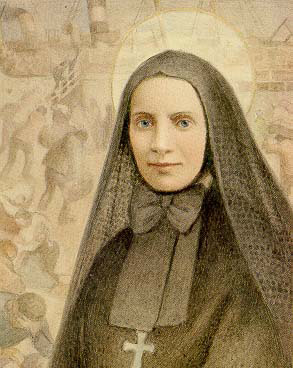
St. Frances Xavier Cabrini’s feast day is celebrated November 13. Mother Cabrini, as she’s commonly called, spent her whole life traveling. She hardly ever stopped, and travel was a lot harder in her day than it is in ours.

Saint Frances Xavier Cabrini

There wasn’t much in Mother Cabrini’s early life to point to such a busy grown-up life. She was born in Italy and had ten brothers and sisters. Her parents were farmers, and their farmland wasn’t too far from a river called the Po. Little Frances could look down into the valley and watch the river make its way to the sea.

When Frances was twenty years old she left the farm and started working as a teacher. During this time, Frances grew in faith and maturity. She took religious vows as a sister, worked hard to save a struggling orphanage, and decided to start her own religious order.

By the late 1880s, Mother Cabrini became interested in a new problem. Hundreds of thousands of Italians moved to America, seeking a way out of the poverty of their new land. Very few of these immigrants were successful right away. Most lived in worse poverty than they’d endured back in Italy. They lived in crowded and dirty apartments, lived on scraps, and were unable to find work. Sad stories traveled back to the home country, right to Mother Cabrini. So Mother Cabrini set out on the long trip to America.

Over the next thirty-seven years, Mother Cabrini was constantly on the move, starting schools, orphanages, and hospitals for Italian immigrants, and others in need. In the first few years she traveled between New York, Nicaragua, and New Orleans. After having a dream in which she saw Mary tending to the sick lying in hospital beds, Mother Cabrini started Columbus Hospital in New York City.

After she founded the hospital, Mother Cabrini made trips back to Italy to organize more nuns for work in America. Between these trips, she and some sisters headed south to Argentina. The sisters went by way of Panama and then Lima, Peru. They made the journey by boat, train, mule, and on foot.

Back in the United State, Mother Cabrini traveled constantly taking her sisters to Chicago, Seattle, and Denver. It was in Chicago that Mother Cabrini, at the age of sixty-seven, passed away. She’d begun her work with just a handful of sisters. By the time she died, fifty houses of sisters were teaching, caring for orphans, and running hospitals. Her order had grown to almost a thousand sisters in all.

Mother Cabrini was obviously a very holy woman, and the church recognized her holiness by canonizing her in 1946 as the first American citizen to become a saint!


This reflection is from Loyola Kids Book of Saints. Buy the book to read more about St. Francis Xavier Cabrini or the stories of over sixty other saints!   


Jesuits look back on 150 years of Bengal mission

Bookmark and Share


Belgian Jesuits are celebrating the 150th anniversary of the establishment of their Bengal mission in eastern India.

HK933_1.jpg 


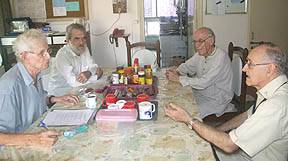
Belgian Jesuit missioners of Calcutta province have
a chat over a cup of coffee at the Jesuit provincial
house in Kolkata. From left: Father Jean Englebert, a liturgist, Father Charles Pollet, a theology professor,
Father Albert Huart and Father Andre Bruylants

The order has had a big impact on lives in the region through education, literary contributions and a translation of the Bible into Bengali.

Father Andre Bruylants, 83, former headmaster of the Jesuit-run St. Xavier’s College in Kolkata, has been working in the mission for 60 years. He is one of seven remaining Belgian Jesuits in the religious society’s Calcutta province.

Jesuit teachers had educated thousands of people and become icons of Catholic education in the region, he says.

Others have influenced the region’s socio-cultural leaders through scholarly interreligious exchanges, and reached out to Indians through the study of Hindu scriptures and engagement with Hindu intellectuals.

Jesuits have influenced literary thinking through publishing and translating Western Christian classics into Bengali, and also helped locals use their own language in worship.

Father Christian Mignon, 85, came to the mission at the age of 25. He was to make a unique contribution to religious life in Bengal, translating the Bible into Bengali over 40 years. The job, in which he was helped by Hindu poet and teacher, Sajal Banerjea, was completed in 2003.

He had previously translated liturgical texts after the Second Vatican Council, which opened the way to the use of local languages in the Mass.

English Jesuits first came to Kolkata in 1833 and started St. Xavier’s but left the country in 1849 after a conflict with the local bishop.

The Belgian Jesuits, who arrived in the city in 1859, were invited to restart the school, which they did within two months in January 1860.

Belgian Jesuit Father Albert Huart, 85, who translated a book on the Jesuits’ Bengal-mission history, is former vice-principal of St. Xavier’s College.

He said that the Belgians expanded from the English educational base to probe further the possibilities of village missions.

Initially the Jesuits’ focus was on the Chotanagpur area, in the present state of Jharkhand. This was where Jesuit Father Constant Lievens (1856-1893), whom the tribal Church reveres as the “apostle of Chotanagpur,” had worked to restore tribal dignity.

By 1869 the Jesuits were entrusted with the Bengal mission, at the time consisting of the present Indian states of West Bengal, Jharkhand, Bihar, Madhya Pradesh and Orissa.

Jesuits ‘connect’ to deceased members

Bookmark and Share


By Julian Das, Konchowki

Jesuits ‘connect' to deceased members thumbnail
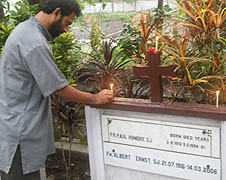
Jesuit Father Amulya Kannanaikal lights a candle at the cemetery at Dhyan Ashram

The Jesuits working in West Bengal state have “brought together” the memories of 220 confreres who had worked and died in eastern India in the past 150 years.

“By placing the names of all those who died in the Bengal Mission, we wish to pass on a tradition to the younger members undergoing training to become Jesuits,” said Jesuit Father Jeyaraj Veluswamy, rector and master of novices.

On All Souls’ Day (Nov. 2) every year, some 20 people visit the cemetery at Dhyan Ashram (abode of prayer), a Jesuit center near Kolkata, to honor the missioners and Jesuit seminarians by organizing prayer services. The Catholic Church observes All Souls’ Day worldwide as a day to honor the faithful departed.

This year, two stone slabs bearing the names of 220 deceased Jesuits carved have also been erected at the cemetery.

“To celebrate 150 years of our Bengal mission, we wish to honor all who had toiled and died,” Father Veluswamy said.

He said people also visit the cemetery during the missioners’ birth and death anniversaries. These include former staff and students of Jesuit educational institutions, who are mostly Hindus.

Kolkata Jesuits have gathered in the cemetery during the annual meeting to “feel united” with their deceased confreres, the novice master added.

According to Father Albert Huart, Calcutta Jesuit province’s archivist, some 500 Jesuits had worked in the Bengal Mission for the past 150 years.

Most of the 220 who had died and buried within the Calcutta territory are from Belgium, with some Yugoslavians and Maltese, Father Huart added.

Four Belgian and three English Jesuits established the Bengal Mission in 1859, which is now divided into seven Jesuit provinces.

Podcast : That Turbulent Priest

Bookmark and Share


Bob Drinan: The Controversial Life of the First Catholic Priest Elected to Congress


Raymond A. Schroth, S.J., reviews the life of the controversial priest and politician Robert F. Drinan, S.J. When Fr. Drinan ran for Congress in 1970, he was among a dozen priests and religious seeking higher office. By the time Drinan was forced to leave in 1980 by order of Pope John Paul II, that number had dwindled, signaling the end of the era of the priest-politician. In his ten years in office, Drinan helped bring an end to the war in Vietnam and impeach a sitting president. Fr. Schroth discusses his controversial legacy, including his much cited stand on abortion. Fr. Schroth’s Bob Drinan: The Controversial Life of the First Catholic Priest Elected to Congress is published by Fordham University Press.


Download ‘That Turbulent Priest’ podcast