Category: Uncategorized

Belief, History and the Individual in Modern Chinese Literary Culture

Bookmark and Share


by Artur K. Wardega, S.J. 


Belief, History and the Individual in Modern Chinese Literary Culture

Editor: Artur K. Wardega, S.J.
Date Of Publication: Jun 2009
Isbn13: 978-1-4438-0571-1
Isbn: 1-4438-0571-8

A value system in constant change; a longing for stability amid uncertainties about the future; a new consciousness about the unlimited challenges and aspirations in modern life: these are themes in modern Chinese literature that attract the attention of overseas readers as well as its domestic audience. They also provide Chinese and foreign literary researchers with complex questions about human life and achievements that search beyond national identities for global interaction and exchange. This volume presents ten outstanding essays by Chinese and European scholars who have undertaken such exchange for the purpose of examining the individual and society in modern Chinese literature.

Artur K. Wardega, S.J. (萬德化) is Director of the Macau Ricci Institute in Macau, China and specializes in 20th century Chinese and French literatures. He has written several articles published in 神州交流Chinese Cross Currents and in scholarly journals in China and abroad. His recent publications in Chinese include a trilingual book entitled The technique of mise en abyme as employed in André Gide’s The Counterfeiters (Central Compilation & Translation Press, Beijing, 2007) and French translation of the novel 笠山農場Li Shan Nongchang by 鐘理和 Zhong Lihe (1915-1960), under the title La Ferme du Mont Li (Artois Presses Université, Arras, 2009).

Indian Jesuit college honors Dalai Lama

Bookmark and Share


By Philip Mathew, Bangalore

A Jesuit-run college in southern India honored Dalai Lama inviting the Tibetan spiritual leader to its prestigious annual program.


Indian Jesuit college honors Dalai Lama thumbnail
A view of the St. Joseph’s College in Bangalore

“We invited him to show our solidarity with him and the Tibetan struggle,” Father Ambrose Pinto, principal of St. Joseph’s College, Bangalore, told ucanews.com yesterday.

The Tibetan spiritual leader was the guest speaker at the Josephite Summit, a meeting of past and present students, their parents and the college’s well wishers.

Some 3,000 people attended this year’s summit on Jan. 30.

Father Pinto described Dalai Lama as the mahatma (great soul) of the world. “By inviting him we wanted to affirm the diversity of the world we live in, and send a message that Buddhism was a great religion and we have great respect for it,” Father Pinto added.

The Dalai Lama praised Christian contributions to India’s education sector. The 76-year old Buddhist monk said the Tibetan struggle is not for separation from China but to preserve “our way of life and culture.”

According to the Dalai Lama, conversion through monetary and other inducements is harmful and against religious principles.

Conversion without the full awareness and knowledge of a religion by a person is unfair, he added. He said some Buddhists in Mongolia have joined Christianity lured by money.

The Nobel Peace laureate also disapproved of Hindu extremists attacking churches on the pretext of checking alleged conversions. Such incidents are against the tolerant nature of Hinduism, which he said is the most inclusive religion in the world.

The Tibetan spiritual leader termed India as a model of ahimsa (non-violence) and religious harmony. He said everyone knows the sporadic incidents of communal disharmony in India are caused by “mischievous elements.”

Some 100 Tibetan students study in the college, which was founded 128 years ago. It imparts graduate, post-graduation and research education to more than 5,000 students.

Six Weeks with the Bible for Catholic Teens

Bookmark and Share


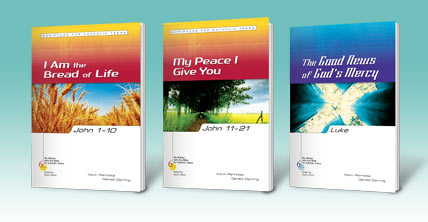
Six Weeks with the Bible for Catholic Teens introduces high school students to different books of the Bible to help youth discern what Scripture means for their lives today. The series provides students with a clear explanation of Biblical text, group discussion questions to encourage faith sharing, opportunities for prayer, and a means to enter into conversation with God. The flexible design of the series makes it ideal for youth groups, and the books can be used for youth nights, retreats, or Bible sharing during Lent and Advent.


Bible Workshop for Young People

Help middle and high school students become familiar with the structure of the Bible with this 90-minute workshop. Also available in Spanish.

Adapted from The Bible Blueprint.


Available titles:

Acts: The Good News of the Holy Spirit

Exodus: God to the Rescue

Genesis 1-11: God Makes a Start

John 1-10: I Am the Bread of Life

John 11-21: My Peace I Give You

Luke: The Good News of God’s Mercy

Mark: Getting to Know Jesus

Revelation: God’s Gift of Hope

Shabbat Shalom

Bookmark and Share


by MEREDITH GOULD 

Note: I jotted this down in real time last Friday evening and didn’t get around to posting it. Another week has passed with a new set of stresses and demands. May I be graced with the energy to get myself to Vespers tonight.

I feel like going to Mass this evening and am marveling, a bit, that I feel this way. I also feel grateful that I live in a city where I could go to a 5:30 PM Mass on a Friday night-Shabbat shalom to me!

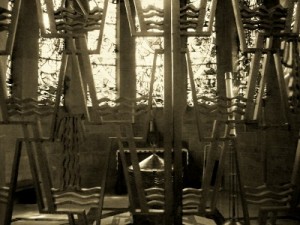
Baptismal Chapel at Cathedral of Mary Our Queen in Baltimore, MD.

Baptismal Chapel at Cathedral of Mary Our Queen in Baltimore, MD.

Don’t want to over-think why I’m feeling this ripple of longing, but suspect it might have to do with not being at church-the-building this week.

Never mind that I belong to a virtual community that prays the Daily Office, that I’ve participated almost every day and led prayers three times this week. Never mind that unless I’m able to receive gluten-free Eucharist, something few Roman Catholic churches manage to provide, I’m buzzing with neuralgic pain within 40 minutes of receiving Communion. (In those moments, I still believe Jesus loves me, although I sometimes have my doubts about the Church.)

The sun is beginning to set. I’ve had a strange day, but one that wasn’t untypically so. I feel like going to Mass. And while I know darn well I won’t hoist myself off the couch, haul on appropriate clothing, get into the car and drive to the Cathedral of Mary Our Queen, I like knowing I could. I like the feeling that I want to even more.

He Was One of Us

Bookmark and Share


by Daniel J. Harrington, S.J. 

Wilfrid Harrington, a Dominican priest who is a professor of Scripture at the Dominican House of Studies in Dublin and visiting lecturer at the Church of Ireland Theological College in Dublin, is widely regarded as the “dean” of Catholic biblical studies in Ireland. Through his many books and articles and his vast experience as a teacher and lecturer, he has brought the best of technical scholarship to a wide audience. His very large body of work provides an excellent example to be imitated in both style and context. It is always learned, personally engaged, clearly and concisely written, positive and constructive and theologically sensitive and relevant.
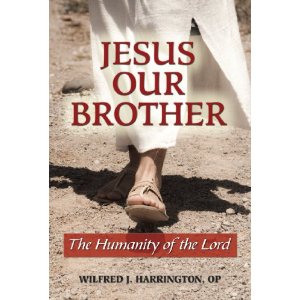
Jesus Our Brother: The Humanity of the Lord

Jesus Our Brother
THE HUMANITY OF THE LORD
BY WILFRID J. HARRINGTON, O.P.
PAULIST PRESS. 128P $14.95 (PAPERBACK)

His latest volume seeks to illustrate the authentic humanity of Jesus by highlighting Jesus’ characteristically human traits. He regards this as important (indeed as “the astounding truth at the heart of Christianity”) because it is in the human Jesus that we meet God. This is not another speculative book about the quest of the historical Jesus. Rather, it is an attempt to synthesize what the four Gospels say about Jesus in the light of modern critical scholarship. It gives particular attention to Mark’s Gospel because it is the earliest Gospel, and because Mark’s Jesus is the most human.

After considering Jesus’ early life in Nazareth, Harrington discusses his association with John the Baptist and Jesus’ own career as prophet, teacher and healer, as well as his death on the cross. Then he treats those persons for whom Jesus showed special concern: the poor, women, children, sinners and social outcasts. Next, in what is by far the longest chapter and the heart of the book, he deals with the human traits or characteristics of Jesus in the following areas: faith, testing, love, prayer, religion, compassion, forgiveness, nature, humor, exasperation, anger and fear. Then he reflects on the various reactions that the human Jesus evoked: acceptance, opposition and rejection. And he concludes with observations on Jesus at his most vulnerably human in the Gethsemane episode, in what sense Jesus was and was not a failure, and the cross as God’s own definition of what it is to be human.

I am often asked for recommendations of books that get at the “real” Jesus, are learned and scholarly but not overly technical, and are generally orthodox in their theology while being challenging personally and theologically. This is that kind of book. Besides his prodigious knowledge of the Bible, Harrington brings out clearly the value of taking seriously the humanity of Jesus. He describes Jesus as having come as a human being into our human history to tell us of the goodness of God-the Deus humanissimus, the God bent on the salvation of humankind. And he sees Jesus on the cross as showing us that we are truly human when we accept our humanity, when we face the fact that we are not masters of our fate. In the Cross God defined the human being as a creature that he as creator might be wholly with us, as parent with child.

Now in his mid-80s, Harrington by his writing and teaching remains not only one of Ireland’s national treasures but also a teacher for all who seek to enter into the world of the New Testament. Though our paths have seldom crossed, we share a surname and common roots in the Beara Peninsula of Ireland. Also, each of us has contributed a volume to a series edited by the other. But even more important to me has been the example of learning, industry and fidelity shown by Wilfrid Harrington in making available to God’s people the best in contemporary biblical scholarship and so helping our Catholic Church become more explicitly and profoundly biblical.


Daniel J. Harrington, S.J., is professor of New Testament at Boston College School of Theology and Ministry and editor of New Testament Abstracts.

Celebrating Martin Luther King, Jr, and Other Social Justice Voices

Bookmark and Share


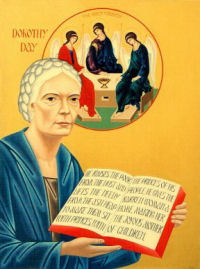
Dorothy Day

A painting by Nicholas Brian Tsai. The original hangs in Our Lady of Lourdes Church, 2808 Lake Shore Ave., Oakland, CA 94610; tel 510-451-1790. The painter is a member of Holy Trinity Orthodox Cathedral in San Francisco.

Sometimes the best way to learn about a historical person is to read what they have said or written. Here are some quotes from people who were leaders in promoting social justice. If one of the quotes rings true with you, spend more time getting to know the person who said it. Search out more of his or her quotations, speeches, interviews, or writings. Think about ways you can model your life after him or her.

Martin Luther King, Jr.

Click here to go to Martin Luther King, Jr.’s address delivered when he accepted the Nobel Peace Prize on December 10, 1964, in Oslo, Norway.


Dorothy Day

“The mystery of the poor is this: That they are Jesus, and what you do for them you do for Him. It is the only way we have of knowing and believing in our love. The mystery of poverty is that by sharing in it, making ourselves poor in giving to others, we increase our knowledge of and belief in love.”


-“The Mystery of the Poor” by Dorothy Day. The Catholic Worker, April 1964. Found in “Dorothy Day Library on the Web” at www.catholicworker.org/dorothyday.


Daniel Berrigan, SJ

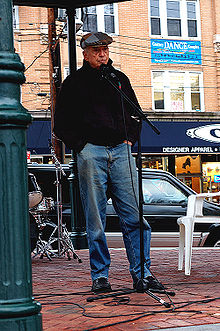
Daniel Berrigan, SJ at the Third Annual Staten Island Freedom & Peace Festival, 2006-10-28

Daniel Berrigan, SJ

“… we are that small and assailed and powerless group of people who are nonviolent in principle and who are willing to suffer for our beliefs in the hope of creating something very different for those who will follow us. It is we who feel compelled to ask, along with, let’s say, Bonhoeffer or Socrates or Jesus, how man is to live as a human being and how his communities are to form and to proliferate as instruments of human change and of human justice; and it is we who struggle to do more than pose the questions-but rather, live as though the questions were all-important, even though they cannot be immediately answered.”


-from “A Dialogue With Radical Priest Daniel Berrigan” in Time (March 22, 1971)


César Chávez

“Once social change begins, it cannot be reversed. You cannot uneducate the person who has learned to read. You cannot humiliate the person who feels pride. And you cannot oppress the people who are not afraid anymore.”


-from “Lessons of Dr. Martin Luther King, Jr.” speech by César Chávez, January 12, 1990


Better than Your Best?

Bookmark and Share


by Jim Manney


Better than Your Best?

This is the time for resolutions to accomplish great things in the year ahead, so it’s a good time to think about what the word magis means. Magis is one of the more mysterious Ignatian terms. It’s a Latin word meaning “the greater, the excellent, the best,” as the tagline for the masthead for this blog puts it. It’s associated with restless striving to always do better, to undertake a greater project, to set more ambitious goals. Sometimes I find the notion of magis inspiring. Often I find it intimidating.

The idea of the magis comes from the Call of the King meditation in the Spiritual Exercises. Ignatius has us imagine Christ as a King calling us to join him in his work to save and heal the world. Who wouldn’t want to respond eagerly to this call? It makes perfect sense to sign up. “All those who have judgment and reason will offer themselves wholeheartedly for this labor,” Ignatius comments.

But Ignatius urges us to consider something more: to “go further still,” to “make offerings of greater worth and moment.” We’re asked to serve the King with something more than wholehearted service. How is this possible?

It really isn’t possible. I think Ignatius is raising the possibility of greater-than-wholehearted service as a personal invitation. He’s putting it out there for us to consider. It has more to do with personal commitment to Christ than with restless type-A overachieving. What can you imagine that would motivate you to do more than your best? It’s a question each of us can answer only for ourselves. It’s a question we can answer only as we get closer to our King.

Father General urges priests not to go it alone

Bookmark and Share


by UCANews 

Jesuits need to collaborate with others and not work alone, said Father Adolfo Nicolas, the Jesuit superior general during his visit to Thailand.

Jesuits' leader urges priests not to go it alone thumbnail
Jesuit superior general Father Adolfo Nicolas

Nowadays due to the fewer number of priests, Jesuits cannot carry out their mission alone. Rather, they need to collaborate with various sectors, Father Nicolas told about 100 Jesuits and others involved in Jesuit ministries in Thailand during his Jan. 20 welcome at Xavier Hall, the Jesuit residence in Bangkok.

Jesuits need to cooperate with people who possess the human qualities of love, hope, joy and justice, said the superior general. Jesuit priests must not become isolated and uncommunicative with people, Father Nicolas said.

The Jesuits in Thailand have been collaborating with various stakeholders, but there is room to strengthen this, said Father Paul Pollock, superior of the Jesuits in Thailand.

Father Adolfo is on a two-day visit to Thailand, before going to Cambodia and Singapore.

The Jesuit community in Thailand has 31 members, including 18 priests in Bangkok, Sam Phran and Chiang Mai. They work with refugees and migrants, prisoners, vulnerable children and students and conduct retreats. They also run a parish in Bang Saen, lecture at Saengtham College – the country’s major seminary and work with various NGOs on human rights issues.

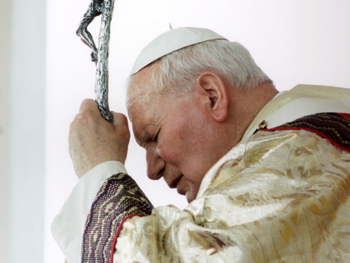
Pope John Paul Miracle near Recognition

Bookmark and Share


Pope John Paul Miracle near Recognition

A presumed miracle needed for the beatification of the late Pope John Paul II reportedly has reached the final stages of approval. The miracle-involving a French nun said to have been cured of Parkinson’s disease-has been approved by a Vatican medical board and a group of theologians and is now awaiting judgment from the members of the Congregation for Saints’ Causes, according to Italian journalist Andrea Tornielli. If the congregation accepts the healing as a miracle attributable to the late pope’s intercession, then Pope Benedict XVI still would have to sign a decree formally recognizing it before a beatification ceremony can be scheduled. Tornielli, who covers the Vatican for the newspaper Il Giornale, wrote Jan. 4 that the process is so far advanced that Pope John Paul could be beatified sometime in 2011. Jesuit Father Federico Lombardi, the Vatican spokesman, told Catholic News Service Jan. 4 that the final step before beatification requires the pope’s approval and that the pope is free to make his own decision on the matter. According to Tornielli, at the end of 2010, the presumed miracle passed the first three stages in a five-step process that involves medical experts, a medical board, theological consultants, the members of the congregation and, finally, Pope Benedict.

Indian Jesuit arrested in scarf controversy

Bookmark and Share


By Ajit Paul, Ranchi

A Jesuit priest in an eastern Indian state has been arrested for removing the face scarf of a Muslim female student.

Father Ephraim Baa, who is in charge of the Intermediate Section of St. Xavier’s College in Ranchi, Jharkhand, has apologized for his “inadvertent” action.

The incident occurred on Jan. 7 during a student protest against the college’s decision to charge for additional hours of teaching for weak students.

Father Baa was trying to pacify the demonstrators who had blocked the college gate.

The priest told ucanews.com he wanted to ensure the girl, who was shouting, was “from our college since many outsiders join such demonstrations.” He said the girl ignored several requests to show her identity card.

“Then I pulled the scarf from her face without knowing she was a Muslim. Otherwise I would not have touched her scarf,” he said.

Muslims were outraged by pictures of the incident published in a local newspaper the next day.

Thousands of Muslims took to the streets and burnt Father Baa’s effigy. Apologies from the college and Father Baa failed to pacify the mob that burnt tires and damaged vehicles.

The Muslim girl, Neha Praween, appealed to the protestors to show restraint. She said she had no grudge against anyone. “Whatever has happened is unfortunate but I don’t want any violence in the city,” she said.

Under pressure, the police arrested Father Baa on Jan. 8 on charges making assertions prejudicial to national integration and assault on a woman with intent to outrage her modesty.

Meanwhile a Muslim cleric, Maulana Asgar Misbahi, has appealed to his people to maintain peace. “What has happened in prestigious St. Xavier’s College was unfortunate. Father Baa has asked pardon and there is no reason to prolong this issue,” he added.

Some Church leaders today decided to boycott the Prabhat Khabar (Morning News), the local paper that carried the priest’s photographs.

Jesuit Father Alex Ekka, who directs a social science institute, alleged the newspaper wanted to stoke enmity between Christians and Muslims, who maintain cordial relations in the city.