

Volunteering Pedro Arrupe (VOLPA) is promoted by the jesuit NGOs Alboan and Entreculturas. This video explains the meeting between North and South and the transformation which results in the person and the environment of those who experience it.

Volunteering Pedro Arrupe (VOLPA) is promoted by the jesuit NGOs Alboan and Entreculturas. This video explains the meeting between North and South and the transformation which results in the person and the environment of those who experience it.


The third presentation in The Ignatian Way series explores the idea of finding God in all things. The series is based on materials written by Brian Grogan, SJ, of the Irish Jesuits.
When you are ready, start the presentation. If you wish to view it in full-screen mode, click the icon at bottom right. Options for sharing the presentation are also available through the bottom row of icons.


by VINITA

Please read chapter 22 from Days of Deepening Friendship and then enjoy the reflection. (If you are unable to preview the chapter, please click here.)
“When I spend time with a friend, I want that person’s presence. After a while, a phone call or an e-mail just isn’t good enough-I want a body to hug, a face to gaze upon, the whole person behind the phone voice and the written words. God wants our whole presence, not just our thoughts flung heavenward when we have a second and just our emotional overflow when the day has gone sour. Prayer is the sharing of presence.”
Days of Deepening Friendship, p. 173
One reason prayer can seem unnatural is that we don’t go about it naturally at all. We feel that we must assume a certain physical position, or that we must use some words and phrases but not others. It’s all right to feel joy and gratitude, but we try to push the anger and sadness back and out of the way.
Actually, sometimes we’re tempted to pray sort of the way we’d go through a job interview-putting out our best appearance and conversation, and presenting the self that we think will make the best impression.
Or, we are so used to other people judging and shaming us that we bring to God the self that is least likely to get us into trouble.
What do you bring to prayer? What language? What emotion? What facial expressions? What movements of body?
Are you entering a conversation with a tricky deity who is impossible to please?
Or are you entering a conversation with someone who loves you better than the “bestest” friend?
Try this: After you have enjoyed a conversation with a friend, reflect on your part of the conversation. Write down what you said, what tones of voice you used, which physical gestures. Write about how you felt, and how you expressed those feelings.
Then, when you pray, remember that marvelous self that you shared with your friend. Try to bring that self into conversation with the Divine friend, and see what happens.


By Andre Bruylants
Physical punishment in schools like caning, slapping or beating, even in the most moderate of forms, is now banned by the courts. Period! Formerly, a kid who was caned in school would get another beating at home to corroborate that his parents stood by authority. No longer! Thence the question, how to discipline the child and the teenager when they cross the Lakshman Rekha (dividing line), as they are prone to do? How has physical beating in schools as a form of punishment become a practice in India? I had my schooling on the “Continent.” I do not remember instances of physical beating in school. Not that we were never punished. It looks to me that caning as a form of punishment is a legacy of the British system of education. Anyone who watched the movie Goodbye, Mr. Chips or read James Hilton’s novel will remember that Mr. Chipping, the much-beloved teacher and headmaster, who earned the esteem and respect of his students, practiced caning as a matter of rule to redress those found wanting. His mandate as the head of the institution was to mold youngsters and make gentlemen out of them as expected by the British society of his time. And the system said, “Use the cane!” But Mr. Chipping was benign compared to Dickens’ Oliver Twist’s world where the child had no rights, no face and no name. Now children have rights, and a face and a name. They are persons in their own right, echoing the Lord’s exhortation to “Let the children come to me.” Thanks to the 1989 UN Convention on the Rights of the Child, they have the right, among others, “to be protected from violence and abuse.” But what is less known is that they have the right “to express themselves and give their opinion.” And perhaps, it is here that for the adult, the shoe pinches. Violence by would-be mentors falls short of their mission in accompanying their charges in their growth toward adult personhood. It doesn’t have to be physical. Emotional violence can be a severe. Think of epithets showered on youngsters in the heat of classroom demonstrations. Think of the hurts, in moments of impatience, created by hasty words or actions, by ignoring a pupil or denying the sincerity of her efforts. Think of deliberate humiliations in front of peers (standing on the desk with hands on the earlobes) or name-calling (‘good-for-nothings’), and so on, quite apart from slappings or beatings. The effects of emotional violence is as varied as its forms. Some students respond passively way, others aggressively. Some show poor academic performance, lack of self-confidence, or engage in self-injury, bullying, or other antagonistic reactions. By constrast, where emotionally positive learning is fostered, students feel less burdened and are more cooperative and adjusted. They are more respectful toward each other in their cultural and faith differences. They tend to get the most out of school life. The need of the hour is to put the heart back in the midst of the classroom and in the playground. We must give the same status to imagination, creativity and intuition as we do to knowing, remembering and reasoning. A recent Kolkata media commentator recently encapsulated a good test for whether schools have fulfilled their task to “Discover the child, watch over him, stand by him and set him free.” Father Andre Bruylants SJ, 84, is the author of books on value education for schools and was the principal of Jesuit schools in the order’s Calcutta province for 25 years. He has influenced school curriculums in Jesuit schools across eastern India.
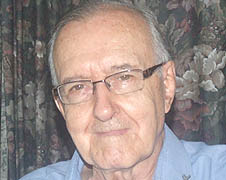
Jesuit Father Andre Bruylants


by Vicki Rosen

What distinguishes these schools from other institutions of learning? Jesuit education embodies five key teaching elements. These are described best by Peter-Hans Kolvenbach, S.J. in his 1993 document”Ignatian Pedagogy: a Practical Approach”:
• Context: What is a learner’s environment, background, community, and potential?
• Experience: What is the best way to engage the learner as a whole person in the teaching and learning process?
• Reflection: How may a learner become more reflective so she/he more deeply understands what has been learned?
• Action: How can a learner move beyond knowledge to action?
• Evaluation: How can the teacher help the learner by assessing her/his growth in mind, heart, and spirit?
The focus on the education of the whole person is also referred to as “Cura Personalis.” The USF Jesuit Foundation explains this as “seeking to integrate all aspects of individuality: the intellectual, moral, spiritual, affective, aesthetic, physical, and social. This approach to education is holistic and calls on the learner to reflect on his or her experience in the context of the larger community.”
As a librarian, I’ve wondered how I can incorporate these principles into my work with students and faculty as they search for information. Currently, research into the affective aspects of information seeking and the neuroscience of learning are also offering new insights. During a Professional Research Leave and, with the help of a Jesuit Foundation grant, I took time this past summer to read widely, talk with my Jesuit and librarian colleagues, and reflect on my experiences. As I continue to assimilate this information, I hope to “move beyond knowledge to action.” For now, the actions are yet to be discerned. Perhaps not surprisingly, I’m gaining a deeper understanding not just of pedagogical models, but also of myself along the way.


Saint Retreats for Children Grades 3-6
Each year we celebrate All Saints Day on November 1 and All Souls Day on November 2. In honor of the saints, Loyola Press offers the reflections of four saints for children. This November, we recognize St. Nicholas, Blessed Kateri Tekakwitha, Saint Francis Xavier Cabrini, and Saint Andrew. In these brief saint retreats:

Saint Nicholas

Blessed Kateri Tekakwitha

Saint Frances Xavier Cabrini

Saint Andrew
You can navigate through the retreats by using the continue button or by clicking on the side navigation boxes. If you are unable to see the retreat, download Adobe Flash for free.

Feast Day December 6

Children all over the world know him and love him.
In Germany, he’s Kriss Kringle. In France, he’s Pere Noel. British children call him Father Christmas. Of course, you know him as Santa Claus.

He’s got another name, you know. It’s an ancient one that goes back hundreds of years. It’s one of the very first names people called him: St. Nicholas.
Children tell lots of fun stories about Santa Claus, Pere Noel, or Kriss Kringle. All of these stories remind us of how much we’re loved and of how happy we are when we give. The earliest stories we know were told about St. Nicholas, the bishop of Myra.
Hundreds of years ago, Nicholas lived in a seaside town named Myra, which is in the country we now call Turkey. Ever since he was a small child, Nicholas loved God more than anything. He studied hard, prayed often, and followed Jesus by helping the poor.
The people of Myra loved Nicholas so much that when their old bishop died, they immediately elected Nicholas to replace him. He served them well for a long time.
Nicholas was loved for one reason. He loved. He loved God and God’s people so much that he would do anything for them.
Here is a story about Nicholas that has been passed down through many generations.
There was a man living in Myra who was very poor. This man had no wife, but he had three grown daughters who lived with him.
In those days, when a young woman got married, she had to bring money or property with her into the marriage. This is called a dowry. If a woman didn’t have a dowry, she would never marry.
This man was so poor that he had no money for his daughters’ dowries. And he didn’t have enough money to support them either. He had, he believed, only one choice: to sell his daughters into slavery. Nicholas heard about this terrible situation. Late one night, Nicholas crept to the man’s home and threw something through the window. It was a bag of gold-enough to pay the dowry for his oldest daughter.
The man was overjoyed, and his daughter was too. She married, but her father was still left with a problem. Two, to be exact. What about the two younger daughters? Sadly, he prepared to send them away.
Nicholas returned one night and again threw a bag of gold through the window. The father rejoiced. But he wondered who was helping him and why.
Of course, Nicholas didn’t want the man to know. He knew that it’s best to help others without letting them know we’re helping them. If we help others in this way, we help because we truly want to and not because people will praise us for it.
But the father was determined. He had one daughter left and no money for a dowry. He certainly hoped he would be helped again, especially because he wanted to find out who was doing it. So he locked the windows and watched out the door.
Nicholas still wanted to help, but he didn’t want to be seen. So, in the back of the house, far from the father’s sight, he dropped the bag of gold for the third daughter right down the chimney!
Other stories are told about Nicholas. It’s said that God worked through Nicholas’s prayers to raise children from the dead-some who had been killed in a fire and another child who had drowned. All of these stories tell us the same thing about St. Nicholas. He lived for God, which means that he lived for love. If people were in need and he was able to help, St. Nicholas gave them hope and strength. St. Nicholas never paused for a minute to wonder what he should receive in return for his help. He only thought about what he could give to those who needed him.
Stories about St. Nicholas spread from his home in Turkey up to Russia, where he is still a very popular saint. Through the centuries, people passed on stories of him across the most northern parts of Europe, then to Germany, France, and England, and finally to the United States. The children in every country gave St. Nicholas a name in their own language, and ours is Santa Claus.
Christmas is a fun, exciting time, isn’t it? It’s fun because of all the time we get to spend with our families. It’s fun because we do a lot of celebrating. It’s fun because we get to think, sing, and pray about Jesus, who was born into the world to save us.
Christmas is also fun because we get to give. We can show our family and friends how much we love them by giving them special gifts that we make or buy.
We give because we’re thankful. We’re thankful for friendship and love and for all the people who take care of us. We’re thankful to God for giving us life.
St. Nicholas was thankful too, and that’s why at Christmastime we try to be just like him. He was so grateful for the life God had given him that he just couldn’t stop giving joy and hope to others-no matter how far he had to travel or how many roofs he had to climb!
St. Nicholas showed his gratitude for God’s gifts by giving to others. What gifts can your family share with those in need?
|
|
from Loyola Kids Books of Saints by Amy Welborn © 2001 |

The best Catholic apps

by Jack McLain, S.J.

During a recent discussion with a brother Jesuit about the inherent goodness or badness (I believe the terms ‘Luddite’ and ‘Borg’ were trotted out during the conversation) of smart phones, I asserted that there were plenty of Catholic-centric uses for such devices. In the great Jesuit fashion, my confrere asked me to prove it. So I began combing through Apple’s App Store in order to find the best Catholic apps I could.
From the beginning, I left a few things off of my list, most notably digital rosaries. I am not opposed to rosary apps; I have one actually, but trying to separate the sheep from the goats in this particular instance proved to be a little too bandwidth intensive. Most rosary apps had free versions so you could try them before you invest your 99 cents. My other criterion was one I alluded to above, namely, I wanted to find apps that were applicable to the non-techno person who was looking to use their device to add to their faith life. I focused exclusively on iPhone apps because of its userbase and because I don’t have access to an Android-based phone.
Here are some of the better apps:
iBreviaryPro (Free): This app, which I’ve been using for over a year, can be a life saver. Last year my campus minister, seated next to me at a student Mass, whipped her head around and turned white as a sheet. “I forgot to put the Gospel in the binder!” She whispered during the Psalm. I calmly fished under my alb, pulled out my iPhone, fired up the app and had the Gospel ready by the time I made it to the lectern. It includes the Office readings for the day and, as a bonus, all the parts of the Mass for a presider. Plus, all the readings update automatically when you turn the app on-in five different languages, no less! The only downside is that it requires a data connection. If our chapel had been a signal dead spot, I would have been sunk.
Universalis ($24.99): This is from the super-useful Universalis software house, whose goal is to “harness computer technology to help enrich the spiritual lives of Christians.” The app contains all the readings within the app itself, so it doesn’t matter if you are on top of Mount Everest (although I read recently they have 3G coverage there now), you can get your daily readings and pray the Office with out a wireless connection. Exceptionally well organized and easy to navigate, this is best of the daily reading and Office apps I reviewed. Two caveats about the app: First, the price. In a world of 99 cent apps, $25 will give some people pause, but this is clearly a case of getting what you pay for. The app replaces both a lectionary and a breviary (not to mention being much easier to carry) so the price tag shouldn’t be a sticking point, in my opinion. My second quibble is a priest-centric one: I wish the app also provided the parts of the Mass.
Divine Office ($14.99): This app has all the functions of the apps above, automatically figuring out the date and bringing up the readings for the time of day. The feature that sets it apart is that it will also download audio files of the prayers of the hours so that you can listen to a group of people praying, and pray with them. Ideal for quiet time on a train or bus or even over your car audio system during your commute. Another neat feature: by tapping on a globe icon you see a map showing where other people are using the app around the world. This gives you a real sense of praying with universal church.
iCatholicRadio & Radio Vaticana (Free & $3.99 cents respectively): These apps stream audio from Catholic radio stations. iCatholicRadio streams from Holy Family Communications, which features shows ranging from Catholic call-ins to the recordings of Bishop Fulton Sheen. The user interface needs work-it doesn’t have the buttery smoothness usually associated with Apple-but it works fine. It can also stream the audio in the background so you can listen while you navigate to another app. Radio Vaticana does the same thing, only it offers a direct line to the broadcasts of the Vatican Radio in several different languages. Good for a change of pace.
3-Three Minute Retreat (99 cents): The Irish Jesuits started a Web site several years ago that leads you through a quick reflection for your day. Loyola Press has taken this idea and applied it to the portable world. Each day it supplies you with a brief reflection set to placid music in either English or Spanish. It follows the Ignatian arc of settling down to pray, reading Scripture, reflecting and deciding act. It is a simple, straightforward app that does exactly what it says.
Mass Times (Free): For sheer useful simplicity, this app was probably the best one I reviewed. It uses your location to find the nearest parish and gives you the Mass times at those locations. You can also search for a particular church and bookmark your favorites. A sponsored banner pops up every once in a while, but that’s how they make the app free. This is a must-have for Catholics on the move who like to find a Mass wherever they go.
CatholicTV (Free): This app allows you to watch the Mass of the day along with much of the other programming of CatholicTV from Boston on your iPhone. The catch is that you need to have a WiFi signal. An excellent app for someone in an isolated place who wants to enjoy tons of quality Catholic content.



The Lord will fulfill his purpose for me;
your steadfast love, O Lord, endures forever.
Do not forsake the work of your hands.
Psalm 138:8
From an early age, we get the message that in order to succeed we must be good managers. Whatever the task, it should be done to perfection. Whatever the event, it should go without a glitch. Whether we are making sure our children are well-fed and arriving at school every day in clean clothes, or we are leading a company through a much-needed organization, it is crucial that we juggle all the responsibilities and tend to every detail, while monitoring how everyone is doing.
Of course, life rarely works that way. And it doesn’t take long to become overwhelmed with the impossible task of managing life as it is rather than how we expected it to be. Before long, real life is overflowing and unmanageable.
We often cope by finding containers for the overflow, developing habits that might temporarily relieve our sense of being overwhelmed. Maybe we work longer hours or develop addictions. Or we redirect our attention to distractions and entertainment, or we begin unloading emotionally on the people around us.
Maybe it’s time to ask yourself just how you’re managing. You’re probably doing well much of the time. But you will live out holy purpose only with the help of holy love.
This is a reflection by Vinita Hampton Wright, author of Days of Deepening Friendship. This reflection and Vinita’s retreat can be found at the Days of Deepening Friendship blog.


The second presentation in The Ignatian Way series gives an overview of Ignatian spirituality. The series is based on materials written by Brian Grogan, SJ, of the Irish Jesuits.
When you are ready, start the presentation. If you wish to view it in full-screen mode, click the icon at bottom right. Options for sharing the presentation are also available through the bottom row of icons.
When you are ready, click here to start the presentation.
