Category: Uncategorized

Wisdom Story 20

Bookmark and Share


Wisdom Story 20

by Paul Brian Campbell, SJ   

There are three ways of seeing life. In one, people stick fast. In another, they go to excess. In the third, they see correctly.

In the first way, people take pleasure in all the things of life – in possessions and happenings, in families and continuation. When a teaching is proclaimed that advises non-attachment and going beyond the dictates of the self, their heart does not leap up and they are not drawn to it.

In the second way, people are afflicted by hatred of life. Just as attached to life, they nonetheless revile it and make a bad thing of it to excess.

In the third way, people see life as it is – forever being and ceasing to be. They accept it willingly but are not attached and do not despair. It is they who begin to know the unconditioned.

– Itivuttaka Sutta

Index of Shalom July 2011

Bookmark and Share


  Index of Shalom  July 2011 

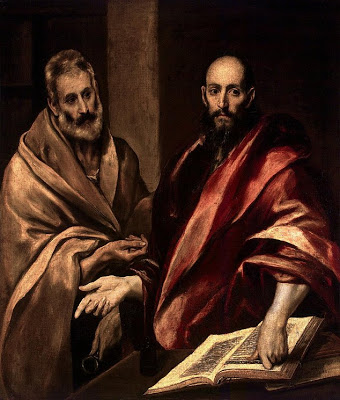
Ss Peter and Paul, Apostles

Bookmark and Share


In celebrating today the two great Apostles who are the ‘pillars’ of the church, we hear about both of them being specially protected and guided by the Lord, being rescued in fact from dangerous situations.

The Acts of the Apostles tells us about Peter being arrested and put in prison, but then being released by an angel who took him to safety. At first Peter thought he was just dreaming, but then realized it was actually happening. “Now I know for certain,” he said, “that the Lord… rescued me’.

Writing to his friend and disciple Timothy, Paul is reflecting over his life and all he’s been through, grateful for the faith that has guided and protected him. “The Lord stood by me and gave me strength,” he writes, “I was rescued from the lion’s mouth.”

Both men recognize that what the Lord had done for them was for the benefit of God’s people, of us who are their modern – day followers in Christ’s footsteps. As we honour them, our thanks and glory go to the Lord who so dramatically rescued them from real dangers, and we ask His continued protection for ourselves through their intercession.


Lord, may the patronage and role-modelling of Peter and Paul not only awaken us to the Your presence with us but also to the strength and perseverance You give. May we open our eyes to recognize You in the ordinary events of our lives and know how You protect and keep us.


DAILY OFFERING

Eternal Father, I offer You everything I do this day; my thoughts, words, joys and sufferings. Grant that, vivified by the Holy Spirit and united to the Sacred Heart of Jesus and the Immaculate Heart of Mary, my life this day may be of service to You and to others. I also pray that all those preparing for marriage discover in Sacrament the source of Christ’s grace for living a fithful and fruitful love. Amen.

PRAYING WITH THE CHURCH

INTENTION
That the priests, united to the Heart of Christ, may always be true witnesses to the caring and merciful love of God.
Elaboration


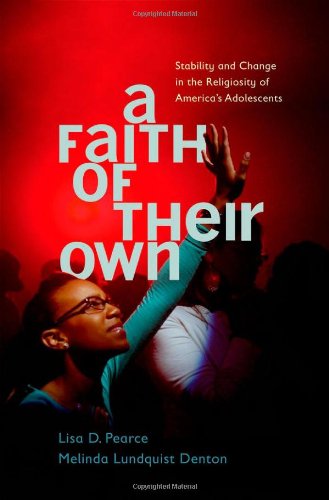
Teenage Faithland – A Faith of Their Own

Bookmark and Share


Those who know and rightly admire the adroit sociological analysis of Christian Smith and Melinda Denton’s groundbreaking 2005 study of the religious lives of teenagers, Soul Searching:

A Faith of Their Own

A Faith of Their Own

STABILITY AND CHANGE IN THE RELIGIOSITY OF AMERICA’S ADOLESCENTS

BY LISA D. PEARCE AND MELINDA LUNDQUIST DENTON OXFORD UNIV. PRESS.

284P $24.95


The Religious and Spiritual Lives of American Teenagers will surely also want to read carefully this new study. A Faith of Their Own is based on a second wave of surveys and in-depth interviews of parents and teenagers in the National Study of Youth and Religion.

The same teenagers, first interviewed in 2002, when they were between 13 and 17 years old, were followed up in 2005, three years later, to determine what if any religious changes took place as the teenagers began to drive their own cars, engage in nonmarital sex or cohabitation, and grow closer to planning their educational and career aspirations.

Lisa D. Pearce and Melinda Lundquist Denton have written a most helpful book. Their main thesis is that religiosity among teenagers (as among adults) is multidimensional. It does not lend itself to crude uni-dimensional indices of low versus high, without further ado. They postulate a threefold index for religiosity based on content, conduct and centrality. To assess content they probed respondents’ belief in God (and the kind of God they believed in: personal and engaging versus more detached or even just a cosmic principle) and belief in the exclusiveness of their religion (few American teenagers think there is only one true religion). For conduct, they analyzed responses about religious attendance, private individual prayer and helping as a volunteer. Finally, to assess centrality they used three measures: importance of religion to the respondent; how close he/she felt to God; and what each thought was the meaning of life.

Although the authors drew mainly from surveys, their intent was to hew as closely as they could to “lived religion.” They knew that most respondents are not totally consistent across the three measures. They can be strong in attending services (perhaps under parental pressures) but weak in claiming religion is important. Conversely, many who attend church only sporadically may pray daily, say religion is important to their lives and think often about the deepest meaning of life.

Based on their measures, Pearce and Denton profile five distinct religious types: abiders, adapters, assenters, avoiders and atheists. Abiders tend to come from intact families whose parents also attend services regularly. They do show a kind of congruence across content, conduct and centrality measures. They are, in one sense, the most religious (although the authors shy away from narrowly comparative judgments on religiosity). But they also show a kind of vulnerability when doubts arise. As the authors note: “When those who are highly religious become less religious, they tend to do so across the board, not just in public religious practice.”

Adapters are more likely to pick and choose among religious beliefs and, compared with abiders, are more lax in attendance at weekly services, although they may be more fervent in personal prayer than abiders, more likely to volunteer and stronger in claiming religion is central to their lives. Often enough, adapters may come from broken families or families of a lower income status, where parents may have night or weekend jobs that make church attendance difficult. The authors remind us that not all religious disengagement is a personal choice of the adolescent.

Assenters are lower on the centrality of religion to their lives or on personal prayer than the adapters, although their attendance at religious services may look the same.

Avoiders believe in God but in other ways avoid religion. Not that they oppose it, but the avoiders seem to have a congruence in their behaviors that displays initiative and ambition. There are few teenage atheists.

Overall, most teenagers (81 percent) in the second wave surveys remained in the same profile type they were in earlier. Continuity is the stronger characteristic of teenage religiosity than change. When change occurs, it tends to be one rung downward on the ladder: e.g., from abider to adapter or from an adapter to assenter. Some religious types (e.g., abiders) are less likely to engage in risky behaviors, such as drug or alcohol use and premarital sex.

Pearce and Denton also probe the role of peers, parents and religious institutions in supporting or helping teenage religiosity. As the earlier study, Soul Searching, showed, most teenagers are largely inarticulate about their beliefs. Often enough they are moralistic deists. Nor do they talk very much with their peers about religion.

Parents’ religiosity and roles are crucial. Religiously practicing parents more likely inspire practicing teenagers. Teenagers who report being close to one or both parents are more likely to be abiders or adapters than lower on the scale. Parents who pray daily for their children are more likely to have religious children. Key also is what the authors call “scaffolding.” This refers to parental help, guidance and their ability to talk to and give congruent and useful support for their children both in religious exploration and in dealing with their doubts and questions and achieving autonomy.

One key finding of the study is that teenagers who successfully personalize their own religion (as opposed to just acting out their parents’ expectations) were more likely to claim they had become more religious over the three-year span of the surveys than less, even if their religious attendance at church was more sporadic. Under-scaffolding (parental neglect or absence) and over-scaffolding are equally bad. Restrictive approaches that do not allow honesty about teenagers’ questions and doubts are not helpful.

The role of congregations in teenage religiosity was also probed. Two questions sought answers to whether teenagers found their local parish/congregation’s services boring and whether there were adults in the parish with whom the teenager could honestly talk about religious questions, including doubts. Most teenagers reported positive responses about their local congregation.

As a sociologist of religion, I would strongly recommend A Faith of Their Own to my confreres for its supple methodology for measuring and tracking religiosity. As a parish priest I would also recommend it highly to parents who may be perplexed or confused about their teenagers’ religiosity. I would especially urge religious educators of youth and/or youth ministers in parishes to peruse its findings.


John A. Coleman, S.J., is a sociologist and assistant pastor at St. Ignatius Church in San Francisco, Calif.


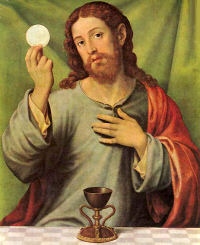
Body and blood of the Lord

Bookmark and Share


I find the best time and place for me to pray is in the morning in the chapel where I am to celebrate the Eucharist. Prayer is a meeting with God and I meet Him there in several different ways. He is present in the very air in the chapel, sustaining it in existence. Without it I would die. Similarly he is present in the steel and concrete of the building itself, preserving them from dissolution and non-existence, giving me a place to pray.

On the lectern is a copy of the Bible and there I find Him in a special way conveying to me a message of love, guidance and encouragement. This message empowers me to live and work with Him in the day ahead.

As the people enter the chapel one by one I can see in them Christ present as brother and friend. Later in the celebration of the Eucharist they will be formed into a community, the Body of Christ in this place and this time. After the Eucharist and in it’s power I may be drawn to someone who, alone and ill, is Christ for me and a listening world.

Finally I reflect that the awaiting bread, resting on the altar to be consecrated by my words will be transformed into Christ, made bodily present to nourish us for a Christ-like day ahead.


Lord Jesus, living and present in the Eucharist, strengthen us. We beg you to reveal Your many presences to the men and women of the world.


DAILY OFFERING

Eternal Father, I offer You everything I do this day; my thoughts, words, joys and sufferings. Grant that, vivified by the Holy Spirit and united to the Sacred Heart of Jesus and the Immaculate Heart of Mary, my life this day may be of service to You and to others. I also pray that all those preparing for marriage discover in Sacrament the source of Christ’s grace for living a fithful and fruitful love. Amen.

PRAYING WITH THE CHURCH

INTENTION
That the priests, united to the Heart of Christ, may always be true witnesses to the caring and merciful love of God.
Elaboration


A Jesuit Lawyer on Incarceration and Human Dignity

Bookmark and Share


by James Martin, S.J. 


From the Center for FaithJustice, this thoughtful article by Kurt Denk, S.J., a Jesuit priest and lawyer. Fr. Denk had for a time served as a chaplain at San Quentin Prison in California. The summary of the article follows:

Jesuit priest and lawyer Kurt Denk asks us to consider what a new, landmark Supreme Court decision regarding California prison overcrowding says to Catholics and all those trying to live as faithful citizens. He suggests two areas that should inform our actions within the public square:

First, human dignity-as a concept within the Eighth Amendment and one underlying Jesus’ commands to his disciples-remains relevant to contemporary political and legal debate.

Second, competing visions of the role of various institutions (such as courts and state governments) and actors (such as voters) in addressing questions of dignity, punishment, deterrence, and rehabilitation implicate themes that are deeply rooted in Catholic social teaching.

 Read the entire reflection here.

Lighten Up!: Spiritual Advice for College Graduates

Bookmark and Share


by James Martin, S.J.  


What an honor to be with you all. And what a strange experience, too. As you heard, I am a proud Penn grad. As you didn’t hear, during those four years, I spent way too much time at Smokey Joe’s Pub (or Smoke’s, as I hope it’s still called). In fact, the last time I was here, in Irvine Auditorium, as I recall, I was freaking out over an accounting exam and really … high.

Happily, today, I am neither of the two.

Actually, I used to be on the staff of Punchbowl, the humor magazine, and the editor during that time, still a good friend, told me I should say, “Happily, today, I am only one of the two.” But then another friend said, “If you say that, Penn will never invite you back!”

But this is a religious event so let me begin with a parable: There’s an interfaith gathering at Penn and all the participants — Catholics, Protestant, Jewish, Muslims, Buddhists, even agnostics and atheists — are on lunch break. They go to a local food truck (my favorite, which we called Ptomaine Tony’s), and they all get food poisoning and die.

So they arrive at the gates of heaven, bummed out because, you know, they’re dead, but happy because they’re in heaven. And St. Peter comes out to take care of business. So he turns to the Protestants and says, “Hey, thanks for all that great work you did in helping people learn the Bible and all those great hymns. So welcome to heaven. Why don’t you go to Room Five, but make sure not to look in Room One.” Off they go. Then Peter says to the Jewish crowd, “Hey, thanks for keeping the Covenant faithfully, and following all the Commandments that God asked of you. So Mazel tov! Welcome to heaven. Go to Room … Four, but don’t look into Room One.” Then he turns to the Muslims and says, “Thanks for all daily prayers and your devout observances of all that the Quran taught. Welcome to heaven! Go to Room Three, but make sure not to look into Room One.”

Finally, one of the agnostics, who’s surprised to be there at all, says to St. Peter, “What’s in Room One?” And he says, “Oh, that’s the Catholics. They think they’re the only ones up here.”

Now, you’re now probably wondering why you’re spending your final hours of undergraduate-hood listening to cheesy religion jokes. You’re thinking that if you’re going to go to the baccalaureate address, then at least there should be a point to this talk. Well, that is the point. Which is this: Lighten up. Don’t take yourself so seriously. Or, since this is the baccalaureate at Universitas Pennsylvaniensis, and I should frame things more elegantly, how about this: Joy, humor and laughter are underappreciated virtues in the spiritual life and represent an essential element in one’s own relationship with God.

It’s not clear why humor and laughter have been deemed as inappropriate in so many religious settings. But I’m sure you’ve met people who seem to think that being religious means being deadly serious all the time. But, as the saying goes, when you’re deadly serious, you’re probably seriously dead. In Christian circles these people are known as the “frozen chosen.”

There are a host of reasons — sociological, theological and even psychological — why humor is downplayed within religious circles. Take American Christianity, for example.

Many Christians still have a hard time imagining Jesus as someone who laughed and who had — God forbid — fun. But he surely did. Anyone who told clever stories and amusing parables must have had a sense of humor. But why don’t we see this more in the Gospels? Why isn’t Jesus seen as a funny guy?

Well, one reason is that because we live in a different culture and time we don’t “get” some of the intentionally funny parts. Humor, as you are know from living in a multicultural environment, is culture-bound. It often doesn’t translate from culture to culture. It is also time-bound. Check out a movie from the 1940s and you’ll see that some of the jokes simply fall flat. So if humor is culture-bound and time-bound, imagine how hard it is for 21st-century Americans to appreciate jokes from first-century Palestine.

Moreover, we’ve heard the funny stories so many times that they cease to amuse. In one Gospel story, for example, a fellow named Nathanael is told that the Messiah is from Nazareth. And Nathanael says, “Can anything good come from Nazareth?” That’s a little dig at Jesus’s hometown, which was a real backwater. It’s kind of like saying, “Can anything good come from Wharton?” It’s a dig. But Christians have heard that story so many times, that they miss the humor.

Reaching farther back, the Old Testament is filled with good humor, even laughter. When Abraham and Sarah, age 100 and 90 respectively, are visited by three strangers who tell them that Sarah is going to have a baby, Abraham, according to the Book of Genesis, “falls on his face laughing.” And when Sarah overhears the news of her superannuated pregnancy, she laughs, too.

“Why did you laugh?” says God. “I didn’t laugh,” Sarah says. “Yes you did,” says God. And when they have a son, they name him Isaac, or in the Hebrew, Yitzhak, which means, “He laughs.” Then Sarah says in a wonderful line, “God has brought laughter into my life and all will laugh with me.” There’s a story at the beginning of the three great monotheistic religions that combines humor and holiness.

Stories about the humor of the Christian saints reaches a far back as the early Roman martyrs. In the third century, St. Lawrence, who was burned to death on a gridiron over hot coals, called out to his executioners, “Turn me over and take a bite, I’m done on this side!” (And in flawless Latin, no less — perfectly conjugated.) A century later St. Augustine prayed, “O Lord, give me chastity … but not yet.” (No comment.) And to give this a more ecumenical twist, there’s a whole book of stories and asides called the Wit of Martin Luther. I wonder if he told knock-knock jokes.

Saintly humor continues right up until modern times. The most well-known contemporary example may be Pope John XXIII, who served as pope from 1958-1963. The Italian-born pontiff, who described himself as “just a peasant,” had an earthy sense of humor. In the 1940s, when John was still an archbishop and the Vatican ambassador to France, he was at an elegant dinner party in Paris, seated across from a woman wearing a low-cut dress that exposed a lot of cleavage. His secretary turned to him and whispered, “Quel scandal!” And John said, “What’s the scandal?” And his secretary said, “That woman! Everyone is looking at her!” And John, “No one is looking at her. Everyone is looking at me to see if I am looking at her!”

“Joy is not incidental to spiritual quest. It is vital.” That’s not me talking, that’s the Hasidic Rebbe Nachman of Breslov, writing in the 18th century. And have you ever seen a talk by the Dalai Lama? His lectures are filled with laughter, something anathema to too many serious-minded religious people today.

Now I’m not advocating a mindless, idiotic happiness. You would be a robot if you weren’t sad during times of tragedy or pain or struggle. As the Book of Ecclesiastes said (or maybe it was “The Birds”), “There is a time to mourn.”

But Ecclesiastes also says, “There is a time to laugh.” In the religious sphere we forget this truth at our peril. (Ecclesiastes said there is also a “time to gather stones together” but I’ve never found a good time for that one.)

In short, the great spiritual masters from every tradition knew the value of humor and laughter. Let me give you just three reasons why.

First, humor is a tool for humility. We can tell jokes about ourselves to deflate our egos, which is a good thing for everyone. Look, you’re about to graduate from an Ivy League school, the best in the country — OK, one of the best. Certainly one of the best in West Philadelphia. Kidding: the best in the country! It’s easy to get stuck up. It’s just as easy in religious circles. Sometimes on the way out of church people kiss my hand. The other day a woman said to me, “Seeing you celebrate Mass is like seeing Jesus say Mass.” I didn’t ask her when the last time she saw Jesus saying Mass was.

For example, that Catholic joke I told at the beginning is fun to tell. But it reminds me that Catholics need to be careful about assuming they have all the answers. Self-deprecatory jokes remind us not to take ourselves so seriously. They remind us of our essential humanity, what Jesus called our “poverty of spirit.” Our essential limitations, our basic humanity, our shared reliance on God. As a college grad you’ll probably go on to positions of prominence, and be tempted to think you’re better than everyone else: Don’t.

We are all human beings, from the guy who cleans up the vomit in the toilets in the dorms on Sunday mornings to that demi-god and commencement addresser Denzel Washington. We’re all beloved children of God; none of us better than the others. Laughing at ourselves helps to remember that.

A second reason for humor in religious spheres: Humor speaks truth to power. A witty remark is a time-honored way to challenge the pompous and the powerful. Jesus deployed humor in this way, challenging some of the authorities of his time. Humor is a weapon against the arrogance and pride that infects all human beings, and infects religious institutions, because they are made up of human beings.

The mother of a friend of mine, for example, was once in the hospital at the same time a local bishop, who was recovering from some minor surgery. The bishop took it on himself to go from room to room and visit all the patients. He came into my friend’s mother’s room and said to her, “Well, dear, I know just how you feel.” And she said, “Really? When was your hysterectomy?” Later they became friends and, years later, he presided at her funeral Mass, where he told that joke on himself. He learned not to take himself with deadly seriousness.

Finally, joy is an important part of our relationship with God. One of the best ways of thinking about our relationship to God is as a friendship. Like any friendship, for example, it requires time. What kind of friend would you be if you never spent any time one-on-one with your friend? That’s what prayer is: one-on-one time with God. Being in relation also requires you to listen — to God’s presence in your daily life and in prayer. It requires you to be willing to deal with rocky times, time when you feel that you’re friend isn’t there for you as much as you’d like. All the things you can say about a good friendship you can say about prayer.

Now, you’re smart college graduates, so know where I’m going with this: Any good friendship is leavened with some joy, some humor and a lot of laughter. The same goes for our relationship with God. Ever thought about incorporating lightheartedness into your spiritual life?

After all, the Book of Isaiah, says, “The Lord takes delight in his people.” So can you imagine God delighting in you? If that doesn’t work, how about this: How many times have you heard “God loves you”? You think, “Yeah, whatever. That’s just what God does.” It’s like wallpaper. But how about this: God likes you. That has a different energy to it, doesn’t it? Can you imagine God liking you?

And: Can you allow yourself to think that the funny or unexpected things that happen to you might be signs of God’s playfulness, especially things that cut you down to size? Can you think of God in a playful way? In one fifth-century Midrash, the rabbis tell the story of God braiding Eve’s hair in the Garden of Eden, like one who would help a bride. It is a charming and playful image of a loving God.

So, if you’re a religious person, or a spiritual-but-not-religious person, or if you’re a seeker or a doubter or an agnostic or an atheist, here’s some baccalaureal advice: Don’t take yourself so damn seriously. Laugh at yourself. Use some humor to speak truth to power, especially on behalf of the poor. See what happens when you incorporate joy into your spiritual life, and try to locate God’s delight. Overall: be joyful; cultivate a sense of humor and laugh — for God’s sake.

To that end, I’ll close with, what else, a joke. Why? Well, the better question is, “Why not?” So a Catholic priest and a rabbi are en route to an interfaith program at Penn’s Hillel Center and they get into this long discussion about whose job is harder, and they swerve off the road and hit a telephone pole on Chestnut Street and go straight to heaven. So they find themselves standing there in front of the gates of heaven.

So the rabbi and priest wait outside for some time, until finally the golden gates open up. Just then a huge choir of angels starts singing and a long red carpet rolls out, all the way up to the foot of the … priest. And the rabbi stands back.

Suddenly there’s a big trumpet blast and out come hundreds of saints: St. Peter, St. Francis of Assisi, St. Joan of Arc, St. Ignatius of Loyola, St. Teresa of Avila, and on and on. They all greet the priest and say, “Welcome to heaven, Father. Thank you so much for all of your hard work.” Then a long blue carpet rolls out and out comes Mary, the Mother of Jesus. The priest can’t believe his eyes! Mary strides up to the priest, gives him a kiss on his head, and says, “Welcome to heaven. Thank you for being such a good priest.” Finally, there is tremendous trumpet blast, a long white carpet rolls out and Jesus Christ himself comes out. The priest bursts into tears — he can’t believe it! Jesus comes up to the priest, hugs him and says, “Welcome to heaven! I’m so happy you’re here!” Then there’s another huge trumpet blast, the angels burst into song again, and the whole group hugs the priest and claps him on the back. They all go back into heaven, laughing and singing. The gates close and the rabbi is left standing there, just agog.

So now he’s pretty excited, wondering who’s going to welcome him. Maybe Moses or Aaron. Maybe Miriam. Maybe one of the Prophets. Maybe one of the great rabbis. Maybe God himself. He starts to gather his thoughts and think about what he might want to say. After a half-hour passes, he starts to get antsy. An hour passes. Two hours pass and he starts to get annoyed. Finally, a little side door opens and a little man, who he doesn’t even recognize, but who must be a saint, calls out, “Hey you!”

The rabbi looks around for the carpets, or Moses, or the prophets, or the great rabbis, or somebody, and he walks up to the little saint. The saint says, “Oh yeah, so welcome to heaven.” So the rabbi says, “Is that it?” The little saint says, “What do you mean?”

And the rabbi says, “Oh come on! Is that the welcome I get? After working so hard on earth? I mean, the priest gets the carpets and the angels and the trumpets and the saints and Mary and Jesus, and all those nice words, and all I get is this?”

The little saint thinks and says, “Oh yeah, yeah, yeah. Well, you have to remember something. We get rabbis up here every day. We haven’t had a priest in years.”

Thank you. And go Quakers!

This is the text of the University of Pennsylvania Baccalaureate Address, given by Rev. James Martin, S.J., at Irvine Auditorium on May 15, 2011 to the college graduates and their parents.

 

Jesuit Electronic News Service Vol. XV, N. 12

Bookmark and Share


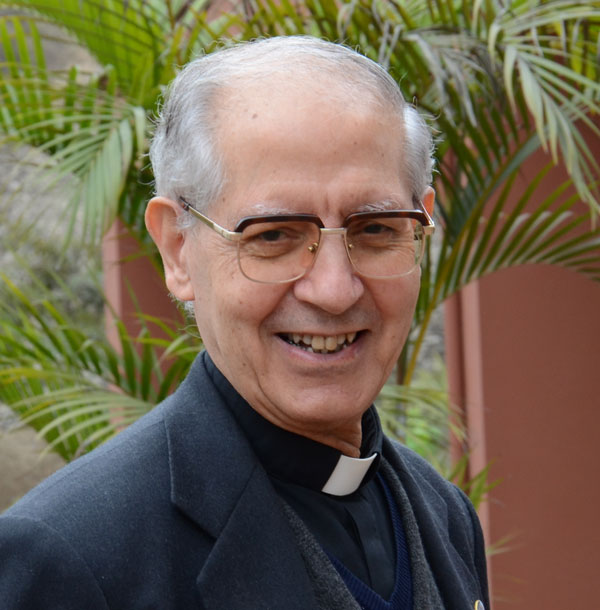
Father General


Fr. Adolfo Nicolás, S.J.

In these days Father General and his Council are at the retreat house of Galloro, not far from Rome, for their annual Spiritual Exercises (May 29-June 5). These will be followed by four days of “Tempo Forte” (June 6-9): which are days of intense reflection and prayer that take place three times a year. The main topics on the agenda are: the study of 2011 ex-officio letters on the youth apostolate; ecology and the Society’s way of proceeding; the examination of restructuration of Provinces as required by GC35; the implementation of the restructuring of the secretariats as announced a few months ago.

From the Curia


–  From June 13 to 25, the Colloquium for Spanish Speaking Major Superiorsappointed during the past year will be held at the General Curia. The purpose of the meeting is to provide group reflection, with the participation of Father General, on important issues of the Provincial government, such as the statement of conscience and the personal accompaniment, the communitarian animation, the insertion into the reality of the local Church, the mission to the frontiers and the interprovincial and international collaboration. The colloquium is useful also to illustrate to the new superiors the various offices and services of the General Curia and to have a personal contact with the staff of Father General in the government of the universal Society. The colloquium has always an international character. This time the participants are 10 major superiors from Latin America, Spain and Germany. At the end of the colloquium the Provincials will visit and celebrate the Eucharist in the Rooms of St. Ignatius, as a sign of real commitment to the charism and mission of the Society.


–  From June 14 to 21, the Third Pan-African meeting of the Apostleship of Prayer and the Eucharistic Youth Movement  (E.Y.M.), the youth branch of the Apostleship of Prayer will be held in Kinshasa (Congo Democratic Republic). The first was in Lagos (Nigeria), in 2002, the second in Dar Es Salaam (Tanzania), in 2009. This time, about 25 delegates, including Jesuits, religious sisters and lay collaborators, from 15 African countries, will meet for a week under the themeTowards the re-creation of the Apostleship of Prayer and the and the E.Y.M. in the Church of  Africa today. The meeting will be an important boost to the promotion of this spiritual way that helps millions around the world, and especially for the Youth branch, very lively and widespread in Africa. 

During the upcoming World Youth Day in Madrid (Spain), the Eucharistic Youth Movement will have a privileged moment during what is called the “Youth Festival”.  On Wednesday August 17th they will share with all those interested the richness and joy of their Eucharistic-grounded and Ignatian inspired formation program for children and young people. The Movement is today very much alive in nearly 50 countries in the world.

Appointments


Father General has appointed:


– Father John Lee Hua Provincial of China. Father John, currently Delegate for Mainland China, was born in 1966, entered the Society of Jesus in 1992 and was ordained a priest in 2002.


– Father Jeyaraj Veluswamy Provincial of Calcutta (India). Fr. Jeyaraj, up to now Novice Master of the same Province, was born in 1961, entered the Society of Jesus in 1983 and was ordained a priest in 1994.


– Father Adelson Araújo dos Santos Regional Superior of Amazzonia (Brasil). Father Adelson Araújo, up to now Spiritual Director of the Philosophate of Belo Horizonte, was born in 1964, entered the Society of Jesus in 1986 and was ordained a priest in 1997.

From the Provinces


BRAZIL: Mendes de Almeida towards Beatification

The process for the beatification of Jesuit Mgr. Luciano Mendes de Almeida who died on August 27, 2006, will begin next August o behalf of the Archdiocese of Mariana, Brazil. It was announced to the Bishops gathered for the 49th general assembly of the Brazilian Bishops’ Conference by its president, Msgr. Geraldo Lyrio Rocha, who asked them to sign the petition to be presented to the Holy See. Msgr. Mendes de Almeida was archbishop of Mariana for 18 years, from 1988 to 2006, and for two consecutive terms he was both secretary and president of the Brazilian Episcopal Conference. Much loved by the people and the Brazilian episcopate, he became known especially for his love for the poor and marginalized people and his commitment to human rights.


PHILIPPINES: Jesuit backs mining

Mining can contribute to create wealth so that Filipinos do not have to leave their families behind in order to find jobs abroad. Father Emeterio J. Barcelon, SJ, ofMilamdec Microfinance Foundation Inc. and of Xavier University Ateneo de Cagayansaid that the mining industry could well lead to the country’s economic salvation. Father Barcelon  said he supports open pit mining in South Cotabato, and he explained: “We should take care of what God has provided us, but being against mining is illogical. The Philippines is rich in minerals, including gold. Leave them idle in the mountains does not benefit anybody, they can be extracted so that it will help people live a decent life,” he said. And regarding international groups who are against mining he continued: “Many are opposing mining but even those who are not connected with the industry use materials that result from mining in their day-to-day activities. The policy to preserve the natural resources for future generations has no sense. Why should we preserve our minerals for the future generations when we need these for the present generation,” said Fr. Barcelon.


INDIA:  The Novitiate’s Greening

In India, Sacred Groves are forest fragments of varying sizes, which are communally protected and which usually have a significant religious connotation for the protecting community. Hunting and logging are strictly prohibited within these zones. Sacred Groves are considered ecologically important concentrations of biodiversity. Whereas other Indian regions like e.g. Himachal Pradesh possess over more than 5,000 such Sacred Groves, the state of Meghalaya has only about 50, and these struggling to survive. It was in this context that the Jesuits developed the idea of converting their novitiate in Shillong, the capital of the state of Meghalaya, into a Sacred Grove dedicated to the conservation of biodiversity. The Jesuit property covers an area of 80 acres; it has a sheer drop of a thousand feet on one side and meandering meadows on the other side. Sholas and pine trees characterize the precincts; a gurgling stream passes through to the reservoir at the bottom of the campus. Jesuits Yan and Richard Jarain formed a persistent partnership in following up their dreams. Twenty-two novices formed a team to construct lanes and paths crisscrossing the pine forest. In addition, the officials of the Forest department were eager to lend a helping hand to plant indigenous trees in the campus. The novices formed teams to execute a joint action plan for 2011.


INDIA: Jesuits to fight corruption

“We are living in a society where social evils and corruption have become the order of the day. Jesuits should play a new role in fighting them,” Justice Cyriac Joseph, Supreme Court judge, told during a gathering marking the end of year-long golden jubilee celebrations for Kerala Jesuit Province. Justice Joseph, the product of a Jesuit education, lauded Jesuit contributions to youth formation and for providing quality education to the poor. “I am a beneficiary of Jesuit formation,” Justice Joseph said, and continued: “In fact, Jesuit priests guided me and influenced me in my faith formation. Thousands of people have benefited from the Jesuits’ vision and mission for the Church.” He was speaking at the Loyola College auditorium in Sreekaryam, near Thiruvananthapuram, the Kerala state capital. Archbishop Maria Callist Soosapakiam of Trivandrum, who presided over the gathering, thanked the Jesuits for establishing educational institutions in coastal areas and conducting studies to identify basic problems in Kerala’s poorer areas. Jesuits have helped Kerala’s fishing communities to advance socially, educationally and spiritually, he said.


MEXICO: 300 years after the death of Fr. Kino

Until June 30 the Library “Francisco Xavier Clavijero” of the Iberoamericana University (UIA) in Mexico City houses the exhibition: Mind bold Missionary, adventurous heart and indomitable spirit. The exhibition is organized by the Iberoamericana University and wants to celebrate the 300th anniversary of the death of Fr. Eusebio Francisco Kino. On display there are more than 100 documents, including manuscripts, letters, books, maps and objects, owned by the Mexican Province of the Society of Jesus, by the Iberoamericana University, individuals and governments of the States of Sonora and Baja California who kindly bestowed them for the occasion. Father Kino, also known as the Father of “Pimería Alta,” a region comprised today among the State of Sonora and South Arizona, is considered one of the most important evangelists of the Society of Jesus in America. In 1975 a statue in his honor was placed in the National Statuary Hall of the Capitol in Washington.


ROME:  Efficacy of Jesuit Chinese Mission

The strategies used by Jesuit missionaries in China present a relevant and efficient way to spread the Gospel message, says Father Klaus Schatz during a conference given recently at the Pontifical Gregorian University, as part of a series of talks on “Conversion. A change of God? Experiences and Reflections on the Interreligious Dialogue,” organized by the Institute of Interdisciplinary Studies of Religion and Culture of the Gregorian University. Father Schatz, who is presently based at the Philosophisch-Theologische Hochschule Sankt Georgen of Frankfurt, referred to the example of Father Matteo Ricci, and reflected on the missionary’s strategy, beginning with winning over the elite ruling class in an effort to gain the trust of the emperor and his court, the official interpreters of religion in that country. In order to reach out to the political and cultural leaders, the missionaries used Western sciences and technology such as astronomy. The novelty that they presented, Father Schatz noted, was that in Christianity every person could have a direct and immediate relationship with God. This was a rare concept in China at that time, when the emperor was believed to be the only one who could offer sacrifices to heaven.


UGANDA:  Refugees learn skills in arts and crafts

As part of a new initiative to help urban refugees become more self-reliant, JRS (Jesuit Refugee Service) has started a new course training refugees in the production of arts and handicrafts in the Ugandan capital, Kampala. A pilot group of five refugees participated in the first training and learned how to produce earrings, necklaces, bracelets, bangles, belts, cards, bags and how to embroider, using simple and easily available local materials such as paper, wooden beads and fibers. “This is a great opportunity for us. Instead of providing us with fish, we were taught how to catch the fish and we were provided with the fishing rods. Now I am ready to go fishing myself”, said Anastase, a Rwandan refugee who participated in the course. This arts and crafts course was introduced following a needs assessment in 2010, during which refugees had expressed a desire for such training. “As refugees we require training in skills that can be utilised in the situation we are in. To learn how to produce arts and crafts is one kind of training from which we can benefit”, one refugee said. Other courses offered by programme include catering, hairdressing and tailoring.

Jesuitica


Conversion of a nazi criminal. In 1947 Nazi Rudolf Hoess, former commandant of Auschwitz Concentration camp (not to be confused with Rudolf Hess, Hitler’s Deputy Führer) was in solitary confinement in Krakow, awaiting execution for his war crimes. When he heard the bells of the local Carmel, he was reminded of the faith he had embraced as a child but had long since rejected. He called for a German-speaking priest. The local Jesuit Provincial, Fr. Ladislav Lohn, went to the convent of Sister Faustina and asked the Sisters to pray earnestly while he went to hear the prisoner’s confession. In the end Hoess was reconciled with the Church and received Holy Communion. Later Hoess wrote his wife and five children, expressed sorrow for his crimes, and begged forgiveness of the people of Poland. He was executed April 16, 1947.

A Wisdom Story 3

Bookmark and Share


by Paul Brian Campbell, SJ

During a momentous battle, a Japanese general decided to attack

A Wisdom Story

even though his army was greatly outnumbered. He was confident they would win, but his men were filled with doubt. On the way to the battle, they stopped at a religious shrine. After praying with the men, the general took out a coin and said, “I shall now toss this coin. If it is heads, we shall win. If tails, we shall lose. Destiny will now reveal itself.”

He threw the coin into the air and all watched intently as it landed. It was heads. The soldiers were so overjoyed and filled with confidence that they vigorously attacked the enemy and were victorious. After the battle, a lieutenant remarked to the general, “No one can change destiny.”

“Quite right,” the general replied as he showed the lieutenant the coin, which had heads on both sides.

A Wisdom Story 5

Bookmark and Share


by Paul Brian Campbell, SJ 

Several citizens ran into a hot argument about God and different religions, and each one could not agree to a common answer. So they came to the Lord Buddha to find out what exactly God looks like.

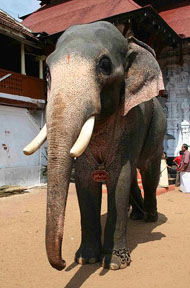
The Buddha asked his disciples to get a large magnificent elephant and four blind men. He then brought the four blind to the elephant and told them to find out what the elephant would “look” like.

The first blind men touched the elephant leg and reported that it “looked” like a pillar. The second blind man touched the elephant tummy and said that an elephant was a wall. The third blind man touched the elephant ear and said that it was a piece of cloth. The fourth blind man hold on to the tail and described the elephant as a piece of rope. And all of them ran into a hot argument about the “appearance” of an elephant.

The Buddha asked the citizens: “Each blind man had touched the elephant but each of them gives a different description of the animal. Which answer is right?”