Category: Uncategorized

JRS assisting refugees from Somalia

Bookmark and Share


JRS assisting refugees from Somalia
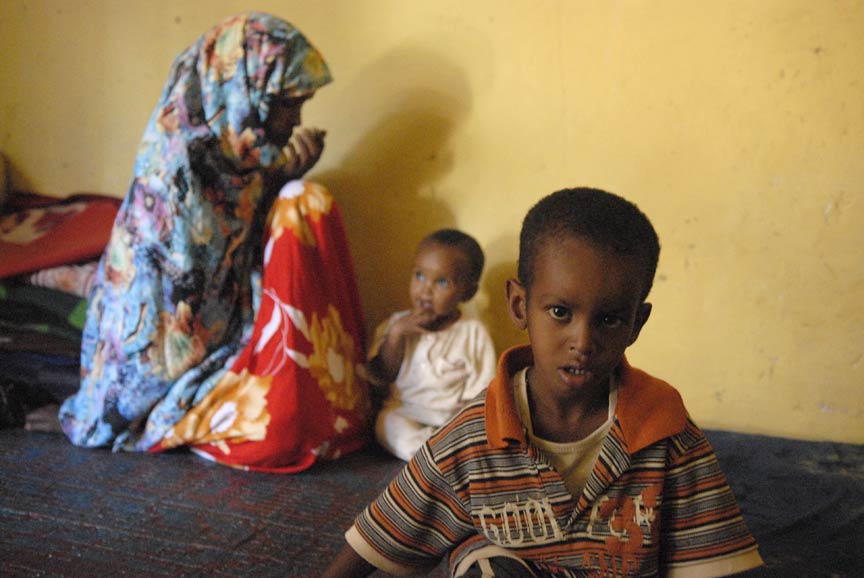
Refugees from Somalia in Addis Ababa, Ethiopia. There are currently more than 750,000 Somali refugees living in eastern Africa, mostly in Kenya and Ethiopia. (Christian Fuchs – Jesuit Refugee Service/USA)

In the midst of one of the worst humanitarian crises in recent times affecting the Horn of Africa, Jesuit Refugee Service has announced plans to step up ongoing work for Somalis in Ethiopia and Kenya, and establish new services in the former.

“We have been serving Somalis for many years and are aware of their needs. We are preparing to help increased flows of traumatized survivors restore normality to their lives. This is a long-term commitment, as psychosocial and education services are key to helping bring stability to refugees’ lives. As our budget is already stretched, we urge the public to help us out in whatever way possible,” said JRS Eastern Africa Director Fr. Frido Pflueger, S.J.

Years of conflict and sporadic droughts have displaced nearly two million Somalis and the figures are rising quickly. As of July 20, more than 120,000 Somalis had fled into Kenya and Ethiopia. This month as many as 3,000 refugees have been arriving daily into the two countries. About 11 million people are believed to have been affected by the worst drought in more than half a century. If action is not taken immediately, famine will spread to the rest of southern Somalia.

“While the number of Somali refugees served by JRS at the moment is relatively low, the types of services offered, such as counseling, are resource intensive. If, as expected, JRS begins offering education services in Dollo Ado camp in Ethiopia, this number will increase dramatically. We are now seeking resources for this new intervention,” said Fr. Pflueger.

Causes

The current crisis is the consequence of three overlapping and intersecting problems: extreme drought; the lack of a functioning central government in Somalia; and the inability of aid agencies to gain access to south central Somalia controlled by the al-Shabab militant group. This is compounded by rising food prices throughout the region, hurting already vulnerable populations with further devastating losses.

Countries in the region are putting measures in place to cope with the situation. Kenya recently announced the expansion of one of three Dadaab camps for new refugees, and Ethiopia is currently expanding the Dollo Ado camp in the southeast of the country.

However, there are limits to what these countries can do, as they are already seriously affected themselves by the drought. There are currently more than 750,000 Somali refugees living in eastern Africa, mostly in Kenya and Ethiopia. Unless the international community can deliver humanitarian aid inside Somalia, Somalis are likely to continue suffering at home and fleeing, where possible, to neighboring countries.

JRS in Ethiopia

JRS teams currently assist nearly 4,000 vulnerable refugees and asylum seekers in Addis Ababa, providing educational, recreational, training and psychosocial support services, as well as emergency assistance. Learn more about JRS in Ethiopia here.

So far the number of Somalis arriving into Addis Ababa has remained relatively constant, but JRS teams are making contingency plans to increase support for an influx into the programme. JRS is in advanced negotiations with the UN refugee agency (UNCHR) to begin providing psychosocial and education services in Dollo Ado camp, now hosting more than 100,000 Somalis.

JRS in Kenya

JRS teams in Nairobi and Kakuma camp currently respond to the needs of 12,500 vulnerable asylum seekers and refugees, offering educational support, food and non-food items and financial, medical and psychosocial assistance, including the training of counsellors and mental health workers. Women facing gender violence also find protection at the JRS safe haven.

JRS projects are seeing large of Somali in both Kakuma camp and Nairobi; now nearly 100,000 between both places. These mainly single mothers face particular difficulties due to large family size and the lack of support networks. Traumatized by conflict, gender violence and in need of culturally specific services, Somali refugees are being provided with intensive counseling and educational support. Without assistance, they and their children face destitution.

Situations like this have become very common in Somalia. Hassan (not his real name) fled Somalia at 10 years of age after his parents were killed and his sister kidnapped by gunmen looking for food. After days of traveling on foot and then, fortunately, by boat, he finally escaped Somalia. Hassan is now in Kakuma.

“JRS teams are also welcoming families fleeing the forced recruitment of their children, some seriously disfigured; for instance, one 16-year old boy had his hand amputated after he refused to join al-Shabab. Other families have had to take longer routes to avoid al-Shabab, consequently their children die from hunger or face exploitation at the hands of people posing as good Samaritans,” said Fr. Pflueger.


What Was Ignatius Like?

Bookmark and Share


Pedro Ribadaneira, one of the first Jesuits, describes Ignatius:

“We frequently saw him taking the occasion of little things to lift his mind to God, who even in the smallest things is great. From seeing a plant, foliage, a leaf, a flower, any kind of fruit; from the consideration of a little worm or any other animal, he raised himself above the heavens and penetrated the deepest thoughts, and from each little thing he drew doctrine and the most profitable counsels for the spiritual life.”

“And he desired that all in the Society accustom themselves always to find the presence of God in everything and that they learn to raise their hearts not only in private prayer, but also in all of their occupations, carrying them out and offering them in such a way that they would feel no less devotion in action than in meditation. And he used to say that this method of prayer is very profitable for all and especially for those who are much engaged in exterior things of the divine service.”

Taiwan Catholics ‘need more clarity’

Bookmark and Share


by UCA News 


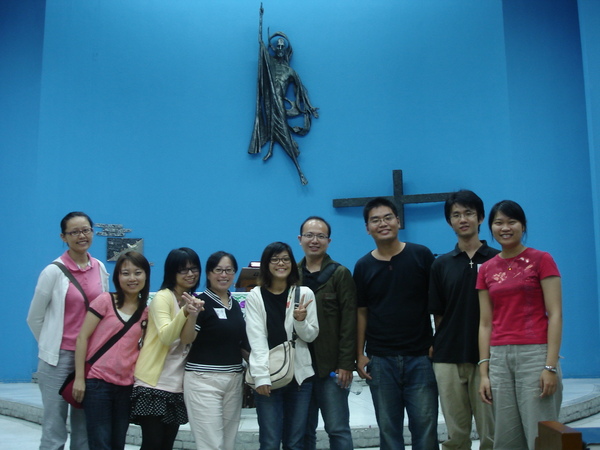
A lecture entitled “Knowing The Mainland Church,” at the Kuting Sacred Heart Church in Taipei, gave Taiwan Catholics the chance to hear what it is like to serve as a Church worker in mainland China and find out more about the problems they face.

“The aim of the lecture was to raise Taiwan Catholics’ awareness of the Church there,” said one of the organizers, Jesuit Father Ignatius Hung Wan-liu.

“Local Catholics in general don’t have a deep understanding of aspects such as the ‘underground’ and ‘open’ Church communities. Their knowledge is mostly based on what they get from Church-run and secular media,” he said.

Father Ignatius pointed out a number of common misunderstandings surrounding the Church in China. For example, most Taiwanese Catholics think that if a mainland priest has government recognition, he automatically belongs to the Chinese Catholic Patriotic Association. This is not so.

Given the complexities of the Church there, it is clear that there is potential for many more misconceptions. Yet it has rarely been as important to clarify them as it is now, with Beijing and the Vatican at an impasse over episcopal ordinations without papal mandate.

The government-sanctioned ‘open’ Church consecrated two illicit bishops this month. In return, the Vatican declared latae sententiae (automatic) excommunication on both of them, in the first excommunications since China began to elect and ordain bishops on its own in 1958.

The need for clarification is also critical now as Taiwan’s universities are no longer off-limits to people from the mainland. This year for the first time, thousands of mainland students have enrolled and will soon be arriving to study. Their numbers will undoubtedly include Catholic priests, nuns and seminarians from both the ‘open’ and ‘underground’ communities.

This has led to calls for the Church authorities to make positive plans to help avoid a scenario where Taiwan Catholics come into contact with illicit clergy and mistake them for Vatican-recognized Church people.

As one priest here has pointed out, “religious congregations and missionary societies will take care of their confreres when they arrive in Taiwan, but there is no specialized committee in the Church to take care of mainland diocesan priests, seminarians or nuns who study here.”

Sister Mary, who spoke at the lecture, is a case in point. She is from northern China and is in Taiwan to study. She told the audience that the mainland Church’s biggest problem today is not the Catholic Patriotic Association but the general standards of formation, which she thinks need to be enhanced for both clergy and parishioners.

Father Willy Ollevier of the Immaculate Heart of Mary Congregation also addressed the audience, talking about his evangelization experiences in China which started 30 years ago. “The Chinese government restricts the activities of visiting Catholic clergy,” he said, “but I think the Taiwan Church still can help greatly with evangelization and pastoral formation, through cultural and educational exchanges.”


Fr General: ‘The globalisation of superficiality’ is happening

Bookmark and Share


by Tim Muldoon


Fr. Adolfo Nicolás, Superior General of the Society of Jesus, spoke to Belgian Jesuits in September 2010 about a “globalization of superficiality,” a result of a surfeit of information (Click here if you can’t see the video.)

I am mindful of Eliot’s lines from “Choruses from the rock“:

Where is the wisdom we have lost in knowledge?

Where is the knowledge we have lost in information?

Nicholas Carr suggests in a provocative book that the internet is rewiring our brains and that we are losing the ability to think deeply.

The Examen is a meditative practice of not only reviewing one’s day, but also reviewing one’s knowledge: what one chooses to give over one’s attention to. It may be seen as the practice of avoiding superficiality by bringing before God that which merits our attention, our knowledge, our love. We are not human search engines churning mindless information: we are human beings capable of loving the way Christ loved, of giving our attentiveness and our intellectual powers to those places in the Kingdom where Christ calls us to work.

Stop surfing for two minutes: sit in silence and pray.


Wisdom Story 22

Bookmark and Share


by Paul Brian Campbell, SJ   


Wisdom Story 22

An investment banker was at the pier of a small coastal village when a small boat with just one fisherman docked. Inside the small boat were several large yellow fin tuna. The investment banker complimented the fisherman on the quality of his fish and asked how long it took to catch them.

The fisherman replied, “Only a little while.”

The investment banker then asked, “Why didn’t you stay out longer and catch more fish?”

The fisherman said, “With this I have more than enough to support my family’s needs.”

The investment banker then asked, “But what do you do with the rest of your time?”

The fisherman said, “I sleep late, fish a little, play with my children, take siesta with my wife, stroll into the village each evening and spend time with my family, I have a full and busy life.”

The investment banker scoffed, “I am a Harvard MBA and could help you. You should spend more time fishing; and with the proceeds, buy a bigger boat: With the proceeds from the bigger boat you could buy several boats. Eventually you would have a fleet of fishing boats. Instead of selling your catch to a middleman you would sell directly to the processor; eventually opening your own cannery. You would control the product, processing and distribution. You would need to leave this small coastal fishing village and move to a big town and eventually to the the city where you will run your ever-expanding enterprise.”

The fisherman asked, “But, how long will this all take?”

To which the investment banker replied, “15 to 20 years.”

“But what then?” asked the fisherman.

The investment banker laughed and said that’s the best part. “When the time is right you would announce an IPO and sell your company stock to the public and become very rich, you would make millions.”

“Millions?…Then what?”

The investment banker said, “Then you would retire. Move to a small coastal fishing village where you would sleep late, fish a little, play with your kids, take siesta with your wife, stroll to the village in the evenings and spend time with your family.”


Ten Elements of Ignatian Spirituality

Bookmark and Share


Ignatian spirituality is one of the most influential and pervasive spiritual outlooks of our age. There’s a story behind it. And it has many attributes. This page provides an introduction to it.

1. It begins with a wounded soldier daydreaming on his sickbed.

Ignatian spirituality is rooted in the experiences of Ignatius Loyola (1491–1556), a Basque aristocrat whose conversion to a fervent Christian faith began while he was recovering from war wounds. Ignatius, who founded the Jesuits, gained many insights into the spiritual life in the course of a decadeslong spiritual journey during which he became expert at helping others deepen their relationship with God. Its basis in personal experience makes Ignatian spirituality an intensely practical spirituality, well suited to laymen and laywomen living active lives in the world.

More about Ignatius Loyola


2. “The world is charged with the grandeur of God.”

This line from a poem by the Jesuit Gerard Manley Hopkins captures a central theme of Ignatian spirituality: its insistence that God is at work everywhere—in work, relationships, culture, the arts, the intellectual life, creation itself. As Ignatius put it, all the things in the world are presented to us “so that we can know God more easily and make a return of love more readily.” Ignatian spirituality places great emphasis on discerning God’s presence in the everyday activities of ordinary life. It sees God as an active God, always at work, inviting us to an ever-deeper walk.

3. It’s about call and response—like the music of a gospel choir.

An Ignatian spiritual life focuses on God at work now. It fosters an active attentiveness to God joined with a prompt responsiveness to God. God calls; we respond. This call-response rhythm of the inner life makes discernment and decision making especially important. Ignatius’s rules for discernment and his astute approach to decision making are well-regarded for their psychological and spiritual wisdom.

More about Call and Response

4. “The heart has its reasons of which the mind knows nothing.”

Ignatius Loyola’s conversion occurred as he became able to interpret the spiritual meaning of his emotional life. The spirituality he developed places great emphasis on the affective life: the use of imagination in prayer, discernment and interpretation of feelings, cultivation of great desires, and generous service. Ignatian spiritual renewal focuses more on the heart than the intellect. It holds that our choices and decisions are often beyond the merely rational or reasonable. Its goal is an eager, generous, wholehearted offer of oneself to God and to his work.

More about the Spirituality of the Heart

5. Free at last.

Ignatian spirituality emphasizes interior freedom. To choose rightly, we should strive to be free of 

personal preferences, superfluous attachments, and preformed opinions. Ignatius counseled radical detachment: “We should not fix our desires on health or sickness, wealth or poverty, success or failure, a long life or a short one.” Our one goal is the freedom to make a wholehearted choice to follow God.

6. “Sum up at night what thou hast done by day.”

The Ignatian mind-set is strongly inclined to reflection and self-scrutiny. The distinctive Ignatian prayer is the Daily Examen, a review of the day’s activities with an eye toward detecting and responding to the presence of God. Three challenging, reflective questions lie at the heart of the Spiritual Exercises, the book Ignatius wrote, to help others deepen their spiritual lives: “What have I done for Christ? What am I doing for Christ? What ought I to do for Christ?”

More about the Daily Examen

7. A practical spirituality.

Ignatian spirituality is adaptable. It is an outlook, not a program; a set of attitudes and insights, not rules or a scheme. Ignatius’s first advice to spiritual directors was to adapt the Spiritual Exercises to the needs of the person entering the retreat. At the heart of Ignatian spirituality is a profound humanism. It respects people’s lived experience and honors the vast diversity of God’s work in the world. The Latin phrase cura personalis is often heard in Ignatian circles. It means “care of the person”—attention to people’s individual needs and respect for their unique circumstances and concerns.

8. Don’t do it alone.

Ignatian spirituality places great value on collaboration and teamwork. Ignatian spirituality sees the link between God and man as a relationship—a bond of friendship that develops over time as a human relationship does. Collaboration is built into the very structure of the Spiritual Exercises; they are almost always guided by a spiritual director who helps the retreatant interpret the spiritual content of the retreat experience. Similarly, mission and service in the Ignatian mode is seen not as an individualistic enterprise, but as work done in collaboration with Christ and others.

More about Collaboration

9. “Contemplatives in action.”

Those formed by Ignatian spirituality are often called “contemplatives in action.” They are reflective people with a rich inner life who are deeply engaged in God’s work in the world. They unite themselves with God by joining God’s active labor to save and heal the world. It’s an active spiritual attitude—a way for everyone to seek and find God in their workplaces, homes, families, and communities.

10. “Men and women for others.”

The early Jesuits often described their work as simply “helping souls.” The great Jesuit leader Pedro Arrupe updated this idea in the twentieth century by calling those formed in Ignatian spirituality “men and women for others.” Both phrases express a deep commitment to social justice and a radical giving of oneself to others. The heart of this service is the radical generosity that Ignatius asked for in his most famous prayer:

Lord, teach me to be generous.

Teach me to serve you as you deserve;

to give and not to count the cost,

to fight and not to heed the wounds,

to toil and not to seek for rest,

to labor and not to ask for reward,

save that of knowing that I do your will.

Wisdom Story 21

Bookmark and Share


by Paul Brian Campbell, SJ   


Wisdom Story 21

A highly skilled carpenter who had grown old was ready to retire. He told his employer-contractor of his plans to leave the house building business and live a more leisurely life with his family. He would miss the paycheck, but he needed to retire.

The employer was sorry to see his good worker go and asked if he could build just one more house as a personal favor. The carpenter agreed to this proposal but made sure that this will be his last project. Being in a mood to retire, the carpenter was not paying much attention to building this house. His heart was not in his work. He resorted to poor workmanship and used inferior materials. It was an unfortunate way to end his career.

When the job was done, the carpenter called his employer and showed him the house. The employer handed over some papers and the front door key to the carpenter and said “This is your house, my gift to you.”

The carpenter was in a shock! What a shame! If he had only known that he was building his own house, he would have made it better than any other house that he ever built!


Chinese Catholic layman to be beatified

Bookmark and Share


The Vatican has put a Chinese Catholic scholar who lived nearly five centuries ago on track for beatification. In an Associated Press story dated April 20, Vatican spokesman Fr Federico Lombardi SJ, is quoted saying the go-ahead for the beatification cause for Paul Xu Guangqi, who lived from 1562 to 1633, was a “beautiful light of hope for China today and tomorrow.”

Fr Jerry Martinson SJ talks about the significance of the start of the beatification process for Xu.

This is hopeful news indeed for Chinese Catholics. In his pastoral letter to the Shanghai Diocese on the 375th anniversary of Xu’s death, Jesuit Bishop Jin Luxian stated that Xu “can be declared a saint without a shadow of a doubt”. It was Bishop Jin who actively initiated the process for Xu’s canonisation. Xu was a native of Shanghai for whom the city’s Xujiahui District is named.

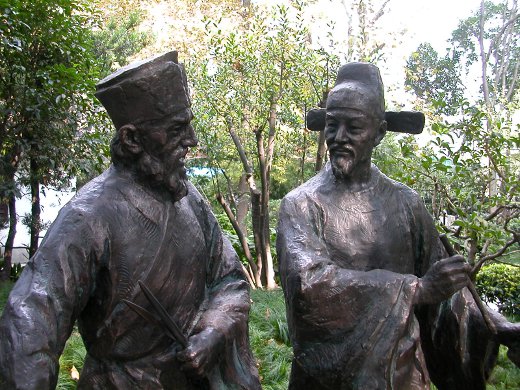
Many Chinese Catholics believe that Xu should be canonized together with his close friend and colleague, Italian missionary and Jesuit Matteo Ricci. It was Ricci’s map of the world that caught Xu’s attention and drew him to seek out the Jesuits in Shaozhou in 1596, and in 1600, to visit Ricci in Nanjing. Xu received instructions in the Catholic faith by the Jesuits and was baptised in 1603.

Shortly after his baptism, Xu passed the Metropolitan Examination, moved to Beijing where he re-established contact with Ricci, and steadily rose to the highest office in the land, Grand Secretary to the Emperor, the equivalent of today’s Prime Minister. He worked closely with Ricci and translated many of Ricci’s writings into Chinese. Together they translated the first six books of Euclid’s Elements, introducing geometry and western logic to Chinese.

Xu collaborated with a number of Jesuit scientists, including the mathematician-astronomer, Adam Schall von Bell, and convinced the Emperor to assign them major projects such as the correction of the Chinese calendar. This led to the appointment of Schall, and a long line of Jesuits after him, to the directorship of the Astronomical Bureau for a period lasting nearly 150 years.

Xu’s close friendship with the Jesuits, and frequently heroic defence of the Society at the Imperial Court, resulted in a relationship of trust between the Jesuits and the Emperor. This relationship was maintained with successive emperors well into the Qing Dynasty and provided an umbrella of protection that allowed the fledgling Chinese Catholic Church to take root and grow.

Xu’s work and influence have been the focus of several meetings over the years. Most recently, a symposium on Xu’s influence on East-West intercultural dialogue was held in June by the Archdiocese of Naples, the University of Naples, the Saint Egidio Community, the Xu-Ricci Dialogue Institute of Shanghai’s Fudan University, and the Universita Cattolica del Sacro Cuore. An international group of scholars, including several from China, presented papers that explored Xu’s deep religious faith, his outstanding accomplishments in agriculture and the development of life-saving crops, water conservation, military reform, and various areas of scientific research.

Throughout his long and distinguished career, Paul Xu remained a faithful, zealous and model Catholic layman and supporter of the Jesuits. Fr. George Dunne SJ, author of Generation of Giants, states that Xu is “rightly regarded as the greatest glory of Chinese Catholicism.”

Xu’s beatification and canonization – together with Matteo Ricci – would enshrine these two saintly men as models for Chinese Catholics and missionaries as well. The universal Church would profit greatly by emulating their example of collaboration between clergy and laity and sincere intercultural dialogue. Without these qualities, neither Xu nor Ricci, alone, could have made such outstanding and long-lasting contributions to China and to the Catholic Church.

Jesuits in Europe – News Bulletin #160

Bookmark and Share


From the Curia:

· Colloquium for Spanish Speaking Major Superiors

From June 13 to 25, the Colloquium for Spanish Speaking Major Superiors appointed during the past year will be held at the General Curia. The purpose of the meeting is to provide group reflection, with the participation of Father General, on important issues of the Provincial government, such as the statement of conscience and the personal accompaniment, the communitarian animation, the insertion into the reality of the local Church, the mission to the frontiers and the interprovincial and international collaboration. The colloquium is useful also to illustrate to the new superiors the various offices and services of the General Curia and to have a personal contact with the staff of Father General in the government of the universal Society. The colloquium has always an international character. This time the participants are 10 major superiors from Latin America, Spain and Germany. At the end of the colloquium the Provincials will visit and celebrate the Eucharist in the Rooms of St. Ignatius, as a sign of real commitment to the charism and mission of the Society.


· Third Pan-African meeting of the Apostleship of Prayer

From June 14 to 21, the Third Pan-African meeting of the Apostleship of Prayer and the Eucharistic Youth Movement  (E.Y.M.), the youth branch of the Apostleship of Prayer will be held in Kinshasa (Congo Democratic Republic). The first was in Lagos (Nigeria), in 2002, the second in Dar Es Salaam (Tanzania), in 2009. This time, about 25 delegates, including Jesuits, religious sisters and lay collaborators, from 15 African countries, will meet for a week under the theme Towards the re-creation of the Apostleship of Prayer and the and the E.Y.M. in the Church of  Africa today. The meeting will be an important boost to the promotion of this spiritual way that helps millions around the world, and especially for the Youth branch, very lively and widespread in Africa. 

During the upcoming World Youth Day in Madrid (Spain), the Eucharistic Youth Movement will have a privileged moment during what is called the “Youth Festival”.  On Wednesday August 17th they will share with all those interested the richness and joy of their Eucharistic-grounded and Ignatian inspired formation program for children and young people. The Movement is today very much alive in nearly 50 countries in the world.


· Global Ignatian Advocacy Network

For the first time ever, all the members of the Global Ignatian Advocacy Network(GIAN) will come together from 18-23 June in the retreat house near the birth place of St Ignatius in Loyola. The five leaders and twenty core group members of the global networks for Ecology, Right to Education, Migration, Peace and Human Rights, and Governance of Natural and Mineral Resources will spend six days learning about advocacy and networking, and discerning the way forward for their networks. All Conferences are represented in the group, which will be supported by the Social Justice and Ecology Secretariat, and two experts of Alboan, the Jesuit NGO of the Loyola Province. The workshop in Loyola will be followed by a worldwide mapping of Jesuit institutions that are currently engaged in advocacy. You are invited to follow the meeting through the GIAN website: http://www.ignatianadvocacy.org/


Appointments

Father General has appointed:

– Father John Lee Hua Provincial of China. Father John, currently Delegate for Mainland China, was born in 1966, entered the Society of Jesus in 1992 and was ordained a priest in 2002.

– Father Jeyaraj Veluswamy Provincial of Calcutta (India). Fr. Jeyaraj, up to now Novice Master of the same Province, was born in 1961, entered the Society of Jesus in 1983 and was ordained a priest in 1994.

– Father Adelson Araújo dos Santos Regional Superior of Amazzonia (Brasil). Father Adelson Araújo, up to now Spiritual Director of the Philosophate of Belo Horizonte, was born in 1964, entered the Society of Jesus in 1986 and was ordained a priest in 1997.

–  Father Paul Martin Regional Superior of Guyana. Father Paul, currently coordinator of Ministries in South Pakaraimas, Diocese of Georgetown, was born in 1960, entered the Society of Jesus in 1984 and was ordained a priest in 1996.

Michael J. Garanzini– Father Michael J. Garanzini, of the Missouri Province (USA), as Secretary for Higher Education, succeeding to Father Ronald J. Anton. This appointment will take effect on 1st September 2011. Father Michael, President of the Loyola UniversityChicago, was born in 1948, entered the Society of Jesus in 1971 and was ordained a priest in 1980. “Among other duties, Father Garanzini will have responsibility for the creation and maintenance of networks of research and common action among Jesuit higher education institutions throughout the world, for the promotion of the Jesuit identity in these institutions, and for the development of means of sharing the knowledge and research of Jesuit universities with those who have limited access to education.” 

… Jesuits around the world, Rome, June 6 and 20, 2011

Celebrating Ignatius

Bookmark and Share


It’s July, the month of high summer (in the Northern Hemisphere) and the month of St. Ignatius Loyola, whose spiritual ideas we celebrate here at IgnatianSpirituality.com. Ignatius’s feast day is July 31. Loyola Press has assembled a collection of reflections, insights, prayers, blog posts, and article excerpts for every day of the month.

Here is the list. Today’s good idea is an invitation to browse the “What Is Ignatian Spirituality?” section of this website.