Category: Uncategorized

Why Jesuits Are in Higher Education

Bookmark and Share


By William J. Byron, SJ

From Jesuit Saturdays: Sharing the Ignatian Spirit with Friends and Colleagues

In education, as in all else, the Jesuit is not content with simple efficiency-doing something right. Rather, he wants to be effective, which means doing the right thing. Accordingly, in all things the Jesuit way involves a search for God’s will. This search, in the Jesuit vocabulary, goes by the name of discernment. (One Jesuit I knew, the late Tom Savage, a professor of English at Xavier University in Cincinnati, taught his students a lot about discernment by means of a simple message posted on his office door: “The fool collects, the wise person chooses.”) Discernment, it should be noted, is a wisdom characteristic that prepares a person to choose wisely. …


Why Jesuits Are in Higher Education

Jesuits in higher education will, upon reflection, notice that their method, their style, their way of doing what they do, is radically influenced by the spirit of their founder, Ignatius of Loyola. At least it should be. … [H]is wisdom lies hidden in several documents-in his spiritual journal, or Autobiography; in the Constitutions he wrote for his followers; and in the retreat outline written from personal experience and known as the Spiritual Exercises, which should not be separated from the Directory he intended for the use of the experienced guide who assists the person making the Exercises.

Assisting the Spirit in Moving Minds and Hearts

Discernment and the search for God’s will are the warp and woof of Ignatian spirituality, but the Ignatian way of discernment cannot be learned from books. It can only be experienced under the direction of a sensitive guide. Such guides are available on Jesuit university campuses, typically through retreat programs, to work with people interested in making the Spiritual Exercises. A special task, a privileged opportunity, for Jesuits in higher education is to open the book of the Spiritual Exercises to those who want to grow spiritually. In this context, as in the classroom, learning is directed by a motivator-organizer and assimilated by an active participant in the process. In the retreat experience, one learns how to pray. In the classroom experience, one learns how to learn. As classroom educator or spiritual guide, the Jesuit tries, as an instrument of God’s grace, to assist the Spirit in moving the minds and hearts of those who want to grow.

In the domain of higher education, there are many (students, faculty, and staff alike) with the potential for wisdom. That is why Jesuits gather at colleges and universities to work. Their task is not only to teach and search for truth in all its forms but also to share their founder’s special grace with those who want to grow in the Ignatian way. Often on Jesuit campuses there can be found a Jesuit whose assignment is to explain the Ignatian heritage and to bring interested members of faculty, staff, or student body into closer experiential contact with this spiritual tradition.

Christian wisdom is to “know you, the only true God, and the one whom you sent, Jesus Christ” (John 17:3). There is an Ignatian way toward this wisdom. It is Ignatian, not Jesuit in any proprietary sense; hence it is there to be shared with others. The Jesuit is expected to have internalized this way. His educational methods will, not surprisingly, reflect it. His normal desire will be to live and work in companionship with others who know this way, so he lives in community with other Jesuits. And his hope will be to share this way or see it shared with others. This is all part of the Jesuit purpose in higher education or in any other work.

Sharing Ignatian Spirituality with Lay Colleagues

The Jesuit, by vocation, is trained “to seek God in all things,” even in quite secular and esoteric things and in academically rarefied surroundings. Seeking and finding God in all things is a bedrock Jesuit principle. And on this bedrock rests the traditional Jesuit commitment, in theory and in practice, to a Catholic Christian humanism. God is in all things human.

Not all Jesuits are skilled in sharing their Ignatian spirituality with lay colleagues. But few would not attach high importance to the sharing. And all support the various mechanisms in place within or around Jesuit institutions to facilitate this sharing. The realization of all these ideals, the translation of this theory into practice, is a personal challenge to Jesuit fidelity. The Society of Jesus lives on the trust it places in each of its members to appropriate the essentials of its spiritual heritage, to sustain them in himself by God’s grace, and to pass them on to others who want to grow in this way.

A brochure inviting prospective students-the kind who want to grow-to consider enrolling at the Jesuit-run University of Scranton states the matter simply and well:

College is an integral part of life’s journey. Over the next four years, you’ll gain knowledge, acquire skills and forge relationships that will last a lifetime. At the University of Scranton, we offer a liberal arts education in the dual Jesuit traditions of cura personalis-care for the whole person-and the magis-a restless pursuit of excellence. In this remarkable community of inquiry, as scholars and learners together, you’ll develop healthy habits of the mind and heart that will serve you well in any endeavor you choose.

That’s another way of explaining why Jesuits are in higher education.


Things We Cannot Change

Bookmark and Share


by Paul Coutinho,SJ

Many things in life are beyond our control. 

We can do very little about the weather, natural calamities, sickness, and so many things that happen in our lives. Often we see these things as hardships, as unfair situations. But we do have the power to decide how we will respond to situations beyond our control. One effective response is the Serenity Prayer: “Lord, give me the serenity to accept the things I cannot change, the courage to change the things I can, and the wisdom to know the difference.” Or we may use the Eastern way of looking for the divine presence in the unexpected. The Bible begins by telling us that in the beginning there was chaos and confusion all over the world, and God hovered over this chaos and out of it brought forth a new and beautiful creation. When my life is chaotic and I find it difficult to understand what is happening, let me allow the divine spirit to hover over my darkness, and let me wait for the new and the beautiful to spring forth in my life. Chaos is often the shortest path to our spiritual core.

Engaging ecologically

Bookmark and Share


By Pedro Walpole,S.J.

ENVIRONMENTAL concerns continue to draw Jesuits in the Asian region to find ways to better understand, engage, and respond to the social and ecological challenges.


There are many among the Jesuits and those who work with them who have contributed much to addressing the environmental concerns of our times, whether through research institutes, university education or social centers. At this stage, there is a major review and fundamental awareness of the need to care for creation. Exploitation or domination of creation has not been the major attitude of relating with creation. However today the Jesuits are emphasizing that reconciliation with creation, as with social justice, is fundamental to being responsible people of faith in the world. And this affects all Jesuits and all Jesuit institutions.

A focal point of ecological engagement is the Mekong River that traverses six countries and where over 60 million people depend for their food, water, transport, and incorporate their livelihoods and many aspects of their daily lives.

In selecting the Mekong region and the complexity of the management its people and resources require, Jesuits from many countries undertook an experiential workshop this month in Kompong Cham City in Cambodia that provided occasion to better understand the complexity of their work with the environment, from the perspective of Reconciliation with Creation.

The basic dynamic of reconciliation with creation is to start with gratitude for life and to experience something of this environment and life of the people, rather than immediately with the issues, to seek to learn first and not to lead, and to collaborate with those who are already engaged.

Mekong, like many rivers in Asia, swells with the onset of the southwest monsoon and the typhoons of the Pacific. The natural overflow onto the floodplains along the Mekong and Ton Le Sap are expected annually, reaching a peak in September. In visits to the local communities, people shared that there has been no major rise in the waters in the last 10 years and the flooding is not occurring as experienced in the past.

This reduced flooding is being attributed to the dams built, mostly in the upper course of the river in China; on the other hand China says it is the noted changes in weather during this period. This is under scientific review at present and China is being asked to share more of their data and information. There are many concerns with the dams both in Lao RPD (Xayaburi Dam) and Cambodia (Sambor Dam), which have major financial backing and are seen as essential to national development.

The Mekong is also a focal point for development in the region for the Asian Development Bank in terms of hydropower and infrastructure support. The present estimate of 10,000-megawatt production is envisaged to reach 70,000MW or more in the years ahead. This is where much of the ecological and social questions arise.

This greater emergence of transboundary management of responses is encouraging greater discussions in identifying who plays what role in the changing river. The Mekong discussions also engender the need to look at the bigger picture and to go beyond each country’s boundaries in developing the social and political systems that can best respond to human development. The Mekong River Commission is the most evident organization in this, and many other countries involved in transboundary river management are seeking to learn the responsibilities of such politically critical institutions.

There are very complex political relationships involved. There are also various economic strategies and development designs being drawn up. But beyond national projections for energy requirements, the basic needs of people living in this area and the security of their livelihoods must be integrated and made sustainable.

This is meeting in Mekong is part of the global engagement that Jesuits seek in understanding the reconciliation with creation needed.


Wisdom Story 24

Bookmark and Share


by Paul Brian Campbell, SJ    

When a man whose marriage was in trouble sought his advice, the Master said, “You must learn to listen to your wife.”

The man took this advice to heart and returned after a month to say that he had learned to listen to every word his wife was saying.

Said the Master with a smile, “Now go home and listen to every word she isn’t saying.”


Can you answer the challenge?


2011 magis

Bookmark and Share


This week in Cordoba has been full of cultural and religious experiences. It has also been a week of much walking. From the Mezquita-Cathedral, to the Jewish Cultural Center, over to the Archeological Museum, passing by the Botanical Garden,

Can you answer the challenge?

we have seen much of the city on foot.

Granted, we are not walking nearly the distances of our fellow pilgrims on the Camino, but a few here in Cordoba have developed blisters in solidarity.

Tonight we will commence a hike of our own. Not on a section of the Camino, but to a hermitage up a mountain outside the city limits. We will be camping near the hermitage, before walking back down tomorrow morning. Cordoba has become our home for the past week, and we’ve grown familiar with it. But if there were a perfect time to challenge ourselves once again to experience something different, it would be now!

In preparation we’ve packed our bags, laced up our sneakers, refilled our water bottles and we are now watching movie. Watch a movie, you say? In preparation for a hike? What does a movie have to do with a hike?! More than you might think.

We are watching the French film, “Of Gods and Men,” a film which won the Grand Jury Prize at the Cannes Film Festival. Under threat by fundamentalist terrorists, a group of Trappist monks stationed with an impoverished Algerian community must decide whether to escape the threats or stay and accompany the community in this time of need. It’s the very essence of the topics we have been discussing over the past week: We are all not the same. We come from different backgrounds, different experiences, and different faiths. Asking and discussing these questions may be outside our comfort zone. Yet we share this earth we call home. How do we live together on it? In violence or peace?


Businessman embraces spiritual calling

Bookmark and Share


by UCAnews 

In a pragmatic Chinese society such as Taiwan’s, it might strike people as particularly unusual

Chien Chuan-yao (right) at the Jesuit Society of Taiwan, where he shared his transformation from successful businessman to lay ministe

that the senior manager of a multinational corporation would be willing to forego his worldly success and devote himself to spiritual matters.

This is precisely what Chien Chuan-yao has done.

The former marketing manager shared the epiphany that changed the course of his life during a gathering hosted by the Jesuit Society in Taiwan in commemoration of the feast of the society’s founder, St. Ignatius of Loyola, last week.

Chien, a parishioner of Holy Trinity Church in Hsinchu diocese, was one of three laypeople to share their stories of faith with about 200 Catholics as part of ongoing celebrations of the Year of Laity.

He told the assembly that he had reached the peak of his career about eight years ago, at which time he was responsible for an annual marketing budget of millions of Taiwanese dollars.

At the height of his success, Chien said he was shocked to discover the contempt his wife showed towards his professional accomplishments.

“In the quiet of one night, I began to ask myself if making money was the only goal in life and how I should walk the path of my remaining life,” Chien told the audience.

After prayer and considerable reflection over many nights, he decided to quit his job and work for the Church – a decision his employer deemed crazy.

Chien said he attended a week-long spiritual retreat, which dramatically altered his outlook and confirmed his conviction to work for the Church.

He then enrolled in a four-year theology program at Fu Jen Catholic University and has now established a prison ministry in which he seeks to spread the Catholic faith to those who have lost their way in life.

The temptation of material success, however, revisited Chien when his former employer tried to lure him back to the marketing sector by offering him a lucrative position in mainland China.

But Chien’s inner struggles had long ended, and his determination to serve God was fixed.

Father John Wu Po-jen, director of the Taipei Ignatian Spirituality Center said greater numbers of laypeople have realized Ignatian spirituality is relevant to their lives during programs celebrating the Year of Laity.

“It is more persuasive to have laypeople rather than clergy share the spiritual changes in their lives because audiences would think ‘it is a must’ for the latter since the clergy have dedicated their lives to God already,” the Jesuit priest said.


What Would Ignatius Think about Social Media?

Bookmark and Share


Would Ignatius spend a lot of time on Twitter and Facebook if he was around today? Perhaps not, says Lisa Kelly:

With all our technology we truly have the capacity to live our lives in almost constant contact with others virtually anywhere. So really, I don’t ever have to say goodbye. “We” can live on via email forever. I wonder what Ignatius would say about trying to do so.

I think he would say that we need to first acknowledge the gift that we have in our friendship. Here and now. I don’t know what the future holds for either of us so let me take a moment, here and now, to thank you for the gift you have been to me. Name it. Celebrate it. Wallow in it for just bit.

Then I think he would say, regarding staying in contact, we ought to use technology in as much as it helps us on our end to respond to God’s love, and rid ourselves of it so far as it hinders us in responding to God’s love. If by staying in contact with me, you are not being fully present to those in your daily life now, you will be missing out on the presence of God in them, and they will miss out on experiencing it in you-and I know it is so fully present in you. You need to be fully present there in this next phase of your life. That is where God needs of you. That is what I want for you.. . .

“We” don’t have to live on via email or texting or Facebook. “We” live on in our Oneness with Christ. And in that, we will never lose contact.

Read the whole thing

Preparations for MAGIS Complete, Full List of Experiences Now Available


2011 World Youth Day

Bookmark and Share


World Youth Day 2011 is set to begin in Madrid, Spain in just a few weeks. Pilgrims from all over the world will be in attendance, ready to share the common bond of their Catholic faith.

While many of those pilgrims are still a few weeks away from boarding planes or taking trains to Madrid, an initiative known as MAGIS will be sending students all over Spain and Portugal to participate experiences in preparation for World Youth Day.

This initiative was started in 1997 (World Youth Day Paris). In 2005 in Cologne, it was called MAGIS for the first time. In 2008 it was celebrated in Sydney and in 2011 it will be celebrated in Madrid in the days leading up to World Youth Day. The motto for this MAGIS is “with Christ at the heart of the world.” The Society of Jesus, along with other religious institutions and laypeople throughout the world who follow Ignatian Spirituality, have invited pilgrims to find Christ at the center of their lives.

Throughout the past year and a half of planning, ideas have become realities and all that is left to do are the finishing touches.

After the initial selection, more than 400 volunteers began working in teams to go about organizing the potential experiences, working on content and logistics, and finalizing plans. There are six types of experiences: Pilgrimage, Social Service, Art and Creativity, Faith and Culture, Spirituality, and Ecology.

Recently released, MAGIS has posted a list of the experience locations and what work will be completed at each; these include visiting Fatima, volunteering in a prison, accompanying marginalized families, serving pilgrims at Lourdes and restoring a hermitage. For the full list, click here.


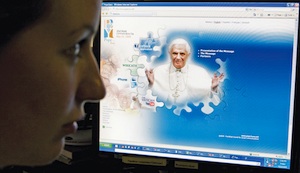
How well is the church reaching out to people in the digital age?

Bookmark and Share


by James Martin, S.J.  

The industry term for the appeal of a Web site is “sticky.” Visitors (or “eyeballs”) stick to a site if it is interesting, lively, useful, provocative and generally appealing. Conversely, the “bounce rate” refers to how frequently initial visitors navigate away from a page to a different site. Sticky is good; bouncy is bad.

How bouncy or sticky are Catholic Web sites? More broadly, how well is the church using social and digital media in its mission to spread the Gospel? Since “the church” can mean many things, let’s narrow the topic down: How well are those who work in church organizations in this country using social and digital media?

First, the good news. These days almost every Catholic organization and diocese and most parishes have a firm Web presence. Available to both the devout and the doubtful, these sites are repositories of useful information. One can check out editorials in the diocesan newspaper, follow the pastor’s blog (and read his latest homily), make donations to a favorite Catholic charity, and check on Mass times. An up-to-date Web site is as much a necessity today as a weekly parish bulletin is (or used to be).

More good news: The U.S. Conference of Catholic Bishops has found great success in the world of social media. It has over 29,000 “fans” on Facebook, where the conference sometimes sponsors trivia contests and where fans use the page for lively discussions. The conference also maintains its own YouTube channel and frequently updates its Twitter feed. Sample tweet: “Are you ready to spend some behind-the-scenes time w/Pope Benedict XVI at the Apostolic Palace? The grand tour.” (Note 4 tweeters: 2 save space drop XVI).


The bad news is that more than a few Catholic sites are unimaginative, difficult to navigate, full of dead links and look like they have not been redesigned since the Clinton administration. In the print world, magazine editors are encouraged to redesign every five years. On the Web, reinvention happens more frequently. If the medium is the message, then the message is that the church is often a laggard. More lamentable than the appearance is the content: while church sites are repositories for information, they are often nothing more than that. While Mass times and donor information are important, a good Web site requires more than just raw facts. As philosophers might say, these are a necessary but not sufficient condition for stickiness.

Most good Web sites are updated daily. If they want young eyeballs, then this is done several times a day. And good Web administrators post not just text but video, podcasts, slideshows and interactive conversations. If not, he or she should not be surprised by a lack of visitors. Those who wonder whether it is really possible to update sites daily would do well to remember that there is plenty going on in our church, so it is not hard to be creative: point viewers to international church news they might not otherwise see; upload videos of Catholic speakers; link to articles from your favorite Catholic magazines (hint); point to new (or old) Catholic art; and post the latest Vatican press release.

Too Busy?


Many church employees might say: “Are you nuts? I’m too busy!” But not updating is like having a microphone in the parish that is not working. A priest or deacon could deliver homilies that would put St. John Chrysostom to shame, but if no one can hear them, what is the point? Likewise, if church organizations do not maintain a fresh Web site or blog, fewer people-especially the young, who get their information digitally-are going to visit these sites and hear the church’s message, or even care if the church is speaking.

Back to the good news: The official church has hit its stride in the blogosphere. Archbishop Timothy Dolan of New York blogs religiously (pun intended). So does Cardinal Sean O’Malley, O.F.M.Cap., of Boston, who supplements his blog with photos. The blogosphere is a natural place for articulate communicators, and there are many in the church. But blogs present significant challenges, like encouraging dialogue among readers and building a sort of virtual community. Take a look at a few diocesan blogs and note how many comments there are: often the number is zero.

Why zero? Too often it is because the blogger posts and then walks away. To paraphrase Truman Capote’s comment about Jack Kerouac, that’s not blogging, that’s publishing. Responding to commenters encourages more people to read, post and discuss. This practice is not without its own dangers; it is easy to get bogged down in arcane theological e-battles.

Accepting and publishing comments, even those not in line with church teaching, is another challenge that demands, besides patient catechesis, constant charity. Still more charity is required when the comments become ad hominem. “In omnibus caritas,” as Blessed John XXIII liked to say. Easy to say, but harder to do when someone says you are an idiot, a heretic (or both) or that one should be, as someone recently said of yours truly, summarily laicized.


Doubting the Haters

One area where the institutional church’s relationship with digital media is doing poorly is in its own reading of blogs; one can pay too much attention to those who are called “haters.” Not a few Catholic bishops, administrators, theologians, thinkers, writers, priests, brothers and sisters have been vilified for no good reason on Catholic blogs whose raison d’être is to police, condemn and attack.

Some sites seem to have set themselves up as a Web-based magisterium, even when the inquisitors have little to no theological acumen. After all, on the Web no one knows that you are not Hans Urs von Balthasar.

Sometimes these attacks ping around the Web and find their way to the Catholic school where the targets of the attacks work, the university where they teach or the diocese in which they minister. So a caveat: Don’t believe everything you read in the blogosphere. Remember that the authors of some so-called Catholic blogs are not always reliable. It is better to check with the subject of the attack.

Languages and Modalities

Back to how the church can better use digital media to spread the Gospel. As for the (somewhat) newer media, the church is still playing catch-up. That is understandable: church workers are busy folks. But the lack of attention may give the unwitting impression that the church considers Facebook, YouTube and Twitter as beneath them or inherently risible. “You tweet?” said a priest to me recently. “Whatever for?” When I told him that I post 140-character homilies every morning, he rolled his eyes.

My response was this: Does the church seriously want to reach young people? I mean people who are really young-not just under 50, but under 25-young men and women in college or high school. The church longs to reach the young, but is it willing to speak not only in the language of young people, but in the modes they use? Or does the church expect them to come to it and speak, as it were, in its own language?

Jesus, after all, asked his followers to go to the ends of the earth, not just to places where they felt comfortable. And Jesus did not sit around in Capernaum waiting for people to come to him. Sometimes people came to the house where he was staying; more often, he went to them. And more important, Jesus spoke in a language that people understood and used media that people found accessible.

Using a mode of communication specifically designed to reach his audience, Jesus’ parables were vivid stories that drew from everyday life-simple tales about farmers planting seeds, women sweeping their houses, a man being beaten by robbers-and easily understood stories from nature-a mustard seed, lilies, birds, clouds. Jesus spoke the language of the people of his time, used examples from their daily lives and offered it all in a mode they appreciated. He was not afraid of being seen as undignified by talking about commonplaces like mustard seeds or sheep. The Son of God did not see that as beneath him. And if he did not consider speaking in familiar styles as undignified, then why should we?

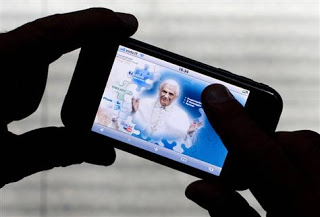
The truly creative church administrator, pastor or bishop might even think beyond current modes and into the fastest emerging field of digital opportunity: mobile communications, mobile app development and apps specifically designed for tablet computers (like the iPad).

The Birds of the Air

In every age the church has used whatever media were available to spread the good news. Jesus used parables drawn from nature and everyday life; St. Paul used letters to reach out to the early Christians; St. Augustine practically invented the form of the autobiography; the builders of the great medieval cathedrals used stone and stained glass; the Renaissance popes used not only papal bulls but colorful frescoes; Hildegard of Bingen, some say, wrote one of the first operas; St. Ignatius Loyola encouraged the early Jesuits to write and publish pamphlets, and the early Jesuits used theater and stagecraft to put on morality plays for entire towns; Dorothy Day founded a newspaper; Daniel Lord, S.J., jumped into radio; Bishop Fulton Sheen used television to stunning effect; and now we have bishops and priests, sisters and brothers and Catholic lay leaders who blog and tweet.

No medium is beneath us when it comes to proclaiming the Gospel, especially to the young. This includes Web sites, but also all social and digital media. How sad it would be if we did not use the latest tools available to us to communicate the word of God. If Jesus could talk about the birds of the air, then we can surely tweet.


Read Fr. Martin’s “10 Dos and Dont’s” for Web-savvy organizations.


James Martin, S.J., is culture editor of America. This essay is adapted from an address given at the 2010 World Communications Day, sponsored by the Diocese of Brooklyn. ad hominem.tweet



Index of Shalom August 2011

Bookmark and Share


Index of Shalom  August 2011