Category: Uncategorized

127 hours

Bookmark and Share


By Brendan McManus,S.J.

First of all, every hiker should see this film – a lesson in the power of nature and the relative insignificance of human beings. It is based on the true story of Aaron Ralston as told in his book Between A Rock And A Hard Place. He was an extreme outdoor sportsman who unfortunately got trapped in a narrow ‘slot’ canyon, his hand caught by a falling boulder. There is no getting away from this next gruesome detail: that he has to sever part of his arm to escape. It is a fairly simple but dramatic story that is worked to maximum effect by director Danny Boyle, of Trainspotting and Slumdog Millionaire.

What really fascinates me, especially after I read his book, were the events that led him to this life-shattering event (he nearly died) and the subsequent significance or meaning he took from it. Ironically, at the end of his book he calls the 127 hours, the film’s title, he spent trapped in the canyon a ‘spiritual experience’ that he wouldn’t change for anything. I say ‘ironically’, as there was very little evidence of any overt spirituality there before, or especially after. Not that he is any different to thousands of typical American gung-ho young men, convinced of their own invulnerability, thinking they will live forever while pitting their talents against death. What is disappointing though is that he appears to lack any reflective ability, to gain any insight for his subsequent life through this life-threatening injury and extreme liminal experience – having the experience but missing the meaning.

Not unlike St Ignatius of Loyola, he is a bit of a wild one, living for the moment, sacrificing everything for the weekends and the mountains where he feels most free and most actualised. He admits himself in the book that it is quite a selfish life, having few responsibilities and chasing the dream of multiple ‘peak’ experiences. There is no doubt that the five days he spends in Bluejohn Canyon in Utah are profoundly spiritual in essence – he has repeated visions of his friends, his family and those who love him – essentially replaying his whole life. The film manages to portray this aspect particularly well through flashbacks and clever editing. He also judiciously manages to use all his climbing gear and meager resources to the utmost, to stretche out his survival well beyond the predicted statistics, a miracle in itself. At one stage, faced with certain death as his considerable talents are exhausted, he etches his epitaph into the stone walls. All he is left with are the emotional memories of those closest to him, a call to connection and relationship.

In fact, the film very cleverly manages to hold your attention during the ordeal of his entrapment, in what could have been a very boring three-meter wide sandstone landscape with one occupant. There is a great sequence where he stretches his body out into the twenty minutes of sunlight that enters the canyon every morning in a kind of worship. The use of the video footage that he shoots of himself becomes an important tool for analysis and commentary to a wider audience.

There is one hilarious semi-crazed part where he imagines himself as host and interviewee of his own radio show, carrying on a bizarre dialogue on his precarious position. A lot of the credit has to go to actor James Franco though; he really pulls this one-man show off with a gritty and eminently believable performance that has you feeling the pain and isolation with him.

What I really loved about this film is that it is a really good story well told. Even though you know the inevitable outcome, that he is going to have to make that self-mutilating surgery, you can’t help but be fascinated in the lead up to it. It is essentially a story about survival, limits and the tough decisions that have to be made. I know that it would make a great Ethics class discussion exploring the principle of Double Effect: was it justifiable to cause himself great bodily harm, severing a limb, in order to save his life? There is also some wonderful wilderness footage that has you aching to be in Utah. But you really find yourself asking: would I be able to do that? Am I capable of such necessary violence? It is a question of realistically assessing options and following through on them. It is humanity stripped down to its barest essential, hanging onto life by a thread, and prioritising values. Although he doesn’t go very deep, at least it does have a happy ending!

In summary, I would recommend this film highly. It is very well shot and acted, and is a fascinating true story.

Directed by Danny Boyle. 94 mins.

Wisdom Story 26

Bookmark and Share


Wisdom Story 26

by Paul Brian Campbell, SJ   

The Master always frowned on anything that seemed sensational. “The divine”, he claimed, “is only found in the ordinary.”


To a disciple who was attempting forms of asceticism that bordered on the bizarre the Master was heard to say, “Holiness is a mysterious thing: The greater it is, the less it is noticed.”


Testing and Experimenting: Life in the Jesuit Novitiate

Bookmark and Share


Second-year Jesuit novice Penn Dawson in the remote village of Karasabai in Guyana.

Second-year Jesuit novice Penn Dawson in the remote village of Karasabai in Guyana.

A scientist who has an idea that he wants to test runs to his laboratory. There he applies various tests to see whether his initial idea was a sound one. Some people use the laboratory analogy to try to explain the novitiate experience, and in many ways a “lab” is an accurate analogy for this first stage in Jesuit formation.

When a man enters the novitiate, he has a good idea that God is calling him to become a Jesuit – he has discerned and spent many hours in the application process being interviewed by Jesuits, doctors and even a psychologist – but he has never lived as a Jesuit; he has not yet tested his vocation. Likewise, the Society of Jesus has a good idea that the man they have admitted is a good fit, but it needs some real life experiences with this man to know for sure. The novitiate is this time of testing and discernment.

One of the reasons a laboratory is a good analogy for the novitiate is because St. Ignatius designed the novitiate to have specific tests which are called “experiments.” No, novices are not asked to deliver electric shocks to one another, nor does the novice master ring a bell before meals and measure salivation. Instead, the various experiments, many conceived by Ignatius himself, test whether a novice can do what Jesuits do and live as Jesuits live.

The first experiment is arguably the most important – the undertaking of the full 30 day Spiritual Exercises of St. Ignatius. In this powerful and moving experience, a novice moves through the retreat, seeking to know and follow Christ more closely and to more clearly hear His voice in his life. He will draw on this experiment for the rest of his Jesuit life.

In our novitiate, the experiment that follows the Long Retreat is the “Primi Class Experiment.” All of the first year novices, called primi, go to Kansas City, Kansas, to work in a variety of ministries and to work on building a stronger sense of community. This year the primi worked in parishes, schools and a hospital. In addition they worked with Burmese refugees who have been granted asylum by the US government and with the Turnaround Program, a program which seeks to help recently released prisoners get their feet on the ground in their new life.


First-year Jesuit novices lead singing at Mass during a teen retreat.

First-year Jesuit novices lead singing at Mass during a teen retreat.

First-year Jesuit novices lead singing at Mass during a teen retreat.
Next, for the Pilgrimage Experiment, the novice master hands each novice $5 and a one-way bus ticket to a destination, different for each novice. Ignatius thought it was important for all novices to understand the importance of begging for what one needs – food, shelter, transportation – as he did in his own life, going from his home in Spain to Jerusalem shortly after his conversion. On pilgrimage, the novice “[puts] all hope in the Creator and Lord and accept[s] sleeping poorly and eating badly because it seems to us that the one who cannot live and walk for a day without eating or sleeping poorly cannot persevere long in our Society.”[*] The journey depends on the grace that he is praying for in his spiritual life or that he received during the Exercises or on a particular challenge the novice master believes that man needs.

Ignatius tells us that it is important for a novice to work in a hospital, caring for the needs of the people there. In Ignatius’ day, this was by far the most grueling experiment because unlike today hospitals were large places which held those for whom no one else would care – those at the edges of society, the poor, the mentally or physically disabled and the dying.

Today, novices find themselves working in the infirmaries of the New Orleans and Missouri Provincesand places similar in character and work to the hospitals in Ignatius’ day. They also work at Good Shepherd or Loyola Academy “Nativity” schools in New Orleans and St. Louis, l’Arche communities or the inner city of East St. Louis, among others.

In the fall of his second year, each novice undertakes the Jesuit Experiment, designed to give each novice an experience of living in a Jesuit community while working at a Jesuit apostolate, living the sort of life he would lead were he to take vows and continue on in Jesuit life. Many novices find themselves in Jesuit high schools, however some end up in Jesuit universities or other locations.

During the Long Experiment that follows, each man is assigned to a location for three months to work in a community, usually in the developing world. Novices have gone to distant locations like Guyana in South America, Guatemala, Honduras, Belize and St. Francis Mission on the Rosebud Reservation in South Dakota. It is of utmost importance that novices experience the various kinds of poverty that exist in the world and learn to identify with those who are most vulnerable. This experiment provides such exposure. Also, in the longer timeframe of this experiment, a novice ideally can plug in to the life of a community better than in the shorter experiments, and he can more deeply and more richly experience the life and work of the Jesuits in that location.

After his many tests, the scientist can come to a conclusion about his initial observations – the same holds true for the Jesuit novice. After the successful conclusion of the experiments, much prayer and discernment, and with the permission of the novice master and provincial, the hopeful novice is approved to profess the vows of poverty, chastity and obedience in the Society of Jesus. Even though he has no need for a lab coat, graduated cylinders, or mass spectrometers, a man who enters the novitiate readies himself for the testing that happens in this initial “laboratory” of Jesuit life.

[*] José Ignacio Idigoras, Ignatius of Loyola, the Pilgrim Saint, trans. C. Michael Buckley, S.J. (Chicago: Loyola University Press, 1994), 456. 

Jesuit Provincial one of the ten best leaders of Colombia

Bookmark and Share


Francisco de Roux, Provincial of Colombia, has been awarded by the Foundation leadership and democracy. For more than 15 years a project has been woven with the peasants of Barrancabermeja, Yondó, Cimitarra and other municipalities in the region to strengthen the peasant economy and the leadership of the communities being harassed by armed groups. Groups of fishermen, biodiverse peasants , a network of community radio stations, among others. Since then he has been able to prove that the territories of the conflict can be places where you can establish a dialog between the various sectors. 


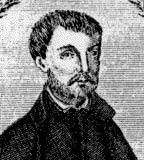
Feast of St. Stephen Pongrácz, SJ

Bookmark and Share


They stripped him and stabbed him countless times then crushed his fingers and burned his side with a flaming torch. They tied a rope around his head and almost crushed it. They cut off his nose and ears and tied his hands behind his back. Then they hanged him upside down and severely paddled him twice in the head. Finally, they ditched him in a sewer where he stayed alive for twenty more hours. This was how St. Stephen Pongrácz suffered and died in the hands of the Calvinists in Kosicie (now in Slovakia).

Can I bear such pain? I cannot even tolerate a small cut on my finger much less have my ears and nose cut. To be honest, I cannot even answer if I am willing to suffer and die for my faith. To surrender and give up one’s life is easier said than done.

I do not want to suffer. I do not want to be a martyr. I want to live a life of ease and convenience.

But not standing by our faith–isn’t this also a type of suffering? When we do not heed Christ’s call, we doom ourselves to a life of emptiness. And when we waste our lives in pursuits that will only fade away, what can be a greater suffering than that?

I have always equated martyrdom with physical pain and bodily death. But martyrdom is much more. Christian martyrdom involves dying to one’s self. This may not always be like the violent death of St. Stephen Pongrácz. It is a dying that is less dramatic but not less difficult.

We do not need to undergo physical death in order for us to be martyrs. To be a martyr is to be a witness to one’s faith. All Catholics are called to be martyrs. Our Catholic faith calls us to love as Jesus loves, to be merciful for Christ is merciful, and to be holy as our heavenly Father is holy. Struggling to answer this call is also martyrdom.

As the reality of Christian martyrdom confronts me, I feel ashamed of myself as a Catholic. I easily fall into temptation. I find myself setting aside my prayer time for other activities. I prioritize my own enjoyment over more substantial things.

How can we be martyrs? We can start by obeying our parents and following traffic rules. We can also start by going to confession at least once a year and going to Sunday Mass on time. These may seem simple enough, but as we do these, we grow in strength to tackle more difficult opportunities to witness to our faith.

Martyrs don’t have to die. Modern martyrs live that others may know how to live.

St. Stephen Pongrácz, pray for us that we, too, may be martyrs today.

Peter Favre and His Friends

Bookmark and Share


by James Martin, SJ    

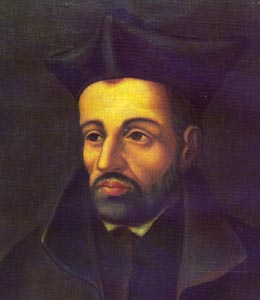
Today is the Feast of Blessed Pierre Favre, S.J., one of the early Jesuit companions, and an overlooked Jesuit hero. Often called the “Second Jesuit,” Favre was said by St. Ignatius Loyola, the founder of the Society of Jesus, to be the man best suited to direct others in his Spiritual Exercises.

But Favre’s story is not nearly as well known as those of his two famous college roommates, Ignatius Loyola and Francis Xavier. (That so many books can’t even agree on a standard way of referring to the man–Pierre Favre, Peter Faver, Peter Favre, Peter Faber–is an indication of the lack of attention given him.) Below is a meditation on the life-changing friendship between Peter and his college roommates.

Friends in the Lord
Ignatius, Peter and Francis

With his talent for friendships, Ignatius enjoyed close relations with a large circle of friends. (That is one reason for his enthusiasm for writing letters.) Indeed, the earliest way that Ignatius referred to the early Jesuits was not with phrases like “Defenders of the Faith” or “Soldiers of Christ,” but something simpler. He described his little band as “Friends in the Lord.”

Friendship was an essential part of his life. Two of his closest friends were his college roommates, Peter Favre, from the Savoy region of France, and Francisco de Javier, the Spaniard later known as St. Francis Xavier.

The three met at the Collège Sainte-Barbe at the University of Paris, then Europe’s leading university, in 1529. By the time they met Ignatius, Peter and Francis were already friends sharing lodgings. The two had studied for the last few years for their master’s degrees; both were excellent students. And both had heard stories about Ignatius before meeting him: the former soldier was a notorious figure on campus, known for his intense spiritual disciplines and habit of begging alms. At 38, Ignatius was much older than Peter and Francis, who were both 23 at the time. And his path to the university was more circuitous. After his soldiering career, his recuperation and his conversion, he had spent months in prayer trying to discern what to do with his life.

Ultimately, he decided that an education was required. So Ignatius went to school, taking elementary grammar lessons with young boys and, later, studying at the universities of Alcalá and Salamanca. His studies provide us with one of the more remarkable portraits of his newfound humility: the once-proud soldier squeezed into a too-small desk beside young boys in the classroom, making up for lost time.

Several years later, he enrolled at the University of Paris, where he met Favre and Xavier. There, in Favre’s words, they shared “the same room, the same table and the same purse.”

His commitment to a simple life impressed his new friends. So did his spiritual acumen. For Favre, a man troubled all his life by a “scrupulous” conscience, that is, an excessive self-criticism, Ignatius was a literal godsend. “He gave me an understanding of my conscience,” wrote Favre. Ultimately, Ignatius led Peter through the Spiritual Exercises, something that dramatically altered Favre’s worldview.

This happened despite some very different backgrounds. And here is one area where Ignatius and his friends highlight an insight on relationships: friends need not be cut from the same cloth. The friend with whom you the least in common may be the most helpful for your personal growth. Ignatius and Peter had, until they met, led radically different lives. Peter came to Paris at age 19 after what his biographer called his “humble birth,” having spent his youth in the fields as a shepherd. Imbued with a simple piety toward Mary, the saints, relics, processions, and shrines, and also angels, Peter clung to the simple faith of his childhood. Ignatius, on the other hand, had spent many years as a courtier and some of them as a soldier, undergone a dramatic conversion, subjected himself to extreme penances, wandered to Rome and the Holy Land in pursuit of his goal of following God’s will.

One friend had seen little of the world; the other much. One had always found religion a source of solace; the other had proceeded to God along a tortuous path.

Ultimately, Ignatius helped Peter to arrive at some important decisions through the freedom offered in the Spiritual Exercises. Peter’s indecision before this moment sounds refreshingly modern, much like the frustrating indecision of any college student today. He wrote about it in his journals:

Before that–I mean before having settled on the course of my life through the help given to me by God through Inigo–I was always very unsure of myself and blown about by many winds: sometimes wishing to be married, sometimes a doctor, sometimes a lawyer, sometimes a professor of theology, sometimes a cleric without a degree–at times wishing me to be a monk.

In time, Peter decided to join Ignatius on his new path, whose ultimate destination was still unclear. Peter, sometimes called the “Second Jesuit,” was enthusiastic about the risky venture from the start. “In the end,” he writes, “we became one in desire and will and one in a firm resolve to take up the life we lead today….” His friend changed his life. Later, Ignatius would say that Favre was the most skilled of all the Jesuits in giving the Spiritual Exercises.

Ignatius would change the life of his other roommate, too. Francisco de Jassu y Javier, born in 1506, in the castle of Javier, was an outstanding athlete and student. He began his studies in Paris at the age of 19. Every biographer describes Francis as a dashing young man with boundless ambition. “Don Francisco did not share the humble ways of Favre,” wrote one.

Francis Xavier was far more resistant to change than Peter Favre had been. Only after Peter left their lodgings to visit his family, when Ignatius was alone with the proud Spaniard, was he was able to slowly break down Xavier’s stubborn resistance. Legend has it that Ignatius quoted a line from the New Testament, “What does it profit them if they gain the world, but lose or forfeit themselves?” As John W. O’Malley writes in The First Jesuits, Francis’s conversion was “as firm as Favre’s but more dramatic because his life to that point had shown signs of more worldly ambitions.”

It is impossible to read the journals and letters of these three men–Ignatius the founder, Xavier the missionary, and Favre the spiritual counselor–without noticing the differences in temperaments and in talents.

In later years Ignatius would become primarily an administrator, guiding the Society of Jesus through its early days, spending much of his time laboring over the Jesuit Constitutions. Xavier became the globetrotting missionary sending back letters crammed with hair-raising adventures to thrill his brother Jesuits. (And the rest of Europe, too: Xavier’s letters were the equivalent of action-adventure movies for Catholics of the time.) Favre, on the other hand, spent the rest of his life as a spiritual counselor sent to spread the Catholic faith during the Reformation. His work was more diplomatic, requiring artful negotiation through the variety of religions wars at the time.

Their letters reveal how different were these three personalities. They also make it easy to see how much they loved one another. “I shall never forget you,” wrote Ignatius in one letter to Francis. And when, during his travels, Xavier received letters from his friends he would carefully cut out their signatures, and keep them with him–“as a treasure,” in the words of his biographer Georg Schurhammer, S.J.

Here is Francis Xavier, writing from India, in 1545, to his Jesuit friends in Rome, expressing love for his faraway friends.

God our Lord knows how much more consolation my soul would have from seeing you than from my writing such uncertain letters as these to you because of the great distance between these lands and Rome; but since God has removed us, though we are so much alike in spirit and in love, to such distant lands, there is no reason…for a lessening of love and care in those who love each other in the Lord.

The varied accomplishments of Ignatius, Francis and Peter began with the commitment that they made to God and to one another in 1534. In a chapel in the neighborhood of Montmartre in Paris, the three men, along with four other new friends from the university–Diego Laynez, Alfonso Salmerón, Simon Rodrigues, and Nicolás Bobadilla–pronounced vows of poverty and chastity together. Together they offered themselves to God. (The other three men who would round out the list of the “First Jesuits,” Claude Jay, Jean Codure and Paschase Broët, would join after 1535.)

Even then friendship was foremost in their minds. Laynez, noted that though they did not live in the same rooms, they would eat together whenever possible, and have frequent friendly conversations, cementing what one Jesuit writer called “the human bond of union.” In a superb article in the series Studies in the Spirituality of Jesuits, entitled “Friendship in Jesuit life,” Charles M. Shelton, S.J., the professor of psychology, writes, “We might even speculate whether the early Society would have been viable if the early companions had not enjoyed such a rich friendship.”

The mode of friendship among the early Jesuits flowed from Ignatius’s “way of proceeding.” For want of a better word, they did not try to possess one another. In a sense, it was a form of poverty. Their friendship was not self-centered, but other-directed, seeking the good of the other. The clearest indication of this is the willingness of Ignatius to ask Francis to leave his side and become one of the church’s great missionaries.

It almost didn’t happen. The first man that Ignatius wanted to send for the mission to “the Indies” fell ill. “Here is an undertaking for you,” said Ignatius. “Good,” said Francis, “I am ready.” Ignatius knew that if he sent Francis away he might never see his best friend again.

So did Francis. In a letter written from Lisbon, Portugal, Francis writes these poignant lines as he embarks. “We close by asking God our Lord for the grace of seeing one another joined together in the next life; for I do not know if we shall ever see each other in this….Whoever will be the first to go to the other life and does not find his brother whom he loves in the Lord, must ask Christ our Lord to unite us all there….”

During his travels, Xavier would write Ignatius letters, not simply reporting on the new countries that he had explored and the new peoples he was encountering, but expressing his continuing fondness. Both missed one another, as good friends do. Both recognized the possibility that one would die before seeing the other again.

“[You] write me of the great desires that you have to see me before you leave this life,” wrote Francis. “God knows the impression that these words of great love made upon my soul and how many tears they cost me every time I remember them.” Legend has it that Francis knelt down to read the letters he received from Ignatius.

Francis’s premonitions were accurate. After years of grueling travel that took him from Lisbon to India to Japan, Francis stepped aboard a boat bound for China, his final destination. In September 1552, twelve years after he had bid farewell to Ignatius, he landed on the island of Sancian, off the coast of China. But after falling ill with a fever, he was confined to a hut on the island, tantalizingly close to his ultimate goal. He died on December 3, and his body was first buried on Sancian and then brought back to Goa, in India.

Several months afterwards, and unaware of his best friend’s death, Ignatius living in the Jesuit headquarters in Rome, wrote Francis asking him to return home.

From The Jesuit Guide to Almost Everything. For a short biography of Blessed Peter Favre, see this excerpt from Jesuit Saints and Martyrs, by Joseph Tylenda, S.J. The best (and mos accessible) biography of Favre is The Quiet Companion, by Mary Purcell. It is currently out of print but well worth tracking down.



Wisdom Story 25

Bookmark and Share


by Paul Brian Campbell, SJ   

Wisdom Story 25

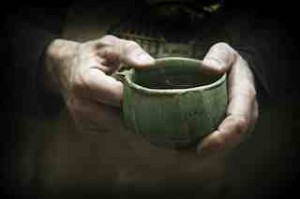
The Master once told the story of a priceless antique bowl that fetched a fortune at a public auction. It had been used by a tramp who ended his days in poverty, quite unaware of the value of the bowl with which he begged for pennies. When a disciple asked the Master what the bowl stood for, the Master said, “Your self!”

Asked to elaborate, he said, “All your attention is focused on the penny knowledge you collect from books and teachers. You would do better to pay attention to the bowl in which you hold it.”


10 Characteristics of Ignatian Spirituality

Bookmark and Share


by Paul Brian Campbell, SJ   

When I first came to Loyola Press, someone asked me to do my best to sum up Ignatian Spirituality in as easily-understandable way as I could. I came up with a list of ten characteristics and I will now share them with you, David Letterman-style, from #10 to #1 (although I’m not confident that there is a “correct” order). Astute readers (!) will notice that I have covered several of these characteristics in individual posts and I plan to write on them all as we go along.

10 Characteristics of Ignatian Spirituality

10. Union of minds and hearts – as brothers and sisters, we listen for the God who is present among us, admitting no division based on ethnicity, nationality, background, age or gender.

9. Flexibility and adaptability – (e.g.,16th Century Jesuits wearing Chinese robes and generally adapting to various cultures; respecting people’s lived experience.)

8. Ad Majorem Dei Gloriam (For the greater glory of God) – praising God and dedicating oneself to participate in God’s healing work in the world.

7.The World is charged with the grandeur of God” – the positive, energetic and engaged vision of God’s constant interaction with creation.

6. Faith that does justice – the realization that there can be no true expression of faith where concerns for justice and human dignity are missing.

5. Inner Freedom (the result of self-awareness and discernment.)

4. Contemplation in action – not a monastic existence, but an active one that is, at the same time, infused with prayer.

3. Reflection (Self-awareness/Discernment) leading to Gratitude which leads to Service (linked to becoming a “man or woman for others” – big Ignatian buzzwords.)

2. Personal relationship with Christ and love for the Church (bruised and broken as it often is.)

1. Finding God in all things


Jesuit Interviews Magis Pilgrims about Their World Youth Day Experiences

Bookmark and Share


Today, pilgrims are joining the Holy Father for a World Youth Day vigil in Madrid, Spain. Last night, they experienced the Via Crucis, the Way of the Cross, and tomorrow, World Youth Day 2011 will culminate with the closing Mass with Pope Benedict XVI in Cuatro Vientos.

Jesuit Father Jack Benz sat down with some Magis pilgrims to talk about their experiences at World Youth Day 2011 in this video.


Index of Shalom September 2011

Bookmark and Share


    Index of Shalom  September 2011