Category: Uncategorized

Rembrandt’s Jesus

Bookmark and Share


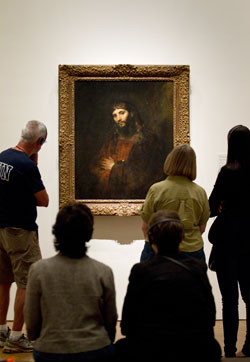
Leo J. O’Donovan, S.J., reviews the impressive new exhibit of Rembrandt’s paintings of Jesus in the October 31 issue of America. Here Fr. O’Donovan narrates a slideshow of selected images from the exhibit, which moves to the Detroit Institute for the Arts on Nov. 20. We recommend you view the slideshow in full-screen mode for best effect.

View the slideshow.

The Prayer that Changes Everything

Bookmark and Share


by Jim Manney


A Wisdom Story

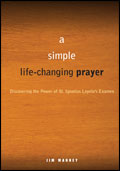
I’ve just published a new book. It’s called The Prayer that Changes Everything, and it’s about the Ignatian examen, which has changed a lot of things for me in the last couple of years. One of my good friends, Paul Campbell, gave the book a nice mention on his People for Others blog yesterday, and that has spurred me on to mention it here.

I’ve read everything about the examen that I could get my hands on, but mostly I’ve prayed it and experienced the difference it makes. I share some of those experiences in the book. The book is fairly short, fairly personal, and hopefully convincing and informative. It is, like a couple of good movies I’ve seen recently, “inspired by true events.”

We’ll have a sample chapter up on IgnatianSpirituality.com very soon. Meanwhile, for a taste of it, here is the Preface:

The Examen changed everything for me, but it almost didn’t happen. For years I had occasionally heard people talk about the Examen as a good way to pray. I went to a Jesuit college; I remember one of my teachers saying that St. Ignatius Loyola himself thought that the Examen was the indispensible prayer. But I wasn’t interested because I thought they were talking about the Examination of Conscience.

This was the methodical inventory of sins that I was taught to do as a boy in Catholic schools in the 60s. I would work my way through lists of faults, toting up my offenses in preparation for the sacrament of Confession. This was a grim exercise. Also a confusing one. Lying I understood, and eventually I knew what lust was. But what was “acedia?” (It means spiritual laziness.) At any rate, the charm of the Examination of Conscience wore off as I grew older. I set it aside and moved on to other things (not all of them improvements). When people talked about the Examen, this is what I thought they meant. I wasn’t interested. I thought it was just the thing for people who like that kind of thing, and I wasn’t one of them.

Then I learned that the Ignatian Examen was not the old depressing Examination of Conscience. Quite the opposite. This was a prayer that focused on God’s presence in the real world. It looked to a God who was near to me, present in my world, and active in my life. It told me to approach prayer with gratitude, not guilt. It helped me find God in my life as I lived it, not in some heavenly realm beyond space and time. The Examen had me take myself seriously, as I am, not as I wished I was or thought I could be someday if I worked hard enough.

It’s no exaggeration to say that the Examen changed everything. It might change things for you too.

Best Ignatian Songs: Gabriel’s Oboe

Bookmark and Share


by Jim Manney

This is the second time “Gabriel’s Oboe” has appeared in our occasional “Best Ignatian Songs” feature. (The first time is here.) The occasion is the opening of a musical based on the movie “The Mission,” a great film inspired by the Jesuit missions in South America in the eighteenth century. The musical opened this week in Seoul. It will go on world tour to China, Japan, Italy, and New York.

“Gabriel’s Oboe” was an instrumental piece in the movie. Here, Daniele Gatti sings it. (If you can’t see the video, click here.)


Up the Ladder

Bookmark and Share


by Jim Manney

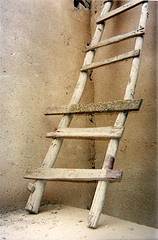
Writing in the Huffington Post, Fr. Jim Martin’s literal climb up a scaffolding in an old church becomes a powerful metaphor for the climb up the ladder of sanctity. Each rung is one of the beatitudes:

That’s the climb the saints made. Each of those beatitudes is a rung on the ladder. The first and most basic is poverty of spirit; the poverty of knowing that we are limited, finite, dependent on God – in a word, human. But there are other rungs: Mercy. Meekness. Righteousness. Purity of Heart. Peacemaking. The willingness to suffer persecution. . . .

Each of those steps may seem hard, even dangerous, to step on, and it may seem that we can’t do it, but that’s the path we’re invited to climb. But it’s Christ who urges us on, saying, “Come on. It’s worth it. I know it looks hard. I know you think you can’t do it. I know you think you can’t strive for holiness, but you can. Wait till you see what I have in store.”


Spiritual Directors Who Direct

Bookmark and Share


by Jim Manney

Joseph Tetlow, SJ

Joseph Tetlow, SJ, is one of the of the most respected and knowledgeable Ignatian spiritual directors. For years he guided the 250 Jesuit retreat houses around the world in his capacity as head of the Jesuit General’s Secretariat for Ignatian Spirituality. So when Fr. Tetlow says something unusual about spiritual direction, it’s a good idea to listen.

What he says is that spiritual directors sometimes direct. You don’t hear that very often. Many spiritual directors don’t like to be called “directors.” The usual description of the job emphasizes listening and accompanying people on their spiritual journeys. That’s surely important, probably the most important part of the job. And Ignatius himself insisted that spiritual directors not get in the way of God dealing directly with people. Nevertheless, says Fr. Tetlow, spiritual directors do direct.

You tell a desolate woman to change her prayer as it’s mainly self-absorption. You instruct a young Jesuit not to change his current way of praying. You challenge a married woman, telling her that she would be wise to break off a relationship that is disturbing her marriage. You do none of this easily or without reflecting, and never harshly or judgmentally. But you do it.

In fact, he says, this is one thing that distinguished Ignatian spiritual direction from other kinds.

Doing Good and Praying Well

Bookmark and Share


by Jim Manney

It struck me then very clearly that one who seeks the spirit of God in good works will find it better in prayer later on than the one who seeks God first in prayer and then in action, as we often do. Whoever, then, seeks and finds the spirit of Christ in good works makes much more solid progress than the one who seeks it in prayer alone; for one has him in affection and effect both. You must then mortify yourself and dispose yourself to gain all good by means of good works. For by this means you will perceive that this is a most excellent preparation for mental prayer. Let then your life be conducted in this manner, both with Martha and Mary, that is, made up of action and contemplation, pursuing the one for the other, and not one only for itself.

Peter Favre, SJ 

Becoming a Priest

Bookmark and Share


by Jim Manney

Video cameras are following Radmar Jao as he prepares to be ordained a priest next month. Jao is the subject of a video series produced by the US Jesuit conference. It’s aimed at vocations promotion, but it’s easy for anyone with an interest in Jesuits and Ignatian spirituality to get drawn into the story of this articulate, likable young man, who joined the Jesuits in 2001.

Jao used to be an actor. Among other things, he played a small part in this episode of “Seinfeld,” my favorite TV comedy. (He delivers Chinese food to Elaine about a minute into the clip.) Jao is now finishing theological studies at the Jesuit school at Berkeley. There will be three videos in the series, interspersed by short video diaries. The homepage for the series is here. Below is the first video. (If you can’t see it, click here.)

Best Ignatian Songs:Spring and Fall: To a Young Child

Bookmark and Share


by Jim Manney

Some time ago I featured the Natalie Merchant song “Wonder” in our occasional “Best Ignatian Songs” feature. Here is another. It’s a setting of Gerard Manley Hopkins’ poem “Spring and Fall: To a Young Child.”

The song is in the middle of a concert Merchant gave at a TED conference. Go to the 16 minute, 23 second point in the video. The poem is very lovely and very sad. It’s a good idea to read the poem while you listen to Merchant sing it. You’ll find it here. Click here to watch the video on YouTube. (H/T to Tom Beaudoin.)


Ignatius’s First Followers

Bookmark and Share


by Jim Manney


Let’s take a moment in IgnatiusFest to think about the men who first followed Ignatius. We wouldn’t be here without Ignatius, but we wouldn’t be here without the first companions either. They were a handful of students who met Ignatius at the University of Paris. They made the bold decision to join their lives together in a radical fellowship. It was a crucial moment. As the narrator of this video says, “the first follower turns a lone nut into a leader.”

The video explains how movements get started. Watch it with Ignatius’s first companions in mind. (Click here to see the video on YouTube.)


Doing Too Much

Bookmark and Share


by Jim Manney

A customary question in a job interview is, “What are your weaknesses?” The customary answer is, “Sometimes I take on too much work,” “I try too hard,” or some variation thereof. I’ve said this myself.


Doing Too Much

I’ve had others say it to me. It’s part of the game of interviewing for a job. You’re trying to present yourself as supremely competent and confident (a deception, in other words). The interviewer is trying to get behind the façade. You turn the tables by presenting a defect as a feature. (“If you hire me, I’ll work so hard that you’ll have to order me to go home.”)

Trying too hard is a weakness, but maybe not in the way you think. I’ve seen lots of people who “do too much.” They take on projects when they shouldn’t. They go off and work on their own instead working with a team. They shoot too high and fall short. They reveal character flaws: pride, a desire to control, neediness.

I understand all that, but recently I learned something else about trying too hard-from a basketball coach. The coach is Bob Huggins of West Virginia. He was complaining about players who “do too much.” They dive for a loose ball and get out of position. They take a bad shot instead of passing. They’re too aggressive on defense. Huggins said that these players are selfish. Then he said this: “People who try to do too much are taking the easy way out.”

I’d never thought about it that way, but it seems right. It’s easier to do it yourself than to work with others. It’s easier to say “yes” to extra work than to have discomfort that saying “no” would bring. It’s easier to keep control than to do things someone else’s way.

The honest answer to the job interview question might be, “sometimes I take the easy way out.”