Category: Uncategorized

Steve Jobs and the saints

Bookmark and Share


By James Martin, S.J. 


I have been both astonished and moved by the tremendous outpouring of emotion over the death of Steve Jobs, at age 56. Mr. Jobs, as is known by anyone whose fingers ever touched a computer or held an iPhone, was a dazzlingly talented innovator who, as President Obama noted, will likely rank among the greatest of American inventors.

Still, there have been many other gifted public figures -political leaders, business tycoons, philanthropists, researchers, scientists, writers, entertainers and inventors of other sorts- whose deaths did not touch such a chord. Obituaries of Mr. Jobs have appeared in almost every newspaper, magazine and (of course) website; television news programs devoted hours to covering his legacy; Facebook was promptly filled with impromptu photos, collages and tributes; nearly everyone on Twitter had something to say; and the Apple store in New York City is taking on the look of a shrine.
Some of these reactions may have to do with Mr. Jobs’ appeal to an age demographic that has grown up entirely in the digital age, an era that the Apple innovator helped to usher in. And some of the sadness is no doubt prompted by the age at which he died: 56 is still young, even to the young.

But this is only part of the story. As someone who has written on the saints, I found that the coverage of his death, and the way his life is being retold, seemed oddly familiar. Why did people’s reactions -photos of candles posted on Facebook pages; cartoons with Mr. Jobs speaking to St. Peter at the Pearly Gates; flowers laid before Apple stores- remind me of what happens following the death of a saint? Why did the coverage in most venues seem, for want of a better word, worshipful? A few reasons suggest themselves, and a few intersections between the life of Mr. Jobs and the lives of the saints seem apparent. And no, before we continue: I’m not suggesting that he was a saint. But consider…

1.) He was a visionary. Anyone who could create, almost singlehandedly, the Mac, the iPod, the iPhone and the iPad, possessed what we commonly call great “vision.” But of course this is the precise language used for the gifts of the mystics. In the Christian tradition, people like St. Bernadette Soubirous, the 19th-century young woman who saw apparitions of the Virgin Mary in the town of Lourdes, are called “visionaries.” Often, admirers of the visionary are drawn not only to the vision itself (in one case, a glimpse of the divine; in the other, the promise of instant communication); we are also drawn to the person himself or herself, who offers the possibility that mortals can “see” in new ways. Christian mystics are granted visions of -depending on the saint- Jesus, God the Father or Mary: rare entrees into a world most of us cannot “access.” They are revered for this privilege, marking them as one of the elect. The one who sees calls to our desire to see more.

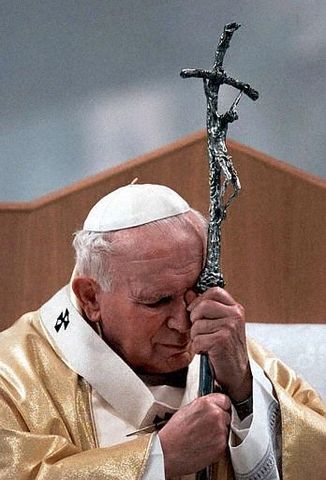
2.) He was the object of a cult. By this I don’t mean the common definition of a “cult” (a group of crazies surrounding an even crazier leader). Rather, the “cult” that surrounds the saint (and that is the term used) is simply a group of admirers who follow carefully the saint’s teachings, study his or life and meditate on his or her writings. After Mr. Jobs’s death, I asked a friend who works for a large website to explain the seemingly outsized reactions, and he pointed to the devoted consumers who followed Apple’s latest rollouts, religiously, as it were. This kind of “cult” is not too far from the lives of the saints, in which their every utterance and act is eagerly anticipated. During their lifetimes, cults grew up around figures like Padre Pio, the 20th-century stigmatic from Italy, as well as more recent holy persons like Mother Teresa and Pope John Paul II. Something in us responds to the charismatic figure; something in us wants to “follow” that person’s words, thoughts or, in the case of Mr. Jobs, his creations.

3.) He was unique. The radical personality who bucks the system is a key feature of the lives of the saints, and is often deeply attractive to us, perhaps because it underlines the value of our individuality. One of the most widely quoted of Mr. Jobs comments was an encouragement to reject “dogma.” “Think Different,” was Apple’s famous motto.

Ironically, many of the great Christian saints clung to dogma, which is not quite as restrictive as Mr. Jobs might have suspected. Dogma, or a codified system of belief, can be not only liberating but an engine of individuality. Mother Teresa, for example, (now Blessed Teresa of Calcutta) left her old religious order and way of life to found a new one, the Missionaries of Charity, which served the “poorest of the poor” in Calcutta. But first she had to win over her former religious superior, her bishop and the Vatican. At first those in authority resisted, but she won them over by, in effect, inviting them to “think different.” The most recently canonized American saint, Mother Theodore Guerin, foundress of the Sisters of Providence of St. Mary-of-the-Woods, faced opposition from her local bishop (who threatened ejecting her from her own religious order) before she was able to attain autonomy in 19th century Indiana. In their uniqueness, often won at a high price in the face of the “status quo,” the saints remind us of the inherent human dignity of the individual. As the Catholic theologian Karl Rahner said, the saint shows us what it means to be a Christian in this particular way. Or in this different way.

4.) He was human. Apparently, Steve Jobs was not the easiest person to work with. Nor was he always kind. The New York Times noted his asperity when dealing with Apple’s competitor, Microsoft, “The only problem with Microsoft is they just have no taste,” he said. “They have absolutely no taste. And I don’t mean that in a small way, I mean that in a big way, in the sense that they don’t think of original ideas, and they don’t bring much culture into their products.” Sometimes the saint is loved not simply for his closeness to God but for his patent humanity. The saint has a temper, flies off the handle, loses his or her cool in pursuit of a great ideal. St. Jerome, the first translator of the Bible into Latin, was famously irascible, once writing that one of his detractors “walked like a tortoise.” To take another example, St. Peter is beloved not only because he was a great apostle, but for his many flaws: denying Jesus three times before the crucifixion, among them. Holiness makes its home in humanity. That insight says, “They’re not perfect. Maybe I could aspire to this level of achievement.”

5.) He gave us something we didn’t know we needed. Saints offered their followers something new: an innovative way to follow God in a particular place and time. Some saints show their admirers new ways to pray, or new modes to serve the poor or, more broadly, new ways to live out the Gospel. The founders of the great religious orders all did this in one way or another. They met a need that they were able to identify with more clarity than those around them. Mr. Jobs, clearly, offered what consumers needed: Apple’s revenues show that. And he did so, apparently, with no market research. The customer, he said, does not know what he needs. Likewise, no one in the 14th century knew that the Catholic church needed a group of men and women entirely devoted to poverty, until St. Francis of Assisi stepped onto the world stage.

6.) He was mysterious. Like many of the saints, Steve Jobs showed a youthful precocity that would not only serve him well in later life but marked him as a remarkable individual at an early age. The lives of the saints are filled with legendary stories of youthful promise: St. Nicholas of Myra, in the fourth century, is said to have stood up in the baptismal font while still an infant-and, in some retellings, preached a homily! Such stories create an air of mystery surrounding the person.

Later, Mr. Jobs kept the public at bay, offering only rare glimpses of his private life, particularly in later years. This made his rare public appearances -for example, during the launch of a new Apple products- more exciting. Many of the saints, though human, seem removed from us. Their life of prayer, their inner life, always remains something of a mystery.

7.) He was, in his own way, a spiritual man. In the end, Mr. Jobs’ appeal may be closer to that of the saints than we might think. “Being the richest man in the cemetery doesn’t matter to me … Going to bed at night saying we’ve done something wonderful… that’s what matters to me,” he said. That quote could have come from many of the lives of the saints. And in his Stanford University commencement speech in 2005, he spoke explicitly on a topic that even some religious leaders avoid today: death. “No one wants to die. Even people who want to go to heaven don’t want to die to get there. And yet death is the destination we all share.” Here is one clear intersection between the saint and Mr. Jobs: he spoke about spiritual matters.

By no means-to quote St. Paul–am I suggesting that Steve Jobs was a saint. De mortuis nihil nisi bonum, as they say, but a few who worked with him have spoken of his less-than-saintly actions. Yet for those scratch their heads at the online tributes, the lives of the saints can help explain the powerful appeal of this creative genius. Likewise, the grief over Mr. Jobs’s passing may explain to those more familiar with iPhones than icons something about the appeal of the saints.

The Ignatian Adventure

Bookmark and Share


The Ignatian Adventure

The great river of Ignatian spirituality flows from The Spiritual Exercises, the guided conversion experience developed by St. Ignatius Loyola. Most of the time Ignatius gave the Exercises as a silent retreat of about 30 days, and for centuries that was the way most spiritual directors offered them.

That’s changed in recent years. Most people who make the Exercises today do it over the course of six to eight months while living their normal lives. These “Exercises in daily life” involve daily prayer and a weekly meeting with a spiritual director. These are called “19th annotation” retreats after a note (the nineteenth!) that Ignatius wrote in the preface to the Exercises.

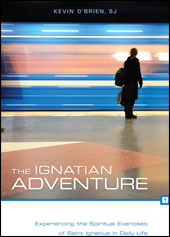
If you are interested in this approach to the Exercises, I’d recommend reading The Ignatian Adventure by Kevin O’Brien, SJ, just published by Loyola Press. The book offers material for a 32-week experience of the Spiritual Exercises that Fr. O’Brien has used with both individuals and groups. The book is also full of short, pithy essays on many Ignatian topics.

You can see what the book is like by clicking the blue see inside button for the book on Loyola Press’s website.

AIDE: Ordination scheduled in China has VATICAN approval

Bookmark and Share


VATICAN CITY, NOV. 29, 2011 (Zenit.org).- An episcopal ordination scheduled for Wednesday in China has the Vatican’s approval, says the director of the Vatican press office.

Jesuit Father Federico Lombardi released a statement affirming that the upcoming episcopal ordination of Luo Xuegang in the Diocese of Yibin has the Vatican’s backing.

Father Lombardi said he saw news of the ordination in the media. He added his hopes that if the ordination takes place, “the norms of the Catholic Church will be respected, namely that the faithful are informed about the approval of the candidate by the Holy See, and that no illegitimate bishop participates in the liturgical ceremony.”

“If the norms are respected,” Father Lombardi said, “the event would be an encouragement for the Catholic community.”

AsiaNews reported Friday that “the faithful of the diocese fear that the illegitimate and excommunicated bishop of nearby Leshan, Paul Lei Shiyin, may participate in the ceremony as a consecrating bishop.”

Lei was ordained a bishop on June 29 without the permission of the Holy See.

Best Ignatian Songs: Jesus Ahatonhia

Bookmark and Share


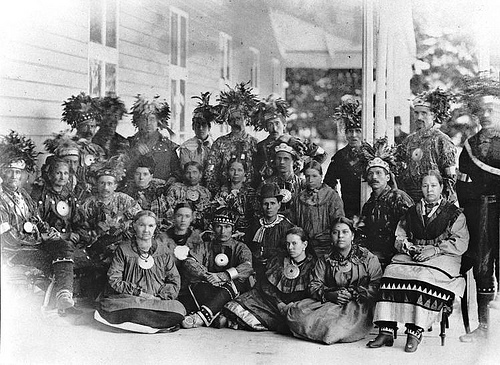
“Jesus ahatonhia,” our last Christmas song of the season, is probably the first Christmas carol written in North America. The title means “Jesus, he is born” in the language of the Huron/Wendat native people of Canada. The Jesuit martyr St. Jean de Brébeuf wrote the song in that language. It is a good example of the way the early Jesuit missionaries adapted the ideas and imagery of native people to express Christian concepts. Here is a literal translation from Wendat into English.


It’s also a beautiful song. It has become known as “The Huron Carol,” and has been sung by numerous artists in both French and English. Here is sung by the Canadian artist Heather Dale. The first verse is in Wendat, the second is French, the third is English.


Index of Shalom December 2011

Bookmark and Share


Landmine survivor advocates for change

Bookmark and Share


Representatives of States Parties to the Mine Ban Treaty, some states not party, international organizations, UN agencies, the International Committee of the Red Cross and ICBL members will gather in Phnom Pehn, Cambodia, from November 28 through December 2, 2011, to assess challenges and progress made in the universalization and full implementation of the Mine Ban Treaty. JRS International Director F. Peter Balleis, S.J. and JRS Asia Pacific Director Fr. Bernard Arputhasamy, S.J. will attend the meeting.

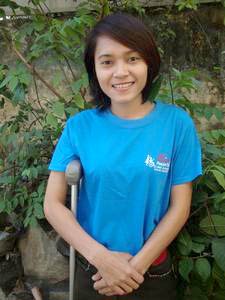
With just days to go until the 11th Meeting of States Parties in Cambodia, the International Campaign to Ban Landmines interviewed Song Kosal, from the Cambodian Campaign to Ban Landmines. Here Kosal speaks about her experience after a landmine accident and the need to spread the word about landmines.

When and how did you become involved with the ICBL?

In 1994 the ICRC (International Committee for the Red Cross) came to my village in Battambang province to help people who needed prosthetic legs. At that time I met Father Kike Figaredo from Spain who later sent his staff to find me to ask me to join the campaign to ban landmines so that I could work to make sure that other children didn’t have to experience that I did.

I joined the campaign to ban landmines and very soon after, in 1995. I went to Vienna to speak at the UN about landmines and at that time I was only about 11 years old. They wanted me to help to ask all people and countries to ban landmines, but I was a small girl and I remember being so scared that I forgot what I wanted to say, I was speechless! But at the same time I met Reth and other landmines survivors and they helped me to become strong again.

At that time nobody wanted to ban landmines, they did not agree. But in 1997 we saw that there were 122 countries who wanted to ban landmines – this was a great success! I was there and I was one of the first people to sign the People’s Treaty, followed by many other campaigners and governments. At the time I didn’t speak very good English and there were very big crowds, so I felt worried, but I remember everyone being very happy and being easy to talk to.

Why did you become involved? Personal experience, inspired by others in the campaign, political or humanitarian interest, or something else entirely?

I don’t want to see other children or people getting hurt by landmines like I did. I want to see children be able to run and play and do anything they want in safety – I don’t want to see them or anyone else killed or injured by landmines. I also want to see them have their dreams come true – to make the dream of a safe life a reality.

I don’t remember what happened to me when I stepped on the landmine other than what my mother told me, as she was with me when it happened. But what I do know is that when I grew up and got to know myself I came to see myself as different from other people because I have only one leg but other people have two. It felt like I had lost everything – I had no hope. At that time in my village there was also fighting as part of the war – it was a terrible time not only for me but for everyone in the village.

One time I walked to school in my village about a kilometer from my home with my crutch – before I didn’t have a crutch at all so I had to stay at home but I asked my father to make me one because I really wanted to walk. He made me a crutch from wood which was heavy and very hard to use but I used it anyway I kept trying because I really wanted to walk and this crutch was like my other leg. That day when I was walking home from school I was hit by a motorbike and got a head injury – and my crutch flew into the rice field. I just cried. After that there was really bad fighting in my village so I could not go to school that often, I was in grade one for three years.

In 1996, when I was about 13, I got support from Sister Denise and other campaigners and was able to come to Phnom Penh to continue my studies and school. I used to walk to school and there were some children who saw me walking with my crutch and called me “kombut” which in Khmer means a disabled person – when I heard that word I felt like I was different and it made me sad. Some people think that it’s ok to call landmine survivors that word – but for us it really touches us in our heart and I really wish people would think carefully when they use it.

As an ICBL national campaigner how would you like to see states – either your country or others – Push for Progress at the 11MSP?

I hope that State Parties and States not Party will come to the 11MSP and announce the progress they have made and what still needs to be done to achieve a mine free world. I hope that survivors are given the chance to have the voice to speak up about their needs – I want them to feel they can speak up and are supported by all the campaigners and governments and that everyone listens to what they really want. I also want to hear all states including my government promise that they will do a greater, better job of listening to the real needs of survivors from all over the world.

What message do you have for anyone out there who isn’t aware of the lethal threat landmines still pose for thousands of civilians every day?

Since I joined this campaign I have been traveling to many countries talking about this issue and telling people about my story. I met many people who didn’t know about the landmine issue who were surprised to hear about my story and this problem. This is a good way to make people understand more about this issue, so I would like to say I’m very grateful and thankful for the people who have been involved with this campaign because spreading this message is so important.

My message to those people who don’t know about landmines is that more of you should get involved to give support to the campaign and to push other governments who are not yet on side with the MBT – we really really need them, we cannot work alone, we need help from them. Once you know more about this you can talk to others broaden the understanding on the issue so we all can make a better place for everyone who lives in mine affected countries. Do you remember the song by Michael Jackson – Heal the World? It is like that, we all have to do something to make the world a better place. That is my message.

Interview by The International Campaign to Ban Landmines. For more information about the ICBL, please visit their website.

Jesuit Refugee Service/USA is a member of the International Campaign to Ban Landmines (ICBL). The ICBL is a global network in over 90 countries that works for a world free of antipersonnel landmines, where landmine survivors can lead fulfilling lives. The Campaign was awarded the Nobel Peace Prize in recognition of its efforts to bring about the 1997 Mine Ban Treaty. Since then, we have been advocating for the words of the treaty to become a reality, demonstrating on a daily basis that civil society has the power to change the world.

Each year, some 26,000 people are killed or mutilated by landmines, which pose a severe hazard to human life in some 70 countries. People displaced by humanitarian disasters are frequently the victims of landmines during their flight and are often prevented from returning home at the end of a conflict because the presence of mines renders their roads unsafe and their fields unfarmable. The elimination of landmines is a major concern to JRS both internationally and in the United States.

In the run up to the 11MSP, which is being held in Phnom Penh, Cambodia, between November 28 and December 2, 2011, the ICBL will be highlighting the amazing work of some campaigners from around the world. Read their stories in their own words and how they are working hard to Push For Progress towards a mine free world.

Seeking Sainthood

Bookmark and Share


by Kathy Henry 


Popular musician and worship leader Steve Angrisano often poses this question, his “pop quiz,” to his young audiences: How many believe you will be a saint one day? When very few in the audience raise their hands, Angrisano goes on to give his view of sainthood, and more to the point, the purpose of Christian faith. The definition of a saint, he explains, is just a person in heaven. How many of us believe we will be in heaven one day? How many of us use that goal as a guide for daily living? Sometimes I find it difficult to equate my ordinary daily living with such lofty ends. Am I worthy?

The Scripture readings for the Feast of All Saints describe the rewards of eternal life for those who are worthy. In Revelation 7, we hear of the great multitudes worshiping before the throne of God in robes washed clean in the blood of the Lamb. Later, in the Gospel of Matthew, Jesus shares the Beatitudes and speaks of the many blessings bestowed on those who are meek, merciful, pure in heart, and hungry for righteousness. And though I do indeed long to be the kind of person who receives these rewards, I’m still not certain my ordinary struggles with human living equate me with those we celebrate on November 1.

What do these readings and this Feast of All Saints have to say to ordinary seekers like me? What do I have in common with all those holy men and women listed in the canon of saints? Sainthood is for everyone who wants to do the right thing but faces the struggles and temptations of earthly life every day. This feast reminds me of-and affirms-my desire to share eternal life in the presence of my divine Creator, Savior, and Sanctifier with all the holy ones who have gone before me. I know I will require purification through the blood of the Lamb. Yet I also know that it is my desire for holiness that keeps me headed in the right direction even when I am distracted and veer off course.

Sainthood requires something of me as well. I must make a conscious effort every day to be the kind of person worthy of God’s blessing. Starting my day with the Lord through the daily Scripture readings or reflecting with a 3-Minute Retreat helps me focus on who I want to be each day. Praying the Ignatian Examen at the end of the day gives me an opportunity to review where I tend to get sidetracked. Celebrating the sacraments, seeking spiritual companionship, and taking advantage of opportunities to grow in faith are some of the many ways I can continue to be the person God created me to be. In order to achieve my spiritual goals, I require the blessings that come with nurturing my spiritual life, practicing virtuous living, seeking forgiveness, and praising God continuously for the many gifts I have already received. It is in these ordinary human ways I continue on the path so many before me have journeyed.

Steve Angrisano concludes with this point: When you die, there are only two options, so you should choose Option A, Saint!

Do you believe you will be a saint one day? What are you doing today to remain on the path seeking sainthood?


Kathy Olenik Henry has been involved in the faith formation of children and adults for 19 years. She holds a Masters in Religious Education from Loyola University, New Orleans, and has served as a catechist, DRE, youth minister, and retreat director. She lives in Ohio with her husband and five sons.


Wisdom Story 28

Bookmark and Share


by Paul Brian Campbell, SJ   

The disciple was a Jew. “What good work shall I do to be acceptable to God”?

“How should I know”? said the Master. “Your Bible says that Abraham practiced hospitality and God was with him. Elias loved to pray and God was with him. David ruled a kingdom and God was with him too.”

“Is there some way I can find my own allotted work”?

“Yes. Search for the deepest inclination of your heart and follow it.”


Business Plan

Bookmark and Share


by Kerry A. Robinson 

I have the best job in the world. And I never saw it coming. Seven years ago, heartbroken over the sexual abuse crisis in the Catholic Church, I visited my spiritual director yearning to lend myself to a meaningful, life-giving pursuit. She suggested that as a prayerful discipline every day for a month, I open myself to the world of possibility while going about the hectic demands of full-time work and motherhood.

Fortified by her wisdom, I flew to Memphis for a board meeting of Catholic philanthropic foundations and received the answer to my prayers in the person of Geoff Boisi, to whom I offered my services. He later became the founding chair of the National Leadership Roundtable on Church Management and invited me to be its first director.

Our network is made up of senior executive leaders from all sectors and industries. These thoughtful, generous men and women-ordained, religious and lay-are chief executive officers, presidents, executive directors, generals and major religious superiors. They are people of profound faith and accomplishment. All Catholic, they come together to help the church respond positively to complex, contemporary and temporal challenges. Our work is neither easy nor expedient. Daily we contemplate the managerial, fiscal, administrative, personnel, communications and public relations challenges facing church leaders.

How? When church leaders ask for help, we respond rapidly with advice, programs and personnel. A bishop from the Midwest, for example, contacted the Leadership Roundtable and explained that the diocese’s pastors and lay leaders could benefit from greater managerial, financial and human resource expertise. The leaders’ proactive approach allowed us to help the diocese implement the Roundtable’s Standards for Excellence, 55 concrete measures to ensure that Catholic parishes, dioceses and nonprofits are operating within accepted best practices. (A recent Carnegie-Notre Dame study confirmed that this local church is now run more efficiently and effectively, and pastors report the advantage of having a credible roadmap to guide their managerial responsibilities.)

We also assist with leadership formation through the Pastor’s Toolbox, a weeklong Harvard Business School-style seminar that equips new pastors with tools for effective management. And when the Great Recession threatened church assets, we convened economic leaders and bishops, a collaboration that led to two national initiatives: coordinated procurement to save money and pooled investment to increase assets.

There is no question that my faith-in possibility, in the church, in God’s providence-brought me to this role. Every day I try to honor this gift by remembering its genesis in vocational discernment and the blessing of meeting Geoff Boisi and our many inspiring colleagues.

When you love something, like the church, you come to know it intimately and see it at its best and at its most ignoble. A close priest friend reminds me that it is harder to hold on to one’s faith the closer one gets to the center of power. There is an irony involved: more care of one’s own inner life of faith must be taken when one works daily in service to the church. What we witness at times (arrogance, fear, control, clericalism, mediocrity, vitriol between the left and right, lack of mercy, distrust) can challenge faith. But it is a challenge my colleagues and I have come to embrace. We commit ourselves to being the church we want to see, to remembering what it is we love most about the church, to serving in a manner that is positive, solution-oriented and faithful.

To accomplish our mission, we hold ourselves to high standards. We seek the best and brightest Catholic leaders, from the church and secular arenas, and assemble them to collaborate on ways to strengthen the church. Recently, when we sought to provide communications expertise to lay and ordained church leaders, we turned to Tony Blair, former prime minister of the United Kingdom, and Bishop Gerald F. Kicanas, then vice president of the U.S. Conference of Catholic Bishops.

As Christian stewards, we believe that to complain and refuse to be part of the solution is to be complicit. As baptized Catholics, we are active, grateful participants, engaged in the life of the church while attending to its temporal needs. We meet for liturgy and begin in prayer. We remember how much can be accomplished when nobody cares who gets the credit. We follow guiding principles and maxims that are deeply Catholic: Trust in providence; banish cynicism; extend the benefit of the doubt; be on the lookout for grace; be joyful.

Catholics in the United States have attained education, affluence, influence and executive leadership, which allows for unprecedented lay expertise, support and leadership in service to the church.

I no longer know if it is my work that nurtures a rich, earthy, vibrant inner life of faith or my faith that inspires and sustains my passionate commitment to serve the church. Either way, it makes for a great day job.

Kerry A. Robinson is executive director of the National Leadership Roundtable on Church Management.

Best Ignatian Songs: After the Storm

Bookmark and Share


by Jim Manney 

My daughter Laura turned me on to the British band Mumford and Sons. They’re something special. “After the Storm” speaks of longing for God, and the hope that love will triumph:

And there will come a time, you’ll see, with no more tears.

And love will not break your heart, but dismiss your fears.

Get over your hill and see what you find there,

With grace in your heart and flowers in your hair.

The lyrics (most of them, anyway) are part of the video, but you can read them all here. If you like this song, listen to “Roll Away Your Stone.”

(Click here to watch the video on YouTube.)