Category: Uncategorized

Helping Families Celebrate Lent

Bookmark and Share


by Kathy Henry


The Lenten devotionals started arriving in my mailbox before Advent was over. We keep a box in the office. On one side it says “Lent/Easter,” on the other, “Advent/ Christmas.” The box fills quickly.

Churchy people like me delight in the selection and struggle to make just the right choice for helping families celebrate Lent with this year’s meditation and prayer. We think everyone should be as excited about this season as we are. We spend hours planning activities and celebrations that we hope will impact the families we serve. The reality may be sobering. Sometimes we plan too much. Do families really care about the season of Lent, and all of its signs and symbols, all of its opportunity and potential? What can we do help the families in our charge get the most out of this sacred time without overwhelming them with the choices?

Start with the basics. Encourage families to focus on the practices of prayer, fasting, and almsgiving in their homes.


  • Prayer—Provide simple, age-appropriate devotions for both children and adults. Parents need to nourish their own spirituality in order to nourish that of their children. Children like interactive devotions. Teens are not too old or too young for either.
  • Fasting—Encourage not only “giving up” but “adding to.” In addition to giving up a favorite food or activity, invite families to consider adding an activity or habit. Practice complimenting others, expressing gratitude, and being helpful. Fast from bad habits; practice good habits.
  • Almsgiving—Give families a reason for gathering those loose coins. Yes, we may have a rice bowl, but why? Make it tangible and visible.


Make it communal. Assure families that other families are also struggling to make Catholic practices happen in their homes. Give them a venue for sharing their experiences.


  • Begin the season with a communal Lent gathering that includes activities designed to encourage family faith formation. Last year we reflected on Matthew 6:1–18, handed out purple prayer cloths, decorated glass jars for alms, and created personal family plans for celebrating Lent in our homes.
  • Invite families to participate in (not just attend) a family Stations of the Cross service. Include a potluck meal.
  • Promote a communal almsgiving project, such as Catholic Relief Services’ Operation Rice Bowl, collections for Heifer International, or supporting a local charity. Create a visual display in church. In one parish, we kept a large wooden salad bowl full of rice in front of the altar throughout Lent. (The servers loved to run their fingers through it after Mass!)


Keep it simple. We know how busy family life can be any time of the year. Make sure families know our efforts respect their lifestyles without lowering the bar for faith formation.


  • Teach families how to create a Lenten focus in their homes. Send visuals home.
  • Give examples of ways to carve out small moments of grace in the middle of a busy day. Daily devotions don’t need to last a half of an hour. Take a 3-Minute Retreat together.
  • Remind parents to select activities that fit their household. Lenten spirituality should never feel forced or imposed. At the same time, don’t be afraid to try something new.


Our task is to convince families that it can be fun and enriching to celebrate Catholic Lenten traditions at home. What else can we do to nurture family faith formation this Lent?


The Daily Examen…a new way to enter a new year

Bookmark and Share


by Daniel Haugh


Perhaps by now, two weeks into the new year, the resolutions made on January 1 have come and gone. As mentioned in previous posts, for many years I was troubled at my lack of resolve and will power. The “check list” kind of resolutions never really worked for me.

For me, rather than attempting a new list (perhaps one more manageable), I am beginning to use this time of year to reflect and meditate upon where and how God is at work.

As I look back on 2011 and ahead to 2012, many questions arise, that I believe may be more important than whether or not my check list of do’s and don’ts is complete.

Have I grown in maturity, wisdom, understanding?

Has Faith, Hope, and Love increased in my life?

Am I willing to ask others to speak into my life and be honest with me.

Did I become more irritable? Less giving? Has compassion given way to apathy?

I realize the difficulty in trying to discern, but I have discovered that if I take time to sit and ponder (with openness and honesty) I am able to look back on this past year and see ways in which I have grown (hopefully) and other areas that I have not.

This past week I spent a few hours in various cathedrals in Paris. I love the atmosphere of transcendence and mystery as I embrace the Spirit of Peace. I gaze at the stained glass, dip my fingers into the baptism fonts to remember my own, and sit looking, praying, and reflecting. Often I will light a cancel and ask for illumination.

These moments brought me back to an earlier time in my journey when I practiced an ancient spiritual tradition called the “Examen Prayer” or “The Daily Examen”

A practice that I was first introduced to during a course on Spiritual Direction in college referred to then as The Ignatius Examen of Consciousness.

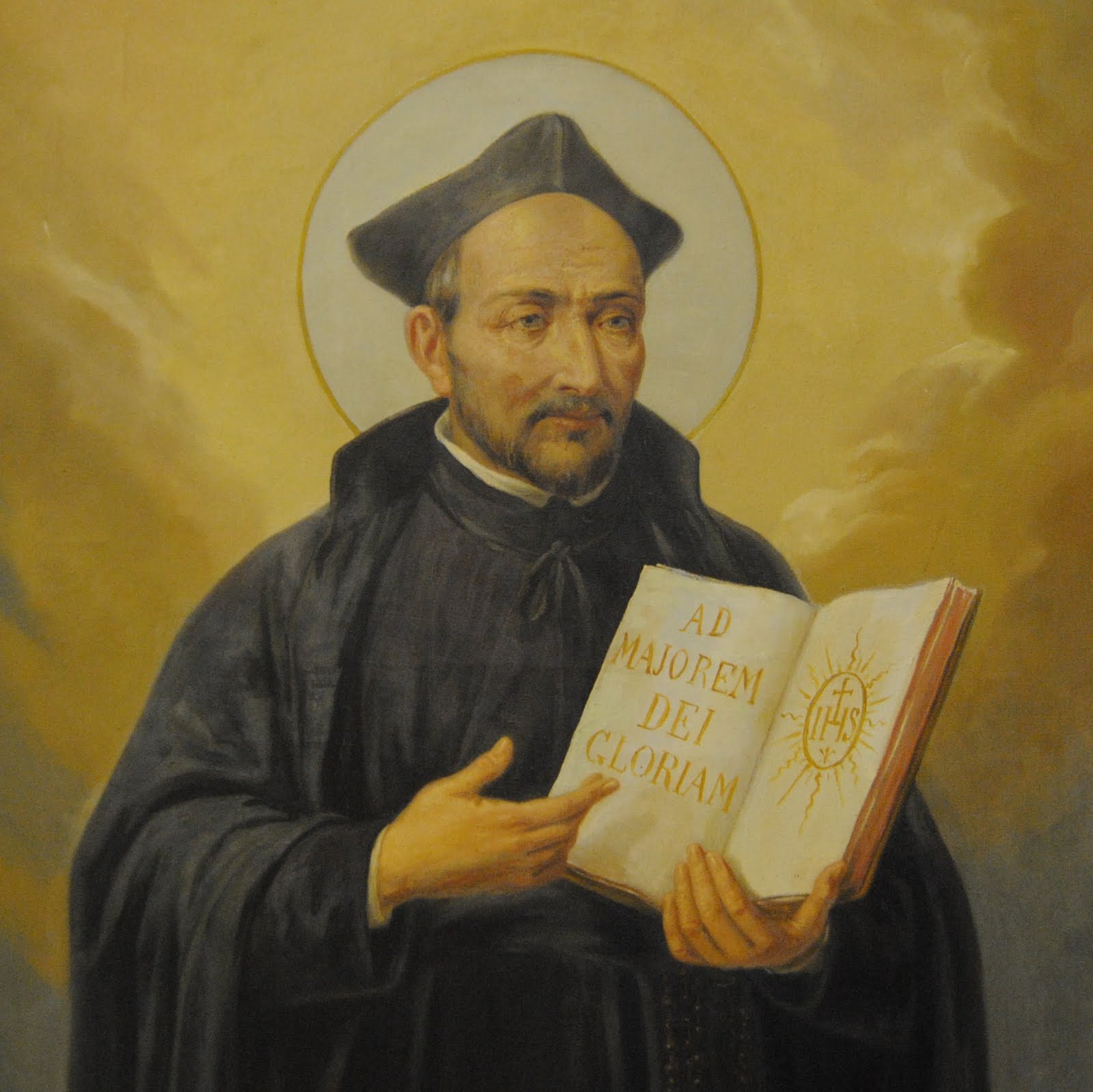
This is a wonderful spiritual discipline from the early church, practiced and made popular by the Jesuit priest St. Ignatius.The prayers and methods of praying suggested here are based on nearly five-hundred years of Jesuit spiritual tradition. They could help you grow in intimacy with God and experience Jesuit spirituality first-hand. St. Ignatius believed that he received a gift from God that not only enriched his own Christian life but was meant to be shared with others. The gift was a “method,” a way to seek and find God in all things and to gain the freedom to let God’s will be done on earth. This way of praying allowed Ignatius to discover the voice of God within his own heart and to experience a growth in familiarity with God’s will. Jesuits call this prayer their daily examen of consciousness.


The Examen of Consciousness

This is a prayer where we try to find the movement of the Spirit in our daily lives as we reflect on our day. This prayer can be made anywhere: on the beach, in a car, on the bus or metro, at home, in the library. Many people make the Examen twice daily: once around lunchtime and again before going to bed. There are five simple steps to the Examen, and what follows is just one interpretation of these five steps in discerning the movement of God’s Spirit in your day. Through this method of praying you can grow in a sense of self and the Source of self; you can become more sensitive to your own spirit with its longings, its powers, its Source; you will develop an openness to receive the supports that God offers.

1. Thanksgiving

Lord, I realize that all, even myself, is a gift from you.

– Today, for what things am I most grateful?

2. Intention

Lord, open my eyes and ears to be more honest with myself.

– Today, what do I really want for myself?

3. Examination

Lord, show me what has been happening to me and in me this day.

– Today, in what ways have I experienced your love?

4. Contrition

Lord, I am still learning to grow in your love.

– Today, what choices have been inadequate responses to your love?

5. Hope

Lord, let me look with longing toward the future.

– Today, how will I let you lead me to a brighter tomorrow?

I have found that depending on the season of life, or simply depending on the mood I am in that day, some themes are more difficult than others. Some years, Contrition is at the heart of what I need, Others times it is thanksgiving. Hope is always there.

My professor of Spiritual Formation taught us a simplified version of The Examen, which focusses on the #3 Examination

As a prayer:

1) How have I experienced your love today?

2) How have I loved you well?

3) How have I not loved you well? (this implies loving others as well. Love God = Love Others.)

This resolution and daily practice is worthwhile and certainly has the potential to transform this new year, for ourselves and those around us. May we begin this year looking back in reflection to see Go’s love and provision and grace protecting and guiding us. May we look ahead with anticipation and excitement and pray for God’s spirit to guide us in the upcoming year.

We have begun encouraging our youth and young adults to start this new year, new week, and each new day with these prayers. During one of our weekly gatherings, we look at the life of Saint Ignatius and set aside time individually to do the Examen.

My prayer is for a renewal desire to be saturated in God’s Word each day and to have fresh eyes and ears to witness His grace all around us.

Take, Lord, and Receive Take, Lord, and receive all my liberty, my memory,

my understanding, and my entire will.

All I have and call my own.

Whatever I have or hold, you have given me.

I return it all to you and surrender it wholly to be governed by your will.

Give me only your love and your grace and I am rich enough and ask for nothing more.

-St. Ignatius, from the end of the Spiritual Exercises


Our Choices as God Might See Them

Bookmark and Share


by Charles Jackson, SJ


Discernment presupposes an ability to reflect on the ordinary events of one’s life, a habit of personal prayer, self-knowledge, knowledge of one’s deepest desires and openness to God’s direction and guidance. Discernment is a prayerful “pondering” or “mulling over” the choices a person wishes to consider. In his discernment, the person’s focus should be on a quiet attentiveness to God and sensing rather than thinking. His goal is to understand the choices in his heart: to see them, as it were, as God might see them. In one sense, there is no limit to how long he might wish to continue in this. Discernment is a repetitive process, yet as the person continues, some choices should of their own accord fall by the wayside while others should gain clarity and focus. It is a process that should move inexorably toward a decision.

Young Adult and Layman

Bookmark and Share


by Becky Eldredge

One of my greatest joys in life is journeying with those in their 20s and 30s in my work with Charis Ministries, and even more specifically, sharing with them the gifts and joys of Ignatian spirituality. At the beginning of every Charis retreat, we take the time to share St. Ignatius’s story. I am always amazed at how much his story speaks to the young adults and how much they find encouragement and inspiration in Ignatius’s story.

To begin with, Ignatius’s conversion happened when he was a young adult and a layman. Instantly, this opens up the reality that we are invited, as Ignatius was, into a relationship with God right now as we are in our 20s and 30s. His conversion story did not happen after years of theological training or years of religious education; rather, it happened in the prime of his military career. What does that say to young adults? God wants us now, and if Ignatius could make the radical change as a young adult to follow Christ, then we can also right now. Caitlin, a 22-year-old college student, captures this reality when she says:

What inspires me the most about Ignatius is the humanness of his story. The humanness and the humility that his conversion story ends with are inspiring. It seems that if he can overcome the life he was living to find Christ, our journey can’t be that far.

The question that Ignatius’s story invites all of us, not just young adults, to consider is, “Am I aware of the depth of God’s desire for a relationship with me right now?”

Praying with the Jesuits

Bookmark and Share


By James Martin, SJ


In the mid 1960s, a French Jesuit named Joseph de Guibert offered a charming analogy about spirituality, first made in the Middle Ages. A spirituality is like a bridge, he said. Every bridge does pretty much the same thing: It gets you from one place to another, some- times over a perilous route, or a river, or a great height. But each does it in a different way. Bridges might be made of wood, bricks, stone, or steel; they might be arches, cantilevers, or suspension bridges. One is adaptable to a setting in ways that others may not be.


“Yet each one in its own way achieves the common purpose,” Father de Guibert said, “to provide a passage….”


Each spirituality, by analogy, offers a distinctive “passage” to God.


Many Christian spiritualities flow from the great Religious Orders: Benedictines, Dominicans, Franciscans, Carmelites, Assumptionists, and Cistercians. Over the centuries, each Order has developed its own spiritual traditions — some directly handed down by its founder, others that came by meditating on the life of the founder. Today, members of those Religious Orders live out what Father de Guibert calls a “family tradition.”


So what is the spirituality of the Society of Jesus, aka the Jesuits?


It begins with St. Ignatius Loyola (1491-1556), the founder of the Jesuits. After hoping to be a great soldier, Ignatius was injured in a battle in 1521. Carried back to his family’s castle to recuperate, the proud soldier began reading books on the life of Christ and the lives of the saints. Slowly he began to recognize, through his emotional reactions to what he read, that God was inviting him to something new.


Setting aside his old life, Ignatius began to live as a hermit in a cave and experienced a series of mystical experiences that convinced him more than ever that he was being called to conversion. Over time, Ignatius gathered together friends who would later form the Society of Jesus. In his later years, the former soldier worked as an administrator, and also counseled and advised many people — Jesuits and other- wise — in their spiritual lives.


Overall, the total sum of the practices, methods, emphases, accents, and highlights of the Christian way of life that comes from Ignatius and from the Jesuit Order is known as “Ignatian spirituality.”


But how can the everyday lay- person benefit in his or her daily life from the insights of a 16th- century soldier-turned-mystic?


If you asked 10 Jesuits to define Ignatian spirituality, the first thing out of their mouths would probably be “finding God in all things.” That deceptively simple phrase was once considered revolutionary. For it means that nothing is seen as outside the boundaries of the spiritual life. Ignatian spirituality is not confined within the walls of the Church. It does not consider only overtly “religious” topics, like reading Scripture, as part of a person’s spiritual life. The way of Ignatius looks at all your experiences as ways to meet God. That includes prayer and service to be sure; but it also includes friends, family, work, relationships, sex, suffering, and joy, as well as nature, music, and pop culture.


The second definition those 10 Jesuits might give is being “a contemplative in action.” That idea resonates with many people today. How would you like to live more contemplatively? Or simply, more peacefully? Would you like to disconnect sometimes from the distractions of constant e-mails and phone calls for just a little quiet?


Well, while peace and quiet are essential to nurturing our spiritual lives, most of us are not going to quit our jobs or leave our families to join a monastery and spend our days in silence. And, by the way, monks work hard (some even have e-mail!). So while Ignatius counseled his Jesuits to carve out time for prayer, they were expected to lead active lives. They were to be active people who adopted a meditative stance toward the world. They were to be “contemplatives in action.” Instead of seeing the spiritual life as one that can exist only if it is enclosed behind monastic walls, Ignatius asks you to see the world as your monastery.


But the spirituality of Ignatius also invites us into certain ways of prayer.


Perhaps Ignatius’ greatest gift to the Church is his Spiritual Exercises, a four-week manual for prayer based on the life of Christ. In the Exercises, we are invited to use our imaginations to place ourselves creatively within scenes from the Gospel. So, for example, in a meditation on the Nativity, Ignatius asks us to imagine our- selves inside the stable with the Holy Family. Use your imagination as you ask yourself the following: What do I see? Hear? Smell? That may sound odd to you. It once did to me. The first time I heard about “Ignatian contemplation,” I said to my spiritual director, “Isn’t it just making things up in your head?” My director patiently asked me some helpful questions. Did I believe that God worked through relationships? Yes, I said. Did I believe that God can work through my emotions? Of course. “Then why can’t God work through your imagination?” he asked.


Once I felt free to place myself imaginatively into the Gospel scenes, I noticed how many emotions insights, memories, desires, and feelings arose as I prayed in a new way with Scripture. Placing yourself imaginatively into Gospel passages often helps you feel closer to Christ, who is, after all, speaking to you through Scripture.


Another traditional Ignatian practice is the “examination of conscience.” This type of prayer was so important that Ignatius said that even if a Jesuit neglected all other kinds of prayer — excepting the Mass, of course — he should never omit this one. The examination is a review of the day in which we look for signs of God’s presence. First, you place yourself in the presence of God, as we do at the start of any prayer. Second, you recall things for which you are grateful. They don’t have to be big things: any- thing at all that makes you happy. Ignatius asks us to “savor” these gifts and give thanks. Next, you review your day, looking for signs of God’s presence: Where did you accept God’s invitation to love, and where did you turn away? Then you express sorrow for your sins, and perhaps decide to seek out the sacrament of Reconciliation. Finally, you close with a request for God’s help the next day.


The examination of conscience is a wonderful way to live out the call to prayer as a “long, loving, look at the real,” as the Jesuit theologian Walter Burghardt once wrote.


It’s tough to summarize Ignatian spirituality in a few pages. For it includes not only a variety of spiritual approaches (like “finding God in all things” and being a “contemplative in action”) and specific kinds of prayer (Ignatian contemplation and the examination), but also derives from other sources. The varied activities of the early Jesuits — for example, opening up a house for reformed prostitutes — shed additional light on the idea of finding God in all things. The lives of the great Jesuit saints and martyrs give us further insights into Ignatian spirituality. And the lives of the thousands of lay men and women who have followed the way of Ignatius also reveal something about this flexible and accessible spirituality.


For me, Ignatian spirituality has been a wonderful bridge to God. Its emphasis on finding God in all things, being a contemplative in action, using one’s imagination for prayer, and carefully considering your day helped me realize that, as Ignatius said, “the Creator can deal directly with the creature.” It has brought me into a much deeper relationship with God than I ever imagined possible. And for this I thank St. Ignatius Loyola. And God, of course!

Young Jesuits for the welcoming of visitors in Loyola in Summer 2012

Bookmark and Share


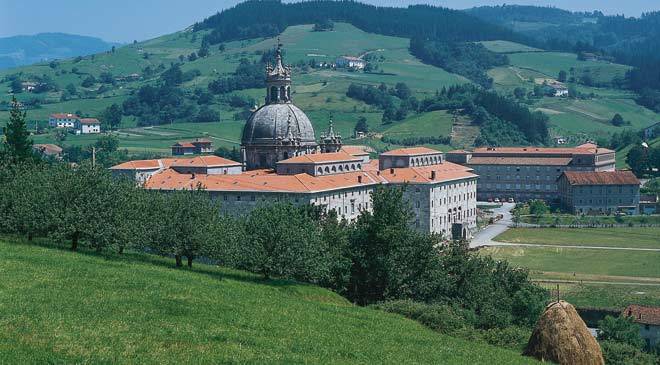
Each summer, Loyola Shrine, the birthplace of St. Ignatius (Province SJ of Loyola, Spain), welcomes thousands of visitors from a variety of countries who come for various reasons (tourism, religious motivations, etc.). This provides us an interesting opportunity to speak with them and to educate them about St. Ignatius’ life and the life of the Society of Jesus.

The Jesuit community of Loyola would therefore be delighted to receive some young Jesuits (priests or not) who are willing to collaborate in the welcoming of visitors and in other works of the Shrine, for part of the summer of 2012 (July, August and September). Among the necessary conditions: a sufficient knowledge of the Spanish language and a stay of about one month. The Shrine offers free accommodation and other facilities to be determined.

For more information, please contact Fr. Javier Zudaire. Starting now, candidates can send him their requests, attaching their CV’s. They will receive a definitive answer before the 1st of April 2012.


Award to culture of peace

Bookmark and Share


The Spanish Jesuit Jesus Maria Alemany received on December 15th, the Human Rights Award 2011 in the category “people”. The General Council of Lawyers in Spain represents 166,000 lawyers in our country and gives the award. Jesus Maria Alemany will receive this award, for “devoting his life to promote education, respect for human rights and culture of peace through the Pignatelli and the Foundation Center Research Seminar for Peace in Zaragoza “. His teaching and research has moved on border issues between theology and society, culture and justice, as well as culture of peace and analysis of international relations, publishing dozens of papers in these fields.

Jesus Maria Alemany was born in 1938 in Zaragoza and entered the Society of Jesus in 1955 being ordained in 1968. He was director of Centre Pignatelli in Zaragoza (1972-1975), and currently chairs the Foundation “Research Seminar for Peace” in Zaragoza. He has been director since the beginning in 1984.


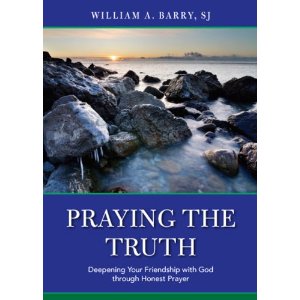
Praying the Truth

Deepening Your Friendship with God through Honest Prayer


Bookmark and Share


We don’t question our desire to be open with our close friends about our feelings, even if those feelings are difficult to express. We recognize that being honest with our loved ones will only deepen our bonds and help us feel peace in being able to express our innermost thoughts. Why then is it so challenging for us to come as we are, however we are, when approaching God in prayer?


In Praying the Truth: Deepening Your Friendship with God through Honest Prayer, William A. Barry, SJ, helps us deepen our friendship with God by examining how to approach God, at any time and with any problem, in complete honesty. Fr. Barry reflects on how secrecy can hurt families, the Church, and ourselves and how what we are keeping secret can get in the way of our connection with God. He acknowledges that we may fear God’s reaction when revealing our most intimate truths; but just like with friendships, we risk not developing our relationship with God if we are dishonest about who we are and how we feel.

Praying the Truth helps us realize that if we do not approach God in complete honesty, we may be holding back a part of ourselves that needs to be healed. By learning how to communicate honestly with God, our friendship with God and our faith in God’s promise to love us unconditionally will be strengthened.

Jesuit Electronic News Service Vol. XV, n.23

Bookmark and Share


Appointments


Pope Benedict XVI has appointed:


– Father Antonio Spadaro Consultor of the Pontifical Council for Culture. Father Spadaro, Director of the magazine La Civiltà Cattolica, was born in 1966, entered the Society of Jesus in 1986 and was ordained a priest in 1996.


Father General has appointed:


– Father Severin Leitner General Consultor and Regional Assistant for Central-Eastern Europe (ECE) to replace Fr Adam Zak. Fr Severin was until now Rector of the Theologate at Innsbruck and Delegate for Formation of Jesuits in Europe. He was born in 1945, entered the Society in 1965  and was ordained priest in 1974.


– Father Kinley Joseph Tshering Provincial of Darjeeling (India). Fr. Kinley, currently rector and principal of St. Joseph School, North Point, was born in 1958, entered the Society of Jesus in 1986 and was ordained a priest in 1995.


– Father Vernon D’Cunha Provincial of Bombay (India). Fr. Vernon, currently Treasurer of the Province and Master of Novices for many years, was born in 1956, entered the Society of Jesus in 1977 and was ordained a priest in 1989.

Jesuitica


Signposting the Mormons. The Mormons are under particular scrutiny in the USA because one of them, Mitt Romney, has declared an interest in the Presidency. There was a time when they were less acceptable. In 1838 Governor Boggs of Missouri decreed: “The Mormons must be treated as enemies, and must be exterminated, or driven from the State, if necessary for the public peace.” As they were hounded from state to state, seeking a place where they could live in peace, they sought advice from Jean Pierre DeSmet SJ, the noted explorer of the American west. His description of the magnificent Great Salt Lake valley pleased them greatly.  So Salt Lake City became to Mormons what Rome is to Catholics, and Jesuit de Smet stands there among the founders’ statues.


Jesuit Troika? Readers will have noticed one sign of hope on the European scene, a unity of purpose among three of Europe’s leaders: Herman van Rompuy, President of the European Council; Mario Draghi, President of the European Central Bank; and Mario Monti, the new Prime Minister of Italy. In a recent speech van Rompuy reminded the listeners that all the three were educated by the Jesuits: “My two technocrat colleagues share with me an idea of a humane market economy, an area where I have always dwelled.” They share the global economic vision of Pope Benedict’s encyclical: Caritas in Veritate. The fact that the Spaniards have just elected another Jesuit alumnus, Mariano Rajoy, as their leader, is stirring the lunatic fringe to talk of a Jesuit take-over of Europe – whatever that means. (AMDG Express). 


Notice


Wishing all our friends and readers a Merry Christmas

and a New Year filled with joy and peace,

The Press and Information Office reports that the next Electronic Bulletin

will appear around the middle of January 2012.

In February it will resume its regularity. 

Index of Shalom January 2012

Bookmark and Share


Week Before Epiphany

1st Week in Ordinary Time

2nd Week in Ordinary Time

q

3rd Week in Ordinary Time

4th Week in Ordinary Time