Category: Uncategorized

Christ Has No Online Presence but Yours

Bookmark and Share


by Meredith Gould


During December 2010, I visited Loyola Press to talk with the marketing and sales team about why, when and how to use social media. As part of my preparation, I hunkered down to take a more rigorous look at the Virtual Abbey, an online community offering the Daily Office via Twitter. This virtual monastery seems to engage new and active participants on a weekly basis.

People are hungry for prayer as well as engagement in community. Yearning to seek and find, they’re knocking on virtual doors that open into real experiences of faith lived out in the secular world. The Virtual Abbey uses online technologies and tools to provide prayer, as well as community, for people of faith–and those who yearn to be.

My experience with the Virtual Abbey plus participating in an ongoing conversation about what it means to be “church” these days, inspired me to create this contemporary take on Saint Teresa of Avila’s well-known prayer, Christ Has No Body. For your consideration and contemplation:

Christ Has No Online Presence but Yours

Christ has no online presence but yours,

No blog, no Facebook page but yours,

Yours are the tweets through which love touches this world,

Yours are the posts through which the Gospel is shared,

Yours are the updates through which hope is revealed.

Christ has no online presence but yours,

No blog, no Facebook page but yours.


In my imagination? I see Saint Teresa winking her approval!

The Grace We Need

Bookmark and Share


by Vinita Hampton Wright


No matter how pure our motives and how flawless our discernment process, we depend on God’s grace ultimately to help us make not only good choices, but the best ones.

We count on God’s grace as we examine our hearts. We need grace to help us detach from biases and the sorts of passions—both negative and positive—that can sometimes cloud our judgment.

We count on God’s grace as we seek out information. It’s not always easy to get to the truth of a matter—sometimes it depends on who is supplying the information. Three different people may have three different sets of recommendations as to a job or a major purchase or the best way to deal with a defiant teenager. Sometimes we seek out—perhaps subconsciously—those who generally agree with us and who are less likely to challenge our thinking or our facts.

We count on God’s grace as we listen to the wisdom of Scripture, the Church, and our conscience. Scripture can be misused, misquoted, and misinterpreted in so many ways! I can probably find a specific verse in the Bible to back up anything I want to do. This is why the Scriptures themselves encourage us to study God’s word and meditate on it so that it seeps down into us not just intellectually but in ways that the Holy Spirit can use to transform us. In the same way, we know that the Church has made various bad judgments through its history. God does not magically make the Church omniscient—as the body of Christ, we move forward in community by grace and with constant learning and discernment.

And the human conscience is shaped by situation and conditioning—which is why it took centuries for well-meaning Christians to understand that slavery is wrong and that women and children are full human souls and not the property of men.

My conscience has limits, and so does yours. We make our best judgments, but we pray that God’s grace will continue working in us so that the conscience is shaped, not only by family and culture, but by Divine Love itself.

Just as grace can help us discern, grace can help us when we don’t discern well. Grace is God’s love showing up no matter how things go. Grace helps us grow beyond the mistakes and beyond the situations we cannot control.

Consolation and Desolation

Bookmark and Share


by Vinita Hampton Wright

It’s hardly fair—to the material or to readers—to limit discussion of consolation and desolation to one post! But these topics will come up in some form during Lent. Also, many of you in the DDF community are already somewhat familiar with Ignatian spirituality and terms such as consolation and desolation. So here is a brief summary.

Consolation and desolation are states of the soul that, if we pay attention to them, can guide our steps and aid our prayer. When in consolation, we are growing in love and grace, moving toward God and God’s desires for us. When in desolation, we are moving away from God, and we experience a diminishment of peace and other marks of spiritual growth and health.

It’s important to understand that consolation does not always feel good, and desolation does not always feel bad. False consolation can give us feelings of pleasure and satisfaction in situations and activities that are not enhancing our spiritual growth. And sometimes when we are moving in the right direction, we can experience emotional turmoil, even deep sadness.

Many, many writers and spiritual teachers have described desolation and consolation, but I always fall back to Margaret Silf’s effective summary (from Inner Compass, 84–85):

Desolation

-Turns us in on ourselves

-Drives us down the spiral ever deeper into our own negative feelings

-Cuts us off from community

-Makes us want to give up on the things that used to be important to us

-Takes over our whole consciousness and crowds out our distant vision

-Covers up all our landmarks

-Drains us of energy

Consolation

-Directs our focus outside and beyond ourselves

-Lifts our hearts so that we can see the joys and sorrows of other people

-Bonds us more closely to our human community

-Generates new inspiration and ideas

-Restores balance and refreshes our inner vision

-Shows us where God is active in our lives and where he is leading us

-Releases new energy in us

As we learn to recognize when we are in desolation and consolation, we can respond accordingly—changing course (through prayer, community, discernment, spiritual direction) when in desolation, and staying the course when in consolation.

What Can We Do? Action Steps for Moments of Return

Bookmark and Share


by Becky Eldredge


Moments of return for Catholic young adults are moments that hold the potential for evangelization and outreach. Below are practical strategies for strengthening important moments in young adults’ lives.

Welcome and Celebrate Young Adults

From the minute a young adult stands in front of us at our parishes we should be celebrating the fact that she is there. After watching numerous friends get married, baptize their children, and begin religious education of those children, I know that making these decisions can at times be challenging for young adults to make. Our starting point as we minister to young adults within marriage preparation, baptismal preparation, and religious education needs to be one of gratitude, the same gratitude we experience when a new high school teen walks into a youth ministry event.

When that high school teen walks in our doors, we do not question why he is there, but rather we celebrate the fact that he stepped foot in the door. This attitude of thankfulness for the presence of the young needs to come from all in the parish—administrative people answering the phone, faith formation ministers, pastors, and others. The first words out of our mouths need to be “Congratulations!” or “Welcome!” or “We are glad you came!”

Invite Young Adults to Share Their Stories

The second step is giving young adults an opportunity to share their stories. Inviting young adults to share their sacred stories is an invitation for them to begin to notice God at work in their lives. One of the biggest gifts we can give a young adult is the gift of “holy listening.” For marriage preparation, it is simply inviting the young adults to share how they met, to share about their relationship, and most importantly why they chose to be here. For baptismal preparation, it is taking the time to listen to the story of their child’s birth, the reason they gave their child his/her name, the struggles or ease of getting pregnant, and their fears and joys of parenthood. When a parent calls about sacramental preparation or religious education, we can take a moment to hear about the child, to hear about the gifts of that child, and to minister to the parent. All three moments of return gift us with an opportunity to be “holy listeners” to the sacred stories of young adults’ lives. Truly listening is an opportunity to minister to young adults and provide a connection to our parishes.

Teach

As young adults share their stories, we can also offer the gift of knowledge. In my years of ministry to and with young adults, I have learned the importance of slowing down when young adults are in front of me to offer moments of teaching instead of rushing through a meeting. Young adults come to us with questions and a hunger to have these questions answered. My motto is “never assume” someone understands or has all of their questions answered until I ask. With each of the major moments of return, we have golden opportunities to help pass on our faith. With marriage preparation, we can share why Matrimony is a sacrament, and what it means to be Christ’s love for each other and a witness to God’s love in the world. With Baptism, it is helpful to share the reasons for the symbols and even more importantly what it means to be the primary educator of children’s faith. Religious education allows us opportunities to teach both parent and child by simply sharing information.

Connect to Other Young Adults

A final thing we can do when these moments of return occur is connect young adults to other young adults in similar life circumstances. I call these moments of return for a reason. Often young adults are re-entering their faith communities, and as they re-enter, they know few people their age at the parish. A simple act of introducing newlywed couples or new parents to other young adult couples in that similar stage can be an avenue of connecting to the larger faith community. The same is true with parents in religious education programs. So often, young adults tell me they want to find others within the parish community that are their age and in similar life circumstances. As faith formation ministers, we can help create community by connecting people to each other.

With an attitude of thankfulness, an atmosphere of hospitality, sacred listening and teaching, and connecting young adults to the larger faith community, we have the ability to help a young adult’s moment of return turn into something that occurs more than once!

In Spite of Darkness

Bookmark and Share


by Jim Manney


In Spite of Darkness” is an award-winning documentary about an interfaith retreat at the Auschwitz-Birkenau concentration camps in Poland, where more than 1 million people, nearly all of them European Jews, were exterminated by the Nazis. It was produced by Loyola Productions Munich and directed by Christof Wolf, SJ. You can watch it at this link on the film’s site. This is the trailer.


Priests in Fiction

Bookmark and Share


by Doris Donnelly


This week, Doris Donnelly reviews Vestments, a new novel about a young priest struggling with his vocation. Here she offers a few classic novels featuring a priest protagonist.

The Power and the Glory by Graham Greene (1940)

An unnamed whiskey priest is on the run from a Mexican state that has outlawed the church. All other priests have fled or been rounded up and shot. Stripped of his life of pampered privilege, and in a haze of alcohol and fear, the priest is unwittingly tugged to minister to needy peasants while eluding an intense lieutenant who is determined to rid his country from all seeds of corruption planted by the church. The paradox of strength in weakness has probably never been novelized better than here by Greene.

The Diary of a Country Priest by George Bernanos
(1936 French; 1937 English)

This touching and uncommonly profound diary is in a class of its own. The journal belongs to a young Catholic priest in an isolated French village who serves misguided, petty, impoverished parishioners with unstinting devotion without a shred of gratitude in return. Engulfed by sadness at his inability to connect with his people, he remains a faithful witness to grace in spite of what seems to be a life of unmitigated failure. As he dies of cancer, grace glows and we recognize the privilege of being in the presence of a saint.

The Innocence of Father Brown by G. K. Chesterton (1911)

OK, maybe not so innocent, at least not in the ways of understanding human nature where he excels and outdoes his almost contemporary, Sherlock Holmes, who relied solely on keen observation and deductive reasoning. Brown does more. He solves impenetrable mysteries always as a means to an end—the firm conviction that even the most hardened criminals are not beyond the possibility of repentance and redemption. Brown’s wit charms still, a hundred years later.

The Sparrow by Mary Doria Russell (1996)

In 2019, Father Emilio Sandoz, a Jesuit linguist, travels with his team on a secret mission to the planet Rakhat, where the first proof of intelligent extraterrestrial life is detected. Forty years later, Sandoz, the sole survivor of the failed mission, is rescued only to face an inquest by the Vatican that probes the heart and soul of this emotionally shattered and physically debilitated priest. We learn of a tragic human error that leads to Sandoz’s disgrace and prompts the perpetual question about how a good God allows excruciating suffering to exist.

The Thorn Birds by Colleen McCullough (1977)

A popular potboiler, The Thorn Birds turbocharges the clichéd tale of “dark passion” and “forbidden love” between a beautiful woman and a handsome priest. McCullough needs 700 pages to trace lust, ambition and the inevitable pain that burrows deep in the hearts of Meggie Cleary and Father Ralph de Bricassart as Meggie remains in the Australian outback and Ralph sets out for the fast lane of ecclesiastical prominence and success in Rome.

Death Comes for the Archbishop by Willa Cather (1927)

This majestic story belongs to Jean-Marie Latour, a French missionary priest dispatched with a companion to New Mexico in the mid-1800s to evangelize its people who are American by law but Mexican and Indian by heritage. Cather captures the dignity of Bishop Latour, whose gift of self to others is unrelenting as he confronts not only the quintessential beauty and unforgiving landscape of the Southwest but also renegade priests, wrenching human suffering and his own loneliness. Hands down, this is an American masterpiece.

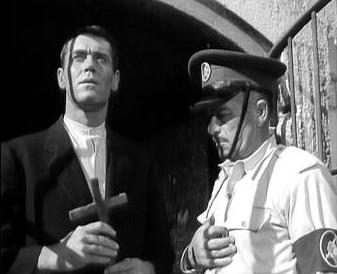
Pictured above: Henry Fonda in the film adaptation of The Power and The Glory.


Doris Donnelly is a professor of theology at John Carroll University, Cleveland, Ohio.

St. Claude de la Colombiere

Bookmark and Share


Missionary and ascetical writer, born of noble parentage at Saint-Symphorien-d’Ozon, between Lyons and Vienne, in 1641; died at Paray-le-Monial, 15 Feb., 1682. He entered the Society of Jesus in 1659. After fifteen years of religious life he made a vow, as a means of attaining the utmost possible perfection, to observe faithfully the rule and constitutions of his order under penalty of sin. Those who lived with him attested that this vow was kept with great exactitude. In 1674 Father de la Colombière was made superior at the Jesuit house at Paray-le-Monial, where he became the spiritual director of Blessed Margaret Mary and was thereafter a zealous apostle of the devotion to the Sacred Heart of Jesus. In 1676 he was sent to England as preacher to the Duchess of York, afterwards Queen of Great Britain. He lived the life of a religious even in the Court of St. James and was as active a missionary in England as he had been in France. Although encountering many difficulties, he was able to guide Blessed Margaret Mary by letter. His zeal soon weakened his vitality and a throat and lung trouble seemed to threaten his work as a preacher. While awaiting his recall to France he was suddenly arrested and thrown into prison, denounced as a conspirator. Thanks to his title of preacher to the Duchess of York and to the protection of Louis XIV, whose subject he was, he escaped death but was condemned to exile (1679). The last two years of his life were spent at Lyons where he was spiritual director to the young Jesuits, and at Paray-le-Monial, whither he repaired for his health. His principal works, including “Pious Reflections”, “Meditations on the Passion”, “Retreat and Spiritual Letters”, were published under the title, “Oeuvres du R. P. Claude de la Colombière” (Avignon, 1832; Paris, 1864). His relics are preserved in the monastery of the Visitation nuns at Paray-le-Monial.


For Lent, Try An Ignatian Prayer Adventure (Online Retreat)

Bookmark and Share


by Jim Manney


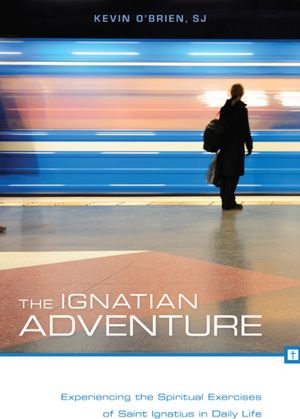
What are you doing for Lent? Am I the first to ask? Ash Wednesday is only two weeks from today–a date I’ve been keenly aware of because I’ve been very busy lately putting together our Ignatian Prayer Adventure. This is an eight-week online retreat that can be completed during Lent and Easter. It’s a version of the Spiritual Exercises. We’re using materials from The Ignatian Adventure by Kevin O’Brien, SJ.

The retreat actually begins on the Sunday before Ash Wednesday–February 19. It will continue through Lent, concluding the week after Easter. Eight weeks in all.

We’ve designed a retreat that you can adapt to your needs and circumstances. You can pray it every day–as much as 30-40 minutes if you have the time, or less if need be. The Prayer Adventure is full of scripture readings, meditations, reflections, and prayers that you can use however you wish. It follows the general arc of the Spiritual Exercises. If you stick with it throughout the Lent-Easter season, you will experience many of the graces of Ignatius’s great retreat.

I’ll join fellow Loyola Press bloggers Paul Brian Campbell, SJ, and Vinita Hampton Wright in offering weekly reflections on An Ignatian Prayer Adventure. We’ll be doing this on our blogs, so you should be sure to subscribe to them: dotMagisDays of Deepening Friendship, and People for Others.

I’ll have more to say about the retreat in the coming weeks.


Shanghai bishop praises Xu Guangqi

Bookmark and Share


Bishop Aloysius Jin Luxian of Shanghai has issued a pastoral letter for the upcoming Chinese New Year urging his flock to learn from Paul Xu Guangqi, the first local Catholic convert for whom the diocese is promoting his sainthood cause.

The letter Xu Guangqi: A Man for All Seasons was published last weekend, three weeks before the start of the Chinese Year of the Dragon, which begins on January 23.

The letter comes days after the 95-year-old Jesuit prelate was discharged from hospital, having suffered a broken rib after a fall.

Describing himself as “an old fan” of Xu (1562-1633), the prominent Church leader urged Catholics to respect, commemorate and propagate the sage during the 450th anniversary of his birth this year.

Xu, a Chinese scholar-bureaucrat who collaborated with Jesuit Fr Matteo Ricci (1552-1610), had a mild and flexible character but “it does not mean he easily compromised his faith or had no aggressiveness in evangelization,” Bishop Jin noted.

During the difficult early days of the Church in China, Xu insisted on practicing Fr Ricci’s principle of respecting Chinese culture and maintaining a cautious approach in protecting the Church community, he wrote.

Xu suggested that direct confrontation would lead to greater hatred and persecution of Catholics.

“Leave it as it is, and hatred would naturally calm down,” the letter said.

At the same time, Xu tried his best to explain the Catholic faith to the emperor and put himself forward as a role model for being both a Catholic and loyal Chinese citizen. “How can such faith be a compromising faith?” Bishop Jin asked.

According to the prelate, Xujiahui district in downtown Shanghai, which grew around the graveyard where Xu was buried, became a place where modern Chinese culture developed and spread.

Xu was also a founder and pioneer of Catholicism in Shanghai.

Thus Bishop Jin urged Catholics to visit historic monuments associated with Xu and learn from his example during his birth anniversary this year and his 380th death anniversary next year.

He also called on the sick to pray for Xu’s intercession so that any miracle would be contributive to making him the first Chinese confessor-saint.

My take: Reclaiming Jesus’ sense of humor

Bookmark and Share


by James Martin, SJ


Here’s a serious question about levity: The Bible clearly paints a picture of Jesus of Nazareth as a clever guy, but he never seems to laugh, much less crack a smile. Did Jesus really have no sense of humor; didn’t he ever laugh?

Well, one difficulty with finding humor in the New Testament is that what was seen as funny to those living in Jesus’ time may not seem funny to us.

For someone in first-century Palestine, the premise (or “setup” as a comic would say) was probably more amusing than the punch line. “The parables were amusing in their exaggeration or hyperbole,” Amy-Jill Levine, a New Testament scholar at Vanderbilt University, said in an interview. “The idea that a mustard seed would have sprouted into a big bush that birds would build their nests in would be humorous.”

People in Jesus’ day would probably have laughed at many of his intentionally funny illustrations: for example, the idea that someone would have lit a lamp and put it under a basket, or that a person would have built a house on sand or that a father would give a child stones instead of bread.

But contemporary Christians may be missing the humor that Jesus intended and that his audience understood.

Father Daniel J. Harrington, SJ, professor of New Testament at Boston College, agrees. “Humor is very culture bound,” he told me. “The Gospels have a lot of controversy stories and honor-shame situations. I suspect that the early readers found these stories hilarious, whereas we in a very different social setting miss the point entirely.”

Let’s repeat that: hilarious.

Or maybe we just know the stories too well. Too many Gospel stories have become stale, like overly repeated jokes. “The words seem to us like old coins,” wrote Elton Trueblood, a 20th-century Quaker scholar, “in which the edges have been worn smooth and the engravings have become almost indistinguishable.”

In his book “The Humor of Christ,” Trueblood recounts the tale of his 4-year-old son hearing the Gospel story of seeing the speck of dust in your neighbor’s eye and ignoring the log in your own and laughing uproariously. His son recognized the humor that someone else, who might have heard the story dozens of times, might miss.

There are other indications in the Gospels that Jesus of Nazareth had a lively sense of humor. In the Gospel of Matthew, Jesus is castigated for not being as serious as John the Baptist. “The Son of Man came eating and drinking,” Jesus said, “and they say, ‘Look, a glutton and a drunkard.’ ” In other words, the Gospels record criticism of Jesus for being too high-spirited.

“Jesus and his disciples,” said the Rev. Richard J. Clifford, SJ, a biblical scholar at Boston College, “are criticized for living it up!”

After his time on Earth, some of this playfulness may have been downplayed by the Gospel writers, who, scholars say, may have felt pressured by the standards of their day to present a more serious Jesus.

“There were probably things that were compressed and shortened, and some of the humor may have been leached out,” Clifford said. “But I see Jesus as a witty fellow, someone who is serious without being grim. When the disciples argue among themselves, Jesus brings wit into the discussion.”

Jesus also embraces others with a sense of humor. In the beginning of the Gospel of John comes the remarkable story of Nathanael, who has been told by his friends that the Messiah is from Nazareth. Nathanael responds, “Can anything good come out of Nazareth?”

This is an obvious joke about how backwards the town was; Nazareth was seen as a backwater with only a few hundred people.

And what did Jesus say in response? Does he castigate Nathanael for mocking his hometown?

Jesus says nothing of the sort! Nathanael’s humor seems to delight him.

“Here is truly an Israelite in whom there is no deceit,” Jesus said. In other words, here’s someone I can trust.

Nathanael then became one of the apostles. Jesus’ welcoming of Nathanael into his inner circle may be the clearest indication that Jesus had a sense of humor.

Besides, what kind of a person has zero sense of humor? I asked Eileen Russell, a clinical psychologist based in New York who specializes in the role of resilience, how she would describe the psychological makeup of a person without a sense of humor.

“A person without a sense of humor would lead to that person having significant social problems,” she said. “He would most likely have difficulty making social connections, because he wouldn’t be able to read signals from other people, and would be missing cues.”

That’s the opposite of what we know about Jesus from the Gospels. Yet that’s just the kind of one-sided image that many Christians have of Jesus. It shows up in Christian books, sermons and in artwork. It influences the way that Christians think about Jesus, and therefore influences their lives as Christians.

If part of being human includes having a sense of humor, and if Jesus was “fully human,” as Christians believe, he must have had a fully developed sense of humor. Indeed, his sense of humor may be one unexamined reason for his ability to draw so many disciples around him with ease.

It’s time to set aside the notion that Jesus was a humorless, grim-faced, dour, unsmiling prude. Let’s begin to recover his humor and, in the process, his humanity.