Category: Uncategorized

The Examen of Consciousness

Bookmark and Share


by Christopher Chiu


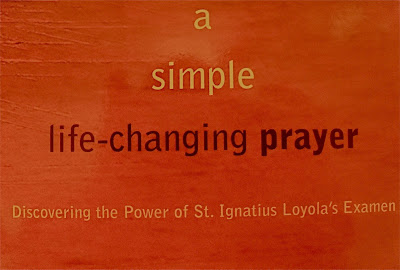
The Examen (or the Examen of Consciousness to be specific) is an ancient prayer method practiced by many throughout the history of the Church. Ignatius of Loyola, founder of the Jesuits, adopted this practice into his Spiritual Exercises.

Jesuits are supposed to pray this prayer twice a day. Ignatius thought the Examen was a gift that came directly from God and that God wanted it to be shared as widely as possible.

I have been practicing almost daily the Examen for over two years. This prayer, together with the Ignatian Spiritual Exercises, has literally changed my life. Through this practice, I have not only found my core calling in life but also discovered what Margaret Silf called an “inner compass” for navigating my journey with God. For the Examen helps me notice the inner movements within my soul: Am I moving towards God or away from God in my actions, thoughts and decisions? Through repeated practices over time one can discover patterns that are crucial to map out where one is growing and where one needs growth. For example, in my prayer I discovered a pattern of feeling inadequate and wanting to procrastinate when performing important tasks. This, I slowly discovered, indicated my lack of security in the love of Christ which limited my capacity to serve God and others. This “unfreedom” was keeping me from becoming fully the person that Christ has created me to be. I also discovered a pattern of feeling fully alive when I helped people to gain a better understanding of a concept or reality. This makes me want to further develop my gift of teaching and seek out opportunities to teach. I believe we become more godly when we are more fully human. And we are more fully human when we are fully alive.

We begin the Examen by being present to ourselves. We find a relaxed position (e.g. sitting, walking, standing). We notice our body, our breathing and our environment. When we are fully present, we remind ourselves that we are in God’s loving presence. He is here to meet us. He does not condemn us. Rather, his compassionate love embraces us.

We give thanks to God for one specific thing. We can thank him for the weather, for our families, friends, or jobs. Then we ask for God’s grace to help us notice and understand how he has been coming to us (through our experience of the events) during the day and how our soul has responded.

Now we begin to go through the period of time lived since our last Examen. If we practice the Examen daily, it will be the last 24 hours of our lived experience. It may be helpful to go through the events hour by hour. Pay special attention to the events that have stirred us emotionally. How did I react to those events? Did any events cause us to fear and anxiety, anger, to fall into sin or to move away from God. Ignatius calls all these negative inner movements desolation. Stay in those events. Ask Jesus to show you the significance behind each of these negative movements within the soul. Do they tell you something about who you are at the moment? If so prompted, repent and ask for God’s forgiveness and help.

Then, we pay close attention to the events that made us joyful, peaceful, feel fully alive, or drawn close to God. Ignatius calls these positive inner movements consolation. Stay in those events. Again, ask Jesus to show you the significance behind each of these movements. Do they tell you something about who you are? Do they tell you something about who God is? Give thanks to God for these movements of consolation.

One normally can go through the Examen in about 15 minutes. Do not worry if you do not right away receive any insight from God about the significance of these positive or negative movements. God may show you in due time as you continue to journey with him. Do not fall into the temptation of doing a self analysis. The insight gained from the Examen is a gift from God – not the result of a self-analysis.

Over time, patterns of desolation and consolation will emerge. They are the “inner compass” pointing you to the directions where you are still bound by “unfreedom” (or sin) – these are the places in which God, in his grace, wants to meet you – and where you can be most alive in God.

Good Things Will Happen

Bookmark and Share


by Maureen McCann Waldron

Last weekend, my husband, Jim and I had dinner at a Chinese restaurant. At the end, we opened our fortune cookies. Mine was bland and offered lucky numbers. But Jim’s fortune was specific and intriguing: “Three months from this date, good things will happen.”

We laughed and calculated the date in mid-May when good things will happen. I went home and marked it on the calendar in the kitchen. Good things will happen to us!

The next day, I went for a long walk, taking advantage of our 40 degree winter and enjoying the sunshine, pondering the fortune of “good things” that will come this Spring. I strolled through the park, nodding and smiling at everyone else who was so happy to have this warm mid-winter day.

I noticed the canopy of huge old trees that hang over the road in the park. In February, they look like fabulous sculptures of brown against a blue sky. I thought of the many times our family has walked, biked, or driven along this road. I savored my memories of the beautiful green canopy of trees in the summer, when they bend down over the road. The weather is so warm right now that the birds are even chattering and singing, completely out of season.

“Well this could be a day when ‘good things happen,’” I thought to myself. Then I realized that this day was already exactly this way and I likely would not have noticed any of it — smiling joggers, birds singing, trees arching — if I hadn’t tucked the idea of “good things happening” into my consciousness.

There are more than 80 days between now and the “good things will happen” day on our kitchen calendar–days for me to remember that every day good things happen, just as a simple gift. I have decided to make a list for the next 80 days of the daily good things that happen in my everyday life. It’s an exercise in paying attention. I will let you know what I find.

Now that seems to be my good fortune!

Index of Shalom  March 2012

Bookmark and Share


 Index of Shalom  March 2012 

Podcast:To be the voice for the voiceless

Bookmark and Share


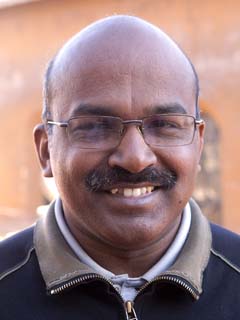
Fr. Xavier Jeyaraj was born in Tamil Nadu, India in 1962 and joined Calcutta Province of the Soceity of Jesus in 1982. As a child, being moved by the great example of Fr. Leveil, S.J, inspired by the life of St. Francis Xavier, and with an overwhelming urge to work for the poor, he opted to work with and for the marginalized. He completed his Masters in Social Work and Bachelors in Civil Law and started a Social Centre called Udayani (rising sun) in Kolkata in 1998. From July 2007, he was the Coordinator for Social Apostolate of the South Asian Conference. He strongly believes that only by teaching the poor people to stand on their own feet and defend themselves, we can bring social changes. The motive for him to pick up legal studies was to defend the people who have nobody to speak for them. Xavier, now as the Assistant at the Social Justice and Ecology Secretariat (SJES)in the Jesuit Curia in Rome, will take care of the planning of the commitment of the Secretariat, especially building up of Global Ignatian Advocacy Networks (GIAN).


Download MP3


Finding God in the Midst of Chaos

Bookmark and Share


by Jason Brauninger, SJ

I spend my days in a Level I Trauma Center. Most people familiar with Jesuit education imagine a Regent to be a high school teacher, but not all of us share that experience of Jesuit regency. In May of 2010, I was assigned to the Regis University Jesuit Community to work at a local Denver hospital as a Registered Nurse, an assignment that has brought many different experiences to the table. The emergency room has brought me many such experiences.

While working in the Emergency Department (ED), I heard overhead the following announcement repeated three times, as is the protocol: “Pediatric Code Blue. Emergency Room. Five minutes by ground.” Just so you know, these are probably the worst words that can come across the overhead paging system. Soon a two-year-old child was brought into our ED. When she arrived, there was no heartbeat. The firemen and paramedics were breathing for her. We began life-saving procedures and were able to gain a heartbeat, but it was one that would not last long. A short flight to the local children’s hospital followed, but only a few minutes after arrival this young life was presented to the Lord, the God Most High. She was alleviated from all of her pain and suffering.

From the moment this young child was brought into the trauma room, I knew that God was present. As the new nurse in the ED, my role was to watch and learn and try to be helpful to the team. I did what I could. I began CPR, I held the child’s hand, and most importantly (probably just for me) I placed my hand on the child’s head and prayed as hard as I could for her. I was filled with an overwhelming sense of God’s love and grace. Suddenly I heard a voice say to me, “baptize this child and claim her for Christ.” So, I did. I spoke the child’s name and said, “I baptize you in the name of the Father, the Son, and the Holy Spirit. My child, you now belong to Christ.”

After that was done, I looked around the room. Present with us were four or five police officers, about half a dozen firemen, and the paramedics who brought this young child to the emergency department. I could almost feel the pain, anxiety, and stress they were experiencing. The looks of concern on their faces for a child that they didn’t even know was astounding, looks that told me that they were looking at the face of their own child. What had happened to this child was their worst nightmare of what could happen to their own.

What a terrible way to end the day! I wish I would never have to experience such things, but such is life as an RN in a Level I Trauma Center. I am often asked how I deal with so much tragedy through out the day. How is it that I can experience so much death and still come back home and carry on with my other obligations in life? The answer to that question is a simple one: my faith in God. I know that no matter what I do in the emergency room, in the end, the outcome will be according to the will of God.

I also tell people that part of the answer is prayer. A particular practice of prayer that I have found particularly helpful is known in Ignatian spiritualty as “the examen.” Ignatius of Loyola, from the very beginning, promised that we can find God in all things. He teaches us that God can be found in the good things of life and in the bad, in the things that make us happy and the things that make us sad. Sometimes these can be matters that are extremely difficult; sometimes they can be things that are so everyday that we are blinded to God’s presence in them. But enough of my babbling; let me present to you different ways of opening our eyes to the awesome presence of God active in the world.

How is it that we can find God in all things? Where did Ignatius come up with this idea? It’s one that is present in many different spiritualities and traditions, from ancient times up to the present day. Blessed Teresa of Calcutta says, “I see the face of Christ in one of his more distressing disguises in the poor and the dying.”1 In Genesis 1:27, the writer tells us that we are made in the image and likeness of God. If this is true, then God is present in each one of us and therefore should be found in everyday events. If we belong to God, then God will present himself in a way that makes our “soul yearn for God, like a deer yearns for running water.”2

Ignatian spirituality offers several ways for us to find God in all things, but the examen is the one I feel is most important in finding God in daily life. The examen is a period of self-reflection, a time where we can look back into every aspect of our day and search for the ways in which God was present. We then look at how, in each of those situations, we responded to God’s presence in our life. So, how DO we pray the examen? What is involved in this prayer? Does it take a long time? Am I going to get bored with this prayer? These are questions that I have asked myself, so don’t feel bad if you are asking them yourself.

The examen consists of five elements for reflection each day. The prayer usually takes no longer than fifteen minutes, but if you need more time, that is okay, too. When we complete that same prayer over and over again it can become monotonous, but I think that this is a temptation that one must resist, because we all know that the evil spirit doesn’t want us any closer to God than we already are.

The following is the examen that I prayed after my shift was finished for the day at the hospital.

1.Recall that you are in the presence of God. As I mentioned before, I felt the presence of God almost immediately upon the arrival of the child. On the ride home from the hospital, I turned off the radio in the car and focused on the quiet, hearing only the sound of tires on the road. I asked God to be with me as I prayed for this young life.


2.Spend a moment looking over your day with gratitude for its gifts. There were many gifts of this day. I thanked God for the people with whom I work. I was thankful for the opportunity to work in a Level 1 Trauma Center where I can experience so many things as a nurse. I was thankful for the firemen, who with great care did everything possible to save the life of this child.

3.Ask God to send you His Holy Spirit to help you look at your actions and attitudes and motives with honesty and patience. “When the Spirit of truth comes he will guide you into all truth.” (John 16:13) Here, I simply asked for the Holy Spirit to guide my prayers.

4.Now review your day. This is the longest of the steps. Recall the events of your day; explore the context of your actions. Search for the internal movements of your heart and your interaction with what was before you. Allow God to speak, challenge, encourage and teach you. Thus you will come to know that Christ is with you. Christ will continually invite you to love your neighbor as yourself and strengthen you to do this. I have noticed that over the years of praying the examen that I find it easier to focus on the ways in which I failed to see God. This, I am sure, is due to my personality. I found that I have to work very hard to look at the positive things throughout the day and make sure that I recognize God’s presence in those situations as well. In that day in the hospital, the first thing that I noticed was the judgment that I passed on the family of this child. I wondered where they were when this happened. Why didn’t they do something to stop this child’s demise? I even passed judgment on God, asking him why he did nothing to stop the death of this beautiful young child.As I prayed those last words, my mind switched to the things where God was present. I noticed how grateful I was that this child would not have to suffer anymore, and that I was present during this situation to baptize this child for the salvation of her soul. God was present in all the people who worked so hard to save this child.

5.The final step is our heart-to-heart talk with Jesus. Here you speak with Jesus about your day. You share your thoughts on your actions, attitudes, feelings and interactions. This step is a simple conversation with Jesus. Simply tell him how you feel. Don’t be afraid to ask him questions or tell him if you are angry with him. (Thankfully, he doesn’t hold a grudge). For me, this conversation went as follows: “Lord, I am sorry for passing judgment. I am very thankful that you were in that room with us, that you allowed us to use the things we know to save that child, but to be able to recognize that it was your Father’s will to have that child with you in heaven. My Lord, please protect the young who cannot protect themselves. They are so vulnerable. Lord, help me to continue to care for all of my patients as if I were caring for my own family member. May you grace and bless me with compassion and love, so that I may share that same compassion and love with my patients.”

Once you’ve done the Examen a few times, you will find your own rhythm and method. Cover all five points daily with freedom to dwell more on one than another, as the Spirit moves you. You might also like to add some music, candles or images to help you pray. If you would like, you may download a copy of the Examen in the form of a bookmark from our website. It is in Adobe Acrobat (.pdf) format and is entitled “Praying the Jesuit Examination of Conscience.”

It is sometimes very difficult for us to find the presence of God in our lives. He will show up in places where we expect him to be, but he will also be “disguised.” For me, I tend to find Christ the easiest in the sick and the injured; in the suffering Christ. It is in the everyday things, like life in the community, completing my studies, or a visit with my family where I can be blind to the presence of Christ.

So I would like to close by asking you a question: where do you find Christ in your life? Do you see him in the everyday things? Would it be difficult for you to find Christ in the situation that I described above? What about that person that you really find it difficult to love? Is Christ present in him or her? These are questions that can be reflected on while praying the examen and while waiting for the time when God will surprise us with his active presence. These questions, and the answers we receive, remind us every day that each of us is just like that little baby: a child of God.

– — – — –

1 David Scott is a writer and editor with a specialty in religion and culture. His current book, A Revolution of Love: The Meaning of Mother Teresa, is published by Loyola Press, which is also publishing his next book, The Catholic Passion: A New Invitation to the Faith, this month.

2 Psalm 42:1.


Jason Brauninger grew up in St. Rose, Louisiana. He studied Fire Science at Eastern Kentucky University and Philosophy and Nursing at St. Louis University. He currently works as a Registered Nurse at a Level I Trauma Center and teaches at Regis University in Denver, Co.

 

JRS 30 Years : Seeing through others’ eyes

Bookmark and Share


by Philip Bader and Joe Torres

It was a simple idea, really, but one that would produce unexpected results.

Jesuit Refugee Service Asia Pacific (JRSAP) has for three decades ministered to the needs of a steady stream of refugees from across the region seeking freedom and opportunity denied to them at home.

To cap its commemoration of 30 years of service, JRS enlisted eight asylum seekers from Cambodia, China, Iran, Pakistan and Sri Lanka to participate in a project that would give them an opportunity to tell their stories in their own way and in their own voice.

They were given point-and-shoot cameras, two hours of training and two months to put into pictures a narrative of their lives in the Thai capital.

Molly Mullen, regional communications assistant at JRSAP, spearheaded the project by bringing some cameras donated during a trip home to the United States.

“We want people in Bangkok and in the region to understand that refugees and asylum seekers … are completely capable of telling their own stories,” she said.

“People hear the word refugee a lot and they don’t really know what we’re talking about,” she said, adding that “there are people here from all over the world trying to save their lives and find safety in Bangkok.”

She said that photography offered an accessible and effective medium for asylum seekers to connect with others and share their experiences.

“There’s no language barrier with photography. People can really get across what they want to say with one photo and they’ve done that with this photo exhibition, and I think that it’s worked really well for them.

Phea, a former freelance journalist from Cambodia and member of the opposition Sam Rainsy Party, ran foul of the government after publishing two books about political corruption and human rights abuses in his country.

The Ministry of Education banned the books and announced that it was seeking the author for questioning. Phea fled to Bangkok in July 2010.

“I am very happy with this project because I think it is the history of my life. I can take a picture and keep it for a long time for my wife, for my children, when I have a family,” he said.

“I want somebody, especially the human rights organization in Thailand or in the world, to know the life of an asylum seeker.”

Yi, a school teacher and mother from northeast China, endured years of harassment, emotional trauma and physical torture by Chinese authorities bent on forcing her to renounce her practice of Falun Gong. Falun Gong began in China in 1992 as a spiritual tradition combining moral teachings, meditation and physical exercise similar to qigong. It was banned by the Chinese government in 1999 and many practitioners have been imprisoned and tortured.

Abandoned by her husband, who also took custody of their child, Yi came to Bangkok in 2007. The photo project offered her the opportunity to speak on behalf of those who were not able to escape as she did.

“With these pictures, I just want to tell others what is the daily life of a Falun Gong refugee,” she said.

Now in Bangkok awaiting official recognition by the UN High Commissioner for Refugees, Phea and Yi, along with six other asylum seekers from Iran, Sri Lanka and Pakistan who took part in the photography program, struggle to find their way in a foreign city where they have no legal status, few resources and face daily fears of arrest and deportation.

JRSAP is no stranger to the issue of refugees.

For three decades they have served those in need, following the principles of founder Father Pedro Arrupe SJ, who saw refugees as “a challenge we cannot ignore” and the mission of the organization to “accompany, serve and defend the rights of refugees.”

Fr Bernard Hyacinth Arputhasamy SJ, regional director of JRSAP, said the refugee issue has become more political in recent years, and that he understood the importance of a nation’s sovereignty and security.

“Thailand has been very hospitable, playing host to refugees for more than four decades. So how can we balance the legality with an ethic of hospitality?” he said.

“The refugees come, we should never forget, with their human dignity still intact. How do we respect that? They have resources, cultural resources. Their history, their tradition. How can we listen to their stories and welcome them as equal human beings?”

It is this dignity that Mullen sees as a fundamental issue for the photography program, and for the thousands of other asylum seekers living in Bangkok.

She says that many refugees have described themselves as ghosts in Bangkok, “that they live in hiding” and are not able to play a substantial part in Thai society.

“I feel like these photos are a really great way for them to push their way into Bangkok at large,” she said.

“I’m hoping that through this project the idea of ghosts can slowly start to diminish in the refugee community in Bangkok.”

Photographs from Phea, Yi and fellow participants will be on display in the exhibition See What I See: Photographs by and about urban asylum seekers in Bangkok, at Toot Yung Gallery on January 28 at 6pm.


My to do list, Examen the next Day

Bookmark and Share


by Stratoz

Back in August, in the midst of silence at Wernersville, well, in the midst of the one conversation I had that particular day, my spiritual director gave me a book to read.

I may have said something like this… “even the thought of how it may be good to get ready for my 8 days of silence, did not bring me back to praying the Examen.”

My spiritual director handed me a book by Jim Manney while telling me about how it had rejuvenated her passion for the Examen. So I read it. And what struck me was how I had always resisted/ignored/avoided the part of the prayer about examening the next day. So I placed it into practice, and now four and a half months since I left that hill top, almost every night I sit down and look at my expected day. I check off what I did, but also examen what did not happen. The goal for me is to list what I fully expect to do the next day: teach about momentum, plant marjoram seeds, consult with a colleague, listen to jazz, hope, continue on with the big mandala project, pierogies for dinner, e-mail this friend, lift weights, ….. As I examen my future, I ponder: which are bringing me the gladness of anticipation for the next day and which bring me reluctance to face the day…

and which have I been avoiding but keep placing on the list.

So I came home and ordered the book. I loaned it to a friend, and now I can imagine taking it out to the Jesuit Center when I spend a night there in February, a fine time to get recharged with a second read.

A Lin-spired Reflection

Bookmark and Share


by Peter Schineller, S.J.

LINcredible! Jeremy Lin has taken NY by storm. Before each game he and teammate Landry Fields have a ritual. He has been called the Taiwanese Tebow, but he is not Tebowing. He and Landry pretend they are paging through a book, and then raise hands and eyes to heaven. They explain that the book is the Bible and it is God they are playing for. They look to heaven for God’s assistance as the game begins.

Indeed, Lin, a devout Christian, was an active member of the Asian American Christian Fellowship while at Harvard. So let’s follow through —with a theological view—on his spectactular beginning with the Knicks.

Since coming to the Knicks, they have played LIN-spired basketball.

His LIN-itiation into the NBA has reached around the globe, possibly saved the Knick’s coach’s job. Tickets to Knick’s games, and No. 17 Knick’s shirts are selling like wildfire.

Not only does he LIN-spire the Knicks, but countless youths to be the best they can. Some sports commentators now see him as the LIN-carnation of the ideal point guard. He reminds older fans of Bob Cousy more recent fans of John Stockton.

He does make mistakes, a number of turn-overs, so he is not LIN-errant. And while the Knicks have won every game in which he started, eventually the Knicks will lose, because he is not LIN-fallible, and not yet LIN-mortal.

He says that if doesn’t play B-ball, “I would be a pastor.” And he looks forward to that when his playing days are over. But right now, he is preaching to a very large, world-wide congregation, from the basketball court. So let’s enjoy the show!

Four Strategies for Discernment

Bookmark and Share


by Vinita Hampton Wright

In the Spiritual Exercises of St. Ignatius, there are various “rules for the discernment of spirits”—what we would simply call principles of wise discernment. Included in these rules are four helpful strategies to use when trying to make a good decision.

1.Line Up the Pros and Cons.

Make a list of all the advantages of going a certain route. Then make a list of all the advantages of not going that route. If you have more than one route to consider, make pairs of lists for each possibility. Sometimes when we actually write down the pros and cons, we see things that were not apparent before.

2.Try It On for Size.

Imagine that you have already made the decision. For instance, you have decided to get your teaching certificate. Now go through several days—a week perhaps—of pretending that you in fact are in the midst of getting the certificate and are looking for a teaching position. Notice how you react emotionally to this imaginary life. How does it feel to have made this decision? This method requires imagination but can be quite revealing.

3.How Would You Counsel Someone in Your Situation?

Pretend that your dilemma belongs to someone else, and that person comes to you for counsel. How would you approach looking at the situation? What advice would you offer? What questions would you ask? Then try to apply your counselor’s wisdom to yourself.

4.At the End of Your Life, How Will You See This?

Pretend you are nearing the end of your life—St. Ignatius actually suggested that people imagine being on their own deathbeds. Consider the whole of your life—what you did and why, what you are grateful for, what you regret. In light of this long view, how do you see the current discernment you are trying to make?

12 Really Stupid Things I Never Want To Do Again

Bookmark and Share


by James Martin, SJ


Last year I listed 12 things I knew at age 50 that I wish I had known at 25. Now I’m a year older. And if I’m not wiser, at least I’m a bit more experienced. So here are 12 really stupid things I’ve done that I never want to do again. Maybe you’ve done some of them, too. But I’ll bet we’d both be happier if we didn’t…

1. Compare. Ever heard the saying “Compare and despair”? Comparing yourself to someone else usually means that you imagine the other person is better off, more satisfied — in a word, happier. But here’s the problem: We end up comparing what we know about our life, which is a mixed bag of good and bad, with a fantasy of someone else’s supposedly “perfect” life. Why do we do this? Because we know all about our own problems, but other people’s problems are harder to see. As a result, our real life always loses out. That leads to despair. Besides, there’s probably someone comparing his or her life to your supposedly perfect one — which shows you how ridiculous it all is.

2. “Should” on Yourself. It’s devilishly easy to imagine yourself making a choice that would have taken you to a different place in your life. I should have married this person; I should have taken that job; I should have moved; I should have blah, blah, blah. This is called “shoulding all over yourself.” (Say it aloud and the negative meaning becomes clearer.) Reflecting on our choices is an important way to grow, but you can’t live your real life if you’re busy living in your “should have” life. You’ll end up torturing yourself. Jesus of Nazareth once said you can’t serve two masters. You can’t live two lives either.

3. Get People to Like You. I spent all of my teens, most of my 20s, a great deal of my 30s and too much of my 40s trying to get people to like me. But forcing people’s affection rarely works. Plus, it takes too much energy to tailor yourself to what you think people will like (which is impossible to figure out anyway). Your true friends like you already. Be open to change and growth by all means; but treasure friends who love you for who you are. St. Francis de Sales, a lighthearted 17th-century saint, once said: “Be who you are and be that perfectly well.”

4. Interrupt. We all think we’re good listeners. We’re not. Many of us are absolutely terrible listeners, impatiently waiting for our turn to speak, confident that our next utterance is the solution to everyone’s problems or the most interesting of all the commentary yet offered. But you can’t contribute intelligently to any conversation if you’re not listening what the other person is saying. Interrupting someone says, “I have no interest in even letting you finish your thought.” As my sister tells her children, you have two ears and one mouth for a reason.

5. Worry About How You Look. I cut myself shaving: Is the blood still showing? I have a zit: Is it getting bigger or going away? I need a haircut: Should I get one today or tomorrow? Are these pants too short? Too long? Who cares? Sure, you need to look presentable for your job and a decent appearance is a sign of respect to those around you. But if your friends are overly concerned about your clothes, and judge you on that basis, they may not be the best friends for you. And who in their right mind cares what strangers think about your clothes, unless you’re a fashion model? Spend less time thinking about your outside and more about your inside.

6. Work Constantly. We are immersed in a culture of productivity, which says that we are what we do. That’s why the first question out of someone’s mouth upon meeting a stranger is often “So what do you do?” We also measure ourselves by how much money we have, or make. Thus, discussions about salary are a big taboo. You can ask someone about their facelift or their divorce, but not what they earn. Why? Because it’s the default measure of worth, and it ruthlessly places people on a social ladder. If someone makes more than we do, we may feel “less than.” Look, everyone’s got to work. But if value is gauged by wealth, then when we make less, we feel less valuable as human beings, which is tragic. Nelson Mandela didn’t make much money when he was imprisoned in South Africa; was he less valuable? Plus, if we are what we do, when we’re not working we’re nothing. This kind of thinking creates a skewed measure of “value.” Stop driving yourself nuts with the trap of constant work.

7. Fail to Give People a Break. Hey, surly person behind the drugstore counter: Why didn’t you say thanks when you handed me my change? Hey, barista, why are you being so rude? Stop and think. Maybe it’s because they’re underpaid; they hate their low-paying job; their mother is dying. Remember that behind those frowning faces are full lives. Remember too, that all these people all beloved creatures of God, with their own human dignity, and holy in their own way — yes, holy. When the Book of Genesis said that God looked at everything and said, “It was good,” he meant people, too. Even the angry barista. Give them their dignity by giving them a break.

8. Complain About Minor Illnesses. If you’ve got a serious or chronic illness, you need to share your struggles and frustrations with your physician, with friends and family, or even a therapist. You need support. But do you have a cold that has hung on for days and makes you phlegmy? When you bend over like this does your back ache because you pulled a muscle in the gym? No one really wants to hear about minor illnesses. Everyone gets sick, for Pete’s sake. In the words of the great prophets, suck it up.

9. Be a Jerk. You’re tired. You’re rushed. You’ve got a cold. You’re late. You’re angry about something your boss said. Yes, you’re miserable. That doesn’t mean you have to be a jerk to everyone else. It really doesn’t. Sure, share your frustrations and struggles with close friends, but don’t make everyone else’s life more miserable by passing on your misery. Once, I joked to a friend, “Boy, my life is such a cross!” “Yes,” he said, “But for you or others?”

10. Avoid Doing the Right Thing. It’s no fun to call a friend who is in a bad mood because she’s lost her job. It’s no fun to take responsibility for making a mistake. It’s no fun to speak out against racism, sexism or homophobia and stand up for those being mocked. It’s not fun, it takes effort; but you know it’s the right thing to do. Do it anyway. If you don’t, you’ll feel terrible about yourself, and that’s really no fun.

11. Make Fun of People. Nothing brings me lower than a few minutes of mocking another person. (Particularly if the person is not present.) But the snappy putdown has a high value in our culture, and famous snubs (say, of one famous writer to another) are repeated, and treasured like beautiful jewels. Much of our current political climate consists of politicians mocking people in the other party. (That’s been a big help in this country, hasn’t it?) Malicious speech is an easy way to wound. If you feel like you’re powerless against badmouthing someone, ask yourself three questions when it comes to commenting on another: Is it kind? Is it necessary? Is it true?

12. Be Hard on Yourself. One of my Jesuit mentors used to say, “Be easy with yourself, Jim.” If you’re reading this list, and taking it at all seriously, you may be beating yourself up about stupid things that you’ve done in the past. (Believe me, my list is just as long as yours.) But you also want to change yourself, which is good. So be careful to “trust in the slow work of God,” as the Jesuit Pierre Teilhard de Chardin used to say. (He was also a paleontologist, so he knew about things moving really slowly.) Or if you don’t believe in God, trust in slow work, period.

If you ever get discouraged about your rate of change, just think about trees — yes, trees. In the summer they’re green. In the fall they’re red. And no one sees them change.

James Martin, SJ is a Jesuit priest, culture editor of America and author of “Between Heaven and Mirth: Why Joy, Humor and Laughter are at the Heart of the Spiritual Life.”