Category: Uncategorized

Best Ignatian Songs: We Are Alive

Bookmark and Share


by Jim Manney

My kids know I’m a big Bruce Springsteen fan, so I was pleased when my daughter Laura gave me his latest album, “Wrecking Ball.” It’s terrific. Several songs fortify the Boss’s reputation as the greatest Catholic poet of our time. My favorite is “We Are Alive.”

We are alive

Oh, and though we lie alone here in the dark

Our souls will rise to carry the fire and light the spark

To fight shoulder to shoulder and heart to heart.

I couldn’t find a video of a live performance that I could recommend, so we’ll have to settle for the sound track with a poster. Lyrics here. Click here to watch it on YouTube.


18 new Provincials in Rome

Bookmark and Share


On 30th of April, the General Curia will welcome 18 new provincials belonging to six different conferences. They,in the presence of Fr. General, will reflect on important themes such as, the government of the provinces, the account of conscience and personal guidance, the animation of community, the participation in the reality of the local Church, the frontier mission and interprovincial and international collaboration. The meeting will end on 12th May.

A Priest Behind the Iron Curtain

Bookmark and Share


James Martin, S.J., joins Tim Reidy for a discussion of Walter Ciszek’s With God in Russia, which chronicles the imprisonment of an American Jesuit in the Soviet Union. The Vatican recently gave formal approval for Fr. Ciszek’s cause for canonization to proceed. The Pennsylvania-born priest spent five years in the notorious Moscow prison, Lubyanka, and later in Siberian work camps. He developed a deep reliance and belief in the providence of God, and risked his life ministering to his fellow prisoners.


Download MP3


Was Ignatius a Trauma Survivor?

Bookmark and Share


by Jim Manney 

Every time the story of Ignatius Loyola is told, the teller of the tale mentions that he was a soldier and that he was wounded in battle. But then the speaker hurries on to what happens next-his conversion during his year-long recovery from terrible battle wounds.

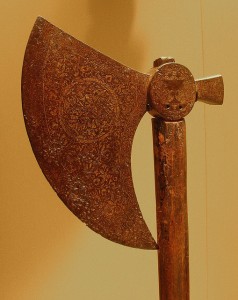
Writer Dawn Eden thinks we should pause a moment and reflect on what Ignatius experienced as a soldier. She suggests that he was a trauma survivor. Fighting was often hand-to-hand. Men killed other men with swords, pikes, axes, and knives. Ignatius must have experienced intense terror and witnessed horrific carnage. Such things cause deep emotional and spiritual wounds. This is something that was always known but seldom talked about, and to our knowledge, Ignatius never talked about it.

I wonder how Ignatius’s battle experiences affected him. Trauma survivors often feel responsible for the horrific things they experienced. Could this be a factor in the bouts of morbid scrupulosity Ignatius suffered? Survivors are often tormented by memories. Ignatius was careful to include his memories in the things he gave back to God (“Take, O Lord, and receive all my liberty, my memory, my understanding, and my whole will.”) Those who heal from trauma have a profound sense of having come a long way from a very dark place. Can we detect this in Ignatius’s deep sense of gratitude to God?

Possibly so. In the Spiritual Exercises Ignatius strives to help us understand that we are sinners who are redeemed and loved by God. He may have been able to do this because he experienced it in a place where most of us don’t go.

Index of Shalom May 2012

Bookmark and Share


    Index of Shalom  May 2012 

How to Pray with Shalom
Publishing Information
Back to Main Page
 

Podcast:Featuring the future in Ukraine

Bookmark and Share


Fr. David Nazar, a Jesuit priest of Ukrainian origin, born and brought up in Canada has an incredible experience of practicing faith in two different Rites, the Byzantine and the Latin, in the Catholic Church. He explains how it became an aid for his later ministry, as Fr. Peter Hans Kolvenbach, S. J. invited him to establish the Jesuit District in Ukraine.He is presently the superior and also involved in the Jesuit Refugee Service in Ukraine.


Download MP3


Waiting for a country to call home

Bookmark and Share


by SJAPC 

Mohammad is one of the many Muslim Rohingya refugees forced to flee their homes in western Burma. After a hazardous journey across Burma, he was able to cross into Cambodia and apply for asylum. Sr Denise Coghlan RSM, Jesuit Refugee Service Cambodia Director, shares JRS’ work with the Rohingya.


Mohammad’s story

“My name is Mohammad and I’m a Rohingya from Arakan state. Before I fled Burma, the authorities often stopped me on my way to school and sent me to work in military camps. They made me cook, clean, carry heavy building materials and things like that, and punished me if they were unhappy with my work.

We were targeted for being Muslim; when they heard about our plans to build another classroom, our madrasa (Islamic school) was closed. On several occasions, my brother, father and I were arrested and beaten.

One night I was offered an opportunity to go to Thailand with my uncle. I didn’t have any time to tell my family, but I couldn’t let this opportunity to escape slip by. At around midnight, 29 of us – all Rohingya – left by boat on what would be an 18-day journey. After three days, we ran out of drinking water and were forced to drink seawater, which made us very sick.

We arrived in Thailand late at night. Unsure of where we were and scared to continue travelling over land, we hid in the jungle near the coast and waited until morning. As the sun rose, we were arrested and sent back to the Thai border city of Mae Sot where I would spend the next six months in immigration detention.

A lot of people were arrested around Mae Sot when I was there. I was terrified of being sent back to Burma, beaten and left to die as my father was. I escaped, and with my little remaining money I was able to cross into Cambodia and apply for asylum.

Every day I think about my future. Every day I worry about what will happen to me tomorrow. I just want to work and live peacefully and look after my family. I want the same things as everyone else.”

The Rohingya were made stateless after the 1982 Citizenship Act only recognised the national ‘races’ present in Arakan state prior to British colonisation in 1823.

Denied legal documentation, the Rohingya people are frequently oppressed by the Burmese authorities. Forced labour, land confiscation, restrictions on freedom of movement and religious expression are common features of their lives. Excluded from accessing public health and education services and prevented from taking up employment, they are forced to live in destitution.

The Rohingya have fled far afield – Bangladesh, India, Saudi Arabia, Malaysia – and in late 2009 they started arriving in Cambodia. In 2010, continued arrivals coincided with the implementation of the new refugee procedures, transferring responsibility for status determination from the UN refugee agency to the government.

The Cambodian government has not yet resolved any applications from Rohingya asylum seekers. Regrettably, the new framework does not afford any formal rights to asylum seekers, leaving them in legal limbo, and at the mercy of government officials turning a blind eye to their employment in the informal labour market.

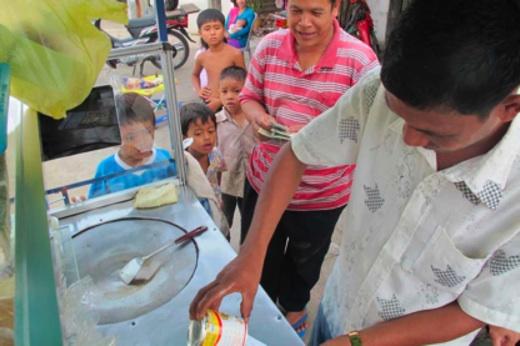
With the help of JRS, many Rohingya have started their own businesses selling roti bread on mobile carts; but it is a daily struggle as profits barely meet the most rudimentary shelter and food costs.

As the Rohingya await the outcome of their asylum applications, JRS workers seek to help them deal with the day-to-day hardships. Perhaps the hardest thing is knowing that even if their applications are accepted, their daily lives will not substantially change.

Trying to manage expectations is a challenge, as is encouraging them to make friends and learn the Khmer language and about its culture. But there is little hope they will be resettled to a third, wealthier, country. They face the daunting prospect of integration into Cambodian society, one which struggles, and often fails, to meet the needs of its own nationals.

Wisdom Story 34

Bookmark and Share


by Paul Brian Campbell, SJ 

A Hindu saint who was visiting the river Ganges to take a bath saw a family shouting angrily at each other. He turned to his disciples smiled and asked, “Why do people shout in anger shout at each other?”


His disciples thought for a while, then one of them said, ‘Because when we lose our calm, we shout.’

“But, why should you shout when the other person is next to you? You can as well tell him what you have to say in a soft manner.” asked the saint. Some disciples offered answers but none satisfied them. Finally the saint explained,

“When two people are angry at each other, their hearts are very distant. To cover that distance they must shout to be able to hear each other. The angrier they are, the more they will have to shout to hear each other across that great distance.

What happens when two people fall in love? They don’t shout at each other, but talk softly because their hearts are very close. The distance between them is either nonexistent or very small…”

The saint continued, “When they love each other even more, what happens? They do not speak, they only whisper and they get even closer to each other in their love. Finally they even need not whisper, they only look at each other and that’s all. That is how close two people are when they love each other.’

He looked at his disciples and said, “So when you argue do not let your hearts get distant, Do not say words that distance you further or else there will come a day when the distance is so great that you will not find the path to return.”

source from: “Why We Shout When In Anger


The Canonization Of Walter Ciszek

Bookmark and Share


by James Martin, S.J.


Often when we think about “God’s will” we think of trying to figure it all out. What is God’s will? What am I supposed to do? How can I discover God’s will?

Seeking answers, we pore over Scripture. We talk to trusted spiritual advisers. And we look within, too: one of the themes of Christian spirituality is the idea of “discernment,” in which your desires help to reveal God’s desires for you. We look for signs of those desires in our lives.

But there is a danger: We might overlook the fact that God’s will often doesn’t need much “figuring out” or “discernment.” Sometimes it’s right in front of us. And that’s what one of my heroes realized in the midst of a harrowing experience in a labor camp in the Soviet Union. And just this week the Vatican announced that it had given its formal approval to beginning the process that could lead to this amazing man’s canonization.

Walter Ciszek (1904-1984) was an American-born Jesuit priest who had been sent by the Jesuits to work in Poland in the late 1930s. Originally hoping to work in the Soviet Union itself, Ciszek found it impossible to gain entrance and ended up in an Oriental-rite church in Albertin, Poland. When the German army took Warsaw in 1939, and the Soviet Army overran Eastern Poland and Albertin, Ciszek fled with other Polish refugees into the Soviet Union, hoping to serve them (in disguise) as a priest.

In June 1941, Ciszek was arrested by the Soviet secret police as a suspected spy. He spent five years in Moscow’s infamous Lubianka prison and then was sentenced to 15 years of hard labor in Siberia. In addition to his forced labor, he served as priest to his fellow prisoners, risking his life to offer counseling, hear confessions, and — most perilously — celebrating Mass.

We said Mass in drafty storage shacks, or huddled in mud and slush in the corner of a building site foundation of an underground… Yet in these primitive conditions, the Mass brought you closer to God than anyone might conceivably imagine.

Ciszek wouldn’t return to the United States until 1963. By then many Jesuits assumed that he was long dead. And why wouldn’t they? The Jesuits, who had given up hope for his return, sent out an official death notice in 1947. But toward the end of his captivity, Ciszek was suddenly and surprisingly permitted to write letters home. Only then did family and friends learn of his “rebirth.”

After a complicated diplomatic exchange was worked out with the help of President John F. Kennedy, he returned to the United States on Oct. 12, 1963, coming directly to the Jesuit community of America magazine in New York. Thurston Davis, S.J., the editor-in-chief at the time, wrote in the next week’s issue, “In his green raincoat, grey suit and big-brimmed Russian hat he looked like the movie version of a stocky little Soviet member of an agricultural mission.” Ciszek settled down to work on the story of his time in Russia, called “With God in Russia,” detailing the extreme conditions in which he lived — capture by the Soviets, the interrogation, the long train ride to Siberia, the wretched prison camps, and his eventual release into the Russian population as an ex-convict always under surveillance. The book, still in print, was a huge success. But a few years later he realized that the book he really wanted to write was the story of something else: his spiritual journey. That book is called “He Leadeth Me.”

Ciszek wrote that he wanted to answer the question that everyone kept asking him: “How did you manage to survive?” His short answer was “Divine Providence.” The full answer is his book, which shows how he found God in all things, even in a Soviet labor camp.

Much of this has to do with his understanding of surrendering to what the future had in store for him. In one of the most arresting chapters of the book, Ciszek has a startling epiphany about what it means to follow “God’s will.”

For a long time, as he toiled in the labor camps, he had been wondering how he would be able to endure his future. What was “God’s will?” How was he supposed to figure it out? One day, along with another priest friend, he had a revelation. When it comes to daily life, God’s will is not some abstract idea to be figured out, or puzzled over or even discerned. Rather, God’s will is what is presented before us every day.

[God’s] will for us was the 24 hours of each day: the people, the places, the circumstances he set before us in that time. Those were the things God knew were important to him and to us at that moment, and those were the things upon which he wanted us to act, not out of any abstract principle or out of any subjective desire to “do the will of God.” No, these things, the 24 hours of this day, were his will; we had to learn to recognize his will in the reality of the situation.

This truth is so freeing that Ciszek returns to that theme again and again in his book. This recognition sustains him through many years of hardship, suffering and pain.

The plain and simple truth is that his will is what he actually wills to send us each day, in the way of circumstances, places, people and problems. The trick is to learn to see that — not just in theory, or not just occasionally in a flash of insight granted by God’s grace, but every day. Each of us has no need to wonder about what God’s will must be for us; his will for us is clearly revealed in every situation of every day, if only we could learn to view all things as he sees them and sends them to us.

What is Ciszek’s response? Surrender to what life has placed before him. “The challenge lies in learning to accept this truth and act upon it,” he writes. This is something that everyone experiences: our lives change in ways we cannot change.

Now, when life changes for the better, acceptance is no problem. You meet a new friend. You get a promotion at work. You fall in love. You learn that you’ll soon become a mother or a father, or grandmother or grandfather. In these cases “acceptance” is easy. All that one needs to do is be grateful.

But what happens when life presents you with unavoidable suffering? This is where the example of the Jesuit approach to obedience may be helpful. The same thing that enables a Jesuit to accept difficult decisions by their superiors is the same thing that can help you: the realization that this is what God is inviting you to experience at this moment. It is the understanding that somehow God is with you, at work and revealed in a new way in this experience.

Let me be clear: I’m not saying that God “wills” suffering or pain. Nor that any of us with ever fully understand the mystery of suffering. Nor that you need to look at every difficulty as “God’s will.” Some suffering should be avoided, lessened or combated: treatable illnesses, abusive marriages, unhealthy work situations, dysfunctional sexual relationships.

Nonetheless, Walter Ciszek understood that God invites us to accept the inescapable realities placed in front of us. We can either turn away from that acceptance of life and continue on our own, or we can plunge into the “reality of the situation” and try to find God there in new ways.

This essay was adapted from “The Jesuit Guide to (Almost) Everything: A Spirituality for Real Life.