Category: Uncategorized

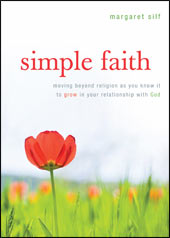
Simple Faith


Moving Beyond Religion as You Know It to Grow in Your Relationship with God

Margaret Silf

5 x 7 Paperback

ISBN:978-0-8294-3623-5


Description

For many people, faith is based on creeds, doctrine, and head knowledge. It’s about mastering the “facts” and making sure you give the “right” answer when any spiritual question is asked. But best-selling author Margaret Silf believes that faith is not about mastery but about mystery, and that living in that mystery allows us to focus much less on religion and much more on relationship–a relationship with the Divine.

In Simple Faith, Silf encourages us to rethink many of the teachings on faith that end up holding us back from experiencing the joy and freedom that a simple faith offers. In short but compelling chapters, Silf provides answers to many important questions of faith: Does life really have meaning? Is it true that God is love? Why do bad things happen to good people? Who is Jesus, and why did he have to die? Is faith really about saving our souls or about spending our lives doing good for others?

Silf’s overall message is very clear–faith is not knowing about God, but coming to know God, and that knowing this God requires us to accept the mystery that is God. For all who struggle with conventional religion, Simple Faith is a simple way to help draw closer to the Divine and find life-changing meaning in a new kind of faith.

If You Are Looking For God, God Will Find You


by Chris Lowney
Heroic Leadership

I happen to believe that “if you are looking for God, God will find you.” Ignatius of Loyola or Mother Teresa would have likewise believed that even as we are looking, and even when we mostly feel lost, God is somehow finding us, whether or not it feels that way to us. Ignatius believed (as I do) that when we set ourselves toward some worthy purpose that transcends our meager strength, we tap into a source of meaning, strength, peace, and courage that is beyond us. We come to realize, in a graced moment, that we are called to some great purpose, that we cannot do it on our own, but that we don’t have to do it on our own. That’s why Ignatius urges, in one after another of his Spiritual Exercises, that we speak to Jesus “in the way one friend speaks to another.”

Fictitious Priests


by Jim Manney

If you like to read novels about priests, Doris Donnelly of John Carroll University has six suggestions.

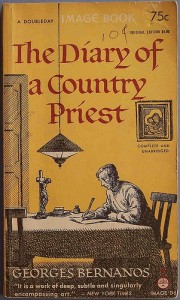
My book group has read four of the six in recent years. I’d say (and I think my fellow readers in the group would agree) that three of them get an A+: The Power and the Glory, The Diary of a Country Priest, and Death Comes for the Archbishop. The Sparrow, the only one about a Jesuit, is an interesting but uneven science fiction tale. The Innocence of Father Brown is a good suggestion for our group. As for The Thorn Birds — nah, I don’t think so.


St Francis Borgia


St Francis Borgia, Priest, SJ (Memorial)

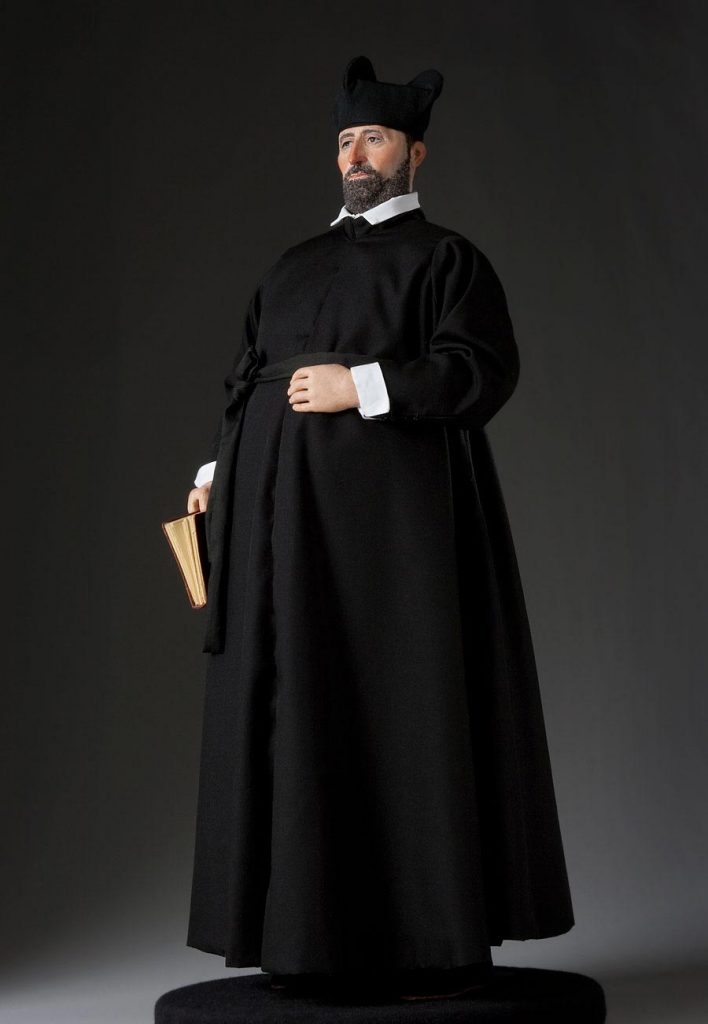
Francis Borgia was born in Gandia, Spain, in 1510. He was the eldest son of the Duke of Gandia, great grandson of the notorious Pope Alexander VI (known as the ‘Borgia Pope’) and of King Ferdinand V of Aragon. He received a private education and was presented to the Emperor’s court at the age of 18. In the following year, 1529, he married Leonor de Castro and was made viceroy of Catalonia by the Emperor Charles V. He and Leonor had eight children.

In 1543 he succeeded his father as the fourth Duke of Gandia. Because of problems arising from his attempts to put an end to corruption by legal officials, he retired to his estate. He now devoted his time to the development of his property, including the setting up of a Dominican house and the restoration of a hospital.

His happy family life came to an end when his wife died in 1546. In the following year,1547, he quietly entered the Society of Jesus (Jesuits) and passed the dukedom on to his eldest son, while making provision for the rest of the family, including arranging their marriages. The news of this very distinguished candidate to the Society could not remain a secret for long and, although he tried to down play his social status, his genuine ability could not be hidden.

In 1551 he was ordained a priest. Because of his aristocratic birth, great abilities and wide reputation, he was immediately offered a cardinal’s hat. This he refused, preferring the life of a travelling preacher. However, in 1554 he was made Commissary General for the Jesuits of Spain and Portugal by St Ignatius Loyola, the founder and first superior general of the Jesuits. Here his previous experience of government and administration proved invaluable and he established many colleges and other Jesuit houses.

In 1561 he was called to Rome and in 1565 was elected Superior General of the Jesuits. For the remaining seven years of his life he was so active and effective in governing that he has been called the Society’s second founder. He worked for the reform of Christian life in Europe and set up a new Jesuit province in Poland as well as new colleges in France. He also promoted missionary work in other parts of the world, especially in the Americas. In Rome he was one of the founders of the Roman College (later known as the Gregorian University), he built the church of St. Andrew on the Quirinal as well as initiating the building of the Gesu church. Despite the high status of his office, Francis led a humble life and was widely regarded, even in his own lifetime, as a saint.

When the plague struck Rome in 1566, he organised relief for the poor as well as sending Jesuit priests to take care of the sick in hospital.

In 1571, he accompanied a papal ambassador on a visit to Spain, Portugal, and France, which was very successful. However, under the burden of both sickness and the cares of office, he died on 30 September 1572 soon after his return to Rome but not before giving his blessings to his children and grandchildren. He was 62 years old.

He was canonised by Pope Clement X in 1671.

Francis is remembered for his spirit of prayer and his humility that led him to renounce worldly honours in order to live for Christ alone.


How I Became A Jesuit Priest


by Paul Lickteig, SJ

I was just ordained a Jesuit Priest. Exactly how this vocation emerged is difficult to describe. Even in a Church that spends most of its time focusing on mystery, people have difficulty making sense of the choice to become a member of the Catholic clergy. I think of the various, surprised “What’s?” of my friends when I told them of my decision to join the Society of Jesus. Having been part of various artistic communities for years made my desire to be a Jesuit priest appear strange at best, polemical at worst. Yet, there it was: I had an undeniable pull to enter a religious order in the Roman Catholic Church.

Vocation is a strange thing. It is the idea that people can be drawn towards a particular way of life. Vocation is partially about the job, but more about the way a person’s choice of work allows something deeper to develop in his or her heart. For many, “the call” comes at the expense of other aspirations. It is a trade-off. We let go of certain impulses and choose to follow other desires, in an oftentimes circuitous route, that we hope will lead towards a deeper awareness of how me might better love and serve humanity.

This desire to love and serve led me to explore a single mystery in a deeper way: GOD. Awareness of the great I AM, the Source of Being (also the source of much debate and even war) was a sensitivity that I had desired to cultivate openly and without distraction for years. It was not that I thought I would find the answer. Rather, I hoped the choice to grapple with the mystery of existence and the human attempt to give voice to those things we call “eternal” would shape me in ways that I had come to admire in others. When I found the Society of Jesus, I found a group of people that were responding to this same mystery in a profound way.

I look to the group that I was ordained with, and I see my own struggle to accept the role of priest reflected in their stories. Their resumes and records of life experiences are extensive. They were, in different lives, medical doctors, the director of a New England think-tank, a political speechwriter, academics, MBA’s, artist’s, school teachers and even an Army Ranger. Of course, lists of accomplishments show little of the struggle that each of us went through to get to the place where we could choose to follow our desire to join the Jesuits. Somehow, in the midst of a culture that is far from supportive of such impulses, we had all found our way into a group that was dedicated to prayer and service lived within vows of poverty, chastity and obedience, Ad Majorem Dei Gloriam.

None of the eighty or so men I originally joined with could have known what was in store for us in the next eleven years of training. Weeks after we entered the Jesuits, the Twin Towers toppled and the U.S. entered a sort of hysteria. Months later, rumors of various sexual “improprieties” began to appear in the news, only to develop, in the coming years, into a horrible description of full-scale sexual abuse and cover-ups that spanned the course of decades. This was only the beginning. The coming years would bring war, natural disasters, political turmoil, religious factionalism, and a terrible economic recession. With each year, my classmates and I would be given new experiences in ministry as a way of preparing us for a deeper awareness of the world’s difficulties, as if we were not already painfully aware.

During those years of training I was asked to work with addicts in the Bronx, go to New Orleans to gut houses, live with tea-garden workers in Northeast India, and take classes in counseling. I taught religion at an all-boys prep school, spent summers in Ecuador learning Spanish and interacting with people of various mountain tribes, built affordable housing in Omaha, and prayed with people on silent retreats. I did restorative justice with the men incarcerated at San Quentin, ministered to the sick and the dying, and took stray classes in business management. I moved from community to community, never staying in one place for more than nine months at a time. In each new home I was asked to interact with the best and worst that humanity has to offer, and somehow find the grace of God thread through it all.

Ultimately, this is the purpose of Jesuit training: to find Christ in all things. Rather than fleeing from the world and finding Christ in the quiet of our own private meditations, we seek to name the Incarnation, the eternal God being revealed in all of our lives every day. We engage the existential difficulties of humanity not only in an academic way, but in the lives of the people that we meet, minister to, and minister with. Somehow in that place of conflict and uncertainty, we all learn to name the truth of the Spirit that gives us life and calls us all towards a greater embodiment of compassion and patience in a tumultuous world.

Looking back, I am not exactly sure how any of us made it to ordination. For each of us, though, there was something in the commitment that we made eleven years ago that would not allow us to forget our “yes” to God and Church. There is something in the faith that we profess that has allowed us to thrive. And while maybe none of us could name what it was that kept us here in a way that all would agree with (thus the old joke “three Jesuits, five opinions”), what I say is that eleven years ago I gave a commitment to continue exploring this great Mystery in a faith that stretches back thousands of years. It is a yes I will continue to follow as this life unfolds mercifully before me.

The Consolation in being a Jesuit Mentor


by Jeff Pioquinto,S.J.

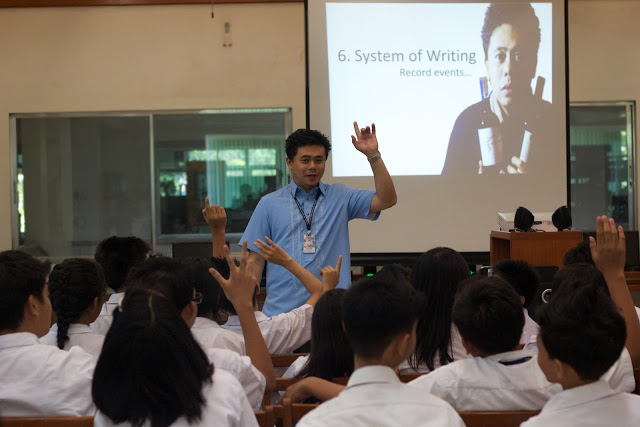
Being a teacher and mentor to my students is my greatest consolation. There is no greater consolation that a teacher can get than seeing his students learn and grow as mature individuals. Growing closer to their God, becoming productive citizens of this country, responsible leaders in their community/class and being men and women for others.

Social Studies 2 and Information Technology 1 : Ateneo de Davao University.

“Do not go where the path may lead; go where there is no path and leave a trail.” – RW Emerson

God Had Other Plans: How Our Daughter Has Affected Our Spirituality


by Mercedes and David Rizzo

Being the parent of a child with autism is not anything either of us would have chosen. In fact, you might say we went into it kicking and screaming, like any other parents faced with the same situation. During the diagnostic process 10 years ago we questioned whether the diagnosis of autism was accurate. After all, David had a history of late talking, and we were both confident that our daughter would soon develop speech and prove all the experts wrong. However, as time went on and speech never developed, we knew the diagnosis was true, and we found ourselves left to navigate the uncharted waters of autism.

Looking back now, we realize that our spirituality was immature. When faced with a life-altering event, one relies on what one knows. We thought if we took Danielle to shrines of our favorite saints, attended healing services, touched her with holy relics, and recited rosaries and novenas that our prayers would be answered in exactly the way we wanted. We called on such formidable saints as St. Padre Pio and St. Jude. We did it all! We never passed up the opportunity to ask for a cure. We thought we could bargain with God but, of course, God doesn’t work that way. Although there was nothing wrong with the practices we tried and our intentions were sincere, God had other plans.

God seemed to be showing us a different way of understanding. Our daughter’s lack of verbal language led us to adopt a more image-based and picturesque approach to prayer. Our spirituality became more intuitive and sacramental. We began to see Danielle’s lack of words as an image of God’s silence and a place to encounter the mystery and meaning in our lives. It became clear to us that God was revealing himself in a way we never could have imagined. It also became clear that Danielle was part of this plan, touching the lives of so many she encountered. Ultimately, Danielle’s autism led us in a new direction- helping children with disabilities and their parents to grow in the faith and participate fully in the sacraments of the Church. We have learned to trust God and the vision God has for our family.

Character-Driven – ‘Peter’s faith—and lack thereof—helps guide my writing and my life.’

by Peter A. Quinn 

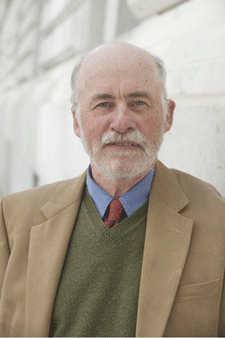
A novelist and a Catholic, I practice my faith and my novel writing in separate spheres. I make no attempt in my books to explain or defend Catholic teaching. For its part, the church has enough problems without bearing responsibility for my ineptitude as a writer. Yet distinct as they are, the two are not sealed off from each other: The convictions that infuse and inform my writing are grounded in my Catholicism.

For me, the essence of novel writing is the exploration of character. I never start with an outline. I begin with characters. They give me my plots, not vice versa. My relationship with my Catholic faith is grounded in that same dynamic. Beginning with Peter (the name I was given at baptism), it is all about characters, the amazing troupe found in the Jewish and Christian Scriptures and the procession of saints and sinners I continue to encounter in my life.

As a child in the days of the Latin Mass, my ears perked up when I heard Peter mentioned in the Gospel. My fondness for him has deepened as I’ve grown older. Bullheaded, mercurial, a husband who worked hard at his day job (fisherman) while pursuing another vocation (apostle), Peter has been my patron in the struggle to believe and to hold a job, raise a family and write novels.

Whether Catholic or not, every novelist, it seems to me, can see him or herself in the scene from the Gospel of Matthew in which Peter summons the courage to get out of his fishing boat-to abandon his comfort zone-and walk on water. I remember having a similar experience when, after years of talking about writing a novel, I actually set out to write one. The sinking feeling that I was in way over my head soon followed the exhilaration of the first few steps.

In the Gospel, Jesus reaches his hand out to Peter and says to him, “O you of little faith, why did you doubt?” As a believer and a writer, I have shared Peter’s doubt. Each time I start a novel, I have the same sensation of going over the side of the boat. With all three novels I have published, I have despaired of finishing more times than I care to remember. In the practice of my faith, there are times I am confident and at peace; at other moments, I waver and feel bereft.

Peter did not drown. He gripped Jesus’ hand, pulled himself up and went back to the boat. He continued to live with his imperfections and kept wrestling with his doubts. He was rebuked by Jesus for his dimwittedness (“Get behind me, Satan”). Put to the test, he not only denied Jesus but ran away, absenting himself from the bloody scandal of Calvary. Even when he returned and took a leadership role, he was challenged by Paul for his narrow vision of the Christian community and made to change his stand.

At the very end, according to legend, Peter was fleeing martyrdom in Rome when Jesus appeared hurrying in the opposite direction. “Where are you going?” Peter asked. Jesus answered, “I am going to Rome to be crucified again.” Peter went back. Familiar as he was with failure, he did not give up. He persisted.

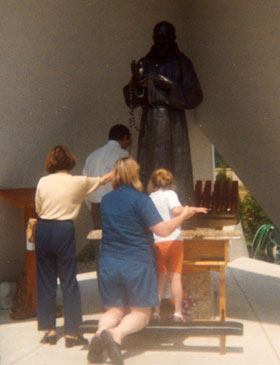
I have a statue of Peter in the room in which I write. He holds his iconic keys to the kingdom that Jesus said is in each one of us. My attachment to Peter is personal and professional. He is a constant reminder of our common human struggle with individual fallibility and the terrifying fragility of all existence-a struggle faced perhaps by novelists and artists in special ways.

Peter is also an example of a person undefeated by his flaws, able to acknowledge his inadequacies yet keep the faith, clinging always “to the substance of things hoped for, the evidence of things not seen.” I would find it impossible to be a novelist or a Catholic without taking to heart Peter’s worldly and holy persistence.

Listen to an interview with Peter A. Quinn.


Download MP3

Peter A. Quinn, formerly a speechwriter for two New York State governors, Hugh Carey and Mario Cuomo, retired from Time Warner as corporate editorial director in 2007. His third novel, The Man Who Never Returned (Overlook, 2010), was published in August.

Faith Healing – From the boardroom to the emergency room

by Allan Woods

In the summer of 2004 I was the vice chairman and chief information officer of a Fortune 500 financial institution. I led an international organization that consisted of approximately 8,000 people. Corporate jets, private dining rooms, first-class clubs and meetings at world-class resorts were all part of the package. My plan was to work several years and retire comfortably. But as Woody Allen once said, “If you want to make God laugh, tell him your plans.”

Despite my privileged lifestyle, I felt restless and uneasy. Every day I asked Jesus to give me the wisdom to know his will and the courage to do it. The answer came that autumn in the form of an overwhelming desire to retire and become an emergency medical technician. I knew I would sacrifice anything to follow the Lord’s will, and somehow I knew this was it. Early in 2005 I announced my plans to a shocked chief executive officer and board of directors. By August, I was enrolled in an E.M.T. class.

For the past five years, I have worked part time in Pennsylvania and in South Carolina responding to 911 calls for E.M.S. organizations. I have spent thousands of hours in ambulances treating hundreds of patients. So much for my original plan for retirement.

I do not deal with change very well, and the summer of 2005 brought plenty of it. I left my comfort zone, retired and began E.M.T. certification. I battled doubts: What if I failed? What if I could not get my certifications? What if I could not cope with the trauma, crises and pressure of 911 calls? What if the skeptics who told me I was crazy were right? The words of that noted comic book character/philosopher Pogo, came to mind: “The certainty of misery is preferable to the misery of uncertainty.”

I reaffirmed my decision to stay the course, retire and go to school. In the midst of the uncertainty, I experienced an uncharacteristic peace, calm and focus. I was comforted by the many times Jesus had said not to be afraid, to trust him. Over the years, Jesus has helped me answer the fundamental question of why I am doing this. Jesus did not appear, call, text or send me e-mail, but I felt his answer: “Trust me totally; become humble and spread my message of love, healing and forgiveness.”

I began riding on ambulances as a trainee and received my certifications in February 2006. Responding to 911 calls was and continues to be one of the most humbling and challenging things I have ever done. I went from being the most senior person in the boardroom to the rank of rookie in the ambulance. I considered a shift a success if I did only one dumb thing. The majority of the heroic and dedicated people with whom I worked were younger than my children.

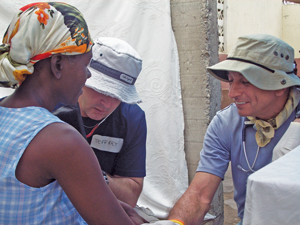
After the earthquake in Haiti, I joined a medical rescue and relief team to help there. When asked why I wanted to go, I said, “I want to bring the light of the face of Jesus into the darkness the Haitian people had experienced.” But when I arrived, I saw that although many Haitian people had nothing-no money, no homes, no food-they still had a sense of joy that comes from an unshakable faith.

A group of Haitian men built us a shelter made of tarps and poles to keep us out of the sun. These men disassembled their own homes to provide the materials. The victims of this terrible tragedy did not complain or blame. I joined them in healing and in prayer. When I returned home, I realized how arrogant my intentions were. The Haitian people had brought the light of the face of Jesus into the dark places in my soul.

Over the years I have realized that as important as emergency medical interventions are, kindness, gentleness and compassion can also heal in other ways. Holding a sobbing biker who had attempted suicide because of life’s failures, praying with the family of a 15-year-old who was seriously injured in an accident or holding the hand of a frightened elderly woman on the way to the hospital are ways Jesus spreads his message of love, healing and forgiveness.

I am privileged to pray with and for seriously ill patients in ambulances and emergency rooms. When leaving a patient’s bedside, I place my hand on his or her shoulder and say, “Good luck and may God bless you.” I have said this to a 95-year-old Catholic nun, an incarcerated double murderer and a male witch, among others. The most common response is, “God bless you, too.”

A reporter once asked me the major difference between my prior job as a corporate vice chairman and my current role as an emergency medical technician. I responded by explaining that my corporate job was what I did, but my current job is who I am. There are many ways to prove Jesus’ love and mercy. Using a broken soul like me to do his will also proves that God has a sense of humor.

Allan Woods, who retired as the vice chairman and chief information officer at Mellon Financial Corporation in Pittsburgh, is currently a certified emergency medical technician working part time in Pennsylvania and South Carolina. He is also chairman of the board of the Holy Family Institute, a Catholic nonprofit that cares for children and families in crisis. This the third in a series of articles on “Catholics at Work.”

Five Things the Spiritual Exercises Taught Me about Jesus


by Becky Eldredge

On more occasions than I care to count, people will comment to me, “Ignatian spirituality does not have enough to do with Jesus. All you hear about is finding God in all things.” While in my head I am thinking of all the things I really would like to say in response to that comment, I typically take a deep breath and ask them, “Have you ever gone through the Spiritual Exercises? They are all about Jesus and a relationship with him!”

Here are the top five things the Spiritual Exercises taught me about Jesus.

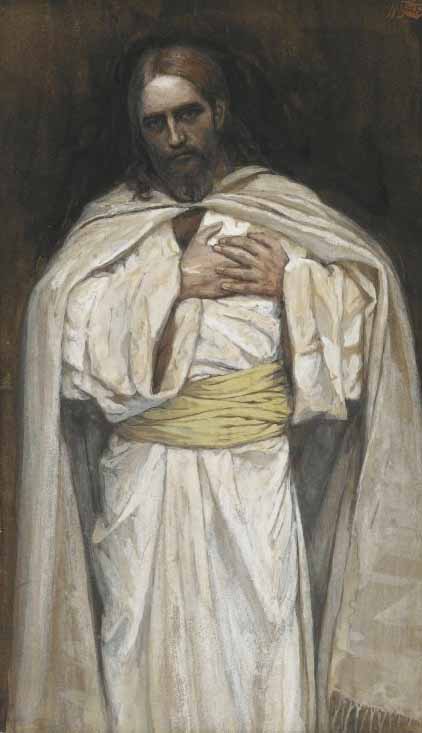
1.Jesus was human. This understanding deepened within me during the Second Week of the Exercises as I prayed with the nativity Scriptures, holding a six-month-old in my arms. It was really Mary who showed me Jesus’ humanity, as a mother nurturing her infant son. Mary carried, birthed, and loved a child. I carried, birthed, and loved a child. The infant Jesus went through all the phases of growing up that my own children go through.

2.Jesus discerned his Father’s will. Praying through the Exercises helped me understand that Jesus grew in wisdom and understanding. Jesus asked his Father, “What is my next right step?” I, too, am called to ask God, Jesus’ Father, what is my “next right step?”

3.Jesus gets suffering. At times Jesus’ discernment of his Father’s will led him to some challenging situations: mockery by family and friends, unwelcome in his home town, betrayal by friends, and physical pain. Walking alongside Jesus and praying with Jesus’ experiences of suffering, especially during the Third Week of the Exercises, showed me how Jesus, a human (see #1), felt pain. Jesus gets our suffering because he experienced his own share in his life.

4.Jesus remained rooted in his Father. Through all of the challenging times Jesus faced, he trusted in his Father and turned to him in time of need for strength on his journey. With his Father’s help, Jesus entered Jerusalem and faced his death. What does Jesus’ dependence on his Father teach me? That when my own discernment leads me to face challenging situations, I, too, can lean on God, and God will walk with me through the journey.

5.Jesus was hopeful. Jesus’ hope came from his trust in God. Jesus understood that his passion was necessary for God to complete the rest of the plan-the Resurrection. Because Jesus was hopeful, I have a reason for hope in my own life. Because of Jesus’ trust in God, I have a reason to believe that in tough times, light will eventually come.

What have the Spiritual Exercises taught you about Jesus?