Category: Uncategorized

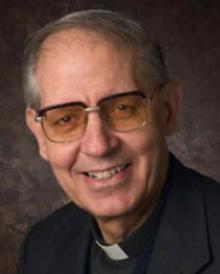
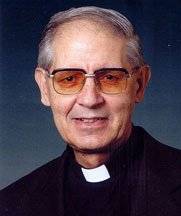
Fr General on New Evangelisation

Fr General on New Evangelisation

In his invention at the 25th Synod of Bishops, Fr General Adolfo Nicolás, superior general of the Society of Jesus, told the Synod that “a New Evangelisation has to learn something from the First Evangelisation, from the things we did well and from the mistakes we committed as well as the insufficiencies we suffered in our desire to communicate the Gospel”.

Stressing that that he was formed in a tradition that encourages finding God in all things, he said “God is present and active in every human community, even if we do not readily see the how or the depth of this presence.”

But, he added, “I am afraid that we, missionaries, have not done it with sufficient depth.”

Fr Nicolás, who spent most of his priesthood in Japan and in other parts of Asia, said that the Church has seen mostly Western, European signs of Faith and Sanctity. “We have not entered with sufficient depth into the cultures where the Gospel was proclaimed in order to see that part of the Kingdom of God that was already there, rooted and active in the hearts and relationships of people. We have not been very willing to find the “surprise factor” in the work of the Holy Spirit, who makes the seed grow even while the farmer is asleep or the missionary is absent.”

He added: “By not paying sufficient attention to how God was present and had been working in the peoples we encountered, we missed important clues, insights and discoveries.”

“The fullness of Christ needs the contribution of all peoples and all cultures,” he said before listing some lessons we can learn from the past that can be of great help in any New Evangelisation. One of these is that “the most credible message is the one that comes from our life, totally taken and guided by the Gospel of Jesus Christ”.

In some reflections on the Synod of Bishops published in the Jesuit Curia website, Fr Nicolás said “The reality around us has become much more complex than we can face individually, and the original challenge of our Mission to serve souls and the Church continues and grows in poignancy. It is my hope that Jesuits will respond to the new challenges with the depth that comes from our appropriation of Ignatian spirituality and from a serious study of our times.”

Asked for signs of what he would consider “Asian” holiness, Fr General replied, “filial piety, that at times reaches heroic levels; the totally centred quest for the Absolute and the great respect for those involved in the quest; compassion as a way of life, out of a deep awareness of human brokenness and fragility; detachment and renunciation; tolerance, generosity to and acceptance of others, open-mindedness; reverence, courtesy, attention to the needs of others; etc.

“Summing up, maybe we can say that if our eyes were open to what God is doing in people (and peoples!) we would be able to see much more Holiness around us and many of us would feel challenged to live the Life of God in new ways that might be more adapted to the way we really are, or the way God wants us to be.”

To read the full text of Fr General’s intervention, click here.

To read Fr General’s reflections on the Synod of Bishops on the Jesuit Curia website, click here.


What If the Answer Is No?


What If the Answer Is No?

by Becky Eldredge

What if God’s answer to one of our prayers is “no”? We are given this answer at times. Sometimes when we are told “no” we easily accept the answer we are given, because what we are asking for is something that really did not matter that much. Occasionally, though, we find ourselves being told “no” when every part of our being wants the answer to be “yes.” What happens to our relationship with God then? Does our relationship with God completely fall apart? Does our entire relationship with God depend on God answering our prayers?

Jesus did not get the “yes” he begged for with every part of his being: “Let this cup pass away from me” (Matthew 26:39). Jesus knew, though, that his prayer was heard, he knew God could answer his prayer, and he knew his Father would be there with him no matter what. Jesus’ relationship with God the Father did not fall apart when his prayer was not answered, because his relationship with God did not depend on answered prayers.

We are invited into a similar relationship-a relationship with God that trusts that our prayers are heard yet does not demand our prayers be answered. We are invited into a relationship of confidence that God can answer our prayers, yet at the same time, we are invited into a relationship that asks us for complete surrender to God’s way. The relationship we are invited into with God is not an insurance policy that guarantees we get what we want. However, we are promised that God hears us and will be with us every step of the way.

I know many of us seek certain things “to pass away from us” in our own lives or in the lives of those we love. When we get an answer of “no” to a prayer we fervently prayed, may we continue to turn to Jesus to help us surrender to God’s will, and may we have the courage to let God take us deeper.

Saints on the Screen


by James Martin, S.J.

The Top Ten Movies about Saints, Blesseds, Venerables, Servants of God and Other Holy Men and Women

Rare is the saint’s biographer who can avoid these words in the first few pages of the book: “His life would make a great film!” Or “Her story was like something out of a Hollywood movie!”

Some lives of the saints seem tailored for the cinema, so inherently visual are their stories. The series of brightly colored frescoes in the Basilica of St. Francis, in Assisi, by Giotto, could be a storyboard pitch for a movie: Francis and his vision at San Damiano, Francis preaching to the birds, and so on. In his book A Brief History of the Saints, Lawrence S. Cunningham notes that there have been, since the talkies, over 30 versions of the life of St. Joan of Arc. Again, one can identify the visual elements with ease: her visions, her meeting the Dauphin, her military conquests, her martyrdom.

The lives of other saints, especially founders of religious orders, are more difficult to dramatize, since they often move from dramatic conversion to undramatic administration. It was long rumored that Antonio Banderas (the cousin of a Jesuit) was set to play St. Ignatius of Loyola on screen. But any marketable screenplay would end after the founding of the Society of Jesus. Few moviegoers would want to slog through an hour of Ignatius sitting at his desk composing the Constitutions or writing one of the 6,813 letters he wrote during his lifetime.

In our time, some saints and near-saints had a closer relationship to their film biographies. In 1997, Mother Teresa approved a script by Dominique LaPierre based on her life, which would star Geraldine Chaplin. “Bless him and his film,” she said. On the other hand, when Don Ameche approached the Abbey of Gethsemani in 1949 to obtain the rights to Thomas Merton’s The Seven Storey Mountain, the abbot, Dom James Fox, said no. (For his part, Merton had been thinking along the lines of Gary Cooper.) After turning down the actor, Dom James asked Mr. Ameche if he had made his Easter duty that year. (He had.)

Films can be a fine introduction to the saints. And sometimes the movie versions are as good as any biography for conveying the saint’s special charism. Here is a roster of the ten best films and documentaries about holy men and women, listed in order of their release.

1.The Song of Bernadette (1943). Busloads of Catholic schoolchildren were taken by enthusiastic priests, sisters and brothers to see this movie upon its release. Since then, the story of the Virgin Mary appearing to a poor girl in a backwater town in Southern France in 1858 has lost little appeal. Based on the novel by Franz Werfel, the movie is unabashedly romantic, with a luminous Jennifer Jones as St. Bernadette Soubirous and the handsome Charles Bickford as her initially doubtful but ultimately supportive pastor, Abbé Peyramale. Some find the score overripe, the dialogue saccharine and the acting hammy (Vincent Price all but devours the French scenery), but the stalwart character of Bernadette comes through. So does the shock that greeted what initially appeared to be a little girl’s lie. (In reality, Bernadette’s parents beat her after hearing their daughter’s tale.) “The Song of Bernadette” effectively conveys Bernadette’s courage in the face of detractors and her refusal to deny her experiences, despite everyone else’s doubts.

2.Joan of Arc (1948). Cinéastes may still sigh over “The Passion of Joan of Arc,” the 1928 silent film starring Maria Falconetti and directed by Carl Theodore Dreyer, but this Technicolor sound version is unmatched for its colorful flair. At 33, Ingrid Bergman was far too old to play the 14-year-old girl, and too statuesque to portray the more diminutive visionary, but the movie makes up for those shortcomings with the intensity of Bergman’s performance and the director Victor Fleming’s love of sheer pageantry. Watch it also for the foppish portrayal of the Dauphin, and later, Charles VII, by José Ferrer. You can tell that he’s going to be a bad king.

3.A Man for All Seasons (1966). It is hard to go wrong with a screenplay by Robert Bolt (who also penned “Lawrence of Arabia” and, later, “The Mission”); Paul Scofield as Sir Thomas, Orson Welles as Cardinal Wolsey; Wendy Hiller as his wife, Alice; and Robert Shaw as an increasingly petulant and finally enraged Henry VIII. Here is a portrait of the discerning saint, able both to find nuance in his faith and see when nuance needs to give way to an unambiguous response to injustice. The movie may make viewers wonders whether St. Thomas More was as articulate as his portrayal in Bolt’s screenplay. He was, and more, as able to toss off an epigram to a group of lords as he was to banter with his executioner before his martyrdom. Read Thomas More, by Richard Marius or The Life of Thomas More, by Peter Ackroyd, for further proof.

4.Roses in December (1982). During a time when the fight for social justice and the “preferential option for the poor” is often derided as passé, this movie reminds us why so many Christians are gripped with a passion to serve the poor, as well as the lasting value of liberation theology. The bare-bones documentary is a moving testament to the witness of three sisters and a lay volunteer who were killed as a result of their work with the poor in Nicaragua in December of 1980. “Roses” focuses primarily on Jean Donovan, the Maryknoll lay missioner, chronicling her journey from an affluent childhood in Connecticut to her work with the poor in Latin America. The film’s simplicity is an artful counterpoint to the simple lifestyle of its subjects and the simple beauty of their sacrifice.

5.Merton: A Film Biography (1984). I’m too biased to be subjective about this short documentary about Thomas Merton, produced by Paul Wilkes, the Catholic writer. Almost 20 years ago, I happened to see this film on PBS and it started me on the road to the priesthood. Last year, I had the opportunity to watch it again and found it equally as compelling. A low-key introduction to the Trappist monk and one of the most influential American Catholics told with still photographs and interviews with those who knew Merton before and after he entered the monastery. The best part of this film is that by the end you will want to read The Seven Storey Mountain, and who knows where that will lead you?

6.Thérèse (1986). This austere work is a rare example of a story about the contemplative life that finds meaningful expression on screen. Alain Cavalier, a French director, deploys a series of vignettes that leads the viewer through the life of Thérèse Martin, from her cossetted childhood until her painful death. It doesn’t quail from showing how difficult life was for Thérèse in the convent at Lisieux, nor the physical pain that attended her last years. But it also shows the quiet joy that attends the contemplative life. A masterpiece of understatement, “Thérèse,” in French with subtitles, reminds us that real holiness is not showy, and the Carmelite nun’s “Little Way” of loving God by doing small things, is made clear to us through this gem of a movie.

7.Romero (1989). One of the great strengths of this movie about the martyred archbishop of San Salvador is its depiction of a conversion. Archbishop Oscar Romero moves from a bishop willing to kowtow to the wealthy to a man converted-by the death of friends, the plight of the poor and his reappropriation of the Gospel-into a prophet for the oppressed. Raul Julia invests the archbishop of San Salvador with a fierce love for the people of his archdiocese that manifests itself in his work for social justice. The actor said that he underwent of a conversion himself while making the film, something that informs his performance. One scene, where Romero wrestles with God-half aloud, half silently-is one of the more realistic portrayals of prayer committed to film.

8.Blackrobe (1991). Admittedly, Bruce Beresford’s film is not about a particular saint. Nevertheless, it hews closely to the lives of several 17th-century Jesuit martyrs, including St. Jean de Brébeuf and St. Isaac Jogues, who worked among the Hurons and Iroquois in the New World. (The protagonist, who meets St. Isaac in the film, is named “Father Laforgue.”). Some Catholics find this movie, based on the stark novel by Brian Moore, who also wrote the screenplay, unpleasant for its bleak portrayal of the life of the priest as well as for its implicit critique that the missionaries brought only misfortune to the Indians. But, in the end, the movie offers a man who strives to bring God to the people that he ends up loving deeply. The final depiction of the answer to the question, “Blackrobe, do you love us?” is an attempt to sum up an entire Catholic tradition of missionary work.

9.St. Anthony: Miracle Worker of Padua (2003). In Italian with subtitles, this is the first feature-length film about the twelfth-century saint best known for helping you find your keys. Hoping to become a knight in his native Lisbon, Anthony is a headstrong youth who almost murders his best friend in a duel. As penance, Anthony makes a vow to become a monk. He enters the Augustinian canons but is soon caught up with the lure of Francis of Assisi, who accepts him into his Order of Friars Minor. The movie successfully conveys the saint’s conversion, the appeal of the simple life and the miraculous deeds reported in his lifetime. The only drawback is that, if medieval portraiture is to be believed, the film’s Anthony looks more like Francis of Assisi than the fellow who plays Francis of Assisi

10.The Saint of 9/11 (2006). You may know Mychal Judge, O.F.M., as one of the more well known heroes of the terrorist attacks on the World Trade Center. Father Judge, a beloved fire chaplain in New York City, was killed on Sept. 11, 2001, while ministering to the firefighters in the north tower. What you may not know is that the Franciscan priest was also a longtime servant of the poor and the homeless in New York City, an early minister to AIDS victims when many others (even doctors and nurses) shunned them, and an experienced pastor at three parishes. This remarkable new documentary is a clear-eyed look at Father Judge’s life, showing how his faith enabled him to deal with his alcoholism (through Alcholics Anonymous) and accept his homosexuality (he was a celibate priest), reminding us that sanctity always makes its home in humanity. An Irish Mercy sister, who knew him during a sabbatical in Ireland says simply, “He was a good man who loved so many.” It is the best movie about the priesthood in years. And, in a nod to the first movie on the list, the film notes that besides his devotion to the homeless, to the sick and to his beloved firefighters, the Franciscan priest Judge enjoyed another devotion: to Our Lady of Lourdes and to St. Bernadette.

Kino Border Initiative Receives Binational Collaboration Award


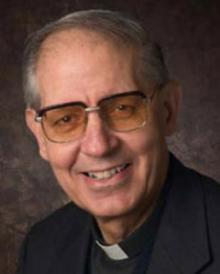
Jesuit Father JBoy Gonzales (right) passes a plate at KBI’s Aid Center for Deported Migrants.

The Kino Border Initiative (KBI), a Jesuit, binational ministry in Nogales, Ariz., and Nogales, Sonora, Mexico, was recently honored for its work with migrants. “There’s a lot of negative press about the U.S.-Mexico border, and I think these awards draw attention to positive programs and efforts that are happening on the border and to the people who live and work there,” says Jesuit Father Sean Carroll, executive director of KBI. “It’s a real affirmation of our staff and the work we’re doing.”

The KBI was one of four organizations to receive an award for binational cooperation and innovation along the U.S.-Mexico border from the Border Research Partnership, comprised of Arizona State University’s North American Center for Transborder Studies, the Mexico Institute of the Woodrow Wilson Center and Colegio de la Frontera Norte in Tijuana.

The awards program honors “success stories” in local and state collaboration between the United States and Mexico. KBI, the only religious work among those honored, was founded in 2009 by six organizations: the California Province of the Society of Jesus, the Mexican Province of the Society of Jesus, Jesuit Refugee Service/USA, the Missionary Sisters of the Eucharist, the Diocese of Tucson and the Archdiocese of Hermosillo.

Currently, there are four Jesuits working at KBI – two from the California Province and two from the Mexican Province. Jesuits are involved in other ways as well. For instance, this summer, a group of seven Jesuits spent five weeks traveling along the Migration Corridor in Central America to experience the route typically traveled by migrants seeking a better life in the United States. KBI was the last stop on their journey. Fr. Carroll says visiting KBI and meeting the migrants can be the most effective type of education.

“We can show photos, we can talk about it, we engage people on the issues – all that’s very helpful. At the same time, when a person or a group is able to dialogue with a group of migrants, that has the biggest impact,” says Fr. Carroll. “The group no longer has just a theoretical idea of the issue, but they think about it in terms of this person or this group of people that has been so affected by the current immigration policy, and I think it has a very significant impact.”

In addition to education and advocacy, KBI also focuses on humanitarian assistance. Since its founding the group has provided thousands of migrants food, shelter, first aid and pastoral support. From the beginning of the year to the end of July, KBI served nearly 36,000 meals to migrants. Last year KBI provided over 450 women and children temporary shelter, and KBI’s clinic treats about 12 to 15 people a day.

“It’s a great blessing for us to offer those services,” Fr. Carroll says. “Our work is very transformative for us individually and as an organization because we serve them and we hear their stories and accompany them at a very difficult time.”

Visit the Kino Border Initiative website, where you can learn more about volunteer and educational opportunities. For more from Fr. Carroll, watch this Ignatian News Network video.


Too Soon to Listen to Christmas Music?


by ANDY OTTO

I have to admit that I’ve slowly been working Christmas music into my music listening in the last couple of weeks. Every year I hear the same complaint that it’s too soon to be listening to Christmas music, that I should wait until at least after Thanksgiving. “Don’t get ahead of yourself,” people tell me.

It’s not that I’m trying to get to Christmas sooner or resist living in the moment. I embrace the Halloween fun. I’m engaged in my family’s Thanksgiving traditions. And when Christmas does come I’m completely present to it. What gets me listening to Christmas music so early is actually something bigger than Christmas Day.

Christmas music indicates to me a change of season. We move from the independence of the summer, the trips to the beach, the sunbathing, and the “me time” into a season where family becomes a more central focus. The last three months of the year bring loved ones together. For me Christmas music represents the nostalgia of holidays past, of a time where God is made present in those special moments with family and friends. It has the same effect as sweater weather, pumpkin pie, and eggnog. These things are all part of the sacramentality of life. Certain things help us find the presence of God in the day to day.

So as the first pinch of cold is felt in the air and as gingerbread lattes appear, I remember who and what those feelings and tastes were so strongly tied to last year, and I look forward to this year. I recall the graces of yesteryear and anticipate those yet to come this season. And by winter’s end, the sacramentality of new buds, warming days, and beach music lead me to the graces of the next season in the life God has given me.

Fr. Nicolás on Evangelization

Fr. Adolfo Nicolás, superior general of the Jesuits, recently talked about the New Evangelization at the synod of bishops meeting in Rome this month to discuss the Church’s missionary outreach. Speaking as the head of a missionary order and as a missionary himself (he spent most of his life in Asia), Fr. Nicolás offered seven principles for missionary work:
The importance of “the way of humility” to communicate the Gospel.

The need of stating “the truth of our limited and imperfect humanity” in everything we say and proclaim, without any trace of Triumphalism.

The simplicity of the message we try to communicate, without complications or excessive rationalizations that make it opaque and not understandable.

Generosity in acknowledging the work of God in the life and history of people, accompanied by sincere admiration, joy and hope whenever we find in others goodness and dedication.

That the most credible message is the one that comes from our life, totally taken and guided by the Gospel of Jesus Christ.

That forgiveness and reconciliation are the most helpful shortcuts to the heart of the Gospel.

That the Message of the Cross is best communicated through the death (to the self and to limited goals) of the missionary.

Everything Is Precious


by Jean-Pierre De Caussade, SJ
The Sacrament of the Present Moment

Those who have abandoned themselves to God always lead mysterious lives and receive from him exceptional and miraculous gifts by means of the most ordinary, natural and chance experiences in which there appears to be nothing unusual. The simplest sermon, the most banal conversations, the least erudite books become a source of knowledge and wisdom to these souls by virtue of God’s purpose. This is why they carefully pick up the crumbs which clever minds tread under foot, for to them everything is precious and a source of enrichment.

Jesuit archives outreach


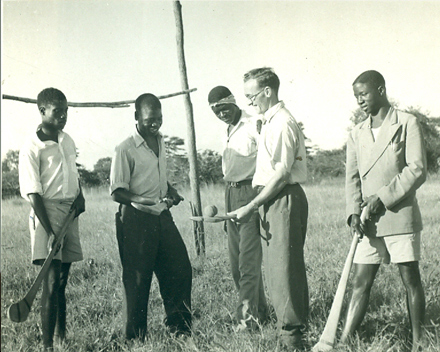
To mark this year’s Archives Awareness Campaign, Irish Jesuit archivist, Damien Burke, has created a set of historical photos from Jesuit schools concerning sports, including this photo of an Irish Jesuit, Fr Joe Conway, teaching Zambian students how to play hurling.

This annual consciousness-raising campaign is an initiative of The Archives and Records Association in the UK and Ireland runs an annual Archives Awareness campaign, and we’re currently in the middle of it. Fittingly, the theme this year is ‘Sports, games and the Olympics’. Damien is a committee-member of the Irish branch of the ARA.

The full set of photos relating to Jesuit schools and sports can be seen here. It is one of many photo sets that Damien has presented on the Irish Jesuit Flickr pages. All of the archive collections can be accessed from here.

Over the past few years Damien has worked hard to expand the profile of the Irish Jesuit Archives. They are an invaluable resource both for people interested in Jesuit history and for those investigating Irish social and cultural history in the last two centuries. Damien has been quick to engage social media. Apart from maintaining the Flickr collections, he regularly posts on an exhibition blog at Tumblr. And to help people who want to keep up with archive activities as they unfold, he also tweets each new development.

How times have changed. Even though archivists might still spend much of their time surrounded by dusty tomes and ageing documents, when it comes to ‘outreach’ they are fully plugged in to the electronic age.

Wisdom Story 43


by Paul Brian Campbell, SJ

Mula came upon a frowning man walking along the road to town. “What’s wrong?” he asked. The man held up a tattered bag and moaned, “All that I own in this wide world barely fills this miserable, wretched sack.”

“Too bad,” said Mula, and with that, he snatched the bag from the man’s hands and ran down the road with it.

Having lost everything, the man burst into tears and, more miserable than before, continued walking. Meanwhile, Mula quickly ran around the bend and placed the man’s sack in the middle of the road where he would have to come upon it.

When the man saw his bag sitting in the road before him, he laughed with joy, and shouted, “My sack! I thought I’d lost you!”

Watching through the bushes, Mula chuckled. “Well, that’s one way to make someone happy!”

Wisdom Story 42


by Paul Brian Campbell, SJ

I have been seeking and searching God for as long as I can remember, for many many lives, from the very beginning of existence. Once in a while, I have seen him by the side of a faraway star, and I have rejoiced and danced that the distance, although great, is not impossible to reach. And I have traveled and reached to the star; but by the time I reached the star, God has moved to another star. And it has been going on for centuries.


The challenge is so great that I go on hoping against hope… I have to find him, I am so absorbed in the search. The very search is so intriguing, so mysterious, so enchanting, that God has become almost an excuse – the search has become itself the goal.


And to my surprise, one day I reached a house in a faraway star with a small sign in front of it, saying, “This is the house of God.” My joy knew no bounds; so finally I have arrived! I rushed up the steps, many steps, that led to the door of the house. But as I was coming closer and closer to the door, a fear suddenly appeared in my heart. As I was going to knock, I became paralyzed with a fear that I had never known, never thought of, never dreamed of. The fear was:


If this house is certainly the house of God, then what will I do after I have found him?”


Now searching for God has become my very life; to have found him will be equivalent to committing suicide. And what am I going to do with him? I had never thought of all these things before. I should have thought before I started the search: what am I going to do with God?


I took my shoes in my hands, and silently and very slowly stepped back, afraid that God may hear the noise and may open the door and say, “Where are you going? I am here, come in!” And as I reached the steps, I ran away as I have never run before; and since then I have been again searching for God, looking for him in every direction and avoiding the house where he really lives. Now I know that house has to be avoided. And I continue the search, enjoy the very journey, the pilgrimage.