
Category: Uncategorized

Film Reviews : Parental Guidance


by Rev Dr Richard Leonard SJ 

PARENTAL GUIDANCE. Starring: Billy Crystal, Bette Midler, Marisa Tomei, Tom Everett Scott, Joshua Rush, Bailee Madison, and Kyle Harrison Breitkopf. Directed by Andy Fickman. Rated PG (Mild themes). 105 min.

This American family comedy has been produced for holiday-time enjoyment. When their busy daughter, Alice Simmons (Marisa Tomei) takes time off to be with her working husband, Phil (Tom Everett Scott), Artie Decker (Billy Crystal) and his wife, Diane (Bette Midler), fly in on request to babysit their three children, Harper (Bailee Madison), Turner (Joshua Rush) and Barker (Kyle Harrison Breitkopf). Recovering from just losing his job, Artie is reluctant, but Diane is willing to help.

The Simmons family live in a house with a centrally operated, automatic computer system, which manages everyone inside it, and before long, things go inevitably wrong. Artie and Diane try modern-day methods to control their grandchildren, and eventually succumb to applying the methods their own parents employed to keep them in check when they were children.

Artie is an old-style parent, and Diane desperately likes to please anyone who asks something of her. They quickly discover their own inadequacies as parents, but not before the grandchildren put them through some exasperating paces. At the end of it all, one knows that love and understanding will shine through, and they do, and there is never any risk to family-values eventually winning the day. Messages abound about believing in yourself, the significance of closeness and empathy, and the importance of being loved.

This is a generation comedy that pits parents and grandparents against modern-day grandchildren. Not surprisingly, the grandchildren are computer-savvy and use their expertise to confuse and befuddle, and they are particularly adept at making sure their manipulative strategies succeed. After enduring embarrassment on several fronts, Artie finds himself battling modern day technology to beat his grandchildren at their game by applying old-fashioned methods based on warmth and affection.

Both Billy Crystal and Bette Milder are very good comic talents, and they give everything they have to a comedy that relies heavily on situational farce. Their acting style is well suited to finding comedy in ridiculously difficult situations, and they rise to the challenge. Facial shock, confusion, mock horror, and surprise are their forte, and they engage in frequent one-liners that communicate their frustrations wittily, while also extracting our sympathy.

Comedies that depend on farce for their impact always work better in some situations than in others, and this film is no exception to that rule. When smiles and laughter come in this movie, Crystal and Midler are nearly always there in the centre of them. Consistent with the film’s classification, some of the language is coarse, but for the most part, crudity is kept well in check and the film is reasonably child-friendly.

The film is laughter-producing, reliable fare for the holiday season, and shows two highly seasoned comedians at work, having a good time. There are no stabbings, horror scenarios, or gut-wrenching scenes, only grand-parents and their charges trying to cope with each other in fairly predictable ways, and with a heavy dose of sentimentality thrown in at the finish for good measure.

This movie is a relatively slight one, and no where near the quality of “Parenthood” (1989), but it is a movie that clearly entertains. One does not go to this film to learn how parents or their children should behave intelligently. Rather, one goes to smile and understand, and to know that it will all turn out well in the end.


Rev Dr Richard Leonard SJ is the Director of the Australian Catholic Office for Film and Broadcasting (ACOFB).Peter W. Sheehan is associate of the Australian Catholic Office of Film and Broadcasting. 


Dialogue on Faith and Protection for refugees


Dialogue on Faith and Protection for refugees

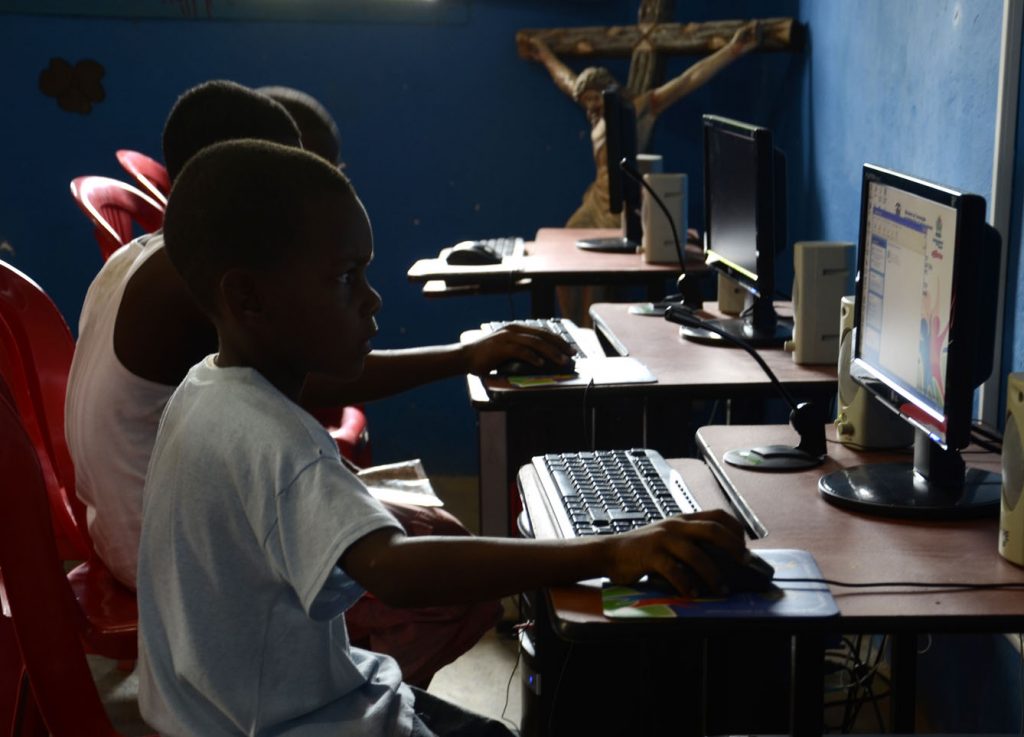
Students in a community which had been displaced for a year by violence along the rivers Calima and Choco outside of Buenaventura, Colombia. (Christian Fuchs — JRS)

by Sam Sawyer, SJ

Jesuit Refugee Service will participate in the United Nations High Commissioner’s Dialogue on Protection Challenges, which begins Wednesday in Geneva. The theme — Faith and Protection — highlights the important role local religious communities play in protecting asylum seekers, refugees and other persons of concern.

Jesuit Refugee Service International Director Fr. Peter Balleis, S.J., Jesuit Refugee Service/USA Director for Policy Mitzi Schroeder and Fr. Michael Gallagher, S.J. of JRS will take part in the meetings, which aim to explore how humanitarian organizations can better engage with religious communities to improve the protection of forcibly displaced and stateless people.

This year’s dialogue has the following objectives:

• to explore how the right to seek and enjoy asylum, and the protection of stateless persons and internally displaced persons (IDPs), are reflected in religious values and traditions;

• identify practical ways for UNHCR and other humanitarian actors to better engage with FBOs in order to help protect and assist refugees, IDPs and stateless persons, and to improve protection space; and

• examine principles of partnership to deepen cooperation between UNHCR and humanitarian partners with FBOs, including those whose primary activity is to support the religious life and holistic development of its adherents.

In preparation for the Dialogue, the Vatican representative to the UN in Geneva took the opportunity to convene major Catholic Church-inspired organizations engaged in the service of refugees, stateless, and internally displaced persons — including Jesuit Refugee Service — to reflect on their ongoing engagement in actions related to “Faith and Protection.” (see attached PDF, Faith and Protection: Key Elements in the Catholic Response to Refugees)

UNHCR notes: “Around the globe, local religious communities are on the front lines of conflict and acute displacement crises, often being the first providers of life-saving protection and assistance. They are strong advocates for respecting human dignity and empowering vulnerable people who are in the margins of our societies. Moreover, they often play a key role in initiating or supporting efforts to resolve disputes and consolidating peace from the community to the national level. In summary, they are hands-on local actors and respected members of civil society.”

In his 1990 Lenten Message, Pope John Paul II said: “Concern for refugees must lead us to reaffirm and highlight universally recognized human rights, and to ask that the effective recognition of these rights be guaranteed to refugees. Thus it is a matter of guaranteeing to refugees the right to establish a family or to be reunited with their families: to have a stable, dignified occupation and a just wage; to live in dwellings fit for human beings; to receive adequate health care…”

To that end, Jesuit Refugee Service has long accompanied, served and advocated for refugees and forcibly displaced migrants. Working with partners in UNHCR, secular organizations and other faith-based groups, JRS aspires to be hospitality in action. We walk alongside, accompany and offer hospitality to the most vulnerable, those “at the frontiers of humanity,” giving priority to situations of great need, in places where a more universal good may be achieved, and to needs to which others are not attending.

Film Reviews : The Life of Pi


by Rev Dr Richard Leonard SJ 

LIFE OF PI. Starring: Suraj Sharma, Irfan Khan, Tabu, Adil Hussain, Gerard Depardieu, and Rafe Spall. Directed by Ang Lee. Rated PG (Mild survival themes). 127 min.

This is a fantasy-adventure drama based on the 2001 novel of the same name by Yann Martel. The novel won The Man Booker prize in 2002, and Ang Lee, the film’s director, was responsible for the much-awarded, “Brokeback Mountain” (2005).

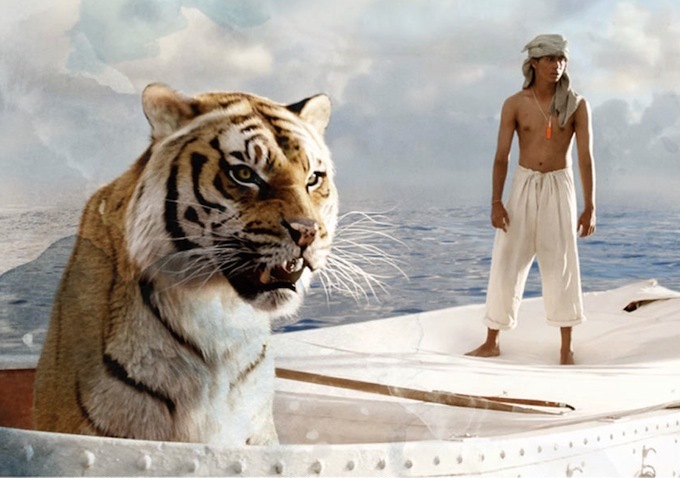
The story is about a young Indian boy, named Piscine Molitor “Pi” Patel, who survives 227 days in a lifeboat set adrift after a fierce storm at sea. Pi shares his first days in the lifeboat with an injured zebra, an angry hyena, a friendly orang-utan, and a 450-pound Bengal tiger, called Richard Parker. There are three people playing Pi in this film, and the major acting role is taken by Suraj Sharma.

The film itself is divided into three parts. In the first section, a local novelist of obscure identity (Rafe Spall) hears of a remarkable story and interviews an adult Pi (Irfan Khan) about his past. Pi’s story is said to make one believe in God. Pi was raised as a Hindu. His beliefs, however, bridge many religions, including Catholicism, and Pi has religious faith in the benefits of each. Faith in God is Pi’s reason for his existence.

The second part shows a young Pi setting out with his family on a Japanese freighter bound for Canada, carrying animals for a zoo. Pi’s father owned a zoo where he lived, and Gerard Depardieu plays an angry cook on board. The ship capsizes and his mother (Tabu), father (Adil Hussain), and brother all perish in the storm. The four animals that survive and find the lifeboat eat or kill each other, leaving Pi (Suraj Sharma) with Richard Parker. Pi uses his knowledge and trains Richard Parker to live with him, and the lifeboat eventually washes up on the Mexican coast, where Richard Parker and Pi find refuge on an island of carnivorous algae, offering fresh water and food by day and death at night. Knowing its dangers, they get back in their lifeboat.

The third part develops the spiritual core of the film. The lifeboat drifts to another island. Near to death, Pi is rescued, an emaciated Richard Parker walks into the jungle without looking back, and the Japanese Ministry of Transport sends two people to ask Pi to explain what happened. They do not believe his story, so he invents one, that “all can believe”. In Pi’s two versions of what happened, the novelist thinks maybe the orang-utan represents Pi’s mother, and Richard Parker is Pi himself. No one can prove the truth of either story, and the novelist chooses finally to believe Pi’s first story because he thinks “it is the better one”. Viewers are left to ponder, however, whether Pi’s story is an allegory of another version of what might really have happened.

This is a stunning movie, beautifully directed and produced, and it brings Martel’s novel brilliantly to the screen. Ang Lee’s grasp of the imaginative power of cinema is apparent everywhere. One marvels at the images of a huge tiger in the foreground with a diminutive youth in the background, and aerial shots from an illuminated sky of a lifeboat with a huge tiger in it. Lee is preoccupied with the narrowing and expansion of distances, and his preoccupation works. The photography wonderfully depicts alternating and contrasting viewpoints of the story that is unfolding.

This is an intense, emotional and absorbing film of spiritual survival against the odds, and illustrates strongly the themes of friendship, faith, and perseverance. Richard Parker unknowingly kept Pi alive, but it was God who gave Pi his reason for living.

This is a remarkable film of a movie many thought was unfilmable. It offers dazzling visual effects, including a whale cavorting in a luminous sea. Almost unforgettable are the scenes of a starving Pi staring a hungry Richard Parker down, Richard Parker pawing desperately at the side of the lifeboat trying to get back in it, terrified marmots retreating from the acid sea coming in on their carnivorous island, and Pi’s faith-filled plea to God in an ocean storm: “What more do you want? “

The film itself was shot digitally for three dimensional release, and should definitely be seen in 3D.


Rev Dr Richard Leonard SJ is the Director of the Australian Catholic Office for Film and Broadcasting (ACOFB).Peter W. Sheehan is associate of the Australian Catholic Office of Film and Broadcasting. 


Ignatius Found God Everywhere


Ignatius Found God Everywhere

by James Martin, SJ
My Life with the Saints

At the heart of what can seem like frenetic activity was an intimate relationship with God, which Ignatius often found difficult to put into words. His private journals show minuscule notations crowded beside his entries for daily Mass. As scholars have concluded, these indicate, among other things, those times when he wept during Mass, overwhelmed by love for God. Ignatius found God everywhere: in the poor, in prayer, in the Mass, in his fellow Jesuits, in his work. and, most touchingly, on a balcony of the Jesuit house in Rome, where he loved to gaze up silently at the stars at night. During these times he would shed tears in wonder and adoration. His emotional responses to the presence of God in his life gives the lie to the stereotype of the cold saint.

Ignatius was a mystic who loved God with an intensity rare even for saints. He wasn’t a renowned scholar like Augustine or Aquinas, not a martyr like Peter or Paul, not a great writer like Teresa or Benedict, and perhaps not a beloved personality like Francis or Therese. But he loved God and loved the world, and those two things he did quite well.

A film on the Jesuit Giuseppe Castiglione


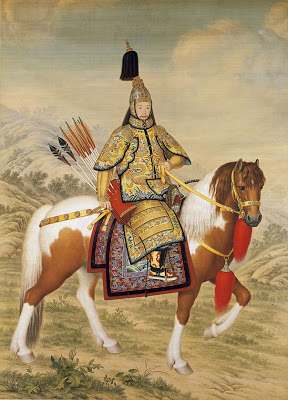
The Qianlong Emperor in Ceremonial Armour on Horseback, 1739 or 1758,By Giuseppe Castiglione

A documentary film on Brother Giuseppe Castiglione (Milan 1688-Beijing 1766), the Jesuit painter at the court of the Chinese emperors, will be produced by Kuangchi Program Service (KPS), the television production studio of the Jesuits in Taipei (Taiwan) and will also be broadcast in mainland China. According to information sent to Fides Agency by the General Curia of the Jesuits, the Kuangchi Program Service has already produced documentaries on Paul Xu Guangqi, a disciple of Matteo Ricci, and Father Adam Schall, who had spikes of over 200 million viewers. Through the media, the Chinese perceive the missionaries reasons of the personalities and their contribution to the cultural and scientific development of China.

The provisional title is “Giuseppe Castiglione in China, imperial painter, humble servant.” A repeated and varied airing on China Central TV Equipment (CCTV) and other broadcasters in mainland China is expected. “While the majority of the Chinese – says Fr Jerry Martinson S.J., vice-president of KPS – know the names of Ricci, Xu and Shall, and can have a vague idea of their role in Chinese history, few people are aware of their religious motivations. Documentaries instead want to give a true and, as far as possible, complete picture of the best examples of the initial missionary activity of Jesuits in China. We believe that these productions have been successful in correcting and improving the perception that the majority of the Chinese have of the Catholic missionary activity.” (SL) (Agenzia Fides21/12/2012)

A Parent Reflects on Jesus’ Parents

by Maureen McCann Waldron


A Parent Reflects on Jesus' Parents

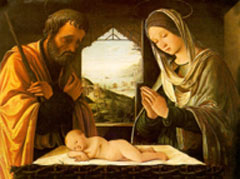
When I was first married, we would pull out a traditional Italian crèche scene and I would set up the shepherds, the animals, three kings and then the family: Jesus in his manger with Joseph and Mary standing on either side of him. I had always put Joseph and Mary on either side of Jesus because that’s the way it is usually depicted in artwork and in all of the stationary, non-moveable nativities I had seen. Besides, that’s the way my parents always set it up when I was a child.

For many long years in our early marriage, my husband I were unable to have a child. Year after year, we would delight with our friends and family as one after another announced their pregnancies. We were always thrilled for them, but at home we shared a deep and private grief that we were unable to be parents.

Finally, after eight years of marriage, my husband and I welcomed a baby girl into our lives early in December. That’s when I changed how I set up the nativity.

As I un-wrapped Mary and Joseph that first year of parenthood, I knew they would never stand on either side of the crib, looking at each other across the crib. Instinctively, I placed them side by side, shoulders touching.

I don’t think new parents stand separately, looking at their child. I think they stand next to each other, holding each other, looking down on the crib, stunned by the miracle in front of them and sharing in their incredible joy.

Besides, I suspect Mary and Joseph were probably as sleepless as any new parents. They probably had to hold each other up a little just to stay awake.


Why should Mary and Joseph stand together in Christmas art rather than face each other?

On that long ago night in the stable, I imagine that this young couple clung to each other with love. Their lives were changed in the same way that every new parent’s life is changed. Joy and anxiety are mingled together as parents of newborns realize that their lives have a new focus, a new responsibility and a new future to imagine.

But for this special couple, there was also the knowledge that something was different about their child and that it came from God in a special way. Mary and Joseph had to say Yes to God in a deeper way than the rest of us. Their child, Jesus, wasn’t just their child, but one that belonged to all of us. He came into this world to save us, to be with us and to love us.

Their Yes, their acceptance of this remarkable child, the child who came to save us, is the reason why in a number of nativity scenes all over our house, Mary and Joseph stand next to each other, always touching shoulders. Their arms don’t move, but I know they are holding on to each other for dear life and thanking God for this joy-filled gift of the child that they share in front of them.

— Maureen McCann Waldron
Creighton University Online Ministries

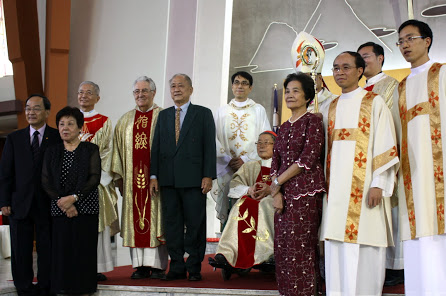
Card. Shan’s work for youth of Taiwan and mainland China


by Xin Yage

Taipei (AsiaNews) – The funeral of Cardinal Shan Kuo-Hsi will be celebrated in a simple manner, “just like those of the poor ” on September 1 in Kaohsiung, where the cardinal lived in recent years after being bishop of the same city. It will be attended by the two cardinals of Hong Kong, John Tong, Bishop of the city, and Card. Joseph Zen.

Yesterday morning a funeral Mass was held in Taipei, which was attended by the mayor of the city, Hao Longpin, staying for the entire celebration, while not being a Christian and despite having other pressing administrative tasks.

Speaking with Father Rao, pastor of Holy Family, the church where the celebration was held, Hao Longpin repeated several times how “Shan Kuo-Hsi was a great friend and a constant encouragement to always find a solution other than confrontation, a way out of problems through collaboration and creativity… just look at what he did the same for young people in recent years despite, or perhaps its better to say ‘thanks’ to his own illness “.

The moral and spiritual legacy of Shan Kuo-Hsi is particularly important for young Chinese. At the level of the Church, Card. Shan always spoke of unity and reconciliation, stressing the futility of any conflict. In the same way always stressed the importance of openness in education, especially for university students in Taiwan. As President of the Catholic Fu Ren, located in what is now called New Taipei City, he always pushed the island students to compete with those of mainland China to enrich their formation and open their minds through new exchanges and friendships, of mutual benefit. Prof. Zhan Delong, current dean of the faculty of theology at Fu Ren, told us: “He was concerned with the formation of priests and seminarians of the continent, as well as those on the island. He said that we can make many proclamations and dreams about the future, but the protagonists are the students that we have today in our classrooms. In a few years he managed to organize an exchange between students of the two sides of the Strait, and even students of theology from the mainland come here to our faculty: This is an enrichment for all , to refine and compare individual experiences, from which especially the Taiwanese students can benefit. “

The Archbishop of Taipei, Msgr. Hong Shanchuan testifies that “there are people who push you to look ahead, to be positive and proactive, not to surrender to obstacles: Shan Kuo-Hsi was one of these people.” The archbishop and the cardinal had appeared together on August 4, and it was also the last public appearance of the cardinal. It was the ordination of a young priest originally from Malaysia and who is having a huge impact on the university students in Taipei, having studied liberal arts and drama at the National Political University, among the top universities in Taiwan. Last year, the Cardinal had promised to preside over the ordination of this young extraordinary talent. However, being forced to a wheelchair, the cardinal could only be present at the side of the altar, while the ordination was presided over by the archbishop. To demonstrate how the Cardinal Shan was loved by the young people, the moment of the embrace between Pedro, the new priest, and the Cardinal was accompanied by a strong applause from many of the students present at the ordination. A young American friend, for the first time in Taiwan, who was sitting next to me, looked at me surprised and said: “Apart from Pedro and Jesus Christ, the one in the wheelchair is the other rock star of the day.”

Mary Receiving Jesus into Her Arms

by Becky Eldredge


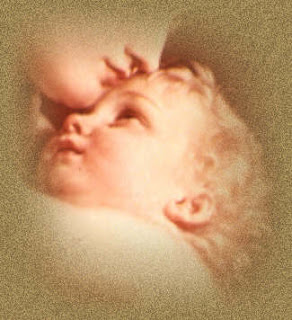
The moment my son, Brady, was first placed into my arms everything changed. As I gazed into his tiny eyes, stroked his peach fuzz hair, and snuggled new life, I knew my life would never be the same. I knew my life would be consumed with loving him, and I knew, as I held him, that I would experience love in a way I had never experienced before. The very act of receiving my son into my arms for the first time changed my life.

Parents across the world understand the emotional moment of receiving our children into our arms for the first time. In an instant, something wells up from deep within us, and in a fleeting range of emotions we experience profound love for another, tremendous responsibility for another, and fear. When Abby, my daughter, was born and placed into my arms those same emotions arose-love, responsibility, and fear.

Advent prepares us for the birth of Jesus. On Christmas, we celebrate the act of Mary receiving Jesus into her arms for the first time-a moment that exemplifies “the Word became flesh and lived among us” (John 1:14). Can we imagine the gaze between mother and child that day? Mary gazing into Jesus’ tiny eyes, stroking his hair, and snuggling the new life in her arms. Mary feeling the same profound love, tremendous responsibility, and fear that all parents experience. Jesus looking up at her. Jesus crying and needing to be soothed by his mother, the same way all newborns need to be soothed.

I know Mary was changed by Jesus’ birth. Advent prepares us for the Incarnation, when a little baby boy brought a light into his mother’s life that changed her life. Advent prepares us for the greatest reason for hope in this world-that this little baby boy brought light not only into his mother’s life that night, but that Jesus’ birth brought powerful light into our world.

A similar dream


In June, a group of Jesuit scholastics and priests spent a week in a Islamic boarding school in East Java, as part of the Indonesian Province’s efforts against religious radicalism, one of three concerns the Province has made a priority. Scholastic Billy Aryo Nugroho SJ recounts his experience.

by Jesuit Conference of Asia Pacific

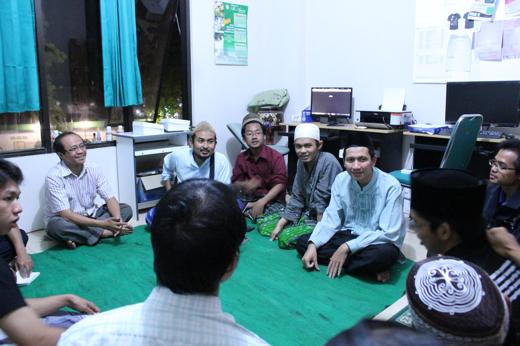
From June 17 to 23, 16 Jesuit scholastics and two priests lived in Islamic boarding school, pesantren in Indonesia. The pesantren was named “Tebu Ireng” and is located in Jombang, East Java.

The stay in the pesantren is a programme of the Indonesian Province that addresses one of its major concerns, religious radicalism. The other two priority concerns of the Indonesian Province are poverty and environmental damage. The concern around religious radicalism is also confirmed in the documents of the Society of Jesus, particularly during the 35th General Congregation.

We hope that this programme can be a significant contribution to our country, which is now threatened by religious radicalism. We also hope that this programme will help Jesuits in formation to embrace the spirit of religious dialogue. Indonesia is a Moslem-majority country therefore a dialogue with Moslem people is indispensable.

We were accompanied by two Jesuit priests who have worked in this area for some time – Fr Heru Prakosa SJ and Fr Greg Soetomo SJ. Fr Heru is an Ad Hoc Coordinator for Moslem-Christian Dialogue for the Jesuit Conference of Asia Pacific, while Fr Greg is a coordinator of the Justice and Peace Commission in the Indonesian Province.

During this programme, we lived together with the pesantren’s students who are called santri. Unfortunately, when we were there, it was the holiday period for santris so few of them were there. Nevertheless, we did not lose our passion to live together with them.

The interesting activity during our time with them was having philosophical and theological discussions. We discussed influential figures from both our religions. We Jesuits spoke of Thomas Aquinas (1225-1274), a great philosopher and theologian, while the santris told us about Al-Ghazali (1058-1111), also a great philosopher and theologian. The discussion enriched our knowledge of each other.

However, the most memorable experience was our meeting with the chief of this pesantren, Salahuddin Wahid, usually called Gus Sholah, whose father had founded the pesantren. During that meeting, Gus Sholah shared with us some inspiring thoughts. He said, “We have a similar dream, which is to create prosperity and peace in our country.” He wanted us to collaborate to make this dream come true. What a beautiful thought. We are united by the same dream. By this experience, we can simply say that humanity unites all people, regardless of their gender, race or religion. Indeed, it is our great duty to accomplish this and this duty can be realized only by struggling together.

After experiencing this programme, we are optimistic that there is promise and hope to build a prosperous and peaceful country where there is religious tolerance, since we believe that we are not striving alone. One thing that we can learn from this experience is that humanity unites all and inspires all to spread the benefits of humanity itself among other people around us.

Billy Aryo Nugroho SJ is a second year Jesuit scholastic studying philosophy at Driyarkara School of Philosophy in Jakarta, Indonesia.


Wisdom Story 47


by Paul Brian Campbell, SJ

A miser hid his gold at the foot of a tree in his garden. Every week he would dig it up and look at it for hours. One day, a thief dug up the gold and made off with it. When the miser next came to gaze upon his treasure, all he found was an empty hole.
The man began to howl with grief, so his neighbors came running to find out what the trouble was. When they found out, one of them asked, “Did you use any of the gold?”

“No,” said the miser. “I only looked at it every week.”

“Well then,” said the neighbor, “for all the good the gold did you, you might as well come every week and gaze upon the hole.”