Category: Uncategorized

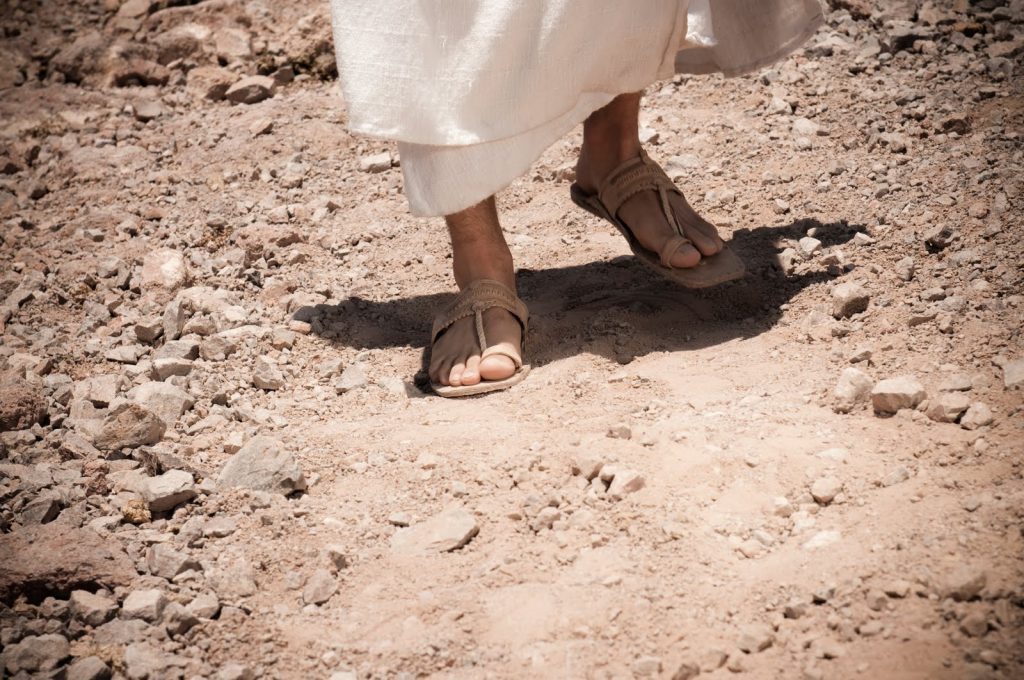
Praying in Strange Places


by Michelle Francl-Donnay

I have been traveling this week, eating and sleeping—and praying—in strange places. I spent the last few days at an exuberant and delightfully chaotic science conference. People struggled to capture what was happening, scribbling notes like mad in pocket notebooks, snapping photos, and recording videos. The strands of conversations wove back and forth, but there was no time to stand back to see the emerging pattern.

On the last day I took a shortcut through an empty auditorium. I found myself wanting to sit down, take out my notes, project the conference Twitter stream up on the giant screen, and in the silence try to make some sense of it all.

Tonight, as I pulled my prayer journal from my travel bag, and settled once again into the quiet stillness of my attic study to pray, I felt that same desire. It’s just over a week since I embarked on this adventure with God. Can I step back and see where I’ve been, look for patterns that might be emerging?

I sipped my tea and skimmed through the notes I had jotted after each time of prayer, asking God to look over my shoulder with me, and help me pull out the strands that we felt were important. I made a few notes: the couple of words that came up again and again, the point of reflection that I struggled with all week.

Until this moment, I hadn’t realized how disconcerting I found all the shifting around I was doing. I prayed in airport waiting areas (twice!), at midnight on the 14th floor of a hotel—in the middle of a tornado watch, glass windows shivering in the wind—and at home, awash in an afternoon’s sunlight. I wanted these weeks of prayer to have a comfortable rhythm to them, a steady discipline of time and place, and yet I couldn’t seem to find it.

God was not dismayed, gently pointing out that the shifts in retreat were making me more aware of who he was for me. My rock, my stronghold, that voice that I hasten to hear. Not just in my prayer space, not just at nine in the evening, but, as Psalm 121 sings so clearly, at every moment: “The LORD will watch over your coming and going both now and forevermore.”

Notice, God says, how you are learning to set down roots of prayer no matter where—or when—you find yourself. Notice that I am here. Always.

Michelle Francl-Donnay is the mother of two teenage boys, a professor of chemistry, and a regular contributor to Philadelphia Archdiocese’s CatholicPhilly.com , where she writes about the joys and struggles of trying to live a contemplative life in the midst of everyday chaos. Michelle gives the occasional retreat and blogs about life, laundry, prayer, and God at Quantum Theology.

What’s an E-Retreat?


by James Martin, SJ

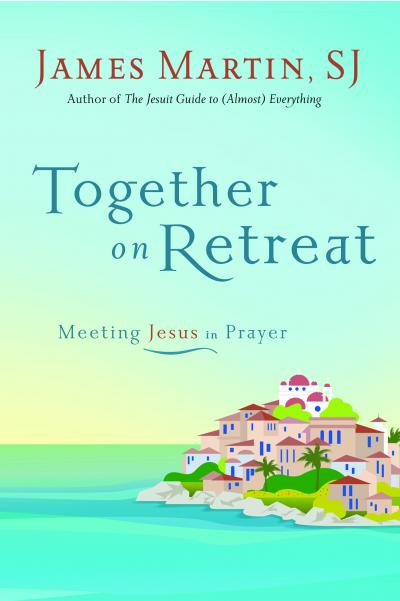
If you’re looking for a new spiritual resource for Lent (and beyond) today is the official “pub date” of Together on Retreat: Meeting Jesus in Prayer, what my publisher and I believe (hope?) is the first-ever e-retreat. It uses the most up-to-date technology of the e-book to lead you through an actual guided retreat. It’s a bit of a plunge into the deep end of the “New Evangelization.”

Since it’s a new form of spiritual resource, I thought I might explain something about this e-retreat. It begins with an introduction that describes a retreat; and then continues with a chapter on how to pray (introducing the reader to Ignatian prayer and lectio divina.) Next comes a chapter on what can happen in prayer (a big source of mystery for many) and then a chapter on some of the most common challenges in prayer (dryness in prayer, distractions, etc) and answering some of the most common questions about prayer.

Then the retreat begins. There are three passages from the New Testament, each focused on Jesus’s ministry by the Sea of Galilee: The Call of the First Disciples, the Miraculous Catch of Fish and the Breakfast by the Sea. As on an actual guided retreat, I provide the Scripture text, offer a brief reflection and then invite the reader into prayer with a series of questions. (The e-retreat, by the way, is based on a real weekend retreat given at Eastern Point Retreat House in Gloucester, Mass., a few years ago.) After a time of prayer (I’m recommending 30 to 60 minutes) you return to the e-book for a series of questions designed to help you reflect on what happened in prayer. At the conclusion of the retreat there is a wrap-up chapter that asks “What next?” All throughout, I try to be your “virtual” spiritual director, anticipating not only what might come up in your prayer (emotions, desires, memories, insights, feelings) but also anticipating common questions about prayer and retreat.

The goal of this new type of spiritual resource is to help a wide variety of people, from the person who has never prayed before to the experienced retreatant, and particularly those who may not have the financial resources or time to go to a retreat house. You can do this retreat anywhere: at home over a few days, during the course of a weekend–or even at a retreat house. And you can do it by yourself or in a group.

There are two versions, a basic version for simple e-readers (like a smartphone or a basic Kindle) and an “enhanced version” for iPads and Kindle Fires and Nooks. The basic version includes not only text, but also photos of the area around the Sea of Galilee. The enhanced version is a pretty amazing use of the latest technology and includes not only text and photos, and a lovely slideshow, but also many videos: videos where I answer questions about the retreat, prayer, spiritual direction, and so on, as well as videos of the Sea of Galilee to help you “compose the place” and more easily enter into each retreat period. The videos are embedded in the book, and appear right on the page. Here’s a video explaining more about the book.

If you’d like to use Amazon here is the basic version and here is the enhanced version If you want to use Barnes & Noble here is the basic version. And the enhanced version. It’s also available on iTunes, Books a Million, Kobo and Google e-books. Here’s an overview on the HarperOne website. Currently there is a plan for it to appear in print, but for the foreseeable future it will remain an e-retreat. (All of my proceeds, by the way, go to America Press!)

I hope that the new technology of Together on Retreat will help believers experience the graces of a retreat and enter more deeply into a relationship with God in prayer. May it be a blessing for you during this Lent and throughout the year.

Film Reviews : Here Comes The Boom


by Rev Dr Richard Leonard SJ 

HERE COMES THE BOOM. Starring Kevin James, Salma Hayek, Henry Winkler,Directed by Frank Coraci. Rated M (sporting violence). 105 mins.

Another Kevin James comedy from Adam Sandler’s company. We know what to expect. Some knockabout comedy, a lot of corny humour, some PG vulgarity, laughter at the expense of a star who could lose some weight. While this is in some ways true of this film, it doesn’t quite do it justice. There is much more of a niceness in this one. There are quite a few funny moments. And it is minimally vulgar. Perhaps a bit more appeal than the usual films with and/or from Adam Sandler.

It is definitely a knockabout comedy. And lots of knocks at that. It is a multi martial arts story. Memories of the recent, Warrior with Joel Edgerton and Tom Hardy which brought multi martial arts to mainstream movies. Someone remarked that it was a bit like Bad Teacher, with Cameron Diaz, with problems in a school. These comments came from audiences familiar with the latest films.

In fact, it reminded this reviewer more strongly of films like Rocky and the story of the underdog who triumphs and of Dead Poets Society where an unorthodox teacher is able to communicate with his students, willing and unwilling.

Perhaps that gives too elevated an impression of Here Comes the Boom Kevin James plays a biology teacher who has given up on his initial teaching zest and has become something of a slob. But, he has some sensitive moments with his friend, music teacher Henry Winkler. (And it is a pleasure to see a grey-haired Winkler in a substantial role that gives him both serious and farcical moments.) The school is in dire financial straits. And the music course is to be cut.

James brashly attacks the authorities and suggests the staff help find the money. One of the students at his night classes to prepare adults for citizenship watches multi-martial arts on TV and, now the former wrestler (well, twenty years former!) decides that he can find the money if he competes and gets the prize money for the loser, $10,000.

School authorities are not pleased. The students gradually see him as a hero. He loses and loses but… well you’ve seen Rocky! And his old teaching zeal is re-ignited. He has spent a lot of time courting the school nurse (Salma Hayek) who resists him but admires his perseverance. There are some nice, sentimental sub-plots about his brother who hates his job but is a great cook, about a young girl from a Filipino family who need her to work in a restaurant.

There is a huge finale in Las Vegas.

Kevin James has some abrasive aspects in his screen personality but he does win everyone over. Henry Winkler is able to bridge the gulf between sport and the arts. The film is very much pro music in school.


Rev Dr Richard Leonard SJ is the Director of the Australian Catholic Office for Film and Broadcasting (ACOFB).Peter W. Sheehan is associate of the Australian Catholic Office of Film and Broadcasting. 


China’s Jesuit ‘come-back kid’


by Fr Michael Kelly,SJ

He’s had more comebacks the Deng Xiao Ping. Deng famously was deposed twice only to bounce back a third time and reshape modern China.

Aloysius Jin Luxian SJ, bishop of Shanghai, has been knocked about and pushed over by life, the Catholic Church in China and at the Vatican, by the Jesuits and the Communist Party on so many occasions you could expect him to be punch drunk by now.

As recently as last year, his patiently prepared succession plan for leadership of the Shanghai diocese came to an abrupt halt in a single speech. His successor, Bishop Ma Daqin, earned the hostility of the Communist Party and removal from office in a single short speech shortly after his episcopal ordination.

So with Ma sidelined and Aloysius Jin’s succession plans thwarted, it was back to the drawing board in Shanghai.

But reversals, challenges, conflicts, misunderstandings and opposition are the staples of Jin’s long life, the outline of which is contained in his memoirs published in Chinese in 2008 with the English translation becoming available in late 2012.

The worst thing he says about anyone in his memoirs is that they are or were naïve. And he says it of himself frequently enough through the account of his own life as it takes its, at times, tortured path.

But what is endearing about his account is the way the almost fresh-faced innocence of the young man still survives in the 90-something’s record of how his long life – including 27 years in various forms of imprisonment – has unfolded. Surprise, wonderment and gratitude flow with the pages.

His childhood was marked by financial reversals for his father and poverty for the family, the death of his parents early in his life and neglect by his extended family in a period of great vulnerability for him and his sister.

An outstanding student, his academic progress was helped by some generous mentors, only to see such preference excite the jealousy of his Jesuit and other peers.

Fast forward to his return to China in 1951, which marks a sharp turn from his stellar academic career in Europe in the 1940s. It is now two years after Mao Zedong has driven the Nationalists from the Mainland and founded the Peoples Republic.

In the following years, he becomes Superior of the Jesuits left in China, rector of the large seminary in Shanghai (a job he returned to in 1982) and senior cleric for a diocese without a bishop.

Then on September 8, 1955, he is rounded up with hundreds of others and begins the 27 years of isolation, control and punishment for crimes only Communists could invent.

All his possessions, including diaries, records and mementos, are confiscated and destroyed.

This makes his memoir all the more remarkable for is its detail of people, places and events that, modestly, the author admits is only his memory because the contemporary and corroborative evidence was destroyed.

The tone and style of this book are quintessentially Chinese. So much of it punctuated with proverbs – Chinese, Latin and French – that gather the story to a point and interpret all that is to follow. His command of Confucius, the New Testament, the pithy aphorisms of Aquinas or Pascal display the fixed points of a distinctively sensitive and educated Chinese Catholic.

And that is perhaps the central paradox in this book: the unalterably Catholic faith and the unassailable confidence of a Chinese patriot.

This book is a first-hand record of 20th century life in China from soon after the fall of the last dynasty, through the early republic, nationalist rule, Japanese invasion, Communist triumph, the demonic turbulence of Mao’s rule, the development of consumerist China and all the corruption and decadence of a Communism grown over-ripe.

It is also the journal of a soul who has never lost his desire for God and his longing to share the experience. And his determination has been for the last 30 years that the Catholic Church not have to make a fourth start in China – in the 21st century as it did in the 13th, 16th and 19th centuries.

Fr Michael Kelly SJ is executive director of the Union of Catholic Asian News

What’s So Funny about Faith?


by Jim Manney 

In a religious order known for welcoming men with unusual backgrounds, Jake Martin stands out. Before entering the Jesuits, he was a stand-up comedian in Chicago. He still writes and performs; this summer he appeared at the Edinburgh Fringe Festival in Scotland, which calls itself the largest arts festival in the world. Jake tells the story of how a comic joined the Jesuits in his book What’s So Funny about Faith?, just published by Loyola Press. Read an excerpt here.

You can get a taste of Jake’s schtick in this mock commercial for the Jesuits. After the comic bit, he talks about his vocation.


Jake Martin, SJ, is a Jesuit comedian and writer from Chicago. He is a regular contributor to America magazine and Busted Halo and performs stand-up and improvisational comedy in Chicago and New York. Jake currently teaches improvisational comedy and theater at Loyola Academy in Chicago. 


Film Reviews : Jack Reacher


by Rev Dr Richard Leonard SJ 

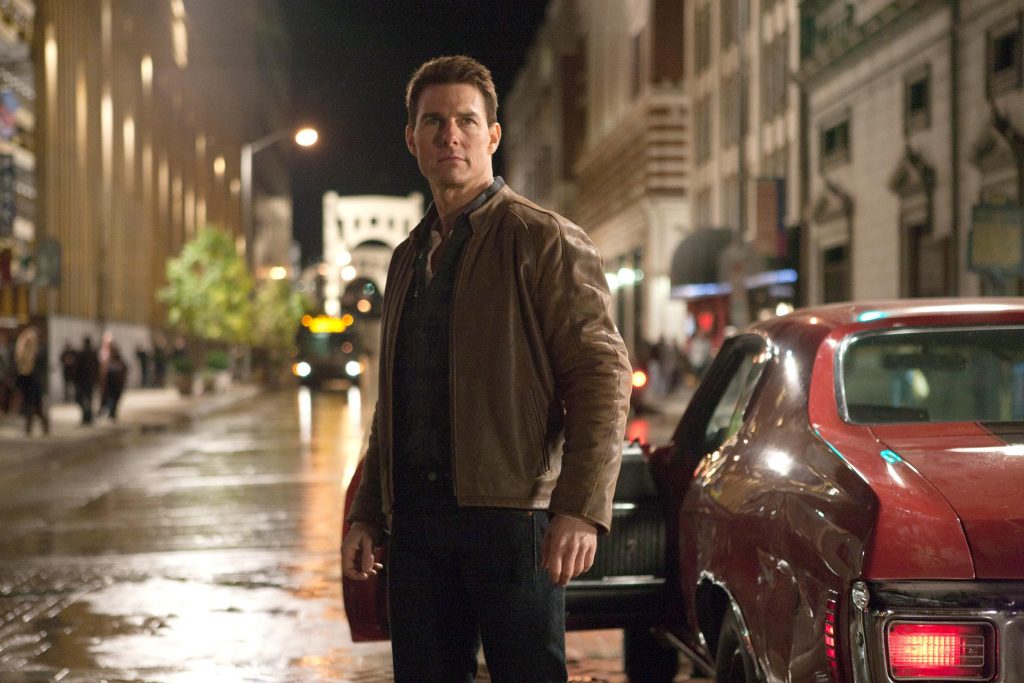
JACK REACHER. Starring Tom Cruise, Rosamund Pike and Richard Jenkins. Directed by Christopher McQuarrie. 130 minutes. Rated M (violence and infrequent coarse language).

Many of Lee Child’s readers of the Jack Reacher novels (including this reviewer), know that he is a former military policeman, now a loner, who continually gets caught up in other people’s problems despite himself. He is tough, laconic (though also sardonic), standing at five feet six and weighing 250 pounds or so.

So, who thought of having Tom Cruise (a foot or so shorter and some years older) for the screen version of Jack Reacher?

Despite strong misgivings, I will admit that Tom Cruise is not too bad at all. Lee Child himself remarked that in the books Jack Reacher is like a sledgehammer whereas in the film, he will be more like a scalpel. Maybe. Tom Cruise does get the opportunity to go the sledgehammer route. The main difficulty is not his height but that, despite many Mission Impossible actioners, his face does not look as lived in as Jack Reacher’s should be. Despite the long career, Tom Cruise still has touches of the baby-face.

One other thing for Reacher readers. This film version of One Shot is a pretty good adaptation of the novel. The first ten minutes or so are exact, with a lot of detail, which can reassure hesitant readers. Needless to say, a number of characters are shed, but the core of the novel is faithfully followed for screen action rather than merely being literal.

For those not familiar with the novels and character, Jack Reacher should prove an interesting, even intelligent, mystery action thriller.

A shooter who has shot five victims in the city centre is arrested and asks for Jack Reacher. It is assumed that he is to witness to the character of the shooter. Not at all. The two have a difficult history. This baffles the shooter’s lawyer (Rosamund Pike), the DA (Richard Jenkins) who happens to be the lawyer’s father, and the chief of police (British Shakespearean actor, David Oyelowo).

This is one of those things are not what they seem tales and it is interesting to see where incidents and clues lead us. Some lead to a veteran shooter, played with his pleasing customary bluff by Robert Duvall, and to a mysterious Russian who is played, capitalising on his sinister voice and accent, by celebrated director, Werner Herzog.

While Jack Reacher does have some fights and Cruise makes them credible enough, there is a car chase, probably the visual equivalent of the physicality of fists, kicks and blows.

We probably won’t mind if this is the beginning of a movie franchise – but Mr Cruise is now venturing into his 50s as should be the literary Jack Reacher.


Rev Dr Richard Leonard SJ is the Director of the Australian Catholic Office for Film and Broadcasting (ACOFB).Peter W. Sheehan is associate of the Australian Catholic Office of Film and Broadcasting. 


Suffering for Christ


by Jesuit Conference of Asia Pacific

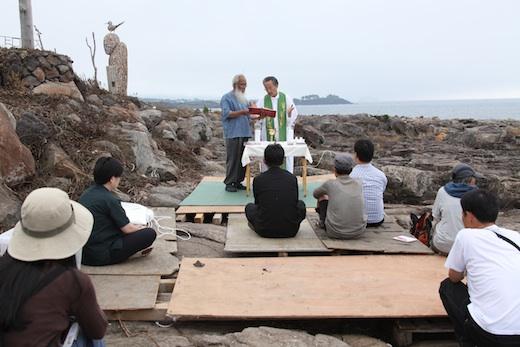
As we look towards Christmas and the hope the birth of Jesus brought us, we remember that in Korea, a Jesuit will be spending his Christmas in prison for standing up for justice.

Korean Jesuit Fr Lee Young-chan and five other peace activists were detained by the police on October 24. He had been protesting the excessive force used by the police in detaining a woman activist, and when the police manhandled him, they claimed his resistance amounted to violence. On Oct 26, the court upheld his arrest and denied him bail. His trial is ongoing.

Fr Lee is the second Jesuit to be imprisoned this year in connection with opposition to the construction of a naval base at Gangjeong Village in Jeju Island. In April, Fr Joseph Kim Chong-uk SJ was imprisoned for opposing and attempting to hinder the construction. Fr Kim has since been released.

The Justice and Peace Commission of the Catholic Bishop’s Conference of Korea and the Korean Province have both issued statements calling for the immediate release of Fr Lee and the other peace activists, and the end of the authorities’ use of violence in Jeju.

The Korean Province also promised continued material and emotional support to the Jesuits engaged in the action in Jeju, saying “With the understanding that this problem is international in scope we will spread awareness of it and join in close solidarity with the Jesuits of North America and also to our own region, the Jesuits of the Asia Pacific.”

In a letter Fr Lee managed to send from prison on November 4, he cites St. Paul saying, “‘For to you has been granted for the sake of Christ, not only to believe in him but also to suffer for him. ‘(Phi1, 27-29) I give thanks that at least in a little way I have been granted the happiness and special favour to directly experience what these words say.”

He further said, “The U.S. and China have been faulting each other while turning N.E. Asia into a powder keg. They are blinded by their hegemony and nationalism and are trying to put each other down. In response, Korea and other nations must join in solidarity, not in inciting war but in ameliorating the situation and in leading toward a reduction in weapons.

“I pray that Jeju may avoid becoming a shrimp caught in a whale fight, but rather prevent the whale fight and become a place brimming with life and peace, an island spreading God’s peace for all peoples to all the world.”

The events in Jeju take place at a critical time for peace in northeast Asia. The ruling party in South Korea has taken a hard line toward North Korea and desires a stronger military to boost national security. The planned naval base on Jeju Island, opening out directly into the East China Sea, will enable increased projection of South Korean naval power. With South Korea’s close alliance with the United States, the naval base could be part of the US’ efforts to encircle China with its military might.

Opposition party lawmakers in South Korea have been critical of the planned naval base and have gained enough agreement for Congress to restrict the budget for this year’s construction. Hopes that the naval base could see a re-examination in 2013 look to be dashed with the ruling party winning the recent presidential election. Construction has been going on 24 hours a day to make up for delays caused by opposition and typhoons. During this time of rapid construction, police presence has been strengthened and their use of violence has increased.

Missioned to the Conference


by Jesuit Conference of Asia Pacific

The Conference team is expanding and strengthening. Consultations between the President and Provincials over several months have resulted in the missioning of Jesuits from various Provinces to core positions in the Conference. This generosity of spirit will greatly help the Conference to keep the Society in Asia Pacific oriented towards the service of faith and the promotion of justice.

The appointments announced by Conference President Fr Mark Raper SJ in December are:

Team for the JCAP Tertianship (from August 2013): Fr Priyono Marwan (IDO) and Fr Ramon Bautista (PHI). Fr Roger Champoux (PHI) retires as Tertian Instructor after 14 years in the role.

Socius to the President and JCAP Treasurer (from April 2013): Fr Simon Yi Kuen-sang (KOR-MYN). Fr Simon will also be the Secretary and Development Officer for the Myanmar Mission Fr Benedict Jung will return to Korea after a long absence.

Delegate for Studies (new position, to commence in 2013): Fr Robin Koning (ASL). Fr Robin’s responsibilities will include promotion of the shared responsibility for Jesuit studies across the Conference and implementation of anticipated directives on Jesuit studies from Fr General.

Secretary for Pre-Secondary and Secondary Education (from December 2012): Fr Chris Gleeson (ASL). Fr Chris is appointed for an initial two years in order to re-activate the secondary education secretariat, which is an important network of mutual support and inspiration, especially with new educational projects in planning in many units in the Conference.

Coordinator for the Social Ministries and Coordinator for the Migration Network (from mid-2013): Fr Benny Juliawan (IDO). Fr Benny replaces Denis Kim who has served long in this role, doubling with his academic duties at Sogang University and teaching a course also at Loyola School of Theology. Benny is expected to assume a full time role as Social Ministries Coordinator once he is freed from his duties at Sanata Dharma University. Benny also takes up a new role for coordination of the services offered to people on the move.

JCAP team for planning and office systems (January to mid-2013): Fr Hari Suparwito (IDO). Fr Hari has an interlude between teaching and taking up doctoral studies. In this time he is asked to help streamline and modernize the JCAP information technology systems.

The search for a Formation Delegate to replace the late Fr Matthias Chae continues.

The Conference also continues to make men available to the Curia, and Fr General recently announced the appointment of Philippine Provincial Fr Jose Cecilio Magadia (PHI) as General Counselor for Formation. Fr Magadia will take assume oversight for the formation of Jesuits and vocation promotion in October 2013.

Why Young Adults Need Ignatian Spirituality


by Tim Muldoon

There have been a number of articles and books in recent years that have addressed a basic concern among Church leaders: what will the Church look like in twenty years? Underlying this basic concern is an awareness that the generation of young adults has not (it seems) appropriated Catholic faith according to the models of earlier generations, and thus have not the same commitment to our faith that would seem to be necessary for the future well-being of the Church. Writers such as Tom Beaudoin and Jeremy Langford have contributed articles to America suggesting that there are legitimate faith questions that young people still raise, and that the Church needs to develop a greater understanding of our generation if it is to effectively minister to us. What I offer here is a reflection on how Ignatian spirituality in particular can speak to young people, and help us to develop a vocabulary of faith.

Why Ignatian spirituality? There are two major reasons: the first practical, the second theological. The practical reason is that it is available. There are many Jesuit high schools and colleges in the US, more than any other religious community sponsors, and thus there is a long history of addressing the spiritual and intellectual growth of young people. Ignatian spirituality works because we have learned how to encourage young people to use it. The theological reason emphasises this point even further: Ignatian spirituality emphasises faith as an ongoing dialogue between the person and God, and thus represents the kind of dynamic approach to faith that young people often intuit for ourselves. To see spirituality as that which demands exercise, work, is to see it as more than an either/or proposition – and this latter position is too often presented as the traditional view (‘if you don’t believe in God, you’re going to hell’). Young people live in a world in which we must constantly confront ambiguity and change; Ignatian spirituality recognises this on a very deep level, and invites us to engage in a process of ongoing conversion. This resonates with our experience of confronting the question of God. Many have grown suspicious of facile answers and arrogant claims to authority, and instead need an invitation to consider more clearly the personal question: who is God for me?

There are five elements in Ignatian spirituality which young people today can use to grow in the understanding of their faith:

1. The first principle and foundation

In a postmodern world, the very notion of ‘foundation’ is shaken – can anything be regarded as ‘foundational’ when it seems that everyone believes something different from everyone else? Robert Ludwig has written in his Reconstructing Catholicism (Crossroad, 1995) that younger Catholics have grown up in what he calls a ‘deconstructed’ context and seek a ‘constructive worldview.’ Practically, this means that younger adults have a harder time with anything that can be claimed as incontrovertible truth – even the existence of God – but that we long for clarity. Paradoxically, then, Ignatius’s first principle and foundation can be seen in such a context as remarkably refreshing. It is disarmingly simple: we are created to praise, glorify, and serve God, and by this means to achieve our eternal destiny. Such a suggestion cuts to the heart of our longing for truth, and offers a simple solution: live as though this first principle and foundation were true. Here I am reminded of Ignatius’s own counsel regarding his spiritual exercises: trust God as if everything depended on you, and at the same time work as if everything depended on God.

I recently had an experience which illustrates the attractive power of the first principle and foundation. During an introductory philosophy class, I was addressing how philosophy begins with the sense of wonder at the ‘limit questions’ that confront us as human beings. Among these are questions about death and suffering, love and the meaning of life. Looking out over a room full of only partly interested students, I threw out the offhand comment, ‘You know, the meaning of life is easy: we are created to praise, glorify, and serve God, and by this means to achieve our eternal destiny!’ Immediately, the collective posture of the room changed; everyone sat up straight and began writing, ‘Can you say that again?’ they asked, ensuring that I repeated every word slowly. I had, of course, only lobbed out this comment to catch their attention, but they were fascinated at the idea that one could encapsulate the meaning of life in a handy sentence.

Because we live today in a world where truth claims are constantly weighed and judged against one another, young people have been given very little reason to think that any one way of living is better than any other. Sharing an articulation of Christian faith that is so direct challenges people to consider what sort of truth claim it is, and what kind of life it offers.

2. God in all things

While the notion of ‘God in all things’ is not uniquely Ignatian, it is characteristically so. Among the figures of the last century and a half who have lived this worldview are the poet, Gerard Manley Hopkins, the anthropologist Teilhard de Chardin, and the theologian Karl Rahner. All of these figures had a strong sense of what Hopkins called ‘the dearest freshness, deep down things’ – that sense that God’s grace animates the whole of the created order to the extent that one cannot but encounter it if one is attuned to it. The celebration of God’s grandeur appeals to the young mind, which sees a panorama of people, traditions, beliefs, and styles among people, and can draw meaning from places very different from the traditional sources of Catholic worship. In short, young people today draw their spirituality from many non-traditional places, especially those in pop culture, as Tom Beaudoin has written in his Virtual Faith (Jossey Bass, 1997).

To speak about God in all things is to admit that no doctrine, no tradition, no scripture alone can exhaust the mystery that is God. It is to remember that our theology, our prayer, our teaching is limited in its ability to convey this myst ery, and that as a result we must ultimat ely stand in awe before God. We who have grown up in a pluralistic world have seen good things in people of varied backgrounds; we know that any talk of ultimate truth must be humble before the vastness of human experience and of creation. On the flip side, to speak of God in all things is to remind us that ours is a sacramental understanding of God – God among us in the face, the word, the gesture that makes present the reality of grace. It is to emphasise that God is not distant and ‘other’, but present and intimate with us. It is to underscore a belief that our lives are not beyond the scope of God’s love, but rather they are already the objects of God’s care.

3. Walking with Christ

Ignatius’s Spiritual Exercises asks the retreatant to enter deeply into the stories of Jesus’s life, to use the imagination to place oneself into the Gospel stories. This spirituality is about sharing in the story, not only by remembering it but also by taking part in it, in order that one might more fully come to know Jesus. Today, this counsel is still valuable to young people, many of whom know the gospel only second-hand. I have had many experiences in which people have commented on how surprised they were by the Jesus of the Gospels, because they had never had the chance to meet him directly. Too often young people rely on the faith of parents, and so never are given the opportunity to really confront for themselves this attractive figure (‘Who do you say that I am?’), and to answer the fundamental call: ‘Come, follow me.’ Young adults undergo a period of distancing themselves from their parents, and part of this distancing involves religion. They need the chance to appropriate their own mature faith, and asking them to consider the real Jesus can be an important step.

4. Consolation and Desolation
Perhaps the most important part of the spiritual journey that young people need to understand is that it is not a straight, easy path towards enlightenment, but rather a struggle that involves highs and lows. Ignatius’s writing on the discernment of spirits is helpful, because it gives us an understanding of how both consolation and desolation are part of the life of faith. Ignatius shows God as one who loves us deeply, but who moves us toward growth even in the periods when God is distant. In short, Ignatius shows us that spiritual suffering is part of the life of faith, and that it forces us to confront the false images of God that prevent us from growing as human beings. For young people, this is a hard message, but so necessary in a culture that says, avoid all suffering. My generation has grown up in a sound-byte, throw-away culture, and we have learned that it is possible to insulate ourselves from reality by turning our short attention spans to the next interesting thing. We need a spirituality that emphasises that faith is sometimes about choosing to confront reality, to trust God even when God is hard to understand – for example, in the face of such mysteries as the death of a loved one or experiences of failure and loss.

5. Social Justice

An important final element in Ignatian spirituality that distinguishes it from so many ‘self-help’ spiritualities in the marketplace is that of social justice. Jesuit education has stressed that Christian faith reaches out to others, and does not rest content with a doctrine of personal fulfilment. As much as young people today are criticised for our self-centeredness, many of us long for the sense that we can make a difference in the world. Having inherited an individualistic worldview, we find that it can be difficult but rewarding to show concern for others. One benefit of living in a pluralistic world is that we have come to appreciate the legitimate differences among people, and so we have a sense that all people share a basic moral equality. We must be reminded, though, that in spite of our culture’s tendencies to exalt the individual, we are called to reach out to people who are left out.

Jesuit institutions have led the way in making the spiritual teachings of St Ignatius available to all people. In my own experience, the so-called ‘19th annotation retreat’ described in the Spiritual Exercises is a great way to offer students the opportunity to learn about and practise this spirituality. I have made the retreat at two different Jesuit institutions, and have helped run it in a university Newman centre, and so I know that it can attract people from different walks of life and help them to grow in their faith lives. Perhaps more than anything else, the invitation to try authentic Christian spirituality is vital if we want to encourage the faith of young people. Ignatian spirituality is good because it offers such an invitation – that people might come to know for themselves what it means to follow Christ.

Tim Muldoon is a Catholic theologian and author of several books, including The Ignatian Workout, an adaptation of Saint Ignatius Loyola’s Spiritual Exercises. He is married with three children, and teaches at Boston College, where he also serves in the Division of University Mission and Ministry.

This is an amended version of an article published originally by America in February 2001. Reprinted with permission.

Wisdom Story 49


by Rev Dr Richard Leonard SJ 

It is said that after the Buddha experienced enlightenment, he passed a man on the road who was immediately struck by the Buddha’s appearance. The Buddha had an extraordinary radiance and peacefulness about him. The man knew he was in the company of an unusual person and he wanted to know more about him. Thus, he stopped and asked the Buddha.


“My friend, what are you. Are you a celestial being, or perhaps a god?” “No,” said Buddha

“Well then, are you some kind of magician or wizard?” “No,” said Buddha again.

“Are you a man?” “No.”

“Well, my friend, what then are you? This time the Buddha replied, “I am awake.”