Category: Uncategorized

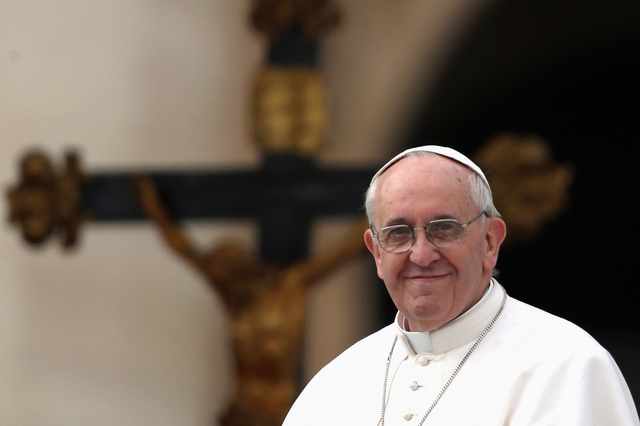
Pope Francis’s Prayer Intentions for April 2013


Pope Francis

The general intention

That the public, prayerful celebration of faith [the sacred Liturgy] may give life to the faithful.

The mission intention

That mission churches may be signs and instruments of hope and resurrection.

Scripture tells us in 1 Corinthians 11:23-32 that the community of believers are anchored in the Eucharist. As you know, this is the earliest recorded Christian understanding of what the Lord did on the day before He died on the cross. In fact, Saint Paul’s letter to the Corinthians has the famous line, “Do this in remembrance of me,” which keeps our attention on what’s essential. Pope Benedict’s good example and teaching tells us that real renewal of our faith rests in our living what the Eucharist means. Consider what the bishops of the Second Vatican Council said about the Eucharist: it is “the memorial of Christ’s sacrifice on the Cross.” Hence, our prayer intention for April not only echoes a key teaching of Scripture but also the magisterium that teaches us that “the liturgy is the summit toward which the activity of the Church is directed.” The Liturgy, most particularly the Eucharist, is the fount of our faith in the Risen Lord, and from which the Church’s pastoral power flows.

The mission intention speaks to the virtue of hope. It is the Christian hope in our eternal destiny. Again, appealing to the teaching of Saint Paul’s letter, 2 Corinthians 5:16-20, pinpoints what we believe about faith in Christ: we live with a new humanity, that is, we have a new creation. The Year of Faith proclamation says, “Through faith, we can recognize the face of the risen Lord in those who ask for our love.”

Wisdom Story 53


by Anthony de Mello, S.J.

Buddha was once threatened with death by a bandit called Angulimal.

“Then be good enough to fulfill my dying wish,” said Buddha. “Cut off the branch of that tree.” One slash of the sword, and it was done! “What now?” asked the bandit.

Put it back again,” said Buddha. The bandit laughed. “You must be crazy to think anyone can do that.”

“On the contrary, it is you who are crazy to think that you are mighty because you can wound and destroy. That is the task of children. The mighty know how to create and heal.”

In the Hands of God


In the Hands of God

by Pedro Arrupe, SJ

More than ever I find myself in the hands of God.
This is what I have wanted all my life from my youth.

But now there is a difference;
the initiative is entirely with God.

It is indeed a profound spiritual experience
to know and feel myself so totally in God’s hands.


Pedro Arrupe composed this prayer after he suffered a debilitating stroke, the effects of which he patiently endured for the final ten years of his life.

Excerpt from Hearts on Fire: Praying with Jesuits, edited by Michael Harter, SJ.

Jesuits seeking global cooperation: Water for All


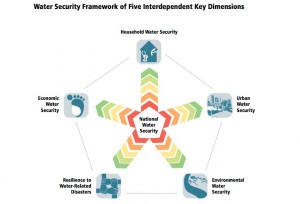
Asian Water Development Outlook 2013, ADB & Asia-Pacific Water Forum

Mariel de Jesus and Pedro Walpole

We live in a world that is increasingly concerned with issues of security. These may be issues of national security, community, family or personal security. Resource security is also a concern, especially since the world’s population is dependent on natural resources – land, forests, and water – the exploitation of which has reached all known boundaries. The rate and volume of extraction are unprecedented and, along with environmental changes on-site and impacts downstream, threaten the natural and human ecology. Many sectors are competing for access and this competition sustains human poverty and degrades the ecology, increasing the need for proper management. Greater governance and cooperation is needed to address the world’s many resource challenges.

Today, much of the focus is on water. Today, 1.2 billion people, about one-fifth of the entire world, live in areas of physical water scarcity. Projections say that by 2025, almost 1.8 billion people will be living in regions of absolute water scarcity.
Approximately 1.6 billion face economic water shortage, meaning they will not have enough money for infrastructure. The main driver of today’s water challenge is economic growth and development. At present, the global requirement for water is 4,500 billion cubic meters of water per day. This demand is expected to grow to 6.9 billion cubic meters of water, exceeding current, accessible water supply by 40%. Water, or rather the lack of it, will also be a constraint to growth; at present, agriculture uses about 70% of annual global freshwater. But government, industry, and households will also require water: 65% more freshwater withdrawals will be required to support the growth of national economies.

Though issues of environment and natural resources have been on the discussion table for years, today, that conversation is reaching a wider audience and a new level of attention. This may be due in part to global business identifying water as a core resource in the sustainability of any business venture. Even if the water is not utilized in the production aspect directly, horizontal or vertical development and auxiliary services will meet questions of water sustainability. Like land, capital, and labor, water is not at the core of production and is a risk. Business has recognized that water is increasingly the limiting factor to the sustainability of many operations. Given the backdrop of climate change, the pressure is on business to find ways not simply to compete in a water-stressed world but to cooperate and contribute to a greater sustainability and access to water for all.

Although stated in different ways by different speakers, this was the constant refrain and reminder during the Asia Water Week 2013 conference: Securing water for all in Manila, Philippines last 11 to15 March and hosted by the Asian Development Bank. While there are potential solutions available to deal with the world’s water problems, thus far, the motivation to act at the scale and level needed is not present. The active presence of the private sector during the Asia Water Week conference may bring the necessary urgency and motivation to act on the issue.

Business must go beyond securing its access to water resources. It must contribute to a sustainable hydrological cycle in the ecosystems it affects and it must participate in the agenda of broader security of water for all to ensure its long-term viability. Business must also ensure that in the process of ensuring its own sustainability, it adds to the world’s sustainability and does not take from others unjustly. If people are concerned only about their own water source, managing and securing their own supply, that is not sustainability, it is self-preservation.

Business is called to work with affected communities, with government, with broader civil society, to address its needs without compromising the global ecology. The private sector will need to develop socialized water access in future developments if they are to be considered as genuinely greening the economy. All stakeholders must be involved in working towards a common goal: water security.

The global community must recognize its interdependence when it comes to issues of water: the world’s population is growing and water resources are finite and vulnerable. The United Nations declared 2013 as the International Year of Water Cooperation, and identified several opportunities for working together to ensure sustainable water use.

Water is critical to all life. We are all affected by the issues of water scarcity and must therefore participate in finding solutions. The world’s water future can only be secured through cooperation and collaboration of all.

 

Un unknown portrait of Jesuit missionary Nicolas Trigault


Nicolas Trigault In Chinese Costume

TEFAF (The European Fine Art Fair), first held in 1975 in Maastricht, The Netherlands, is regarded as the world’s leading art fair. From the very beginning I have been visiting it, especially keeping an eye on works of art that have a connection with the history of the Jesuits. This year I discovered among other beautiful pieces so-called Jesuit porcelain from China with religious imagery on it, a Japanese Nambam lectern with the IHS-logo, and a painting of the Trinity by the Antwerp artist Artus Wolffort (1581-1641), from the Jesuit church of Saint Peter in Münster. The most surprising work of art was an unknown portrait of the Jesuit missionary Nicolas Trigault (1577-1628) in traditional Chinese costume, painted in 1617 when he was 40 years old. The portrait, oil on copper, 10.8 x 20.5 cms., from a private collection in the Czech Republic, is for sale at Rafael Valls Ltd. in London.

Trigault was born in Douai and became a Jesuit in 1594. He left Europe to do missionary work in Asia, arriving in Nanjing in 1611 and later moving to Hangzhou, where he was one of the first missionaries to work in the city. In 1612 he was appointed as the China mission’s procurator in Europe. In 1613 he sailed from Macau to Rome, and from there travelled around in Europe to raise money and publicize the work of the Jesuit missions. Peter Paul Rubens did a portrait of Trigault when the latter stopped in Antwerp in 1617. The portrait at the TEFAF is a, somewhat simplified, mirror image of this painting, now in the Musée de la Chartreuse in Douai.

From March 5 to June 9 there is an exhibition at the J. Paul Getty Museum in Los Angeles, under the title Looking East: Rubens’s Encounter with Asia. A drawing of Trigault by Rubens from the Metropolitan Museum in New York can be seen there.

Go in Peace, A Gift of Enduring Love


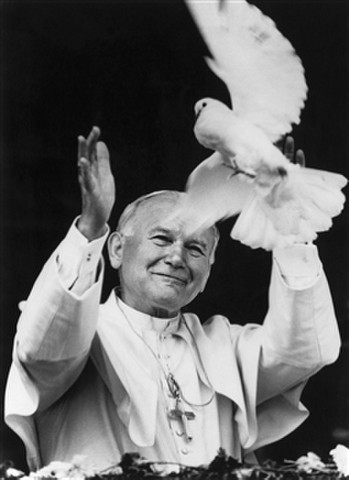
Pope John Paul II:

What we need to foster, in ourselves and in others, is a contemplative outlook. Such an outlook arises from faith in the God of life, who has created every individual as a wonder. It is the outlook of those who see life in its deeper meaning, who grasp its utter gratuitousness, its beauty, and its invitation to freedom and responsibility. It is the outlook of those who do not presume to take possession of reality, but instead accept it as a gift, discovering in all things the reflection of the Creator and seeing in every person their own living image.

Prayer not only opens us up to a meeting with the Most High, but also disposes us to a meeting with our neighbors, helping us to establish with everyone-without discrimination-relationships of respect, understanding, esteem, and love. Prayer is the bond that most effectively unites us all. It is through prayer that believers meet one another at a level where inequalities, misunderstandings, bitterness, and hostility are overcome; namely, before God. Prayer is the authentic expression of a right relationship with God and with others.

We need to reaffirm our need for intense, humble, confident, and persevering prayer, if the world is finally to become a dwelling place of peace.

So, to take time to pray and to nourish prayer and activities through biblical, theological, and doctrinal study; and to live by Christ and His grace by receiving assiduously the sacraments of reconciliation and the Eucharist: such are the fundamental requirements of every deeply Christian life. Thus, the Holy Spirit will be the source both of our action and of our contemplation, which will then interpenetrate each other, support each other, and yield abundant fruit.

This deep unity between prayer and action is at the basis of all spiritual renewal. It is at the basis of the great enterprises of evangelization and construction of the world according to God’s plan.

This reflection is from Pope John Paul II. These are selections from his book, Go In Peace: A Gift of Enduring Love.

Wisdom Story 52


by Anthony de Mello, S.J.

There was an old Zen master called Nonoko who lived alone in a hut at the foot of a mountain. One night while Nonoko was sitting in meditation, a stranger broke into the hut and, brandishing a sword, demanded Nonoko’s money.

Nonoko did not interrupt his meditation while he addressed the man:

“All my money is in a bowl on the shelf up there. Take all you need, but leave me five yen. I have to pay my taxes next week.”

The stranger emptied the bowl of all the money it held and threw five yen back into it. He also helped himself to a precious vase he found on the shelf.

“Carry that vase with care,” said Nonoko. “It will crack easily.”

The stranger looked around the small barren room once more and was going to leave.

“You haven’t said thank you,” said Nonoko.

The man said thank you and left. The next day the whole village was in turmoil. Many people claimed they had been robbed. Someone noticed the vase missing from the shelf in Nonoko’s hut and asked if he, too, had been the victim of the burglar.

“Oh, no,” said Nonoko. “I gave the vase to a stranger, along with some money. He thanked me and left. He was a pleasant enough sort of fellow, but a bit careless with his sword!”

Jesuit Leadership Style


Heroic Leadership

Heroic Leadership
Best Practices from a 450-Year-Old Company that Changed the World

Chris Lowney
ISBN 0-8294-1816-4
336 Pages

Heroic Leadership is the book on Jesuit-inspired leadership today.”

 -Fr. Kevin O’Brien, S.J, vice president of mission and ministry at Georgetown University and author of The Ignatian Adventure


Best-selling author Chris Lowney, a Jesuit-seminarian-turned-investment-banker, breaks down the four guiding principles of Jesuit formation and how they foster dynamic, effective leadership and achieve longevity.

Lowney’s book provides readers with a deeper understanding of the Jesuit formation that helped shape Pope Francis, as well as how this training may influence our Holy Father’s leadership style.

Heroic Leadership includes:


  • The history of the unique formula for molding leaders that have guided the Jesuits for more than 450 years
  • An in-depth examination of the four key elements of Jesuit formation: self-awareness, ingenuity, love, and heroism
  • Modern-day examples of how successful leaders in today’s culture are best served when these guiding principles are applied


Chris Lowney on Pope Francis’s Jesuit Leadership Style:


Reviews:

“Lowney’s examination of the principles of Jesuit leadership…makes for fascinating reading. Jesuits and lay alike will find much to celebrate and emulate.”

-Bradley M. Schaeffer, S.J., president, Jesuit Conference


“Heroic Leadership advances a leadership unafraid to put love at the center. This is a lively, witty book about profound matters.”

-James N. Loughran, S.J., president, Saint Peter’s College


“Lowney demonstrates how today’s organizations need to scrap the traditional and narrow vision of leadership and adopt the Jesuit model of ‘everyone is a leader.'”

-Durant “Andy” Hunter, president, U.S., Whitehead Mann


“I am confident that I would have been a far more effective leader if I had read Heroic Leadership years ago. Highly recommended!”

-Ron Burkard, former executive director, World Neighbors


“Lowney brings together extensive experience in international banking, a solid grasp of Jesuit spirituality and history, and a good acquaintance with recent leadership literature to produce a book that is at once challenging and compelling.”

-The Reverend Harold Ridley, S.J., president, Loyola College in Maryland


Summer with the Jesuit Mission Band

Bookmark and Share


LOOK FOR US IN A CITY NEAR YOU!

“Hearts on Fire – Living Faith in Daily Life with the Spiritual Exercises of St. Ignatius of Loyola”

a retreat event for young adults


Upcoming Dates


Washington D.C.
June 17-18, 2011
St. Aloysius Gonzaga Church
Click here to register

Philadelphia, PA
June 24-25, 2011
Old St. Joseph’s Church
*Special Guest Presenter – Fr. James Martin, S.J.
Click here to register

Charlotte, NC
July 1-2, 2011
Saint Matthew Catholic Church
Click here to register

Baltimore, MD
July 8-9, 2011
Our Lady of Perpetual Help Catholic Church
Click here to register

Richmond, VA
July 15-16, 2011
Sacred Heart Catholic Church
A Bilingual Retreat: Spanish/English!
Retiro Bilingüe: Español/Inglés
Click here to register


Other dates coming soon!


Featuring members of the Jesuit Mission Band


  Jesuit:   pertaining to the Society of Jesus, founded by St. Ignatius of Loyola
Mission:   as in a “parish mission,” an event with presentations, prayer, social time, silence, and song – but here for a whole city
Band:   as in a group or team, e.g. “band of brothers,” not as in a “rock band,” but yes, there will be music too!


A TEAM OF YOUNG JESUITS
A GROUP OF YOUNG ADULTS
A THOUSAND GRACES
ONE HEART

Welcoming all young adults! (18-39, single or married)

If you’d enjoy an introduction to some practical ways of connecting your faith and your everyday life, come join us.  Whether you’re new to prayer or are just looking for new ways to pray and live a more meaningful life, this event is for you!

An Event Offering:

  • A day and a half of spiritual renewal for young adults
  • Dynamic presentations from young Jesuit priests and scholastics (seminarians)
  • An introduction to the Spiritual Exercises of St. Ignatius of Loyola and the spirituality of the Apostleship of Prayer
  • Insights on how the deepest desires of our hearts lead us to the Heart of Jesus Christ
  • Practical ways to connect faith and daily life


WHAT PARTICIPANTS ARE SAYING:

“The presenters were obviously in love with the Lord. They were joyful, peaceful, and attractive in the way I see Jesus attracting people in the Gospels.”


What did you like best about the weekend? Hearing from Jesuits close to my own age; everything was very relevant and explained in a way I could relate to. The music was great, too.”


What are a few things you learned?  1) The practice of Ignatian contemplation – I never knew about “imagining” myself in the Gospels before, 2) The idea of spiritual consolation and desolation and how to respond to each.”


“I can’t remember the last time… I spent a good hour in prayer. Having that time set aside was very much needed, and even more fruitful. Praying by means of Ignatian contemplation is definitely something I’ll continue to do.”


Sample Schedule Outline
(may vary in different locations)

Friday Evening

  • 6:00pm start (light snacks available)
  • Two presentations with music interludes
  • Candlelit Eucharistic adoration service with music and intercessions
  • Evening closes with coffeehouse social and live music (begins around 9:30, stay as long as you are able
  • Participants return home overnight

Saturday Morning

  • Coffee and light breakfast food available in morning
  • First presentation begins at 9:00am
  • Two presentations with music interludes
  • Opportunity for quiet prayer, discussion groups
  • Lunch (at host parish or in local establishments)
  • Presentations and interactive session in the afternoon
  • Finish weekend with Saturday Vigil Mass (yes, this “counts” as Sunday Mass!)

There is no registration fee, but a suggested donation of $15 would help us continue this ministry.  Registration is available at the door, but pre-registration helps our planning.  Thanks!

Mission Band on

Past Hearts on Fire Events


South Bend, IN
Sacred Heart Parish Center (Near Notre Dame)
Hosted by Diocesan CYAM and St. Pius YAs
April 8-9, 2011
Download flyer
Download poster

New York City, NY
Fordham University, Rose Hill Campus
November 20, 2010
Download Flyer


Mount Pleasant, MI
Central Michigan University, 
St. Mary’s University Parish
November 6, 2010
Download Flyer

Des Moines, IA
Holy Trinity Church
July 23-24, 2010
Download Flyer

Chicago, IL
St. Clement Church, Lincoln Park
July 16-17, 2010
Download Flyer

Columbus, OH
St. Catharine Church
July 9-10, 2010
Download Flyer

Iowa City, IA
Newman Center, University of Iowa
June 25-26, 2010
Download Flyer

Milwaukee, WI
St. Monica Church, Whitefish Bay
June 18-19, 2010
Download Flyer

Sponsors:
Apostleship of Prayer, U.S. National Office
Society of Jesus (Jesuits)

Director:
Fr. Phil Hurley, S.J.
Youth and Young Adult Director
Apostleship of Prayer, National Office
3211 S. Lake Dr., Ste. 216
Milwaukee, WI 53235
414-486-1152
[email protected]


We Have Contact with Everyone

Bookmark and Share


by Jim Manney


Ignatius Loyola, writing to a Jesuit who hesitated to work in the king’s court, fearing for the safety of his soul:


My own opinion is that even the argument based on your personal safety is not relevant. Obviously if our religious profession has no other purpose but to ensure our security, and if we were supposed to subordinate the good we do to keeping clear of danger, then we would not have to live among people and have contact with them. But according to our vocation we have contact with everyone . . . If we go about with our intention upright and pure . . . then Christ himself will look after us in his infinite goodness.