Category: Uncategorized

Wisdom Story 56


by Paul Brian Campbell, S.J.

The old Zen master lived in utter simplicity in his mountain monastery with a few disciples. One night, a young monk feels a new sensation in his meditation. Something warm, pulsating, loving… and… furry? He looked down onto a cat. The tail flicked against his face again. The cat turned and rubbed his head on his knee, purring loudly. Gently pushing it away, the monk settled back into his meditation. Unruffled, the cat wound himself around the next disciple, to be again pushed away.

No matter how many doors and windows they closed, the cat always found its way into the meditation room. After a month of this feline audacity, the disciples had enough. They put a nice embroidered collar on him and attached it with a long lead to a pillar in the temple. They gave him a silk pillow, and every day they would feed him, stroke him, and play with him. The cat was very content with his new arrangement.

A few years later, the old Master died. A young abbot from a different area was installed, and life resumed its peaceful rhythm. The new abbot did notice that a black cat was always tied to the northern pillar of the great temple, surrounded by choice offerings and sitting on an ornate silk pillow. Not wanting to look ignorant, he did not ask anyone about its presence, and assumed that it was a tradition of the monastery.

When the cat died, the abbot ordered another black cat to be found to take its place, and installed with full honor.

Over time, all the disciples who had known why the first cat was tied to the pillar died. The successive generations of monks gradually forgot the utilitarian purpose of tying the cat to the pillar. Yet the tradition lived on and flourished for centuries. The original collar was reverently worshipped as a relic. Books of theological commentaries were written on the spiritual significance of tying a black cat to the northern pillar. Legends of miraculous healings due to the intercession of the holy cat were compiled and studied devotedly. Trinkets and memorabilia were being mass produced. Business had never been better.


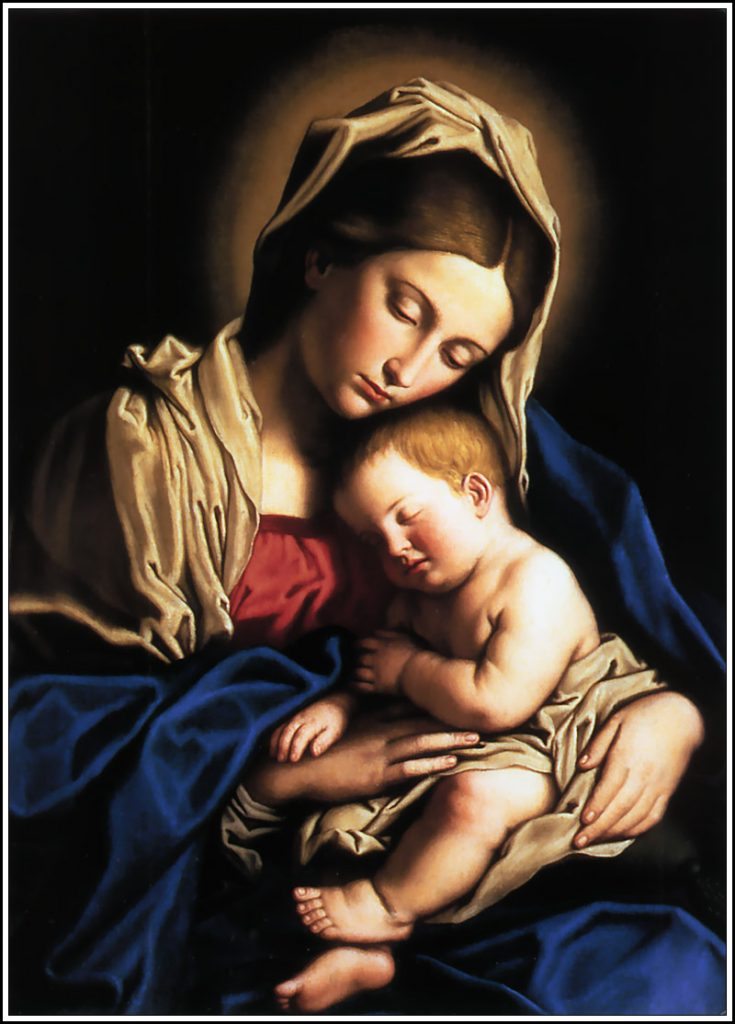
Best Ignatian Songs: Mary


The Corner With A View: Hail, Mary!

by Jim Manney

The singer-songwriter Patty Griffin sang a Best Ignatian Song a couple of years ago. Here’s another wonderful Griffin tune, sent along by my friend and colleague Maria Mondragon.

Jesus said Mother I couldn’t stay another day longer
Flys right by me and leaves a kiss upon her face
While the angels are singin’ his praises in a blaze of glory
Mary stays behind and starts cleaning up the place


Challenging times for the Myanmar Mission


Mark Raper SJ

Many may have thought the battle won when Aung San Suu Kyi was free to appear in public, when hundreds of political prisoners were released, when dissidents were free to return home from exile abroad, when censorship and sanctions were lifted, when elections were held, and as parliament sits to draft a new constitution. In reality the work of rebuilding Myanmar is just beginning.

After half a century of brutal mismanagement and appalling leadership, myriad resentments simmer. Decades of neglect in education, health care, social welfare, and infrastructure cannot be overcome in an instant. As the dictatorship eases control on its own citizens, people seize the opportunity to protest the injuries and injustices they have suffered. As self-expression becomes more common, powerful ethnic, religious and cultural frameworks are evident, and fanaticism, racial disagreements, and old envies are rehearsed.

The treatment of the Rohingya, the response to the escalating attacks on Muslims in Myanmar, the capacity to achieve a peaceful settlement in the Kachin war, the ability to find harmony among many ethnic and racial groups, will test not only the new Myanmar regime of Thein Sein, but also its newfound friends, the many countries and companies now enjoying a honeymoon of new investment possibilities in the country. In this context, new social restraint, new skills of negotiation, new efforts for building community and for protecting the environment are sorely needed.

The Church in Myanmar is awakening to new opportunities and challenges. With few public services apart from seminaries and kindergartens, and a history of necessary isolation from authorities and other religions, the Church begins to learn to take its place in civil society. Now Church leaders have opportunities to develop friendships and trust, and to negotiate across many sectors of society.

The challenges for the Myanmar Jesuit Mission in this context are also great. It is possibly too early to build institutions, but not too early to invest in people and their formation. Recently the mission hosted a visit by a number of provincials for a consultation on how the universal Society might cooperate with and support the mission. They met with Church and civil society members who outlined developments, challenges and opportunities within Myanmar.

The consultation considered our services to the Church, outreach activities to Myanmar society, and internal issues such as formation and governance. The provincials were encouraging; they understood our goals and needs. The importance of finding qualified personnel, both for long and short term assignments, became clear. Promises were given for financial help, for support to a scholarship fund for our lay collaborators, for study opportunities for Jesuits, and for help in searching for resource persons such as educators, spiritual fathers and teachers in seminaries, and for formators of religious. Given the need to inculturate more deeply and to develop apostolic outreach in Burmese language, those being sent for long term assignments will normally be given time to learn the language. Even those on short term assignments, such as regents who come for two or three years, will have opportunities for language studies.

There are more than 30 Myanmar Jesuits in formation, many of them studying in the Philippines and Indonesia. Quite a number will come home this year for some years of practical immersion in service of their people. The challenging times ahead in Myanmar over the coming decades will require qualities of diverse skills, discernment, discipline and deep self-knowledge not just in them but in all who are committed to building community, capacity in the young and harmony in society.

As Easter breaks open with the new light and hope of dawn, please join in prayer and practical support for the fledgling Myanmar Mission in its service of a country now emerging from a long, dark night of isolation and oppression.

Saints on the Screen


by James Martin, S.J.

The Top Ten Movies about Saints, Blesseds, Venerables, Servants of God and Other Holy Men and Women

Rare is the saint’s biographer who can avoid these words in the first few pages of the book: “His life would make a great film!” Or “Her story was like something out of a Hollywood movie!”

Some lives of the saints seem tailored for the cinema, so inherently visual are their stories. The series of brightly colored frescoes in the Basilica of St. Francis, in Assisi, by Giotto, could be a storyboard pitch for a movie: Francis and his vision at San Damiano, Francis preaching to the birds, and so on. In his book A Brief History of the Saints, Lawrence S. Cunningham notes that there have been, since the talkies, over 30 versions of the life of St. Joan of Arc. Again, one can identify the visual elements with ease: her visions, her meeting the Dauphin, her military conquests, her martyrdom.

The lives of other saints, especially founders of religious orders, are more difficult to dramatize, since they often move from dramatic conversion to undramatic administration. It was long rumored that Antonio Banderas (the cousin of a Jesuit) was set to play St. Ignatius of Loyola on screen. But any marketable screenplay would end after the founding of the Society of Jesus. Few moviegoers would want to slog through an hour of Ignatius sitting at his desk composing the Constitutions or writing one of the 6,813 letters he wrote during his lifetime.

In our time, some saints and near-saints had a closer relationship to their film biographies. In 1997, Mother Teresa approved a script by Dominique LaPierre based on her life, which would star Geraldine Chaplin. “Bless him and his film,” she said. On the other hand, when Don Ameche approached the Abbey of Gethsemani in 1949 to obtain the rights to Thomas Merton’s The Seven Storey Mountain, the abbot, Dom James Fox, said no. (For his part, Merton had been thinking along the lines of Gary Cooper.) After turning down the actor, Dom James asked Mr. Ameche if he had made his Easter duty that year. (He had.)

Films can be a fine introduction to the saints. And sometimes the movie versions are as good as any biography for conveying the saint’s special charism. Here is a roster of the ten best films and documentaries about holy men and women, listed in order of their release.

1.The Song of Bernadette (1943). Busloads of Catholic schoolchildren were taken by enthusiastic priests, sisters and brothers to see this movie upon its release. Since then, the story of the Virgin Mary appearing to a poor girl in a backwater town in Southern France in 1858 has lost little appeal. Based on the novel by Franz Werfel, the movie is unabashedly romantic, with a luminous Jennifer Jones as St. Bernadette Soubirous and the handsome Charles Bickford as her initially doubtful but ultimately supportive pastor, Abbé Peyramale. Some find the score overripe, the dialogue saccharine and the acting hammy (Vincent Price all but devours the French scenery), but the stalwart character of Bernadette comes through. So does the shock that greeted what initially appeared to be a little girl’s lie. (In reality, Bernadette’s parents beat her after hearing their daughter’s tale.) “The Song of Bernadette” effectively conveys Bernadette’s courage in the face of detractors and her refusal to deny her experiences, despite everyone else’s doubts.

2.Joan of Arc (1948). Cinéastes may still sigh over “The Passion of Joan of Arc,” the 1928 silent film starring Maria Falconetti and directed by Carl Theodore Dreyer, but this Technicolor sound version is unmatched for its colorful flair. At 33, Ingrid Bergman was far too old to play the 14-year-old girl, and too statuesque to portray the more diminutive visionary, but the movie makes up for those shortcomings with the intensity of Bergman’s performance and the director Victor Fleming’s love of sheer pageantry. Watch it also for the foppish portrayal of the Dauphin, and later, Charles VII, by José Ferrer. You can tell that he’s going to be a bad king.

3.A Man for All Seasons (1966). It is hard to go wrong with a screenplay by Robert Bolt (who also penned “Lawrence of Arabia” and, later, “The Mission”); Paul Scofield as Sir Thomas, Orson Welles as Cardinal Wolsey; Wendy Hiller as his wife, Alice; and Robert Shaw as an increasingly petulant and finally enraged Henry VIII. Here is a portrait of the discerning saint, able both to find nuance in his faith and see when nuance needs to give way to an unambiguous response to injustice. The movie may make viewers wonders whether St. Thomas More was as articulate as his portrayal in Bolt’s screenplay. He was, and more, as able to toss off an epigram to a group of lords as he was to banter with his executioner before his martyrdom. Read Thomas More, by Richard Marius or The Life of Thomas More, by Peter Ackroyd, for further proof.

4.Roses in December (1982). During a time when the fight for social justice and the “preferential option for the poor” is often derided as passé, this movie reminds us why so many Christians are gripped with a passion to serve the poor, as well as the lasting value of liberation theology. The bare-bones documentary is a moving testament to the witness of three sisters and a lay volunteer who were killed as a result of their work with the poor in Nicaragua in December of 1980. “Roses” focuses primarily on Jean Donovan, the Maryknoll lay missioner, chronicling her journey from an affluent childhood in Connecticut to her work with the poor in Latin America. The film’s simplicity is an artful counterpoint to the simple lifestyle of its subjects and the simple beauty of their sacrifice.

5.Merton: A Film Biography (1984). I’m too biased to be subjective about this short documentary about Thomas Merton, produced by Paul Wilkes, the Catholic writer. Almost 20 years ago, I happened to see this film on PBS and it started me on the road to the priesthood. Last year, I had the opportunity to watch it again and found it equally as compelling. A low-key introduction to the Trappist monk and one of the most influential American Catholics told with still photographs and interviews with those who knew Merton before and after he entered the monastery. The best part of this film is that by the end you will want to read The Seven Storey Mountain, and who knows where that will lead you?

6.Thérèse (1986). This austere work is a rare example of a story about the contemplative life that finds meaningful expression on screen. Alain Cavalier, a French director, deploys a series of vignettes that leads the viewer through the life of Thérèse Martin, from her cossetted childhood until her painful death. It doesn’t quail from showing how difficult life was for Thérèse in the convent at Lisieux, nor the physical pain that attended her last years. But it also shows the quiet joy that attends the contemplative life. A masterpiece of understatement, “Thérèse,” in French with subtitles, reminds us that real holiness is not showy, and the Carmelite nun’s “Little Way” of loving God by doing small things, is made clear to us through this gem of a movie.

7.Romero (1989). One of the great strengths of this movie about the martyred archbishop of San Salvador is its depiction of a conversion. Archbishop Oscar Romero moves from a bishop willing to kowtow to the wealthy to a man converted-by the death of friends, the plight of the poor and his reappropriation of the Gospel-into a prophet for the oppressed. Raul Julia invests the archbishop of San Salvador with a fierce love for the people of his archdiocese that manifests itself in his work for social justice. The actor said that he underwent of a conversion himself while making the film, something that informs his performance. One scene, where Romero wrestles with God-half aloud, half silently-is one of the more realistic portrayals of prayer committed to film.

8.Blackrobe (1991). Admittedly, Bruce Beresford’s film is not about a particular saint. Nevertheless, it hews closely to the lives of several 17th-century Jesuit martyrs, including St. Jean de Brébeuf and St. Isaac Jogues, who worked among the Hurons and Iroquois in the New World. (The protagonist, who meets St. Isaac in the film, is named “Father Laforgue.”). Some Catholics find this movie, based on the stark novel by Brian Moore, who also wrote the screenplay, unpleasant for its bleak portrayal of the life of the priest as well as for its implicit critique that the missionaries brought only misfortune to the Indians. But, in the end, the movie offers a man who strives to bring God to the people that he ends up loving deeply. The final depiction of the answer to the question, “Blackrobe, do you love us?” is an attempt to sum up an entire Catholic tradition of missionary work.

9.St. Anthony: Miracle Worker of Padua (2003). In Italian with subtitles, this is the first feature-length film about the twelfth-century saint best known for helping you find your keys. Hoping to become a knight in his native Lisbon, Anthony is a headstrong youth who almost murders his best friend in a duel. As penance, Anthony makes a vow to become a monk. He enters the Augustinian canons but is soon caught up with the lure of Francis of Assisi, who accepts him into his Order of Friars Minor. The movie successfully conveys the saint’s conversion, the appeal of the simple life and the miraculous deeds reported in his lifetime. The only drawback is that, if medieval portraiture is to be believed, the film’s Anthony looks more like Francis of Assisi than the fellow who plays Francis of Assisi

10.The Saint of 9/11 (2006). You may know Mychal Judge, O.F.M., as one of the more well known heroes of the terrorist attacks on the World Trade Center. Father Judge, a beloved fire chaplain in New York City, was killed on Sept. 11, 2001, while ministering to the firefighters in the north tower. What you may not know is that the Franciscan priest was also a longtime servant of the poor and the homeless in New York City, an early minister to AIDS victims when many others (even doctors and nurses) shunned them, and an experienced pastor at three parishes. This remarkable new documentary is a clear-eyed look at Father Judge’s life, showing how his faith enabled him to deal with his alcoholism (through Alcholics Anonymous) and accept his homosexuality (he was a celibate priest), reminding us that sanctity always makes its home in humanity. An Irish Mercy sister, who knew him during a sabbatical in Ireland says simply, “He was a good man who loved so many.” It is the best movie about the priesthood in years. And, in a nod to the first movie on the list, the film notes that besides his devotion to the homeless, to the sick and to his beloved firefighters, the Franciscan priest Judge enjoyed another devotion: to Our Lady of Lourdes and to St. Bernadette.


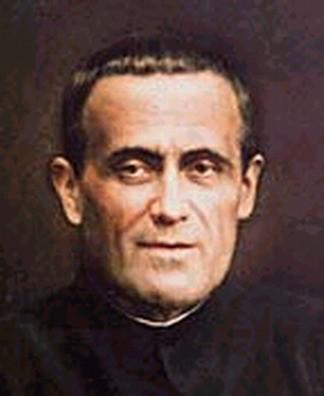
José María Rubio Peralta, S.J. (1864 – 1929)


Fr. José María Rubio Peralta is commonly known as the “Apostle of Madrid.” Born in 1864 in southern Spain, he was drawn as a young man to the thought of becoming a member of the Society of Jesus (Jesuit), but because of personal obligations he was not able to do so until 1906.

By then he was already a diocesan priest with many years of experience working in parishes. For most of his life as a Jesuit – from 1911 until his death in 1929 – he served in Madrid where his simple and sincere sermons touched many people and where he was sought after in the confessional as a compassionate and wise priest. His work, however, was not limited to the church building; he regularly visited Madrid’s slums where he was known as a friend to the city’s destitute and homeless, providing both spiritual and physical aid.

He died of a heart attack at the age of 64 while visiting the Jesuit community in Aranjuez. His remains are buried in Madrid, in the Jesuit church of San Francisco de Borja on Calle Maldonado. In 2003 Pope John Paul II declared him a saint.

Examining the Day and Choosing Freedom


by Joseph Tetlow, SJ

Ignatius suggested several ways to examine the day. If you make this prayer at night, look back over the day to examine what you did or did not do. You could remember by periods, or hour by hour, or one activity at a time. If you make the Examen in the early morning, look back over yesterday and forward into today. Another way to do the Examen is to focus on one act or attitude, one virtue or vice.

The Examen is about choosing freedom. We ask about the characteristic habits that mark or maybe hamper our spiritual freedom. Actions do not harm us spiritually because the commandments forbid them; the commandments forbid them because they harm us. God’s commands are to protect our freedom and even expand it.

The self-examination in this prayer means reclaiming our own freedom. It begins with naming the strengths and gifts that God gives us. Our gifts tell us what God hopes in us. Our lasting freedom lies in living the gifts-each and all of the gifts-that God gives us.

Any idea that the Examen is a self-centered exercise is mistaken. First, because we live in relationships, we cannot know ourselves except in our relationships. And second, because the very gifts we are thanking God for and examining are gifts given not for ourselves alone, but for those whom God gives us to and gives to us.

This is what Jesus meant by “fulfilling” the law: we obey it out of love for God, for our neighbor, and for ourselves.

Fr. Schneider: World’s Oldest Teacher


Fr. Schneider: World’s Oldest Teacher

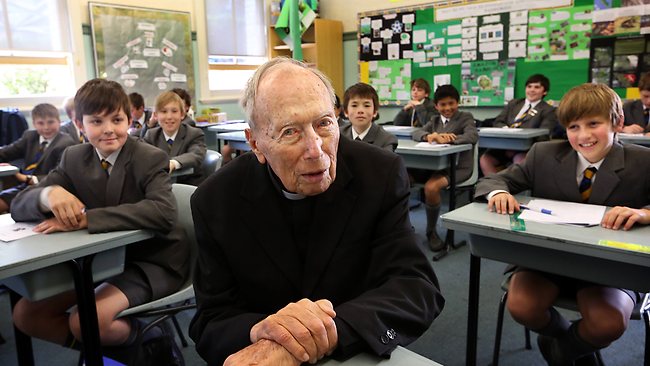
The Guinness World Records recently recognized Fr. Geoffrey Schneider, a 99-year-old Australian Jesuit, as the world’s oldest active teacher. He teaches religion and serves as chaplain at St. Aloysius College in Sydney. He says that his secret is “a mountain of patience. If things are going wrong, don’t start shouting. Just proceed quietly and things will settle down eventually.”

Joe Koczera, SJ, has more about Fr. Schneider on his blog. Here is a video profile. (Click here to see the video on YouTube.)


A Turbulent Decade

Bookmark and Share


by JOHN F. KAVANAUGH S.J.

Time magazine called it the “decade from hell.” I would not go quite that far, but the first 10 years of the new century surely signaled an erosion of confidence not only in institutions, but perhaps also in our very selves. Casting a glance at each year, I am struck not so much by the top news story as by harbingers of opportunity and threat for the new century.

Confidence has eroded not only in institutions, but perhaps also in our very selves.

The year 2000 was marked by the delayed election of President George W. Bush after intervention by the Supreme Court. The peaceful transition despite electoral chaos proved for many once again that democracy works. It could also be seen, however, as the beginning of a mounting distrust of the political system we relied on.

The atrocities of September 2001 were not only the beginning of a war on terrorism; they also marked the beginning of our nationwide feeling of terror. The assault on symbols of two things so close to our national identity-great wealth and great power-exposed us to a vulnerability that would be intensified each year as our wealth and power failed to provide the security we thought they had insured.
The year 2002 revealed the full range of scandal in the Catholic Church. The scandal of sexual abuse by priests and the coverup by some bishops continued to haunt the decade with lawsuits, the outlay of millions in settlements and the departure of many members of the laity wounded by a sense of betrayal and angered by ecclesial priorities. We are still faced with a daunting choice. Do we retrench or do we reform?

In 2003 the United States, having taken on the Taliban the previous year, invaded Iraq. The overthrow of Saddam Hussein and our tenuous claim of victory will likely cost over a trillion dollars. The terrible cost to life and limb for America’s soldiers and Iraq’s civilians may yet weigh more heavily on us if we have opened the way not for peace in the Persian Gulf but for a 100-year war.

The years 2004, 2005 and 2006, though marked by images of torture at Abu Ghraib or terrorism in Madrid and London, are inextricably bound together as testimonials to our seeming powerlessness before great physical and moral evil. A tsunami killed 200,000 people in a flash. A hurricane devastated a great American city. Thugs slaughtered 200,000 in Darfur.

In November 2007 the journals Science and Cell revealed that researchers in Japan and Wisconsin had successfully derived pluripotent stem cells from adult skin cells. Although most people still think of embryos when they hear about stem cells, this new procedure offers the most promising breakthrough in regenerative medicine. The mapping of the human genome early in the decade has opened previously unknown paths to human healing. It has also raised the specter of genetic manipulation, enhancement and modification of our species.

The year 2008 was the year of financial collapse. Earlier rumblings from the ethical failures of Enron and its accounting firm, Arthur Andersen, erupted into a full-blown earthquake. An almost dogmatic faith in the market and blind reliance on financiers dissolved in a decade when stocks would fall 25 percent, median family income would drop, millions of jobs would disappear, and huge corporations would go bankrupt.

Amazon, at the end of 2009, reported that for the first time, electronic books for its Kindle device outsold physical books during the Christmas season. Ray Kurzweil, a creative computer zealot who thinks that artificial intelligence will surpass human intelligence by mid-century, has himself unveiled an e-reader program that will be available for personal computers, the iPod Touch and the iPhone. The exponential growth in computer technology points to a revolution in journalism, medicine, politics, communication and life itself. While most of us celebrate the change, critics like Lee Siegel, in Against the Machine, warn us that we are already becoming an electronic mob, bereft of personal substance and any interior life.

Whether Siegel is right or not, his worry about the loss of personhood, it seems to me, is well founded. But that problem is not new. Perhaps the very fault and fall in Eden turned on the acceptance or rejection of our vulnerability as only human persons. In the present day, it is just that the stakes are so much higher. An unchecked human longing for control, whether in geo-politics, money, power, religion or the domination of nature, makes every new opportunity a treacherous new temptation.

John F. Kavanaugh, S.J., is a professor of philosophy at St. Louis University in St. Louis, Mo.

St. Peter Canisius, SJ (1521–1597)


If you have too much to do, with God’s help you will find time to do it all.

-Peter Canisius


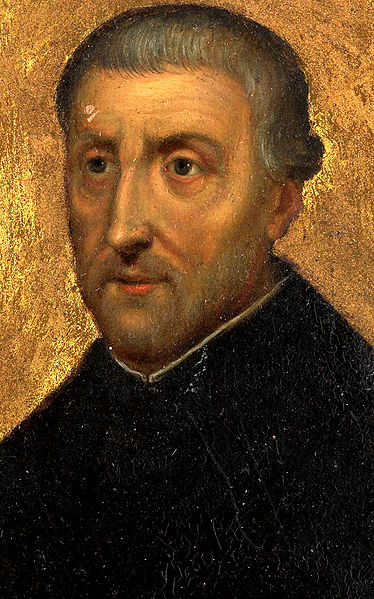
For a half-century Jesuit Father Peter Canisius led the Catholic Reformation in Austria, Bavaria, and Bohemia. For that reason he is reckoned an apostle to Germany, second only to St. Boniface. With stupendous energy he preached and taught in parishes, reformed and founded universities, wrote many books including popular catechisms, restored lapsed Catholics, converted Protestants, preached retreats, and found time to care for the sick. In his last thirty years traveling more than twenty thousand miles on foot or horseback, St. Peter Canisius spearheaded the renewal of the Catholic faith in southern Germany.

Peter Canisius revitalized Catholic life and teaching at universities in Ingolstadt and Augsburg. He founded new ones at Prague and Fribourg. In all four cities his preaching and catechizing won the hearts of Catholics and attracted nominal Protestants to the church. In Vienna his personal care for plague victims made him a most popular figure. Thus, when appointed diocesan administrator, he was in a position to revive the city’s long decadent Catholic community.

After 1555, Peter Canisius published his famous Summary of Christian Doctrine and two smaller catechisms. These books generated the Catholic Reformation as Luther’s catechism had spread Protestantism. Canisius’s catechisms also helped launch the Catholic press. During the saint’s lifetime they were translated into fifteen languages and reprinted more than two hundred times.

In the late sixteenth century, when open hostility typified relations between Catholics and Protestants, Peter Canisius advised charity and moderation. He opposed theological debates with Protestant leaders and, in general, discouraged discussion of Catholic distinctives such as indulgences, purgatory, and monastic vows with Protestants. He believed such efforts only heightened division and embittered relations. He articulated his views in this letter to his Jesuit superior:

It is plainly wrong to meet non-Catholics with bitterness or to treat them with discourtesy. For this is nothing else than the reverse of Christ’s example because it breaks the bruised reed and quenches the smoking flax. We ought to instruct with meekness those whom heresy has made bitter and suspicious, and has estranged from orthodox Catholics, especially from our fellow Jesuits. Thus, by whole-hearted charity and good will we may win them over to us in the Lord.

Again, it is a mistaken policy to behave in a contentious fashion and to start disputes about matters of belief with argumentative people who are disposed by their very natures to wrangling. Indeed, the fact of their being so constituted is a reason the more why such people should be attracted and won to the simplicity of the faith as much by example as by argument.

In 1591, Peter Canisius suffered a stroke that nearly killed him. But he recovered and devoted himself to writing for six more years until his death in 1597.

Let my eyes take their sleep, but may my heart always keep watch for you. May your right hand bless your servants who love you.

May I be united with the praise that flows from you, Lord Jesus, to all your saints; united with the gratitude drawn from your heart, good Jesus, that causes your saints to thank you; united with your passion, good Jesus, by which you took away our guilt; united with the divine longing that you had on earth for our salvation; united with every prayer that welled from your divine heart, good Jesus, and flowed into the hearts of your saints.

—Peter Canisius

Excerpt from Voices of the Saints by Bert Ghezzi. 

A Wisdom Story

Bookmark and Share


by Paul Brian Campbell, SJ


A Wisdom Story

A peasant came running up to a holy man, who was resting under a tree. “The stone! The stone! Give me the precious stone!”

“What stone?” asked the holy man.

“Last night I dreamed that I would find a holy man who would give me a precious stone that would make me rich forever,” replied the peasant.

The holy man rummaged through his bag and pulled out a stone. “He probably meant this one,” he said as he handed it to the peasant. “I found it on a forest path a few days ago. You can certainly have it.”

The man looked at the stone in wonder. It was a diamond, probably the largest diamond in the whole world; he took it and walked away. All night he tossed about in bed, unable to sleep. Next day at the crack of dawn he woke the holy man and said, “Give me the wealth that makes it possible for you to give this diamond away so easily.”

[Several years ago I found this story on the Fairfield University website. I went back just now to find it and was unable to locate it… but I tried.]