Category: Uncategorized

Pope Francis: Call to prayer for the Church in China


(Vatican Radio) Pope Francis has called Christians worldwide to prayer this Friday for our brothers and sisters in China. Speaking at the end of his general audience in Italian, the Holy Father noted that Friday, May 24th, is the day dedicated to the liturgical memory of the Blessed Virgin Mary, Help of Christians, who is venerated with great devotion at the Shrine of Sheshan in Shanghai.

He said : “I urge all Catholics around the world to join in prayer with our brothers and sisters who are in China, to implore from God the grace to proclaim with humility and joy Christ, who died and rose again; to be faithful to His Church and the Successor of Peter and to live everyday life in service to their country and their fellow citizens in a way that is consistent with the faith they profess.

Making our own a few words of prayer to Our Lady of Sheshan, together with you I would like to invoke Mary : ” Our Lady of Sheshan, sustain all those in China, who, amid their daily trials, continue to believe, to hope, to love. May they never be afraid to speak of Jesus to the world, and of the world to Jesus”.

Mary, Virgin most faithful, support Chinese Catholics, render their commitments, which are not easy, more and more precious in the eyes of the Lord, and nurture the affection and the participation of the Church in China in the journey of the Universal Church”.

In May 2008 Pope-emeritus, Benedict XVI, composed a special prayer for the Feast of Our Lady Help of Christians (May 24), venerated at the shrine of Sheshan, near Shanghai. He also designated May 24 as the yearly World Day of Prayer for China and asked that we recite this prayer.

Below we publish the full text of the prayer to Our Lady of Sheshan

Virgin Most Holy, Mother of the Incarnate Word and our Mother,
venerated in the Shrine of Sheshan under the title “Help of Christians”,
the entire Church in China looks to you with devout affection.
We come before you today to implore your protection.
Look upon the People of God and, with a mother’s care, guide them
along the paths of truth and love, so that they may always be
a leaven of harmonious coexistence among all citizens.
When you obediently said “yes” in the house of Nazareth,
you allowed God’s eternal Son to take flesh in your virginal womb
and thus to begin in history the work of our redemption.
You willingly and generously cooperated in that work,
allowing the sword of pain to pierce your soul,
until the supreme hour of the Cross, when you kept watch on Calvary,
standing beside your Son, who died that we might live.
From that moment, you became, in a new way,
the Mother of all those who receive your Son Jesus in faith
and choose to follow in his footsteps by taking up his Cross.
Mother of hope, in the darkness of Holy Saturday you journeyed
with unfailing trust towards the dawn of Easter.
Grant that your children may discern at all times,
even those that are darkest, the signs of God’s loving presence.
Our Lady of Sheshan, sustain all those in China,
who, amid their daily trials, continue to believe, to hope, to love.
May they never be afraid to speak of Jesus to the world,
and of the world to Jesus.
In the statue overlooking the Shrine you lift your Son on high,
offering him to the world with open arms in a gesture of love.
Help Catholics always to be credible witnesses to this love,
ever clinging to the rock of Peter on which the Church is built.
Mother of China and all Asia, pray for us, now and for ever. Amen!
The Role of Crafts in Catechesis


by Joe Paprocki 

Did you know that the Bible begins with a craft activity?

The Creation stories in the Book of Genesis (chapters 1 and 2) explain to us how, out of the divine imagination, God crafted the heavens and the earth, the stars, the sun, the moon, the oceans, plants, and living creatures, culminating in the crafting of human beings.

Simply put, crafting is the art of creating an object with skill and careful attention to detail. Creation is nothing other than God’s craft-work. Made in the image and likeness of God, we human beings are driven to create. Crafting is a way of participating in the creative nature of God and in the Divine imagination.

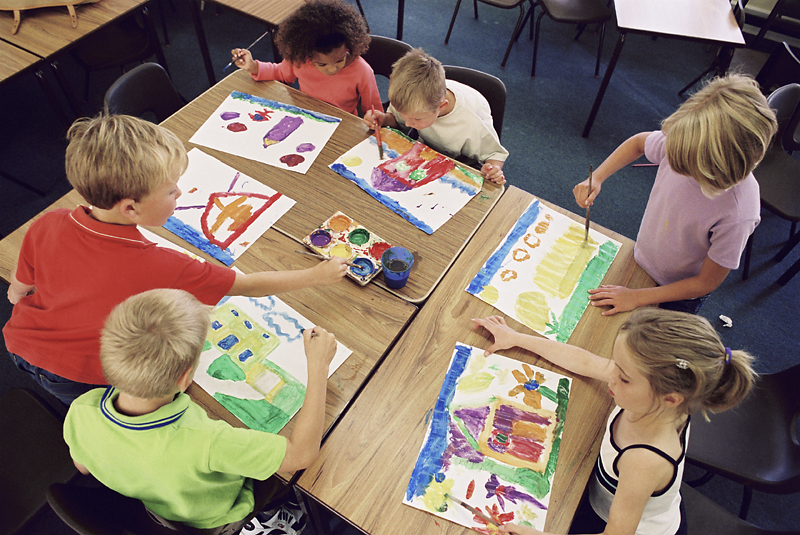
Crafting has a long privileged place in catechesis. The making of crafts allows people of all ages to concretely and creatively express their understanding of the faith and their relationship with God and the Church. Art is a language that we use in catechesis to “bring the divine to the human world, to the level of the senses, then, from the spiritual insight gained from the senses and the stirring of the emotions, to raise the human world to God, to his inexpressible kingdom of mystery, beauty, and life.” (NDC 37B1).

Crafting also is an effective teaching method for those whose learning style is not primarily word-based. People who are more comfortable drawing than writing deserve opportunities to express themselves through art. Likewise, some people simply learn best when they are invited to do something.

Crafting allows those learners who are more visual, artistic, and physical to express themselves and to learn in a manner that more closely fits their learning style. Even for those whose learning style is more word-based, crafting offers an opportunity for a change of pace. Learning in general is more effective when a variety of methods are employed and when participants are actively engaged.

Finally, the Catholic faith is fundamentally sacramental-it is a faith that goes beyond words and recognizes God’s presence reflected in the things of our world. The Catholic imagination looks to the elements of creation as channels of God’s grace. Whether it be the “official” sacramental elements such as water, bread, wine, oil, and fire, or the countless other elements available to us such as rocks, seashells, acorns, pine cones, fabric, paper, flowers, wood, and yes, even pipe cleaners, the Catholic capacity for recognizing God in the physical world is unlimited.

And, of course, one more thing … crafting is fun!


Joe Paprocki is a catechist with more than 30 years in the ministry. He serves as Loyola Press’s National Consultant for Faith Formation, blogs at Catechist’s Journey, and wrote “Beyond the Catechist’s Toolbox,” “7 Keys to Spiritual Wellness,” among others.

Jesuit Refugee Service aims for threefold expansion of higher education to refugees by 2018


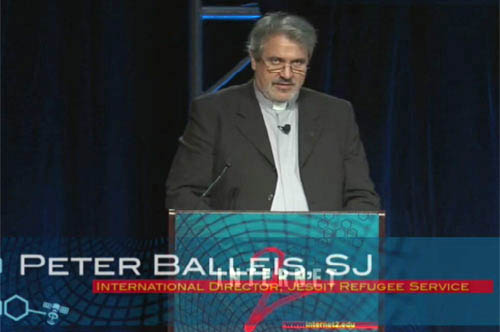
Jesuit Refugee Service International Director Peter Balleis addresses 800 technology innovators at the Internet2 Annual Meeting in Arlington, Va.

by Jesuit Refugee Service

With less than one university-trained teacher for every 280 Darfur refugees in Chad, the case for greater access to higher education is clear. To meet these needs, Jesuit Refugee Service plans to expand its provision of higher education from three to 10 sites by 2018.

Assessments are underway in Afghanistan, Burma and Chad, said JRS International Director Fr. Peter Balleis S.J. at an international technology meeting in Arlington, Virginia. Held by Internet2, the theme was Big Ideas. Big Collaboration. Big Impact. Eight hundred technology innovators heard Fr Balleis discuss the impact of technology on refugee education.

Georgetown University President John DeGioia, and World Bank Information Communication Technology Policy Specialist Samia Melhem also described how technology, volunteers and advanced networks are enabling organizations to deliver education to students in refugee camps, remote villages, war zones and other areas lacking a civil society.

“The objective of JRS is to empower those at the very edges of our societies — be it due to poverty, location, opportunity or circumstance — through access to higher education … so that they can contribute their knowledge and wisdom to our global community of learners,” said Fr. Balleis.

“Just imagine how much brain power and intelligence is lost to the world when a billion people or more are not integrated. We all lose. With technology, we together foster a hope of a more peaceful and humane world,” he said.

According to Fr. Balleis the future will be determined by knowledge, connectedness and access to information. It is the knowledge gap which fuels conflict in places like the Sahel and Afghanistan.

For instance, JRS is managing schools in seven camps in Chad for 60,000 refugee students. The challenge, said F.r Balleis, is to use technology to train all the teachers in the camps in the country.

“To do that, JRS needs access to the internet, computers and solar energy. But it also needs the expertise of universities like Georgetown… I’d like to add one word to today’s motto, big ‘needs.’ With ideas, there is a change of big collaboration and it will have a big impact.”

He reminded the audience that their technology inventions are part of something much bigger — global connectedness and learning.

In cooperation with Jesuit Commons: Higher Education at the Margins, JRS delivers higher education to refugees in Jordan, Kenya and Malawi, with university institutions seeking a practical way to take education where it is needed most. As part of this project, faculty and staff donate time, refugees and staff build their learning spaces, institutions volunteer courses, Microsoft engineers give time and software, and universities provide accreditation.

Internet2 is a technology community founded by leading higher education institutions in 1996, providing a collaborative environment for US research and education organizations. Together, they solve common technology challenges, and develop innovative solutions in support of educational, research, and community service missions.

Wisdom Story 57


Wisdom Story

by Paul Brian Campbell,SJ

Once upon a time a man couldn’t find his ax. He suspected his neighbor’s son because the boy walked like a thief, looked like a thief, and spoke like a thief.

The following morning the man found his ax when he remembered where he left it. The next time he saw his neighbor’s son, the boy walked, looked, and spoke like any other child.

Ricci beatification process heads to Vatican


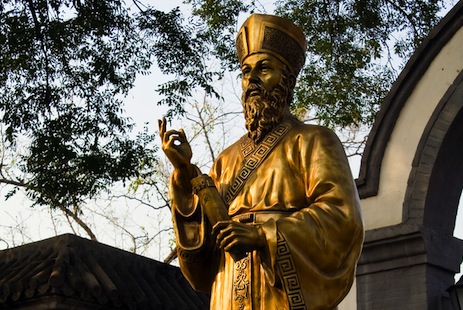
Bronze statue of Fr Matteo Ricci

The beatification process for a 16th century Jesuit who played a key role in introducing Christianity to China is headed for the Vatican.

Bishop Claudio Giuliodori, apostolic administrator of Macerata diocese in Italy, formally closed the diocesan phase of the sainthood process for Father Matteo Ricci on May 10.

Ricci was born in Macerata, central Italy, in 1552 and died on May 11, 1610 in what was then Peking.

While in China, Ricci became the first Westerner to be invited into the Forbidden City, acted as a court advisor on Europe and its cultures, and obtained the emperor’s protection and support.

The initial process began in 1984 with the Jesuit being declared a “servant of God” but further progress stalled soon after.

The process was reopened by Giuliodori in 2010, during celebrations marking the 400th anniversary of the Jesuit’s death.

Now, Riccis’s cause will move to the Vatican, where it will be taken up by the Congregation for the Causes of Saints.

“We have a debt, the Church has a debt, humanity has debt to Father Matteo Ricci,” Bishop Giuliodori said during the closing ceremony of the local phase of the beatification process.

Giuliodori stressed that, in his approach to China’s culture, Ricci didn’t try to affirm “any kind of superiority of European civilization” but acted only to spread his faith.

The bishop said he spoke of Ricci’s beatification process during a recent audience with Pope Francis.

The Jesuit pope, who wanted to be a missionary to Japan in his youth, said that Ricci plays a “fundamental role” because he “opened up a new way of evangelizing,” based on the inculturation of the faith, according to Giuliodori.

“He did it thinking out of the box,” the pope reportedly said.

Archbishop Savio Hon Tai Fai, the Vatican’s highest ranking Chinese cleric at the Vatican, who also took part in the closing ceremony, praised Ricci for being an “exceptional pioneer for intercultural exchange, an exemplary missionary for evangelization.”

According to Gianni Criveller, a Hong Kong-based missionary who headed the historical commission that served the beatification process, Ricci is a modern figure for his capacity to communicate globally, as proved by his numerous letters.

Theme Retreat: God’s Unconditional Love, Self-Acceptance and Reaching Out to Others

Location: Xavier House, Hong Kong
Organizer: Ignatian Spirituality Centre, Hong Kong
Introduction:

At the heart of the gospels is the command to “Love the Lord your God with all your heart and with all your soul and with all your strength and with all your mind” and “Love your neighbour as yourself” (Luke 10: 27, Matthew 22: 37). An authentic experience of God’s unconditional love enables one to better accept oneself and reach out to others in service. (Conducted in English)

Fr Norris Seenivasan, S.J. was the Director of St. John Vianney Retreat House. He is currently the Head of the Counselling Ministry and Diocesan Catechetical Commission in the Diocese of Melaka-Johor in Malaysia. He has taught philosophy at the Ateneo de Manila University and spirituality courses at Loyola School of Theology in Manila. He has a PhD in Clinical Psychology. He is now superior of the Jesuit community in Masai, Johor, Malaysia.

Leader:Fr Norris Seenivasan, S.J.

Services Fee:HK$2400

Download our Calendar of Events for 2013


Address:27 Peak Road West, Cheung Chau Island, Hong Kong

Phone:(852) 2981-0342

Fax:(852) 2981-0749 

eMail[email protected]

Websitehttp://xavier.ignatian.net

Telephone Enquiry Time:9:15am – 12:15pm, 2:00 pm – 5:00 pm 
(Closed on Sat afternoons, Sundays and Public Holidays)

Transport:

Please take the Cheung Chau Ferry at Central Pier 5 to get to Xavier House.

Visitors arriving from the Mainland at corss-boundary check points, by plane or from Macau may get to Central Pier by MTR, Airport Railway, bus, airport coach, mini bus, Hong Kong-Macau Ferry or Star Ferry (on foot). ﹕

– Please click here to view  Map of Central Pier with feeder traffic details.

– Please click here to view  Ferry Schedule & Charges.

– Please click here to view  Map of Cheung Chau showing route from pier to Xavier House.

Date: 2013-06-24 ~ 2013-06-30

Podcast : Young and Imprisoned


Young and Imprisoned

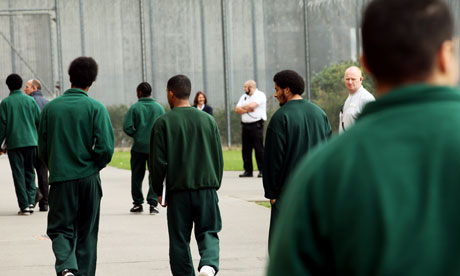
Michael Kennedy, S.J., talks about the Jesuit Restorative Justice Initiative and his work with youth in the California prison system. Father Kennedy is the author of Eyes on Jesus and Eyes on the Cross, among other books. He spoke to Associate Editor Luke Hansen, S.J., at the Los Angeles Religious Education Congress. After the interview, several juvenile inmates who Father Kennedy works with in Los Angeles wrote powerful letters to Pope Francis, thanking him for washing the feet of juvenile prisoners in Rome on Holy Thursday.


Download MP3

Re-Situate Your Life

Bookmark and Share


by Becky Eldredge

Through praying with the various Scriptures suggested for the First Week of the Spiritual Exercises, we come to understand that even though we are sinful people God still loves us and offers us forgiveness. We are invited to view sin as God sees sin. The lens we look through, though, is one of love, which is why we spend time before the First Week of the Exercises praying with the First Principle and Foundation and Scriptures that accompany it.

The First Week of my 19th annotation retreat was challenging at times, because my eyes were significantly opened to see my own sinfulness. The words, “Re-situate your life” were a repeated phrase that gently crossed my thoughts. These were words, spoken in love by God, that held the profound challenge to re-situate my life around Christ and not around the things in my life that appeared to be good: my hubby and kids, my ministry, my commitments.

When I reflect back on my First Week experience during the Exercises, I see a firm but gentle peeling back of the many layers that were keeping me from fully following Christ and from fully centering my life in Christ. The preparation time before I took a healthy look at what kept me from putting God first in my life was foundational for me. The preparation time before the First Week built an intimacy and trust in Jesus, and it strengthened my understanding of the depth of love he had for me. It was only after reminding me of his love that Jesus walked with me on the road to fully re-situating my life around him. It’s a journey that continues to bear fruit in ways beyond my imagination!

Real Presence


paying attention

by Lisa Kelly

Mid-lecture the teacher inconspicuously taps on the front corner of my daughter’s desk to call her back to attention. Much like me, my daughter is a dreamer, comfortable letting her mind wonder into other worlds or places she would like to be. Often it seems my prayer time is just that: time to wonder away to another place.

During Sunday mass I wonder how many people in the congregation are actually following the homily at all. I imagine their minds tuning out the words from the pulpit, coming to rest instead upon their to do list or some recent conversation or upcoming tension to be dealt with. As I wonder about them, I realize that I am just as checked out as they are, lost in my head.

At its very heart, though, Ignatian spirituality is about the exact opposite of letting your mind wonder carelessly in prayer. It is about being fully present to the moment, every moment, including those during prayer and those throughout the day. The depth of Ignatian prayer comes not from saying any particular words or incantation, but from being fully in a moment of relationship with Christ.

In the Examen, I sit one-on-one with Christ. There is no mediator. There is nothing to hide behind. It is just eye-to-eye conversation. This experience of being fully present to Christ, or rather Him being fully present to me, stops my mind in its tracks. There is no where else to be or wonder in to. Here in this moment, with Christ, is the only place I need or want to be. It is where I am most honest about what is going on in my life, where I hear revelation unfettered by the clatter of the day. Only in this full presence is there peace.

And then, like the teacher tapping on the desk, I am brought back from my presence with Christ to my daily reality. Being fully present in the moment means constantly recognizing beauty around me, need in front of me, and capacity within me. In each moment I am aware of my interior movements, my feelings and motivations and what invitations God has placed before me. Aware in the world, I notice the warmth of the sun, and the breeze. In conversations I focus fully on the person before me, look them in the eye, observe their affect, really listen to what they are saying, and respond with sincerity. Only then is there true connection. If I am not present to the moment, I miss that. I miss opportunities to see or respond to God.

CS Lewis wrote that evil seeks to keep us out of the present moment, wasting it with regret of past or worry about the future, because only when one is fully present in the moment can God be engaged. Right here and right now, to what are you present? Therein lies your treasure.

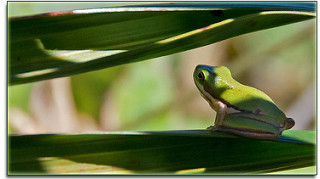
Photo: “paying attentionby Leonard John Matthews from Flickr (Used under Creative Commons license)