Category: Uncategorized

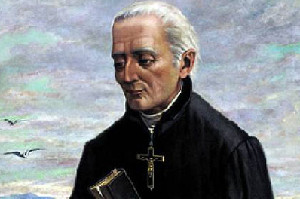
Blessed Joseph Anchieta,SJ


Blessed Joseph Anchieta was born in the Canary Islands, Spain, and son of a wealthy and prominent family. He attended the Jesuit College in Portugal and entered the Jesuit Novitiate at the age of 17. During his noviceship, he suffered a spinal dislocation which caused him pain for the rest of his life.

His superiors sent him to Brazil to regain his health but it never improved. He arrived in Brazil at 19 and had his first contact with the Tupi Indians living in the outskirts of Sao Vicente. He soon learnt to speak the native Tupi-Guarani language, as he believed that to ‘Christianize these people, he must first speak their tongue’.

Together with his superior, Fr. Manuel de Nobrega, they went to Piratininga, where they established a mission called Sao Paola, since they arrived there on the feast of St. Paul. There they taught Latin to those studying for the priesthood, taught grammar and gave catechetical instruction to the Tupi and the Portuguese children. For two decades, Joseph worked on a grammar dictionary used by Portuguese settlers and missionaries.

He served as interpreter to Fr. Nobrega. In 1563, while they were negotiating peace between the Portuguese and the Tamayo tribe, he was detained as a hostage of the Tamayo. During the three months of loneliness and frustration, Joseph composed a poem in honor of the Blessed Virgin Mary. As he had no writing material, he wrote his Latin verses in the seashore’s wet sand and memorized the verses. After his release and return home, he wrote his poem on paper – it had 4172 lines.

After his ordination as a priest at 32, he co-founded the settlement now known as Rio de Janeirio with Fr. Nobrega and was appointed superior of the Sao Paolo and Sao Vicente missions. He also wrote drama in different languages with the plots taken from the Bible and the Catholic faith for his students to perform. He was accorded the honor of being called, ‘The Father of Brazilian National Literature’.

As he grew older, his back deteriorated and he developed a hunchback. He was twice near death but struggled to serve another 10 years at the Espirito Santo Mission. His motto was, ‘Nothing is too arduous that has for its purpose the honor of God and the salvation of souls’. Joseph, Brazil’s most famous and indefatigable missionary finally died at the age of 63.
 

Book Review : Recipe for Joy


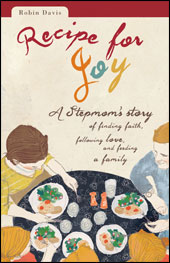
Recipe for Joy

A Stepmom’s Story of Finding Faith, Following Love, and Feeding a Family

Author:Robin Davis

PublisherLoyola Press   Order this book 

ISBN:978-0-8294-3795-9

Introduction

There were three things food writer Robin Davis promised she would never do: she would never move back to Ohio, she would never get married, and she would never join an organized religion. Never say never-today, thirty-something Davis is a recent transplant to the Midwest wife and stepmother, and converted Catholic.

About the Author

Robin Davis has been a food writer for almost 20 years. She is currently the food editor at the Columbus Dispatch, where she hosts a weekly cooking segment on the local CBS affiliate. She is a wife to Ken and stepmother to Ben, Molly, and Sarah. 

Recommendations

“We are happy to promote the new book from Loyola Press, Recipe for Joy.”

-Fr. Leo Patalinghug, Grace Before Meals

“This was great read that makes me consider that maybe I do like memoirs when they’re told as expertly and entertainingly and heart-wrenchingly as this one.”

-Sarah Reinhard

“Davis’s story reminds me once again that there is nothing sedate or mundane about the life of a Believer. You can count on life in Christ being the best adventure you never saw coming.”

-Karen Spears Zacharias


In Recipe for Joy, she shares her stories of food, faith, and family life, and discovers that “food” is the language she can speak when stepping into unfamiliar territory.

Recipe for Joy tells Davis’s story of recognizing God’s plan, doubting it, and then discovering why God’s plan is her newfound path. The stories in Recipe for Joy are grouped by themes based on the courses of a meal, and each chapter ends with a recipe inspired by the theme. Recipe for Joy reveals that food and faith can go hand in hand and that God uses people (and some really good meals) to bring us into a closer relationship with God.

In Recipe for Joy, Robin Davis shares her stories of food, faith, and family life, and discovers how “food” is the language she can speak when stepping into unfamiliar territory.

Earth Day 2013 webisode on Jesuit initiatives and eco-justice


by Ecojesuit 

Ignatian News Network or IN Network , an online news channel on YouTube of Loyola Productions released their Earth Day webisode and shared some Jesuit initiatives on eco-justice.

The webisode Earth Day 2013: A Look at Eco-Justice, hosted by Molly McVie, featured Catholic organizations taking up the cause of eco-justice, as a blend of sustainability and human justice and as a response to the 2011 call by Father General to increase efforts amongst Jesuits and Jesuit institutions for more sustainable practices.

The four-minute webisode included efforts by American Jesuit universities, through the Association of Jesuit Colleges and Universities, such as Boston College and its sustainability fair where students get to learn about sustainable practices and Fairfield University that installed a rainwater harvesting system in their campus.

Ecojesuit was also asked about its efforts to share stories from around the world on environmental and social concerns and where the Jesuit response is. Sylvia Miclat, part of Ecojesuit’s editorial team, mentioned the role of communications and Pedro Walpole, SJ, a member of the Task Force on Ecology, focused on the care and action of the Jesuits for people to have a better quality of life.

Dan Misleh, Executive Director of the Catholic Coalition on Climate Change shared that their organization helps Catholics in the United States to understand Catholic social teaching on the issue of climate change. They have a campaign called the Catholic Climate Covenant where one takes the Saint Francis Pledge, which is about five things: to pray about care for creation, to learn about the science of climate change and Catholic teaching on the issue, to assess the impacts, to act on that assessment and change behaviors, and to advocate on behalf of those who are particularly harmed by the impact of climate change.

Wisdom Story 59


Wisdom Story

by Paul Brian Campbell,SJ

A poor farmer was returning from the market on his cart driven by oxen. It was getting late, and he was passing through a forest when suddenly one of his wheels came off. After an hour trying to fix it, he realized that he would not be getting home in time for his evening prayer. He spread a rough blanket on the ground and looked for his prayer book in his bag.

“Oh no! It’s not there. Where did I put it?” His anxiety quickly reached panic proportions as he his frantically searched his ox cart. “I must have left it at home. Oh God, what am I to do? You know very well that my poor brain has never been able to commit a single line of prayer to memory.”

He fell to his knees, wringing his hands. “Oh Lord, I am so sorry. I have made a terrible blunder today. I did not foresee that I could have been delayed so long. In the future, I will always take my prayer book with me.”

He paused and took a deep breath. “OK, this is what I will do, my Lord. I will say five times, and very slowly, the letters of the alphabet. You know all the prayers. Please arrange the letters together in a way that pleases You.”

God told his angels, “This prayer I like, because it is coming from a simple heart.”


Jesuit Superior General Appointed Head of International Organization of Religious Orders


by Vatican Insider

Jesuit Father General Adolfo Nicolás, superior general of the Society of Jesus, has been appointed president of the International Union of Superiors General (UISG), which represents the superior generals of more than 200 male religious orders. Fr. Nicolás will serve a three-year term and succeeds Franciscan Father José Rodriguez Carballo.

Founded by the Congregation for Religious, UISG’s purpose is to promote the life and mission of individual institutes that work in service of the church in order to make their collaboration more efficient and contact with the Holy See and the hierarchy more fruitful.

All superiors general of religious institutes or societies are members of the UISG. As superior general of the Jesuits, Fr. Nicolás is the leader of the largest religious order in the world. His long experience in Asia and his ability to govern are qualities the Society of Jesus sought in January 2008 when Fr. Nicolás was appointed superior general.

Fr. Nicolás was born in Palencia, Spain, in 1936. He has a degree from the Pontifical Gregorian University, and he completed a Master of Sacred Theology in 1971 at Sophia University in Tokyo, where he went on to become a professor of Systematic Theology. He was director of the Pastoral Institute in Manila from 1978 to 1984, and from 1991 to 1993 he was rector of theologate in Tokyo. He served as provincial of the Jesuit Province of Tokyo between 1993 and 1999. From 2004 to 2007, he was president of the Jesuit Conference of Provincials for Eastern Asia and Oceania.

Wisdom Story 58


Wisdom Story

by Paul Brian Campbell,SJ

Perfect peace? I asked for perfect peace and what do I get? A picture of a storm!? Nonsense. What was the artist thinking of…” The king felt a storm of anger rising within his belly ­ the effrontery of one of his subjects ­ to disobey him so openly. To cool his temper, he looked at the next painting.

“Now this painting here, that’s what I call peaceful. A calm lake, some beautiful mountains reflected in it. Oh and that magnificent sky, with just a touch of puffy little clouds. What artistry, what serenity, what…”

The king moved on to the next painting in his huge exhibition gallery. All the best artists of his kingdom and abroad had entered his competition to depict “perfect peace” and win the coveted position of Royal Court Painter.

Gazing at a serene pastoral painting, the king found himself thinking again ­ “This is indeed a peaceful scene, but somehow it doesn’t help me feel peaceful.” His mind returned to pondering the picture of the storm. Had he missed something, or was the artist a practical joker? He walked back to that first painting to have another look.

Lightning flashed on the bare crags of the mountains, knifing into a dark and furious sky. Foaming waters gashed the dark gullies as they thundered into the flooding river. The king found his gaze following the line of the largest torrent from its source downwards.

He peered closely at the painting.

A smile spread across his face.

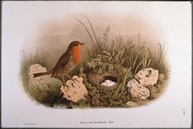
There, in the heart of the raging waters, growing from a cracked rock was a delicate shrub shielding a nest. Unaffected by the violent surroundings was a small bird sitting calmly in its nest.

The king knew he had a winner.


The Land of the Gerasenes


by James Martin, S.J.

Whenever I find myself in a confusing pastoral situation, I ask myself a question that has, sadly, become something of a punch line: “What would Jesus do?”

Yes, I know the phrase has been almost drained of meaning thanks to overuse, but it still has great value for those who minister in Jesus’ name. And once I ask that question, an answer usually presents itself. Be kind. Be merciful. Be forgiving. Listen carefully. Above all, love.

But lately I’ve been wondering if that question can cover all the bases in ministry-or in life. Specifically, I’ve been wondering: What is the best way to deal with emotionally unstable people?

Everyone in ministry will run into this challenge at some point. How do you minister to people who are not simply bothersome, not simply annoying, but seriously unstable? How, in a church setting, can you treat them both compassionately and wisely? In the past few weeks, I’ve been talking with members of the clergy and with lay ministers looking for answers.

Even though I don’t work in a parish full time, I face this challenge regularly. Recently (I’m changing some details) a person who had been posting on my public Facebook page requested my e-mail address so that he could ask me for some personal advice. Now what’s a priest to do? I don’t want to be uncharitable or shirk my priestly duties, so I agreed. Soon I was deluged with e-mails describing his problems in detail. Each time, I tried to respond as well as I could. His e-mails soon became angry-mainly about the world in general. When I didn’t respond within a few hours, they got even angrier. Finally, a few weeks ago, I received one that used the “F-word” several times. I had to ask him not to contact me any more. Then I received on Facebook, Twitter and by e-mail more “F-bombs” from the same person.

Years ago, in a parish book club that met monthly, I was frustrated when one of our meetings was hijacked by someone who was not simply rude or obstreperous, but clearly mentally disturbed. I struggled between wanting to be charitable and also trying to maintain a space for the other parishioners, who were looking forward to the evening. Finally I asked the person to let others speak. She glowered at me throughout the meeting, and then on her way out used the “F-word.”

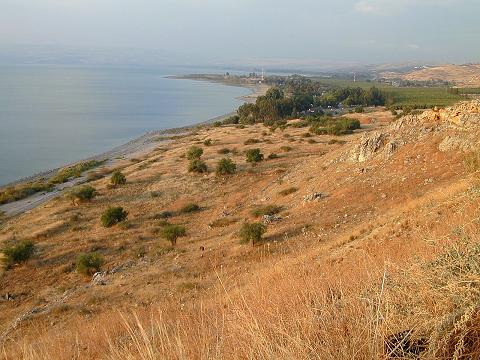
Lately I’ve been thinking, “What would Jesus do?” I had to smile at the answer. He would heal them! The story that came to mind is the account of the Gerasene demoniac (Mk 5:1-20). Jesus and the disciples have just crossed the Sea of Galilee in their boat and a notorious “demoniac” (a man possessed by an “unclean” spirit) accosts Jesus. He screams, “What do you have to do with me, Jesus, Son of the Most High God?” After a brief back-and-forth, Jesus heals the man, and he is later found to be “in his right mind.” Many times I wish I could do that.

Conversations with Catholic pastoral ministers have proved illuminating. Some said they strive to be as kind as they can until the person becomes disruptive or violent. Then they must set limits. Others told me that sometimes people just need a little attention and loving care, and simply listening to them-as Jesus did-may defuse the situation.

I don’t know the answer to this serious pastoral question. I think that it begins with charity, but it should also include prudence and a concern for others in the parish or in the ministerial setting-including oneself.

People who are unstable but not violent are easier to minister to. Of course, even these people may present a challenge, particularly since, in my experience, they tend to return over and over. Some people I spoke with shared with me a few examples of a more jocular approach. One priest said that when an unstable woman said to him, accusingly, after Mass, “Jesus told me in prayer that you’re not holding the host high enough at the elevation,” my friend said, “What time did he say that?” “At 9 this morning,” she replied. “Well,” said my friend calmly, “That’s okay. At 9:30 Jesus told me I was holding it at just the right height.”

My favorite response came from a priest who was accosted by a wild-eyed man who said that he had a message from the devil to give him.

“Oh,” he said gently, “messages from the devil are handled at the parish down the street. Would you like their address?”

James Martin, S.J., is editor at large of America and author of the new e-book Together on Retreat: Meeting Jesus in Prayer.

Tax prep as Ignatian practice


by Richard A. Kauffman

When I was doing my taxes this year, it occurred to me that the process is a bit like praying the prayer of examen. This Ignatian prayer is used at the end of the day to think back on what happened that day, to ponder where God was in it and to think ahead to the next day. In doing my taxes, I was forced to think back on the events of my life in 2011, both the good and the bad.

While the daily examen leads to prayer, a financial review of a whole year can lead to cursing. But going over my finances for 2011 brought pleasant memories along with the unpleasant and bittersweet ones. I felt gratitude for the good fortune of discovering a doctor who was able to do a delicate but minimally invasive surgical procedure on me. He spared me having to go through major surgery with a prolonged and painful recovery period.

I thought too of the deterioration of my mother’s health last year, including the loss of some of her memory and even an unexpected shift in her personality. While she might not yet be ready to claim death as her friend, I was reminded of this notion of Henri Nouwen’s: I hope that she can make peace with death before it comes, to even welcome it as friend.

Many of my pleasant thoughts involved travels. The year was unusual in that it took me on separate trips to three coasts. The expansive and relentless motion of oceans and the shifting of sand cause me to go inward and to think deeply about life. I reflect on the times past and anticipate the time when I’ll no longer be present to this world.

Family get-togethers also surfaced in my memory. Why do some of the best and worst of times involve our families–the ones we come from as well as the ones we bring into this world?

Using the examen prayer as a template for thinking about taxes gave me a different perspective on that dreaded task and deadline. I had to think about where God was in my life last year–or, better still, where I was in relation to God. As with the examen prayer, I thought too about the rest of this year. I wondered what experiences will enter my reflections next year.


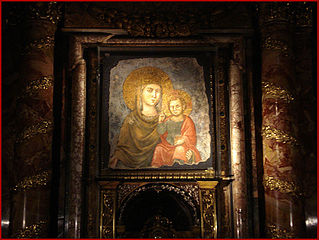
May 24th 1542 – Our Lady of the Way


When Ignatius, Faber, and Laínez came in 1537 to Rome, Ignatius had discovered in the centre of the city, in the vicinity of the Capitol, a small church of Our Lady with the holy image ‘Madonna della Strada’. Time and again he instructed the Fathers to say Mass there. He longingly hoped for an opportunity to acquire that church. It was not so beautiful, but ideally situated as starting point for pastoral activities in the city.

This opportunity resulted from Father Codacio who had got that premises in hereditary tenancy on August 19th 1540, and had attained on November 18th the benefice of the parish St Maria della Strada. With the family Camillo Astalli who owned that complex Codacio worked for the transfer of the church with the holy image to the young Order. On May 15th 1542 Ignatius was inaugurated solemnly in the possessions of the sanctuary, whereas the parish pastoral was shifted to St Marco. It was the first church in the possession of Jesuits.

At the beginning of February 1541 the First Fathers had moved from the Piazza Frangipani into an old, narrow house. It stood opposite the small church and was rented for thirty Scuds annually. By demolition and new building the Professed House and the Church Il Gesù arose from those beginnings. Only under Francisco de Borja, the third General of the Order, was laid the foundation-stone for the building of Il Gesù on June 20th 1568. Architect was Jacopo Vignola, the successor of Michelangelo. The building dragged on for sixteen years until 1584.


Vignola had meanwhile died (1573). Giacomo della Porta was the last and most important building master. Il Gesù is considered as masterpiece of the Baroque in the perfect merging into each other of architecture, plastics and painting.

In this church is in front on the left side the Grave Altar of St Ignatius of Loyola. On its right is venerated the holy image ‘Madonna della Strada’. In the Professed House of the Jesuits just beside Il Gesù the three rooms once inhabited by Ignatius are still shown in their original form. Only the walls are covered with silk wallpapers.

To the building of Il Gesù contributed many donors. The chief patron was Cardinal Alessandro Farnese (who died at the beginning of March 1589). Farnese was Vice-Chancellor and led the state affairs since 1538. For full fifty-five years he belonged to the College of Cardinals. He took part in seven conclaves, often in the role of the ‘pope maker’. He was the ‘Grand Cardinal’, who was unmatched in experience and insight, generosity and charitableness for the poor. Uncommonly rich, he was devoted to the arts, the sciences, and the humanists. To the recent Society of Jesus Farnese was a generous promoter and an influential advisor. The Order owes him its main church Il Gesù, and the Roman Professed House.