
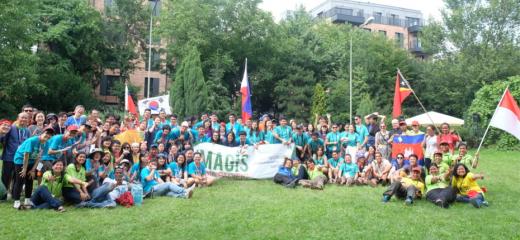
 In 2014, the major superiors of the Jesuit Conference of Asia Pacific decided that the youth had to be a priority for the Jesuit Conference. They saw a clear need to accompany young people in the way of St Ignatius, which is marked by cura personalis (personal care), discernment and magis (more). Continue reading “A path to magis for young people”
A path to magis for young people
Fr General Arturo Sosa arrives for first visit to JCAP
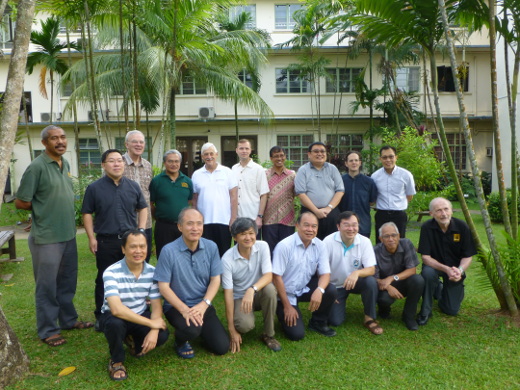
Superior General of the Society of Jesus Fr Arturo Sosa arrived in Yogyakarta, Indonesia today, July 11, on the first leg of his first visit to the Jesuit Conference of Asia Pacific (JCAP). Continue reading “Fr General Arturo Sosa arrives for first visit to JCAP”

Remembering Fr Jerry Martinson SJ
Fr George Gerald “Jerry” Martinson SJ died on May 31 in Taiwan, 50 years after he first arrived in 1967 from the California Jesuit Province. At the age of 25, he was sent to Taiwan and began working at the Jesuit-run Kuangchi Program Service (KPS). He became a renowned television producer and host, known to many in Taiwan and China as Uncle Jerry, his screen name in an English teaching television programme he hosted. Continue reading “Remembering Fr Jerry Martinson SJ”
Working together to form young persons of faith in our schools
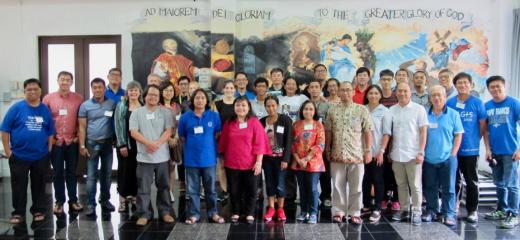
How do we accompany young people in the mission of reconciliation and justice? How do we engage students in this digital age? Who are we in what we do? These were some of the questions discussed in the first JCAP Meeting of Chaplains and Campus Ministers. Continue reading “Working together to form young persons of faith in our schools”
Wisdom Story – 285
 A member of a certain church, who previously had been attending services regularly, stopped going.
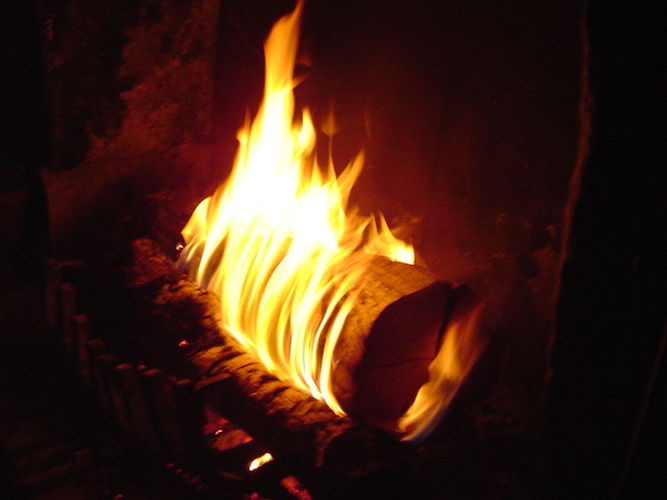
After a few weeks, the pastor decided to visit him. It was a chilly evening. The pastor found the man at home alone, sitting before a blazing fire.
Guessing the reason for his pastor’s visit, the man welcomed him, led him to a big chair near the fireplace and waited. The pastor made himself comfortable but said nothing. In the grave silence, he contemplated the play of the flames around the burning logs.
After some minutes, the pastor took the fire tongs, carefully picked up a brightly burning ember and placed it to one side of the hearth all alone. Then he sat back in his chair, still silent. The host watched all this in quiet fascination.
As the one lone ember’s flame diminished, there was a momentary glow and then its fire was no more. Soon it was cold and “dead as a doornail.”
Not a word had been spoken since the initial greeting.
Just before the pastor was ready to leave, he picked up the cold, dead ember and placed it back in the middle of the fire. Immediately it began to glow once more with the light and warmth of the burning coals around it.
As the pastor reached the door to leave, his host said, “Thank you so much for your visit and especially for the fiery sermon. I shall be back in church next Sunday.”
Increasing collaboration on disaster risk reduction and management

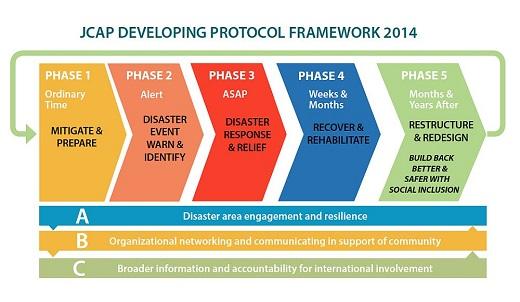
While people in many Jesuit institutions are doing great work in DRRM, having a protocol taps and develops the great potential for magis as more people are reached, networks are broadened, impact multiplied, and response is deepened. A protocol for coordination amongst people provides a system for decision-making and action that outlines procedures and actions to be followed in a particular situation.
The JCAP protocol is a work in progress to guide Jesuit collaborative action and is presently part of a review in the Philippine Province. Hopefully, the protocol can be used and improved by other Provinces in their areas of concern given the appropriateness of context and emerging networks. It is presently focused on floods and landslides but will be easily adapted to facilitate collaboration in the case of earthquakes, tsunamis, fires, volcanic eruptions, and droughts.
While the disaster management cycle is generally described as having four phases (mitigation, preparedness, response, and recovery), there is an increasing realisation of a fifth phase or redesign. The JCAP protocol presents a coordination framework with five phases:
Phase 1 – Ordinary time: Disaster mitigation and preparedness
Phase 2 – Alert: Disaster event warning and identification
Phase 3 – ASAP: Response and relief
Phase 4 – Weeks and months after the disaster: Recovery and rehabilitation
Phase 5 – Months and years after the disaster: Restructure and redesign
Phases 2 to 4 are where many efforts are ongoing, but there is also increasing recognition of the need for more preparedness during “ordinary time” (Phase 1) when it is not the rainy or typhoon season. This is the perfect time to undertake trainings and workshops.
On the other hand, Phase 5 is when restructure and redesign take place and where lessons learnt from the disaster inform future plans. Building back safer and better with a local social economy is a guiding principle, and is the time to review and revise building standards, zoning plans and policies, economic development programs that are socially inclusive, and networking and organising so that capacities are shared and alliances and agreements are established amongst government, international agencies, professionals, and others from civil society.
Jesuit resource mobilisation is also a topic of concern in the JCAP protocol. Often, local and national disaster resource mobilisations are adequate but when extreme events occur and result in a national calamity, international support is mobilised. Jesuit resource mobilisation can be both national and international, as the benefit of institution and apostolic outreach, as well as communications and networks, is available in many places. Xavier Network is a key partner in international disaster collaboration.
The protocol seeks to integrate Jesuit area disaster engagement on the ground while networking with national and international organisations in support of the communities affected. To facilitate donations and support, a clear and simple process is needed for donors to make contributions. And most importantly, a transparent and accountable system for monitoring and reporting funds is needed so that donations are properly documented, official receipts are issued as needed, and donors are kept informed of developments.
This transparent and accountable fund management is also crucial for securing long-term resources for post-disaster rehabilitation, restructure, and redesign. International awareness has to recognise that the long-term problem is tied not only to climate change impact through more extreme weather events but also to livelihoods and secure tenure of homes. These are critical in reducing the social impact of disasters.
Donor expectations and resource mobilisation need to be re-assessed so that social and economic inclusion are built into the financial assistance provided, beyond relief and provision of roofs, housing materials, houses, and fishing boats. The key elements are access to land, sustaining the local social economy, building capacity in local government, and developing a diversity of options for livelihood and entrepreneurship.
“God is Creator of the universe and all life, and in disaster risk reduction we are challenged to experience through our faith how to embrace “natural” disasters,” said Fr Pedro Walpole SJ, JCAP Coordinator for Reconciliation with Creation. “We are learning humbly that we are embracing not an “act of God” but human vulnerability and mortality as part of an ongoing Creation. At the same time, it is beginning to dawn on us that we are partly a trigger of our own suffering through climate change. In our faith, we slowly come to understand that the crucified Christ silently accompanies those who suffer. We need to be able to communicate this while expressing deep hope for humanity, knowing God’s fidelity to us. This is why today we seek a much deeper response of compassion and reconciliation on Earth.” [EcoJesuit]
To find out more about the JCAP coordination protocol for disaster risk reduction and management, click here.
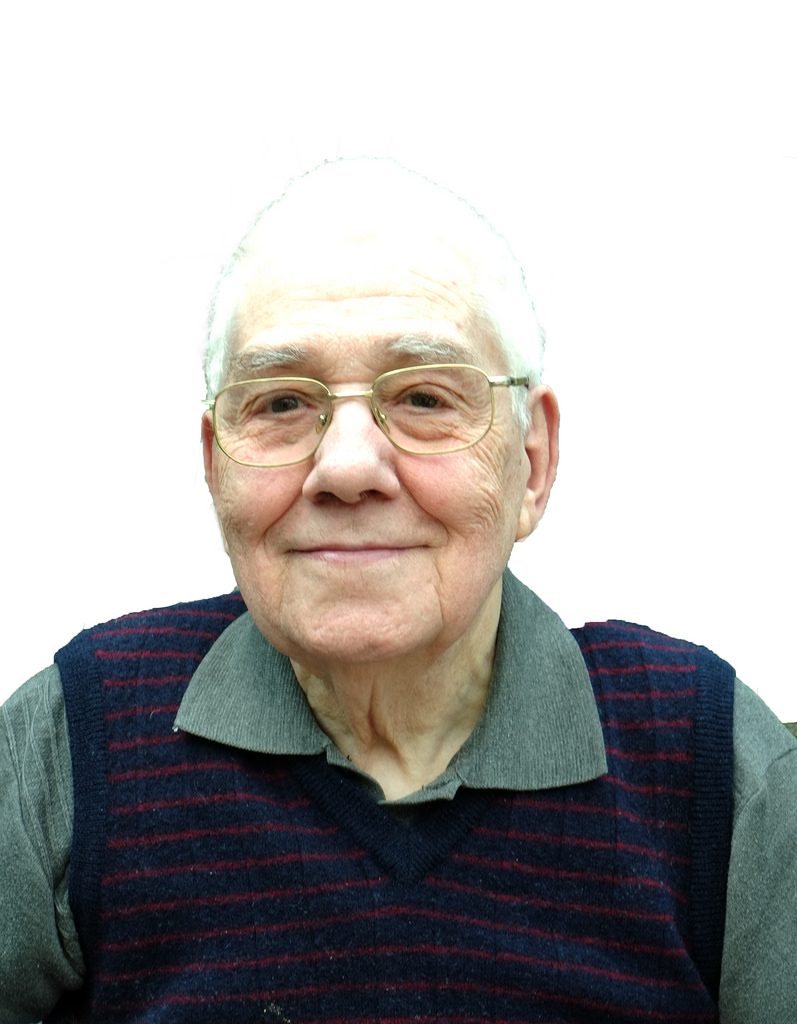
【R.I.P.】Bro. Gérard Aubin went peacefully to the Lord

Bro. Gérard Aubin went peacefully to the Lord on December 25, 2015 at the Cardinal Tien Hospital, Taipei, at 1:42 p.m.
Bro. Aubin was born in Upton, Québec, Canada, on May 11, 1921. He entered the Society in Montréal, Canada, on Apr. 15, 1941, and made the last vows on Aug. 15, 1951 in Québec.
All priests of the Chinese Province will celebrate one Mass first intention for Bro. Aubin’s eternal rest. Those who are not priests will offer one Mass and Communion and recite one “corona”. The members of St. Robert Bellarmine community will offer two Masses, etc.
Yours in Our Lord,
Luciano Morra, S.J.
Socius
December 25, 2015AUBIN Thibault, Gérard, S.J., Bro. (歐 斌)
Year/M/Day
1921-05-11 Born in Upton, Québec, Canada
生於加拿大魁北克Upton
Parents: Hervé Aubin and Emilia Thibault
Brothers and sisters: Theresa, Gérard, Lawrence, Dollard
1921-05-21 Baptized at St. Ephrem in Upton
1928-1932 Elementary education in Upton
1932-1939 Helping his father in their farm
1939-1940 Secondary education in St. Hyacinthe Minor Seminary
He left because of his difficulty in learning Latin and because of headaches
1940-1941 Postulant Brother in the Society of Jesus (1940/10/15 – 1941/04/14)
1941-04-15 Entered the Society of Jesus as Novice in Montréal, Canada
於加拿大蒙特羅進入耶穌會
1943-04-16 First Vows in Montréal
1943-1952 In different houses, humble service
1951-08-15 Final Vows in Québec. FF
在加拿大魁北克矢發末願
1952-1953 Studied Mandarin at Chabanel Hall, Manila, Philippines (Oct-07- )
在菲律賓馬尼拉加伯內讀中文
1953-1979 Taipei, Taiwan, at Holy Family, as sacristan, in charge of health care…(Nov 08-)
在台北聖家堂管理輔祭團與管理團體健康
1966-1966 Sabbatical Year in Canada
1979-1981 Huakuang, Kuanhsi, Hsinchuhsien, as ass. minister, prefect of kitchen,…
在新竹縣關西華光擔任理家
1981-1983 Taichung Infirmary, as assistant infirmarian,…
在台中聖依納爵頤福園副主任
1983-1995 Taipei, at TEC (Tien Educational Center), as ass. minister, prefect of kitchen,..
在台北耕莘文教院擔任副理家
1986-1986 Sabbatical Year in Canada
1991-1991 Sabbatical Year in Canada
1995-2011 Taipei, at Holy Family, as ass. minister, assistant sacristan
在台北聖家堂擔任副理家
2000-2000 Sabbatical Year in Canada
2011-04-15 慶祝入會70年
2011-09-27 Province infirmary, Taipei, praying…
於聖若瑟頤福園為教會及耶穌會祈禱
2015-12-25 於新北市新店耕莘醫院安息主懷
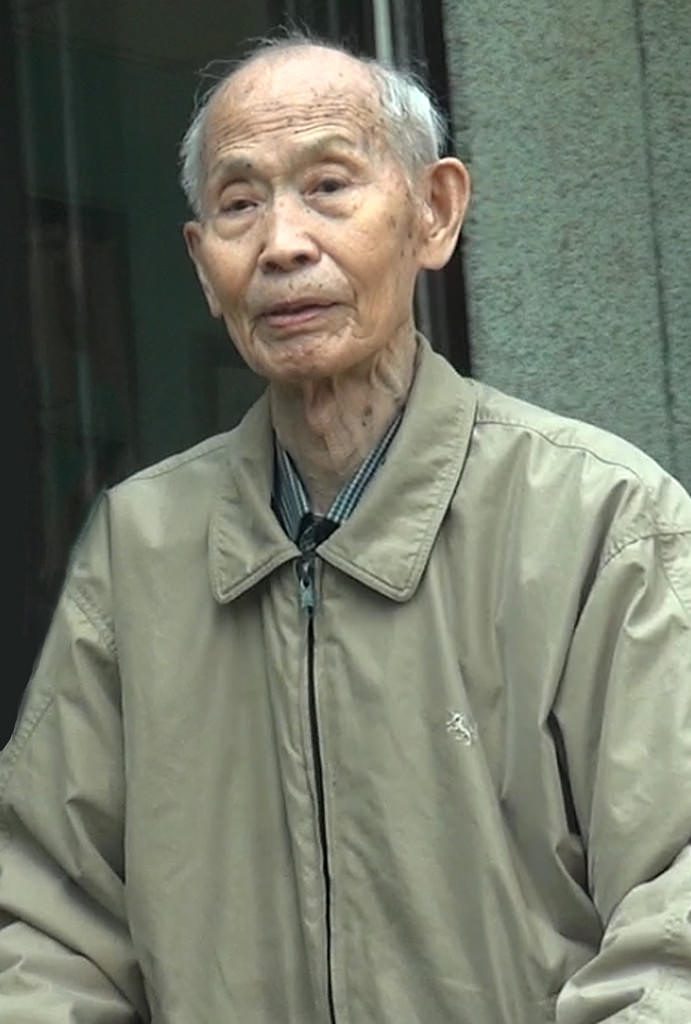
【R.I.P.】Fr. Norman Walling went peacefully to the Lord

Fr. Étienne Wang Kui went peacefully to the Lord on November 18, 2015 at the
Cardinal Tien Hospital, Taipei, at 10:58 p.m.
Fr. Wang was born in Xuanhua county, Chahar (now Hebei) province, on Jan. 5,
1925. He was ordained to the priesthood in Rome on Dec. 21, 1951, entered the Society in
Aix-en-Provence, France, on Oct. 16, 1961, and professed the last vows on Feb. 2, 1976
on Manila.
All priests of the Chinese Province will celebrate one Mass first intention for Fr.
Wang’s eternal rest. Those who are not priests will offer one Mass and Communion and
recite one “corona”. The members of St. Robert Bellarmine community will offer two
Masses, etc.
Yours in Our Lord,
Luciano Morra, S.J.
Socius
November 18, 2015