

Author: 爵醒


The Jesuit Migration Network of Central America and North America (RJM-CANA in Spanish), responded to President Trump’s November 9 proclamation on asylum, calling it a violation of international law, including violating the Geneva Convention of 1951.
In a candid statement issued the same day as the proclamation, RJM-CANA expressed their concern with the most recent administration action from word one, titling the statement, “Mr. Trump, you are who acts illegally, not the caravan.” This was a similar theme expressed by RJM-CANA soon after the migrant caravan left Honduras when RJM-CANA released a statement responding to anti-migrant tweets President Trump’s. However, in this most recent declaration, they also noted the Trump administration’s failure to critically reflect on the relationship between U.S. policy in Central America and the current reality of forced migration, citing such policies as “the root of the forced migration of hundreds of thousands of Central American people.”
The Jesuit Migration Network of Central America is part of a larger network that serves all of Latin America and the Caribbean, seeking to provide effective, coordinated, and comprehensive assistance to migrants, displaced persons, and refugees from very diverse areas: pastoral, educational, social, research, etc. In the United States, participation comes from Jesuit universities, high schools, parishes, and social ministries.
The full statement originally published in Spanish can be found in English below:
|
“Mr. Trump, you are who acts illegally, not the caravan.”
Response of the Jesuit Migration Network of Central and North America to the Presidential
Proclamation signed by President Donald Trump on November 9, 2018
As a member of the continent-wide Jesuit Migration Network of Latin America and Caribbean, comprising 19 countries, the Jesuit Migration Network of Central America and North America repudiates the Presidential Proclamation on massive migration through the southern US border issued today by the White House and signed by President Donald Trump. We consider that this proclamation violates international human rights law, especially the 1951 Geneva Convention on the Status of Refugees.
Above all, we wish to warn about the ongoing construction of a discourse that criminalizes migrants while avoiding self-criticism and reflection on the American asylum system. Further, this discourse ignores all responsibility for supporting policies that are at the root of the forced migration of hundreds of thousands of Central American people.
Donald Trump’s Proclamation published on November 9, 2018, endorses the order issued by the Attorney General and the Secretary of Homeland Security the previous day, which denies asylum to undocumented persons crossing the U.S. Southern Border at unofficial points (i.e., not designated as ports of entry). This new declaration by Trump, clearly aimed at the Exodus of Hondurans heading towards the U.S., is illegal and violates Article 31 of the Geneva Convention on the Status of Refugees, which establishes that the unauthorized arrival of people in refugee situations to a State shall not be criminalized.
According to Trump’s Proclamation, the threatening arrival of aliens with no basis for admission weakens border security and consumes tremendous resources. In response to this, the proclamation advocates for immediate action to protect national security and maintain the effectiveness of the asylum system in the face of the large amount of claims received by the U.S. Trump goes on to assert that many migrants have entered Mexico illegally, some even using violence. However, viewing migrants in this light completely neglects their human rights, especially those of the most vulnerable people, who are also referred to with war language and framed as “the threatening enemy.” More specifically, the proclamation violates Article 33 of the Convention on the Status of Refugees, which expressly states in its second paragraph that a refugee cannot be considered a threat to national security without proper justification. This is a testament to the exceptional character of the rights granted by this convention and the personalized treatment it demands.
The President’s own Proclamation acknowledges that in the last years there has been an increase in the number of people claiming asylum at the border, who in effect have a credible fear of returning to their countries. This is in line with the rising violence in Central America and the number of asylum seekers who are heading not only to the U.S. but to other countries as well. However, according to Trump, very few actually obtain asylum and it is the increase of claims that causes the asylum procedure to last for years and consume many public resources. In other words, he is blaming the asylum seekers for the collapse of the system. Would not the real reason be that the U.S. asylum system is not working properly? In addition, Trump admits that most people who have a credible fear of returning to their countries are being deported. This flies in the face of the non-refoulement principle, contemplated by Article 33 of the Geneva Convention: no country shall expel or return a refugee to the frontiers of territories where their life or freedom would be threatened.
Trump also states in his Proclamation that those who start an asylum-seeking process based on a credible fear are not in detention centers due to lack of space, which he identifies as problematic, especially for members of family units. Again, this reasoning is dangerous not only because it supports the idea that more budget is needed to expand detention centers, but also because it disregards Article 31 of the Geneva Convention, which clearly establishes that States shall not apply any unnecessary restrictions to the freedom of persons in refugee situations.
With all of these more than debatable arguments, Donald Trump justifies the decision to suspend aliens’ access to international protection. This decision specifically targets undocumented migrants arriving from Mexico through unofficial entry points and Trump claims it is based on the protection of the safety of the migrants themselves. In addition to violating the non-refoulement principle, as explained above this order does not take into account the current crisis at the border, which is a result of the regulations and measures adopted by the authorities in the last few months. As a consequence, the official entry ports are plagued with risks and precarious conditions which increase the vulnerability of migrants. Even though the above decision by the U.S. government makes exceptions to provide protection under the Convention against Torture and to offer guarantees to unaccompanied minors, in practice the hardening of the border implies the denial of these rights as well.
To make matters worse, the Proclamation establishes the suspension for a period of 90 days or until an agreement is reached to deport migrants to Mexico. Furthermore, it allows for this period to be extended “according to the interests of the United States.”
Another particularly concerning issue is that at various points the Proclamation sets the agenda for negotiations with Mexico to stop the massive flow of people and for Mexico to authorize the deportation of Central American nationals. It also suggests that a “safe third country” should be considered. These issues have caused worry in the Mexican population. The Federal Mexican government should facilitate the application for asylum in Mexico and the process of searching for another possible country of destination, but this should be part of a free and informed choice by the persons in refugee situations. Under no circumstance can we accept an inter-State agreement that establishes Mexico as a safe third country in which people are forced to apply for asylum instead of in the United States.
|
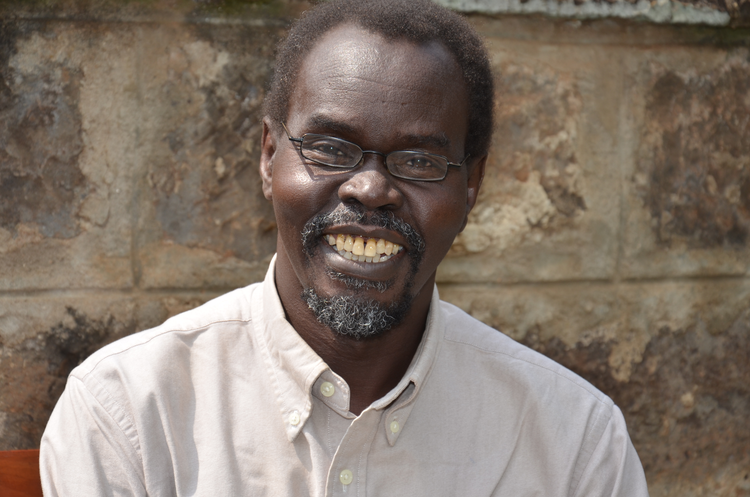
Local media report that a Kenyan Jesuit was shot and killed by armed men in South Sudan’s Gok State in the early morning hours on Nov. 15.
The Eastern Africa Province of the Jesuits confirmed the death of Victor-Luke Odhiambo, S.J., “with deep sadness and shock” in an announcement published on its Facebook account. According to the province, Father Odhiambo was killed when unknown assailants attacked the Daniel Comboni Jesuit Residence in Cueibet where he resided. The province reports that four of the Jesuits in the community had already gone to sleep, but Father Odhiambo “was in the TV room when the assailants attacked.”
“When the rest of the companions heard gunshots and noise, they pressed the alarm and the killers ran away—unfortunately, Victor-Luke was already dead,” the province reported.
One of the Jesuits residing on the compound was awakened by fighting and shouting from the sitting room followed by two gunshots. He said six attackers ran off after students from surrounding dormitories began to rush to the Jesuit residence in response to the alarm. Father Odhiambo’s body was discovered after it had been confirmed that the attackers had fled the compound.
The news was a shock to Jesuits around the world who had worked with Father Odhiambo in the past. In New York, America Media’s James Martin, S.J., said, “Victor-Luke was a wonderful person, a devoted Jesuit and a superb priest. He was warm, kind and friendly and exceedingly welcoming to me during my time in Kenya. Victor-Luke was dedicated to Jesus and to God’s poor, and was also widely respected among his Jesuit brothers.
“The Eastern Africa Province, the Society of Jesus, the Catholic Church, and the world are all sadder places without him.”
Gok State Information Minister John Madol told local media that the motive behind the killing was not clear, but that “one person has been arrested and is in custody.” Additional arrests are expected.
The state government has declared three days of mourning in honor of Father Odhiambo.
“The Eastern Africa Province, the Society of Jesus, the Catholic Church, and the world are all sadder places without him.”
According to the province, at the time of his death, Father Odhiambo was the principal of Mazzolari Teachers College in Cueibet and acting superior of the local Jesuit community since January 2017. He had worked in South Sudan for approximately 10 years.
Father Odhiambo was born on Jan. 20, 1956, entered the society on July 4, 1978, and was ordained a priest on Aug. 22, 1987. He took his final vows on May 30, 1993.
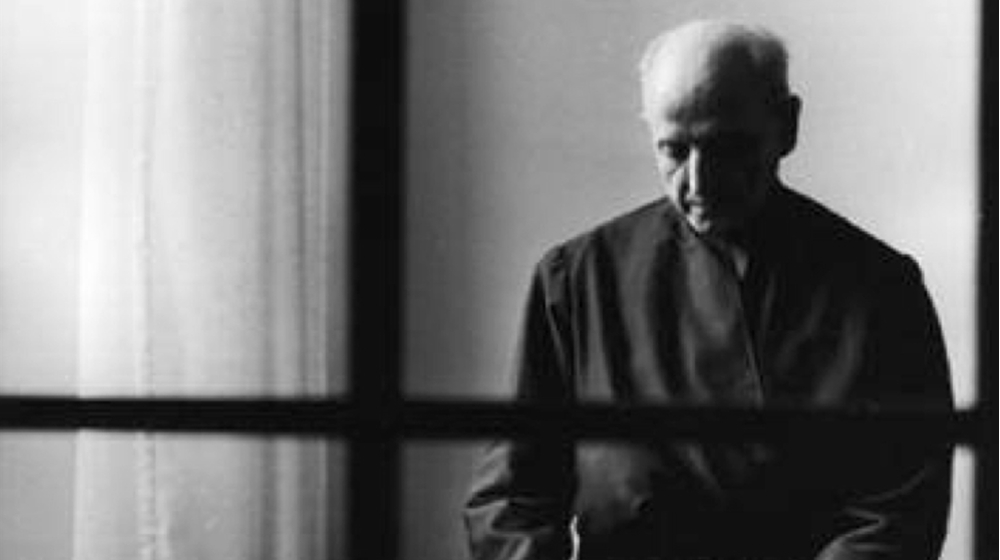
The Society of Jesus has officially begun the process toward the beatification cause of Fr Pedro Arrupe, 28th Jesuit Superior General from 1965 to 1983. From now on, he is considered a “Servant of God”.
The cause has been set in motion in the Vicariate of Rome, where Fr Arrupe died. After prayer and careful consideration, the Society has requested to initiate the ecclesial discernment on Fr Arrupe’s heroic virtues.
Once the nihil obstat, a declaration of no objection, of the Holy See and the consent of the bishops closest to Rome in the Italian Episcopal Conference have been received and there are no objections among the People of God, the session formally opening the cause will take place on February 5 next year, the 28th anniversary of Fr Arrupe’s death, at the Basilica of Saint John Lateran.
Superior General Fr Arturo Sosa SJ made the official announcement yesterday, November 14, the 111th birth anniversary of Fr Arrupe and during a liturgy in Rome marking the 38th anniversary of Jesuit Refugee Service. Fr Arrupe founded JRS in 1980 to meet the humanitarian and educational needs of the refugees of the Vietnam war.
Fr Sosa first mentioned the possible beatification of Fr Arrupe in July during the International Association of Jesuit Universities meeting in Bilbao, Spain.
“During the last few months, as I have informed people about this intention during my travels to many places, I have been able to see for myself how alive the memory and legacy of Fr Arrupe are,” Fr Sosa said in his letter to the whole Society.
He described how Jesuits and non-Jesuits have witnessed Fr Arrupe’s exceptional qualities, such as “his desire to fulfill in everything the will of God the Father, his rootedness in Jesus Christ, his trust in the Holy Spirit as the guide of the Church”. He also cited Fr Arrupe’s missionary disposition and fidelity to the Society’s way of proceeding, and his love for and closeness to the poor.
“Fr Pedro Arrupe showed himself to be an extraordinary, passionate ‘man of God and man of the Church’,” he said.

Fr Sosa also noted Fr Arrupe’s encouragement of the rediscovery of the Spiritual Exercises and other writings of St Ignatius, and the method of personal discernment and discernment in common, which he said paved the way for the renewal of Jesuit life, their consecration and vows, community and mission.
“In general, he provided the means for the Society, the Church and society at large to be nourished by the richness of the Ignatian tradition,” he said.
Born in the Basque region of Spain in 1907, Fr Arrupe was a missionary in Japan in 1938. He was master of novices at the Jesuit novitiate in Hiroshima in 1945 during the bombing. He was appointed Provincial of the Japanese Jesuit Province in 1958, and in 1965 was elected Superior General during General Congregation 31. He participated in the last session of the Second Vatican Ecumenical Council.
“In the decades following the Council, he applied it with ‘creative fidelity’, so much so, that Fr Peter-Hans Kolvenbach in 2007 described him as a ‘prophet of the Conciliar renewal’. Referring in 2011 to this period, Fr Adolfo Nicolás recalled Fr Arrupe’s insistence that ‘the spirit of St Ignatius guide and direct us at this important time in the life of the Church’, a Church that he always wanted to serve unconditionally,” said Fr Sosa.
It was Fr Arrupe who invited students in Jesuit schools to be “men and women for others”. He promoted reconciliation, ecumenism and inter-religious dialogue, and treated people with great respect.
“Until the end, he communicated a great goodness, which matured even more through his illness, when he knew that he was totally in the hands of God,” said Fr Sosa.
One sign of the memory, devotion and living influence of Fr Arrupe is the many communities, houses, apostolic works and programmes that bear his name, one of which is the Arrupe International Residence, the JCAP formation house in Manila.
“I am convinced that the person of Fr Pedro Arrupe, in this time of grace as we move toward a desired beatification, will inspire in Jesuits and in those with whom we partner in mission a greater desire of union and spiritual renewal,” said Fr Sosa, “impelling us to greater collaboration in the reconciliation of all things in Christ, guiding us, ‘under the Roman Pontiff’, wherever the Spirit leads.”
Related story: Process for canonisation cause of Fr Pedro Arrupe underway

On 27 October, 15 candidates from Arrupe International Residence and Loyola House of Studies will be ordained to the diaconate.
Here they are, sharing in their own words about their consolations, struggles and hopes for the future.
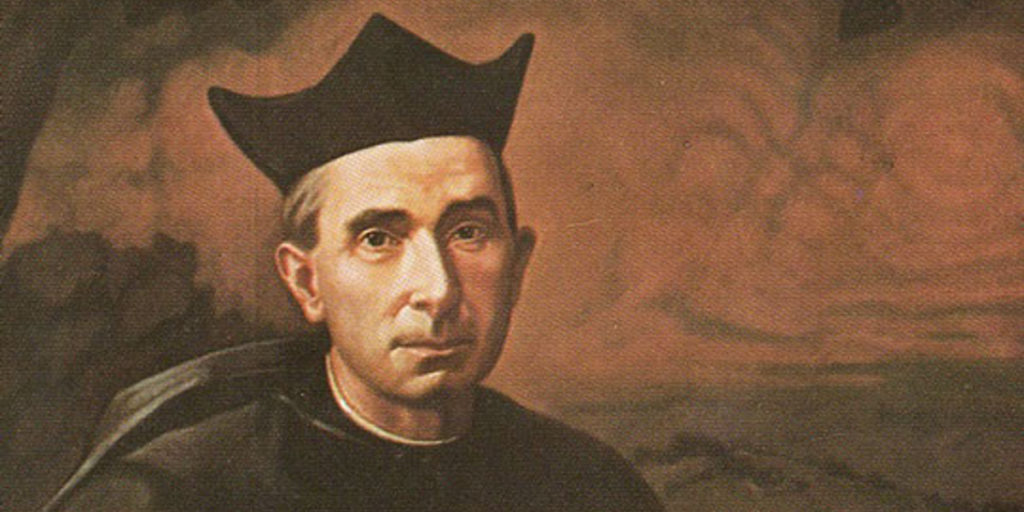
In his letter addressed to the whole Society of Jesus on October 11, Father General Arturo Sosa announced the beatification of Spanish Jesuit Fr Tiburcio Arnaiz Muñoz on October 20 in Málaga, Spain.
Fr Sosa described Fr Arnaiz as “a worthy proponent of popular missions and promotor of the participation of the laity in spreading the faith” and an example to be followed.
“In our own time, we can learn much from what Fr Arnaiz did in his day, giving full meaning to the work of Jesuits designated as ‘operarius’, a title many Jesuits continue to bear with pride today,” wrote Fr General Sosa.
“In ways adapted to our present contexts, many of the rich qualities of Fr Arnaiz can be put into practice: his promptness to detect and respond to structural problems; his energetic determination to undertake new works and persevere in them; his ability to attract and bring together people of diverse social origins for the sake of helping the poor; his admirable strength in confronting setbacks; his courageous evangelising efforts even in difficult times and circumstances; his utter confidence in Providence; his firm personal love for Jesus Christ; and his generous and affable friendship with all types of people.”
In ways adapted to our present contexts, many of the rich qualities of Fr Arnaiz can be put into practice. ~ Father General Arturo Sosa
The new Blessed was born on August 11, 1865 in Valladolid, Spain. At the age of 13, he entered the Minor Seminary and at 25 was ordained a priest. After the death of his mother in 1902, he fulfilled his desire of becoming a Jesuit by entering the novitiate in Granada. Trusting only in God, he declared with unshakeable conviction: “I will no longer die to anyone because I am going to die to all that is not God”.
After pronouncing his vows, he remained in Granada studying humanities, philosophy and theology. He also began to guide people in the Spiritual Exercises and train for the popular missions. In 1909, he traveled to Murcia, where he collaborated for two years in various pastoral activities. He made his tertianship in Loyola in 1911 and pronounced his final vows in 1912 in Málaga, the city where he would remain until his death on July 18, 1926.
Like his contemporaries, Saint José María Rubio and Venerable Francisco de Paula Tarín, Fr Arnaiz was an indefatigable evangeliser of a good part of Spain, using various apostolic instruments, especially the popular missions. His apostolate was focussed on Andalusia. In the province of Málaga’s rural and urban areas, he always left a strong impression.
In the outlying districts of Málaga, in the so-called “corralones” (yards), in which neighbours lived around a common patio, he effectively organised a system of cultural advancement and catechesis for struggling residents. From the start, he was generously helped in this initiative by teachers and other young women from the capital of Málaga.
In 1921, he got to know one of these young women, María Isabel González del Valle Sarandeses (1889-1937), who had set her mind on working as a missionary in some far-off land. Fr Arnaiz suggested that she remain in the south of Spain, and a year later, founded with her an association of consecrated laywomen dedicated to evangelising poor rural regions: the Obra de las Misioneras de las Doctrinas Rurales. They continue to be living witnesses today, through the practice of what they call “doctrinas”, during which they remain present in needy villages, where they offer cultural training and knowledge of the Christian faith, always accompanied by collaborators and volunteers.
Working from the residence of the Society in Málaga, Fr Arnaiz was constantly giving the Exercises, offering spiritual direction, assisting in the Diocesan Seminary, and promoting the Marian Congregations, the Apostleship of Prayer, the “Adoración Nocturna”, and the Conferences of Saint Vincent de Paul.
I have rushed all my life; I have worked as much as I could; now the Lord will raise me up. ~ Fr Tiburcio Arnaiz SJ
Following the impulses of his heart, he frequently visited prisoners and the sick. He helped street children, heard confessions in the Jesuit church and set out to give popular missions. Convinced of the urgent need for good education, he promoted the opening of schools, the founding of a Catholic library, a system for distributing medicines, and the construction of houses of hospitality for people in need. His incessant activity led him to say at the end of his life: “I have rushed all my life; I have worked as much as I could; now the Lord will raise me up.”
At his death, all of Málaga turned out for the funeral of the man whom they later recognised as “apostle of the city.” Fr Arnaiz had already acquired a reputation for holiness during his life, but he continues to attract the faithful of every social condition, who constantly visit his tomb in the church of the Sacred Heart in the centre of the city. It was with good reason that the then-bishop of Málaga and now saint, Manuel González, complained while praying at his funeral: “What are you doing, my Jesus? … How do you expect me to carry the burden you have placed on my weak shoulders if you have taken from me the best workers in this vineyard?” He then encouraged the Jesuits, religious, priests and lay people to imitate Fr Arnaiz.
“Fr Tiburcio Arnaiz was a Jesuit with a strong and deep spirituality, rooted in the Heart of Jesus,” wrote Fr General Sosa. “Completely forgetting himself, he sought only the interests of Jesus Christ—as the motto of his beatification attests—and tirelessly looked after the needs of the poor. The Virgin Mary was for him an abiding source of companionship and consolation.”
Text on the life Fr Tiburcio Arnaiz SJ is taken from Fr General Sosa’s letter to the Society of Jesus.
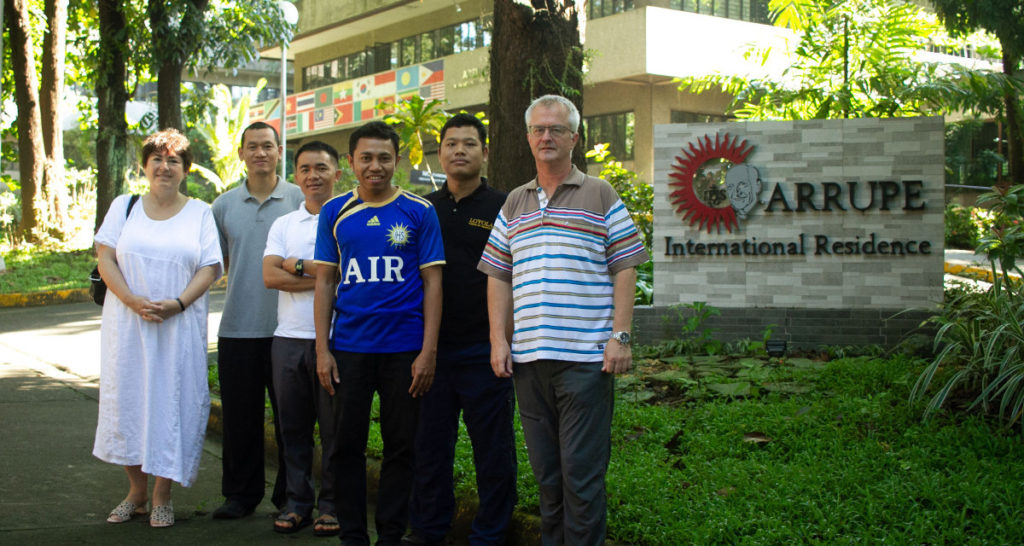

At the Arrupe International Residence (AIR) in Manila, diversity is not aspirational–it is a reality.
“We have a global family,” shared Fr Anton Kurmann SJ, a Swiss Jesuit who stayed at AIR from 2001 to 2004 while studying sociology at the Ateneo de Manila University. “This connectedness is one of the great contributions of AIR.”
Jesuits from across Asia Pacific, South Asia, Europe, North America and Africa come to AIR for the unique residential and formation experience it offers. Living there gives them a chance to engage in intercultural sharing on a daily basis. It is also an opportunity to build great networks for their future ministries.
“Globalisation brings us into contact with people of different nationalities and different religions, and we must be able to find ways to dialogue,” said Fr Kurmann during a recent trip to the Philippines as director of the Swiss Mission Office.
His time at AIR challenged him to adapt and be “more international” in his concept of the world. “One of my first struggles was to accept that in Arrupe people drink wine and beer with ice cubes,” he related in mild bewilderment and smiling. “In my culture, that’s a mortal sin, but I learnt to accept that it also works.”
Fr Kurmann strongly believes that Jesuits must be “interculturally competent”. Being only in their community, he says, is not an option for Jesuits. He cites AIR as a model in preparing Jesuits for international apostolates. The diversity of life at AIR complements the Asian Theology Programme at Loyola School of Theology (LST) to help prepare Jesuits–wherever they come from–for service within their own contexts of the universal mission of the Society.
“In Arrupe, you live with people from a variety of ethnicities and cultures, while LST gives you the tools to reflect on your experiences in your daily community life. If you are still more interested, Ateneo provides you with courses such as anthropology and sociology to make you reflect more on making positive interactions,” shared Fr Kurmann.

The Swiss Mission Office has been supporting the Jesuit Conference of Asia Pacific in the last decade or so through scholarships for scholastics staying at AIR. But the partnership goes all the way back at least 20 years–the Swiss Mission Office supported the construction of one of AIR’s buildings in the nineties.
“Supporting a Jesuit institution which does education and formation in an international setting like AIR makes a lot of sense because you fulfil one of the core functions of being a Jesuit, which is to be open to encountering people of other cultures and traditions,” said Dana Zumr, Swiss Mission Office CEO.
Zumr sees Jesuits as a bridge between communities. “Some people can do more in terms of playing an active part in bringing people together,” she said. “Jesuits, from the beginning, have done this through their approach of going to other communities, trying to adapt themselves to the culture and bringing it back to where they come from.”
She cites Myanmar as an example, a country very rich in culture with more than 100 distinct ethnic groups. “If the scholastics from Myanmar staying at AIR could help the Society go in that direction of intercultural dialogue, that would be something I would hope they would bring back to their country,” she said.
She also hopes to start long term relationships between the Swiss Mission Office and the scholastics they support, who eventually become priests and with pastoral ministries. “If they have ideas or projects, maybe Switzerland could support them. I think that would be great,” she said.
Fr Kurmann and Zumr believe that the future lies in Asia and subsidising the formation of the next generation of Jesuits is like having a glimpse of the future. “You have so many young people. They study theology but they are also connected to the other major religions, like Islam, Buddhism and even Hinduism. It’s a very interesting crystallisation. This is the core place to do all those connections,” said Zumr.
But Asia also faces many challenges, and the Swiss Mission Office also hopes to contribute to these areas.
“We want to support leadership, pedagogy and research, particularly on ecology. We want to contribute to research in the local context,” said Fr Kurmann. These areas are important to the Jesuit Conference of Asia Pacific.
“The conference has been a most reliable partner,” said Fr Kurmann. “It’s a constructive collaboration.”
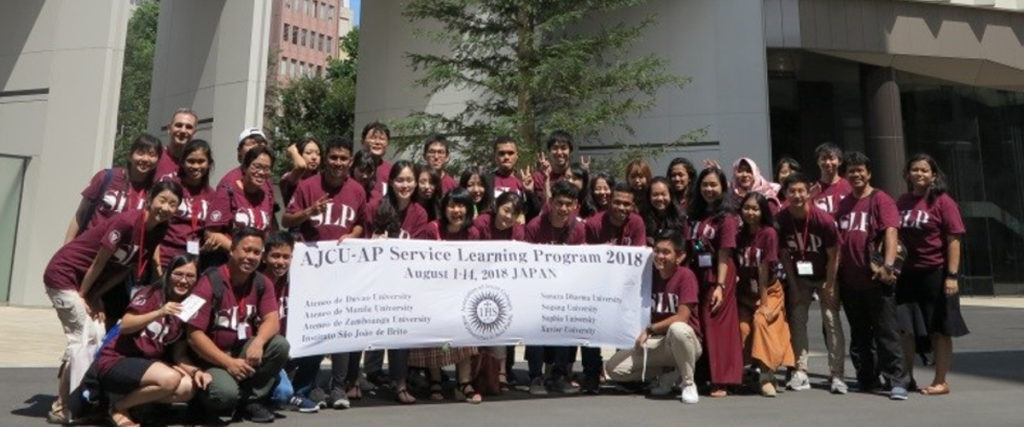
Students from Jesuit universities in Indonesia, Philippines, Korea, Timor-Leste and Japan spent two weeks learning about post-disaster community recovery from the experience of Japan. Through volunteer activities and exchanges with people from the local community, the students studied the progress of the reconstruction and recovery of Iwate Prefecture, badly hit by the Great East Japan Earthquake in 2011.
During the first few days of their arrival, the participants attended lectures on Ignatian education and spirituality, and post-disaster recovery at Sophia University in Tokyo to prepare them for their service learning trip. Then they were sent out for their immersion to Iwate Prefecture.
In the city of Kamaishi, the students helped farmers weed at a local non-profit organisation farm, cleaned factory buildings, helped organise a festival for a nursery school and staged cultural dance performances for the elderly at a nursing home. Students and staff also joined the “Kamaishi Yoisa Festival”, a traditional dance festival held every summer.

Since the students were there foremost to learn about disaster recovery, they visited areas that were worst hit by the 9.0 magnitude earthquake: the towns of Ofunato, Rikuzentakada, which was severely struck by the tsunami, and Unosumai and Otsuchi next to Kamaishi. With them was a professional tour guide who survived the disaster. In Ofunato, the students interacted with Japanese and Filipino Catholics who were brought together fortuitously by the tsunami. In the aftermath of the disaster, the town’s small Japanese Catholic community went around providing aid to survivors when they encountered hundreds of Filipino Catholics also living there. Since then, the Japanese and Filipino Catholics have revitalised the Catholic community, filling the Ofunato Church during Mass.
Some students experienced life-transforming changes in their values and perspectives from listening to the painful stories of the survivors. Many of them realised the importance of faith and gratitude for their life and surroundings. The students also discussed the case in their own countries, reflecting on ways to address natural disasters from their newly gained knowledge. The impact of their experience was evident in the sincerity and seriousness of the group reflections each evening and at the end of the programme.
“As an engineering student, my engagement with the local people opened my eyes to see beyond the colours of hazard maps and the sciences of infrastructure design and construction,” shared Garnelo Jose Cupay from Xavier University in the Philippines. “The call to magis for me is a call to listen and see the stories of the people who have been affected, and provide them with what they truly need.”
The activity was part of the Association of Jesuit Colleges and Universities – Asia Pacific’s annual Service Learning Program held this year from August 1 to 14 and hosted by Sophia University. Twenty-eight students and nine faculty members joined from eight universities, including six students from Sanata Dharma University in Indonesia, seven from the four Ateneo Universities in the Philippines (Manila, Davao, Zamboanga and Cagayan de Oro), four from Sogang University in South Korea, two from Instituto São João de Brito in Timor-Leste and nine from Sophia University. [With reporting from Sophia University]
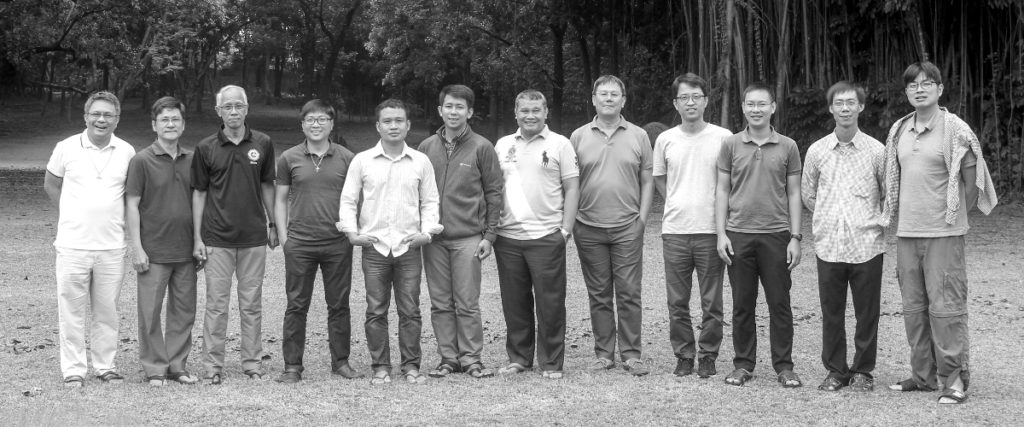
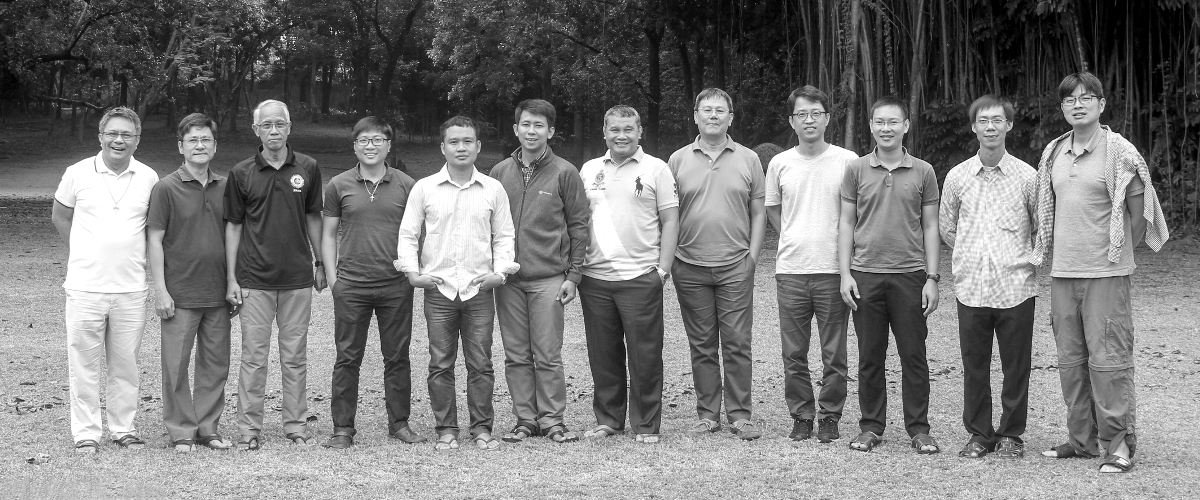
Ignatian accompaniment and spiritual direction were at the heart of the second module of the Jesuit Conference of Asia Pacific (JCAP) Formation for Formators workshop held recently in the Philippines. A basic rhythm of prayerful reflection, sharing of personal experiences and lectures helped the participants gain a better understanding of their own experience with God and learn to help others do the same through Ignatian accompaniment.
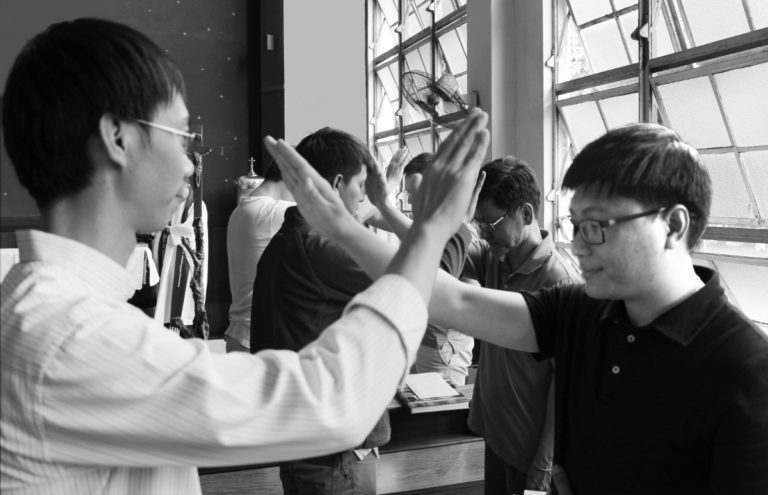
The Center for Ignatian Spirituality (CIS) facilitated the workshop held from August 19 to August 29 at the beautiful and quiet Sacred Heart Novitiate and Retreat Center in Manila. The 11 participants came from Vietnam, Thailand, Korea, Indonesia, Singapore, Australia and China. They were accompanied throughout the workshop by JCAP Formation Delegate Fr Riyo Mursanto SJ and CIS Executive Director Fr Silvino Borres Jr SJ. JCAP President Fr Antonio Moreno SJ was also present during the first day to welcome them.
The variety of their backgrounds proved to be an enriching experience for the participants, who were nonetheless brought together by their unique Jesuit charism rooted in the life of their founder, St Ignatius of Loyola. The opening session focussed on “How God accompanied St Ignatius”. CIS Formation Director Fr Noel Vasquez SJ traced Ignatius’ inward journey towards God and then described how this inward journey later turned outwards as St Ignatius became motivated by a passion to “help souls”. He invited the participants to personally relate to St Ignatius’ experience by reflecting on how God had led them inwardly and outwardly to Him. Using the words of Etty Hillesum, Fr Vasquez reminded them to constantly reflect on how God is leading them: “If you want to teach others how to live, you must take yourself in hand. You have to go on taking stock of yourself.”
The second day was devoted to spiritual direction. Fr Borres gave a brief review of the traditions in Church history, the definition of spiritual direction and how it differs from other types of accompaniment like counselling, and the qualities of a spiritual director. In the next few days, the discussions dealt with how to conduct spiritual direction. Eva Galvey, co-founder of the Emmaus Center for Psycho-Spiritual Formation, defined what a religious experience is and then gave the criteria for evaluating whether a religious experience is authentic or not. Recognising an authentic relgious experience is crucial because “spiritual direction at its core is about helping a person to recognise an experience of God… and to respond to it more fully,” she said. She also pointed out various blocks and resistances in spiritual direction.
Training consultant Monchito Mossesgeld shared on basic helper skills, such as attentive listening, empathic responding and probing to further help the participants in their ministry of spiritual direction. His interactive approach and the numerous case studies he presented elicited active discussion in the group.
Fr Ramon Bautista SJ, Asia Pacific tertianship co-instructor, gave a short yet insightful lecture on the discernment of spirits and election, quoting scriptural as well as living examples. The same topic was expanded by Fr Borres who reminded the participants of the difference between feelings and movements regarding spiritual consolations and desolations. Several cases of discernment were presented and discussed after that.
Finally, the workshop dealt with ethical guidelines and supervision in spiritual direction given by Center for Family Ministries President Fr James Gascon SJ and CIS Associate Tina Mossesgeld, respectively. Fr Gascon admonished the young Jesuit priests of the possible danger of blurring the boundary of confession and spiritual direction. “You may be automatically excommunicated due to the breaking of the sacramental seal,” he cautioned.
The nine-day workshop might have been too short for a topic as serious and broad as spiritual direction, but it was undoubtedly very fruitful. “It really helped me a lot, ” said one of the participants, “especially in understanding the qualities required of a spiritual director and the importance of spiritual experiences. Moreover, the skillls of emphatic responding, probing and managing resistances will certainly help me to improve as formator.” As Galvey commented, these are not just skills that are easy to use, “you have to practise until they become your second nature”.
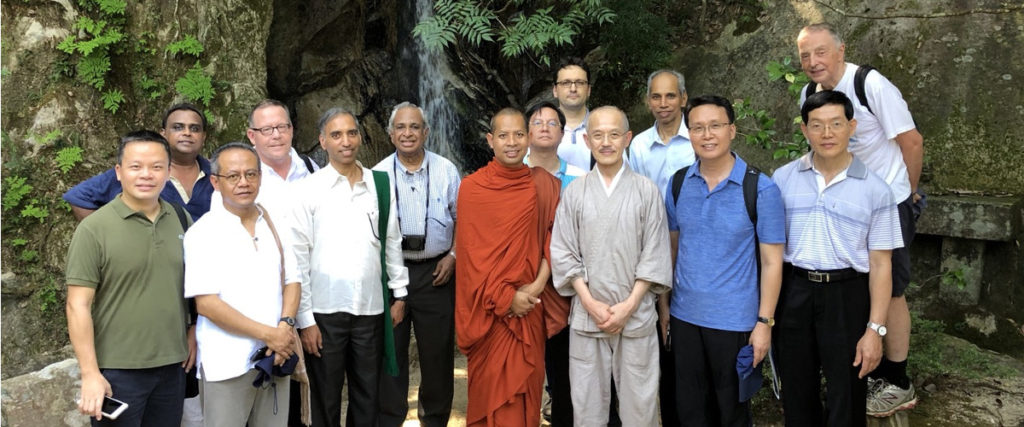
For the Buddhist Studies and Dialogue Group of the Jesuit Conference of Asia Pacific, there was no better place to talk about peace and reconciliation, the theme of this year’s workshop, other than Hiroshima. The city devastated by the first atomic bomb now stands as a beacon of peace and reconciliation. Continue reading “Engaging in Buddhist-Christian dialogue towards peace and reconciliation”
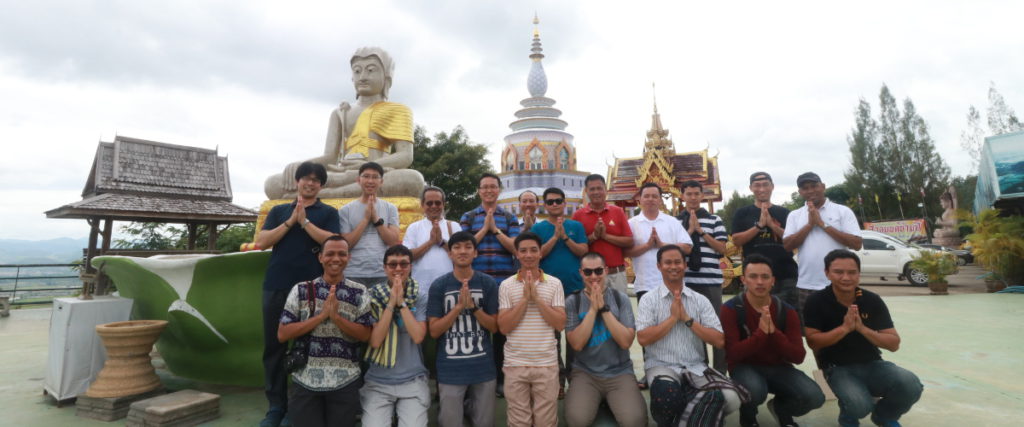

What does it mean to be an Asian Jesuit? This was what 15 scholastics strove to understand better during the nearly month-long East Asia Theological Encounter Program (EATEP) in Chiang Mai, Thailand.
As Fr John Shea SJ, former EATEP Director, said in his introduction on the first day, the EATEP guides young Jesuits in exploring the meaning of inculturation and the position of the Church and Society regarding this, gaining an understanding of Buddhism in this context, and through this, understanding what it is to be an Asian Jesuit.
This is important for the Jesuits in Asia Pacific where Christians are a minority in most of the countries, which include the world’s largest Muslim country and several Buddhist majority countries. GC 34 recognised this: “Jesuits in Asia and Oceania… especially in Asian countries where Christians are a small minority, they dialogue with other cultural and religious traditions in an effort to put the Gospel in touch with Asian life and to bring the richness of Asian culture to the living of the Gospel.” (GC 34 Decree 2 N.2).
Through EATEP and a similar programme focussed on Islam, the Asia Pacific Theological Encounter Programme (APTEP), the Jesuit Conference of Asia Pacific also hopes to form a community to continue this important work of inter-religious dialogue in the future.
The participants for this year’s EATEP, held from July 3 to 29, came from Vietnam, Korea, Indonesia, Timor-Leste and China. The programme was as usual: an intensive 10-day course on Asian contextual theology with Fr Michael Amaladoss SJ, Director of the Institute of Dialogue with Cultures and Religions in Chennai, India, followed by a week of Buddhist meditation at Wat Tam Doi Tone. The participants also spent two weekends visiting Jesuit apostolates and Buddhist sites in Northern Thailand.
“A living theology can only be a contextual theology in a particular context of life,” said Fr Amaladoss who presented many Asian theology themes, such as the Asian Jesus, Jesus the ancestor, the cosmic Christ, The Mahayana Christ, liberation in Asia and Asian spirituality. “In the context of Asia, which is marked by poverty and the richness of cultures and religions, doing theology means doing dialogue with other cultures and religions.”
One difference between this year’s programme and previous EATEP was the use of spiritual conversations. EATEP Director and JCAP Secretary of Buddhist Studies and Dialogue Fr In-gun Kang SJ had the participants do three rounds of spiritual conversations every morning after the second session. This further enriched the participants’ experience and learning, and helped them form what will, by God’s grace, become deep friendships.
“From our Buddhist friends, we learn that emptying our mind does not mean to have ‘nothing’ inside but to fill it with ‘something’ greater than our ordinary desires; that is, compassion and wisdom,” said Fr Kang.
The five days of Vipassana meditation were a deep encounter with the Buddhist tradition for the participants. Besides the hours of meditation, the master monk also gave a one-hour talk every evening. He emphasised that “by living in the present moment with mindful awareness, we can build a profound inner peace within our hearts and bring the same peace to the world”.
Indonesian Scholastic Leo Perkasa Tanjung SJ shared that encountering Buddhists by visiting temples and doing Vipassana meditation “helped me so much to understand theology not only on a theoretical level, but also concretely as it relates to real life”.
Scholastic Phùng Mạnh Vĩnh Nghi SJ said that EATEP awakened him to correct whatever prejudices he had with other religions. “I still feel that there is a gap between my faith and my commitment, and a hesitation toward dialogue with other religions,” he shared. “EATEP helped me fill this gap by giving me the chance to reflect on my own faith and the way I should integrate it with my commitment.
“When we commit ourselves deeply in the service of God and man, we will be drawn closer to the faithful of other religions and there will be no arguing about my God or their gods, but all will feel like being united in the Holy and Divine One.”