

Author: cfliao


From left: Jesuit scholastics Lancy Dias, David Raj and Alex Yagoo
By Ritu Sharma, New Delhi
Three young Indian Jesuit seminarians about to head off to war-ravaged Afghanistan, say mission work there will make their religious commitment more meaningful.
David Raj, 28, Lancy Dias, 27, and Alex Yagoo, 28, volunteered to work in Afghanistan to recapture their congregation’s original spirit of going to new and dangerous places to spread Christ’s message.
Dias will go to Herat, Raj will go either to Herat or Kabul, while Yagoo will go to Bamiyan, where Jesuits have been working for the past five years.
The three come from the Karnataka, Hazaribagh and Madurai Jesuit provinces.
The seminarians spoke about the challenges ahead, their expectations and work as they waited for their visas at the residence of the Jesuit Provincial of South Asia in New Delhi.
Q: How do you feel about going to Afghanistan?
David Raj: Excited, because first we are going to help a country which is facing lots of challenges and problems, and second, there is personal satisfaction that we are going to do something that gives meaning to our vocation.
I feel that Religious life is very secure in India and I want to face some challenges. I have led a very comfortable life during my 10 years as a Jesuit. I think there should be some challenges otherwise there is no point in choosing this life.
Q: Are you not scared of going there?
David Raj: The first Jesuits who went there five years ago felt so but now everything is almost set up. Anything can happen. Then, anything could happen in India also.
Q: What has motivated your decision?
Lancy Dias: From the beginning of my life in the Society [of Jesus], I was fascinated by its universal character. I had opted for the Afghanistan mission two years ago but due could not go. This time, I got the chance. I don’t have fear but curiosity to know the place, to contribute something from what I have gained over the years in my vocation.
Alex Yagoo: I am also excited about Afghanistan. Initially I wanted to work in Nepal but the offer came from Afghanistan.
Q: Are you aware that Indians are targeted in Afghanistan?
David Raj: Attacks and deaths can happen anywhere. We are used to such situations and we are prepared. During my early years in the Society, I worked in a mission where a Jesuit priest was beheaded by people who opposed his work among poor people.
Q: What are the challenges you foresee in Afghanistan?
David Raj: The language and culture of that country will be a major challenge. Indians are brought up in a very conservative way. In our society, Hindus and Christians do not have many Muslim friends or vice versa. Now we are going to an Islamic country. We are going to a place where we are not even allowed to carry a Bible. But the values of Jesus can be taught at any place.
Q: How long will you be there?
Lancy Dias: I will be there for one year and the other two for three years. I will be in Herat where I will be teaching English to students in a high school and I will be training teachers also.
Alex Yagoo: I will be in a university in Bamiyan teaching students and training teachers.
David Raj: I will be either in Herat or Kabul. We are to undergo a teachers’ training program. If we do so then I will be in Kabul. Two more Ursuline sisters from Pune will join us later.
Q: What preparations have you done for this mission?
David Raj: I graduated from Loyola College in Chennai and attended a program on training of trainers. I am concentrating on teaching English.
Lancy Dias: Last year while doing my regency, I had a chance to teach in St. Aloysius College, Mangalore, and take regular classes in English. I have done industrial training.
Alex Yagoo: I am going to teach in the human science department of Bamiyan University. I have to teach four papers so I have prepared for that but I cannot put all that material together because I have to study the situation and the students’ standards.
Q: Would you be able to teach girls in such a conservative country?
David Raj: I think the Indian media is giving a wrong impression about Afghanistan. In the DVDs shown to us, we found both boys and girls receiving education.
Q: But girls are not allowed to venture out in Taliban-controlled areas?
David Raj: Even we are not allowed to go to places where the Taliban are. We have prescribed areas.
Q: Then who will help those people there?
David Raj: We are on the way. We have to explore the possibilities and hope for the better. We are planning to open up new places.
Q: Have you spoken to those returning from Afghanistan?
Alex Yagoo: They are happy about their stay in that country. We want to go with a fresh and open mind. We don’t want to take along any prejudices.
Lancy Dias: Indians are very prejudiced. When we hear about Islam, we think of terrorism but what I have heard from returning Jesuits is that common people there are very good to Indians. If we go with prejudices, it will be difficult for us to remain there. All through our formation, we are fed with ideas about taking challenges, risky missions.
Q: Why didn’t you choose a comfortable life as a Religious?
Lancy Dias: I joined the Society after graduation. I have seen the outside world also but find more meaning in what I am doing now. I still find meaning in Religious life.
Q: How are your families reacting?
Lancy Dias: My mother was initially very hesitant. I told her that anything can happen to me wherever I am. We are not safe even in our country. I felt peace within after my decision to go to Afghanistan.
Alex Yagoo: My parents normally don’t call me but after a bomb blast in Pune where I was studying, I received a call from them. Now, getting a call in Afghanistan could become a daily affair. I had a tough time convincing my parents.
David Raj: I didn’t have a very difficult time making my parents understand. My parish priest was with me and my uncle, who is a bishop, convinced my mother.


Vatican City (AsiaNews) – Benedict XVI received two gifts from Shanghai on behalf of the diocese’s bishops and faithful. He received them from the hands of a Chinese priest at the end of today’s general audience in Saint Peter’s Square. They were a painting on canvas with the portrait of Our Lady of Sheshan, in the background the prayer to the Virgin written by Pope in his Letter to Chinese Catholics, and a bas-relief also of Our Lady of Sheshan on ancient wood taken from the hill where the national shrine is located.
Fr Matteo Chu, who gave the gifts to the Holy Father, was born in the mainland. He is a Jesuit priest who spent 27 years in forced labour. After his release, he went to the United States with Card Gong Pinmei, then to Taipei, Taiwan.
During the audience with the Pope, he was accompanied by another Chinese priest, Fr Gu Guangzhong.
Father Matteo has close ties to the Church of Shanghai, which sent the two gifts for the Pontiff. He is in Rome on a pilgrimage to mark the end of the Year for Priests (see his article, “From Shanghai to Rome, the joy of being a priest in the Year for Priests”, in AsiaNews, 15 June 2010)
He told AsiaNews that he asked the Pope for a special blessing for the Church in China; he also told the Holy Father about the wish of the Church of Shanghai to start the process of beatification of Matteo Ricci and his scientist friend, mandarin Paul Xu Guangqi.


By Julian Das, Kolkata

Jesuit Father Gaston Roberge (center) during the book release
A Jesuit priest has made a “significant contribution” to the film industry with a new book on Indian film theory.
Father Gaston Roberge was praised by film makers, critics and scholars at the launch of his book The Indian Film Theory: Flames of Sholay, Notes and Beyond, on June 15.
“Father Roberge shows us there is an Indian film theory that can form the cornerstone of our film ethos,” said Ashok Vishwanathan, a Bengali film maker and scholar.
“I had been asking myself since the 1980s why we do not have a new theory of popular film,” said Father Roberge. “It was only recently that I got an answer after studying a 2000-year old Indian treatise of drama and dance, Natya Sastra – The Science Of Drama.”
The result is a 100 page book that offers a new perspective on the theories underlying Indian commercial cinema. It has been described as “easily readable” and “radical in its content.”
Father Roberge is author of more than 25 books on cinema and spirituality and founder of Chitrabani the first media center in eastern India. Although he admits some decline in the first decade of the century, Father Roberge has said that cinema will continue to be relevant even in the age of the iPod.


The Sardar Sarovar dam in Gijarat
Tens of thousands of tribals will be forced from their homes if construction on several dam projects in Gujarat proceeds, Jesuit activists warn.
“This is another attempt to push indigenous people to the periphery by grabbing their land and houses to construct big dams,” Jesuit human rights activist Father Cedric Prakash, who directs an NGO in Gujarat’s commercial capital Ahmedabad said.
“More than 30,000 tribals displaced by the Sardar Sarovar dam over the river Narmada in Gujarat and Madhya Pradesh are yet to be rehabilitated and construction of new dams would lead to further displacement of tribals,” the priest added.
The government says damming the Ambika, Par and Tapi rivers in Gujarat’s southern region will provide irrigation water to the Saurashtra and Kutch regions.
Meanwhile, drinking water for Mumbai in Maharashtra state can be supplied by building dams over the Damanganga and Pinjal rivers which flow through the two states.
An agreement for the projects was signed by the two governments in May.
The project sites are currently populated by indigenous people with their own language and cultural identity.
Other activists say the projects will not benefit the tribals at all.
“Compensation is unlikely because most of the land is claimed by the state government’s forest department,” said Father Stanny Jebamalai, who heads the Shakti Trust in Songadh in Tapi district.
Jesuit Father Xavier Manjooran accused authorities of trying to take water away from area already in need.
Dangs, a tribal dominated district, already has a water shortage so why build “big dams to take water to other areas?” he asked.
“Small reservoirs and check dams can be constructed without uprooting people to conserve water,” said Father Manjooran, who also provides legal aid to local tribal people.


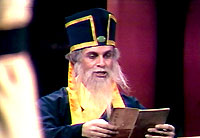
This three part documentary was recorded over 20 years ago by the Kuangchi Program Service, but takes us back 400 years with re-enactments of conversations that would have actually happened between the Jesuit Matteo Ricci and his friend Xu Guangqi. A challenge that all western students of Chinese can relate to, Ricci shows us what it was to struggle through the strokes of a Chinese character before the days of the The Grand Ricci, let alone the brand new digital version. Fittingly Ricci is played by Jesuit Jerry Martinson.
To purchase the full version of the DVD Matteo Ricci in Chinese contact Paul Su or come and visit the Kuangchi Offices in Taipei. Also available are educational documentaries on Matteo Ricci’s good friend Xu Guangqi and two other Jesuits influential in Sino-Western history – Adam Schall von Bell and Francis Xavier. All available in Chinese and English.
Fr Jerry Martinson who acts Matteo Ricci in this film has also been involved in many cross cultural dialogue missions of his own, to hear about them click here.



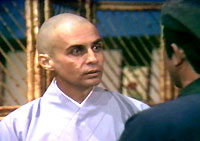
This three part documentary was recorded over 20 years ago by the Kuangchi Program Service, but takes us back 400 years with re-enactments of conversations that would have actually happened between the Jesuit Matteo Ricci and his friend Xu Guangqi. A challenge that all western students of Chinese can relate to, Ricci shows us what it was to struggle through the strokes of a Chinese character before the days of the The Grand Ricci, let alone the brand new digital version. Fittingly Ricci is played by Jesuit Jerry Martinson.
To purchase the full version of the DVD Matteo Ricci in Chinese contact Paul Su or come and visit the Kuangchi Offices in Taipei. Also available are educational documentaries on Matteo Ricci’s good friend Xu Guangqi and two other Jesuits influential in Sino-Western history – Adam Schall von Bell and Francis Xavier. All available in Chinese and English.
Fr Jerry Martinson who acts Matteo Ricci in this film has also been involved in many cross cultural dialogue missions of his own, to hear about them click here.


The Feast of Corpus Christi
Every Mass is a commemoration of Jesus’ Last Supper and a proclamation and participation on this mystery. Because we can sometimes get lost in the routine each Sunday, the feast of Corpus Christi helps us focus once again on what we are called to do at Mass.
Parishes celebrate the feast day in a variety of ways but regardless of the activity, its purpose is the same:
For more information on how to more fully experience Mass:

Living the Mass

Six Weeks with the Bible: Celebrating the Mass
Family resources on the Eucharist:

Together Family Magazine: Eucharist (English)

Together Family Magazine: Eucharist (Bilingual)

Eucharist: My Own Mass Booklet, for children (English)

Eucharist: My Own Mass Booklet, for children (Bilingual)


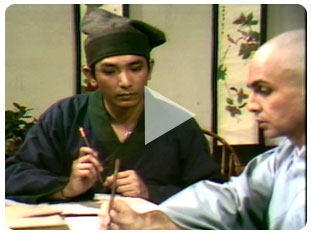
This three part documentary was recorded over 20 years ago by the Kuangchi Program Service, but takes us back 400 years with re-enactments of conversations that would have actually happened between the Jesuit Matteo Ricci and his friend Xu Guangqi. A challenge that all western students of Chinese can relate to, Ricci shows us what it was to struggle through the strokes of a Chinese character before the days of the The Grand Ricci, let alone the brand new digital version. Fittingly Ricci is played by Jesuit Jerry Martinson.
To purchase the full version of the DVD Matteo Ricci in Chinese contact Paul Su or come and visit the Kuangchi Offices in Taipei. Also available are educational documentaries on Matteo Ricci’s good friend Xu Guangqi and two other Jesuits influential in Sino-Western history – Adam Schall von Bell and Francis Xavier. All available in Chinese and English.
Fr Jerry Martinson who acts Matteo Ricci in this film has also been involved in many cross cultural dialogue missions of his own, to hear about them click here.


9th Week in Ordinary Time
10th Week in Ordinary Time
11th Week in Ordinary Time
12th Week in Ordinary Time
13th Week in Ordinary Time


Matteo Ricci and Xu Guangqi
• On May 11, 2010, the digital edition of the Grand Ricci, the largest Chinese-foreign language dictionary in the world, was unveiled in Shanghai.
• This event took place on the date of the four hundredth anniversary of the death of Matteo Ricci (May 11, 1610), pioneer of cultural interaction between China and the West.
• Scholars invited to address the newly founded “Xu Guangqi-Matteo Ricci Dialogue Institute” at Fudan University joined the “Association Ricci” for the May 11 event, celebrating a new era of intercultural dialogue founded on the mutual appreciation of the diversity of our tongues and traditions.
A Story that Reaches across Time and Space
Communication between cultures does not mean giving up one’s mother tongue or traditions. Rather, a sincere effort at cross-cultural communication leads to a renewed appreciation of our own heritage and that of our cultural counterparts. Encyclopedic dictionaries play a major role in cultural dialogue, as they are the repository of the wisdom and memories enshrined in our languages, and allow us to navigate from one world of thought to another. The Grand Ricci, a Chinese-French Encyclopedic Dictionary is the most impressive expression of such a vision.
The Grand Ricci was authored by the Ricci Institute of Paris and Taipei. Its paper edition was published in 2001, but its roots go back to lexicographic research started in Shanghai and Hebei around 1880, and its actual editing started in 1949. With the unveiling of its DVD edition on May 11, cultural interaction between China and the West enters a new phase.
The unveiling of the DVD and the corresponding event are the fruit of the efforts pursued since 2002 by the “Association Ricci”, a not-for-profit network of Sinologists, entrepreneurs and volunteers dedicated to making the Grand Ricci a cultural bridge between China and the West.
Overture of Sino-Western Communication 400 Years ago
More than 400 years ago, Matteo Ricci, a scholar from the Italian Renaissance, came to China, showing great interest and respect for Chinese culture. His legendary friendship with Xu Guangqi, a high ranking Chinese Official and a respected scientist from Shanghai, created a bridge for cultural exchanges between China and the West in the fields of astronomy, cartography, mathematics and philosophy, among others.
Western science and ideas imported to China by Matteo Ricci stimulated Xu Guangqi’s scientific passion and made him the leader of Western Learning in the late Ming Dynasty. Likewise, with the help of Xu Guangqi, Ricci succeeded in becoming a most respected figure in Chinese language and culture. Their works are at the forefront of today’s scientific and cultural communication. This is why the four hundredth anniversary of the departure of Matteo Ricci and his friendship with Xu Guangqi well deserve to be celebrated in Shanghai.
The Grand Ricci– From Shanghai to Shanghai
In the last years of the 16th century, Matteo Ricci began working on a Portuguese-Chinese dictionary. From then on, the Europeans’ passion for Chinese culture, language and literature manifested itself through lexicographic endeavors.
In the late 17th century, Louis XIV, King of France, sent several missions to China, created a whole new path to Sinology and strengthened the relationship between China and Europe.
In accordance with Matteo Ricci’s mission and spirit, for over 50 years the “Ricci Institutes” persisted in the work of researching, compiling and revising lexicographic material. Building directly on the extensive lexicographic research and publications conducted by Jesuits from 1880 to around 1937, especially in the famous Zikawei (Xujiahui) compound, in Shanghai, they started the Grand Ricci’s editing work in 1949. The Ricci Institutes are the direct heirs of this tradition.
During the Sino-Japanese war (1937-1945), Father Zsamar, a Hungarian lexicographer, formed an ambitious project – to compile a Chinese encyclopedic dictionary in five languages: Hungarian, English, French, Spanish and Latin.
In the summer of 1952, the research group went to Macao and began the original compiling work, soon transferred to Taichung and then Taipei (Taiwan). For a few years, there were more than 30 foreign researchers and 20 researchers whose mother tongue was Chinese working hard on the project. The first task was to make index cards according to information they had collected. They compiled around 2,000,000 cards kept in boxes. However, the revision process took much longer than was originally planned…
The interaction between different teams of specialists allowed for a continuous enrichment of the material. But the departure of elder researchers and the lack of financial resources made it difficult to go on. Under the leadership of Father Yves Raguin, a renowned Sinologist, the Chinese-French Dictionary team was the steadiest one; it was able to publish an abridged version of the original project, the Petit Ricci, in 1976, and continued its research, doing pioneering work on Chinese characters’ etymology.
At the end of 1980’s, the Ricci Institutes in Paris and Taipei turned to computing and setting up a large lexicographic database. Over 200 specialists were mobilized for final revision. Finally in 2001, the Grand Ricci was published in Paris. The Association Ricci has also signed a partnership with the Beijing Commercial Press to publish a Mainland Chinese Edition of the Grand Ricci in 2012.

The Grand Ricci–A Chinese Encyclopedia in French
The Grand Ricci is like a luxuriant tree, with its two giant roots penetrating into the fertile soil of French and Chinese languages respectively. It integrates both the diversity of Chinese and the accuracy of French. It pays close attention to the history of both languages and to their cultural references.
There are up to 13,500 characters and 330,000 words included in the seven volumes of this encyclopedic dictionary. Each character has a rich array of translations, showing how meaning evolves with time. For all characters the level of language is indicated (colloquial or formal usage, literary form or epistolary style), for ease of use by every reader. The vocabulary has been compiled, revised and classified into 200 specialized subjects (astronomy, Buddhism, medicine, finance…). Not only characters and expressions representing Chinese cultures are included, but also those translated from western arts and science.
And to meet the demands of different users, a specialized volume of the Grand Ricci was edited for easy retrieval: users are offered different options (pinyin, bushou, entry word…) to facilitate their search. And characters are also arranged by 420 different pronunciation parts. Every part begins with a check list of characters with the same pronunciation.
The Grand Ricci is more than a dictionary – it is an encyclopedic database that covers all fields of knowledge and all aspects of Chinese culture.
A new chapter in a 400 years-long story: the Grand Ricci DVD Unveiling Event held on May 11th 2010 in the Shanghai Museum
On May 11th 2010, the day of the 400th anniversary of Matteo Ricci’s death, in presence of Mr. Thierry Mathou, Consul General of France in Shanghai and Mr. Massimo Roscigno, Consul General of Italy in Shanghai, the DVD Unveiling Event marked another milestone of cultural and scientific exchange between China and the West.
The Grand Ricci DVD weighs only 16 grams, but contains the 9,000 pages of the paper version, which weighs 16 kilograms. The digital Grand Ricci will provide faster and user-friendlier search options to find the characters according to individual practices. Thus sciences and technology contribute to facilitate the understanding of one of the most ancient Chinese esthetical traditions : Writing.
300 guests were invited to the event, including corporate sponsors of the Grand Ricci, prominent personalities from the cultural and economic spheres, officials, as well as local and international media. After the presentation of the DVD, music was played on a rare instrument, the Cristal-Baschet. Guests also had the opportunity to view the “Matteo Ricci Exhibition” organized by the Italian Marches Region in the Shanghai Museum.
Giving a New Meaning to the Xu-Ricci Encounter
Guests of the “Xu-Ricci Dialogue Institute”, Fudan University, School of Philosophy also joined us for the unveiling. The newly founded Institute held its initial encounter on this same anniversary day. Initiated by friends and actors in the Grand Ricci endeavour, it aims to explore new models of interaction between cultural and spiritual tradition, and to give a renewed meaning to the term ‘dialogue’ through international encounters and research projects. Prominent scholars from Europe and the United States gathered at Fudan with foremost Chinese academics from Shanghai, Beijing, Nanjing and Canton.
The reunion is a testimony to the way cultural dialogue today implies continuous attention to the riches of our languages, the creativity of our thought model and the interaction between all the actors of the “economy of knowledge”, to give meaning and direction to the global community that together we are shaping.
The May 11 event
• showcased the richness of the Grand Ricci digital edition
• made its mark as a cultural and musical event in Shanghai
• allowed for a gathering of prominent friends of the Grand Ricci endeavour and major proponents of cultural and scientific interchange between China and the West.
We are not “lost in translation”: the true spirit of translation is to love and understand other countries’ languages and cultures, thus permanently enriching and reviving the flux of intercultural communication. This is what we together testified to when gathering on the evening of May 11th.
Sponsors of the Grand Ricci DVD
We warm-heartedly thank the following institutions that have made this endeavor possible and thank in advance our future sponsors.
• Année de la France en Chine
• Assemblée nationale (Réserve parlementaire)
• Centre national du livre
• Compagnie de Jésus, Province de France
• Compagnie de Jésus, Province de Chine
• Conseil pour la culture (Taiwan)
• EDF
• Fondation BNP Paribas
• Fondation Chiang Ching-Kuo
• Fondation EDF
• Groupe BNP Paribas
• Hermès
• Maverlinn Ltd
• Ministère des affaires étrangères (France)
• Oeuvres pontificales missionnaires
• Publicis
• Sanofi Aventis
Press Contact*:
“Association Ricci”: Chia-Lin Coispeau, [email protected] , cell : 138 1611 0533
* : For “Xu-Ricci Dialogue Center”, press contact: Prof. Li Tiangang, [email protected]