
Author: cfliao
By ucanews.com reporter, Shijiazhuang
Some young Catholics are heading out to work as “Matteo Ricci Volunteers”
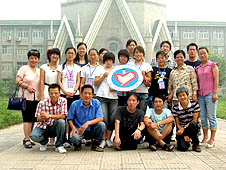
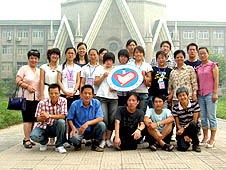
Young Catholics pose for a photo before leaving to serve in Church-run centers
in various Church-run operations in China, including a leprosy convalescent home, orphanages, schools and HIV/AIDS treatment centers.
The 19 high school and university graduates will work on assignments lasting from six months to two years, starting in August.
The program is organized by Jinde Charities, a Catholic NGO based in Shijiazhuang, Hebei.
It is named in honor of Father Matteo Ricci, a Jesuit missioner and pioneer of the Catholic Church in China, to mark the 400th anniversary of his death.
“Today’s young people rarely get the chance to serve others,” said program coordinator Hu Limin. “We hope that being ‘Matteo Ricci Volunteers’ will help them to grow in maturity.”
The group received nine days of training on topics such as how to serve people with HIV/AIDS and leprosy as well as interpersonal relationships and psychology.
“Jinde also pays for insurance and transport for all the volunteers and we give them some pocket money so they can focus on their service,” said Hu.
“I’m hoping this will train me to handle challenges,” said 22-year-old volunteer Mary Liu. “I want to do something worthwhile while I’m young and make a contribution to the Church.”
The medical graduate will go to Guangxi on Aug. 15 and stay there for a year, working with HIV/AIDS infected children. “I admit I’m afraid,” she said.
“My desire is to seek a new understanding on life,” said another volunteer, 24-year-old Yang Shuai. “I want to develop my faith and personality through this. Meeting friends who cherish the same ideals has already strengthened my confidence and courage.”


by Father Xavier Joseph S.J.
 Subscribe
To subscribe to Jesuit Voices, please add the entire URL below to your podcast software:
http://www.sjweb.info/rss/JesuitVoicesFeed.xml
Copy the entire link above (in red) to the “URL” or “feed” field of your podcast software. Enjoy Jesuit Voices


Periodic reviews of Church media centers are necessary for their efficiency and success, says Jesuit Father George Ponodath. The Indian priest now heads a committee looking to suggest ways to enhance the efficacy of the government-run 24-hour educational channel Vyas.
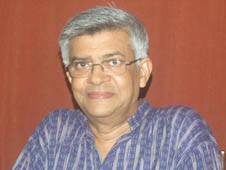
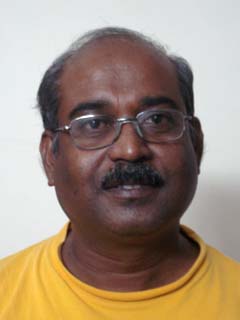
Father George Ponodath
The channel is run by the University Grants Commission (UGC), the top body for higher education in India that functions under the Ministry of Human Resources Development.
The 59-year-old Jesuit also runs the Educational Multi-media Research Center (EMMRC) of St Xavier’s College in Kolkata. EMMRCs in colleges across India contribute programs to Vyas.
The EMMRC in St. Xavier’s has twice been named Best Media Center and won over 50 awards since it started in July 1986. It is also India’s only government-funded media center run by a Christian institution.
Father Ponodath in the following interview speaks about the unique contribution of the Jesuits in media and some of the problems faced by Church-run media centers.
Q. What does the committee’s job involve?
A. We examine the scalability of the programs. It’s not enough to say a media center has 15,000 programs and 500 employees. We have to ask how many people watch the programs. How do we improve our visibility and the scalability of the project? We’re studying the reach, scalability and sustainability of the entire countrywide classroom project. We are also studying ways and means of improving the quality of programs.
Q. How are you going about the review process?
A. We conducted a nationwide survey and used the results to understand the extent of our reach. To our pleasant surprise, we found our programs were watched more in villages than in cities, which is how it should be. Figures suggest we reach about 10 percent of the population in rural areas of Jharkhand, Bihar and West Bengal states. We are still studying the data and it is still too soon to talk about where we go from here.
Q. St. Xavier’s EMMRC has won several awards. Why is that?
A. Consistency in producing programs – both in number and quality. When you look at the size of St Xavier’s College and our media center, ours is a big fish in a small pond.
Other media centers are in large universities, so are small fish in a big pond. Their function, mobility and independence are restricted, whereas I was given ample freedom by the principal.
We are not considered a separate department, but a separate entity. This is a great advantage over other centers. All of them require this kind of independence.
Q. What makes your center special?
A. Content wise we do better than other centers. Most have directors with backgrounds in chemistry or mathematics etc. My field is educational television. Other centers have technicians from other departments, while most of our staff have media technology training. Kolkata has a lot of resources, which makes us better. We also have a young production team, which makes more creative programs.
Q. Are you looking to provide e-content for education?
A. For the past 25 years, we were concerned only with television. Now with the Internet, we should think about e-content. Creating e-content cannot be easily done without television technology. With our experience we have already conducted five e-course sessions very successfully. This was done by combining television and Internet.
Q. As a media expert, how do you view Church media centers?
A. I’m not directly linked with any of the other Church-run media centers, except for a short period when I was involved with the Jesuit Chitrabani media center. However, I did have a lot of Church people asking me for advice or training. I feel that something is basically lacking in Church-run media centers.
If you ask a producer at our center what he is doing, he would say he is making a program for the UGC to be telecast on Vyas. So there is a product, and there is an end-user. In Church-run media centers, there are lots of products, but end-users are not usually defined. If they are, it is not specified how the product reaches users. It is not enough to produce; you have to develop a strategy for marketing the product. That is not happening in a Church-run media center.
Most Church centers lack a professional approach. By that I mean they should have a syllabus, trained staff and hands-on experience.
Q. Do you think periodic reviews will help Church media centers?
A. They’re essential for all institutions. If the Church invests in certain people, or buildings, they should monitor what’s going on. You can’t just say that many things can’t be measured because it is necessary in this case. How many people do we reach? How many people are watching our programs? These are questions which should be asked and answered honestly.


It’s that time again! As the new school year gets under way, there is much to prepare. This chart contains 20 resources to help you get ready. Helpful articles, tips, and activities are only a click away-use these resources to get started or all year long. Resources include:
– 6 Tasks of Catechesis Video
– Ways to Meet and Greet Parents
– Icebreaker Activities


by VINITA
Please read chapter 19 from Days of Deepening Friendship and then enjoy the reflection. (If you are unable to preview the chapter, please click here.)
“Sometimes our resistance toward God and toward our own well-being is not so obvious; it’s hidden within attitudes and personal habits that we form in order to protect ourselves or to help us feel significant. These attitudes and habits distance us from others and from the Divine, and they enable us to keep dealing with life in ways that aren’t working for us” (Days of Deepening Friendship, 148).
The most crucial progress in life is interior. Yes, you need to find your way down the roads of career, family, and community. But equally important is developing the spiritual habit of greeting each day with an open heart. Most of us contain many obstacles to such openness and freedom.
Here are a few questions that might help identify ways in which a person can get in her own way:
– How important is it for me to gain others’ approval? Do I rearrange my activities and my conversations in order to please others, regardless of what is true or what I really think or desire?
– Do I have any addictions? Food, drugs, alcohol, television, Internet use, work, sex-these are some of the obvious ones. Anything I turn to regularly when I am stressed or in pain may be an addiction or developing into one.
– What kind of people do I spend a lot of time with? Do they encourage me to be my best self, or do they pull me in directions that are unhealthy?
– Have I developed strategies and habits that help me avoid doing what I should be doing?
– Is my constant interior dialogue with myself uplifting and positive, or is it critical, self-loathing, and negative?
– Do I find myself in patterns of behavior that are discouraging to me and that I don’t seem to be able to change or break out of?
One good indicator that you’re getting in your own way is what I call primary emotions. Each person has favorite, or habitual, emotions. Some people tend to be angry a lot. It can come out as sarcasm or simple irritation, but for some of us anger is the personal indulgence that holds up our progress. For others, fear colors just about every hour of the day. Often it appears as various minor anxieties, but at the heart of their interior life is fear, and it keeps them stuck.
Some people tend toward ambition or competition, whether or not those modes are truly helpful. Others indulge nostalgia, clinging to the past rather than moving into the present.
asking God to help you identify how you get in your own way.
Blessings on your journey.


By Paul Hwang, Seoul
Korean Jesuits have launched a summer camp program for high school students to help them see “God everywhere.”
Logo of the Jesuit-run program for high school students
Jesuit Father Choe song-yong said the Korean Province of the Society of Jesus has previously run many programs for university students but none for those in high schools.
The Aug. 6-8 program aims to help students reflect on their daily life and relationships through a five-point spiritual technique called the Examen of Conscience.
This entails a prayerful reflection on the events of the day in order to detect God’s presence in one’s every day experience. The Examen of Conscience is the heart of the spirituality developed by Saint Ignatius of Loyola, founding father of the Society of Jesus.
“Due to the pressure of university entrance examinations, high school years are the hardest for young Koreans,” Father Choe said.
“We hope they can refresh themselves with this program,” he added. “Our program aims to illustrate the Jesuit spirit and help students learn from it.”
The Jesuit program also includes recreational activities as well as prayers and reflections on students’ relations with God and others.
Jesuits are expected to take about 15 minutes practicing the Examen at noon and after finishing work each day, Father Choe said.
This allows them to look at themselves, others and the world “with new eyes” and “cultivate a sense of solidarity.”
Father Choe said 70 students applied for the program but only 50 could be accepted.
Others will be invited to another session in September.
In recent years, several Catholic congregations have developed programs to help young people experience Religious life. These are modeled after various Buddhist “temple stay” programs conducted in Korea.


On August 15, we celebrate the Assumption of Mary, body and soul, into heaven. We celebrate this mystery of our faith not only on this Holy Day of Obligation, but also each time we pray the Glorious Mysteries of the Rosary. This special feast day provides an ideal opportunity to reexamine the Marian devotion of praying the Rosary:
Rosaries have worked their way into my purse, my gym bag, my luggage, my computer case, my desk at work. They hang off my bedpost, sit in a tangle on my dresser, and have settled into countless drawers-just as they have settled into the very creases and crevices of my soul’s skin. My little anchors. And of course, they’re not just mine. As I was walking down the street a few days ago, a big, burly guy drove by in a big, burly vehicle with a rosary hanging from the rearview mirror. I smiled and thought to myself, Dude, I know exactly how you feel.
What is the appeal?
The rosary has been called “the epitome of the Gospel,” . . . used throughout the history of the church as a means of teaching the life of Jesus to audiences who either lacked access to books or could not read. The rosary was also a method of drawing believers into communal prayer and greater fellowship. . . . I have grown to love my rosaries and feel the need to have them close by, if not on my person. They remind me of my momma in heaven, that magnificent woman in the sky, always interceding for me, loving me home to heaven. The beads sound good jangling in my pocket or thumping gently against my chest when I go running. I don’t have to be praying a rosary-just as I don’t have to be at Mass or adoration-to feel the presence, strength, comfort, power, life, virtue, and mystery of all that these beads embody.

Excerpted from May Crowning, Mass, and Merton by Liz Kelly.


Twenty members of the Jesuits’ Oregon Province will celebrate jubilees
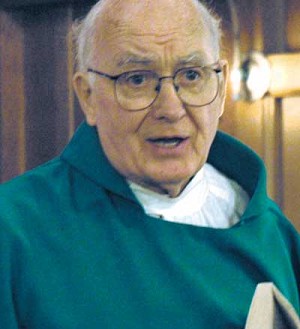
Those marking 60 years as Jesuits include Father Jack Morris, a former Jesuit Volunteer Corps director, African missionary and western Oregon parish priest. He is now doing some writing from his residence at the Jesuit community in Southeast Portland.
With 25 years as a Jesuit is Father J.K. Adams, English teacher at Jesuit High School in Portland and superior of its Jesuit community.
Every year Oregon Province Jesuits gather in summer for ordinations to the priesthood, to honor jubilarians and celebrate first vows, and for discussion and fellowship.
There are 230 Jesuits living in the Oregon Province which is comprised of Alaska, Washington, Oregon, Idaho and Montana.


By Francis Kuo, Taipei
A group of three young men, led by a Filipino Jesuit priest, has completed a bicycle pilgrimage around the island of Taiwan.
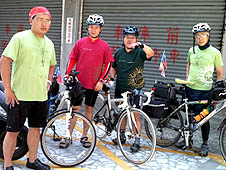
Father Jerome Emmanuel Guevara (far right) with his group of island-touring pilgrims
Father Jerome Emmanuel Guevara and his team began their 10-day tour from Taipei’s Church-run Tien Educational Center on July 19. They returned on July 29, in good time to celebrate the feast of Saint Ignatius of Loyola, founding father of the Society of Jesus.
“We intended to return by the feast day on July 31, so that I could truly report that I have put the Jesuits’ magis spirit into practice,” the priest said jokingly.
In Catholicism, magis, which can be translated from the Latin as “more,” refers to Saint Ignatius’ exhortation to constantly seek ways to do more for God.
The two-wheeled pilgrims had to endure exceptional heat and storms as they traveled through eastern Taiwan before turning north to Taipei. “It was exhausting, but we relied on prayers to sustain us through the tour,” said Father Guevara “and we dedicated our daily Masses to youth vocation and evangelization work.”
The group also offered prayers for women who have lost unborn children through abortion or miscarriage, when they visited the Franz Home in Chiayi city. The Catholic-run home takes care of babies left by mothers who have chosen not to have abortions.
One of the cyclists recalled that the sky suddenly turned dark with thunder as they neared the Immaculate Conception Minor Basilica, Taiwan’s oldest Catholic church, in Kaohsiung diocese.
“The storm began just as the church came into sight and we were so moved, we made the sign of the cross to thank God for his protection,” said 29-year-old Qubit Chiu, who was baptized this year.


The liturgy of the Church, the celebration of the sacraments, and the seasons of Lent and Easter are particular times when we pay attention to what Jesus Christ has done for us through his passion, death, Resurrection, and Ascension. Yet these are not the only times when we experience the Paschal Mystery. It is a part of our everyday life; it is the undercurrent of all that we do and all that we are.
What does this mean? How do I experience the Paschal Mystery? How does it affect me on a day-to-day basis? How do I become aware of its presence in my life in a real way and not just something I know about?
First, let’s look at the Paschal Mystery in general terms, without any religious lingo. The Paschal Mystery is basically the process of dying and rising, death and new life. We see this all around us and in our own lives.
For example, we experience the process of dying and rising each year as we go through the different seasons. Summer is a time of vibrancy and life, which then gives way to fall, when leaves on the trees die and fall away and many plants seem to die. Winter comes and with it the frost and chill that seem to halt all growth and life. But after winter, when it seemed as if everything had died away, spring arrives. New life surrounds us. Daffodils and crocuses begin to push through the once-frozen ground. The bare branches of trees begin to show signs of new leaves.
Another example within nature is a process that many park rangers use-a controlled burn. Certain areas are purposefully set on fire in order to improve the habitat for plants and wildlife. It’s hard to believe that from the charred tree trunks and withered, blackened brush can come a healthy ecosystem with stronger trees and plants. But that’s exactly what happens.
We are a part of nature too. Not only do we experience the seasons and see the process of dying and rising, we also have our own dyings and risings. Sometimes these are obvious-for example, a grandparent dies or a baby is born. But other dyings and risings are less obvious. An experience of dying might be when you have an argument with a friend that leaves you feeling upset, or you see a homeless mother and child and don’t know what to do to help. An experience of rising might be reconciling with someone you hurt or who hurt you, talking with your family about the homeless mother and child and discovering that an organization like the St. Vincent de Paul Society has the people and the resources to care for people who are homeless. These are some of the dyings and risings that we experience every day.
Now when we look at the Paschal Mystery in the context of our religious beliefs and the life of Jesus Christ, we come to a deeper meaning of dying and rising. Jesus Christ’s passion, death, Resurrection, and Ascension are the ultimate event of dying and rising, of death and new life. We learn from Jesus that new life can come from death, that we can find meaning in tough times, that there really is light in the darkness. We learn that all life has this rhythm of dying and rising and that God is with us in good times and in bad. Jesus’ experience of suffering, death, and new life has forever changed us and given us a different way of living. Death no longer has the last word. Plus, when we encounter tough times, we have the comfort of knowing that God has “been there, done that” and the power of hope that new life will come from death. Becoming conscious of our own dyings and risings helps us have a greater sense of compassion for others and a greater willingness to reach out.
Think about your own life. What is a dying or rising that you have experienced today, this week, this year? Reflect on that experience in light of the event of Jesus Christ’s passion, death, Resurrection, and Ascension.
 MP3 file