

Author: cfliao


By James Martin, SJ
“Yet each one in its own way achieves the common purpose,” Father de Guibert said, “to provide a passage….”
Each spirituality, by analogy, offers a distinctive “passage” to God.
Many Christian spiritualities flow from the great Religious Orders: Benedictines, Dominicans, Franciscans, Carmelites, Assumptionists, and Cistercians. Over the centuries, each Order has developed its own spiritual traditions — some directly handed down by its founder, others that came by meditating on the life of the founder. Today, members of those Religious Orders live out what Father de Guibert calls a “family tradition.”
So what is the spirituality of the Society of Jesus, aka the Jesuits?
It begins with St. Ignatius Loyola (1491-1556), the founder of the Jesuits. After hoping to be a great soldier, Ignatius was injured in a battle in 1521. Carried back to his family’s castle to recuperate, the proud soldier began reading books on the life of Christ and the lives of the saints. Slowly he began to recognize, through his emotional reactions to what he read, that God was inviting him to something new.
Setting aside his old life, Ignatius began to live as a hermit in a cave and experienced a series of mystical experiences that convinced him more than ever that he was being called to conversion. Over time, Ignatius gathered together friends who would later form the Society of Jesus. In his later years, the former soldier worked as an administrator, and also counseled and advised many people — Jesuits and other- wise — in their spiritual lives.
Overall, the total sum of the practices, methods, emphases, accents, and highlights of the Christian way of life that comes from Ignatius and from the Jesuit Order is known as “Ignatian spirituality.”
But how can the everyday lay- person benefit in his or her daily life from the insights of a 16th- century soldier-turned-mystic?
If you asked 10 Jesuits to define Ignatian spirituality, the first thing out of their mouths would probably be “finding God in all things.” That deceptively simple phrase was once considered revolutionary. For it means that nothing is seen as outside the boundaries of the spiritual life. Ignatian spirituality is not confined within the walls of the Church. It does not consider only overtly “religious” topics, like reading Scripture, as part of a person’s spiritual life. The way of Ignatius looks at all your experiences as ways to meet God. That includes prayer and service to be sure; but it also includes friends, family, work, relationships, sex, suffering, and joy, as well as nature, music, and pop culture.
The second definition those 10 Jesuits might give is being “a contemplative in action.” That idea resonates with many people today. How would you like to live more contemplatively? Or simply, more peacefully? Would you like to disconnect sometimes from the distractions of constant e-mails and phone calls for just a little quiet?
Well, while peace and quiet are essential to nurturing our spiritual lives, most of us are not going to quit our jobs or leave our families to join a monastery and spend our days in silence. And, by the way, monks work hard (some even have e-mail!). So while Ignatius counseled his Jesuits to carve out time for prayer, they were expected to lead active lives. They were to be active people who adopted a meditative stance toward the world. They were to be “contemplatives in action.” Instead of seeing the spiritual life as one that can exist only if it is enclosed behind monastic walls, Ignatius asks you to see the world as your monastery.
But the spirituality of Ignatius also invites us into certain ways of prayer.
Perhaps Ignatius’ greatest gift to the Church is his Spiritual Exercises, a four-week manual for prayer based on the life of Christ. In the Exercises, we are invited to use our imaginations to place ourselves creatively within scenes from the Gospel. So, for example, in a meditation on the Nativity, Ignatius asks us to imagine our- selves inside the stable with the Holy Family. Use your imagination as you ask yourself the following: What do I see? Hear? Smell? That may sound odd to you. It once did to me. The first time I heard about “Ignatian contemplation,” I said to my spiritual director, “Isn’t it just making things up in your head?” My director patiently asked me some helpful questions. Did I believe that God worked through relationships? Yes, I said. Did I believe that God can work through my emotions? Of course. “Then why can’t God work through your imagination?” he asked.
Once I felt free to place myself imaginatively into the Gospel scenes, I noticed how many emotions insights, memories, desires, and feelings arose as I prayed in a new way with Scripture. Placing yourself imaginatively into Gospel passages often helps you feel closer to Christ, who is, after all, speaking to you through Scripture.
Another traditional Ignatian practice is the “examination of conscience.” This type of prayer was so important that Ignatius said that even if a Jesuit neglected all other kinds of prayer — excepting the Mass, of course — he should never omit this one. The examination is a review of the day in which we look for signs of God’s presence. First, you place yourself in the presence of God, as we do at the start of any prayer. Second, you recall things for which you are grateful. They don’t have to be big things: any- thing at all that makes you happy. Ignatius asks us to “savor” these gifts and give thanks. Next, you review your day, looking for signs of God’s presence: Where did you accept God’s invitation to love, and where did you turn away? Then you express sorrow for your sins, and perhaps decide to seek out the sacrament of Reconciliation. Finally, you close with a request for God’s help the next day.
The examination of conscience is a wonderful way to live out the call to prayer as a “long, loving, look at the real,” as the Jesuit theologian Walter Burghardt once wrote.
It’s tough to summarize Ignatian spirituality in a few pages. For it includes not only a variety of spiritual approaches (like “finding God in all things” and being a “contemplative in action”) and specific kinds of prayer (Ignatian contemplation and the examination), but also derives from other sources. The varied activities of the early Jesuits — for example, opening up a house for reformed prostitutes — shed additional light on the idea of finding God in all things. The lives of the great Jesuit saints and martyrs give us further insights into Ignatian spirituality. And the lives of the thousands of lay men and women who have followed the way of Ignatius also reveal something about this flexible and accessible spirituality.
For me, Ignatian spirituality has been a wonderful bridge to God. Its emphasis on finding God in all things, being a contemplative in action, using one’s imagination for prayer, and carefully considering your day helped me realize that, as Ignatius said, “the Creator can deal directly with the creature.” It has brought me into a much deeper relationship with God than I ever imagined possible. And for this I thank St. Ignatius Loyola. And God, of course!


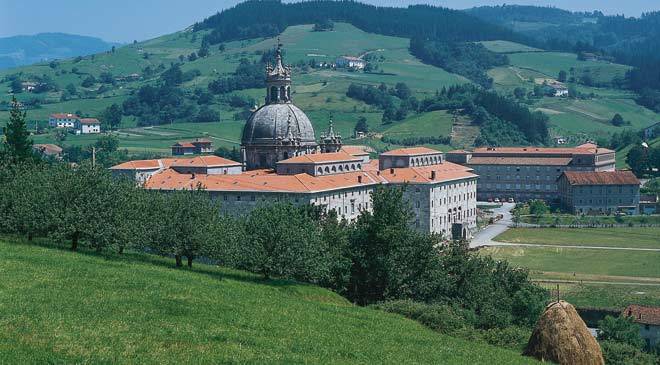
The Jesuit community of Loyola would therefore be delighted to receive some young Jesuits (priests or not) who are willing to collaborate in the welcoming of visitors and in other works of the Shrine, for part of the summer of 2012 (July, August and September). Among the necessary conditions: a sufficient knowledge of the Spanish language and a stay of about one month. The Shrine offers free accommodation and other facilities to be determined.
For more information, please contact Fr. Javier Zudaire. Starting now, candidates can send him their requests, attaching their CV’s. They will receive a definitive answer before the 1st of April 2012.


Jesus Maria Alemany was born in 1938 in Zaragoza and entered the Society of Jesus in 1955 being ordained in 1968. He was director of Centre Pignatelli in Zaragoza (1972-1975), and currently chairs the Foundation “Research Seminar for Peace” in Zaragoza. He has been director since the beginning in 1984.

Fr. Friedrich Weingartner went peacefully to the Lord on January 11, 2012 in the Infirmary in Taipei at 4:20 a.m.
Fr. Weingartner was born in Meggenhofen, Austria, on Jan. 22, 1918. He entered the Society in Austria on Sep. 7, 1937, was ordained to the priesthood on July 26, 1947 in Innsbruck, Austria, and professed the last vows on Feb. 2, 1982.
All priests of the Chinese Province will celebrate one Mass first intention for Fr. Weingartner’s eternal rest. Those who are not priests will offer one Mass and Communion and recite one “corona”. The members of Theologate community will offer two Masses, etc.
Yours in Our Lord,
Luciano Morra, S.J.
Socius
January 11, 2012
Fr. Friedrich Weingartner went peacefully to the Lord on January 11, 2012 in the Infirmary in Taipei at 4:20 a.m.
Fr. Weingartner was born in Meggenhofen, Austria, on Jan. 22, 1918. He entered the Society in Austria on Sep. 7, 1937, was ordained to the priesthood on July 26, 1947 in Innsbruck, Austria, and professed the last vows on Feb. 2, 1982.
All priests of the Chinese Province will celebrate one Mass first intention for Fr. Weingartner’s eternal rest. Those who are not priests will offer one Mass and Communion and recite one “corona”. The members of Theologate community will offer two Masses, etc.
Yours in Our Lord,
Luciano Morra, S.J.
Socius
January 11, 2012

Deepening Your Friendship with God through Honest Prayer

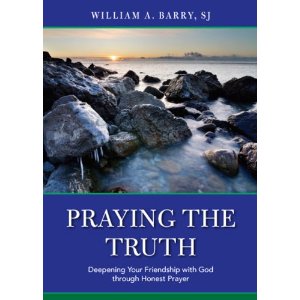
In Praying the Truth: Deepening Your Friendship with God through Honest Prayer, William A. Barry, SJ, helps us deepen our friendship with God by examining how to approach God, at any time and with any problem, in complete honesty. Fr. Barry reflects on how secrecy can hurt families, the Church, and ourselves and how what we are keeping secret can get in the way of our connection with God. He acknowledges that we may fear God’s reaction when revealing our most intimate truths; but just like with friendships, we risk not developing our relationship with God if we are dishonest about who we are and how we feel.
Praying the Truth helps us realize that if we do not approach God in complete honesty, we may be holding back a part of ourselves that needs to be healed. By learning how to communicate honestly with God, our friendship with God and our faith in God’s promise to love us unconditionally will be strengthened.


Appointments
Pope Benedict XVI has appointed:
– Father Antonio Spadaro Consultor of the Pontifical Council for Culture. Father Spadaro, Director of the magazine La Civiltà Cattolica, was born in 1966, entered the Society of Jesus in 1986 and was ordained a priest in 1996.
Father General has appointed:
– Father Severin Leitner General Consultor and Regional Assistant for Central-Eastern Europe (ECE) to replace Fr Adam Zak. Fr Severin was until now Rector of the Theologate at Innsbruck and Delegate for Formation of Jesuits in Europe. He was born in 1945, entered the Society in 1965 and was ordained priest in 1974.
– Father Kinley Joseph Tshering Provincial of Darjeeling (India). Fr. Kinley, currently rector and principal of St. Joseph School, North Point, was born in 1958, entered the Society of Jesus in 1986 and was ordained a priest in 1995.
– Father Vernon D’Cunha Provincial of Bombay (India). Fr. Vernon, currently Treasurer of the Province and Master of Novices for many years, was born in 1956, entered the Society of Jesus in 1977 and was ordained a priest in 1989.
Jesuitica
Signposting the Mormons. The Mormons are under particular scrutiny in the USA because one of them, Mitt Romney, has declared an interest in the Presidency. There was a time when they were less acceptable. In 1838 Governor Boggs of Missouri decreed: “The Mormons must be treated as enemies, and must be exterminated, or driven from the State, if necessary for the public peace.” As they were hounded from state to state, seeking a place where they could live in peace, they sought advice from Jean Pierre DeSmet SJ, the noted explorer of the American west. His description of the magnificent Great Salt Lake valley pleased them greatly. So Salt Lake City became to Mormons what Rome is to Catholics, and Jesuit de Smet stands there among the founders’ statues.
Jesuit Troika? Readers will have noticed one sign of hope on the European scene, a unity of purpose among three of Europe’s leaders: Herman van Rompuy, President of the European Council; Mario Draghi, President of the European Central Bank; and Mario Monti, the new Prime Minister of Italy. In a recent speech van Rompuy reminded the listeners that all the three were educated by the Jesuits: “My two technocrat colleagues share with me an idea of a humane market economy, an area where I have always dwelled.” They share the global economic vision of Pope Benedict’s encyclical: Caritas in Veritate. The fact that the Spaniards have just elected another Jesuit alumnus, Mariano Rajoy, as their leader, is stirring the lunatic fringe to talk of a Jesuit take-over of Europe – whatever that means. (AMDG Express).
Notice
Wishing all our friends and readers a Merry Christmas
and a New Year filled with joy and peace,
The Press and Information Office reports that the next Electronic Bulletin
will appear around the middle of January 2012.
In February it will resume its regularity.
Dear Brothers in Christ,
Fr. Xu Jiangu Ignatius went peacefully to the Lord in Shanghai on Jan. 7, 2012, at 1:42 p.m.
Fr. Ignatius Xu was born in Shanghai, China on July 22, 1920. He entered the Society at Zikawei, Shanghai on Aug. 30, 1938, was ordained to the priesthood at Zikawei on May 31, 1951, and made his last vows on Dec. 8, 1953.
All priests of the Chinese Province will celebrate one Mass first intention for Fr. Xu’s eternal rest. Those who are not priests will offer one Mass and Communion and recite one “corona”.
Yours in Our Lord,
Luciano Morra, S.J.
Socius
Macau, Jan. 7, 2012


Week Before Epiphany
1st Week in Ordinary Time
2nd Week in Ordinary Time
q
3rd Week in Ordinary Time
4th Week in Ordinary Time


by Bill Williams
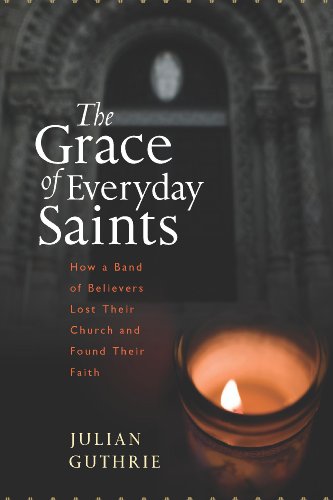
The Grace of Everyday Saints is the riveting story of one such church, St. Brigid, in San Francisco. When Archbishop John Quinn shuttered the church in 1994, shocked parishioners banded together to fight the decision—marking the start of a long-running saga that continues to this day.
The author, Julian Guthrie, is a San Francisco Chronicle journalist who first wrote about the parishioners’ struggle in a series of newspaper articles, which she has now expanded into this compelling book. Guthrie’s narrative brims with drama, tension, surprise and loss. Her descriptions of the faith and lives of the people involved bring the story to life.
Robert Bryan, a nationally known lawyer who represents death row convicts, felt drawn to the parishioners’ cause and became the fiery leader of the Committee to Save St. Brigid. He converted to Catholicism, but eventually became disillusioned with church politics and what he viewed as the arbitrary decision to close the century-old church.
Other activists included Lily Wong, a devoted parishioner from Burma, one of 11 siblings who converted from Buddhism to Catholicism; Joe Dignan, a confused man struggling with his sexual identity before he disclosed to the committee that he was gay; and the Rev. Cyril O’Sullivan, a committed St. Brigid priest who defied the archbishop by actively working with parishioners to save their church. The archbishop soon moved him to another parish to silence him.
To all appearances, Guthrie’s account makes clear, St. Brigid appeared to be a thriving church. There were five Sunday Masses and three daily Masses, celebrated in five languages.
Parishioners met with the archbishop, but he was adamant that the church would not reopen, citing declining Mass attendance and the anticipated high cost of strengthening the church to protect it from earthquakes.
The committee leader Bryan characterized the struggle as one “about good versus evil, about the little guy taking on the powerful.” He even flew to Rome to file an appeal, but no one in the Vatican would meet with him. He accused the archbishop of exercising “morally corrupt leadership.” Tiring of the rancor, the archbishop resigned.
Bryan’s hardball, aggressive leadership eventually split the committee. After a decade at the helm, Bryan gave up his position. Joe Dignan, a younger, less inflammatory leader, succeeded him.
The new archbishop, William Levada, initially seemed more open to compromise, but when the committee offered to raise $1.5 million to upgrade the church, it got no response. Parishioners, however, did succeed in having the church declared a historic landmark so it could not be torn down.
One dramatic subtheme of the story involves the impact of the nationwide sexual abuse scandal involving priests. The San Francisco Archdiocese alone spent $67 million to settle such cases. As Guthrie notes, parishioners believed the archdiocese wanted to sell St. Brigid to raise money to help pay for the settlements, but the archdiocese maintained none of the sale proceeds were used for that purpose.
The St. Brigid story has so many twists and turns that it is hard to summarize them in a short review. At one point the archdiocese agreed to sell St. Brigid to a condominium developer but then backed out of that deal and instead sold the church to the Academy of Art University, which planned to use the building for school and community events.
In 2005 Joe Dignan told the committee, “What I’ve come to learn is that my faith has nothing to do with gold chalices or big cathedrals. It is deep inside.” A year later committee members received the shocking news that Dignan had died suddenly of a heart attack at age 49. The Academy of Art allowed mourners to use the shuttered church for a memorial service.
Despite the loss of their leader and the long odds, the Save St. Brigid committee has vowed to carry on. It continues to meet bi-weekly. One diocesan official has compared the protesters to the Energizer Bunny. They simply never give up. “They believe in something bigger than themselves,” Guthrie writes, “and they are never going to let go—despite the powerful opposition and despite the appearance of getting nowhere.”
Nonfiction books written by reporters often lack depth and a compelling narrative thread, but Guthrie’s account hooks the reader from the start with color, dialogue, telling detail and intrigue, much like good fiction.
Nationwide, the unfortunate economic reality is that some dioceses are close to bankruptcy because of rising costs, declining Mass attendance and multi-million-dollar settlements of sexual abuse cases. Are there options other than closing churches to save money? The author does not say, but perhaps that is a subject for another book.