

Author: cfliao


In the Valley of the Shadow
ON THE FOUNDATIONS OF RELIGIOUS BELIEF
by JAMES L. KUGEL
In the Valley of the Shadow

ON THE FOUNDATIONS OF RELIGIOUS BELIEF
by JAMES L. KUGEL
FREE PRESS. 256P $26
In his latest, most personal book, In the Valley of the Shadow, Kugel advances a proposal that solves that particular mystery, although it extends beyond the psalms: that rather than “Despite all that,” it is “because of all that”-because of the experience of helplessness, because of the “eerie proximity” to death illustrated in the Complaints-that we profess faith. Tragedy lies in the loss of that sense of helplessness.
This insight did not come cheap. Ten years ago, when he was 54, Kugel’s doctors diagnosed him with cancer (he never specifies what kind) and gave him two years, perhaps five, to live. Obviously, he has beaten the odds-the doctors now say he is cancer-free. (In the years since, in fact, he produced his magnificent and provocative How to Read the Bible.) But during his illness and grueling treatment, he inhabited the place where, as he puts it, the background music suddenly stopped -that is, “the music of daily life…of infinite time and possibilities…now suddenly…replaced by nothing.”
Most people lucky enough to experience that state and survive would hurry to forget it. Kugel does not chase the memories, but he regards the fact that “they keep following me around” as a “privileged insight.” For him, the eerie proximity, the sense of his life as a “compact, little thing,” of having a “semi-permeable soul,” of inhabiting “a stark world”-the book is poetic, as obsessed with naming and renaming the condition as analyzing it-is both the door to faith at its elemental level and the reason moderns find it increasingly hard to enter.
For if Kugel’s subject is the “small” state of mind, his goad was his hospital-bed reading on scientific explanations for religion and the New Atheist literature that cites them. In the Valley is Kugel’s own idiosyncratic volley in the God/no-God wars. He found himself both fascinated and exasperated by evolutionary biologists’ contention that religion is a “hyperactive agency detection device,” the reflex of attributing agency to every random ripple of the tall grass because back in the day, a saber-tooth tiger would often jump out. As big predators declined, goes the argument, the hypersensitivity to inexplicable phenomena lived on; and God or gods, the ultimate Agent, became the (erroneous) receptacle for all the corresponding emotion.
Kugel demurs. He concludes that however archaic our agency detection device may be, it remains valid regarding the one irreducible mystery of material life: death. Our error, really our calamity, which he tracks back as far as the early Middle Ages, is that as we have gradually subtracted phenomena from the inexplicable list we have come to think of our own role as progressively “bigger,” to the point where all agents outside of those huge selves have been crowded out, rendering faith incomprehensible. At which point death, the exception, becomes unbearably terrifying. Nor does Kugel think that moderns can recover our former sense of the cosmos: “There we hang, so big that we can barely see that which is real but…outside ourselves, and utterly unable to return to what was an earlier, truer sense of things.”
This is plausible but hardly conventionally uplifting, first, because one hates to feel this lost. And also because even if we could recover the old way of seeing, we would regain our reason to believe, but not (by this particular argument) any content for that belief. This is an occupational hazard of arguing God/no-God; but Kugel once wrote a book called On Being a Jew, so presumably there was some kind of faith ready when he needed it. He does not explore it here.
Offsetting the aridity of his destination, however, is the ride. Kugel has always worn his great erudition not just lightly but alluringly, and a memoir/polemic frees him as never before. He unveils a stream of perfectly framed illustrations, associations and digressions featuring everything from African witchcraft to the psalms (exemplifying art that expresses both death’s starkness and the only useful response) to Leonard Cohen to Wittgenstein to the ancient radio punch line “Was you dere, Charlie?” to the enduring puzzle of why we hit the elevator button when it clearly has already been pressed.
In the Valley of the Shadow‘s other virtue is Kugel’s indelible insistence on his experience, in all its small, eerie particularity. At one point he compares himself to Tiresias, the mythical Greek who (involuntarily) shuttled back and forth from male to female and back again. This rendered him uniquely wise, but inquirers sometimes found his wisdom disquieting. In the admittedly vast American genre of near-death tales, it is hard to imagine another book simultaneously so tough-minded, so uncanny and yet, despite all, so enjoyable. Kugel’s last line is, “From way up here…I can see you all, floating.” What makes this unnerving is that he is still down here, writing. What makes us grateful is the same thing.
David Van Biema is writing a book on the history and cultural interpretation of the Psalms.


by Jim Manney
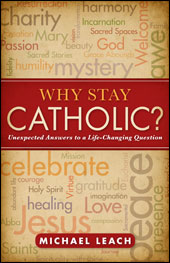
I thought I’d mention a couple of books from Loyola Press that recently won awards from the Catholic Press Association. Why Stay Catholic? by Michael Leach won first place in the category for Popular Presentation of the Catholic Faith. The judges called it “practical, joyous, and spirit-lifting.” It is all of those things, and well-written too. Why Stay Catholic? also won third place in the Spirituality category.
Third place in the Popular Presentation category went to Practice Makes Catholic by Joe Paprocki. The judges said it is rich with wisdom and “short on preachiness.” That’s what we like to hear about our books.
Rounding out Loyola Press’s awards is Living the Mass by Joe Paprocki and Fr. Dominic Grassi. The judges said it was “a gem.”
Finally the National Jesuit News took first place for best electronic newsletter. Not surprisingly, the Jesuits are leading us into the digital future.
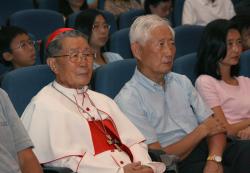

There is deep emotion in the Chinese Catholic world, after the death of Cardinal Paul Shan Kuo-Hsi, SJ, Bishop Emeritus of Kaohsiung, who died yesterday afternoon in the Catholic hospital of GengXin in Taipei (Taiwan). Masses for his soul and remembrance are celebrated all over the Catholic Chinese world in mainland China, in Hong Kong, Macao and Taiwan, especially in the diocese of Kaohsiung, where the body was taken this morning in the Holy Family Parish. As reported to Fides Agency by a statement from the diocese of Kaohsiung, the funeral will be held on September 1, “with a simple ritual, according to the will expressed by the Cardinal in his will.” As desired by the Cardinal, all donations collected will be donated to the “Foundation of Shan Guo Xi for Social Assistance of ethnic and disadvantaged groups.” Always according to his will, the gravestone epitaph on his tomb will report the phrase: “Born in Christ, lived in Christ, died in Christ: forever belongs to Christ,” in tune with his episcopal motto which was “Establishing all things in Christ. ” Great appreciation for his figure was expressed by religious leaders and civil authorities. “Cardinal Shan was not only a religious personality of great mercy, but he is above all a person of immense generosity, peace and serenity that I always admired,” said the well-known Buddhist leader Xing Yun. “In the face of life and death, Cardinal Shan showed great foresight, turning a difficult time in life as an opportunity at the service to all. His thoughts and his wisdom elicit a profound reflection on all of us,” said the Great Buddhist Master Sheng Yan.
Among civilian authorities, a message of condolence was sent by Ma Ying Jiu, President of the Republic of China (Taiwan). Card Shan, after finding out he had cancer in 2006, intensified his efforts to promoting evangelization, with particular care regarding the Church in mainland China. Despite his age and illness, he never failed to lend support to the Bishops and faithful in China, as evidenced by his affectionate and authoritative ” A Letter from Cardinal Paul Shan to All Brother Bishops “, written in 2010, which called for unity and reconciliation in a spirit of great understanding and brotherhood. He spent his energies for evangelization: from November 2007 until April 2012, he held between 219 speeches, lessons and lectures in the university, the hospital and the prison in Taiwan. Cardinal Shan was born on December 3, 1923 in Puyang (today in Henan), in China (diocese of Taming). He entered the Society of Jesus on 11 September 1946 in Beijing and took his first vows on September 12, 1948 in Beijing. He was ordained a priest on March 18, 1955 in Baguio, Philippines, from 1959 to 1961 he studied for his PhD in spiritual Theology at the Pontifical Gregorian University in Rome. After a period in Vietnam, in 1976 he was appointed Episcopal Vicar of Taipei. On 15 November 1979 he was appointed Bishop of Hwalien. On 14 February 1980 he received the episcopal ordination and took possession of the diocese. In 1983 he was commissioned to celebrate the 400th anniversary of the arrival in China of Father Matteo Ricci. On 4 March 1991 he was appointed bishop of Kaohsiung, and took possession of the new diocese on June 17. He was general rapporteur of the Special Assembly for Asia of the Synod of Bishops, held in Rome from 19 April to 14 May 1998. It is due to his desire to invite two Bishops from China to the Synod, to whom the Chinese government did not give permission to participate: during the Synod there were two empty chairs to remember them. That same year, Pope John Paul II created him Cardinal. He was always a figure of authority of the Vatican Commission for the Church in China. (NZ) (Agenzia Fides 23/08/2012)

Gerard O’Connell
Vatican Insider
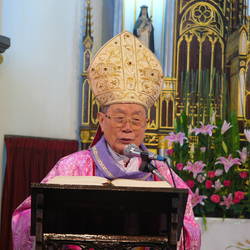
Cardinal Paul Shan Kuo-hsi, the oldest of the three Chinese members of the College of Cardinals, died in a hospital in Taipei, Taiwan, on August 22, after a six-year struggle with cancer.
On hearing of his death, Chinese Catholics worldwide prayed for him at masses in Taiwan, across mainland China, as well as in Hong, Macau and many other places, while Taiwan’s President Ma Ying Jiu and other civil and religious leaders payed high tribute to this greatly revered holy man.
“Like Blessed John Paul II he was an example of how to live and how to prepare to meet the Lord”, a religious sister who had worked closely with him told me. She recalled how when people asked him if he was afraid to die, he always responded: “No! Dying is falling into the loving arms of God.”
He had battled against lung cancer since 2006. When in the spring of this year he was informed that the cancer had spread to his brain, he moved from Kaohsiung to Taipei for further treatment, including cyber-knife surgery. It was the final stage in his long “farewell to life”, a journey conducted with deep faith and trust in God that has made him famous and greatly revered throughout Taiwan, mainland China and the Chinese speaking world.
He considered the cancer a “blessing” that had opened many doors and enabled him to explain the Catholic faith to non-Christians in Taiwan, where 97% of the population is non-Christian. “Many people are surprised that I am not afraid of death, and facing death I am still so calm. So they want to listen to me”, he told me.
Invitations kept arriving, and he decided to give priority to three categories: intellectuals like university scholars and doctors, condemned criminals in prison, and religious groups – including Buddhist, Taoists, Protestant and Catholics. “I have explained our Catholic faith to non-Christians much more in these years than I did in 60 years as a Jesuit”, he said.
When on 5 February 2007, for example, 100 lung-cancer specialists asked him, “‘what means besides medicine do you use?”, he replied, “One that you haven’t paid attention to – my faith!” He told them, “My faith, Christianity, is very simple. Just one word, love, because God is love and the nature of God is immense love.” He explained that he was “not afraid of death, because I know that after death I will enjoy the eternal life of God, which is a life of immense love.”
Cardinal Shan was born in Puyang, in north-eastern Henan province on 3 December 1923. He joined the Jesuits in Beijing in 1946 and took his first vows there in September 1948, but was sent out of mainland China to study for the priesthood just before the Communists came to power in 1949. Following his priestly ordination in the Philippines, he was sent to study at the Pontifical Gregorian University, Rome. Afterwards he was sent to work first in Vietnam and then in Taiwan where he spent the rest of his life, serving as bishop first in Hwalien and then Kaohsiung. John Paul II made him a cardinal in 1998 – the fifth Chinese cardinal in the history of the Church. That same year Shan was “General Relator” at the Synod for Asia, and in 2007 Pope Benedict appointed him a member of the papal Commission for the Church in China, whose situation was always close to his heart.
Since the early 1980s, Beijing has warmly welcomed cardinals from Italy, Belgium, France, Scotland, USA, the Philippines and Vietnam, but it has showed no such readiness to allow the only two living Chinese cardinals who were born in the mainland – Paul Shan Kuo-hsi and Hong Kong’s Joseph Zen Ze-kiun, to visit the land of their birth
Beijing only once allowed Shan to return to the mainland – in 1979. He dearly wanted to return there one last time before he died, and meet again his younger sister and other family members but the Chinese authorities refused to grant him a visa in 2011 because he would not accept their condition that he should go to Beijing too. He knew that if he went there his visit could be manipulated for political reasons by having him meet people in leadership positions in the government established bodies that control the life of the Catholic Church in China. Ever a man of principle, this great soul was not willing to make such a compromise to obtain a visa.
Months later, while visiting the closest point between Taiwan and mainland China, he looked across the straits and raising his hand, waved and said, “Goodbye my sister, we will meet in heaven!”
In an interview with me in Rome, March 2007, he expressed optimism about the future of the Church in the mainland because, he said, “We are in the hands of God, and from history we know that no dictatorial regime will last forever!”


Authenticity is the first test of my values and purpose. If I say I’m here on earth to repair the world or to be holy, do I really, really mean it? Do these ideas make me live and work differently, or do they ultimately hold no more significance than an empty slogan emblazoned across a glossy corporate annual report? Can I say that I’m here on earth for a reason, or am I simply drifting along, grasping after whatever suits a short-term need or a current fad?
If authenticity of purpose is the first test, then putting purpose into practice is the second and equally daunting challenge. For the loftier our purpose, the more we test our imagination to find everyday ways to demonstrate that purpose in how we live. I may be inspired enough to commit to building the civilization of love, but can I live that extraordinary-sounding purpose throughout life’s very ordinary routines of commuting to work, answering office e-mail, keeping a house clean, balancing a checkbook, and doing chores?
Our values are the answer; they are the means by which we translate purpose into practice all day, every day.
SAN FRANCISCO (JTA) — Erin-Kate Escobar, a political science major at the University of San Francisco, had never been interested in her school’s Judaic studies program.
“It was Judaism as religion,” she says.
But when classes resumed last month the old program, with its theological and historical emphasis, had morphed into The Swig Program in Jewish Studies and Social Justice, a reconfigured minor aimed at teaching students what it means to be a Jewish social justice activist.
The program offers classes in Judaism, Jewish culture and thought, Jewish-Muslim and Jewish-Christian relations, and Hebrew and Arabic, as well as two core courses dealing with Jewish ideas about social justice.
Escobar signed right up.
“When I think of Judaism, I think of social justice and tikkun olam,” says the 21-year-old senior, who was raised Jewish in Santa Cruz, Calif. “This is something I’m willing to put my name to.”
Jewish social justice has been a growth industry for at least a decade. The field is bursting with new organizations, from the Progressive Jewish Alliance in Los Angeles to Jewish Community Action in St. Paul, and established groups such as the American Jewish World Service that are directing more of their energies to hands-on social justice work.
Young Jews are flocking to these projects, spending vacations digging wells in Africa, standing on picket lines in Chicago and rebuilding homes in post-Katrina New Orleans.
The new minor at the University of San Francisco, however, is the first academic program of its kind in the country.
Several Jewish social justice groups offer short-term and yearlong fellowships to train young people and rabbinical students in social justice work. The liberal rabbinical seminaries offer electives, some of them quite extensive. But it took a private Jesuit college on the West Coast to create the first academic program of study, a school where just 5 percent of 6,000 undergraduates are Jewish.
Aaron Tapper, who has held the school’s Swig Chair of Judaic Studies since August 2007, developed the program. Tapper, an assistant professor, also is the founding co-executive director of Abraham’s Vision, a conflict transformation organization that works with Jews and Palestinians.
For the Swig program, he spent most of the past year assembling a scholarly advisory board, lining up relevant courses and creating a few new ones.
One of the new core courses, taught by Tapper this fall, is “Jews, Jewish Texts and Social Justice Activists.” Students read ancient and modern Jewish texts, and hear from rabbis and Jewish social activists working in the field about a range of issues.
“Many nonprofits define social justice narrowly, in terms of economic justice,” Tapper says. “We define it a lot more broadly to include racial and ethnic equality, sexual orientation, environmental justice.”
The first guest speaker was Rabbi Lee Bycel, the regional director of the American Jewish World Service. He spoke about Judaism’s prophetic tradition.
“I drove home that the core of Judaism is action,” Bycel says. “We have prayer and study, but without action they lack meaning.”
Bycel says “two or three” students he spoke to in the class are considering careers in Jewish social justice, which he finds significant.
“This is a burgeoning field, and we need people who have a deep commitment to social justice and Jewish values, and the ability to be strategic,” he says. “A program like this plants seeds that will hopefully excite people to go on and get training they need to pursue this as a career.”
The lack of trained professionals able to fill the growing number of positions in Jewish social justice organizations was one of the main challenges highlighted in “Visioning Justice and the American Jewish Community,” a report released in May by the Nathan Cummings Foundation that detailed the huge growth in the field.
“There’s such a need to deepen the talent bank,” says Rabbi Jennie Rosenn, the foundation’s program director for Jewish life and values. “The fact that this is the first academic program of its kind is very exciting, and very complementary to the other Jewish social justice programs.”
Activists throughout the United States are applauding the USF program.
“I think it’s wonderful,” says Sam Aranson, the director of educational programs at the Chicago-based Jewish Council for Urban Affairs.
The council has eight rabbinical students enrolled in a three-month social justice fellowship program, as well as six graduate students in its yearlong Nadiv fellowship for Jewish social justice work.
Rabbi Jonah Pesner, the director of the Reform movement’s Just Congregations initiative, says the USF program is smart to tap into young people’s passion for social justice.
“The fact that an academic institution understands the intersection of Jewish text, Jewish liturgy and action in the world and is able to integrate that into a teaching program is a tremendous step forward in the way Judaism is taught,” he says.
Two of the four students who have enrolled for the new minor are Catholic, including Kathryn Butler.
“I’m not Jewish, but social justice is something everybody can relate to,” says Butler, 21. “The more I read about Jewish social justice, it’s not something I’m focused on as a career, but it will help me as a person.”
Although some people are surprised that a Jesuit college was the first to introduce a minor in Jewish social justice, it is quite fitting. The University of San Francisco was the first Catholic school in the country with an endowed Judaic studies chair, founded by the Swig family more than 30 years ago. And the university’s president, Father Stephan Privett, regularly takes his deans and vice presidents on immersion experiences to Mexico and Central America to deepen their commitment to social justice.
“The Catholic tradition’s focus on social justice is really a reincarnation of Judaism’s prophetic tradition,” Privett says. And the school already offers “Performing Arts and Social Justice,” so creating a similar course for Jewish studies wasn’t a stretch.
Still, Escobar says, the Jewish course is different.
“People say, ‘You just add ‘social justice’ to everything at USF, now it’s just Judaism and social justice,” she quips. “I say, no, it’s not just ‘adding’ social justice on the end. Social justice is part of Judaism.”
• From March 28th to April 9th the Colloquium for English Speaking Major Superiorsappointed during this last year is held at the General Curia. The purpose of the meeting is to provide group reflection, with the participation of Father General, on important issues of the Provincial government, such as the statement of conscience and the personal accompaniment, the communitarian animation, the insertion into the reality of the local Church, the mission to the frontiers and the interprovincial and international collaboration. The colloquium is useful also to illustrate to the new superiors the various offices and services of the General Curia and to have a personal contact with the staff of Father General in the government of the universal Society. The colloquium has always an international character. This time the participants are 12 major superiors from Canada, Hungary, Ireland, India, Malaysia, Sri Lanka, Vietnam, Japan, Micronesia, as well as the new presidents of the European and African Conferences. At the end of the colloquium the Provincials will visit and celebrate the Eucharist in the Rooms of St. Ignatius, as a sign of real commitment to the charism and mission of the Society. This Colloquium in English is the first of those in programme for this year.
• From April 3-7 the meeting of the Socii of the Assistancy of Western Europe (EOC)will take place. Following the format of the meeting of the African Socii, the purpose of this meeting is to familiarize the Socii with the administrative and bureaucratic system of the General Curia and to come to know Jesuit brethren working at the Curia. The meeting is also an opportunity for exchange and friendship. The Secretary of the Society and the Procurator General will help the participants in the study of the various aspects of the work of the Socii, especially with regard to the procedures contained in the various documents, as for instance, the Constitutions, the “Complementary Norms”, the “Legal-Practical Manual of the Society”, Acta Romana, the Practica Quaedam. The last have been renewed after the last General Congregation, and we hope that soon it will be published.
• From April 4-9, the five leaders of the Global Ignatian Advocacy Networks (GIAN) on Ecology, Education, Governance of Natural and Mineral Resources, Migration and Peace and Human Rights meet at the Jesuit Curia in Rome with four experts from Britain, Germany, Singapore and Spain. This workshop marks the beginning of a two-year formation program on advocacy and networking designed by the leaders and run by the Social Justice and Ecology Secretariat.
 |
Appointments: |
Father General has appointed:
– Father Dermot Preston new Provincial of the British Province. Fr Preston is currently Jesuit Regional Superior in Guyana, South America. He is 53, has worked in Guyana, for the past 5 years. He also has experience in the Province’s other Region, South Africa, where he was Chaplain at Cape Town University and national chaplain to the lay Ignatian organisation, the Christian Life Community. On his return from South Africa, he was Socius (Assistant) to the Provincial for four years. Fr Preston was ordained priest in 1990 and was for a number of years vocations director for the British Province.
– Father Alberto Teixeira de Brito Provincial of Portugal.
Fr de Brito was born in 1945. He entered the novitiate in Soutelo in September 1961, and was ordained to the priesthood in 1973. He has got a license in Philosophy at the Catholic University of Portugal and in Theology at the Pontifical Gregorian University. In Portugal, Fr. de Brito lived in Coimbra, Braga and Lisbon, and worked, for many years as Master of Novices. He was Director of the University Center Manuel da Nobrega, in Coimbra, National Secretary of the Apostleship of Prayer and National Assistant of the Community of Christian Life. In 2004 he was called to Rome, as Delegated Assistant of the World Community of Christian Life, where he remained until 2009. Since then, he lived in Brussels, in the European Jesuit community as Director of the Pastoral Foyer Catholique Européen.
– Father Ante Tustonjic Provincial of the Croatian Province.
Fr. Ante was born 1969 in Vukovar (Croatia). He joined the Society of Jesus 1989. After finishing his novitiate in Split, and philosophy in Zagreb, he did his regency in the Croatian Section of the Vatican Radio in Rome. After theology in Zagreb, he was ordained priest 1999.
His first years of priesthood he spent as assistant parish priest in Sarajevo (Bosnia and Herzegovina), where he also worked with the JRS.
Later he studied biblical theology at the Gregorian University in Rome and business administration at the Zagreb School of Economics and Management. Since 2006 Fr. Ante has been the Treasurer of the Croatian Province. He will assume the office of the Provincial on September 8th this year.– Father Emmanuel Mumba Provincial of Zambia-Malawi Province. Father Emmanuel, who was up to now parish priest of St. Mary’s Church in Lusaka-Matero, was born in 1968, entered the Society of Jesus in 1990 and was ordained a priest in 2003.
– Father Franck Janin Provincial of Southern Belgium and Luxembourg.
Father Franck, was born in 1958, entered the Society of Jesus in 1984 and was ordained a priest in 1990. He was Master of Novices from 1995 to 2001. Up to now he was director of the Spiritual Centre of Wépion, responsible for the pastoral of vocations and ecclesiastical assistant of the Christian Life Communities.
… Jesuits around the World, Rome, 5 & 19 April 2011
Dear Brothers in Christ,
Card. Shan Kuo-hsi Paul went peacefully to the Lord on August 22, 2012 at the Cardinal Tien Hospital, Taipei, at 6:42 p.m.
Card. Shan was born in Puyang, Henan, on Dec. 2, 1923. He entered the Society in Beijing on Sep. 11, 1946, was ordained to the priesthood on Mar. 18, 1955 in Baguio, Philippines, professed the last vows on Feb. 2, 1963 in Thu Duc, Vietnam, was appointed Bishop of Hualien on Nov. 15, 1979, Bishop of Kaohsiung on Mar. 4, 1991, and Cardinal on Jan. 18, 1998.
All priests of the Chinese Province will celebrate one Mass first intention for Card. Shan’s eternal rest. Those who are not priests will offer one Mass and Communion and recite one “corona”.
Yours in Our Lord,
Luciano Morra, S.J.
Socius
August 22, 2012
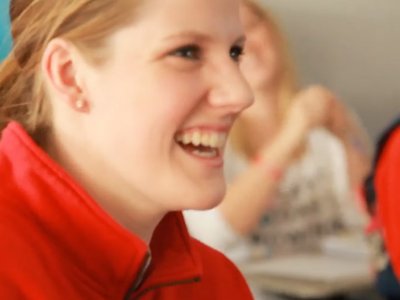
by Jim Manney
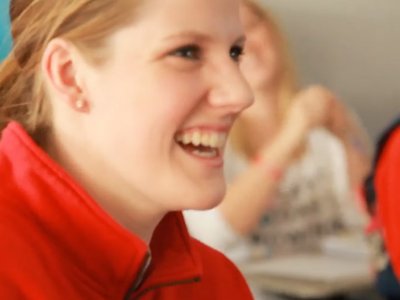
If you watched the Olympics, you probably were charmed by Missy Franklin, the 17-year-old swimmer from Colorado who won four gold medals. Missy will be a senior at Regis Jesuit High School in Aurora, Colorado. Lots of famous athletes have Jesuit school affiliations, but with Missy the connection seems especially meaningful. From an interview:
Going into Regis Jesuit my faith was not a very big aspect of my life. Taking my first theology classes, going to my first Masses, going on my first retreats, I began to realize how important God is in my life and how much I love him and need him. My relationship with (God) grew so much within my first three years at Regis Jesuit and I am very happy with where I am with him right now, although there is a lot of more work to do.
She hopes to go on a mission trip to Belize in the winter, and is even thinking about becoming a Catholic.



by William A. Barry, SJ
The Ignatian Exercises rest on the theological assumption that God creates this universe precisely in order to invite other persons into the relational life of the Trinity. God’s purpose or intention of inviting each person into the relational life of the Trinity is not episodic, occurring periodically in each person’s life. God is always acting to bring about this intention.
Another way of making the same point is to say that God is always in conscious relationship with each one of us as our creator, our sustainer, dear father or dear mother, our brother, our savior, the Spirit who dwells in our hearts. Ignatius presupposes that at every moment of our existence God is communicating to us who God is, is trying to draw us into an awareness, a consciousness of the reality of who we are in God’s sight. Whether we are aware of it or not, at every moment of our existence we are encountering God, Father, Son, and Holy Spirit, who is trying to catch our attention, trying to draw us into a reciprocal conscious relationship.