

Author: cfliao
There was a group of elderly gentlemen in Japan who would meet to exchange news and drink tea. One of their diversions was to search for costly varieties of tea and create new blends that would delight the palate.
When it was the turn of the oldest member of the group to entertain the others, he served tea with the greatest ceremony, measuring out the leaves from a golden container. Everyone had the highest praise for the tea and demanded to know by what particular combination he had arrived at this exquisite blend.
The old man smiled and said, “Gentlemen, the tea that you find so delightful is the one that is drunk by the peasants on my farm. The finest things in life are neither costly nor hard to find.”


I have to admit that I’ve slowly been working Christmas music into my music listening in the last couple of weeks. Every year I hear the same complaint that it’s too soon to be listening to Christmas music, that I should wait until at least after Thanksgiving. “Don’t get ahead of yourself,” people tell me.
It’s not that I’m trying to get to Christmas sooner or resist living in the moment. I embrace the Halloween fun. I’m engaged in my family’s Thanksgiving traditions. And when Christmas does come I’m completely present to it. What gets me listening to Christmas music so early is actually something bigger than Christmas Day.
Christmas music indicates to me a change of season. We move from the independence of the summer, the trips to the beach, the sunbathing, and the “me time” into a season where family becomes a more central focus. The last three months of the year bring loved ones together. For me Christmas music represents the nostalgia of holidays past, of a time where God is made present in those special moments with family and friends. It has the same effect as sweater weather, pumpkin pie, and eggnog. These things are all part of the sacramentality of life. Certain things help us find the presence of God in the day to day.
So as the first pinch of cold is felt in the air and as gingerbread lattes appear, I remember who and what those feelings and tastes were so strongly tied to last year, and I look forward to this year. I recall the graces of yesteryear and anticipate those yet to come this season. And by winter’s end, the sacramentality of new buds, warming days, and beach music lead me to the graces of the next season in the life God has given me.
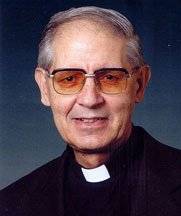
 Fr. Adolfo Nicolás, superior general of the Jesuits, recently talked about the New Evangelization at the synod of bishops meeting in Rome this month to discuss the Church’s missionary outreach. Speaking as the head of a missionary order and as a missionary himself (he spent most of his life in Asia), Fr. Nicolás offered seven principles for missionary work:
The importance of “the way of humility” to communicate the Gospel.
The need of stating “the truth of our limited and imperfect humanity” in everything we say and proclaim, without any trace of Triumphalism.
The simplicity of the message we try to communicate, without complications or excessive rationalizations that make it opaque and not understandable.
Generosity in acknowledging the work of God in the life and history of people, accompanied by sincere admiration, joy and hope whenever we find in others goodness and dedication.
That the most credible message is the one that comes from our life, totally taken and guided by the Gospel of Jesus Christ.
That forgiveness and reconciliation are the most helpful shortcuts to the heart of the Gospel.
That the Message of the Cross is best communicated through the death (to the self and to limited goals) of the missionary.
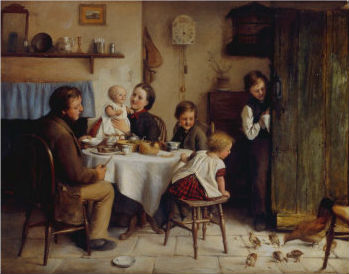

by Jean-Pierre De Caussade, SJ
The Sacrament of the Present Moment
Those who have abandoned themselves to God always lead mysterious lives and receive from him exceptional and miraculous gifts by means of the most ordinary, natural and chance experiences in which there appears to be nothing unusual. The simplest sermon, the most banal conversations, the least erudite books become a source of knowledge and wisdom to these souls by virtue of God’s purpose. This is why they carefully pick up the crumbs which clever minds tread under foot, for to them everything is precious and a source of enrichment.
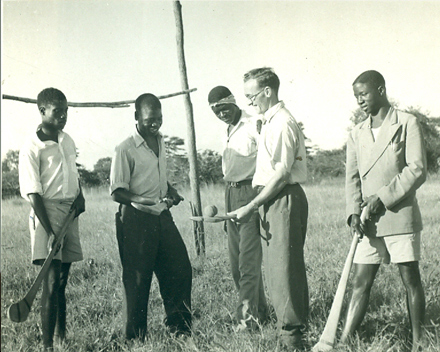

To mark this year’s Archives Awareness Campaign, Irish Jesuit archivist, Damien Burke, has created a set of historical photos from Jesuit schools concerning sports, including this photo of an Irish Jesuit, Fr Joe Conway, teaching Zambian students how to play hurling.
This annual consciousness-raising campaign is an initiative of The Archives and Records Association in the UK and Ireland runs an annual Archives Awareness campaign, and we’re currently in the middle of it. Fittingly, the theme this year is ‘Sports, games and the Olympics’. Damien is a committee-member of the Irish branch of the ARA.
The full set of photos relating to Jesuit schools and sports can be seen here. It is one of many photo sets that Damien has presented on the Irish Jesuit Flickr pages. All of the archive collections can be accessed from here.
Over the past few years Damien has worked hard to expand the profile of the Irish Jesuit Archives. They are an invaluable resource both for people interested in Jesuit history and for those investigating Irish social and cultural history in the last two centuries. Damien has been quick to engage social media. Apart from maintaining the Flickr collections, he regularly posts on an exhibition blog at Tumblr. And to help people who want to keep up with archive activities as they unfold, he also tweets each new development.
How times have changed. Even though archivists might still spend much of their time surrounded by dusty tomes and ageing documents, when it comes to ‘outreach’ they are fully plugged in to the electronic age.
by Paul Brian Campbell, SJ

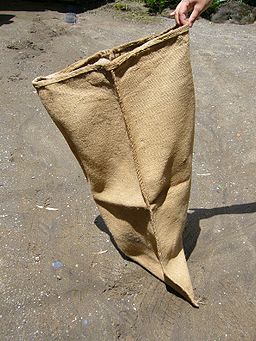
Mula came upon a frowning man walking along the road to town. “What’s wrong?” he asked. The man held up a tattered bag and moaned, “All that I own in this wide world barely fills this miserable, wretched sack.”
“Too bad,” said Mula, and with that, he snatched the bag from the man’s hands and ran down the road with it.
Having lost everything, the man burst into tears and, more miserable than before, continued walking. Meanwhile, Mula quickly ran around the bend and placed the man’s sack in the middle of the road where he would have to come upon it.
When the man saw his bag sitting in the road before him, he laughed with joy, and shouted, “My sack! I thought I’d lost you!”
Watching through the bushes, Mula chuckled. “Well, that’s one way to make someone happy!”


I have been seeking and searching God for as long as I can remember, for many many lives, from the very beginning of existence. Once in a while, I have seen him by the side of a faraway star, and I have rejoiced and danced that the distance, although great, is not impossible to reach. And I have traveled and reached to the star; but by the time I reached the star, God has moved to another star. And it has been going on for centuries.
The challenge is so great that I go on hoping against hope… I have to find him, I am so absorbed in the search. The very search is so intriguing, so mysterious, so enchanting, that God has become almost an excuse – the search has become itself the goal.
And to my surprise, one day I reached a house in a faraway star with a small sign in front of it, saying, “This is the house of God.” My joy knew no bounds; so finally I have arrived! I rushed up the steps, many steps, that led to the door of the house. But as I was coming closer and closer to the door, a fear suddenly appeared in my heart. As I was going to knock, I became paralyzed with a fear that I had never known, never thought of, never dreamed of. The fear was:
If this house is certainly the house of God, then what will I do after I have found him?”
Now searching for God has become my very life; to have found him will be equivalent to committing suicide. And what am I going to do with him? I had never thought of all these things before. I should have thought before I started the search: what am I going to do with God?
I took my shoes in my hands, and silently and very slowly stepped back, afraid that God may hear the noise and may open the door and say, “Where are you going? I am here, come in!” And as I reached the steps, I ran away as I have never run before; and since then I have been again searching for God, looking for him in every direction and avoiding the house where he really lives. Now I know that house has to be avoided. And I continue the search, enjoy the very journey, the pilgrimage.

From the archives, Michael O’Neill McGrath, O.S.F.S., widely known as “Brother Mickey,” talks about his vocation as a painter and some of his notable works. A portfolio of Brother Mickey’s painted mandelas appears in the October 22 issue. Additional paintings by Brother Mickey can be viewed in this slideshow.
|
|
| Download MP3 |
For the past 20 years, Fr. Greg Boyle, SJ, has been running services for former gang members in Los Angeles that operate under the umbrella of Homeboy Industries. One of the many people who’ve been inspired by his work is Freida Mock, an Oscar-winning documentary filmmaker. Her film G-DOG, about Boyle and his work, is set for theatrical release next year. Here’s a clip from the film, showing Boyle at Mass in juvenile prison.
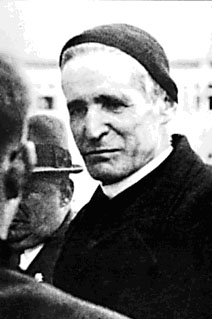
Rupert Mayer was born in Stuttgart, Germany. When he was eighteen and had completed his secondary education, he told his father of his desire to become a Jesuit but was advised that he should get himself ordained as a priest first and to enter the Society later if he was still keen to do so. Rupert accepted his father’s advice and pursued university studies in philosophy initially at Fribourg, Switzerland and Munich and then theology at Tubingen for 3 years before going to the seminary at Rottenburg for his final year. He was ordained on May 2, 1899 and celebrated his first Mass on May 4.

He served for a year as an assistant pastor in Spaichingen and then entered the Jesuit novitiate at Feldkirch in Austria on Oct 1, 1900. After his noviceship he went for further studies in the Netherlands and between 1906 to 1911, he traveled through Germany, Switzerland and the Netherlands, preaching missions in many parishes. Fr Mayer’s characteristic apostolate began when he was transferred to Munich in 1912 where he devoted the rest of his thirty-one years to the migrant people who came from farms and small towns seeking employment and a place to stay .
Fr Mayer responded to the needs of the migrants; he collected food and clothing and searched for jobs and housing for them, and helped them preserved their faith as the city was becoming “pagan.” When Germany entered into World War I, Fr Mayer volunteered his services initially at a camp hospital, but later made Field Captain and traveled with his men to France, Poland and Romania where he was in the front line of battle. His courage became a legend among his soldiers; he was with them in their trenches, and stayed with those dying until the end. His courage was infectious and his presence gave the men hope.

After his convalescence, Fr Mayer went back to Munich and did all he could to help its citizens to recover from the war’s aftermath. He was appointed director of the men’s sodality and within nine years the membership grew to 7000 with men coming from fifty-three different parishes which meant the indefatigable Fr Mayer had to sometime give seventy talks a month to speak to each group. For the convenience of travelers, Fr Mayer introduced Sunday Masses in 1925 at the main railroad terminal and he himself celebrated the first two, beginning at 3:10am. Fr Mayer’s apostolate extended to the entire city and if Munich were a single parish, then the pastor would have been Fr Mayer!
Postwar Munich saw the rise of communist and social movements. Fr Mayer kept a close watch on them, attending their meetings and even shared the platform with their speakers, not to praise them but to raise Catholic principles to point out falsehoods and to indicate the evils to which these speakers were leading their audiences. Fr Mayer also witnessed the rise of Adolf Hitler and also boldly spoke out against the falsehoods Hitler was propagating by stressing Catholic principles. Fr Mayer could not be a National Socialist and it was inevitable that conflict would arise between him and the Nazi movement as the religious response to evil.
In 1933 when Hitler became chancellor of the German Reich, he showed his true colours and began to close church-affiliated schools and started a campaign to defame the religious orders in Germany. Fr Mayer spoke out against this persecution from the pulpit of St Michael’s in downtown Munich and because he was a powerful influence in the city, the Nazis could not tolerate such a force to oppose them. On May 16, 1937, the Gestapo ordered Fr Mayer to stop speaking in public which he obeyed but he continued to preach in church. Within two weeks, he was arrested and was imprisoned for six weeks before his trial where he was given a suspended sentence.He obeyed his superiors’ orders to remain silent but the Nazis took advantage of his silence to defame him in public. To exonerate himself, his superiors allowed him to return to the pulpit to defend himself against the Nazis’defamatory attacks. He was arrested six months later and served his suspended sentence in Landsberg prison for five months until a general amnesty freed him to return to Munich and work in small discussion groups
As the Nazis were still fearful of him, they arrested him again in Nov 1930 under the pretext that he had cooperated with a royalist movement.

Fr Mayer returned to Munich on May 11, 1945 and immediately resumed his apostolic work at St Michael. The years in prison and solitary confinement took a tool on his health. On Nov 1, 1945 Fr Mayer was celebrating the 8.00 am Mass on the feast of All Saints in St Michael’s and after reading the Gospel began his sermon. His topic was the saints in heaven and the Christian’s duty to imitate them to gain Paradise. In the middle of his sermon, while his thoughts were on heaven, his heart stopped, and the sixty-nine old Fr Mayer collapsed and died shortly afterwards. He was buried in the Jesuit cemetery at Pullach, outside Munich but his remains were brought back to the city and interred in the crypt of the Burgersaal, the church next to St Michael’s, where the men’s sodality regularly met.
Fr Mayer the preacher in Munich and the staunch opponent of Hitler was beatified by Pope John Paul II in Munich on Nov 3, 1987.