

Author: cfliao

A sick man turned to his doctor, as he was leaving the room after paying a visit, and said, “Doctor, I am afraid to die. Tell me what lies on the other side.” Very quietly the doctor said, “I don’t know.” “You don’t know?” the man said. “You, a Christian man, do not know what is on the other side?”
The doctor was holding the handle of the door, on the other side of which came a sound of scratching and whining. As he opened the door, a dog sprang into the room and leaped on him with an eager show of gladness.
Turning to the patient, the doctor said, “Did you notice my dog? He’s never been in this room before. He didn’t know what was inside. He knew nothing except that his master was here, and when the door opened, he sprang in without fear.”
“I know little of what is on the other side of death,” the doctor continued, “but I do know one thing: I know my Master is there, and that is enough. And when the door opens, I shall pass through with no fear, but with gladness.”
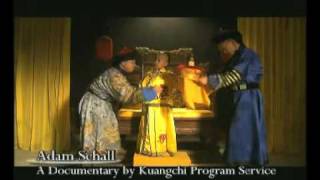
TAIWAN: A Film on Adam Schall von Bell

Adam Schall von Bell in the Service of the Emperors is a two-part documentary co-produced by Kuangchi Program Service in Taipei and Jiangsu Broadcasting Corporation in Nanjing (China). The docudrama tells the story of the seventeenth century German Jesuit missionary Fr Adam Schall von Bell. Adam Schall was a brilliant scientist and astronomer. His talent and ingenuity made him a valuable asset in the late Ming and early Qing empires. He became friend and adviser of three emperors. Having survived the fall of the Ming dynasty, Schall soon found himself serving the first emperor of the new Qing dynasty, the six-year old Chung-chi emperor. Schall was allowed inside the imperial palace because the emperor’s uncle had learned that Schall had completed work on a new and accurate calendar begun by Matteo Ricci during the former Ming dynasty. For Chinese emperors, nothing was more important than an accurate calendar. Schall became the friend of the young emperor, as well as his teacher and mentor. Schall never converted any of the emperors to Catholicism, but by his creative bridge-building he helped to establish the Catholic Church in China and to change the course of Chinese history.
AUSTRALIA: World’s Oldest Schoolteacher
Recently, just weeks short of his 100th birthday, Jesuit Fr Geoffrey Schneider has been declared the world’s oldest teacher by the Guinness World Records. The secret, according to the 99-year-old, is “a mountain of patience”. “If things are going wrong, don’t start shouting. Just proceed quietly, and things will settle down eventually,” says Fr Schneider, who turns 100 in December. The Jesuit priest has taught in schools in Sydney, Melbourne and Perth. He has shaped the intellects and values of leading Australian government, business, academia and sport figures, including the current leader of the federal opposition. As most workers switch between jobs or eagerly plan their retirement, Fr Schneider has no intention of ending his 47-year tenure at Sydney’s St Aloysius’ College, where he enjoys an enviable popularity. In the early 1990s, students were asked to name a new building after their favourite Jesuit saint. Innocently, three of them chose “Saint” Schneider. “I didn’t worry about it at the time, really, but after that we received a direction that Jesuits were not to have any buildings named after them while they are still alive,” he says.
BOLIVIA: International Congress of Fe y Alegría
The 43rd International Congress of Fe y Alegría on Inclusive Education and its Challenges was held in Cochabamba, Bolivia, from the 6 to 9 November. Father General participated in this meeting. Present were more than 2,500 young people, the representatives from 19 countries. Delegations from the various countries presented different aspects of the general theme of the Congress. For instance, representatives of Fe y Alegría Bolivia reflected on their experience of working with disabled people, while representatives from Guatemala spoke of their work with indigenous people. Fe y Alegría Chile explained the challenges and opportunities which arise from its work with people at risk, while their work with the heirs of the first African immigrants was introduced by the representatives from Honduras. “One of the cornerstones of Fe y Alegría is that everybody must have the basic right to education. We are to share our experiences and outcomes, and to provide the education which may be missing in any person’s life”, said Graciela Amo, who was responsible for communication during the Congress. On Wednesday, 7 November, Father General spoke to the Congress on Inclusive Education. During his three days in the country Father Nicolàs also met with the Jesuits of Bolivia. They opened up their apostolic works to him. Father General also paid a visit to Cardinal Julio Terrazas. For more information on the Congress visit: http://www.feyalegria.org/?idSeccion=40.
CHILE: Meeting of Jesuit Novices
From 28 to 31 October novices of the Provinces of Argentine-Uruguay, Bolivia, Chile and Peru met in Valparaiso. These were very intensive days. The novices visited Valparaiso and Viña del Mar to acquaint themselves with the significant works of the Society of Jesus: the Sanctuary of St Alberto Hurtado, Infocap, Techo, the Retreat House, and the community of the international theologate. There, they met with Fr Orlando Torres, who is responsible for Jesuit formation at the international level. They also visited the prisoners at the Valparaiso prison, and participated in a guided tour of the Congress of the Republic. The busy days helped to create an atmosphere of brotherhood, generosity, and acceptance of what God’s Spirit wants to convey to the novices through the Society. The meeting deepened fundamental aspects of the spirituality of their vocation. This is a spirituality which is embodied in the encounter with the needy, and an option for young people which leads them to search for a more just society. The responsibility to put their human, spiritual and academic formation at the service of others came to the fore in this meeting of novices.
CZECH REPUBLIC: Meeting of European Jesuits
A meeting of Jesuits and their collaborators, who work in the field of campus ministry, was held in Prague, the Czech Republic, from the 8 to 11 November. This was the third of such meetings. The theme of the gathering was: The new evangelization: the Ignatian way. The meeting was attended by about 30 delegates from all over Europe. Those present included James Corkery, a professor of systematic theology, Fr John Dardis, the President of the Conference of European Provincials, and Fr Gerald Blaszczak, director of the new General Curia’s Secretariat for the Service of Faith. “The main theme of the conference was particularly appropriate in this time when the Church is celebrating the Year of the Faith on the occasion of the 50th anniversary of the Second Vatican Council”, said Fr Jan Regner, the coordinator of the conference. During the event, there were two eucharistic celebrations open to the public: one on 9 November in the Church of St Ignatius, and a second on 10 November in the Church of St Saviour.
KOREA: A Second Jesuit Priest Imprisoned
In April of this year, it was widely reported that a Jesuit priest, Fr Joseph Kim Chong-uk, had been imprisoned for opposing and attempting to hinder construction of a naval base in Jeju Island, Sth Korea. Fr Kim has been released, but recently a second Jesuit priest, Fr John Lee Young-chan, has been put under court-ordered arrest. He is presently imprisoned without bail, awaiting trial. Fr Lee, together with five other peace activists, was detained by the police on October 24. He had been protesting about the excessive force the police used in detaining a woman activist. When the police manhandled him, they claimed his resistance amounted to use of violence. On October 26, the court upheld the Fr Lee’s arrest. The great majority of residents at the construction site, Gangjeong Village, oppose the project not only because it disrupts their lives but also because it destroys the desire of many residents of Jeju that it be an island of peace. The government has manipulated a small number of residents to voice their approval of the project. Furthermore, the government has proceeded extra-legally in the construction, and has been deluding the people into thinking it is not just a naval base, but a joint government-civilian harbor to boost tourism. The naval base will raise military tensions in NE Asia. Large numbers of peace activists, including many priests and religious, are supporting local residents in their efforts to physically hinder construction of the base. The Justice and Peace Committee of the Catholic Bishops’ Conference of Korea and the Korea Province of the Society of Jesus, among others, have issued statements in support of Fr Lee.
INDIA: Magis South Asia 2012
From 1 to 5 November, for the first time ever on such a large scale in Asia, the Jesuit Youth Convention (Magis), organized by Jesuits, was held at St Joseph’s Boys’ High School Campus Bangalore. The theme of the convention was ‘On pilgrimage with Christ at the Heart of the World,’ and the participants were called ‘pilgrims’. Youth and youth animators from Jesuit Institutions all over India participated in three days of exposure, reflection, and a variety of activities. Present were over 300 youthful pilgrims from twelve Indian states, from such diverse places as Kerala, Tamil Nadu, Gujarat, Pune, Bombay, Mangalore, Hazaribag, Andhra Pradesh, Ranchi, Delhi, Patna, Madhya Pradesh, Darjeeling, Goa and Dumka. Fr Brian Pereira SJ was the main coordinator of the Convention, assisted by Cyril and Lizzel, who were the coordinators of youth groups. Magis began with the solemn Eucharistic celebration. Fr Francis Serrao SJ, the Jesuit Provincial of Karnataka, was the main celebrant. He invited the pilgrims to have “squint (2 way) vision” – one towards God and the other towards one’s fellow human beings. The Convention was firmly rooted in the Jesuit motto Ad Majorem Dei Gloriam, and the major aspect of the convention comprised prayer, Eucharist, reflection and Examen. But the participants, together with their animators and guides, were exposed to the villages, slums, hospitals, homes for the aged, and leprosy colonies in and around Bangalore. See: http://www.daijiworld.com/news/news_disp.asp?n_id=154295.
INDIA: Ignatian Eco Retreat
From 8 to 17 November, an eco retreat was held for Jesuits. It encouraged them to experience and relish the presence of the Lord in His creation. It follows the Ignatian approach to God’s creation, and our relationship with Him in Nature. Robert Athickal SJ, who has introduced a “new Cosmology for our Times” for over two decades, was the animator for this retreat. God created the Earth. Adam (human) was created from Adamah (topsoil), and is therefore permanently linked to both God and the Earth. Fr Kolvenbach notes of this relationship: it is “so closely united that a person cannot find God unless he finds him through the environment and, conversely, that his relationship to the environment will be out of balance unless he also relates to God.” Ignatius affirms a “three-fold relationship of subjects” between God, humans, and the rest of Creation. This relationship is particularly evident in the Principle and Foundation and the Contemplation to attain love, both at the beginning and at the culmination of the Spiritual Exercises. In the Contemplatio, it is clear that Creation is both a source of God as well as a pathway to God. The Ignatian Eco Retreat was held at the Navsarni Diocesan Pastoral Centre in Sawantwandi, on the banks of a beautiful lake near Goa. The lake and lush green hills close by helped in the contact with God through nature.
LATIN AMERICA: Message for the Meeting of Provincial
The 25th meeting of the Conference of Latin American Provincial (CPAL) was held in Lima from 30 October to 3 November. At its end, a message was sent to all Provinces, Regions, Jesuits and their collaborators in Latin America. It aimed to communicate information about the meeting, as well as the spirit which informed it. Among other matters, it notes: “Father General has been with us at this time. He has thrown light on the process of the renewal of Provincial structures, service and mission. He has heard the accounts of conscience of the Provincial and Regional Superiors, and shared our prayer, Eucharists and meals. His presence and contributions have encouraged our confidence to tackle the problems about planning, mission and government in the Society in Latin America. On the evening of the first day, Father General invited us to draw our attention to three matters, both in this meeting and in our Provinces. The first is to analyze the realities in which we live, and to examine the demographics of our Provinces and Regions. He asked us to evaluate the mission and apostolates in which we are currently engaged, whether they should be maintained, expanded or developed, or whether we find it simply too difficult to enter this consideration. Secondly, he challenges us to express our vision of what we want, and how this fits in with the apostolates which we currently have. Thirdly, he challenged us to consider increased collaboration among ourselves for the future, wherever this is possible.” After considering some of the issues raised in greater details, the message to Provinces, Regions, Jesuits and collaborators sincerely thanks the Province of Peru which was the host for the meeting.
PERU: Fr. General Attends the Signing of a University Consortium
During his visit to Peru, Father General attended the signing of a new university consortium. The event brought together the Universidad Antonio Ruiz de Montoya (UARM), the Universidad del Pacífico (UP), and the Universidad de Ingeniería y Tecnología (UTEC). The new network aims to create a context for dialogue between the humanities, economics, and technological sciences. The signing took place during Father General’s visit to the Universidad del Pacífico and the Universidad Antonio Ruiz de Montoya, where he addressed lay collaborators in the educational apostolate of the Society in Peru. In his speech, Father Nicolás pointed out that Jesuit education had to be an education of high quality based on four pillars: it has to be free, interactive with the world, universal in its dimension, and with clear in its vision of history. That same evening, in the “San Juan Berchmans” Juniorate, Father General met Jesuits in formation, priests and brothers, as well as the members of the formation commission. He urged young Jesuits to form themselves in the best possible way in order to be available for the mission. He encouraged them to seek their own rhythms of prayer: “the spiritual life must not be separated from studies”. He also stressed the importance of asking oneself questions, without being satisfied with past answers, and to be always searching for God in their lives.
PERU: The Road of the Andean Baroque
The church of San Pedro Apóstol in Andahuaylillas, Cusco, was recently reopened after a restoration process which took four years. Now the church shines again in all its splendour, and it will be the main point of interest in a tour of the Andean Baroque (La ruta del barroco andino). This is an initiative which seeks to promote development in the area through tourism. The church was originally built in 1610. Today it again glories in the name that was given to it long ago: the Sistine Chapel of America. During the reopening ceremony, Hanaq Pacha Kusikuynin, a seventeenth century polyphonic composition in Quechua, resounded through its nave. It is an exciting, solemn choral piece which was performed by children accompanied by the “Youth Symphony Orchestra” of Peru. The composer was the Jesuit Fr Juan Pérez de Bocanegra, the first pastor of Andahuaylillas. He was also responsible for the original decoration of the church, which he considered an important aspect of his work of evangelization. According to his ideas, the indigenous population had to be led to wonder at the greatness of God and in this way appreciate the vastness of his divinity. The Society of Jesus, the World Monuments Fund, and a number of other organizations, launched La ruta del barroco andino. It is a tour of colonial churches of XVII and XVIII centuries Peru. The pilgrimage starts with the church of the Society in the Cusco Province, continues in the Province of Quispicanchis with the chapel de la Virgen de la Candelaria in Canincunca, leads to the church of San Juan Bautista in Huaro, and ends with the church of San Pedro Apóstol in Andahuaylillas.
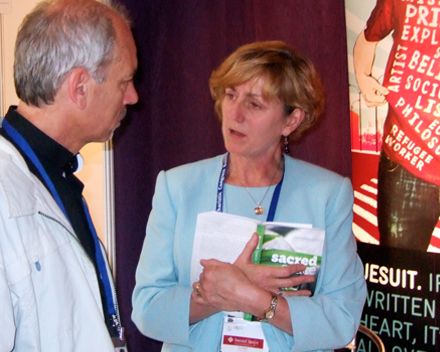

Sacred Space promotes Chapel of Intentions
For weary legs and prayerful spirits a silent physical Sacred Space acted as a welcoming haven in an otherwise busy exhibition hall. A key focus of the week was the promotion of the website’s Chapel of Intentions, a virtual oratory enabling visitors to the site to post and pray for individual prayer intentions.
Ann Martin, administrator (pictured here at the IEC), said “We were amazed at the positive feedback we received at the Congress. To promote the new Chapel of Intentions on our site, over 1000 prayer intentions submitted during the week were individually prayed for within the Sacred Space oratory.”
The online Chapel of Intentions provides an opportunity for visitors to post a prayer for the attention of the site’s worldwide prayer community, which includes three contemplative orders of nuns in Ireland and overseas.
Sacred Space, now 13 years old, has recently undergone a successful visual make-over. It has over 17,000 visitors daily and continues to grow. A team of Eastern European Jesuits is preparing to add Russian, Belorussian and Ukrainian to its current 14 languages.
The Chapel can be accessed at http://content.sacredspace.ie/chapel/intentions.php
34th Week in Ordinary Time 1st Week of Advent 2nd Week of Advent St Thomas Becket 3rd Week of Advent 4th Week of Advent Christmas Octave |
|
|||
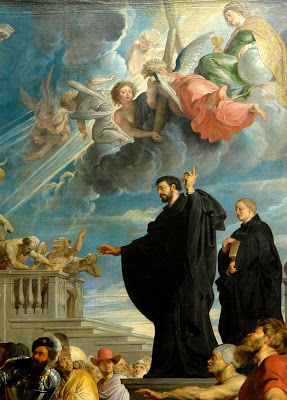

Francis Xavier (Francisco de Jassu y Javier, 1506-1552), was the first Jesuit missionary and the prototype who inspired many men to enter the Society of Jesus and evangelize far off nations. One of the original group of seven men who founded the Jesuits, he was sent to India before the new religious order received formal approval from the Church.
Xavier was born in his family’s small castle in Navarre, in the north of Spain, and there received his early education. In September 1525 he went to Paris to begin university studies at the College of Sainte-Barbe where his roommate was Peter Faber (Pierre Favre) from the Savoy region of France. Four years later everything changed when an older student moved in, Ignatius Loyola (Iñigo Lopez de Loyola), a failed Basque courtier given to prayer. Loyola soon won Faber over to wanting to become a priest and work for the salvation of souls, but Xavier aspired to a worldly career and was not at all interested in being a priest. He earned his licentiate degree in the spring of 1530 and began teaching Aristotle at the College of Dormans-Beauvais; he remained living in the room with Favre and Loyola. When Faber went to visit his family in 1533, Ignatius finally broke through to Xavier who yielded to the grace God was offering him. Four other students also became close friends through their conversations with Ignatius who was became a spiritual guide and inspired the whole group with his desire to go to the Holy Land. Xavier joined his friends Aug. 15, 1534 in the chapel of Saint-Denis in Montmartre as they all pronounced private vows of poverty, chastity and going to the Holy Land to convert infidels.
Xavier and Loyola began studying theology in 1534. Two years later Xavier set out for Venice with the rest of the group except for Loyola who had returned to Spain earlier. Venice was the point of departure for ships going to the Holy Land. The companions spent two months waiting for a ship and working in hospitals, then went to Rome to ask papal permission for their pilgrimage and ordination of the non-priests among them. Xavier, Loyola and four others were ordained by the papal delegate in his private chapel on June 24, 1537. And they continued to wait for a ship, but because of Venice’s impending war with the Turks none sailed for a whole year, something quite extraordinary. The companions then decided that Ignatius should go to Rome and place the group at the disposal of the pope. Meanwhile, they would go to various university centers and start preaching. Xavier and Nicholas Bobadilla went to Bologna.
Xavier went to Rome in April 1538 and began preaching in the French church of St. Louis. He also took part in the famous deliberations during Lent 1539 in which the companions agreed to form a new religious order. Before Pope Paul III granted his approval of the plan, he asked Ignatius to accede to King John III of Portugal’s request to send two of the companions to the new colony in India. Ignatius chose Simon Rodrigues and Nicholas Bobadilla, but the latter got sick and could not go. Francis Xavier was the only one of the companions not already committed to a work so Ignatius asked him to go, even though they were the closest friends and the departure meant that they would never see each other again.
Xavier and Rodrigues left Rome March 15, 1540 and arrived in Lisbon by the end of June. The fleet had already left so the two priests had to remain in Lisbon until the following spring. They devoted themselves to preaching and caring for prisoners. The king was so taken by their work that he asked one of them to stay and start a school; Rodrigues was chosen, leaving Xavier to head off alone as the first Jesuit missionary. As Xavier boarded the ship Santiagio, the king’s messenger gave him a letter in which the pope named him apostolic nuncio, which meant that he had authority over all Portuguese clergy in Goa. The ship set sail April 7, 1541, on Xavier’s thirty-fifth birthday.
It took 13 months for Xavier to arrive in Goa, including a long wait in Mozambique for favorable winds. As soon as he arrived, the energetic Spaniard set about preaching to the Portuguese, visiting prisons and ministering to lepers. He also tried to learn Tamil, but had to rely on interpreters for his first mission to the Paravas, pearl fishers who lived on India’s southeastern shore above Cape Comorin. They had converted to Christianity but been without a pastor, so Xavier reinstructed them in the faith, baptized those who were ready and prepared catechists to remain with them as he moved on from one village to the next. By the end of 1544 he reached the western shore of India at Travancore; in November and December of that year he is reported to have baptized 10,000 persons. He moved northward to Cochin, and then sailed to the Portuguese city of Malacca in Malaya; from there he headed for his goal, the Moluccas, or the Spice Islands where he landed on Feb. 14, 1546. He visited the Christian villages and baptized over 1,000 persons at nearby Seran. Then he did a reconnaissance trip to the islands Ternate and Moro, known for its headhunters. He returned to Malacca in July 1547 and arranged for two Jesuits to take his place.

At first the mission went very smoothly. The local prince gave permission to the foreigners to preach Christianity, but he himself would not convert. Xavier decided that the way to convert Japan was to begin with the emperor, but no one would tell him how to get to the Imperial City, Miyako (today’s Tokyo). They spent a year in Kagoshima but only made 100 converts, so the Jesuits left for Hirado, a port used by the Portuguese on the upper coast of Kyushu. Another 100 Japanese became Christians but Xavier remained eager to see the emperor, so he moved to the country’s second largest city, Yamaguchi. He preached in the streets but suffered a very unsuccessful meeting with the daimyo, so he left that city in December 1550 for Sakai.
Their fortune turned and they finally found a prince willing to take them to the Imperial City. Xavier and Brother John Fernandez were hired as domestic servants and arrived in January 1551, the first Catholic missionaries to see Asia’s largest and most beautiful city. For 11 days they tried without success to secure an audience with the emperor, so they returned to Hirado. They went back, though, with the knowledge that the most powerful lord in Japan was not the emperor, but the daimyo of Yamaguchi, whom they had failed to convince in their first meeting. Xavier resolved to try again, appearing not as a poorly-clad European but as an individual worthy of the daimyo’s attention.
The two Jesuits rented horses and a litter and dressed themselves in colorful silken robes. When they ceremoniously arrived in Yamaguchi, they were received at the daimyo’s palace without any suspicion that they were the same barbarians who had been brushed away only months earlier. Xavier presented the daimyo with expensive gifts of clocks, music boxes, mirrors, crystals, cloth and wine as signs of friendship; and he presented impressive credentials: letters from King John III of Portugal and Pope Paul III. The daimyo granted the Jesuit’s request to preach the Christian religion in the empire, and gave people the freedom to become Christians if they wanted to. He also gave the Jesuits a residence in the city, where many people visited. Within six months they had gained 500 converts.
Xavier thought it was time for him to move on so he brought Father Cosmas de Torres to replace him in Yamaguchi so he could return to India. Xavier set out in September 1551, and found a ship for Malacca. He hoped to return to Japan the following year, but the ship got caught in a typhoon that drove it 1,000 miles off course. On December 17, the vessel entered the Bay of Canton and anchored off Sancian Island. As Xavier looked towards nearby China, he felt that country calling him. The two Jesuits were able to board a ship that happened to be bound for Singapore, which they reached at the end of the month. There Xavier found a letter from Ignatius appointing him provincial of the “Indies and the countries beyond.”
He was back in India in January 1552 and found another letter telling him to return to Rome to report on the mission; he decided that visit could wait until he had first gone to China. In April 1552 Xavier set out from India and entered the Bay of Canton in September. He landed on Sancian Island which was both a hideout for Chinese smugglers and a base for Portuguese traders. None of the smugglers was willing to risk taking the Jesuit missionary over to China; one who said he was, took Xavier’s money and then disappeared. On November 21 he came down with a fever and could not leave his leafy hut on the island’s shore. Seven days later he fell into a coma, but on December 1 regained consciousness and devoted himself to prayer during his waking hours. He died on the morning of December 3 and was buried on the island, but his remains were later taken to Malacca and then to Goa where they were interred in the church Bom Jesus.
He was canonized in 1622 and made patron of the Propagation of the Faith in 1910 and in 1927 was named patron of the missions.
Edmund was born at London in England. He was the son of a Catholic bookseller who was converted and became an Anglican. When he grew up he planned to join his father in business but received a scholarship to Saint John’s College in Oxford.

He was a very popular young English student and a very good speaker. In fact, Edmund was chosen to deliver a welcoming speech to Queen Elizabeth when she visited his college. Some students were very attracted by his happy nature and his many talents and made him their leader.
Even the queen and her chief ministers were fond of this handsome young man. The Queen wanted to make him a Deacon in the Church of England.
But Edmund was troubled about his religion, as he believed that the Catholic Church might be the only true Church. He did not hide his feelings, and the government, which was persecuting Catholics, became very distrustful of him.
Edmund knew that he would lose the queen’s favor and all his chances of a great future if he chose to become a Catholic. The young man prayed about it and decided to become a Catholic anyway.
After he had escaped from England, Edmund studied to become a priest. He entered the Society of Jesus. When the Holy Father decided to send some Jesuits to England, Father Campion was one of the first to go.
The night before he left, one of the other Jesuit priests wrote over his doorway: “Father Edmund Campion, martyr.” Although he knew what danger faced him, the holy priest set out cheerfully. In fact, he had many a laugh because of his disguise as a jewel merchant.
In England he preached with great success to Catholics who had to meet with him in secret. Spies of the queen’s men were everywhere trying to catch him. He wrote: “I won’t escape their hands much longer. Sometimes I read letters that say ‘Campion has been caught’!”
It was a traitor who finally had Edmund captured. The government officials who had been so fond of him visited Edmund in jail. Even Queen Elizabeth came.
But none of their threats or promises could make him give up the Catholic faith. Although they made him suffer, he still defended himself and his fellow priests so well that no one could answer him. But the enemies of the Church condemned him to death anyway.
Before he was put to death, St. Edmund forgave the man who had betrayed him. He even helped save the man’s life. He was tortured in the Tower of London, then hanged, drawn and quartered.
Parts of his body were displayed as a warning to other Catholics at each of the four city gates. St. Edmund Campion died in 1581.
Robert Southwell (1561-1595), one of England’s many poets but one of its most illustrious martyrs, was killed during the reign of Queen Elizabeth I. He came from a well-to-do family but had to move to the continent to study in a Catholic school.

The two Jesuits landed on a secluded coast to avoid capture in the ports of entry. Southwell was assigned to minister in and about London, living at first with the Vaux family and then in the household of the Countess of Arundel whose husband Sir Philip Howard was imprisoned in the tower for maintaining his allegiance as a Catholic. Southwell’s ministry included visiting the dozen or so prisons in the city and helping priests who had just entered the country. When Fr. Garnet, his traveling companion, also came to London, Southwell started visiting Catholics in the outlying counties. He also helped direct the print of Catholic catechisms and devotional books published by a secret press that Garnet established; it was the sole source of religious literature for English Catholics. Southwell put together several letters he had written to Sir Philip to encourage him in prison; these letters were revised and published as An Epistle of Comfort.
For six productive years Southwell exercised his ministry until he was betrayed by a Catholic woman who had been pressured into setting a trap for the Jesuit. Anne Bellamy was imprisoned after she refused to attend Protestant services and was made pregnant by Richard Topcliffe, a priest-hunter noted for torturing his prisoners. Topcliffe promised to marry her and win pardon for her family if she would convince Southwell to go a designated spot where the trap would be set. When she was released from prison, she wrote the priest asking him to meet her at her parents’ home. Southwell went there thinking she wanted to receive the sacraments. Instead Topcliffe and his men were waiting. Southwell managed to slip into a concealed room before they could catch him, but he eventually gave himself up rather than betray the family.
Topcliffe was overjoyed to have captured Southwell, whom he regarded as the biggest catch of his career. Bound in chains, the Jesuit was led to Topcliffe’s residence next to Gatehouse Prison and put in the private torture chamber that Topcliffe had there. Several excruciating days of torture failed to force Southwell to reveal a single name of any Catholics or priests. He remained steadfast despite being tortured 13 different times; finally his captors threw him among the paupers to face cold, hunger and thirst. Southwell’s father managed to visit him in the paupers’ prison and was horrified at his son’s condition. He petitioned the queen to treat him like the gentleman he was, either releasing him or condemning him to death. The queen allowed him to be moved to the Tower where he was better cared for but still could not receive visitors. He did continue, however, to write the poems that expressed his deepest feelings and were later collected and published as St. Peter’s Complaint.
For two and a half years, Southwell endured the solitude of his imprisonment, and then finally petitioned Lord Burghley to be released, be allowed visitors, or be brought to trial. The latter was granted, and he was tried on Feb. 20, 1595 at Westminster Hall. Southwell readily admitted being a Catholic priest but denied any involvement in plots against the queen. He was found guilty of high treason and executed the very next day. For the three-hour journey to Tyburn, he was tied to a hurdle and dragged through the streets to the gallows. Because the noose was improperly placed on his neck, he did not immediately die when the cart moved away from him. The hangman took mercy and hung on his feet to end the agony. Then the 34-year-old Jesuit was beheaded and quartered.
 |
I love Thanksgiving. It’s less hectic than Christmas, and it’s mainly about enjoying family and friends (food too, of course). A few years ago, the late John Kavanaugh, SJ, proposed an idea for extending the spirit of Thanksgiving through December and the new year by making a litany of gifts:
A simple way to do this is to use an 8-inch by 11-inch lined piece of paper. Draw a vertical line down the middle. Each horizontal line counts for a day, and each of the two columns will hold objects of gratitude. Make one column a list of persons, now living or in history, for whom you are grateful-one person or group of persons per line. Make the other column a list of things, places and events for which you give thanks. Each day write one entry in each column. By the end of one month you will have a litany of gifts, a catalogue of the ways God has come into your life. Then, with the mother of Jesus, you can ponder these things in your heart. This is an exercise in appreciation, being present to what is. In this anointing of the present, we will find ourselves entering God’s presence to our lives.
A splendid idea. Let’s do it.

A man went to a barbershop to have his hair cut and his beard trimmed. As the barber began to work, they began to have a good conversation and talked about so many things and various subjects. When they eventually touched on the subject of God, the barber said: “I don’t believe that God exists.”
“Why do you say that?” asked the customer.
“Well, you just have to go out in the street to realize that God doesn’t exist. Tell me, if God exists, would there be so many sick people? Would there be abandoned children? If God existed, there would be neither suffering nor pain. I can’t imagine a loving God who would allow all of these things.”
The customer thought for a moment, but didn’t respond because he didn’t want to start an argument. The barber finished his job and the customer left the shop. Just after he left the barbershop, he saw a man in the street with long, stringy, dirty hair and an untrimmed beard. He looked dirty and unkempt. The customer turned back and entered the barber shop again and he said to the barber: “You know what? Barbers do not exist.”
“How can you say that?” asked the surprised barber. “I am here, and I am a barber. And I just worked on you!”
“No!” the customer exclaimed. “Barbers don’t exist because if they did, there would be no people with dirty long hair and untrimmed beards, like that man outside.
“Ah, but barbers do exist! That’s what happens when people do not come to me.” “Exactly!” affirmed the customer. “That’s the point! God, too, does exist! Because people do not look to God for help is why there’s so much pain and suffering in the world.”
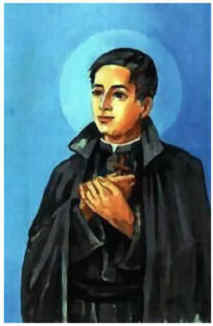
John was born at Driest, Brabant in Belgium. He was one of five children and the son of a shoemaker. As his parents brought their five children up with much care and love, three of their children entered the religious life.
As a child, John stayed very close to his sick mother. Still, he liked to join with his young friends in putting on plays about Bible stories. He was especially good at playing the part of Daniel defending the innocent Susanna.
From the age of seven he formed the habit of rising early and would serve two or three Masses with great eagerness. He once said, “If I do not become a saint when I am young, I shall never become one.”
By the time he was thirteen, he wanted to begin studying for the priesthood. However, his father, a shoemaker, needed his help in supporting the family. Finally, Mr. Berchmans decided to let John become a servant in the household of a priest. From there he could go to classes in the seminary.
Three years later, John Berchmans entered the Society of Jesus. He prayed, studied hard, and enthusiastically acted out parts in religious plays.
He made a motto: “Have great care for little things,” and he lived up to it. St. John Berchmans never did any great or heroic things during his life. But he did every little thing well and for the love of God, from waiting on tables to copying down notes on his studies.
He was known as the saint who performed ordinary actions with extraordinary perfection. Kindness, courtesy and constant fidelity were an important part of his holiness.
When his was in his third year of college doing philosophy, he was asked to participate in a public debate, defending the Catholic faith, at a Greek college. He spoke with great confidence and knowledge on the subject.
But when he returned to his own college after the debate, he became sick with a violent fever and no doctor could discover what illness he had. Yet John knew he was going to die.
He was very cheerful as always. When the doctor ordered that his forehead be bathed with wine, John joked: “It’s lucky that such an expensive sickness is not going to last long.”
John did not live to become a priest. In fact, he died in 1621 at the early age of twenty-two but he had, without any doubt, reached his goal of holiness.
John died clutching his rosary, crucifix and rules of his order in his hands. Miracles took place at his funeral. Right away people began to call him a saint.
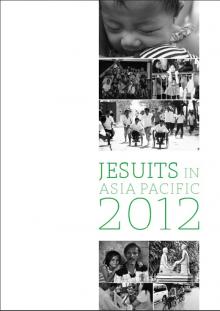
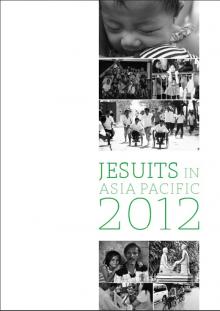
The 16-page document begins with a report by the President, Fr Mark Raper SJ, on the Conference in 2011, and contains articles on the four common priority areas across the Conference – Jesuit Formation, the education project in Timor Leste, Environment and Migration. It concludes with a brief description of our Conference.
In “Forming Jesuits for Asia Pacific“, we discuss the detailed JCAP document on formation entitled “A Profile of a Formed Jesuit for Asia Pacific”, and how the Loyola School of Theology is implementing the Asian mandate for theological education.
“The vision of an educational institute” paints a picture of Instituto de Educação Jesuíta, the education project in Timor Leste that comprises a teacher education academy and a secondary school.
In “A sacred sense of ecology“, we discuss our Environmental Way of Proceeding, which was developed by the JCAP Ecology Task Force as an introduction to the action of reconciliation with creation.
For migration, we have chosen in “Living with our neighbours” to shine the spotlight on Yiutsari, the Jesuit centre for migrant workers in South Korea, as an example of the many local Jesuit works serving migrants in Asia Pacific.
To download Jesuits in Asia Pacific 2012, click here. If you would like a printed copy, please email [email protected].