

Author: cfliao
PHNOM PENH (UCAN) – The upcoming SIGNIS Asia Assembly, to be held for the first time in Cambodia, will boost media activity and awareness of children’s issues in the country, says the host.
The Asian assembly of SIGNIS, a worldwide Catholic association for audiovisual, broadcast and new media, is scheduled Sept. 15-18 in Phnom Penh. Children and the Media is the theme of this fourth Asia-wide assembly, which 53 Church media professionals and workers from 14 Asian countries and territories are expected to attend.
Catholic Social Communications (CSC) of Cambodia is hosting the event in collaboration with other local Church bodies including Don Bosco Social Communication Section in Sihanoukville, Caritas Cambodia Communications Office and Jesuit Communications.
CSC director Father Omer Giraldo told UCA News that hosting the event will not only benefit the Church in Cambodia but also encourage local media and communications projects.
Furthermore, it will boost awareness of children’s rights in the country, said the priest, a member of the Yarumal foreign mission society, based in his native Colombia.
“The congress will have a positive influence on many journalists and communicators in Cambodia. This positive element will reach many Cambodian children who suffer because of the lack of awareness of children’s rights,” the priest asserted.
Similarly, SIGNIS Asia president Lawrence John told UCA News the Asian assembly “provides a platform for organizations and institutions working with children in Cambodia to further address issues of children’s rights and concerns.” He expects that “sensitizing (people on) the issues will bring about greater knowledge and change to benefit the children.”
John pointed out that SIGNIS Asia chose the theme for its upcoming assembly to prepare for the SIGNIS World Assembly next year in Thailand, which will focus on Media for a Culture of Peace – Children’s Rights, Tomorrow’s Promise. He remarked that “the most vulnerable audience in the era of information is children.”
On why Cambodia was chosen as host, he said young people form the core of SIGNIS Cambodia, and SIGNIS Asia wants to support and encourage young people’s involvement in media to promote a culture of peace. CSC is currently the only member-organization in SIGNIS Cambodia.
SIGNIS Asia board members chose Cambodia to host the Asian assembly when they visited last March to celebrate CSC’s fifth anniversary. Father Giraldo described that anniversary event as “an impressive occasion to mark the achievements of this very young institution.”
Media in Cambodia as a whole “has developed very fast during the past 10 years,” the missioner observed.
“When I came to Cambodia in 1995,” he recalled, “there were only a few newspapers in Khmer language, and the Cambodia Daily in English was just beginning. Now the print press is spread all over the country.” He added that “other media have developed very much as well, especially TV,” although he acknowledged “there is a long way to go.”
Father Giraldo expressed concern that Cambodia today is a “new society” that has emerged from decades of conflict, so “most adults, parents and even societal leaders do not have good experience in dealing with new media and technology.”
“The danger,” as he sees it, “is that most children and young people, especially in the countryside, become consumers of whatever comes to their senses without discerning what is good and what is not good.”
One way to face this challenge is to educate parents, educators and societal leaders on the media, and, through them, hold training programs for children and young people on how the media works, the priest suggested.
The upcoming assembly will feature a one-minute video production contest.
After the assembly, participants are scheduled to visit the famous 12th-century Angkor Wat temple complex, about 240 kilometers northwest of Phnom Penh, and attend Mass at a nearby church in a floating village along the Tonle Sap (great lake).
Catholic media people are expected to attend from Bangladesh, Cambodia, Hong Kong, India, Indonesia, Japan, Korea, Macau, Malaysia, the Philippines, Sri Lanka, Taiwan, Thailand and Vietnam.
During August Father General took three short trips to France, Portugal and Lithuania. On August 14-15 Father General attended the meeting of European Jesuits in Formation (EJF) in Lyon. He then moved to Portugal, where he addressed the members of the Christian Life Community (CVX) gathered in Fatima August 17-19. The third and final trip was to Lithuania, August 21-26, to join the Jesuits celebrating 400 years of the Society presence in the country.
The month of September is filled with many meetings. From September 1-4 joined by all his Counsellors except Fr. Daniel Huang, Assistant for East Asia-Oceania, who could not come to Rome because of visa difficulties, Father General reviewed practices relating to ordinary governance in the Society. September 5-9 was the time for a Consultation about the Russian Region attended by nine members of the Region who came to Rome. Finally, the Presidents of the Conferences of Mayor Superiors have been called to a meeting to be held September 15-19 to examine the present situation of the Society. They will discuss three questions related to The Society after G.C 35: What have we done? What are we doing? What are we going to do? Father General plans to write a letter to the Society in due time.
On September 20 Father General will leave the Curia for Brazil where he will attend the meeting of the Provincials Conference in Latin America (CPAL) at Manaus. He expects to return to Rome on October 5.
L’Osservatore Romano of September 7 carried the names of the members of the Synod of Bishops to be held October 5-26 on the topic The Word of God in the life and mission of the Church. Among the 32 Father Synodales appointed by the Pope there are two Jesuits: Cardinal Albert Vanhoye and Father Adolfo Nicolás. With the approval of the Holy Father, among the “experts” appointed by the Secretary of the Synod, there are six other Jesuits: Johan M. Herman Konings (Brazil), Fiorello Mascarenhas (India), Stephen Pisano (USA-Rome), Marko Ivan Rupnik (Slovenia-Rome), Klemens Stock (Germany-Rome) and Cyril Vasil (Slovakia-Rome). Twenty four women will attend the conference: five in the group of experts and 19 among the auditors.
The Holy Father has appointed Father Cosme Hoang Van Dat, 60 years old, Bishop of Back Ninh in Vietnam. Father Hoang Van Dat is the first Jesuit Bishop in Vietnam.
The Holy Father has also approved the appointment of Father José M. Abrego de Lacy, 63 years old, as Rector of the Pontifical Biblical Institute. Father Abrego belongs to the Loyola Province.
Father General has appointed Father John Won-sik Sin, 47 years old, Provincial of Korea. Father Won-sik Sin replaces Father Matthias Chae Joon-ho.
Father Gabriel Codina of the Province of Bolivia, who was Secretary of the Society from 2001 to 2005, died in Barcelona on July 30th.
India
The international press has publicized the incidents of violence against Christian persons and institutions especially in the Orissa region. This part of India belongs to the Province of Jamshedpur. Only rumours regarding the situation were initially available in Rome, but it was difficult to ascertain their reliability. On August 29th the Archbishop of Cuttack-Bhunwshwar wrote to Cardinals, Bishops and Religious summarizing the consequences of the attacks suffered by the Christians between August 24-28; there were 12 deaths, 6 priests who were hospitalized; 2 other priests kidnapped. And 41 churches and chapels destroyed. On August 30th Father Joseph Xavier, Secretary of the Indian Social Institute in New Delhi, provided some reliable information concerning the Jesuits. Some of the Jesuits in Orissa were threatened, others (among them 11 candidates to the Society) had to take refuge in the forest, several schools remained closed, and some buildings of the Society were stoned. Fortunately there were no victims among the Jesuits.
France
On the 8th of August, at an age of 88, Father Joseph Gelineau died in France. He is known all over the world for his contribution to the liturgical and religious renewal after the Vatican Council. The degree of his influence in the Church was evidenced by the two articles that the Osservatore Romano dedicated to him on August 11th and 14th. The Taizé community, the first monastic community to use Father Gelineau’s musical compositions for the Psalms in its daily prayer, made special mention of him and remembered the close friendship between Father Gelineau and the founder of Taizé, Brother Roger.
Spain
On September 5th the San Pablo Publishing House put on sale the Spanish translation of a book authored by Cardinal Martini and Father Georg Sporschill, S.J., Night conversations in Jerusalem that was originally published by Herder in Germany. Father Sporschill worked among drug addicts and children of the street in Rumania and Moldavia. He met Cardinal Martini in Jerusalem and engaged him in conversations in which both Jesuits speculated about the changes in the Church that young people will encounter in the future, which bright zones appear and how the Church could present the Gospel in a more attractive and effective way. According to rumours, the Italian translation which, is under supervision of Cardinal Martini, is expected to be in the book stores by the beginning of January.
 By John DeSio
Students from Jesuit colleges nationwide gathered at Fordham for a conference on the future of humanitarian work in the Jesuit community.
The event, “Engaging Students in Humanitarian Action,” was sponsored by the Association of Jesuit Colleges and Universities through its Jesuit Universities Humanitarian Action Network. From June 20-22, roughly 150 students from 20 Jesuit colleges and universities listened to speakers and participated in workshops designed to hone their humanitarian-action skills.
The keynote speaker was Daniel Villanueva, S.J., who discussed his work with the Jesuit Refugee Service (JRS) in Rome, Liberia and Kenya. More than simply outlining the mission of the JRS, Father Villanueva spoke of his personal journey to the organization and the important work it accomplishes with a small staff and budget.
“This is why I’m here today,” he said, “not to talk about figures of refugees, but to talk about the Jesuit way to approach humanitarian work.”
Father Villanueva said he was inspired to dedicate his life to the Jesuits after he learned about the murder of six Jesuit missionaries in 1989 in El Salvador. Hearing how those men suffered for their beliefs showed him that faith can impact his everyday life.
“It changed my way of understanding religion, and I discovered that faith can have a very important place in my life,” Father Villanueva said. “I realized that life was more than looking for a job or building a house or having a good car.”
He discussed the growth of the JRS since it was founded in 1980 by Pedro Arrupe, S.J., after he witnessed the crisis of refugees in Vietnam. Since then, its mission to provide critical services has expanded to several countries. Despite that growth, the JRS pales in comparison, in both size and scope, to the larger organizations in the field of humanitarian action, Father Villanueva noted. He also pointed out that the JRS does most of its work with refugees who need extra help, especially children, women, the handicapped and the mentally ill.
“These are the most vulnerable populations, the forgotten refugees,” he said.
Some of the major functions of the JRS include building and rebuilding shelters and schools in refugee camps and helping to ensure food equity within these makeshift towns. Father Villanueva estimated that about 500,000 refugees benefit from the actions of the refugee service and its affiliated network. The JRS puts into practice Father Arrupe’s vision of a “faith that does justice,” Father Villanueva said.
He closed his lecture with a realistic discussion of the conditions that surround JRS workers. Refugee camps are not pleasant places, but JRS staffers make it a point of staying within the camps where they can do their best work. Though their housing is better than what the refugees are offered, it is still very poor. This is by design, Father Villanueva added. It lets refugees know that JRS workers are going through the same conditions, if only in a small way.
“If you’re looking for money, JRS is not the way,” he joked at the end of his presentation. “Despite that, we have a pretty good time working with people.”

Even as a young boy growing up in Limerick, Ireland, Gerard Keane wanted to be a priest and he could not understand why others would not want to serve God. Now, aged 82, he has spent 62 of those years with the Jesuits. He celebrated his Golden Jubilee of his priesthood recently.
By Joyce Gan
THERE WAS LITTLE decision-making involved about serving God, Jesuit Father Gerard Keane recalled. “Some people decide on a professional occupation. Others just know what life is asking of them. I belong to the latter category,” he said.
“As far as I can recall I realized all this when I was about nine-years-old though I could not yet articulate it. The ‘Christ thing’ was so compelling that it puzzled me why all boys did not enjoy the same experience.” Eight years later in 1943, he began a 14-year-long training to be a Jesuit and a priest. He was ordained in 1958.
Father Keane arrived in Singapore in 1960. He was on a ship going to Hong Kong when he received a cable to
go to Singapore instead. This event was described by Melaka-Johor Diocese’s Bishop Paul Tan as “Hong Kong’s loss and Singapore’s gain”.
Church of St. Ignatius was just being established and Father Keane began his work as assistant priest. Along the way, the Irish priest learnt the Hokkien dialect so that he could communicate with parishioners who did not speak English.
While at the parish, Father Keane was actively involved in many ministries including Social and Economic Life in Asia and Catholic Teachers’ Movement. He is still remembered by many senior Singaporean Catholics for his “star-quality” voice and riveting sermons on the Sunday evening Christian Broadcasts on radio.
Kenneth Anthony Rappa, who produced those programmes, recalled that “of all the preachers, [Father Keane] had such a bond with God in his heart that everything always fell into place without the need for too much planning”.
“His programmes were special enough for people to enquire if they had to attend Mass in church having already listened to Father Keane’s sermons,” Mr Rappa added. “It was, they said, as if they had been there with us, in church, instead of listening to a studio recording. Those who had diffi culty attending Mass were particularly grateful to Father Keane for making them feel part of the community in spirit.”
Father Keane was also chaplain at the University of Singapore (now NUS) and, for 22 years, at Catholic Junior College (CJC). CJC still honours Father Keane’s contribution with The Father Gerard Keane Award, presented annually to the student who’s made the “most significant contribution to the continuing development and strengthening of the Catholic spirit in the college”.
Principal of CJC Brother Paul Rogers remembers Father Keane as being “ever willing to walk the miles with young people for whom the going was tough at times. And he was the constant presence for any student who wanted a listening ear and a wise mentor. He loved young people and they loved him.”
Ivan Yeo from CJC Class of 1997 wrote in the commemorative book prepared for Father Keane’s Golden Jubilee celebrations: “The regular morning Masses with you as our ever faithful chaplain was always a joy. You taught us so much about our Catholic faith, not as a doctrine or law, but as a living faith and relationship with God our Heavenly Father. Your wise and fatherly ways helped me to relate to God as our loving father, and that has remained my vision of God ever since. The faith I developed over the last decade is deeply sharpened by the many discussions I had with you… I learnt far more in the chapel than I could have in the classroom.
A persuasive writer
Father Keane was editor of the Malayan Catholic News (today’s CatholicNews) from 1969 to 1972. He was a prolific writer – enlightening readers on theological and social issues – and would often invite others whose thinking impressed him, to contribute as well.
He described his editorial vision then as “building a Soldier Apostolate” where he hoped to help influence Catholics to bring their faith “beyond family to society”. He said he was motivated by the desire “to make people grow and become more mature in their faith”.
However he ran into some obstacles while promoting his vision – caused mostly by the “style and approval” system; the political situation in those years gave rise to a climate of fear of “offending the government”. This led Father Keane to “feel very restricted”.
When asked why he stopped writing for the newspaper, he candidly responded, “The answer is simple. I was sacked.” But his writing did not stop with the termination of his services at Malayan Catholic News. He continued to write homilies, reflections and articles, between 6.00am and 8.00am every Thursday morning. His writings, illustrated with drawings and photographs, have been compiled into a book titled “Fairy Lights of Faith and Fancy” to mark his Golden Jubilee. “I was bullied into having it published,” he joked.
Among the articles in the book are scripts for ten Christmas pageants that he wrote for the children of St. Ignatius parish. They are a reflection of the childlike wonder with which he views Christmas, which is his favourite season because “it is full of magic” and peopled by children who are held up as models for our imitation.
Father Keane was afflicted with throat cancer in 2001 and this led to the loss of his voice. He retired from active service in the parish in 2002, but continues to guide the editorial team for the parish’s quarterly publication, “Sharing”.
“Losing my voice is not as disastrous as many thought,” he confided. “Frustration is its most tormenting consequence. But I keep out of mischief by writing and sitting in on Bible-sharing groups. Sometimes I write homilies which others deliver.” When asked if he had any regrets at being a priest, his reply was typically direct and straight from the heart: “No regrets, just gratitude.”
This gratitude is clearly seen in “Finding a New Voice”, one of his reflections, which he wrote on Nov 24, 2003, after learning that he had lost his voice: “Not only did I begin to realize that my whole life had been governed by my voice – teaching, reaching, lecturing, retreat giving, broadcasting, singing, whistling, joking, counselling, and a host of other voice-produced activities – but more dramatically, that I could not relate ever again to people and situations or work and recreation as I once did…
Much has been taken away. But God never takes away without giving more. Unburdened by the demands of normal day labour, I have time to watch the beauty of life and people that was long hidden in a flurry of often vain activity. I became more conscious of what is given to me than what I ever achieved by performance.”
Father Gerard Keane’s words of wisdom

On youth
“When stuck I usually make straight for my New Testament. But there are no teenagers there, I thought. Luke soon told me otherwise when he introduced me to a teenager named Mary. She was a revelation… To me to meet teenagers is to confront mystery.
To treat them with reverence and respect. To wonder at young life striving to move into maturity – the destiny for which God created it. One does not have to understand, for we sense more than we can explain and feel more than we understand. The young like all of us need friendship, love and patience and not posturing on what we grown-ups do not understand.”
On children
“So what is it about little children that endows them with qualities that are as essential as they are rare? … I would suggest that it is their realism and trust.
Grown-ups don’t see things as they are. They see things in terms of their usefulness. They invent pseudo realities to escape from the truly real. They live in a world of pretense.
Children see things as they are, wonder at them and let them be. So they are free, spontaneous and detached. With them, everything is possible, leaving them open to mystery and revelation.”
On the Eucharist
“I am the bread of life.” This phrase has been for me one of the most inspiring in life. I met it when I was very young and it hit me with all the force of an instinctive faith which needed no theological persuasion and no intellectual justifying. It had a lot to do with my becoming a priest because it seemed to persuade me that the truth it contained was more important than any other commodity in life.
If I could trade with this truth and give it to my fellowman, then life would be really worth living.
This appreciation has never changed. To be a priest is, for me, to trade in loveliness – to deal with the loveliness of Godʼs word, to live in the joy of being one of those whom I am very much one, and finally to relish being one with them and all men in the intimacy of the Eucharist.”
On Christmas
“I come from a land of hills – green, soft and welcoming. But at Christmas time those hills take on an added attraction. The whitewashed cottages which dot their hillsides are bright with Christmas candles, large and red and usually secured in a jam jar covered with Christmas paper – lighting in the window sill. It is there to guide Mary and Joseph to find their way. Where are they going? To bring God among us in a stable. We are not at home in this world no matter how much they try to tell us that reality lies in facing and solving the problems of our day.
We are not at home with the complex. We belong in the world of the simplicity of Bethlehem. This is why the Christmas crib is so much our home. All are welcome. Everything seems resolved as we kneel before the stable in silent and tranquil unquestioning. All are welcome. All are at home – at home in the one spot in life
and history that makes us feel we belong. And this is Christmas – simple, uncomplicated, friendly and homely.”
(Written with information from commemorative booklet for Father Keane’s jubilee celebrations.)
Vincent J. Duminuco, S.J., the former rector of the Fordham Jesuit Community, died on Saturday, Sept. 6, at Murray-Weigel Hall, Bronx, N.Y. He was 74. Father Duminuco served as a secretary on the Fordham Board of Trustees for six years before his recent election as trustee emeritus, and held a faculty appointment in the Graduate School of Education (GSE). “Father Duminuco served tirelessly as a faculty member, member of the Board of Trustees and rector of the Jesuit Community at Fordham,” said Joseph M. McShane, S.J., president of Fordham University. “He brought to his work an encyclopedic knowledge of Jesuit education, a passionate devotion to Fordham and a wonderfully pastoral concern for all of the members of the Fordham Jesuit community.” As rector of Fordham’s Jesuit Community, a position he held from 2001 through 2007, Father Duminuco oversaw the emotional, spiritual and physical well-being of the approximately 85 members of Fordham’s three Jesuit communities: Spellman Hall, Loyola Hall and Kohlmann Hall, home of the Jesuit faculty of Fordham Preparatory School. In addition, he supported the members in their apostolic ministry and maintained the operating budget for the Spellman Hall community’s facilities. “Father Duminuco was a most competent and dedicated Jesuit who was very committed to education, and particularly a Jesuit education on a local, national and international level,” said John Cecero, S.J., rector of Fordham’s Jesuit community. “In addition to serving as rector, Father Duminuco was committed to Jesuit education and preparing future educators through the Joseph O’Hare Jesuit Teacher Leadership Program.” Father Duminuco, who joined the Society of Jesus in 1951, spent much of the 2007-2008 academic year on sabbatical in private reading and reflection at Santa Clara University in California, and as a visiting professor at Gonzaga University’s Florence, Italy campus. A graduate of Fordham Prep, Fordham College at Rose Hill and the Graduate School of Education, Father Duminuco began his teaching career at Fordham in 1970 as an adjunct associate professor in GSE. He earned his doctoral degree at Stanford University in 1969. Father Duminuco served as director of the GSE’s Joseph O’Hare Jesuit Teacher Leadership Program since 2003. He was the founder and director of the International Jesuit Education Leadership Project. He edited and contributed of The Jesuit Ratio Studiorum: 400th Anniversary Perspectives (Fordham University Press, 2000). Services are as follows: WAKE: Tuesday, September 9, 2008 In lieu of flowers, the family has asked that donations be sent to Fordham University or the Jesuit Seminary and Mission Bureau, 39 East 83rd Street, New York, NY 10028.

Vincent J. Duminuco, S.J.
Photo by Ken Levinson
4 to 6 p.m.
Fordham University Church
Bronx, New York
VIGIL SERVICE:
Tuesday, September 9, 2008
7:30 p.m.
Fordham University Church
Rose Hill campus, Bronx, N.Y.
MASS OF CHRISTIAN BURIAL:
Wednesday, September 10, 2008
10 a.m.
Fordham University Church
Rose Hill campus, Bronx, N.Y.
BURIAL: Jesuit Cemetery
Auriesville, N.Y.
Notes of condolence may be sent to Father Duminuco’s sister:
Mrs. Ann Marie Ciaramella
50 Columbus Avenue, Apt. 904
Tuckahoe, NY 10707
(08-Sep-2008) Christians in India observed Sunday, 7 September as a Day of Prayer and Fasting for peace and goodwill in response to the violence that Christians in the eastern state of Orissa have suffered for the past month. Some 20 people have been killed, 50,000 displaced and 4,000 homes have been destroyed since August 23. Of those who have fled their villages, some 13,000 are living in nine relief camps run by the government. Some 200 villages were affected, with hundreds of churches burnt down.
On 27 August, Pope Benedict XVI called for an immediate end of these acts of violence. He invited “religious leaders and civil authorities to work together to restore among the members of the various communities the peaceful coexistence and harmony which have always been the distinguishing mark of Indian society.”
Cardinal Varkey Vithayathil C.SS.R., major archbishop of Ernakulam-Angamaly of the Syro-Malabars and president of the Catholic Bishops’ Conference of India, called all the dioceses of his country to observe a day of prayer and fasting on Sunday 7 September, so as to express “solidarity with all the victims and prayer for all our missionaries in India, who are facing most trying and difficult times for the sake of the Gospel.”
The president of the Italian Episcopal Conference (CEI), took up the appeal launched by Benedict XVI, and used September 5, the memorial day of Blessed Mother Teresa of Calcutta in the liturgy, to call Italian dioceses to observe the day of prayer and fasting in solidarity with Christians in India.
SLEMAN, Indonesia (UCAN) – Archbishop Ignatius Suharyo of Semarang has asked teachers and students of a Jesuit-run school to deeply understand and appreciate the freedom their school’s liberal educational approach offers.
The prelate addressed teachers, students and alumni of De Britto College Senior High School in Sleman district, Yogyakarta, about 430 kilometers southeast of Jakarta, during a Mass to celebrate the school’s 60th anniversary.
The freedom the school gives should not be understood as being “free from rules, laws or other bonds,” but rather as being “free to act responsibly based on conscience and love,” he told about 1,500 people who gathered at the school on Aug. 23.
According to headmaster Theodorus Sukristiyono, the school embraces a liberal education approach that allows students to develop themselves. Teachers, he told UCA News on Aug. 28, serve as support to help the students choose life options that are beneficial to themselves and society.
Unlike other schools in Indonesia, he said, his students are not obliged to wear uniforms and may grow their hair long. In classes they are free to express opposing views responsibly. They are also free to initiate social activities, Sukristiyono pointed out.
The De Britto website (http://www.debritto-yog.sch.id/) says it espouses the values of love, freedom, openness and plurality, and it elaborates on the philosophy behind this. Love, it says, molds students into people willing to serve and fight for truth and justice, while freedom encourages them to act responsibly according to their conscience. The school sees openness to and respect for plurality as part of the maturity it strives to develop in its students.
At the Aug. 23 Mass, Archbishop Suharyo pointed out that the word “education” derives from the Latin ex and ducere, which mean “out” and “to lead,” respectively. He urged teachers and students to lead people out to freedom. “I believe the freedom introduced in this school is understood as freedom to act for the common good, in line with its motto ‘Man for and with others,'” added the archbishop, whose archdiocese covers Yogyakarta.
Nineteen priests, most of them De Britto alumni, concelebrated the Mass. Among them were the school’s rector, Jesuit Father Josephus Ageng Marwata, and Jesuit provincial superior Father Robertus Bellarminus Riyo Mursanto.
According to Sukristiyono, the school’s liberal education approach is based on the spirituality of Jesuit co-founder Saint Ignatius of Loyola and aims to train students to be self-reliant.
Asked by UCA News how far this liberal approach has influenced students, the Catholic layman said it has helped them achieve good results in academic studies, athletics and the arts. It has also encouraged students to do social work on their own initiative.
“After an earthquake hit Yogyakarta on May 27, 2006,” he recalled, “several students took the initiative to distribute rice to survivors. The following days they organized their friends and built aid-coordination posts.”
Alvin Egan Natanael, an 11th-grader, said the approach has helped him develop his personality. “We are taught not only academic subjects but also life values,” the 16-year-old said.
Before the Aug. 23 Mass ended, Sweida Zulalhamsyah, a Muslim alumnus who heads the school’s alumni association, announced the school is offering scholarships to poor students “to make sure no student will stop studying because of financial problems.”
After the liturgy, Archbishop Suharyo released 60 birds symbolizing the school’s 60 years. The next morning, school representatives visited the graves of priest-rectors, teachers and alumni.
Founded on Aug. 19, 1948, De Britto College Senior High School now has more than 800 students from various religions and about 9,500 alumni, 37 of whom are priests.
SLEMAN, Indonesia (UCAN) – Archbishop Ignatius Suharyo of Semarang has asked teachers and students of a Jesuit-run school to deeply understand and appreciate the freedom their school’s liberal educational approach offers.
The prelate addressed teachers, students and alumni of De Britto College Senior High School in Sleman district, Yogyakarta, about 430 kilometers southeast of Jakarta, during a Mass to celebrate the school’s 60th anniversary.
The freedom the school gives should not be understood as being “free from rules, laws or other bonds,” but rather as being “free to act responsibly based on conscience and love,” he told about 1,500 people who gathered at the school on Aug. 23.
According to headmaster Theodorus Sukristiyono, the school embraces a liberal education approach that allows students to develop themselves. Teachers, he told UCA News on Aug. 28, serve as support to help the students choose life options that are beneficial to themselves and society.
Unlike other schools in Indonesia, he said, his students are not obliged to wear uniforms and may grow their hair long. In classes they are free to express opposing views responsibly. They are also free to initiate social activities, Sukristiyono pointed out.
The De Britto website (http://www.debritto-yog.sch.id/) says it espouses the values of love, freedom, openness and plurality, and it elaborates on the philosophy behind this. Love, it says, molds students into people willing to serve and fight for truth and justice, while freedom encourages them to act responsibly according to their conscience. The school sees openness to and respect for plurality as part of the maturity it strives to develop in its students.
At the Aug. 23 Mass, Archbishop Suharyo pointed out that the word “education” derives from the Latin ex and ducere, which mean “out” and “to lead,” respectively. He urged teachers and students to lead people out to freedom. “I believe the freedom introduced in this school is understood as freedom to act for the common good, in line with its motto ‘Man for and with others,'” added the archbishop, whose archdiocese covers Yogyakarta.
Nineteen priests, most of them De Britto alumni, concelebrated the Mass. Among them were the school’s rector, Jesuit Father Josephus Ageng Marwata, and Jesuit provincial superior Father Robertus Bellarminus Riyo Mursanto.
According to Sukristiyono, the school’s liberal education approach is based on the spirituality of Jesuit co-founder Saint Ignatius of Loyola and aims to train students to be self-reliant.
Asked by UCA News how far this liberal approach has influenced students, the Catholic layman said it has helped them achieve good results in academic studies, athletics and the arts. It has also encouraged students to do social work on their own initiative.
“After an earthquake hit Yogyakarta on May 27, 2006,” he recalled, “several students took the initiative to distribute rice to survivors. The following days they organized their friends and built aid-coordination posts.”
Alvin Egan Natanael, an 11th-grader, said the approach has helped him develop his personality. “We are taught not only academic subjects but also life values,” the 16-year-old said.
Before the Aug. 23 Mass ended, Sweida Zulalhamsyah, a Muslim alumnus who heads the school’s alumni association, announced the school is offering scholarships to poor students “to make sure no student will stop studying because of financial problems.”
After the liturgy, Archbishop Suharyo released 60 birds symbolizing the school’s 60 years. The next morning, school representatives visited the graves of priest-rectors, teachers and alumni.
Founded on Aug. 19, 1948, De Britto College Senior High School now has more than 800 students from various religions and about 9,500 alumni, 37 of whom are priests.
Jesuit College Preparatory School of Dallas has received a $5 million gift, the largest donation in the school’s 66-year history, from the Mike & Mary Terry Family Foundation, said the Rev. Philip Postell, president of Jesuit.
Father Postell said the gift brings total donations to $22.5 million toward the $26.5 million goal of the “We Are Jesuit” campaign.
In recognition of the landmark gift, Father Postell announced that Jesuit’s arts, athletics and assembly building, completed in 2000, will be named the Mike & Mary Terry Family Foundation Center.
The building serves as the focal point of the campus and is home to many school and Jesuit community events. A ceremony to officially dedicate the building will be held at a school assembly Friday.
“It’s easy to talk about support, but much rarer to exhibit commitment,” Father Postell said.
“The Terry family has always led by their involvement and deeds. Their lead gift will provide real encouragement for others throughout our community to participate in this endeavor.”
The contribution will be divided between the capital and endowment initiatives of “We Are Jesuit,” a five-year drive that began in June 2007.
Approximately $3.8 million will help fund the construction and remodeling of several campus facilities, including new classrooms, enhanced student commons areas and improved athletic facilities.
Approximately $1.2 million will be added to the Jesuit Fund for Excellence and two endowments previously initiated by the Terry family, the Thomas D. DeLoache ’71 Memorial Debate Endowment and the Mike & Mary Terry Family Foundation Faculty Fund.
The Mike & Mary Terry Family Foundation was founded in 2006 by Michael F. and Mary D. Terry. Mr. Terry has been an investor in natural gas, real estate and retailing.
Their daughter, Melissa Pridmore, a 1997 Ursuline Academy graduate, serves as executive director. The Terrys’ two sons graduated from Jesuit, Michael in 2000 and Travis in 2002. The Terrys’ son-in-law, Dustin Pridmore, is a 1997 Jesuit graduate.
“While our family has personally benefited from the superior education provided at Jesuit, we also recognize the positive impact it has made on thousands of other families,” Mr. Terry said. “The Terry family strongly believes in promoting excellence in education and we are delighted to make this investment in Jesuit.”
The gift continues the Terry family’s long history of support to Jesuit and the Jesuit Foundation.
Mr. Terry concluded a two-year term as the foundation’s chairman in 2007 and has also served as a member of the school’s Board of Trustees.
He currently serves as co-chairman, along with Charles “Chick” Young, of the “We Are Jesuit” campaign.
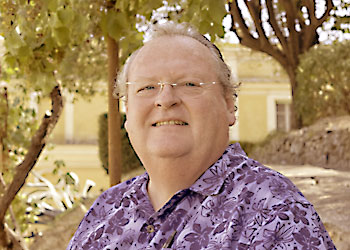
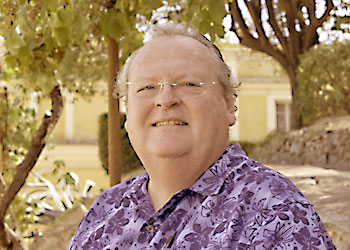 Musician and scholar, Father T. Frank Kennedy SJ
Father T. Frank Kennedy is a Jesuit musician and scholar who has found actual scores of music composed for Jesuit schools in the 17th and 18th centuries, and then produced some of these very early examples of Baroque music. Composers who worked for the Jesuits include Palestrina, Charpantier and William Byrd. Kennedy teaches at Boston College which has also begun a new Monumenta Musicae Societatis Iesu to make this recovered music more accessible.
Posted: September 1 | Listen now: